
What’s a walk on the beach to you? I turned myself loose to explore the question and here’s what I found out. Birds, live and dead; stumps and logs in the wrack – one resistant old timer; my attitudes about how I treat beach animals; a lesson on sand dynamics; a bunch of sort of random beach recollections too. I remember trying this about a year and a half ago in Redtail Rush. I guess this is pretty much in the same spirit, only with a lot more words.
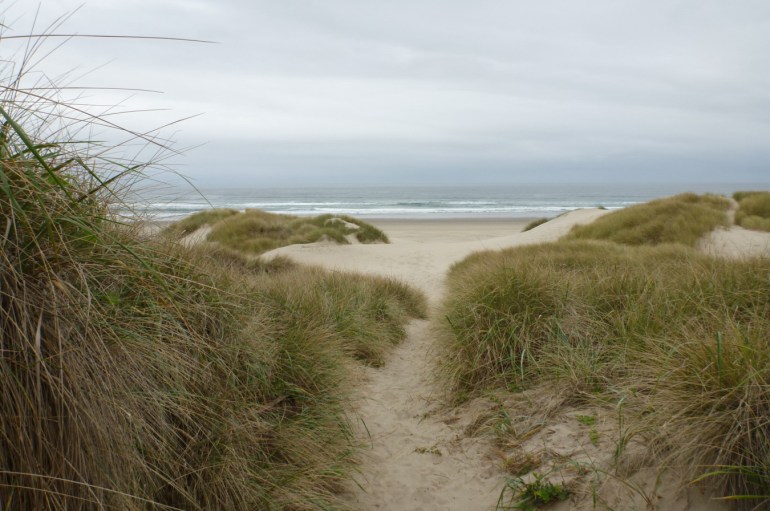
Here’s the trail to the beach. About a year ago I posted a collage of images from the same vantage point in Beach Trails.

This is the earliest image I have of this trail; just over six years ago, from May, 2008. I’m standing lower on the trail here, so it’s hard to tell, but the impression is that vegetation has encroached a bit on the trail and the dune generally. On the other hand, this could just be a seasonal effect.
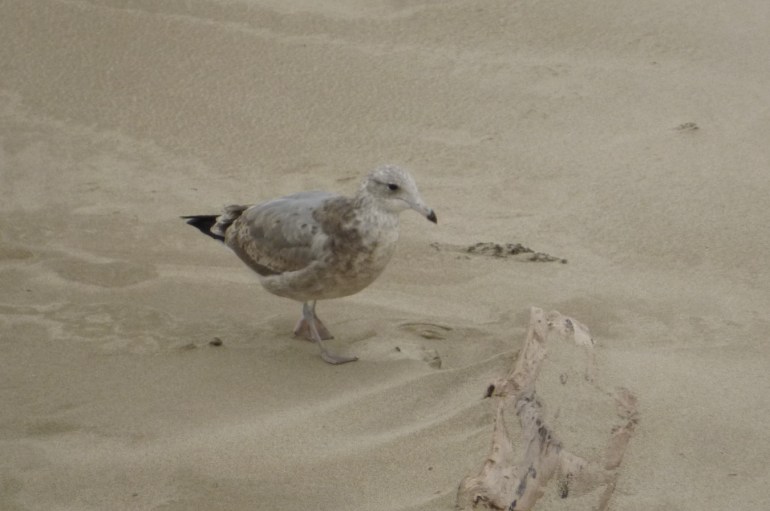
A California gull met me as soon as I dropped off the foredune. I love trying to identify gulls and shorebirds.
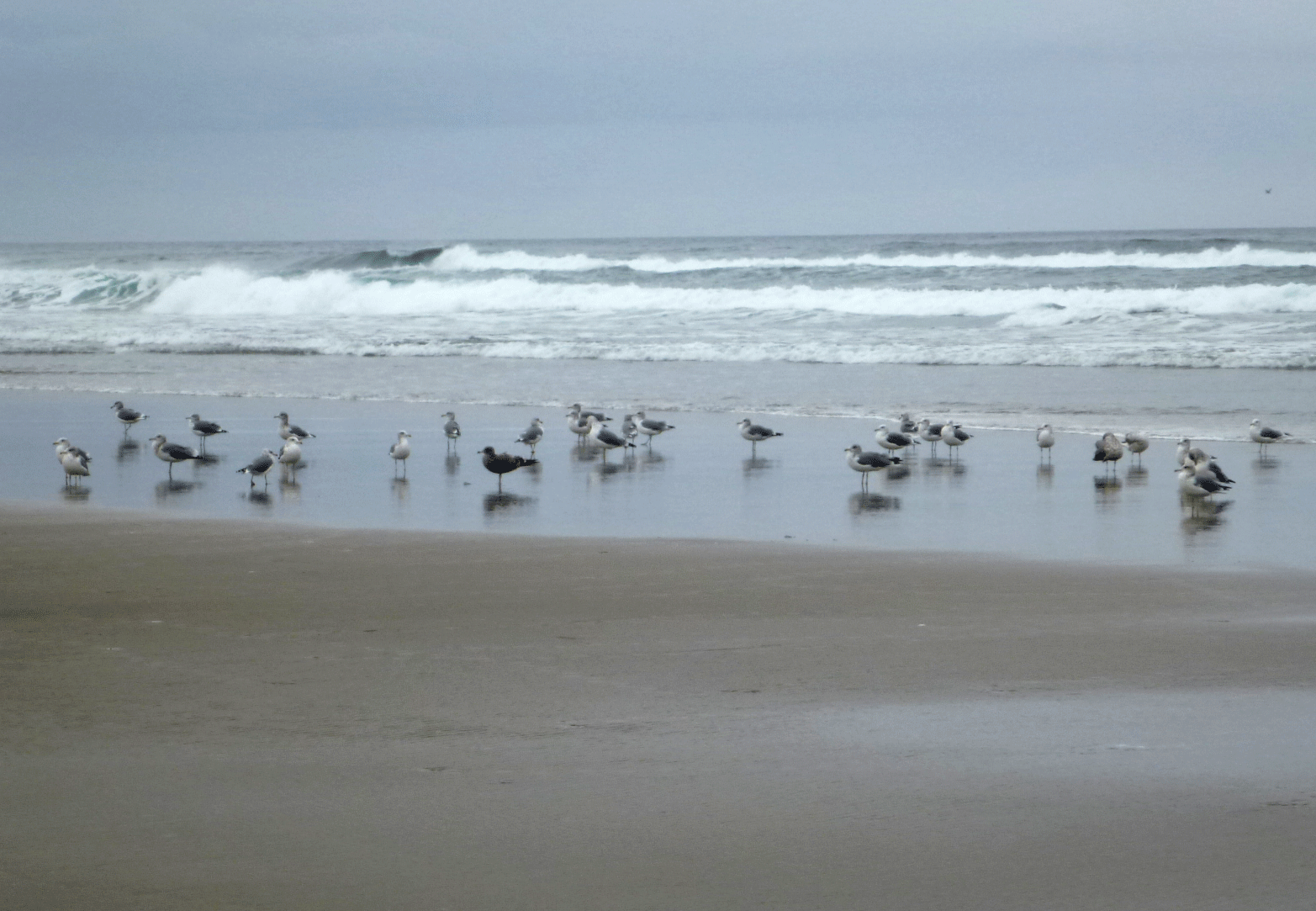
Gulls love to loaf “in the mirror.” The mirror is the wet reflective zone between surf and dry sand; lot of birds love to spend time loafing or feeding there.
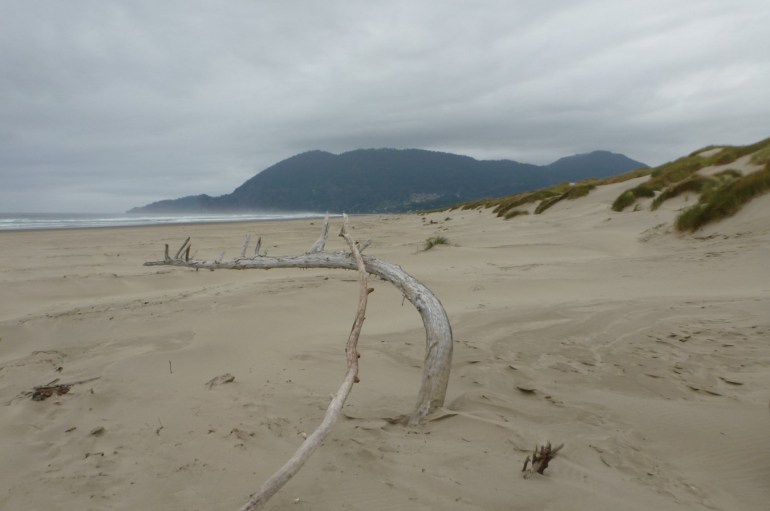
This branch, which is actually part of a larger drift log, has been around a while. It always seems to be in the middle of something interesting so, during its tenure, I’ve taken a quite a few photos of it.
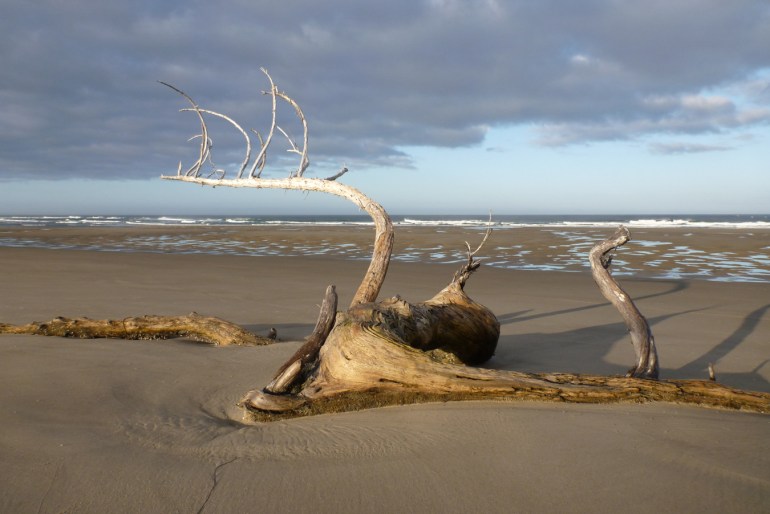
This image, featured in Shows, was taken early in the morning on September 1, 2012, at the start of an unsuccessful attempt to photograph the purple olive, a little beach snail. That was over two and a half years ago, when it was freshly beached and still had some pelagic goose barnacles attached it. Look at how deeply the log is buried in the most recent image. Lots of smaller branches have been broken off over time too.
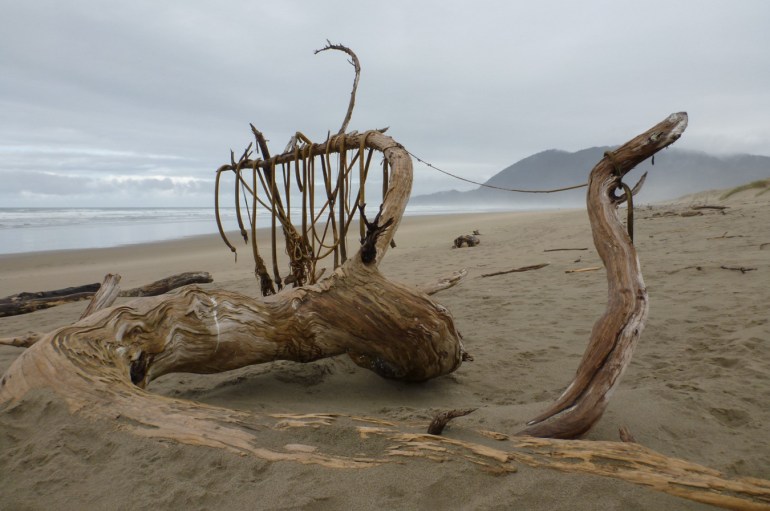
For a while, it was a bull kelp shrine.

It was part of a fort back in April, 2013.
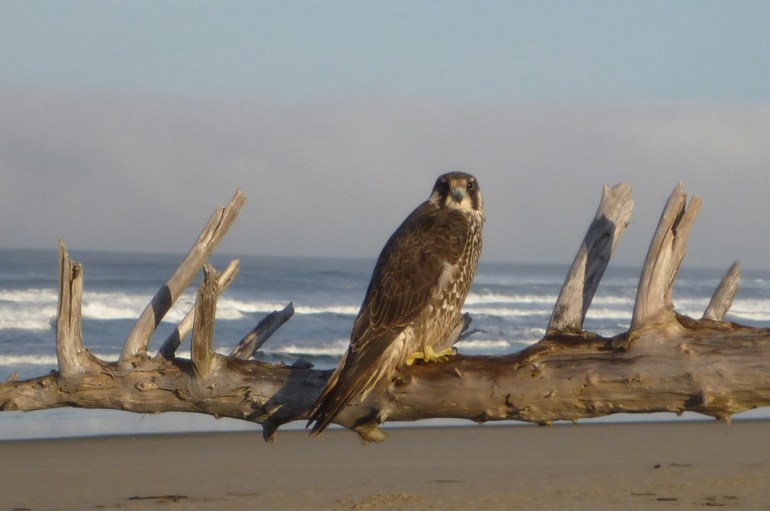
And it served as a perch for a young peregrine early this year.
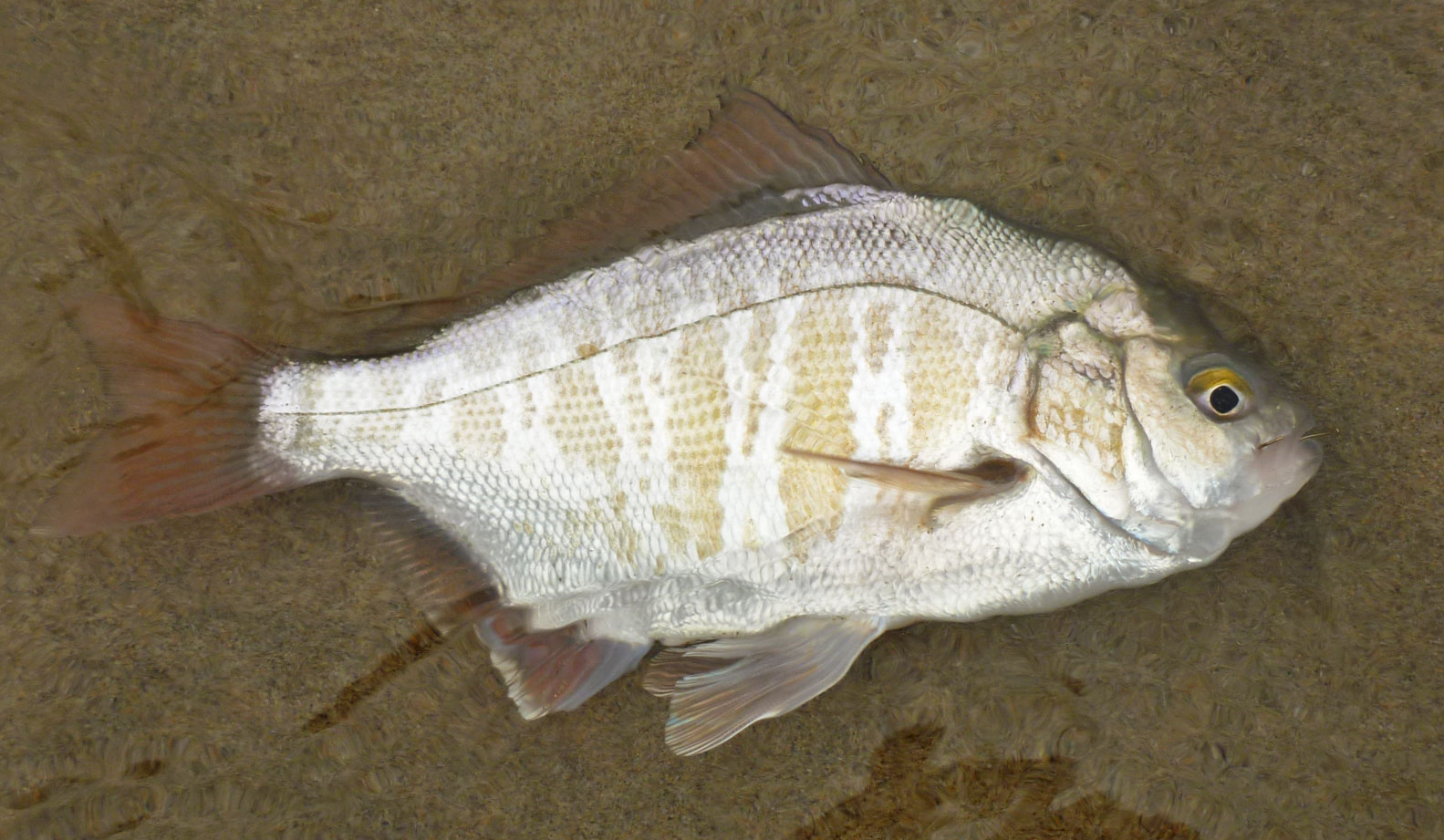
Once I hit the surf zone, I took this photograph of a small adult male redtail surfperch, Amphistichus rhodoterus. When I’m photographing a fish I’m balancing its prospects for a happy release against the time it takes to get the shot. Getting a shot I like always seems to takes longer than I hope, so you won’t see a lot of great fish shots on these pages. When photographing or viewing photos of surfperches and other surf-dwelling fishes, a quick index of how things are going, from the fish’s perspective, can be gotten from glancing at the fins and eyes. Look for erect fins and down-looking eyes, as in this fish.
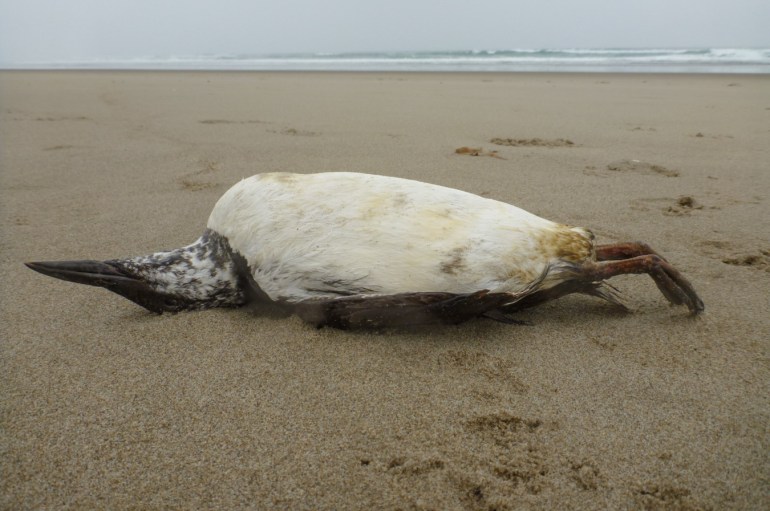
Seabirds wash up on the beach year-around but you can always find plenty in the wrack after the first fall storms.
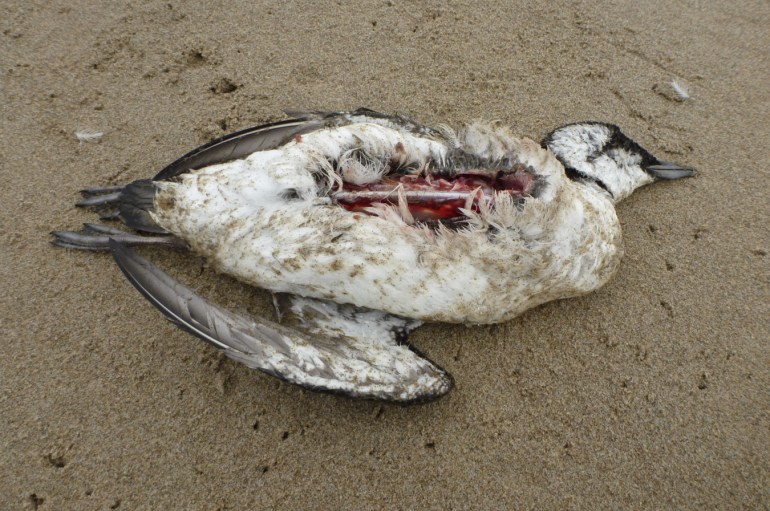
I’ve noticed that scavengers have a fondness for alcid breast meat. I thought this was a common murre when I took the photograph, but now I’m not so sure. If you have an idea about what it might be, please let me know.

I even took a selfie with an old friend. You can see a pretty nice photo of this enduring old giant in In the Mirror.

Same stump, over four years ago. Notice any differences? Sand burial is a force on outer coast beaches.
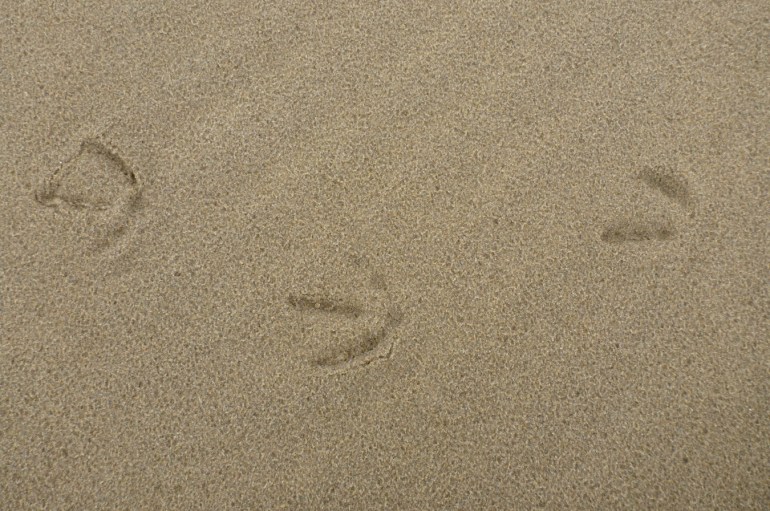
The last photo I took was of these gull tracks. I love finding traces in the sand. If you do too and want to see more, check out Tracks, Trails, and Shows.
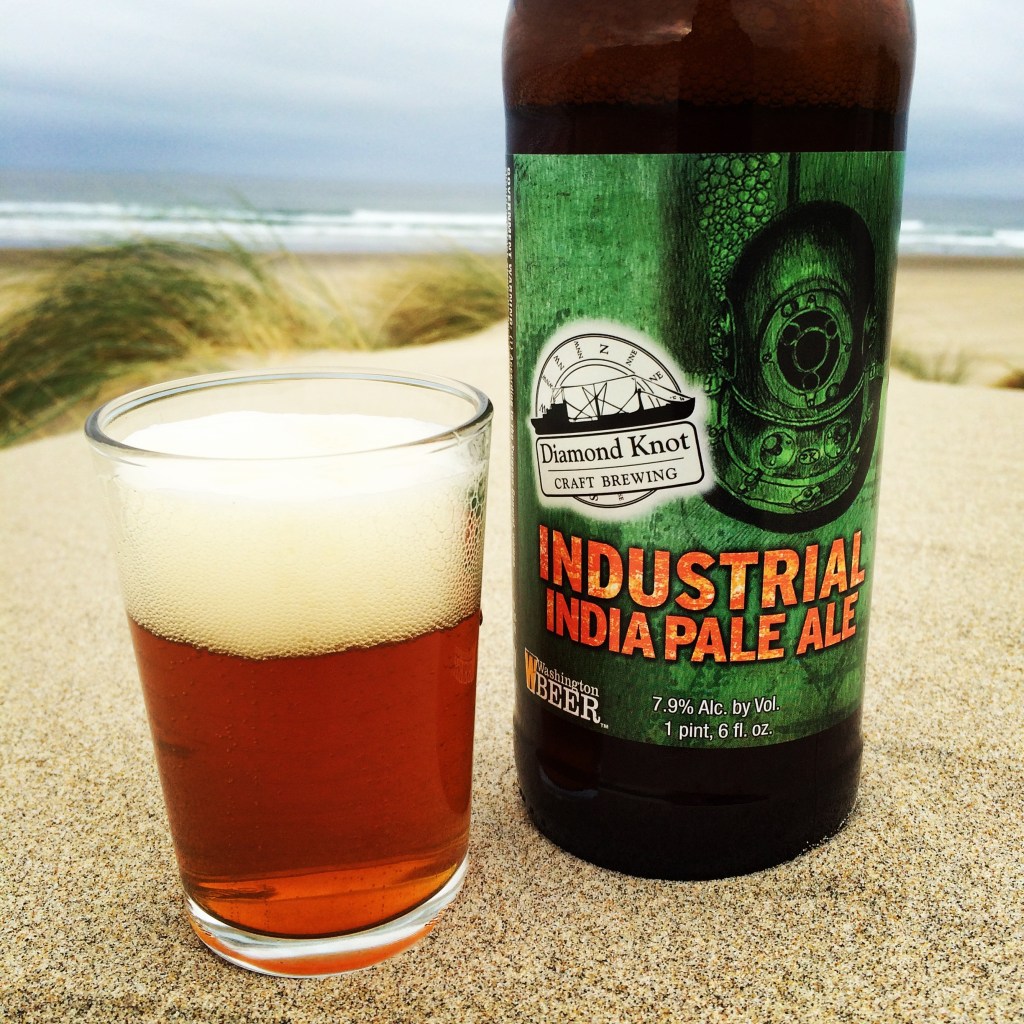
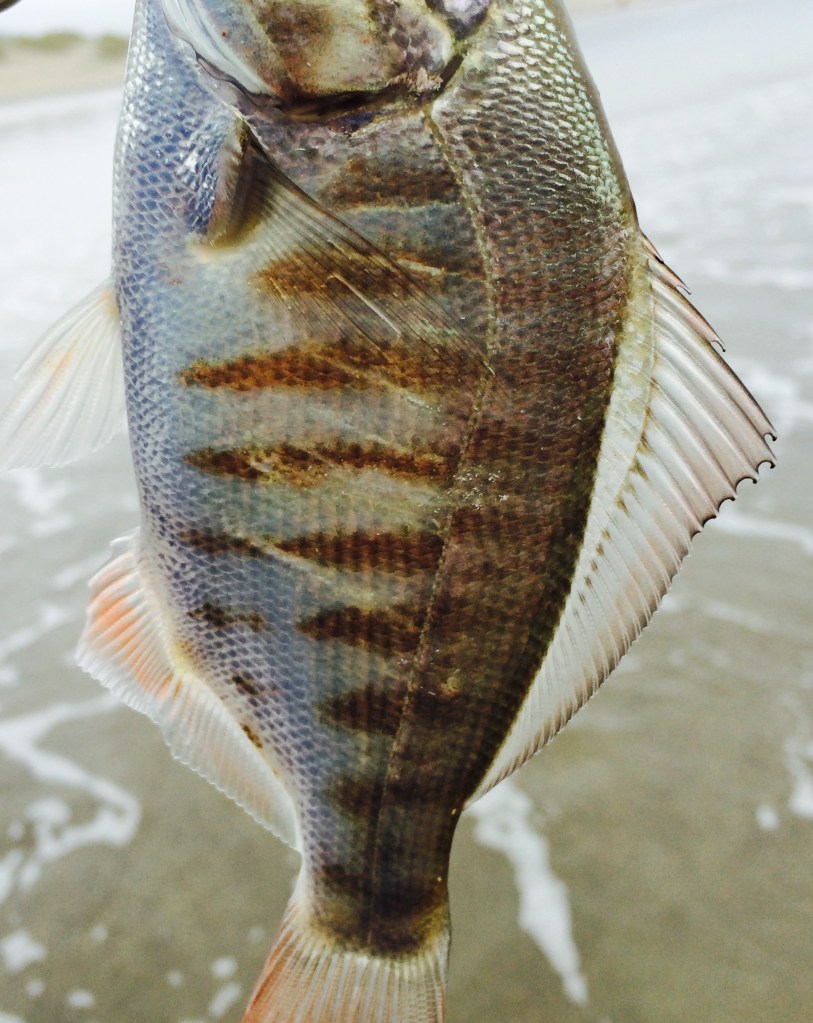
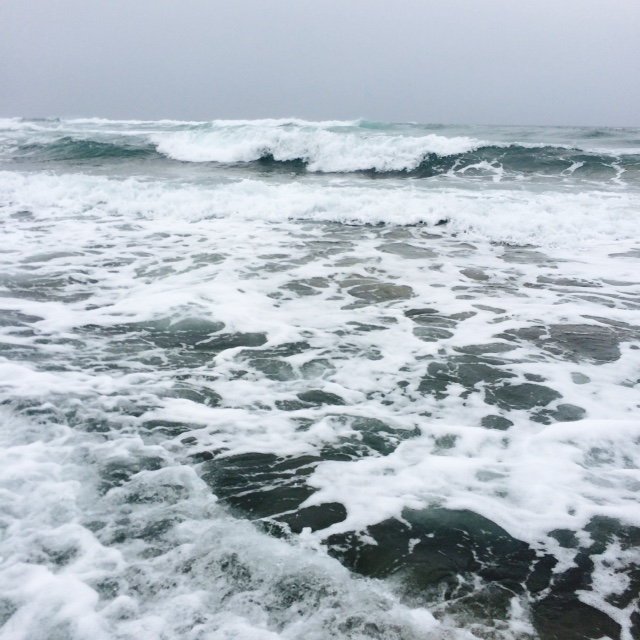
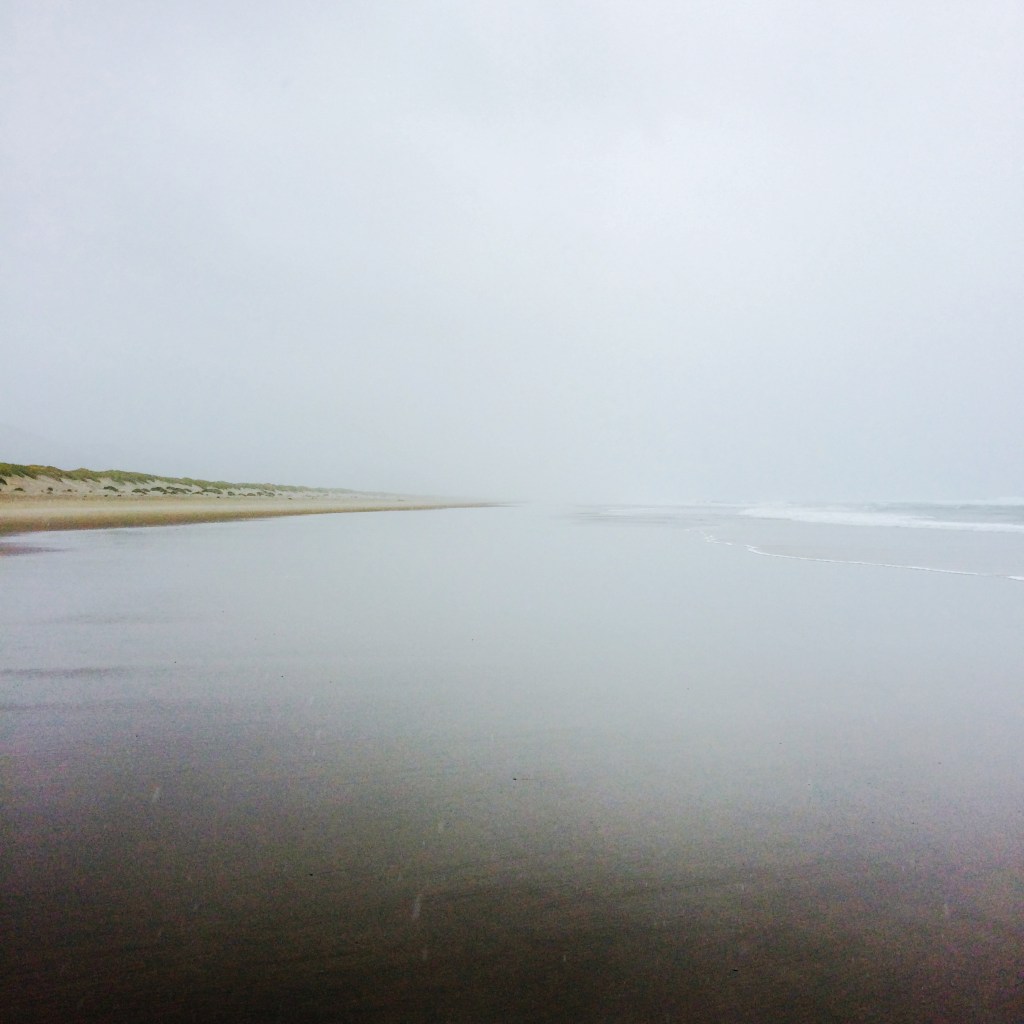
I took a few iPhone photos too; here they are.
Thanks for the walk on the beach.
 theoutershores
My first reaction to the second bird pictured is that it is a Common Murre, but there is too much white around the eyes. Perhaps a Guillemot or a Murrelet? Size and beak length would be a big indicator.
One other person responded and called common murre. So, I think your first reaction is probably correct. When I took the photo I was thinking murre and didn’t give it a second thought. I didn’t even think about including a ruer or something for scale. Great suggestion! It was only later, looking at the photo that I questioned the ID. I compared this bird with beached marbled murrelets and guillemots I’ve come across and they don’t match up. So, probably a common murre. Thanks a ton for helping me with this.