This page is a chronological curation of sea wrack, seashells, and other drifted material, along with tentative identifications, intimations of beach processes and cycles, and musings on mysteries of the Northern Oregon drift. Under each date, I present stand-alone photographs and galleries featuring beach scenes and closeups arranged in the order they were encountered (I take occasional liberties, not always noted, to aid the presentation). Thus, each entry is kind of like an annotated walk along the shore; some entries will evoke that more than others, but providing a beach-walk feeling is my aspiration.
January 12, 2026
Poise
Grace and quiet confidence on display.
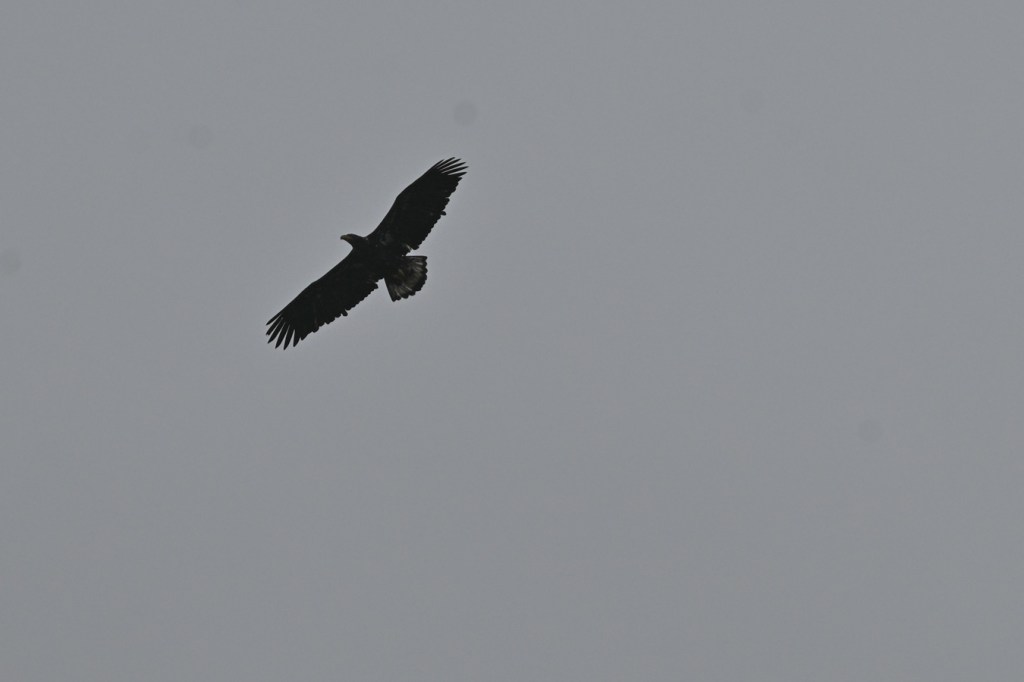
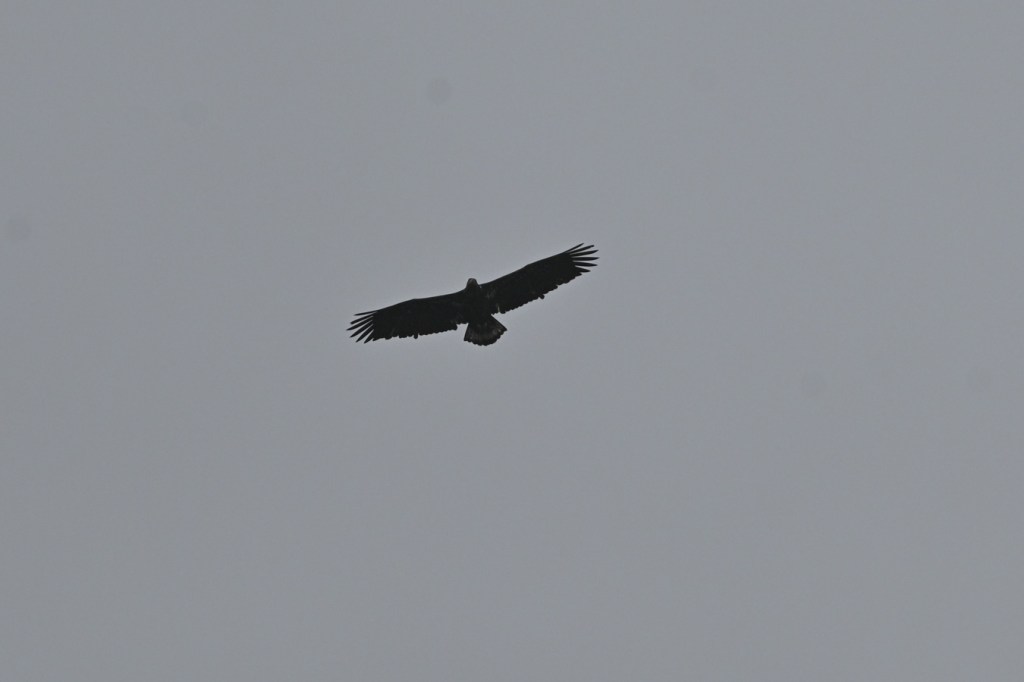
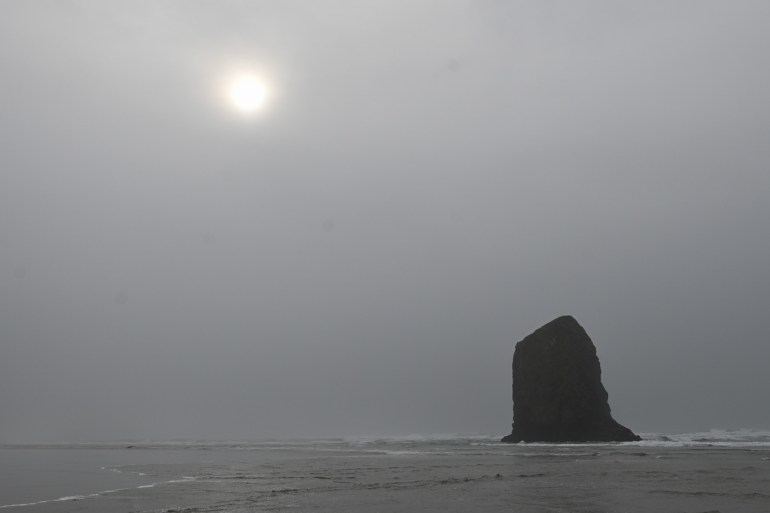
Silhouette
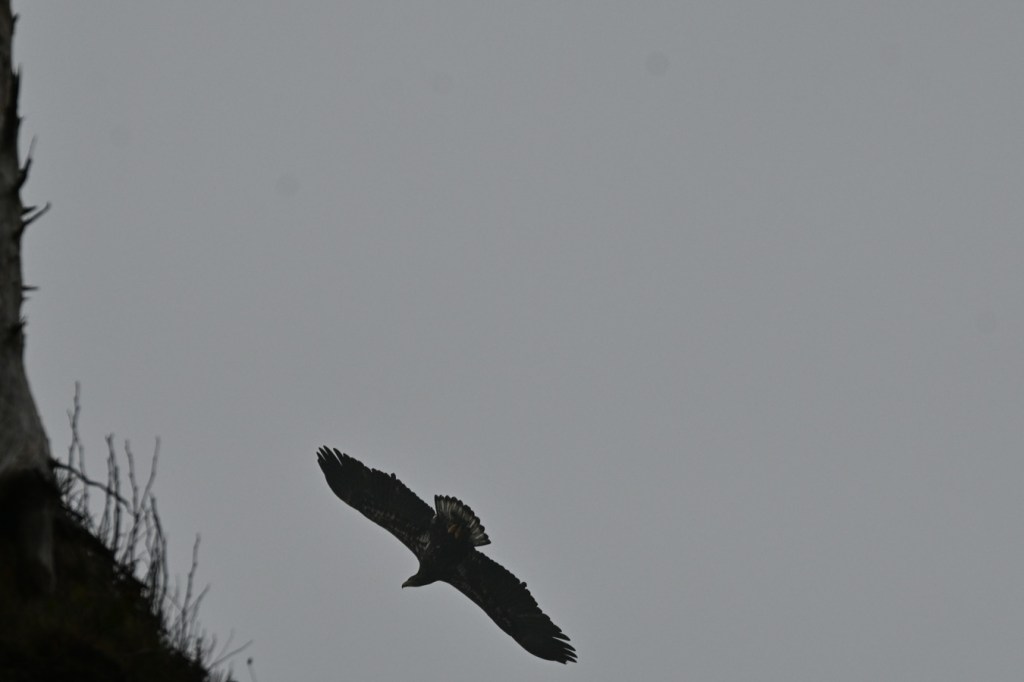
Looking up into an overcast sky you can’t expect to see much color or pattern. Instead, this soaring youngster demonstrates the silhouette.
A Personal Favorite
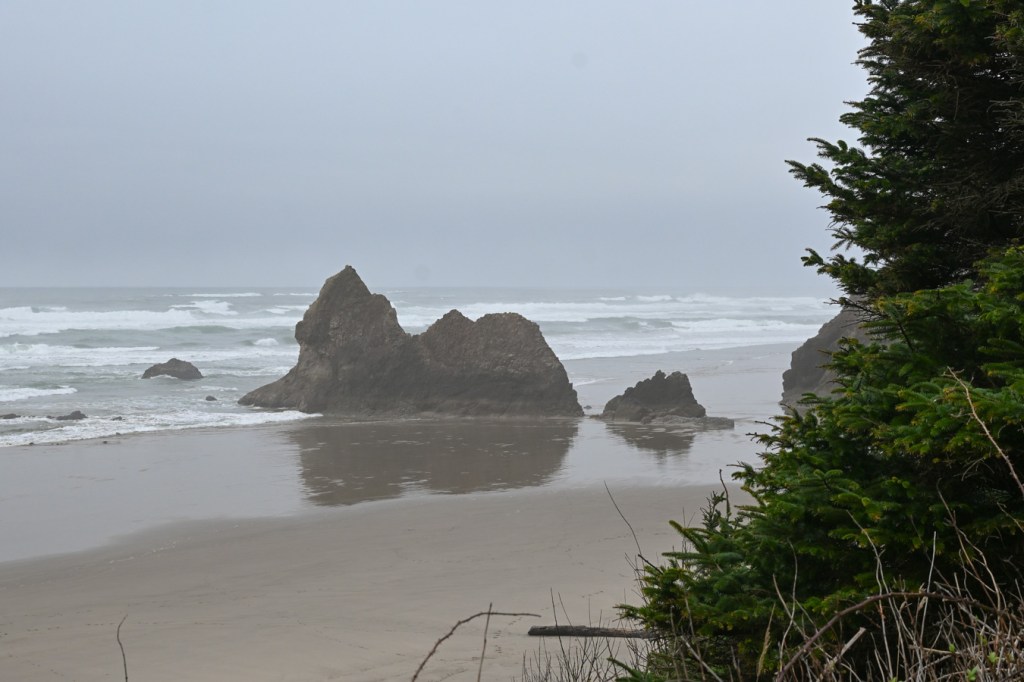
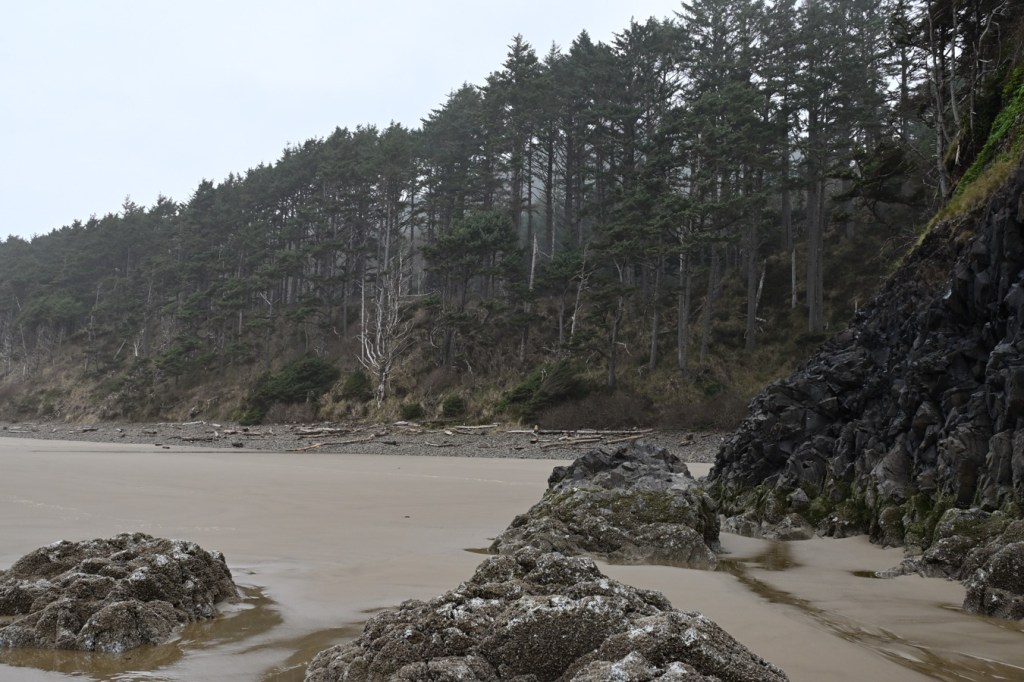
There is a brooding reach where the spruce forest slinks down against a narrow band of driftwood-speckled cobbles—for mood alone, I’ll walk that margin any day.
Tip Top of the Tide
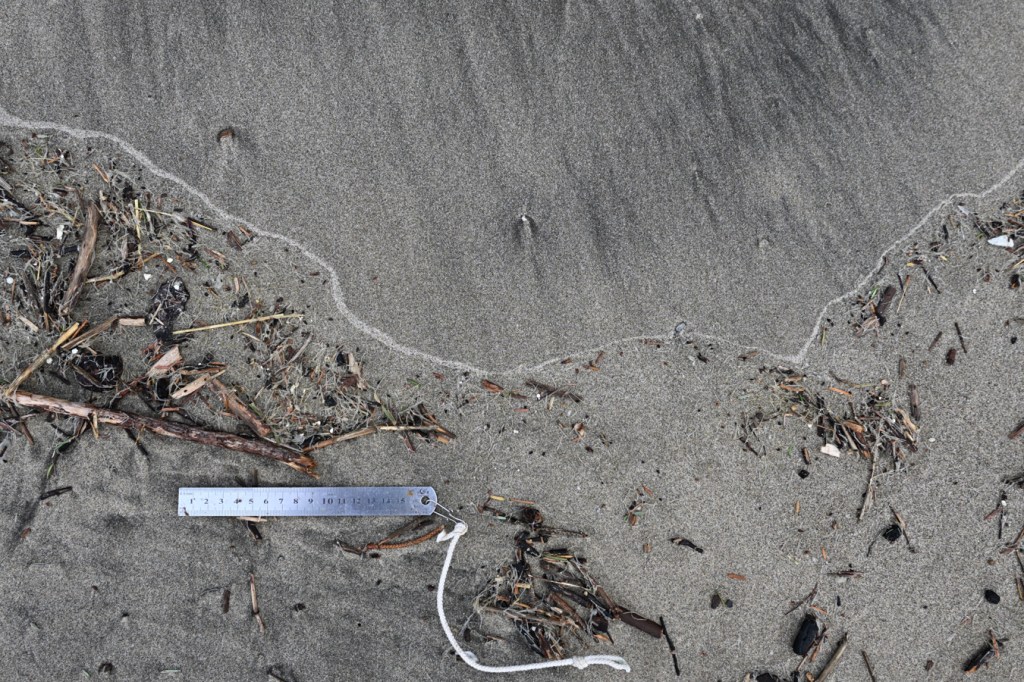
The boundary between bare sand above the reach of tide (upper portion of the frame) and debris left behind by the previous night’s tide (lower portion) is clearly visible. Whenever the boundary is distinct I can’t resist walking its meandering signature.
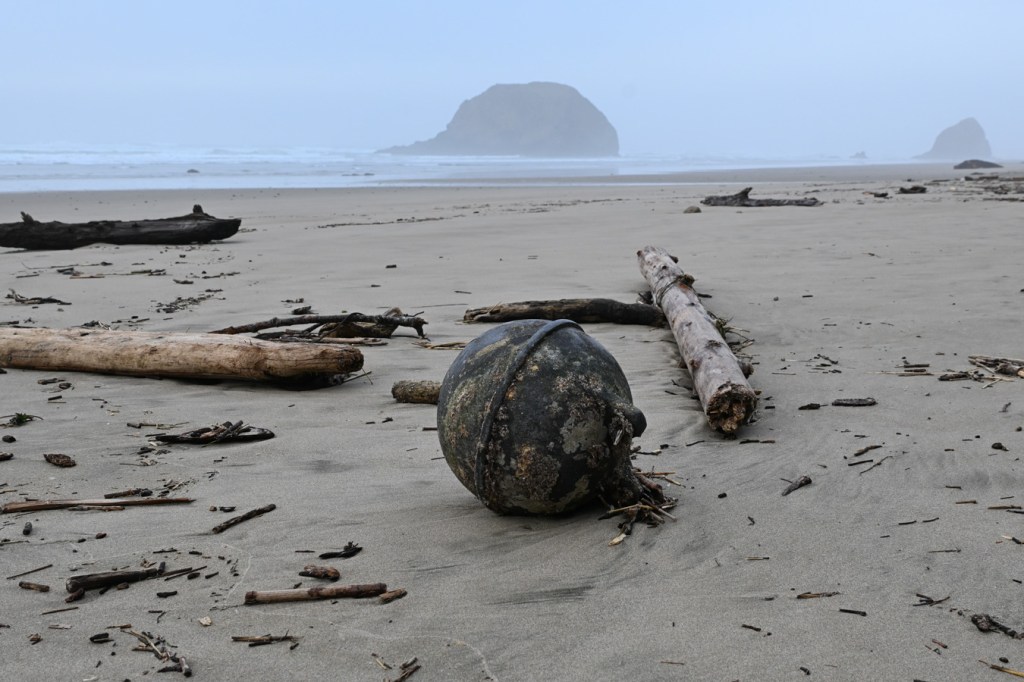
Some bigger material was left behind or moved around by the surge associated with the highest tides of the past couple days. The two images immediately below feature a beached float (upper panel) and a closeup of hitchhiking pelagic barnacles clustered on one of one of the float’s lugs (lower panel).
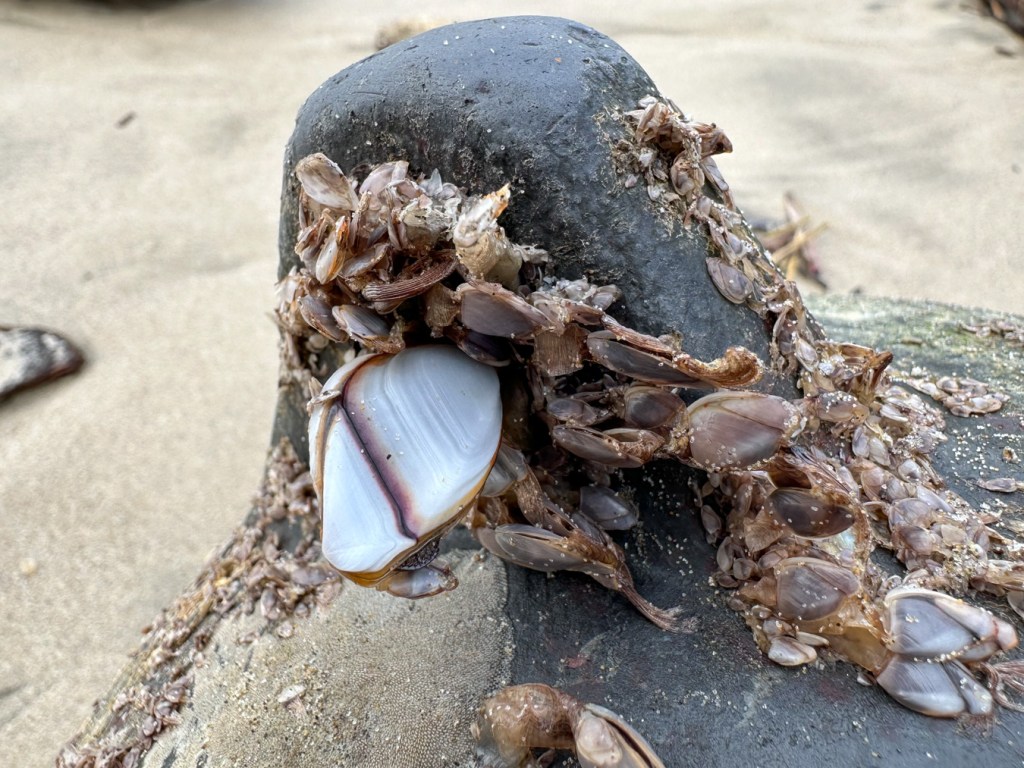
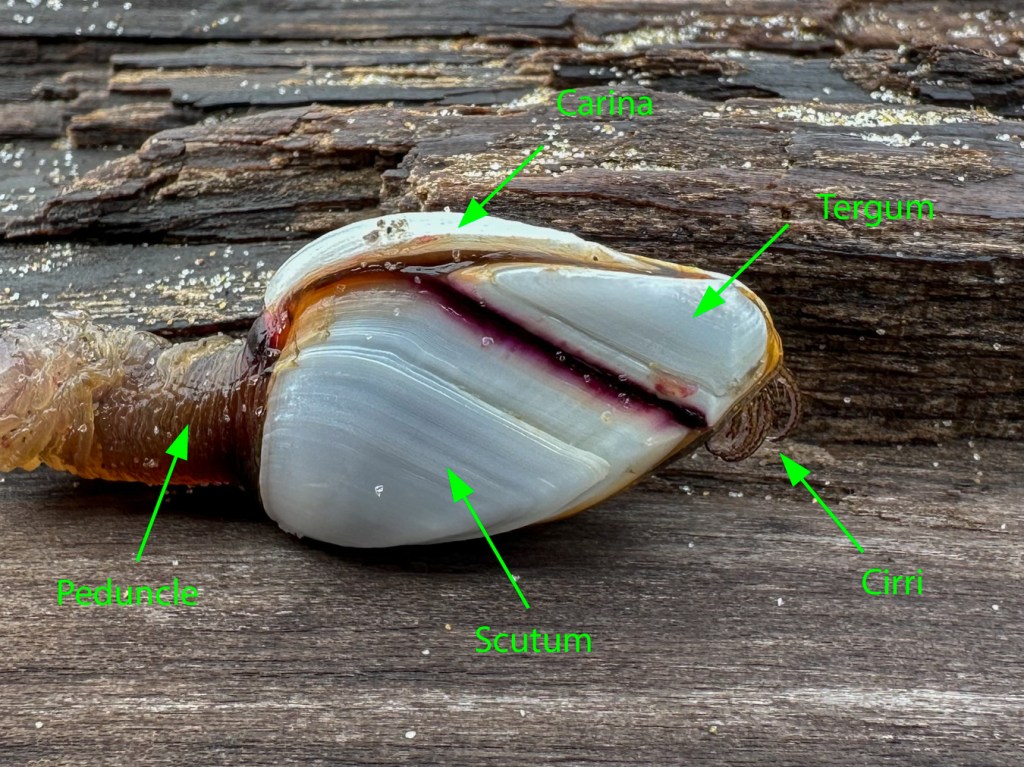
It was as good a time as any, with the barnacles’ fates already sealed, to take a close look at their general layout and anatomy. Below is a closeup of a barnacle I plucked from the float and posed to show its peduncle, left-side plates, carina, and cirri. Orientation-wise, the barnacle’s head (hidden by the plates) is located on the left, against the peduncle at about the plane of the scutum’s base. Poking out on the other end, just below the tip of the tergum are the cirri, the barnacle’s feeding appendages. Finally, the carina lies along the midline on the same plane as the barnacle’s dorsal surface. (With luck, this will become more apparent with the plates removed in the next panel.)
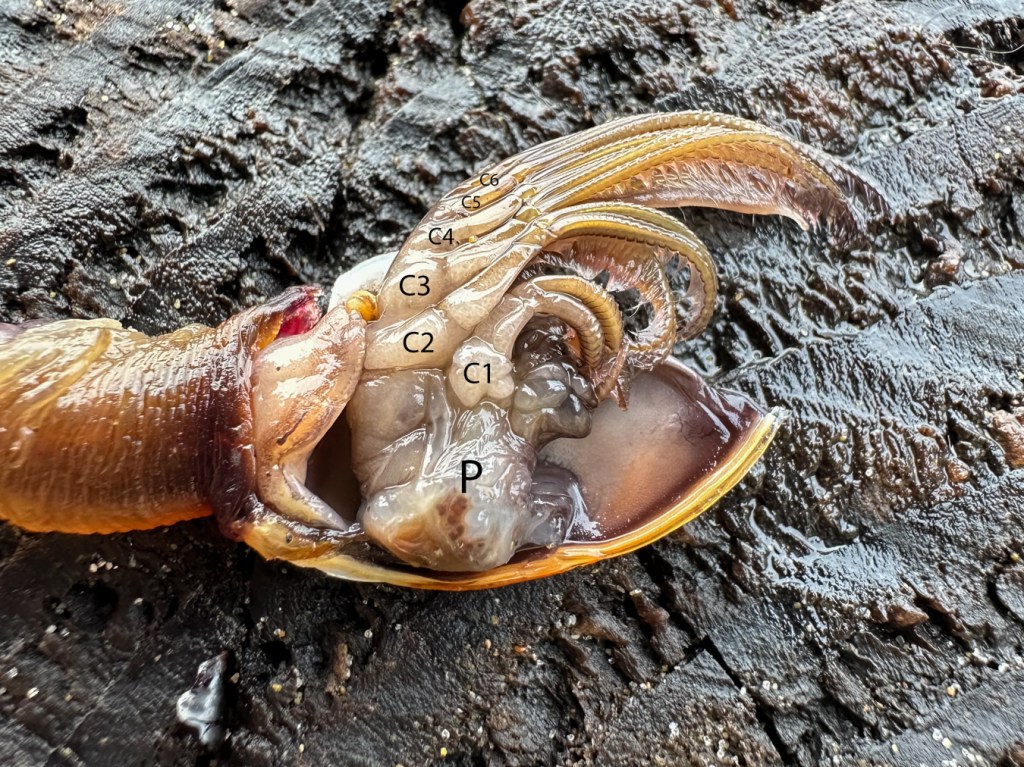
Indulging my curiosity further, I wanted to remove the plates to reveal the goings on inside.
Below, with the same barnacle laid out in the same orientation as above, P indicates the prosoma, an umbrella name for the head and first thoracic segment and includes the nervous system, mouth and digestive organs, excretory and cement glands, various body muscles, and certainly some other important stuff. (Note: This interpretation of the prosoma is personal and is not meant to be definitive.) When I removed the plates (which, incidentally, was a more difficult task that I had anticipated) it was largely to reveal the cirri. Our familiar barnacles have six pairs of cirri which I’ve labeled C1-C6, and the first pair of cirri (C1) is an important landmark. The mouth is hidden on the midline somewhere between the bases of the C1 cirri, and the C1 base is also the place of origin for the filamentary appendages (In Lepas anatifera we should expect two appendages arising from each C1 base). I don’t see anything resembling filamentary appendages here. Well, it’s my first try.
If you’ve come along this far, you might want to stay another minute to see the fabled penis (not labeled). It arises between the bases of the 6th pair of cirri, but here you can see it running out to the right just slightly below and along feathery C4. I’m pretty sure this slender, smooth, muscular-looking cylinder is the penis, but like I noted above, this isn’t a definitive interpretation.
Scenery’s the Antidote for Too Much Closeup Work
This alder log will be moving on with the next high tide, so I’m glad I got to see it laying out like this in front of the stack.
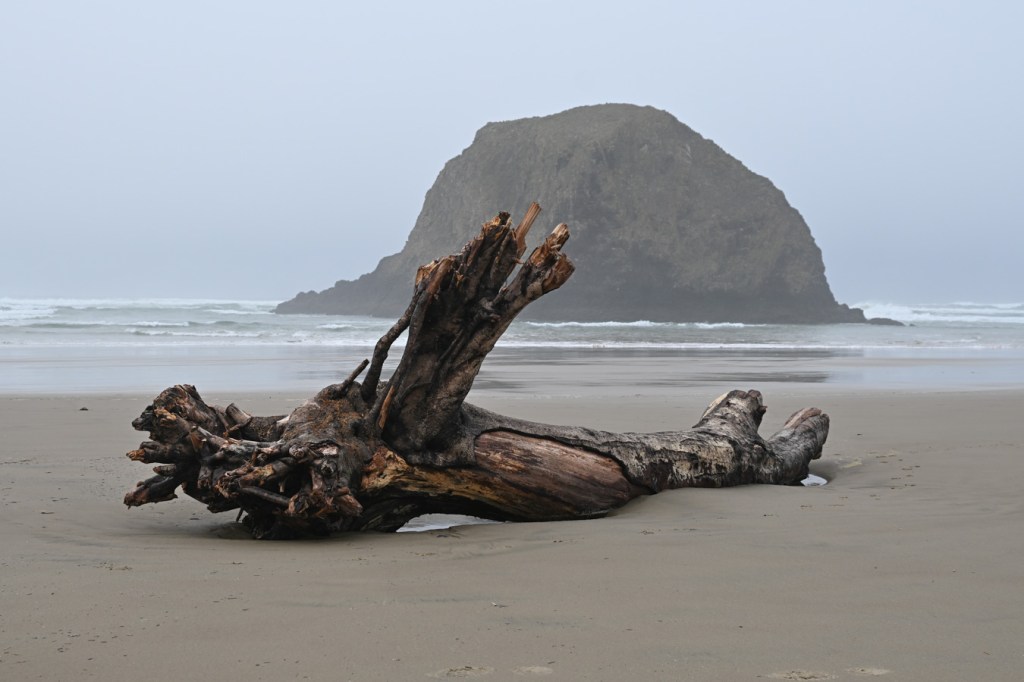
Here, the open space works.
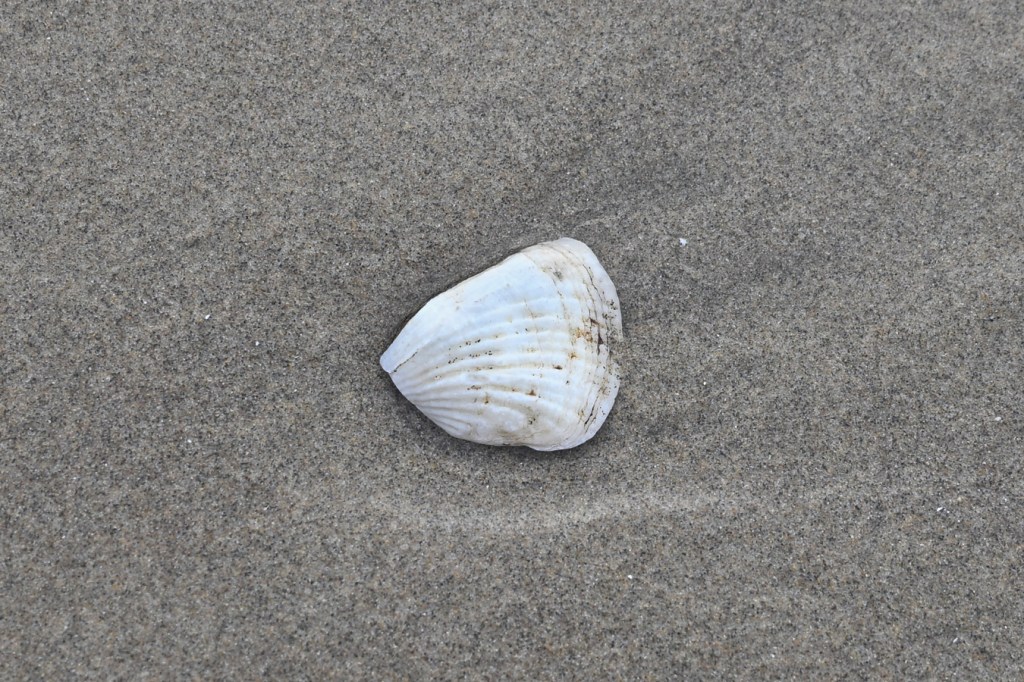
Puzzle Piece
Spotting eroded fragments and solving their mysteries—or sitting with the unsolved—are undersung pleasures of beachcombing.
Slug Outro
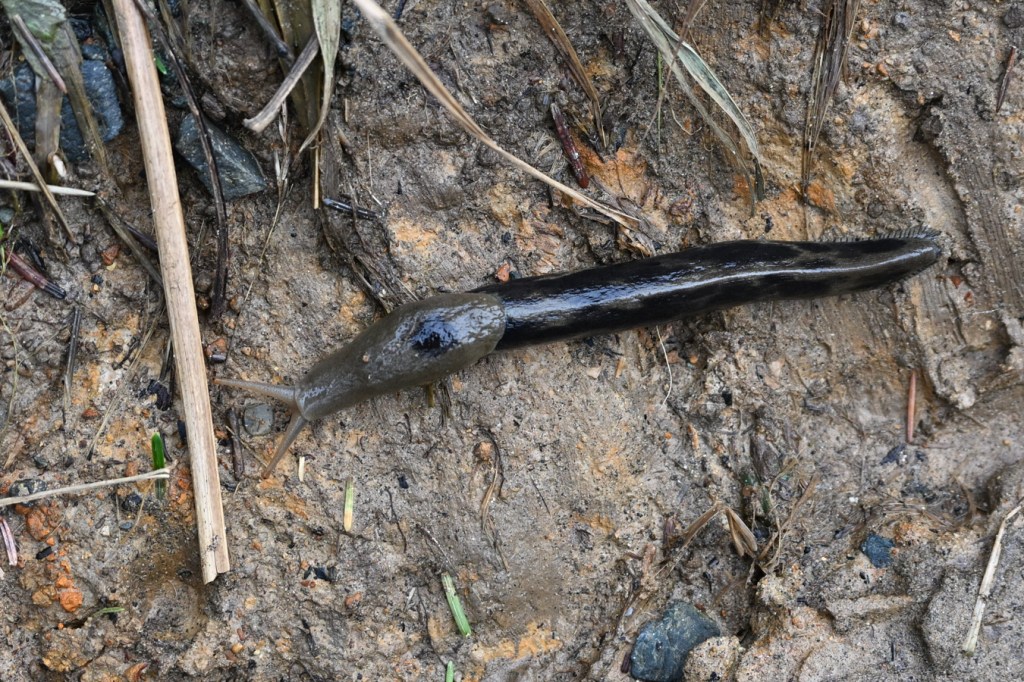
I met this beauty on the muddy trail off the beach.