
Ulva is pretty standard in fresh wrack on sandy beaches. But surf zone sands don’t provide places for attachment, so what you find on the beaches are broken clumps or fragments that have washed ashore from their homes in the rocky intertidal or more sheltered settings such as bays and estuaries. In the wrack line Ulva becomes food and shelter for beach hoppers and other detritus-lovers.

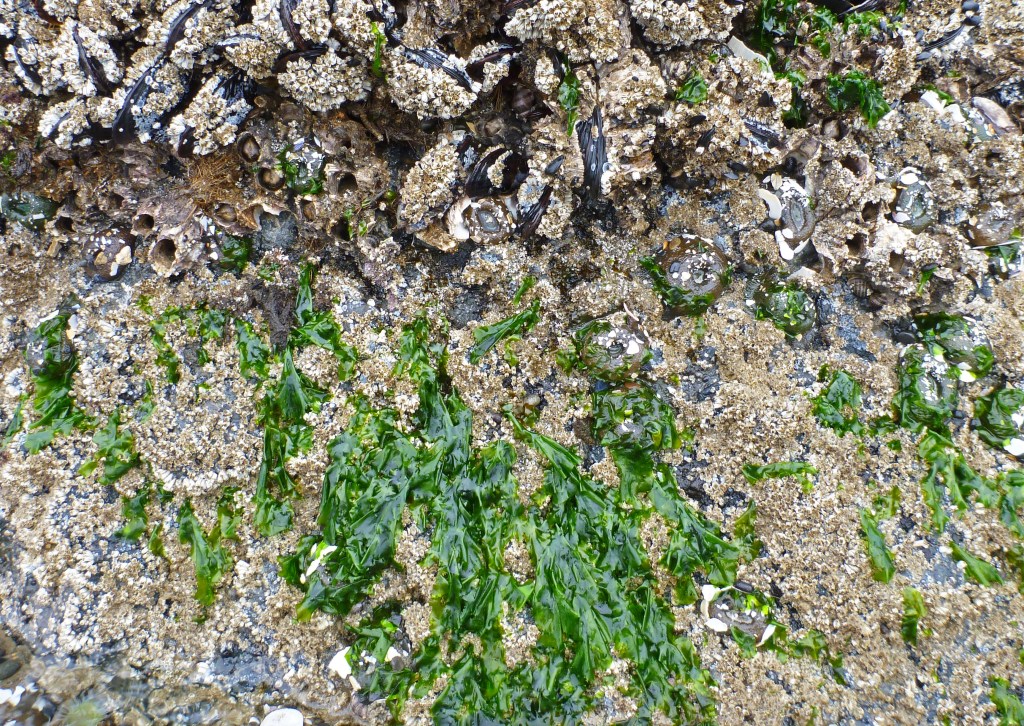
Ulva forms a lush carpet in sheltered rocky intertidal settings, often sharing real estate with Fucus (olive patches in the photo below).

Ulva cannot maintain such a lush carpet-like growth on the exposed outer coast. So instead, on very exposed surf-swept rocks with sand scouring, Ulva is restricted to patches on protected exposures.

There are several species of Ulva on Pacific Northwest shores but it’s easy to see why the broad-bladed forms featured below might be called sea lettuce.
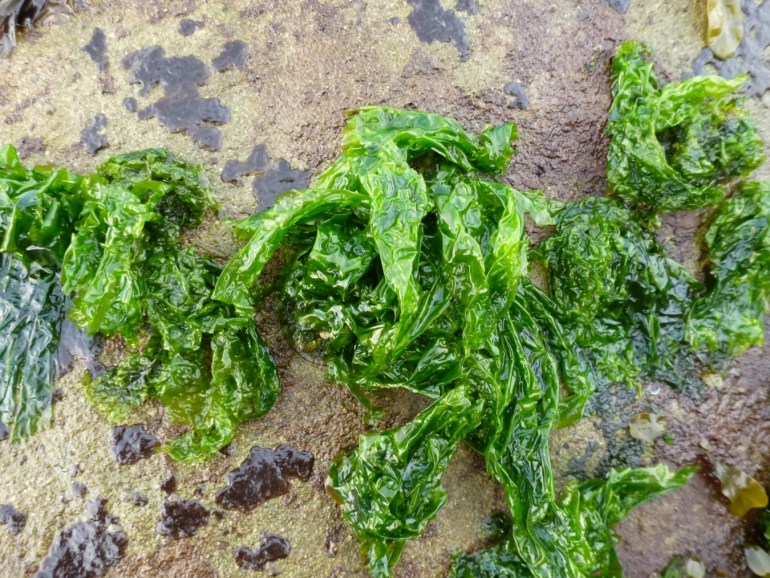


Head to my Green Seaweeds page for more images of sea lettuce and other kinds of Ulva
If you want to learn more, check out the accounts in Seaweeds and Seagrasses Between the Capes, Seaweeds of the Pacific Northwest, and Seaweeds of Alaska. Druehl and Clarkston’s Pacific Seaweeds: A Guide To Common Seaweeds of the Pacific Coast is excellent.
This post was updated on June 4, 2022.
 theoutershores