This page is a chronological curation of sea wrack, seashells, and other drifted material, along with tentative identifications, intimations of beach processes and cycles, and musings on mysteries of the Northern Oregon drift. Under each date, I present galleries with beach scenes and closeups arranged in the order they were encountered (Though I take occasional liberties (not always noted) to aid the presentation). Thus, each entry is kind of like a walk along the shore; some entries will feel more like that than others, but providing a beach walk feel is my aspiration.
July 24, 2025
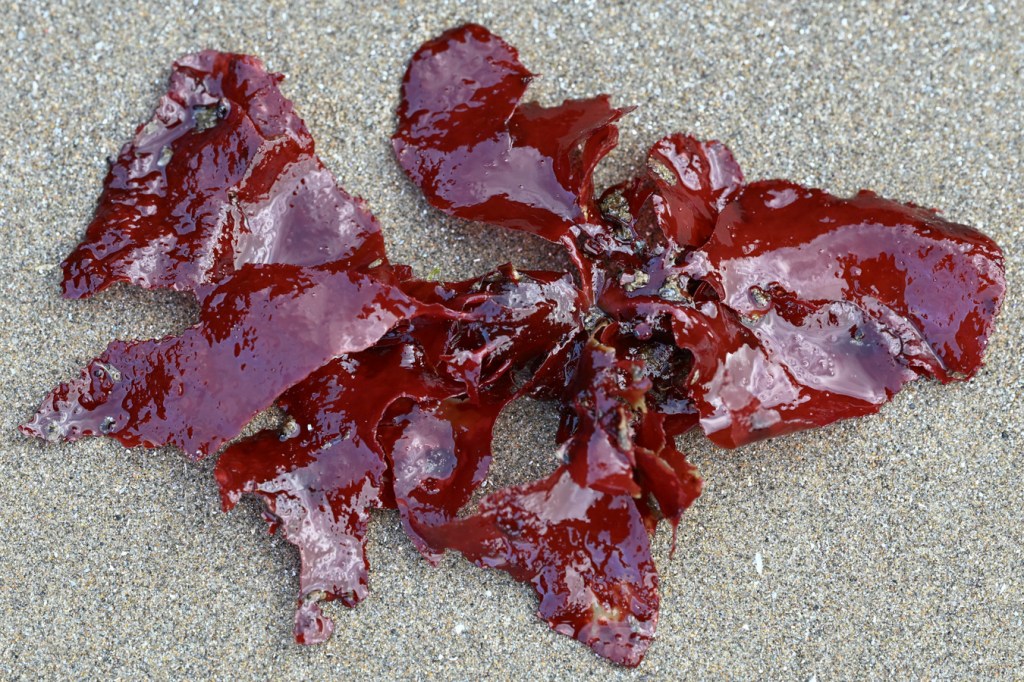
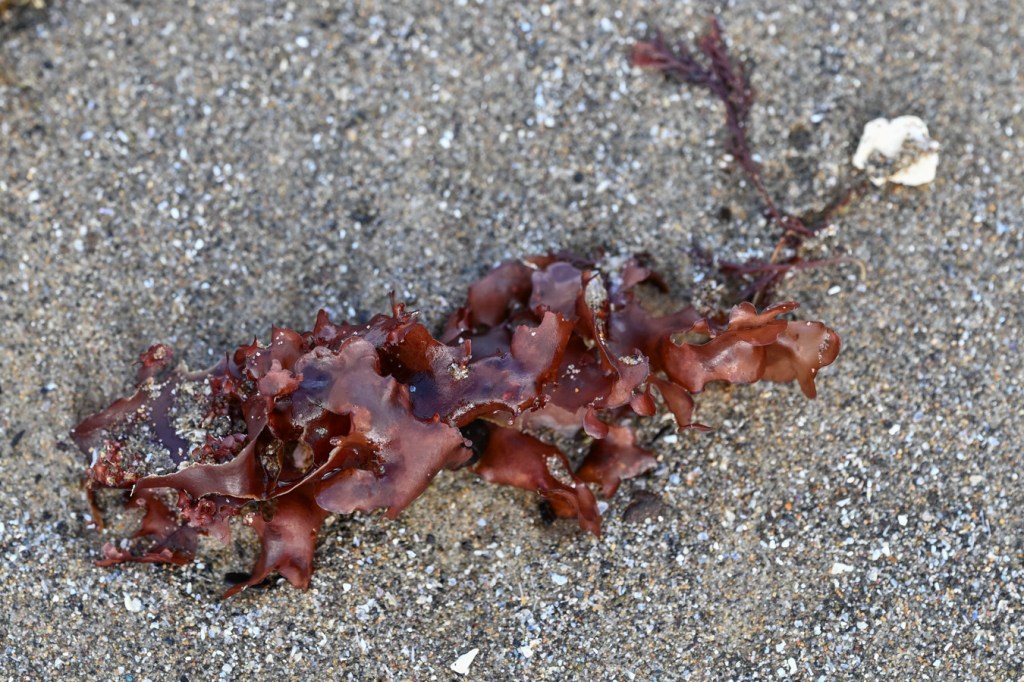
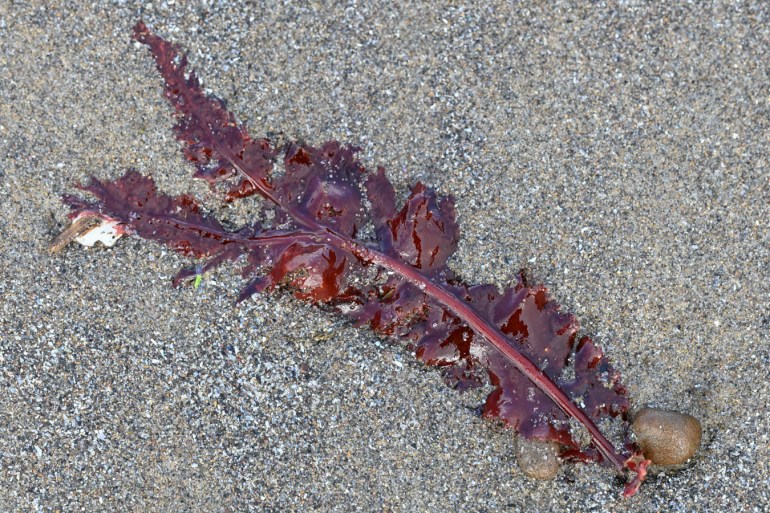
Inscrutable
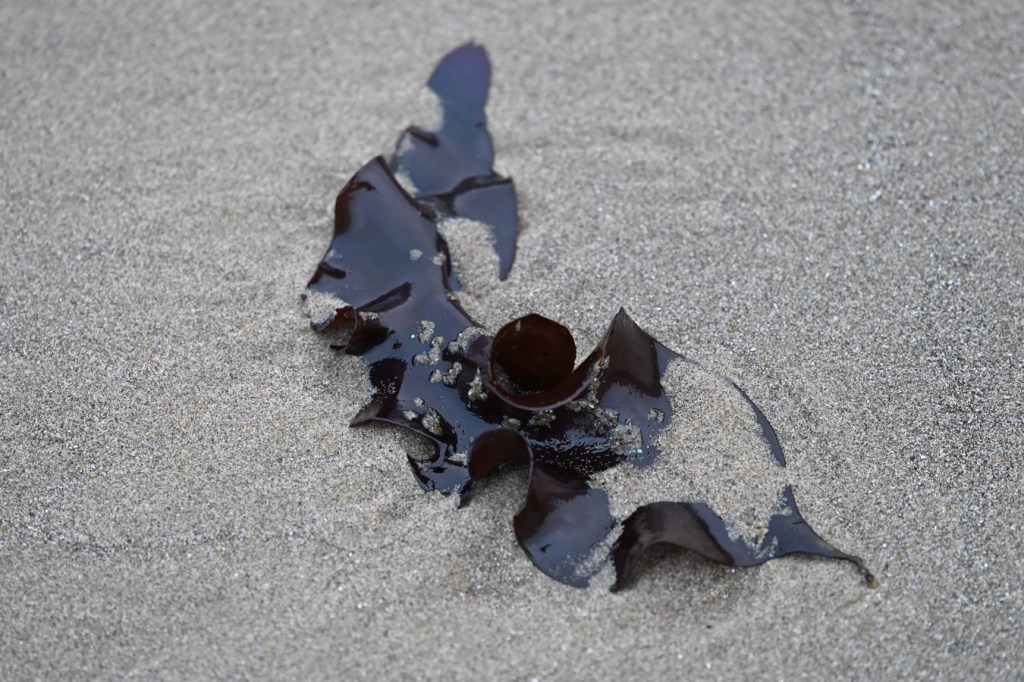
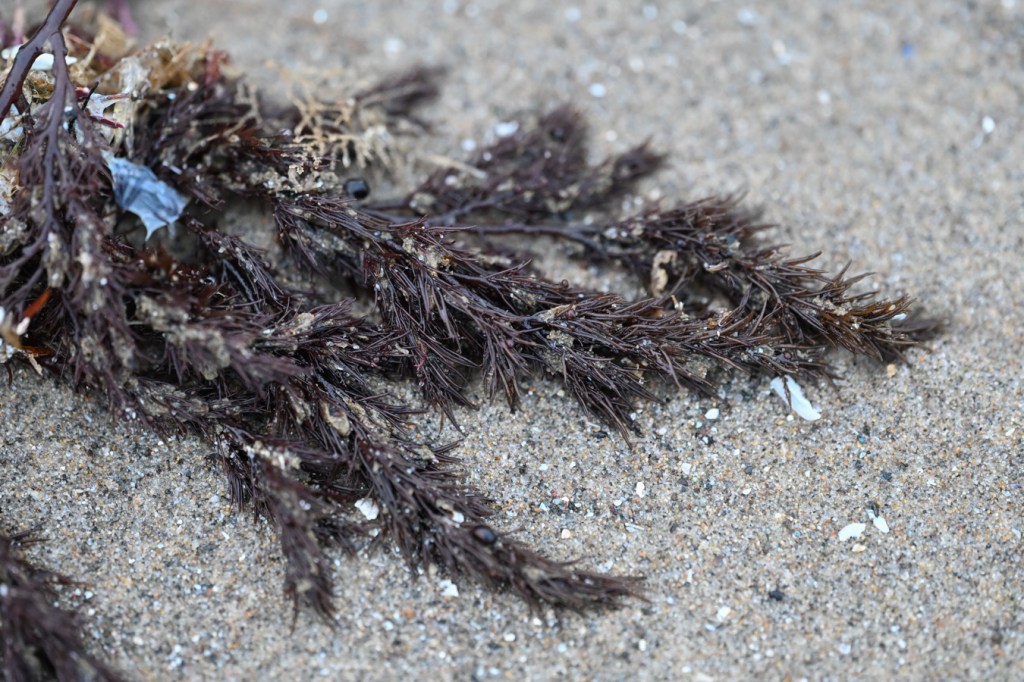
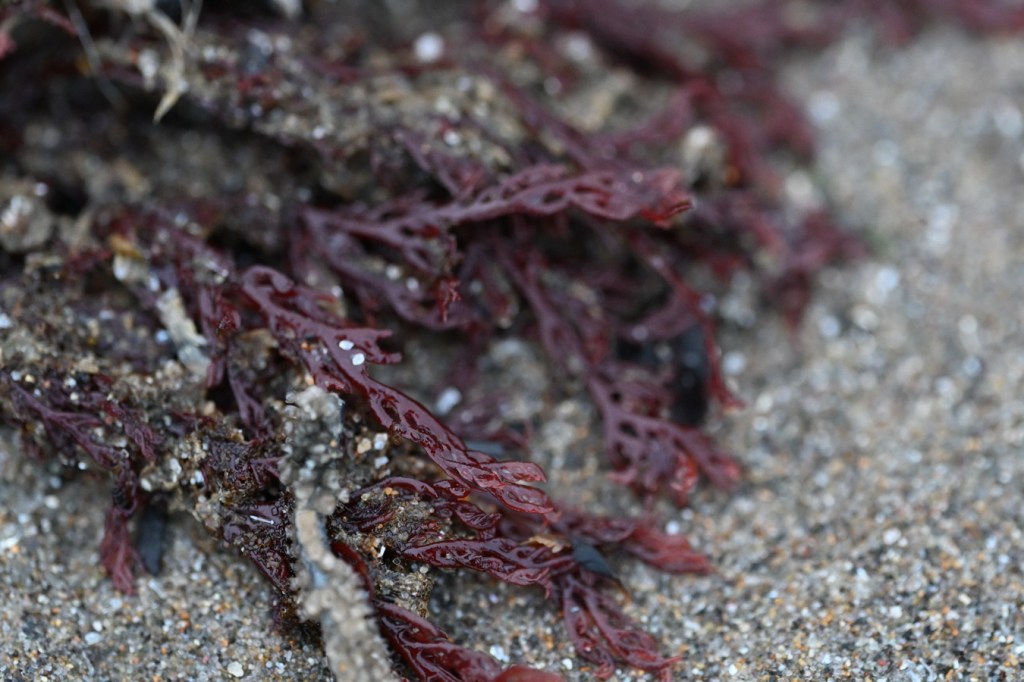
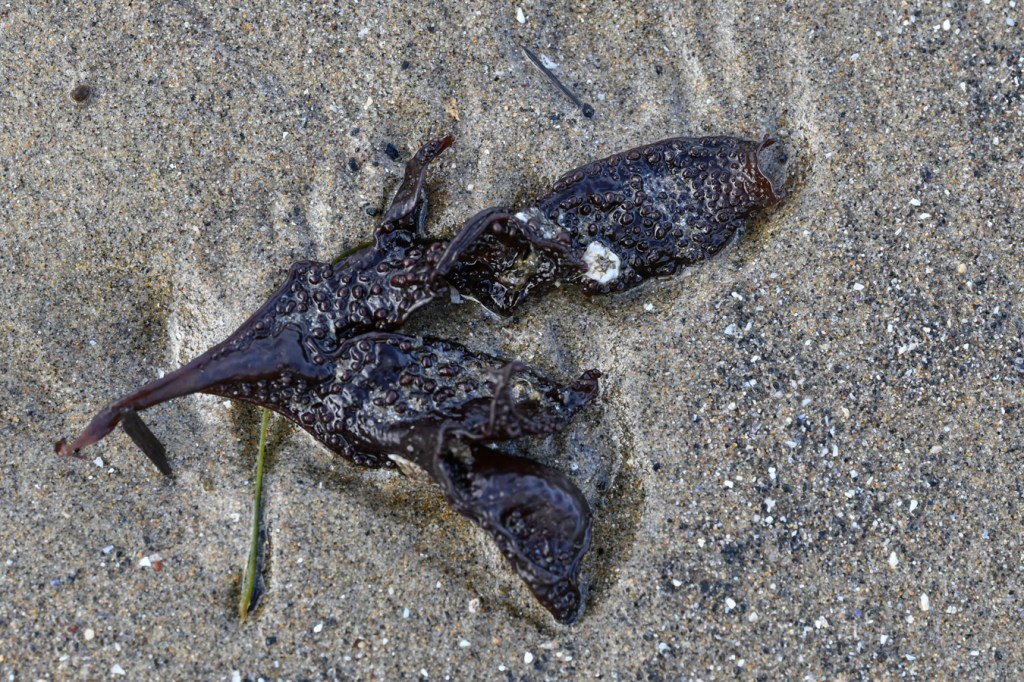
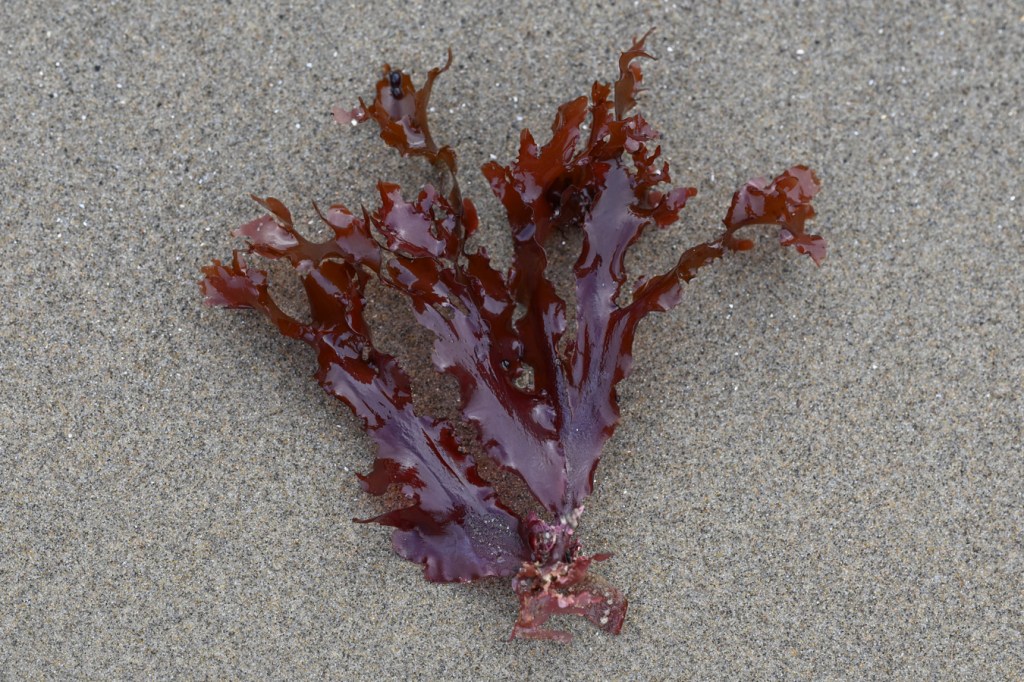
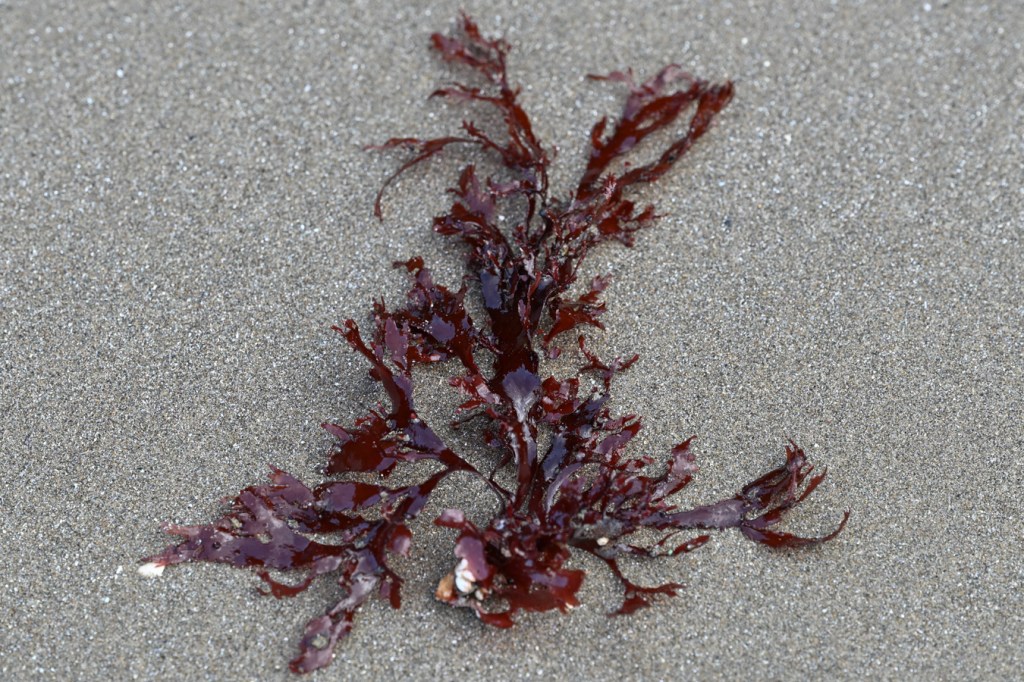
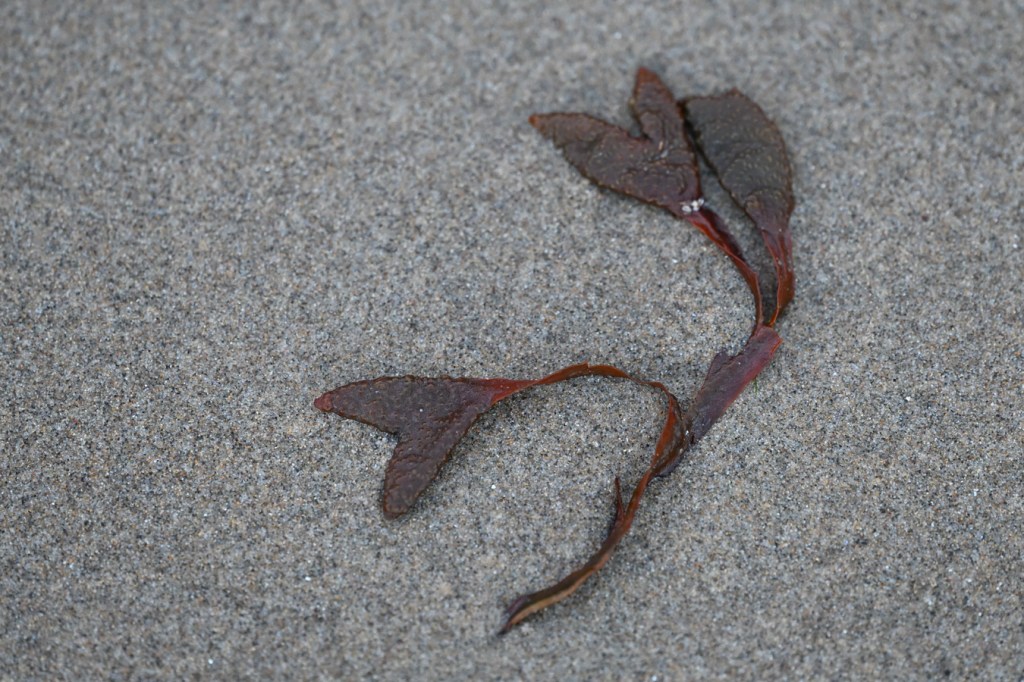
The number of red blades that might wash ashore is impressive. Distinguishing them can be a challenge.
Occasional Beachcomber
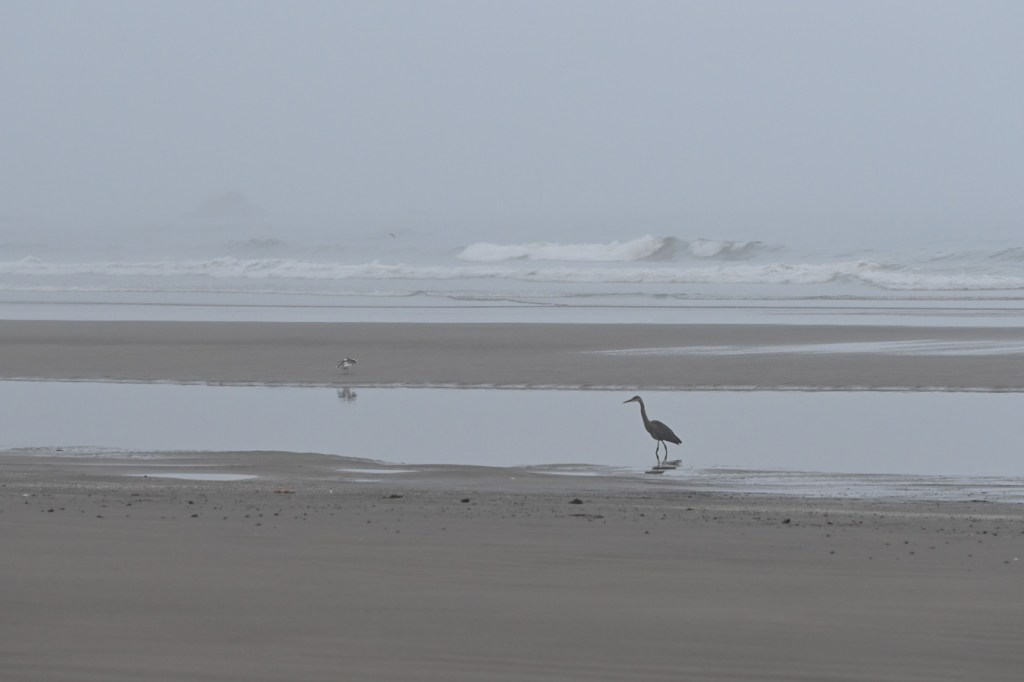
Great blue herons show up every once in a while for low tide.
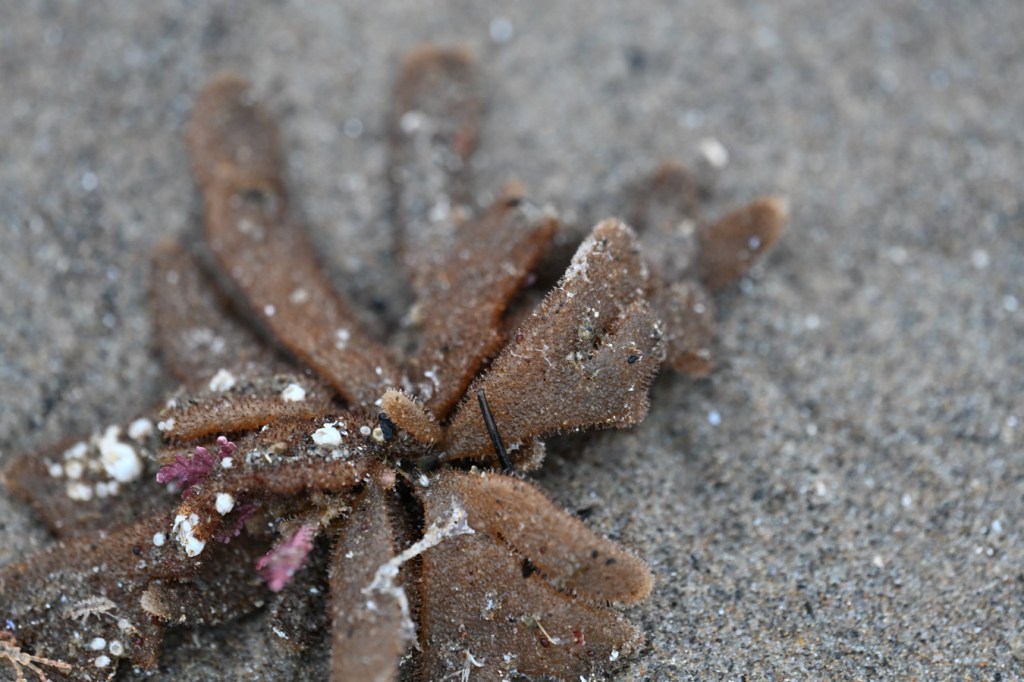
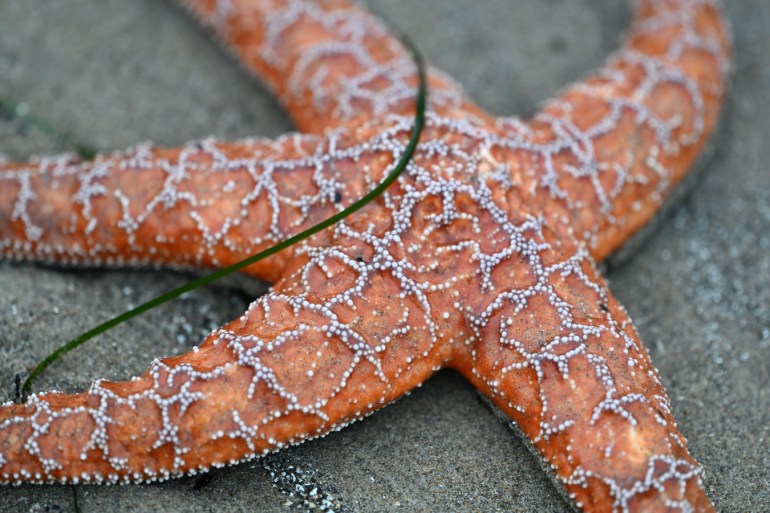
What’s washed up?
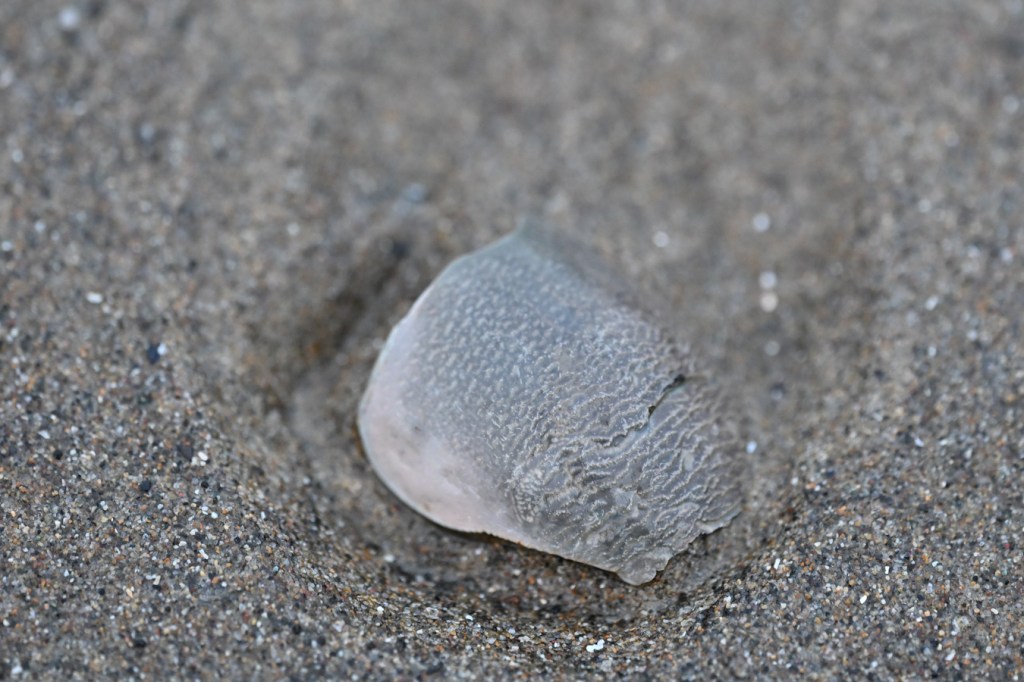
Sources
All that big wood shifts my mind and my gaze to the forest above.
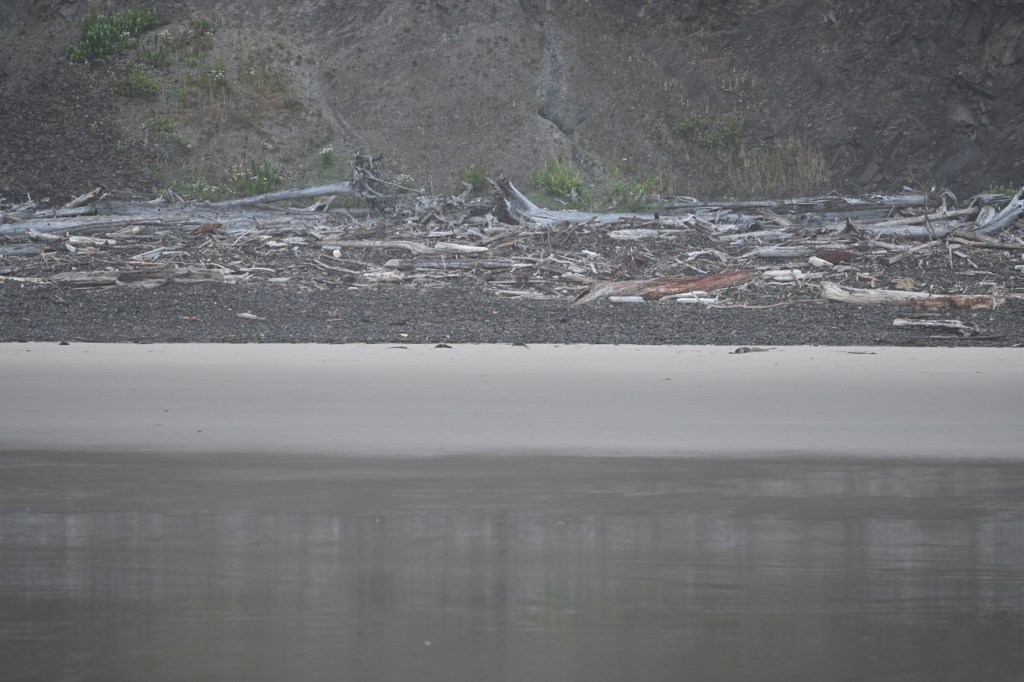
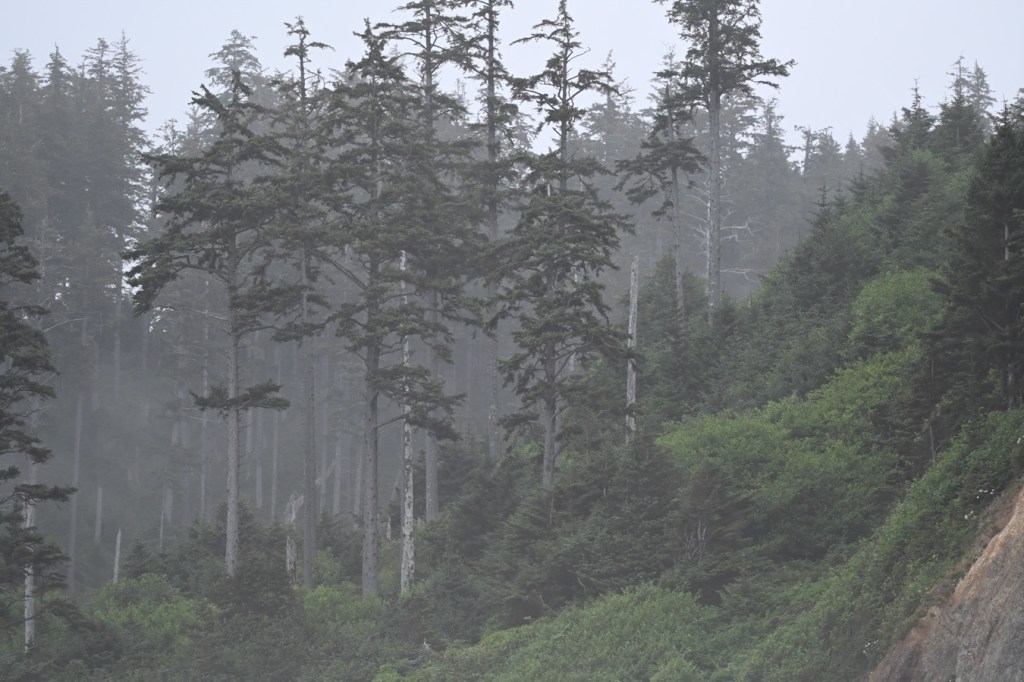
Also washed up
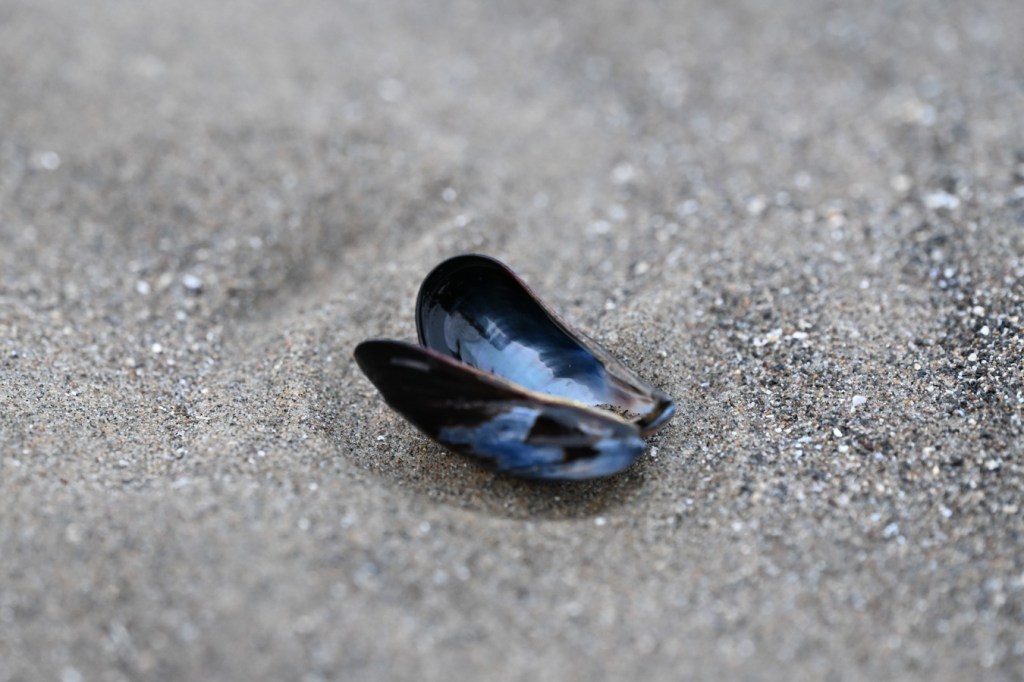
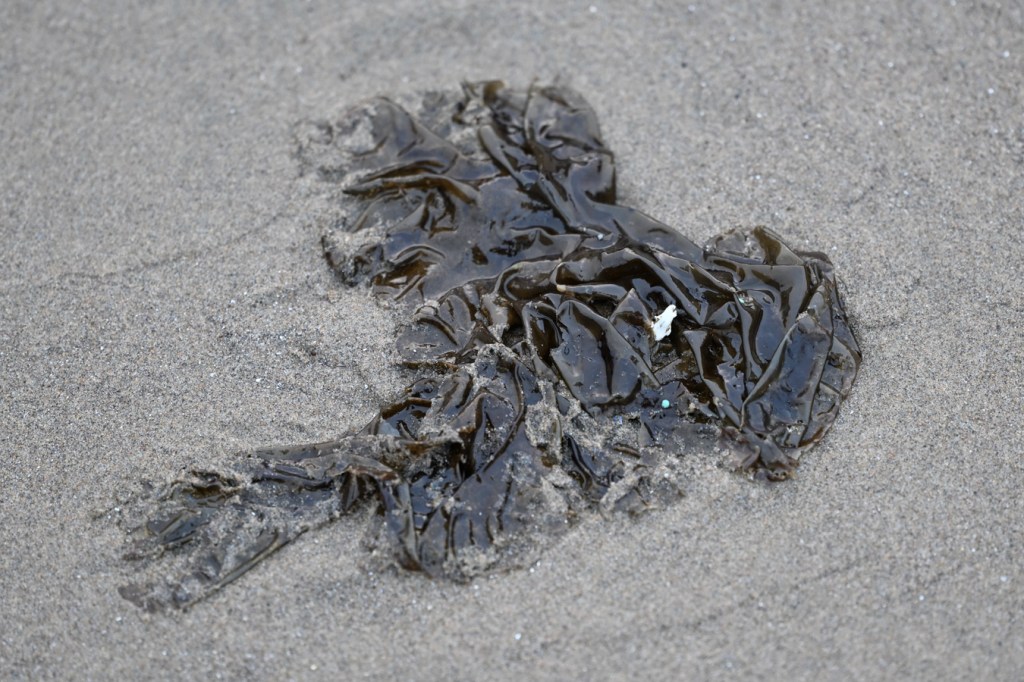
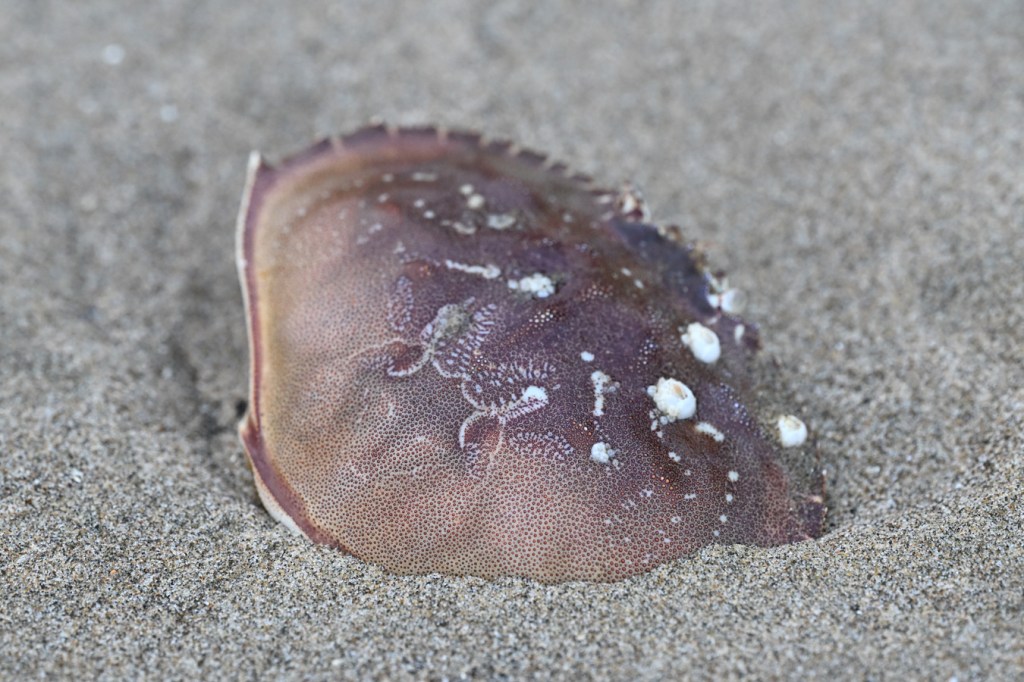
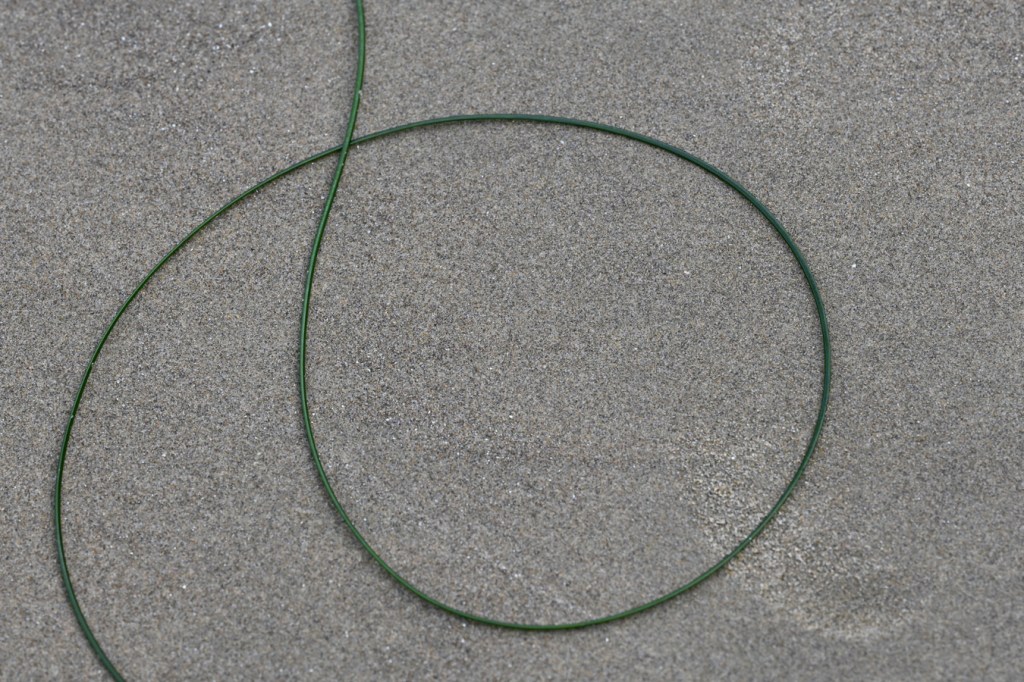
‘Tis the season
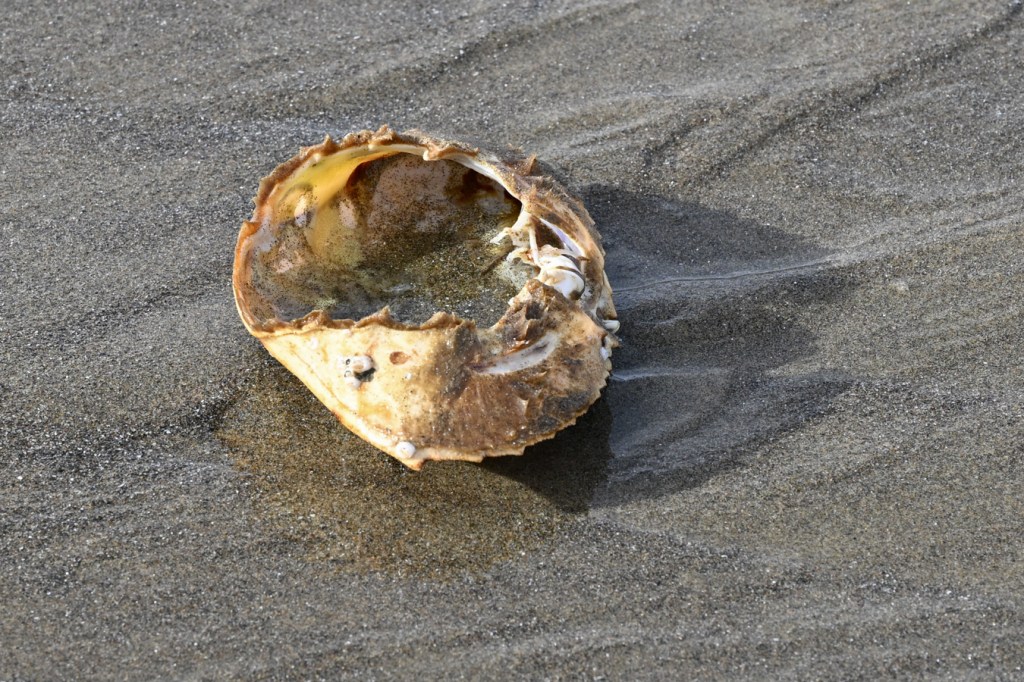
The molt is on.
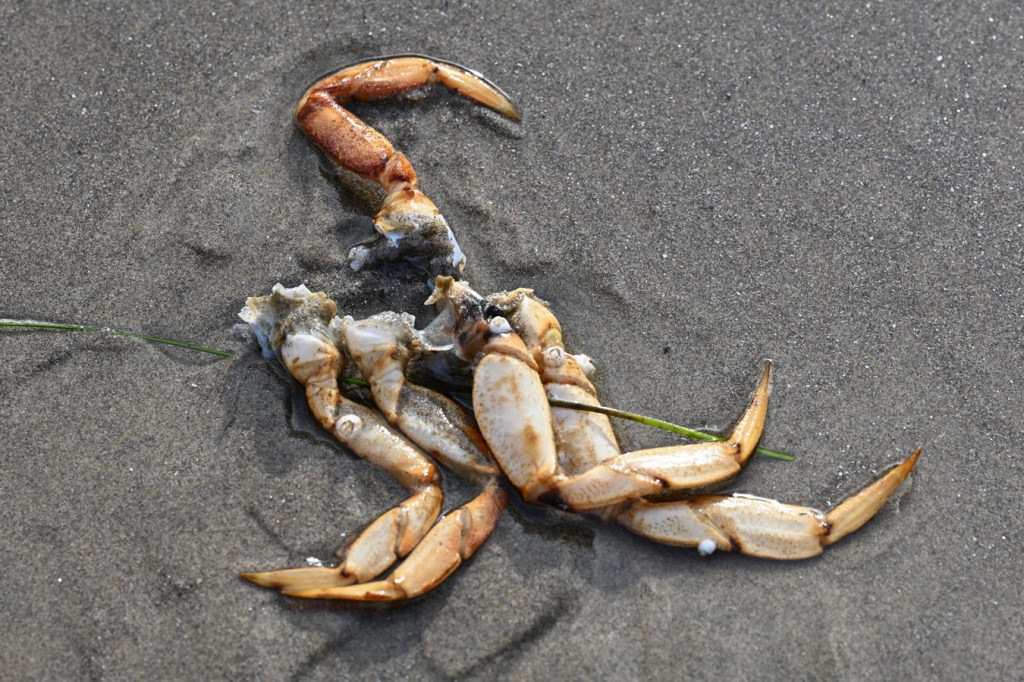
More drifted odds ‘n’ ends
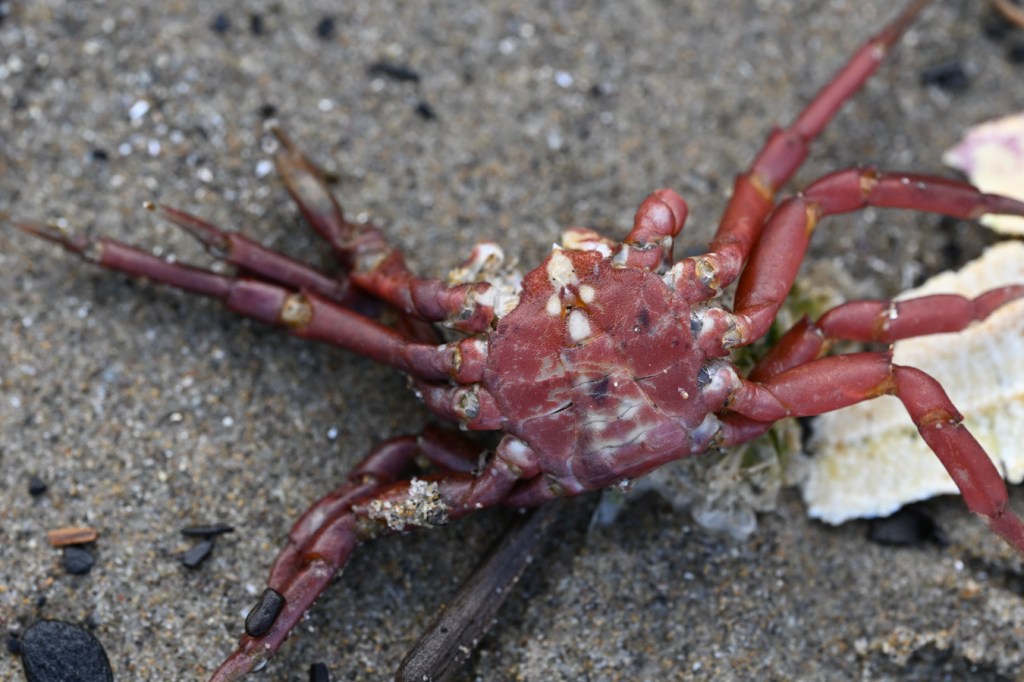
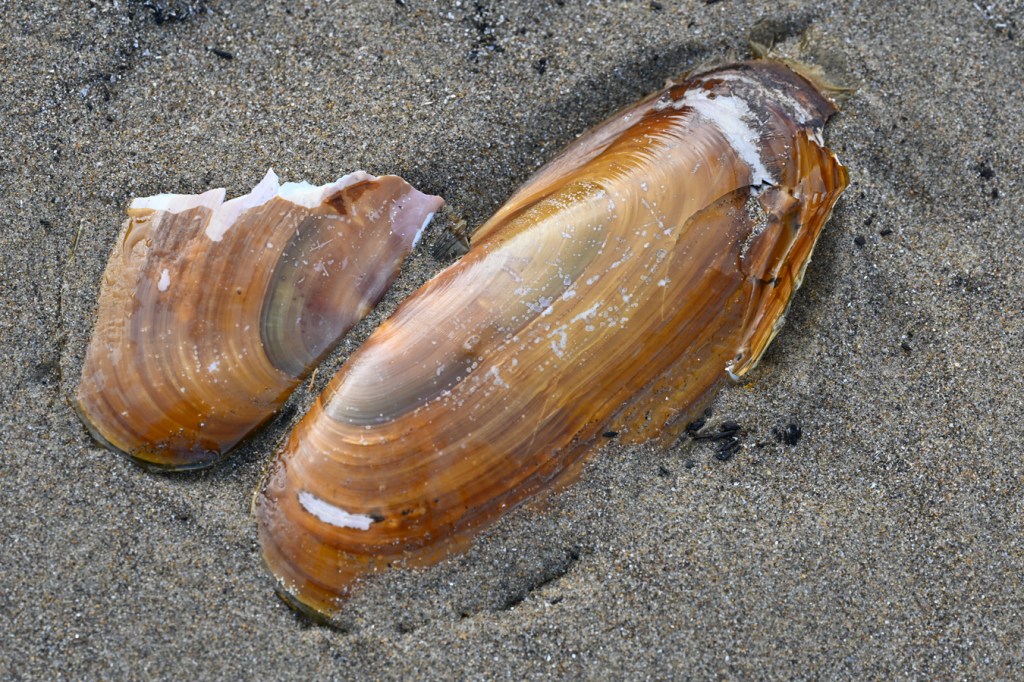
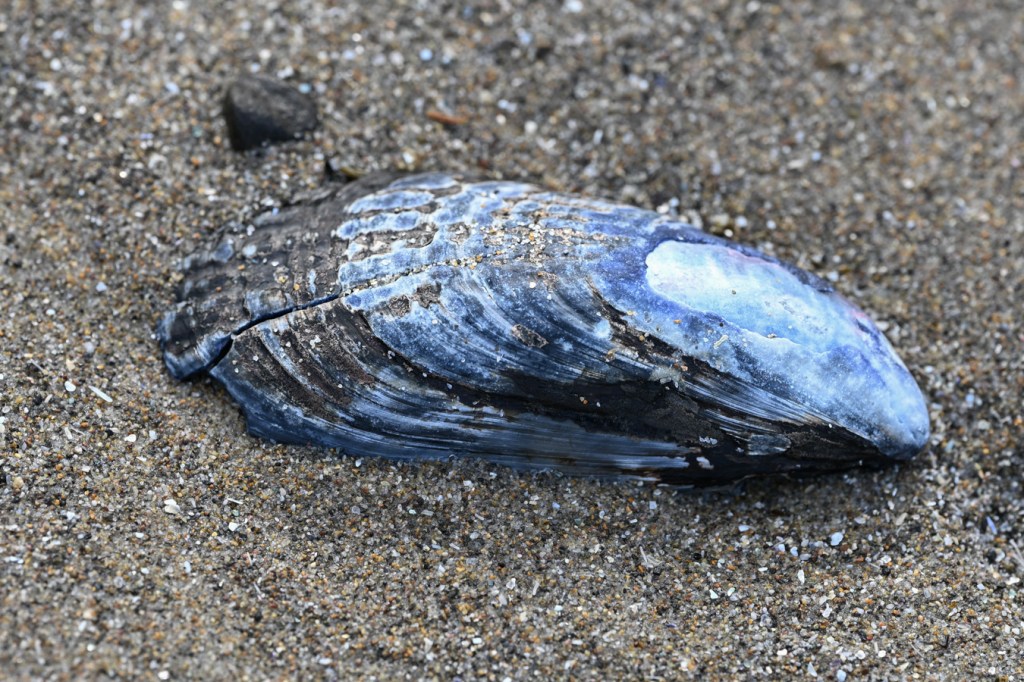
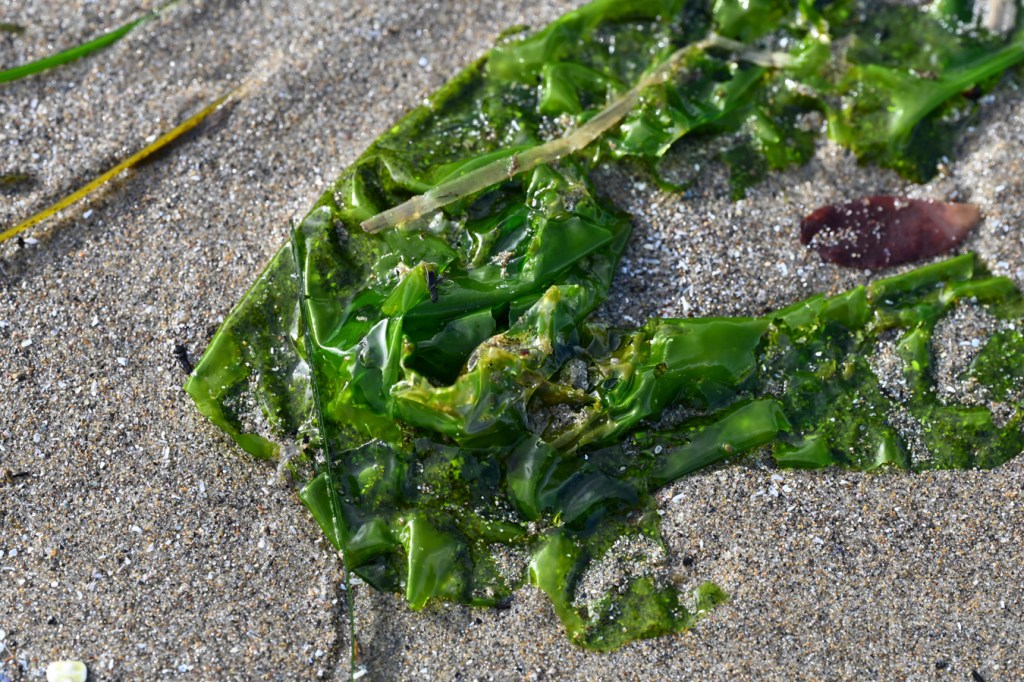
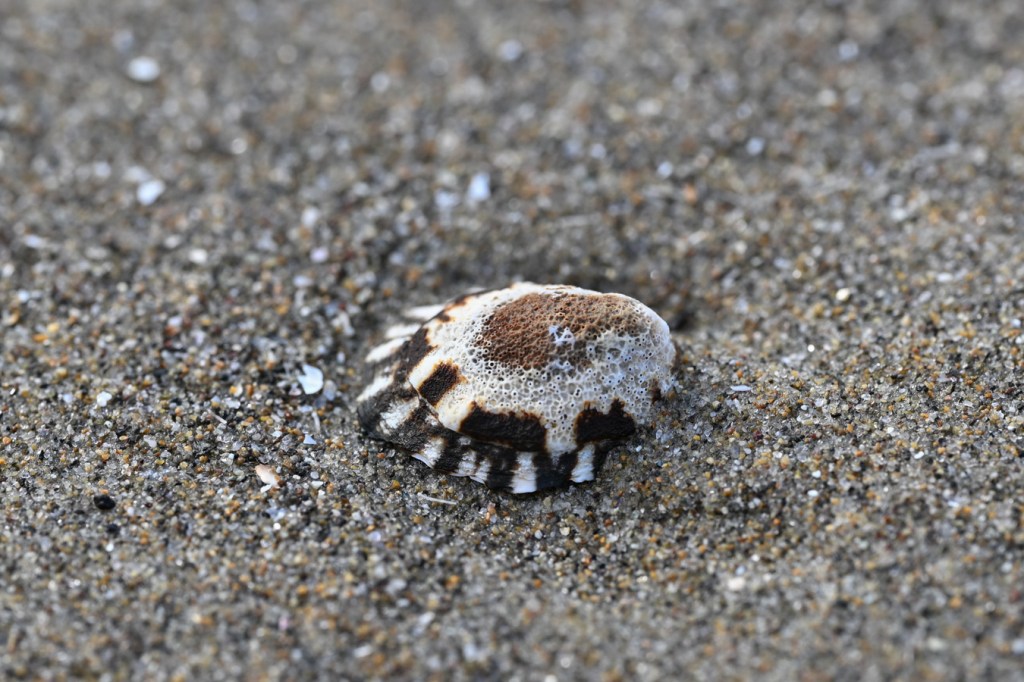
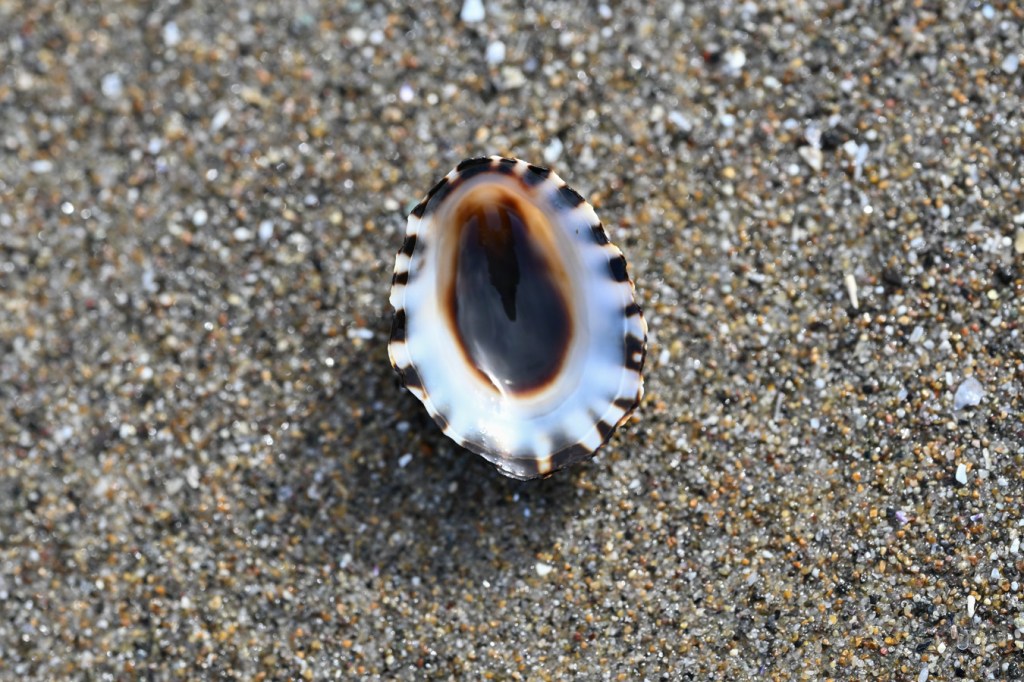
It’s not super common to find drifted Lottia shells on the beach.
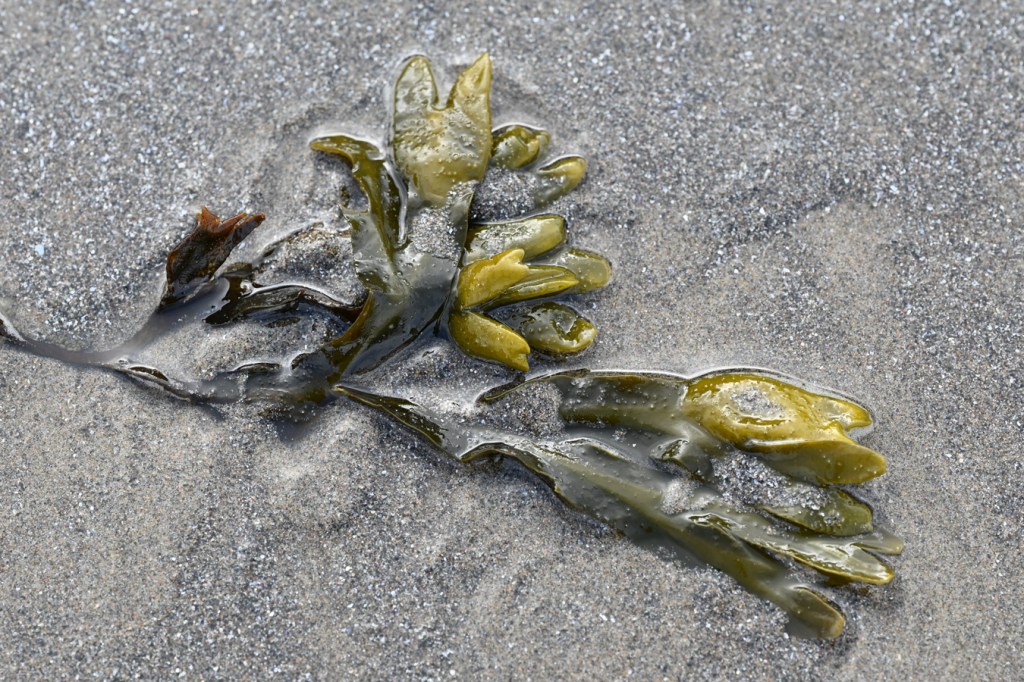
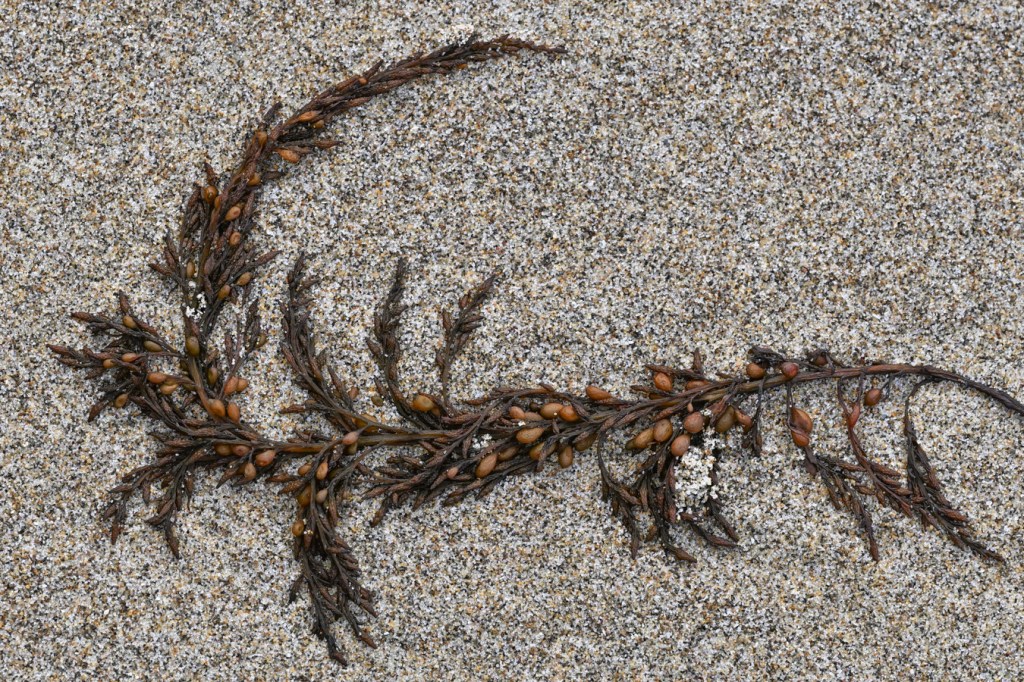
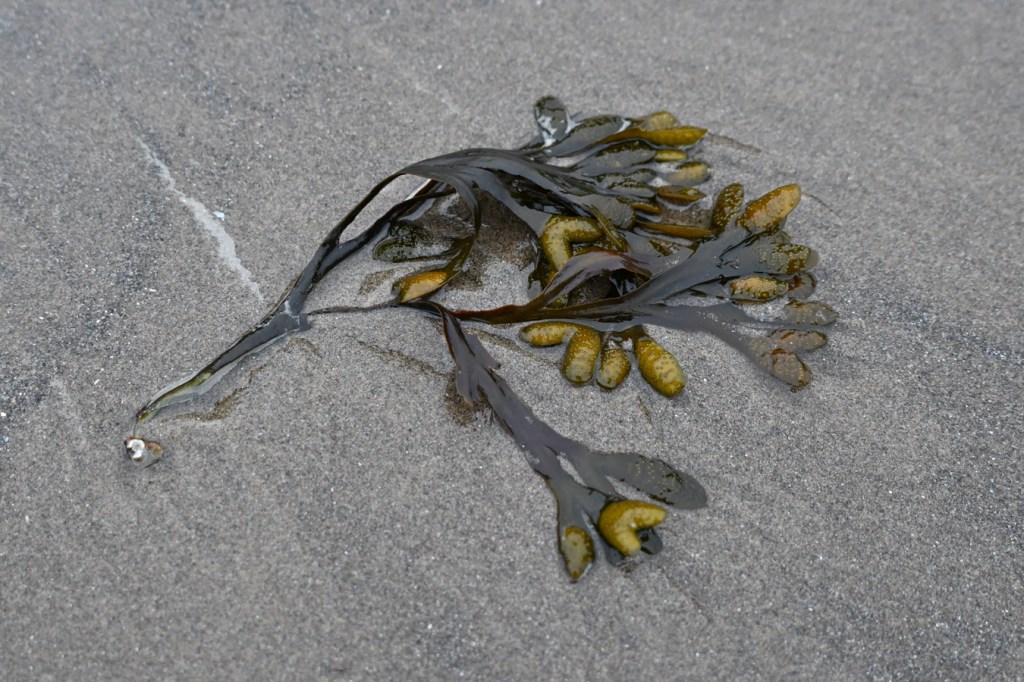
Sargassum usually lays out pretty nice.
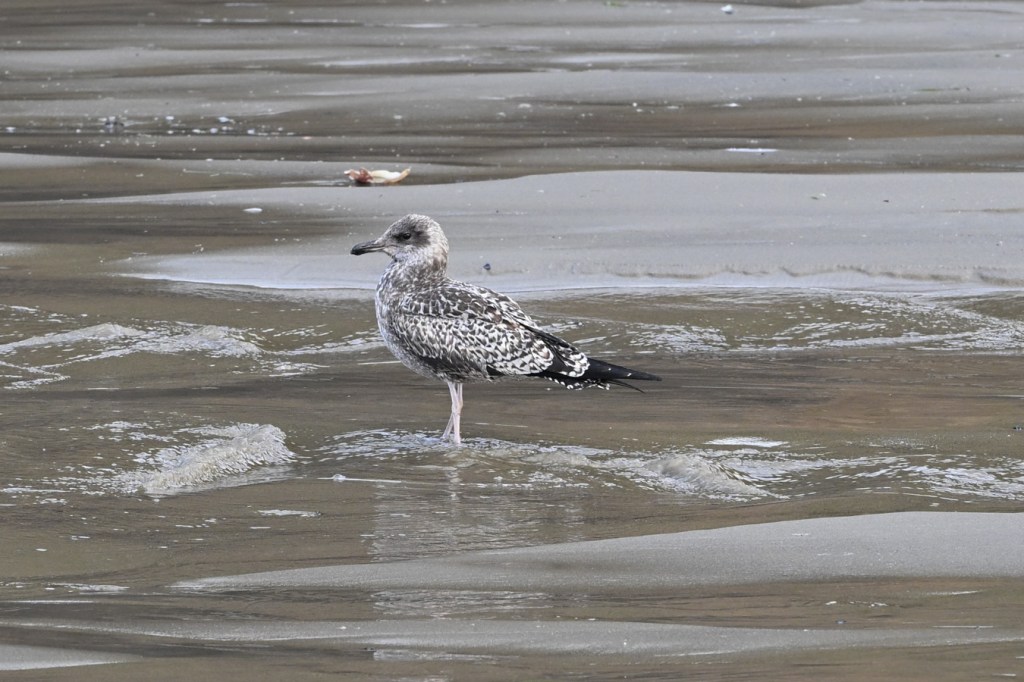
Juvenile gulls seem more likely to let you get close than will adults
Off wrack line
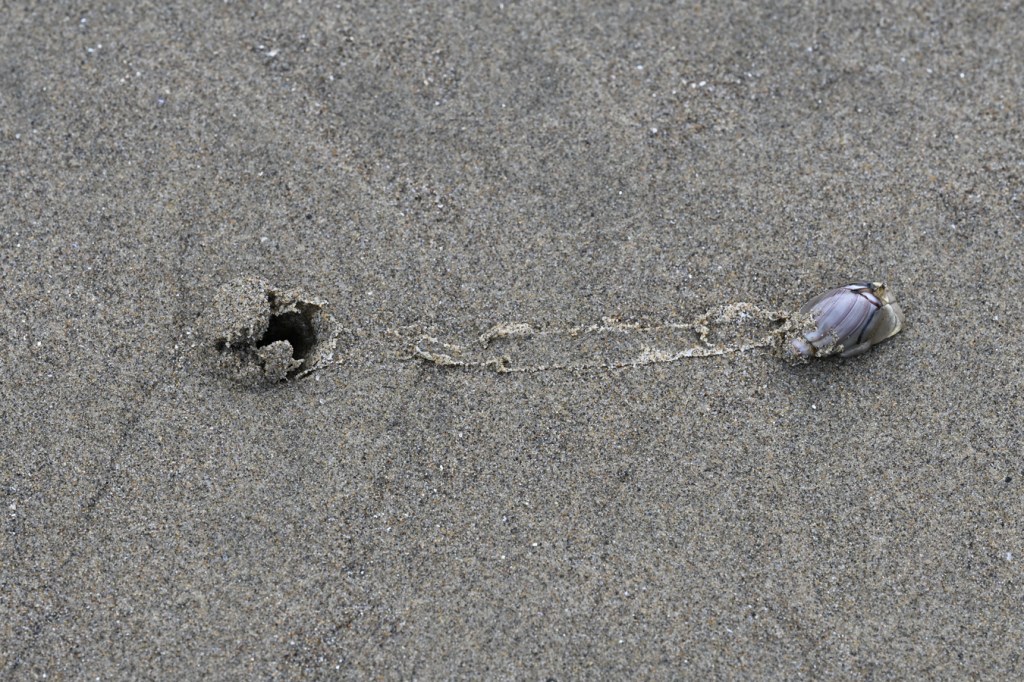
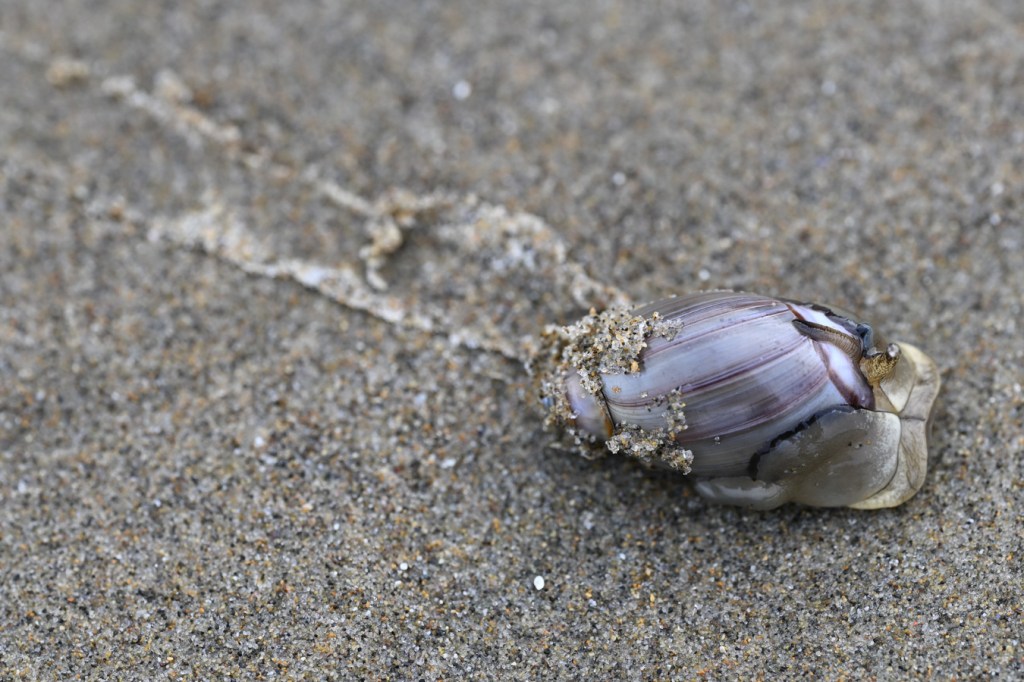
Just a little beach-dweller, a purple olive Callianax biplicata racing over the sand’s surface.
Support for my earlier point about drifted red blades
July 23, 2025
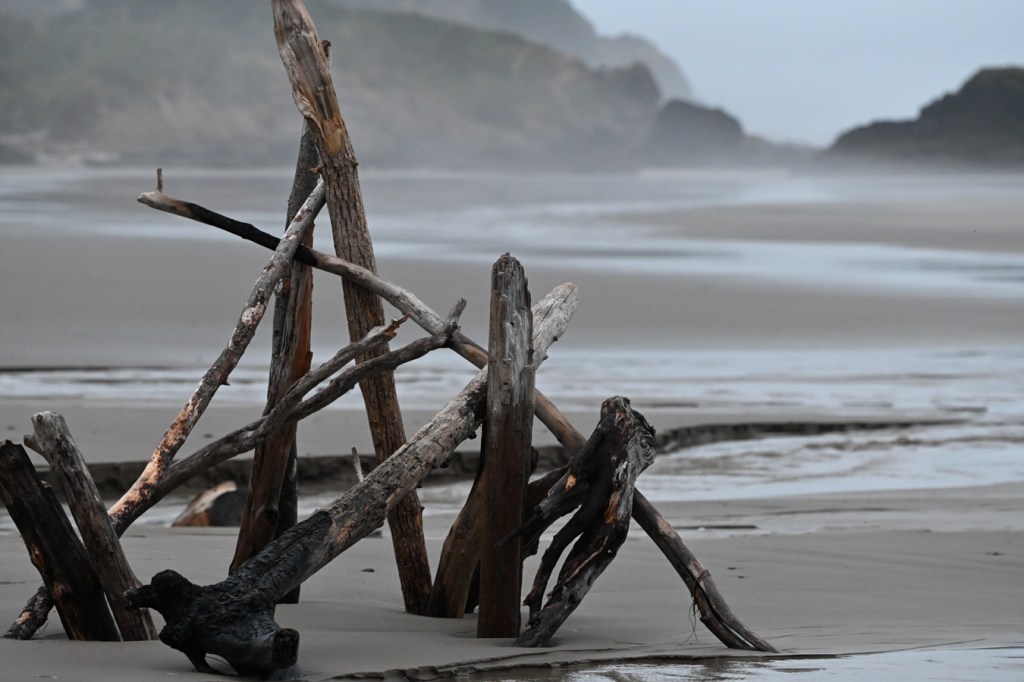
Stark Remnant
Quite a contrast to what must have been a lively scene when this driftwood monument was erected.
Where freshwater flow meets the sea
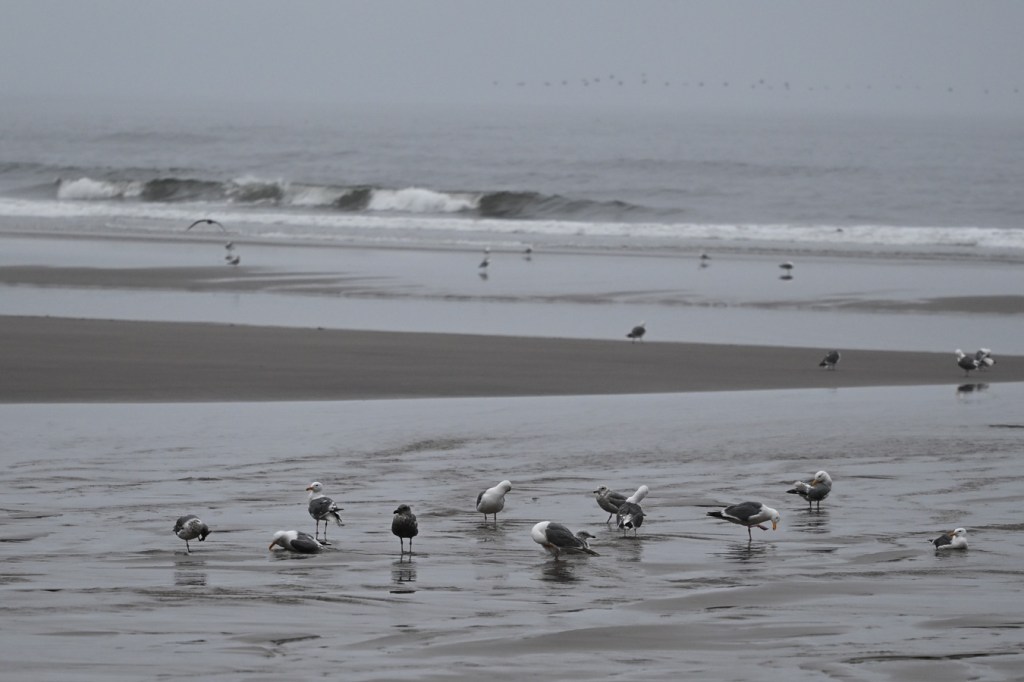
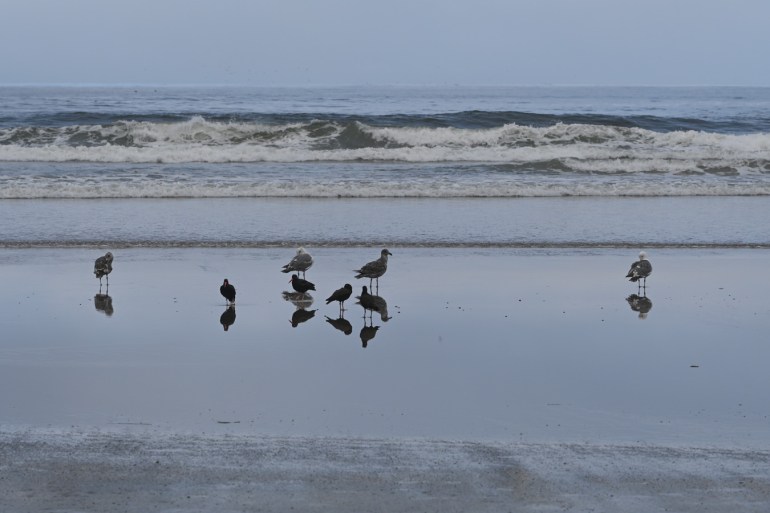
Small streams coursing over the beach on their way to the sea are a magnet for gulls. Given some privacy and proper tides, they’ll spend a lot of time hanging out where streams meet surf.
A reliable wrack line combination
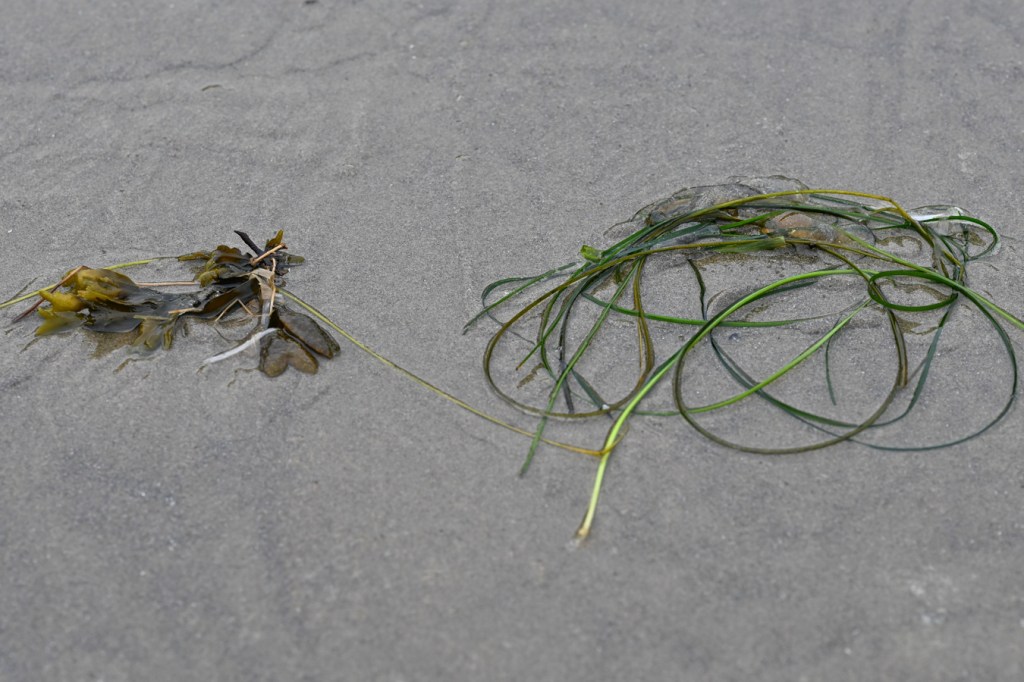
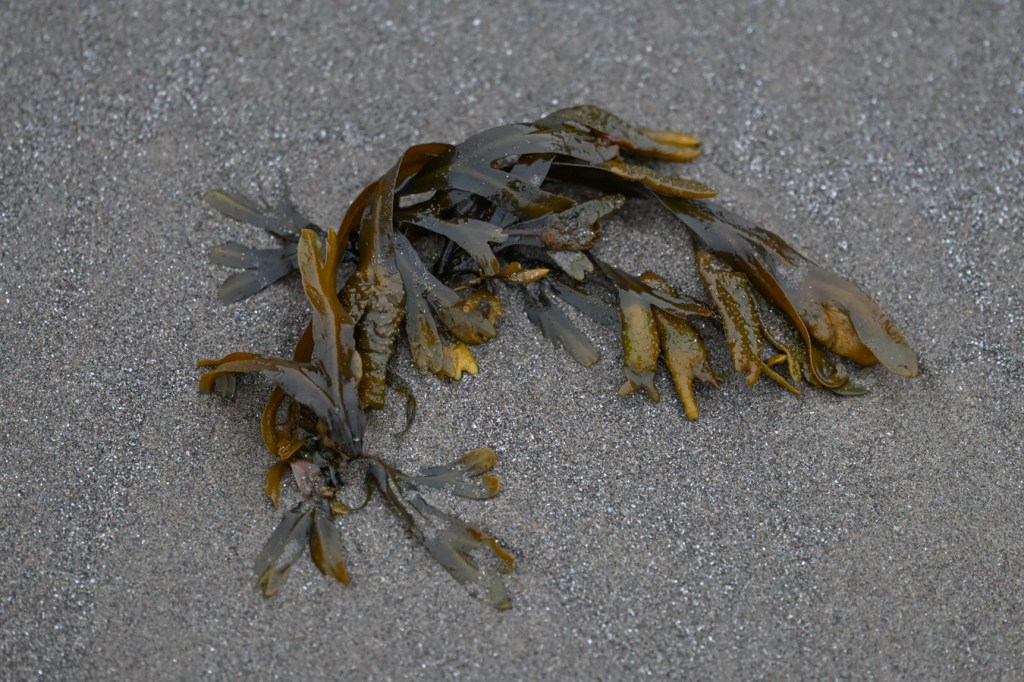
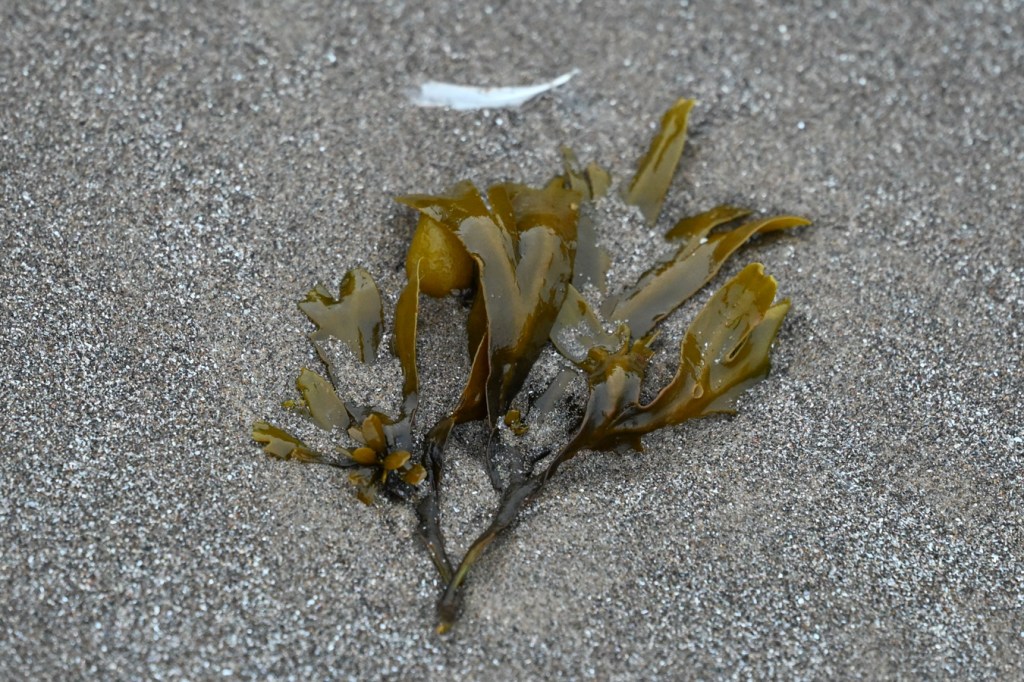
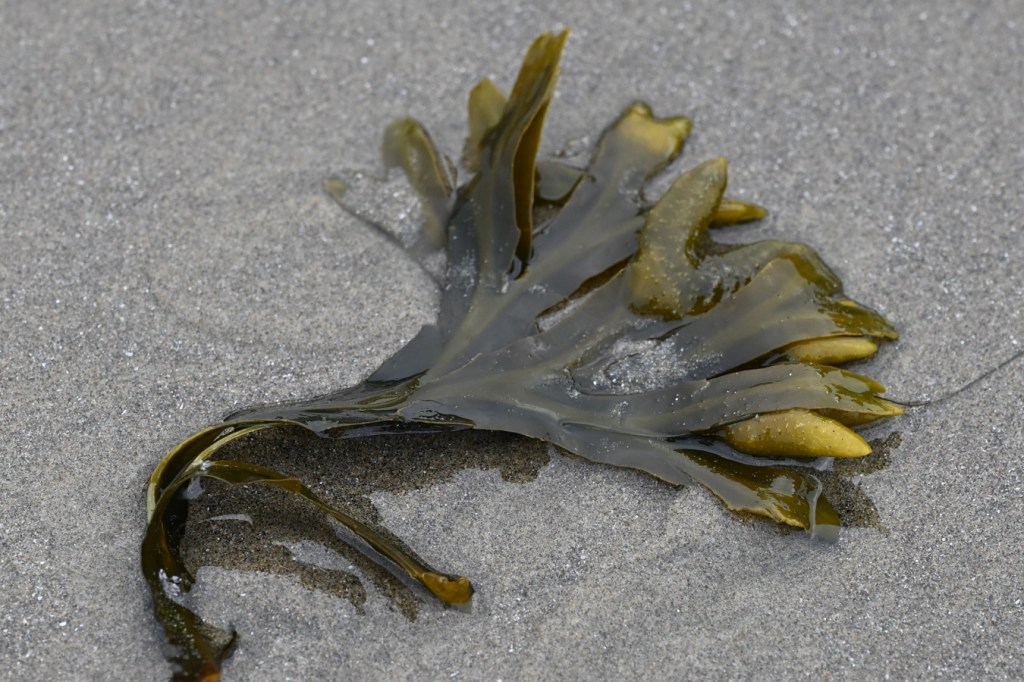
Ever-variable Fucus
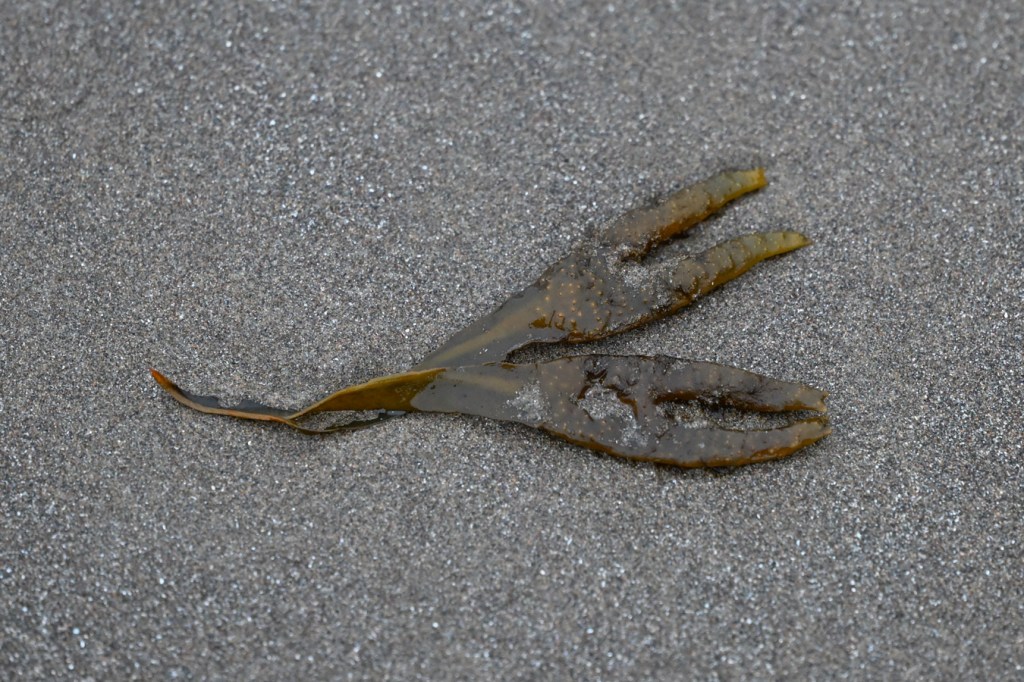
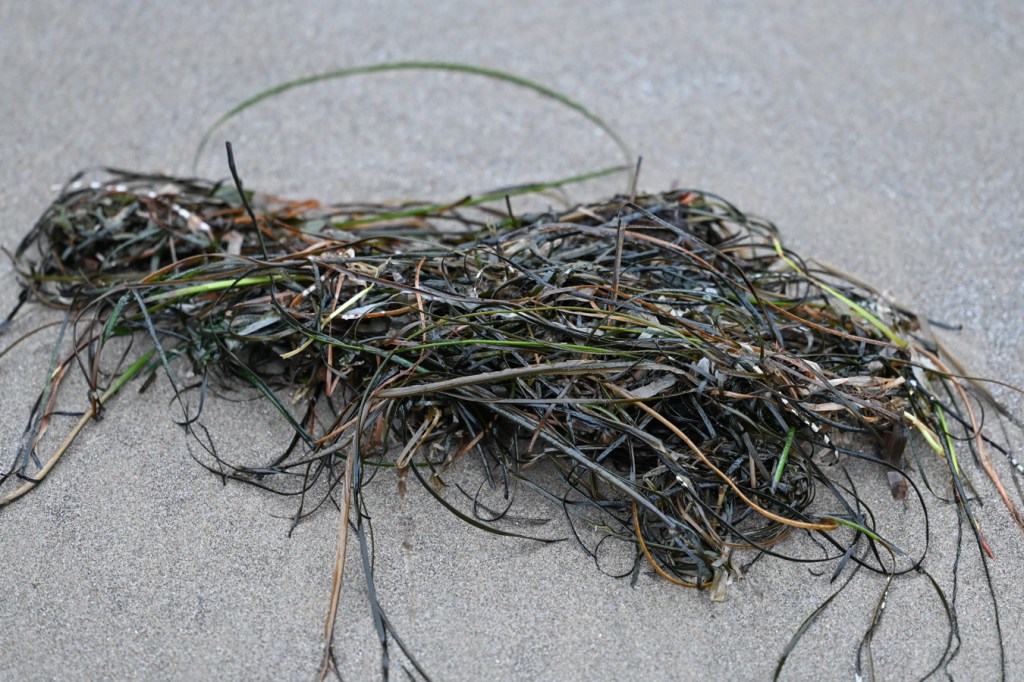
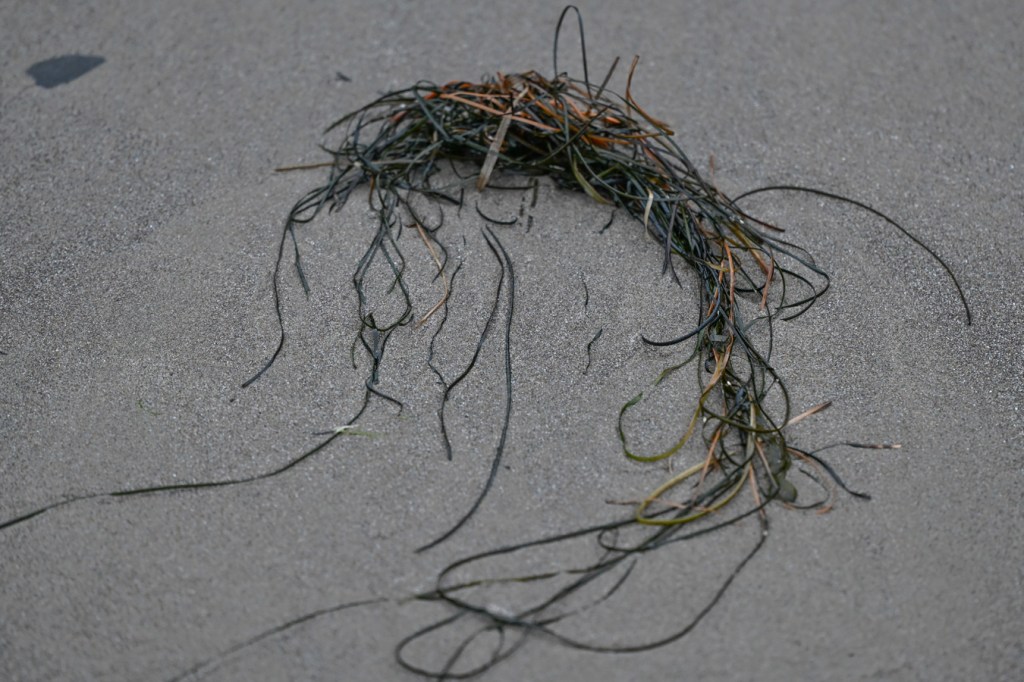
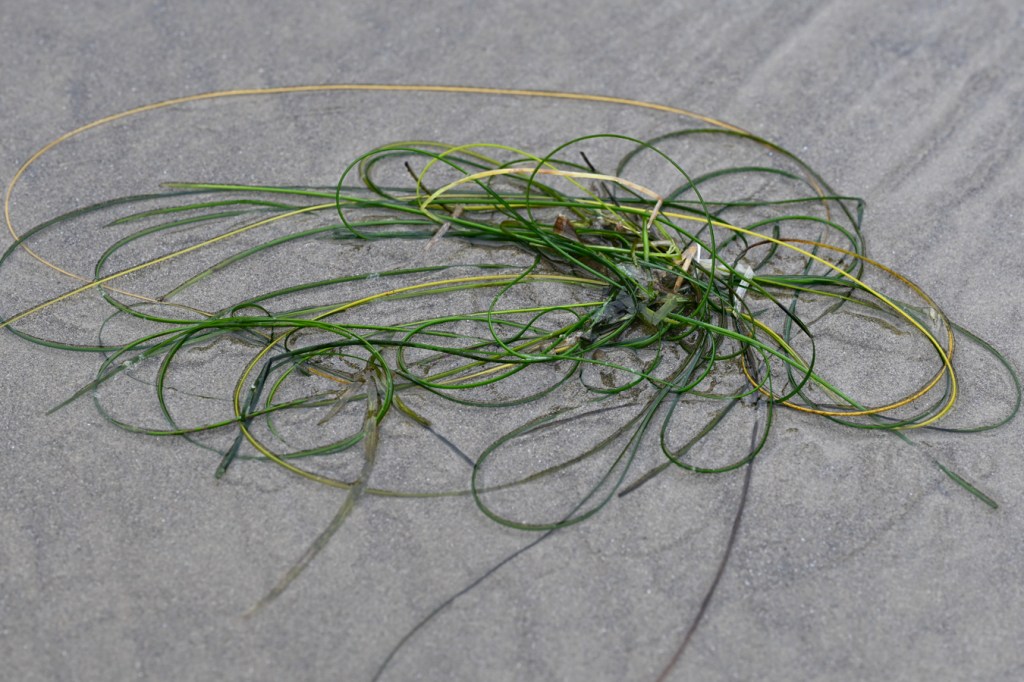
Phyllospadix

A Short Zoological Survey


Look Up

Off Wrack Line
The larger Larus gulls don’t have much problem severing the capitulum and they will swallow them on the spot. (It’s not too uncommon to find pellets of regurgitated shell plates.) I wonder why this one was left behind.
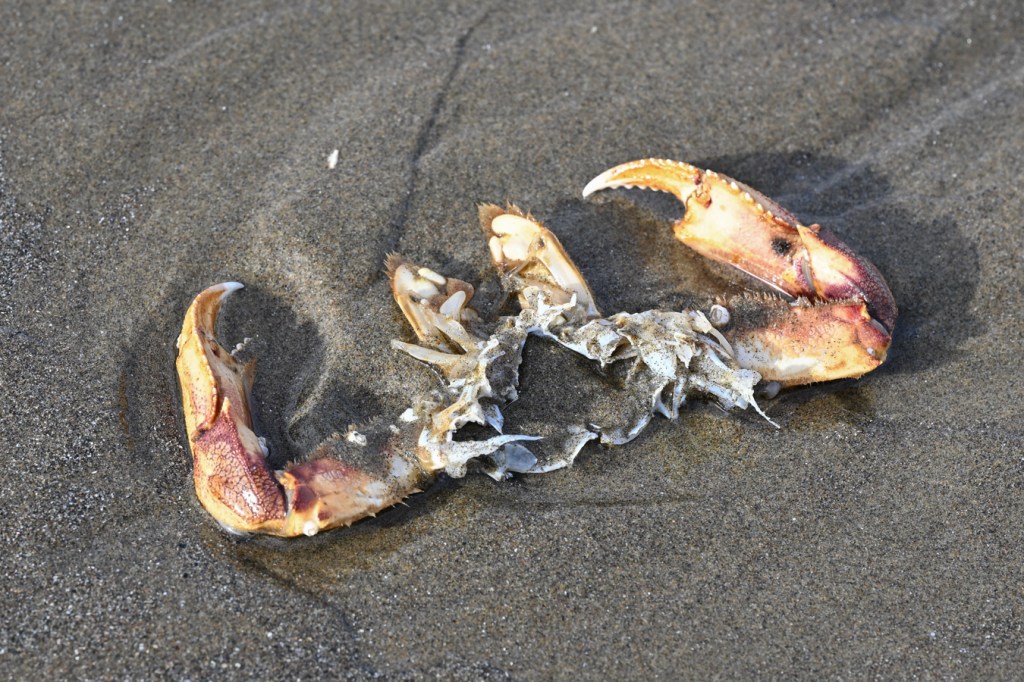
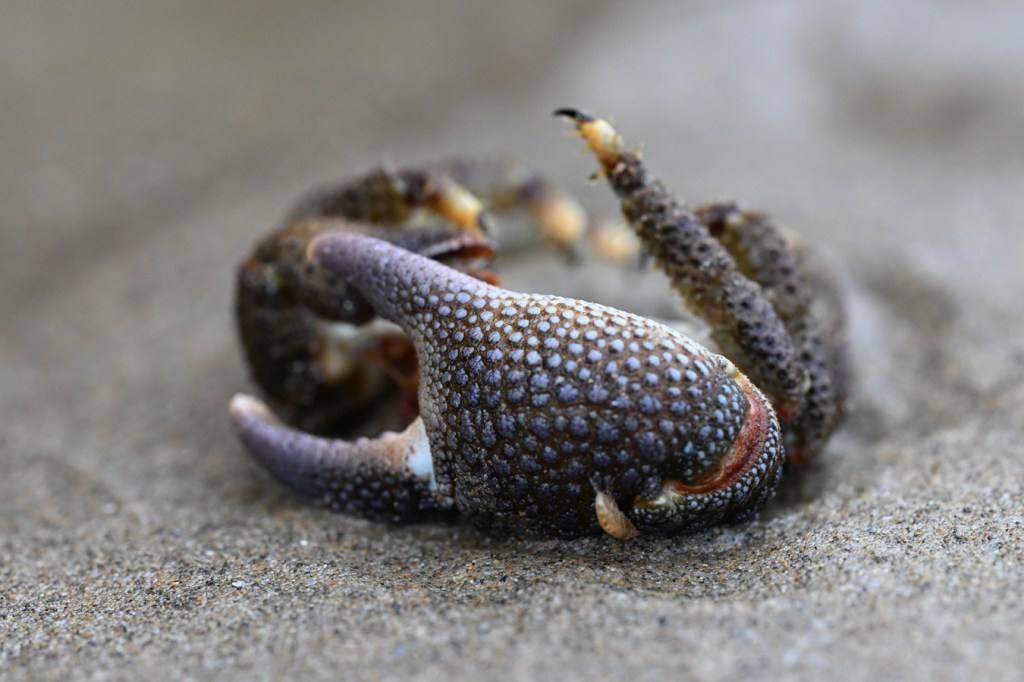
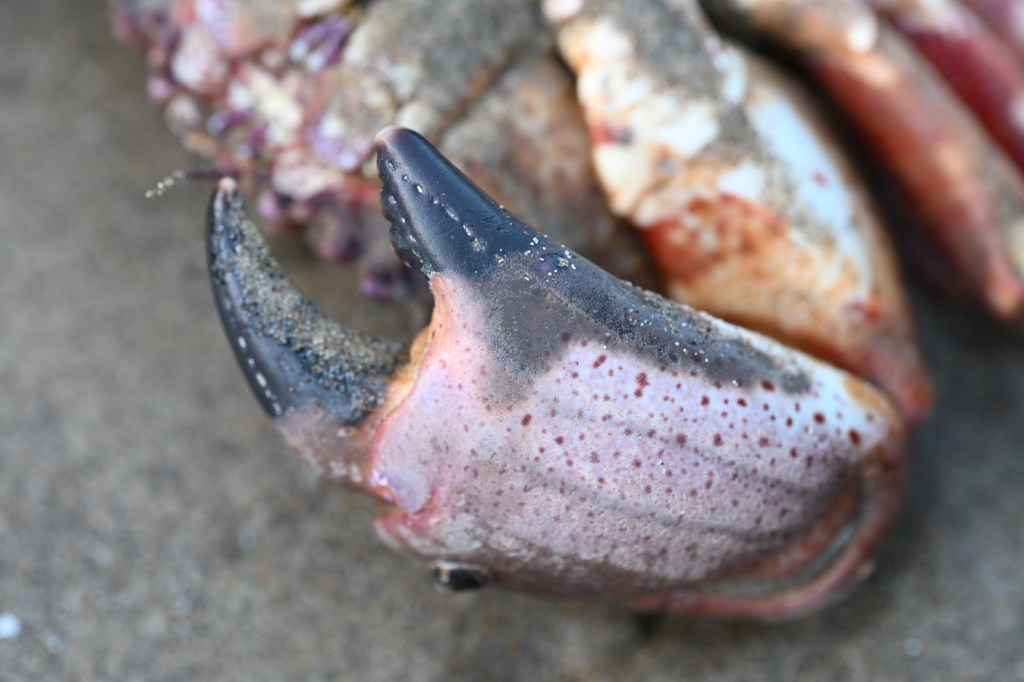
Despite their secretive nature, granular claw crabs are vulnerable when favorable surf and tides allow avian predators to hunt the low rocks. The birds’ habit of eating the abdomen and discarding the rest is a little unsettling.
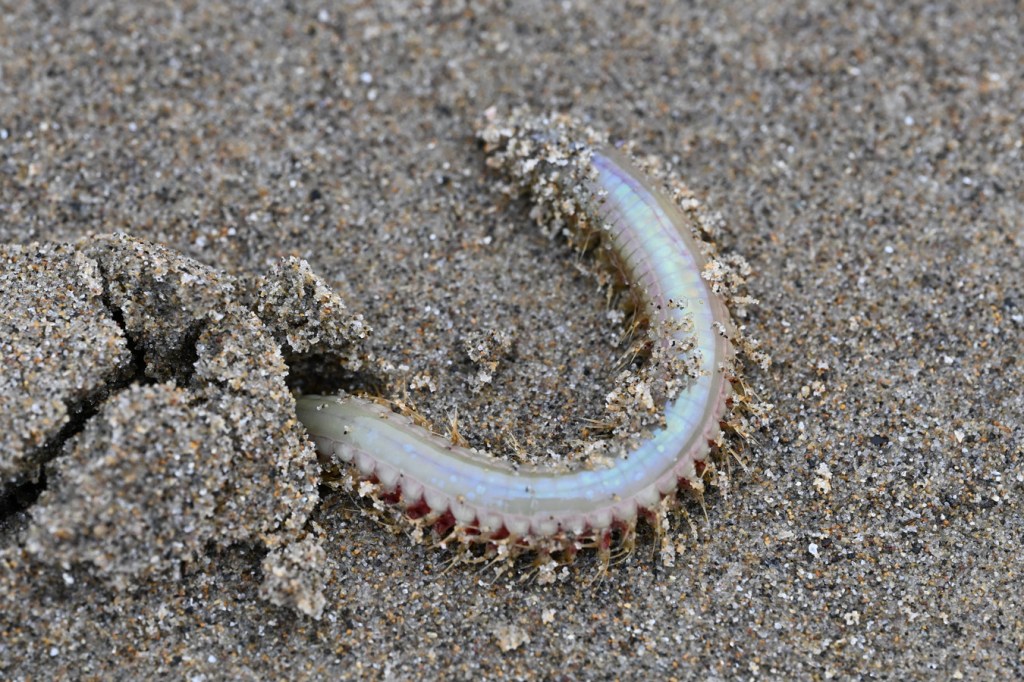
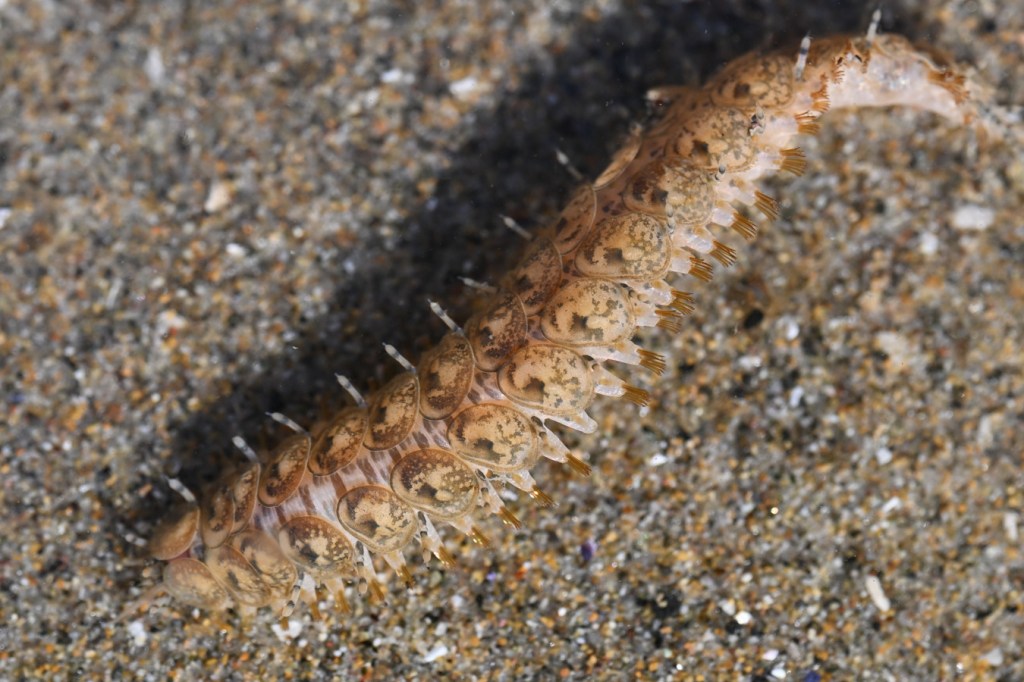
Nephtys, a common sandworm on exposed sandy beaches, rarely shows itself above the surface during daylight hours, but occasionally, say during a morning low tide as here, you might encounter one are more that have emerged from below the sand’s surface.
Disclosures
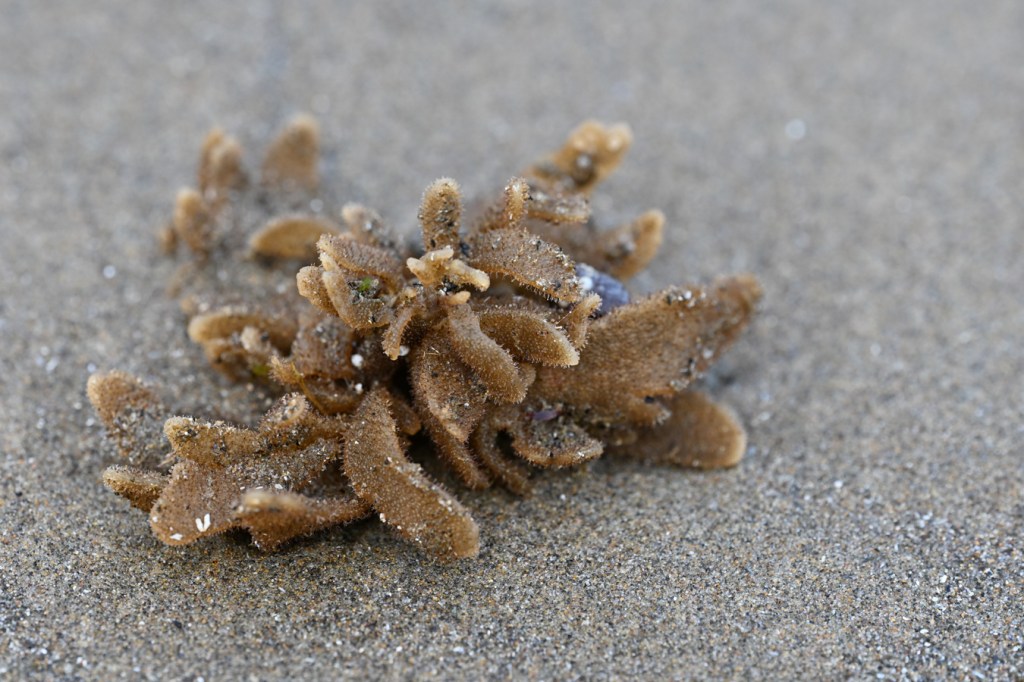
Diversions in the Drift
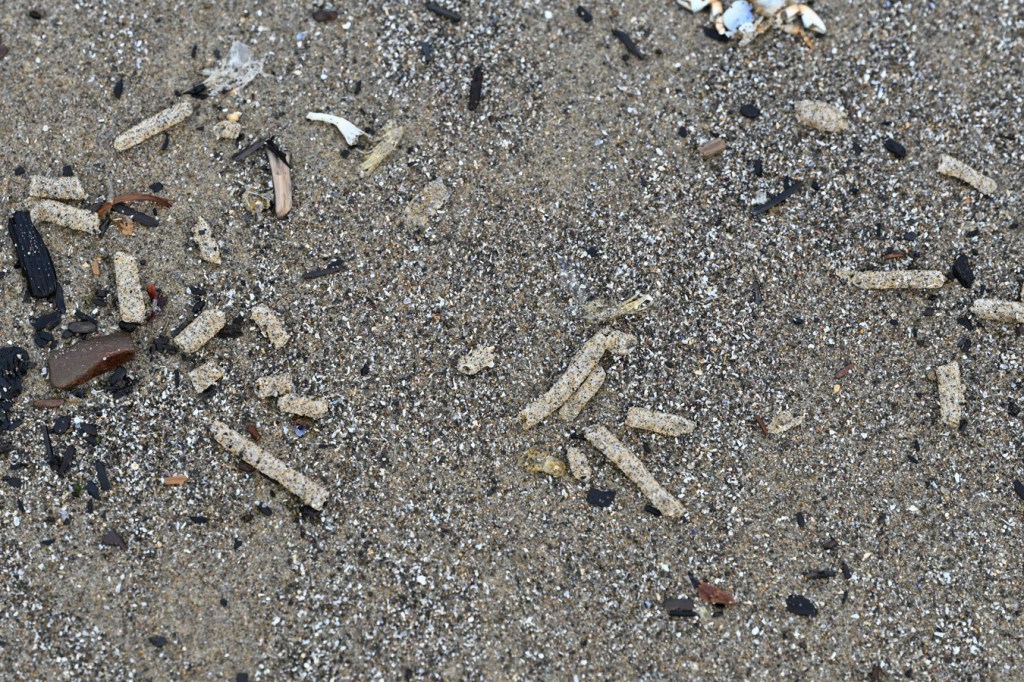
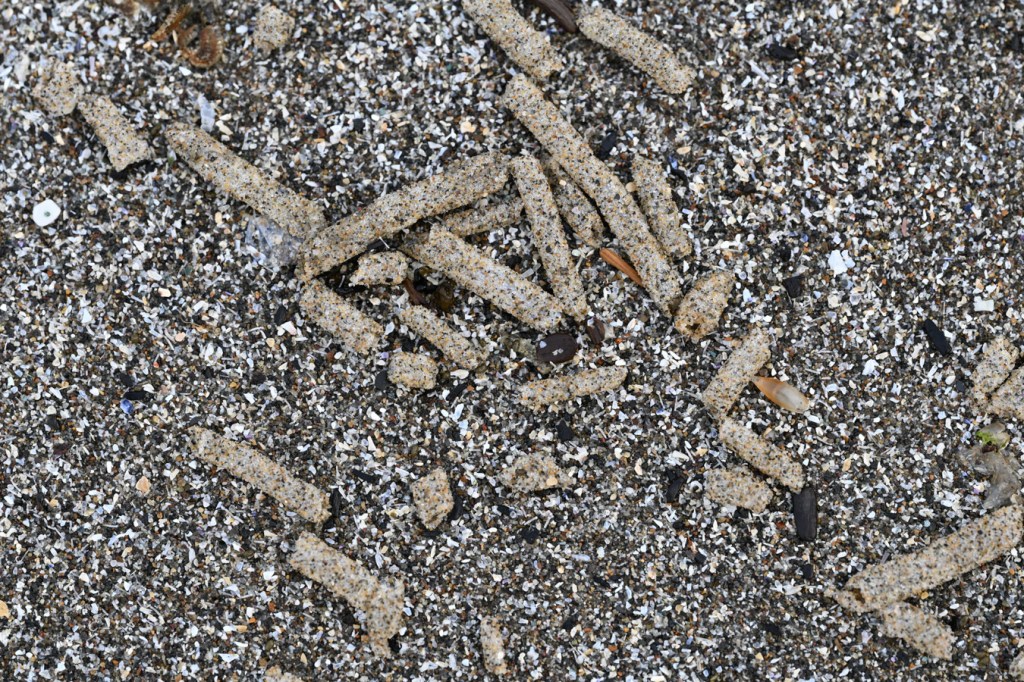
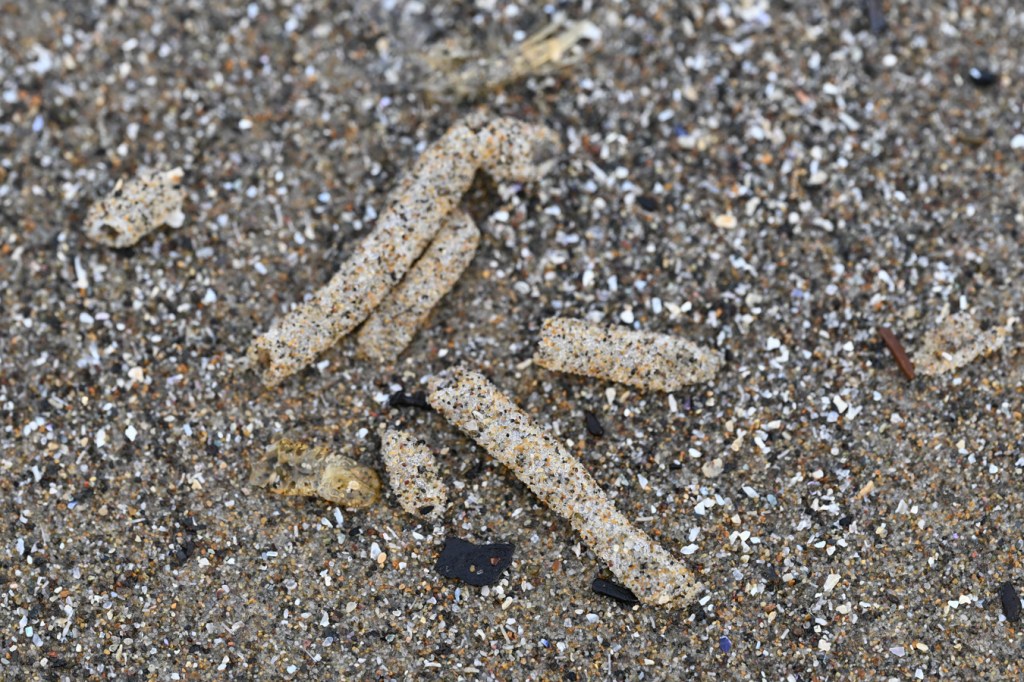
I don’t know who makes these sand-covered tubes. If you know or can point me in the right direction, go to my Contact Me page and give me a shout.
Timeout for swash-zone birdwatching.
A study in barnacles on a Dungeness crab carapace is the best kind of distraction and a great way to round out a walk along the shore. The barnacles featured below are pretty common on Dungeness carapaces and I’ve always assumed them to be Balanus crenatus, but it’s worth noting that barnacles are always ready to throw you an identification curveball.

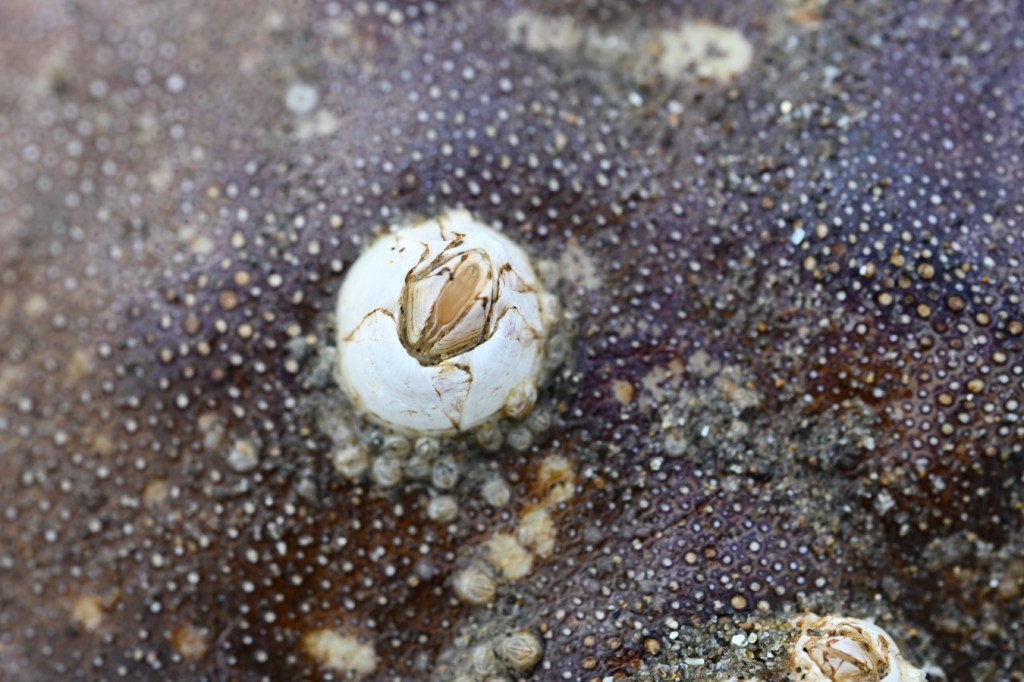
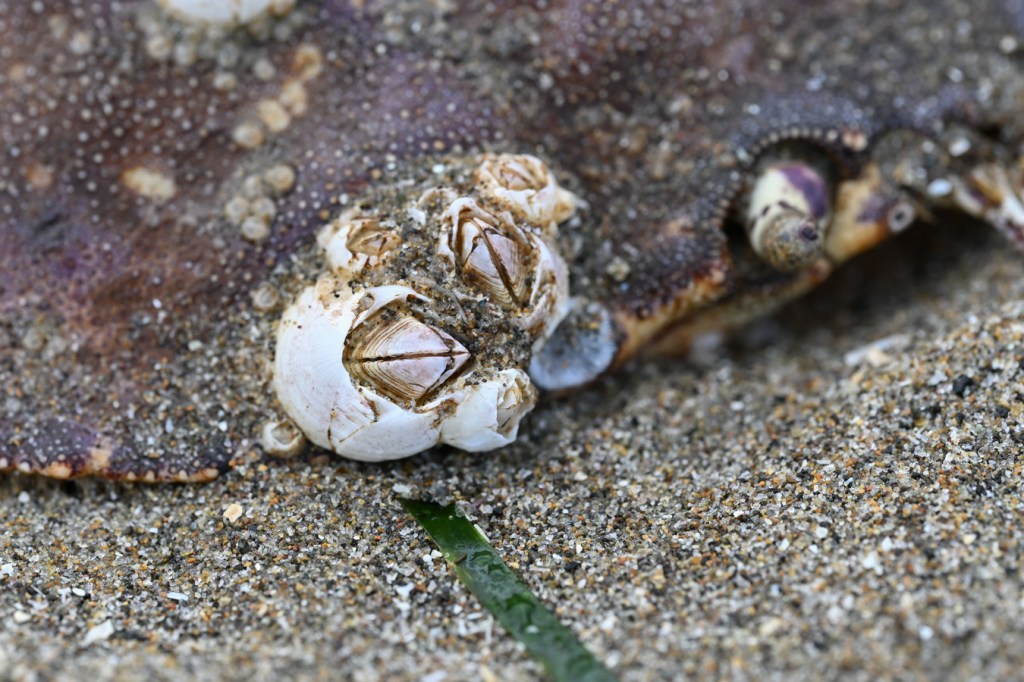
Note: Go over to my Barnacles page to explore examples of other easy-to-find barnacles you might encounter on exposed northern Oregon shores.
***
May 29, 2025
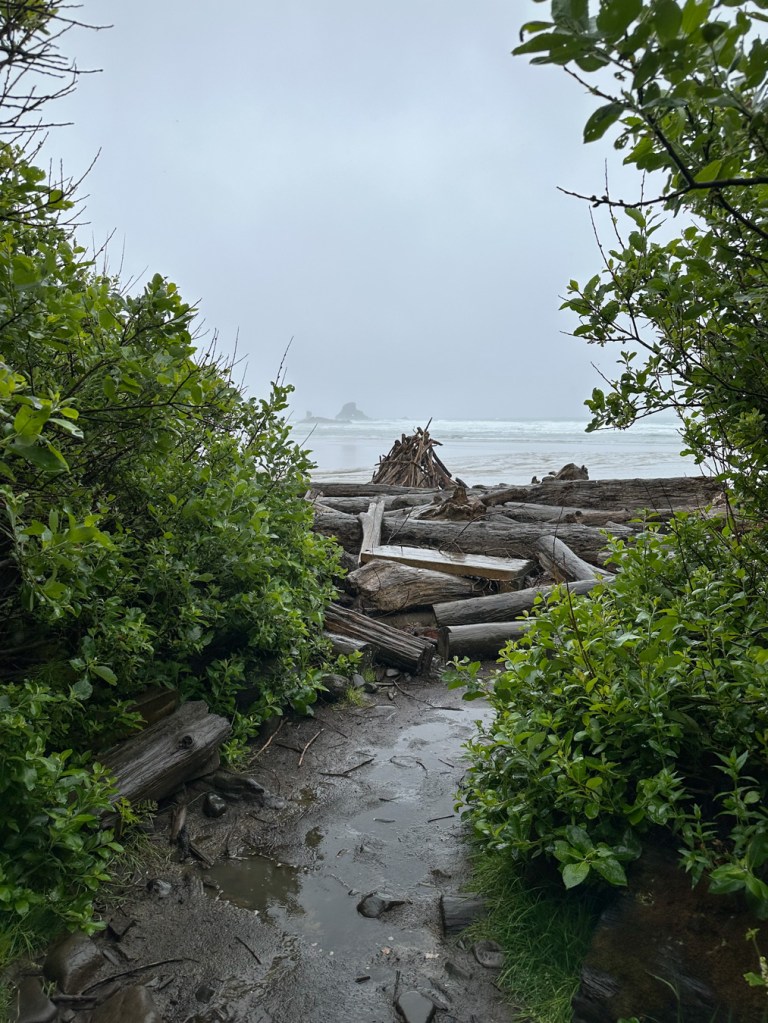
What choice picks await down in the drizzle?


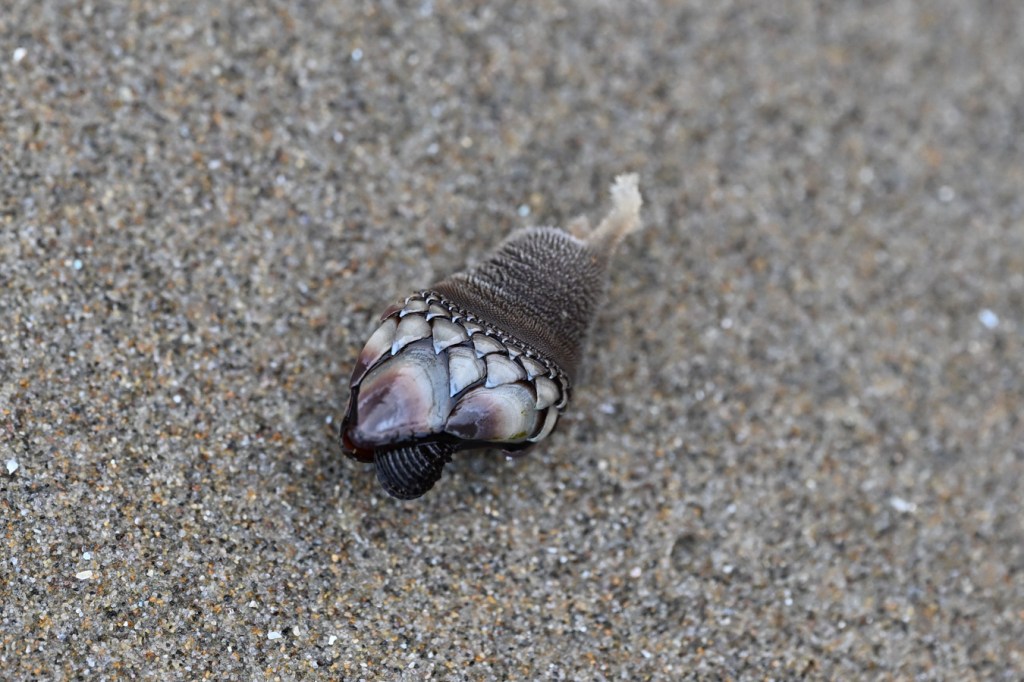
Host and hitchhiker
Here, the host is a small detached and drifted mass of sea sacs Halosaccion, a rocky intertidal seaweed, and the hitchhiker, a pelagic barnacle, looks like Lepas pacifica.

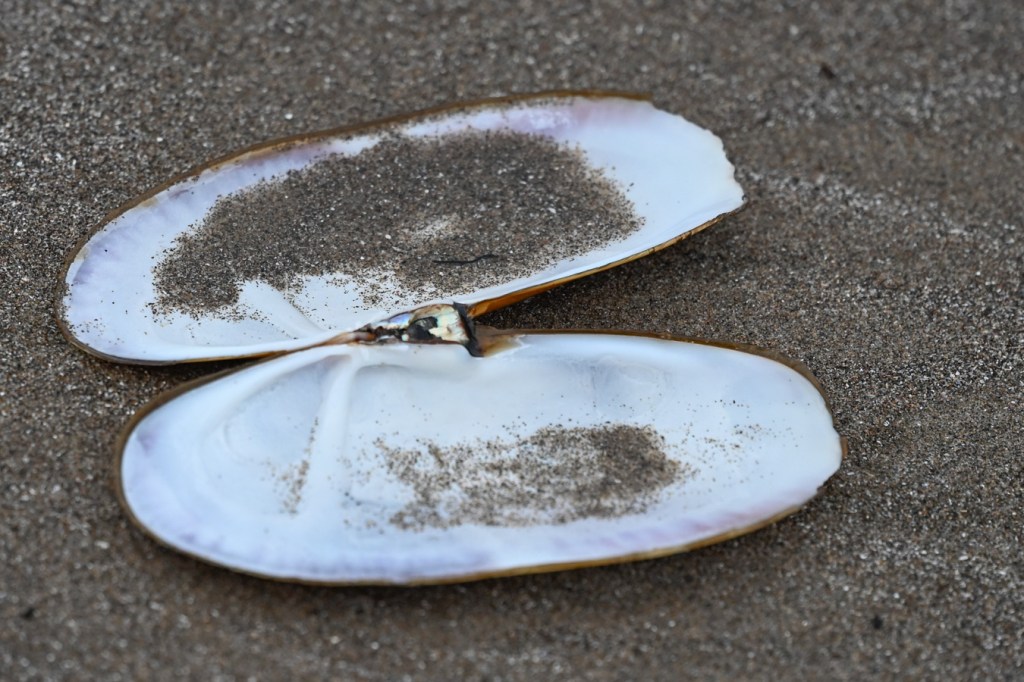
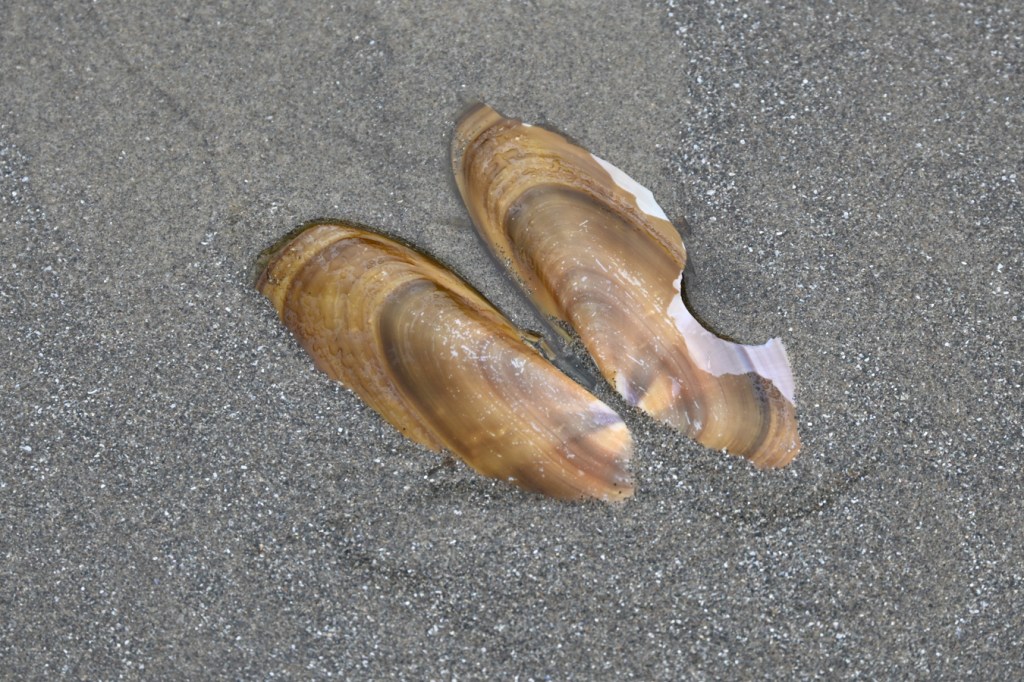
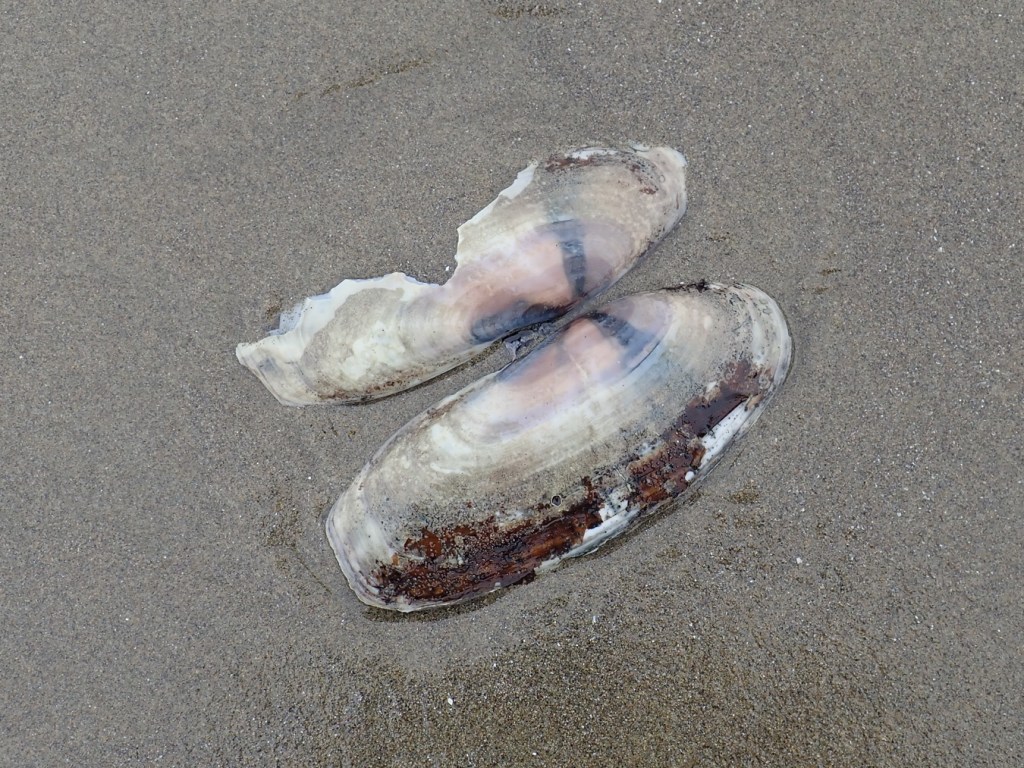
Two sides of Siliqua
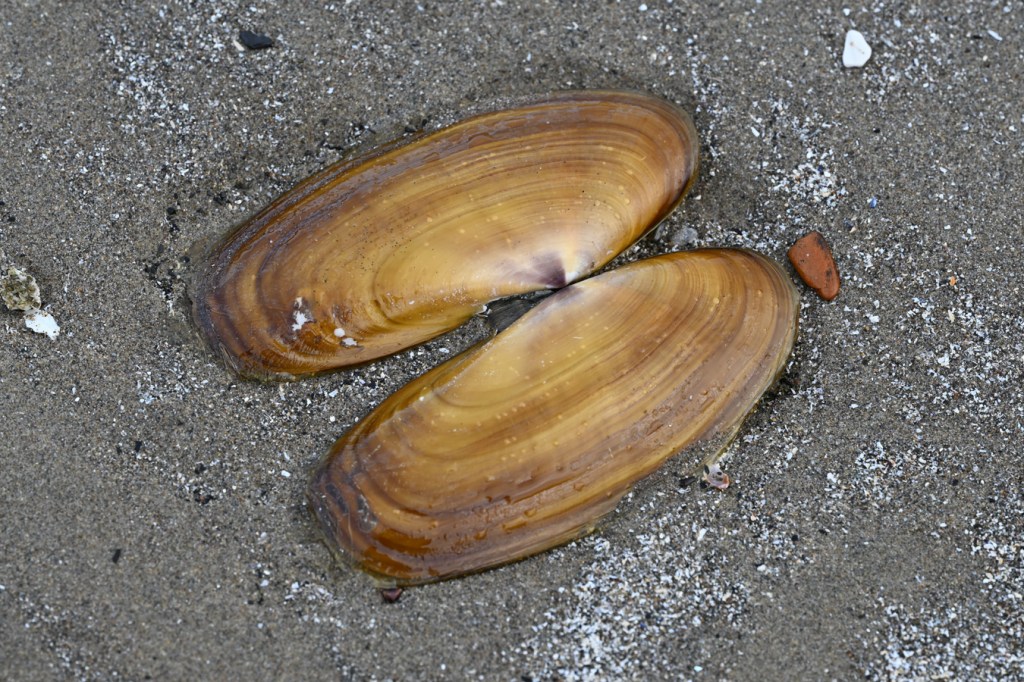
Empty and drifted shells of the Pacific razor clam Siliqua patula.

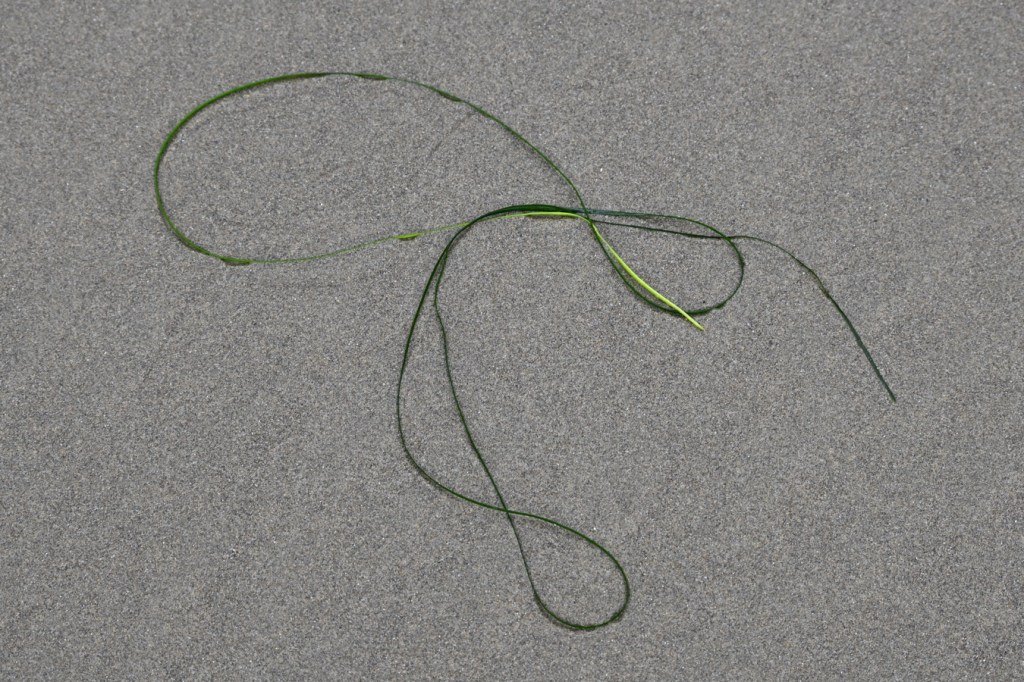
The lovely lines of Phyllospadix
Isolated drift blades lay out with natural grace.

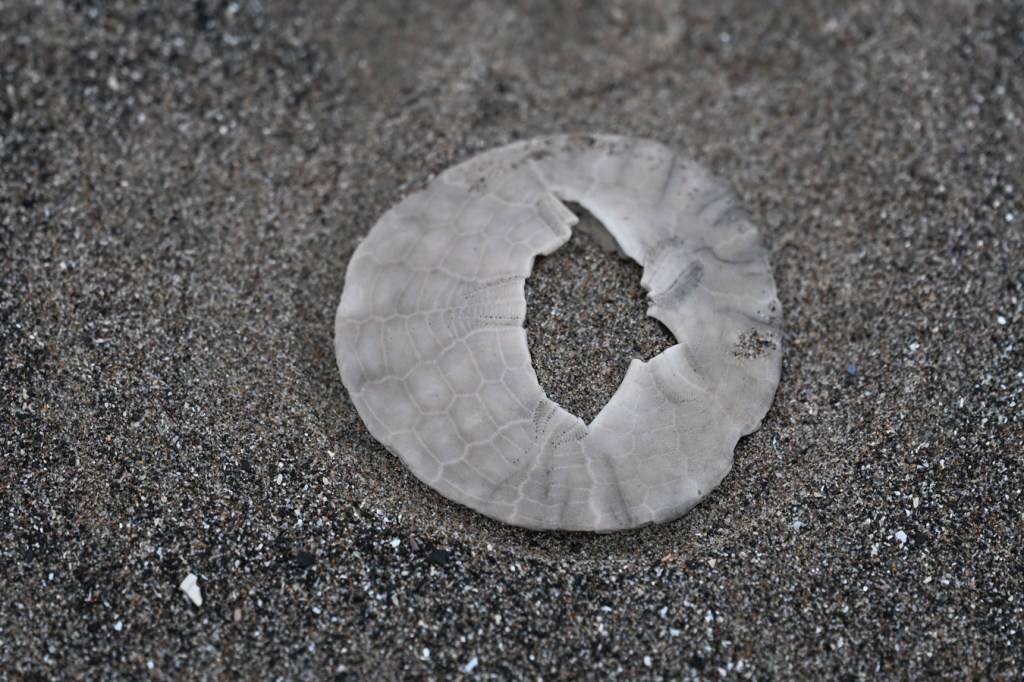
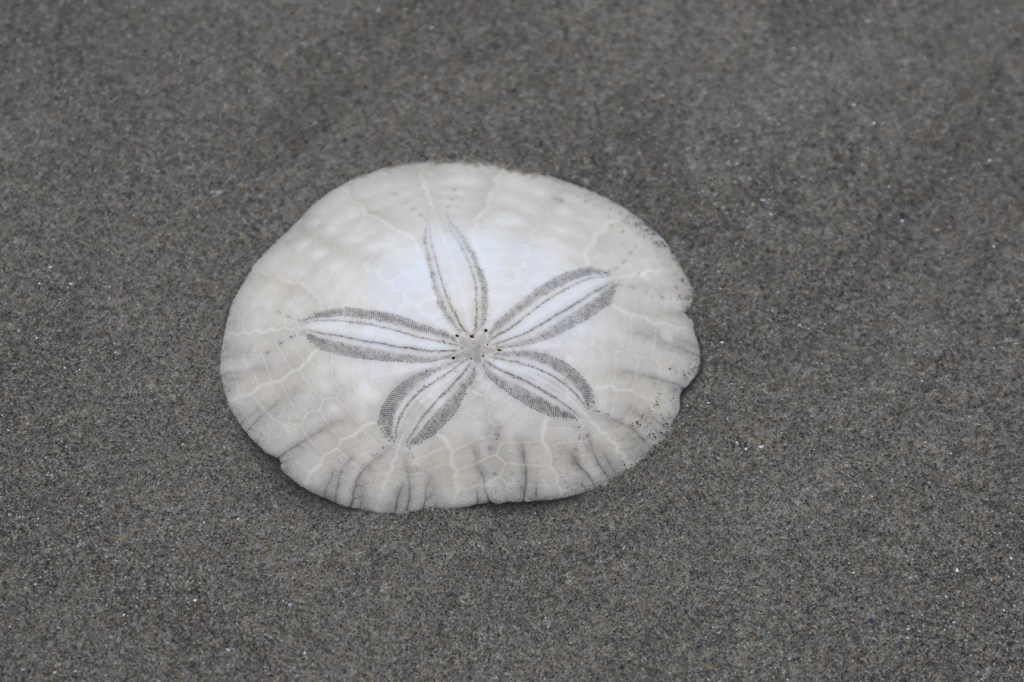
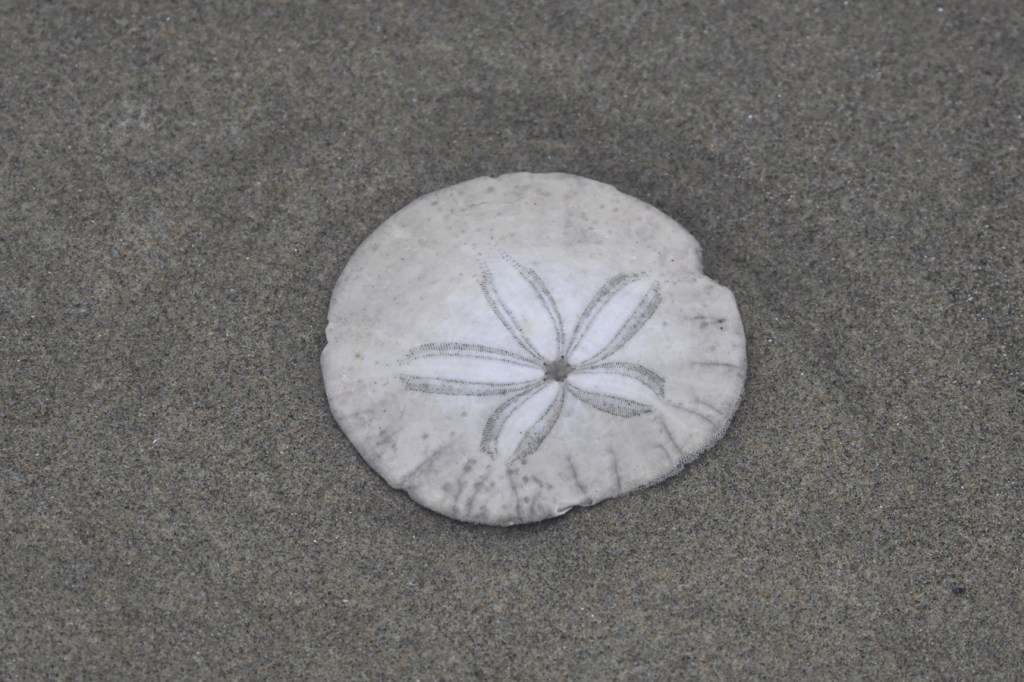
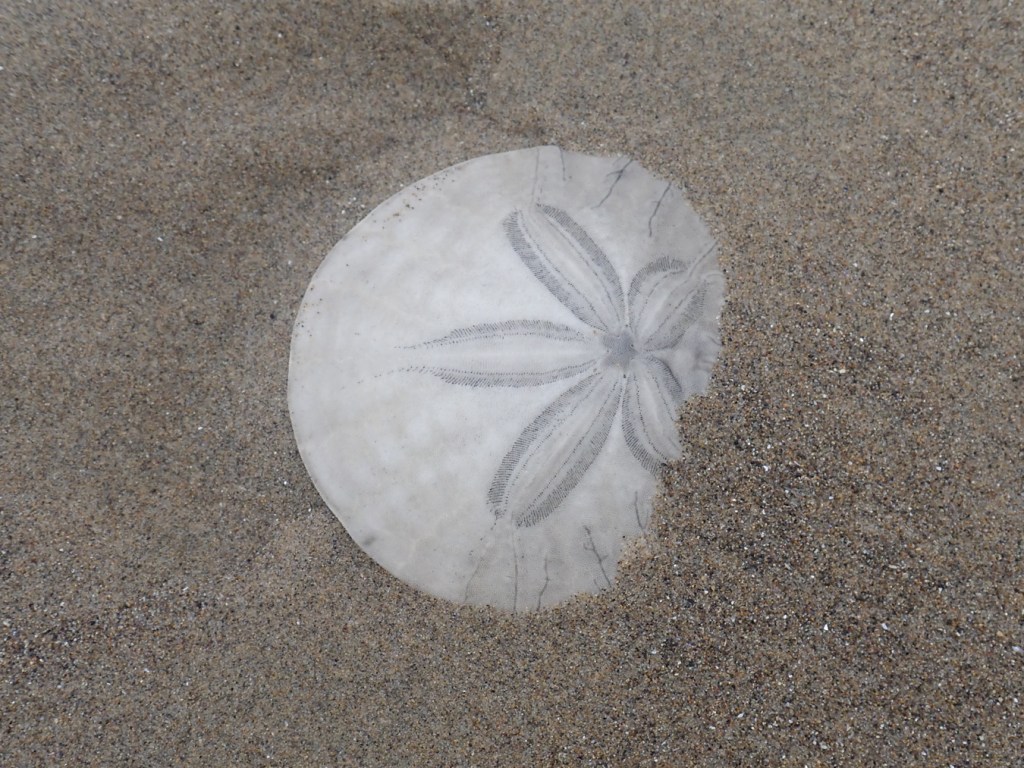
Four bucks
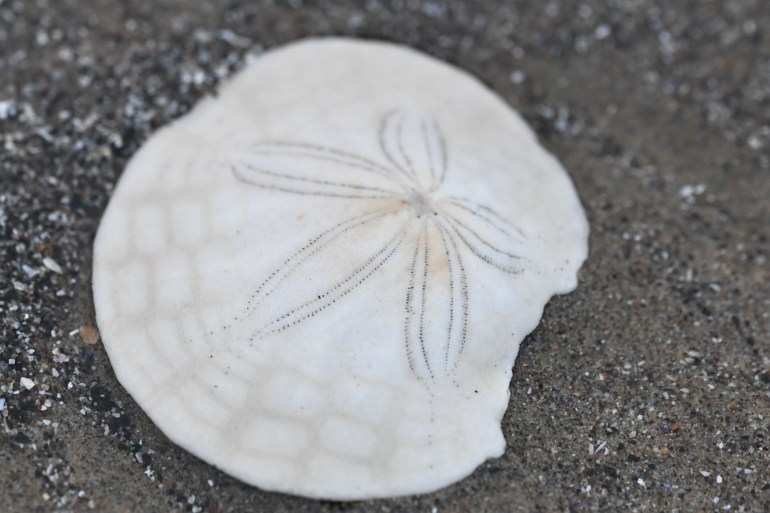
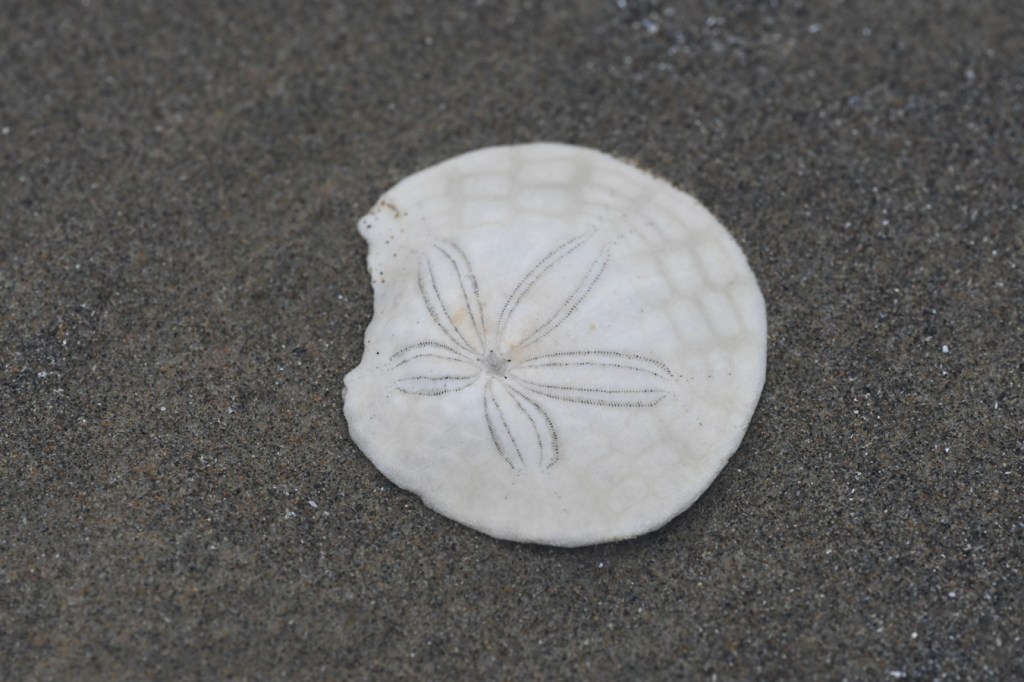
The eccentric sand dollar Dendraster excentricus. (I feel rich when I find whole sand dollar shells.)


On the seaweed side


Off wrack line
I happened to find two little crustaceans out on the sand and it’s worth getting to know both of them; after all, you might encounter one or both of them next time you’re walking the shoreline.
The little crab shown below is a hermit that lives on the rocks and in and around tidepools where you may see them scuttling away to safety at your approach. Sometimes, though, they fall or get plucked or knocked off the rocks. Here, for whatever reason, its landing place was bare sand—vulnerable ground for a hermit crab—where the options are reduced to reclaiming its home rocks, or at least some suitable rocks, or death. I didn’t linger to learn the fate of this unfortunate hermit, a hairy hermit Pagurus hirsutiusculus. I left it as I found it.

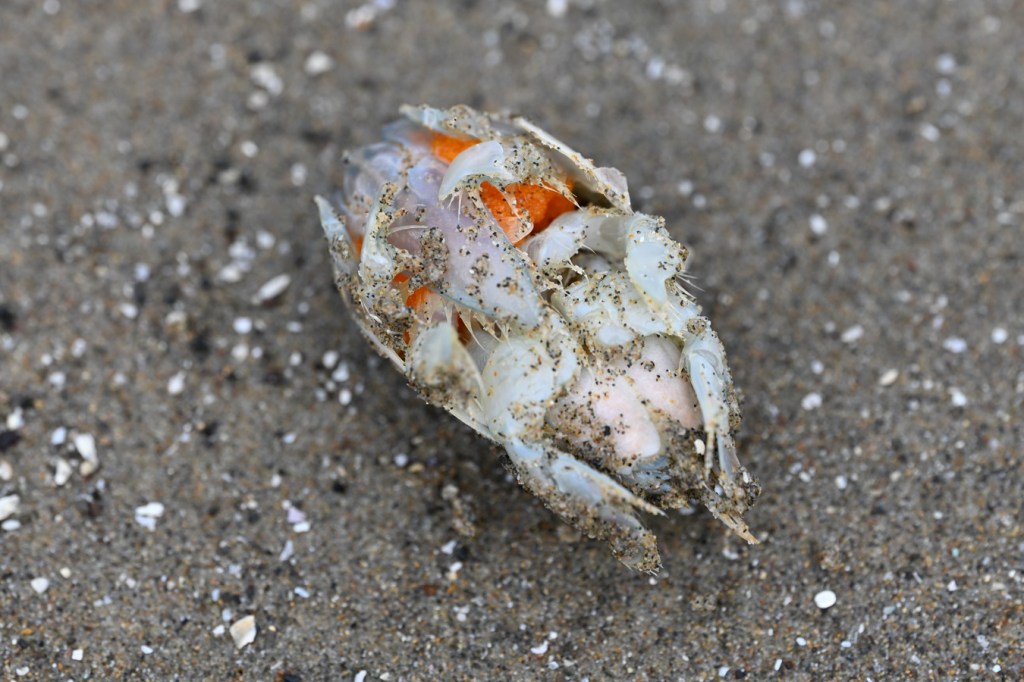
If Pagurus is out of place on the sand, Lissocrangon and sand are one. They are common on surf-swept beaches where you can sometimes see them out on the surface or buried just below. Their molts are routine components of the wrack line.

May 28, 2025
Welcome
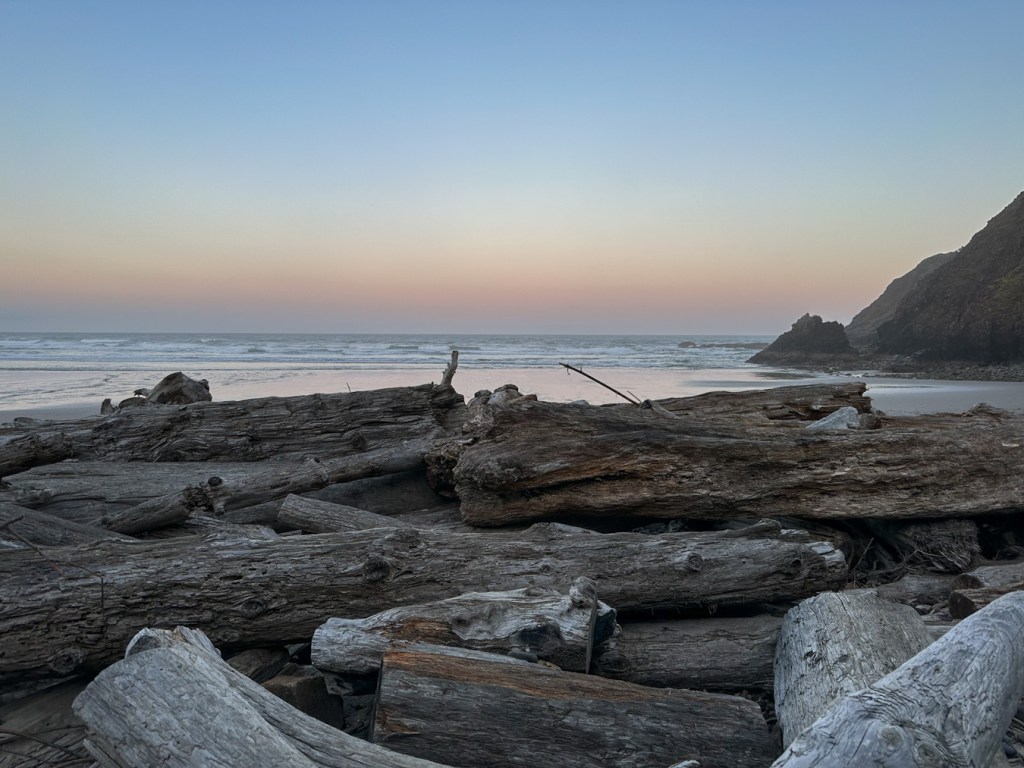
On the seaweed side
Macrocystis tenuifolia
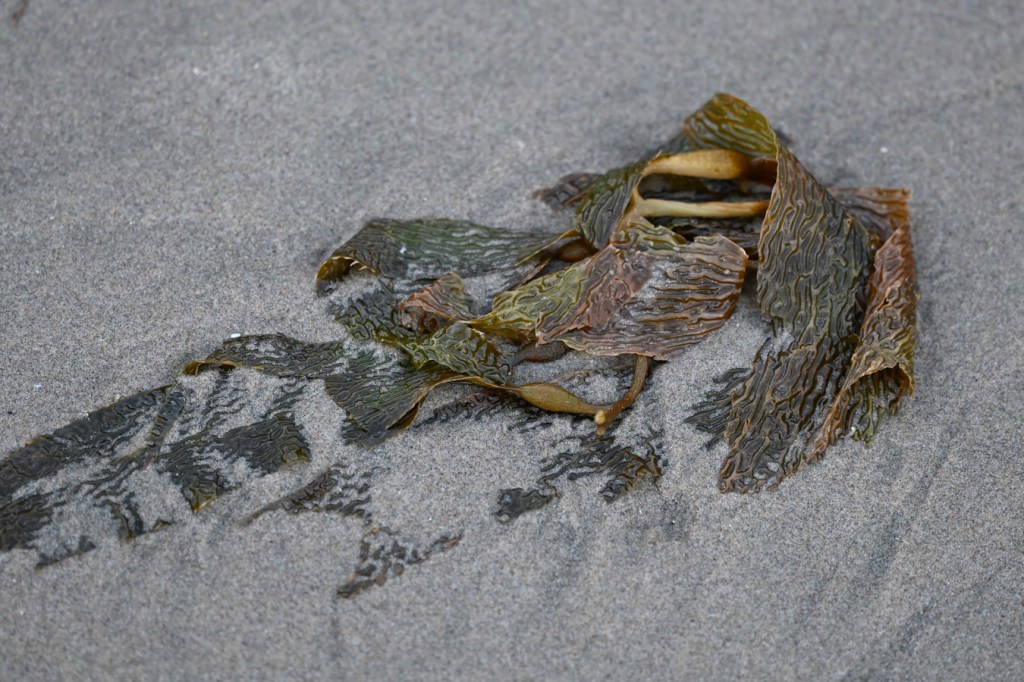
Fucus


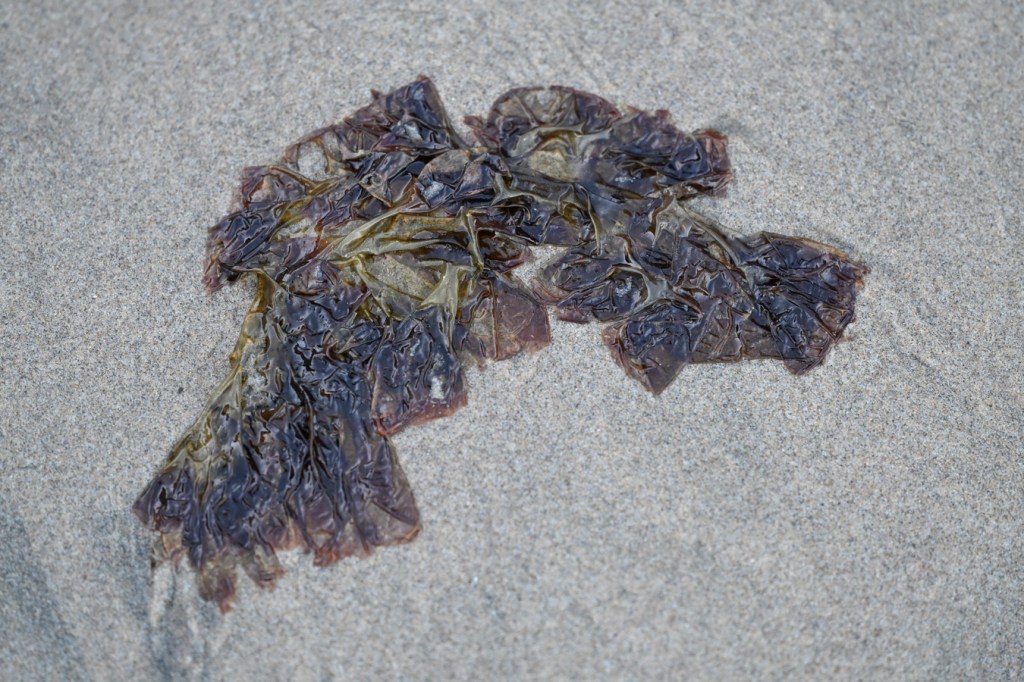
Pyropia
Setup just right
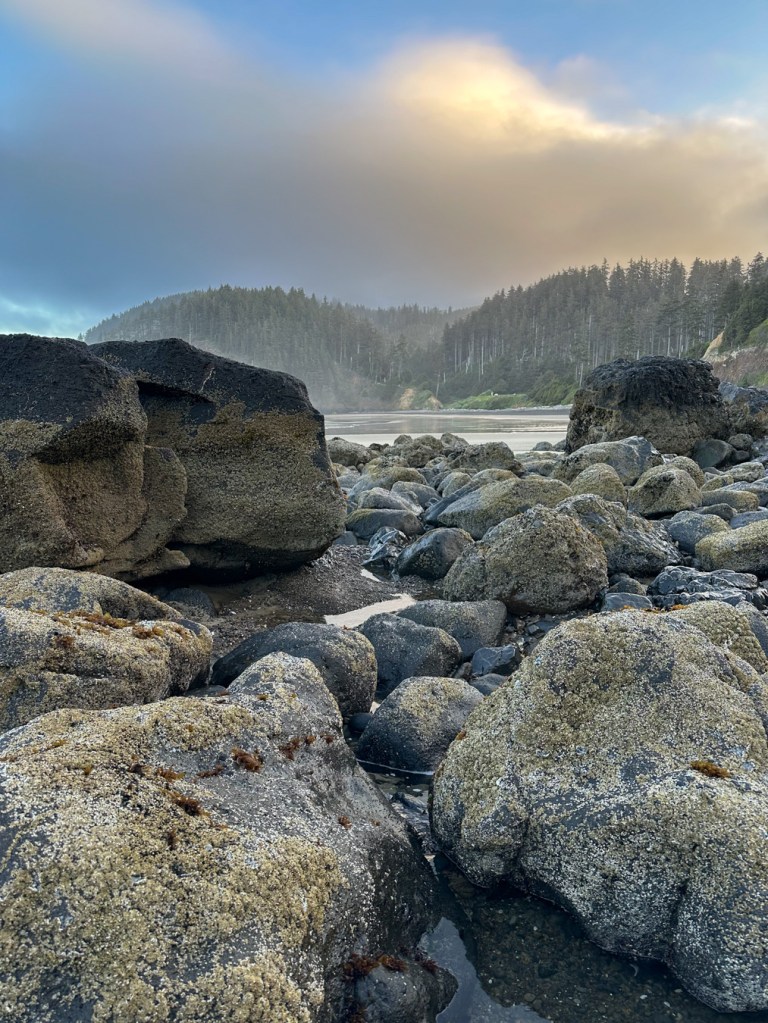
A final drifted find
A little bleached shell, only about one inch long, it’s probably a baby gaper clam, Tresus.


May 27, 2025
Anticipation

Early morning finds
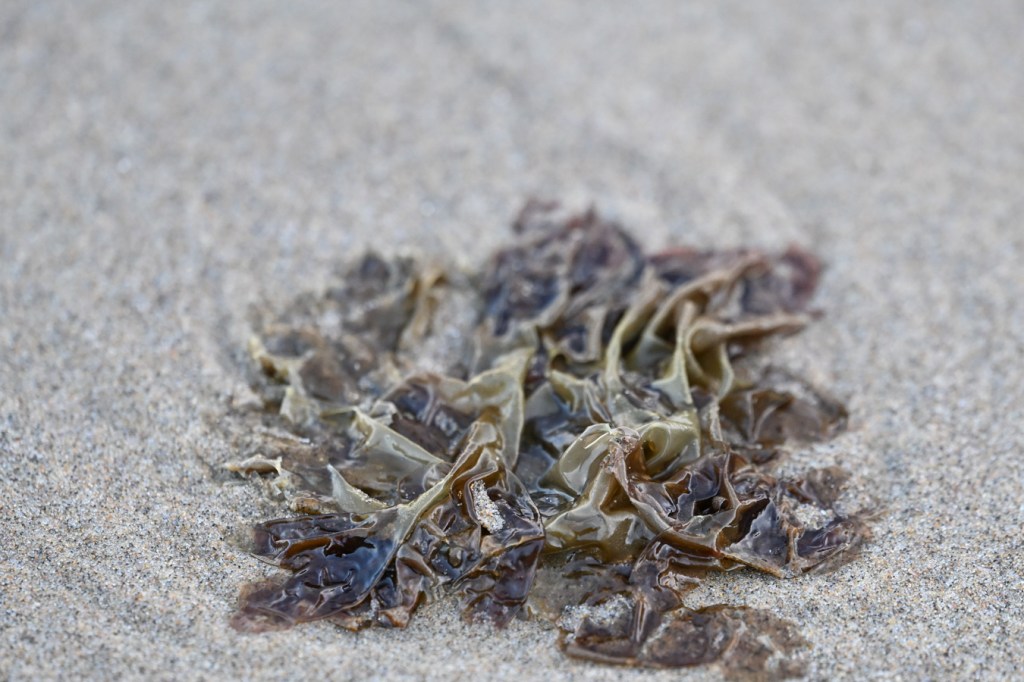


A mirror between stillness and surf
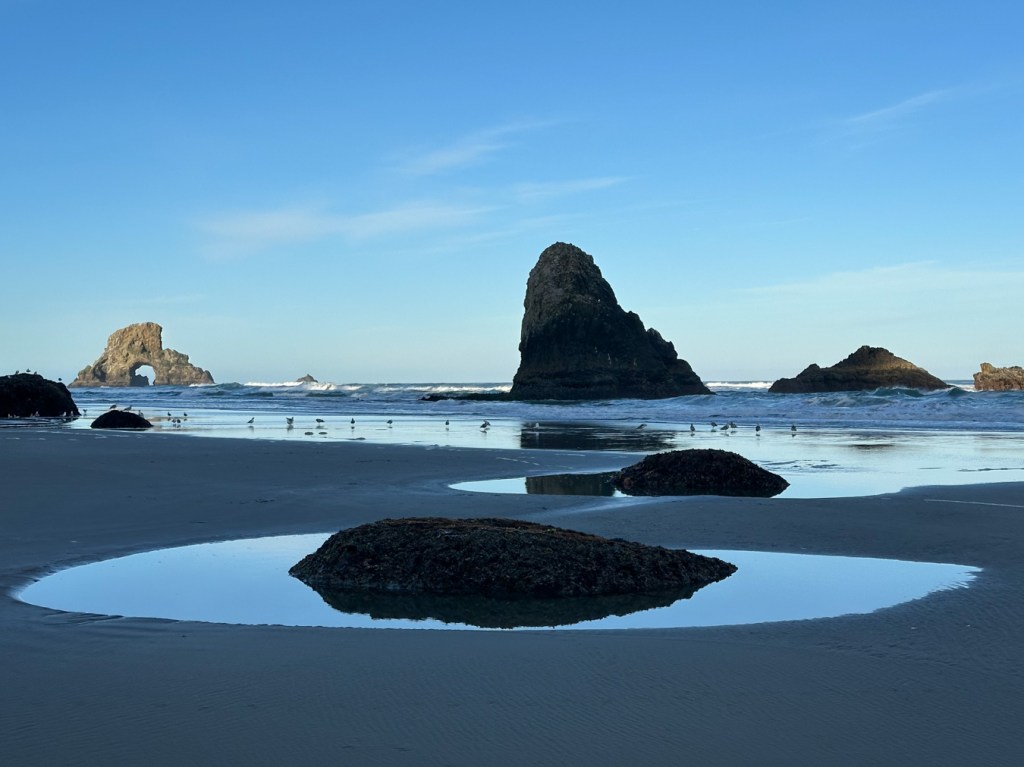
An Inscrutable red blade

Track of the reclusive black-tail

Fine focus on the pinching claw
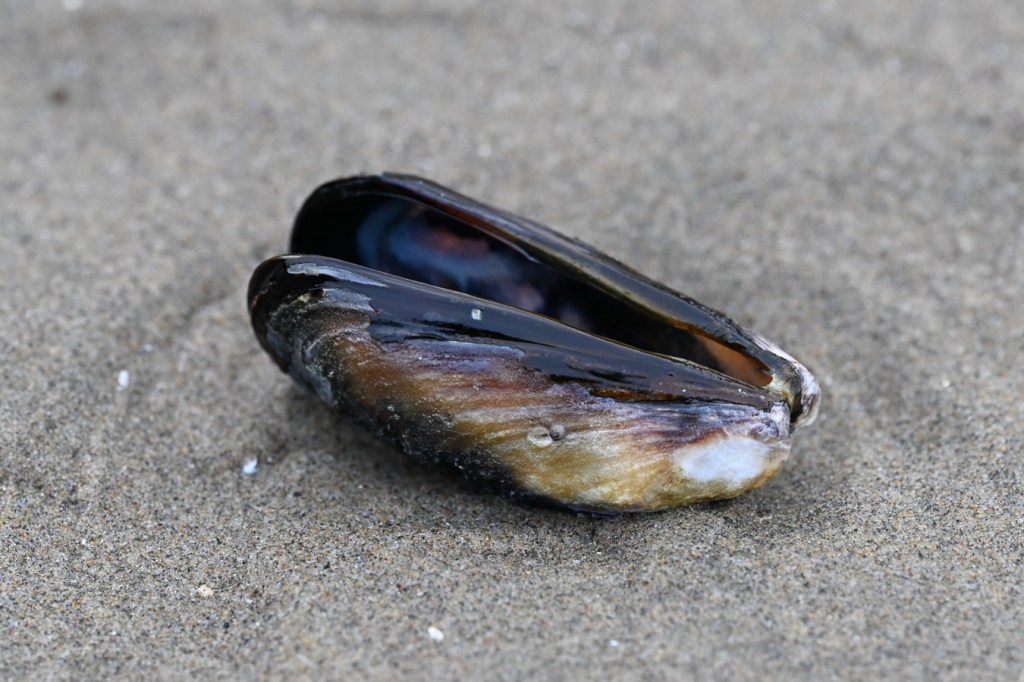
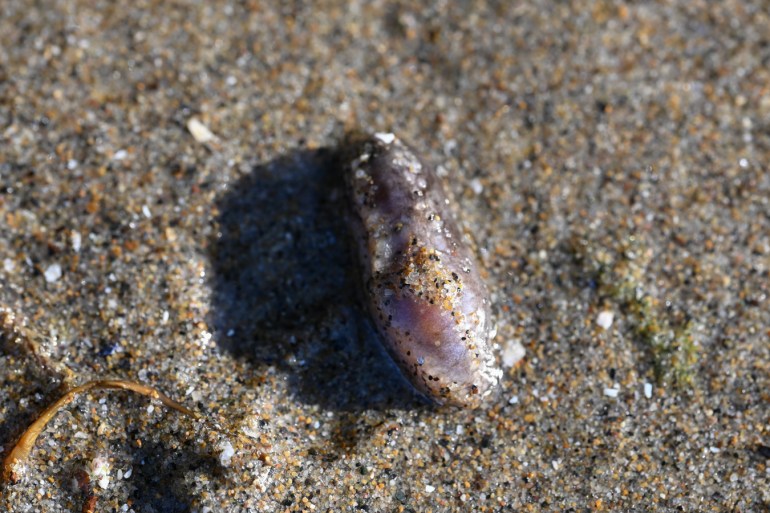
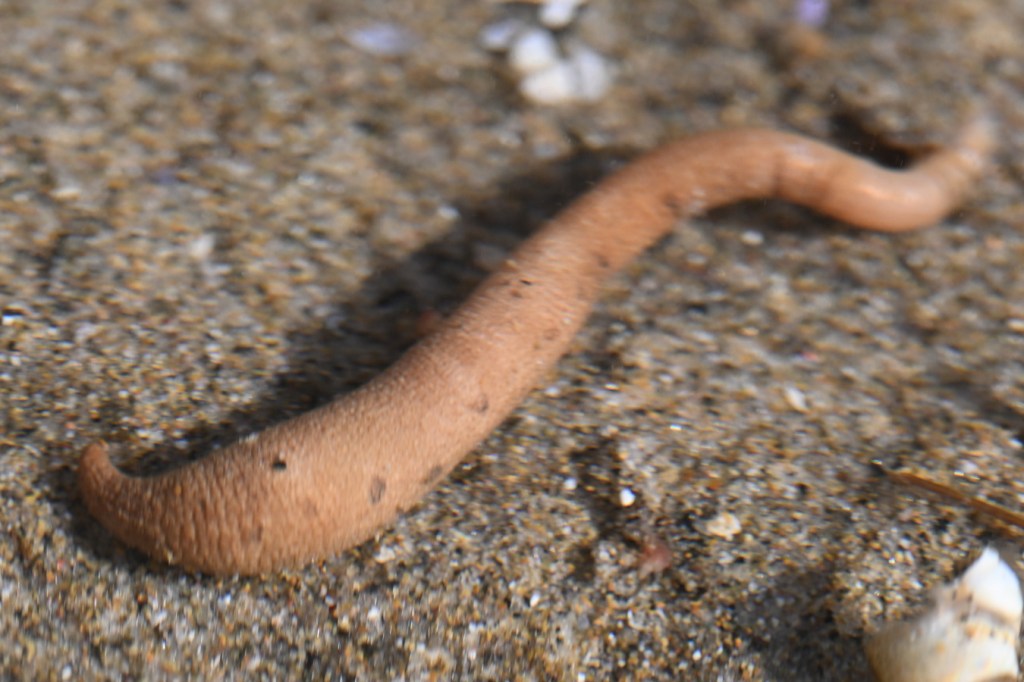
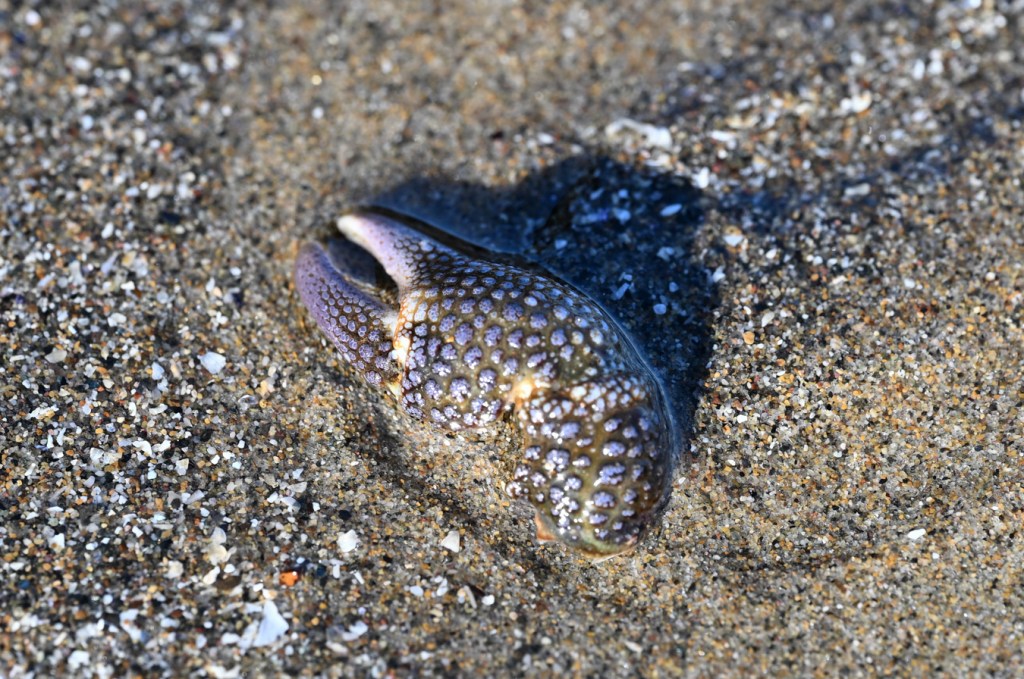
While I was walking the shore, I noticed, from a distance, that harvesters had left a clutter of mussel bed debris behind, so I went over to take a look. The set below shows a sample of doomed creatures they left behind.


Drifted odds n’ ends
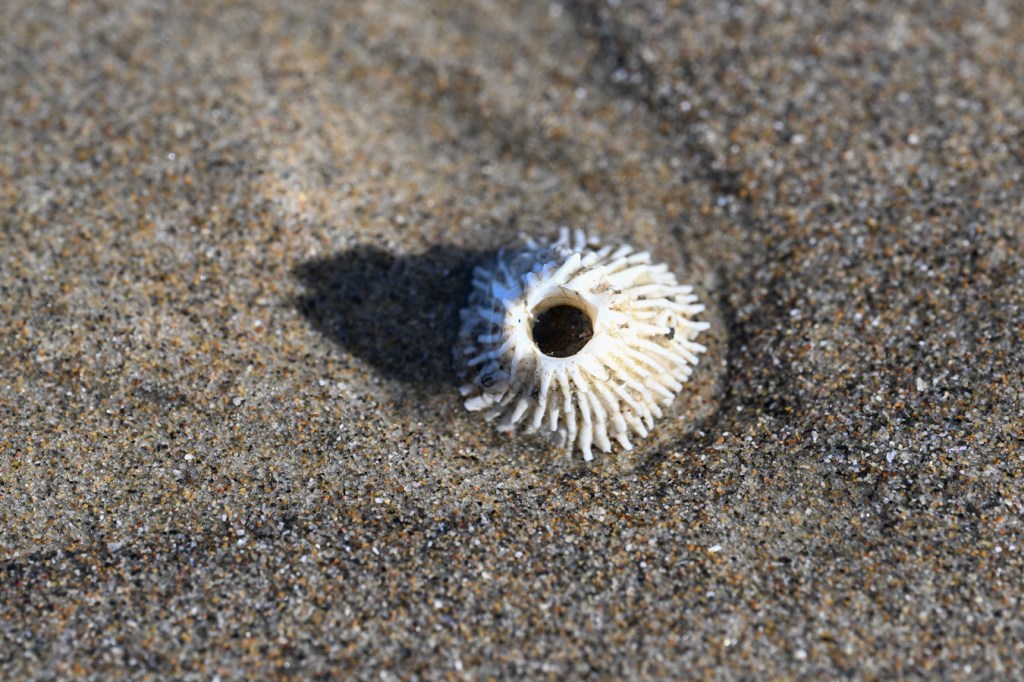

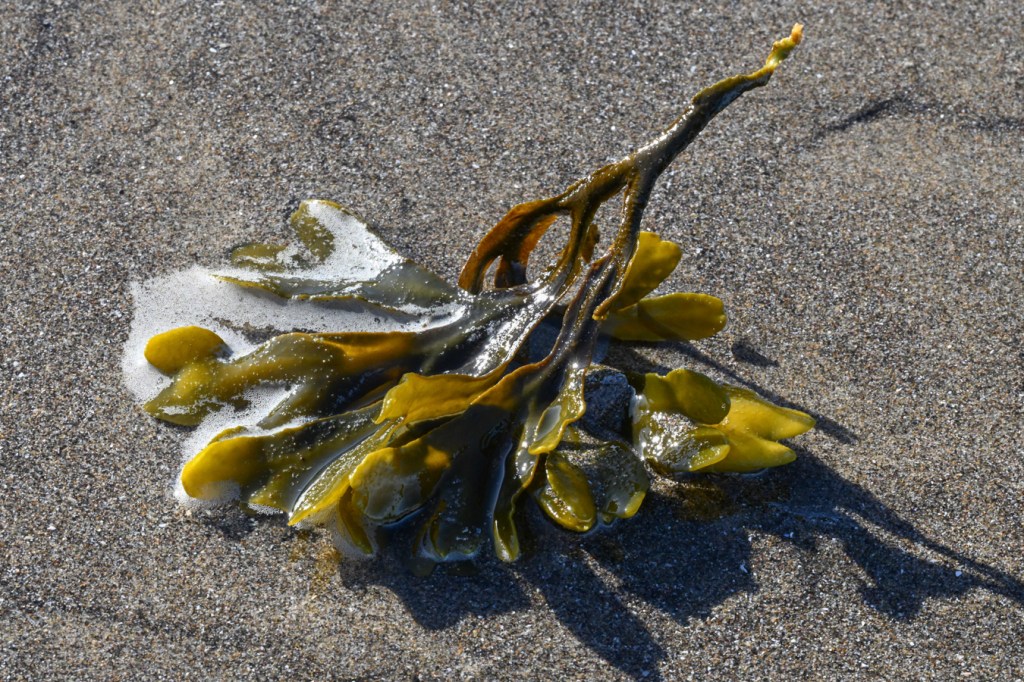

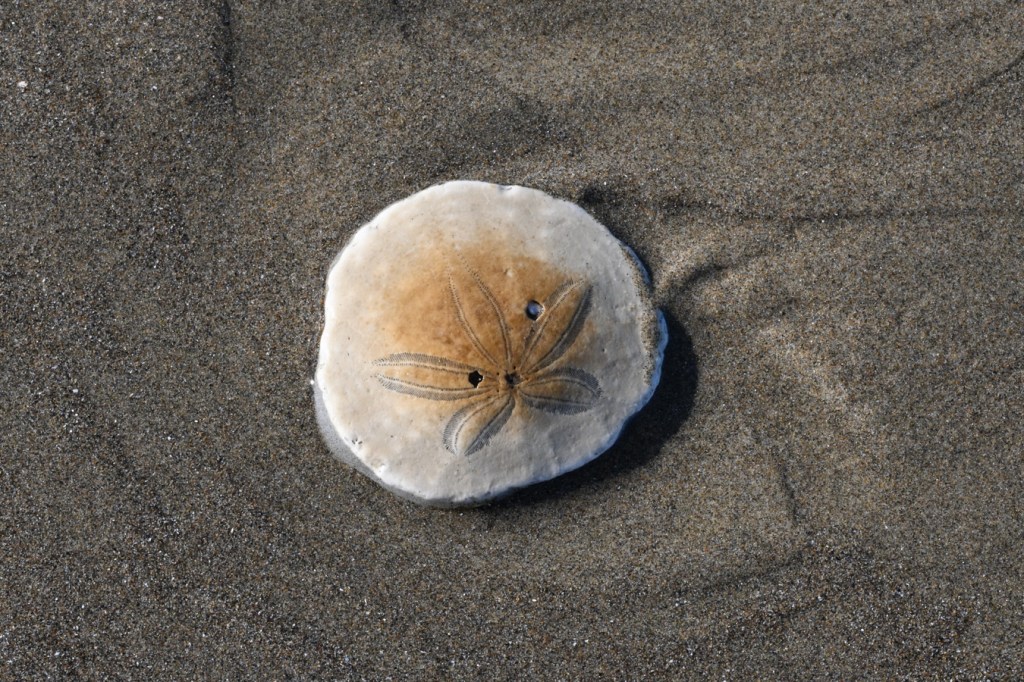


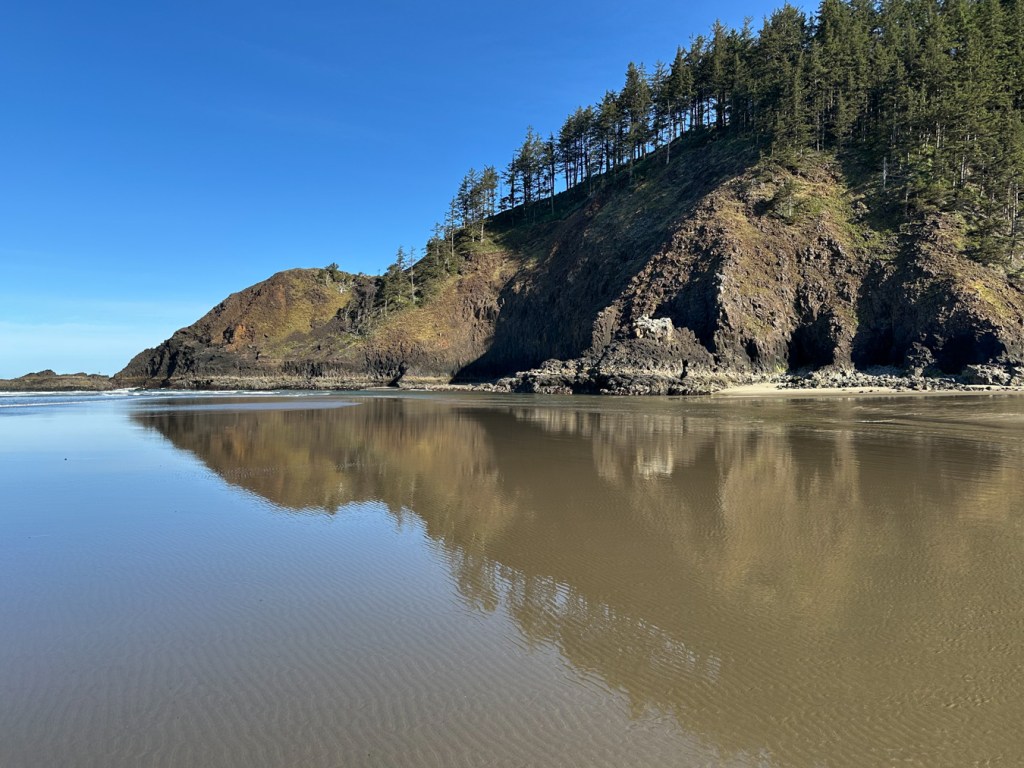
I conclude this walk on the beach with a view of an expansive mirror.
May 1, 2025
A view from above
A view from above is an opportunity for me to illustrate and place perspective on the wrack line and its adjacent reaches on the beach and beyond. A good place to begin is on the beach, where I’ve entered a few labels on the image below, and as good an anchor as any is the wrack line (the eponym of this page!). In this scene, I think of the wrack line as the thin line of debris at the boundary between wet and dry cobbles. It’s composed of material that washed up in one or more of the recent high tides. It contains the treasures sought by beachcombers—polished driftwood and seashells, and buoys and bottles—sometimes from distant shores. At any particular location, the tide sequence, surf conditions, and a bunch of other factors determine whether the wrack line is a single line of debris or more than one line. (In this instance, the label points to the line of debris from the previous night’s high tide, which just made the cobbles).
You can usually expect bare zones below and above the wrack line, where bare gives the wrong impression. (Bare doesn’t mean there is no wrack or drifted material—there are plenty of interesting finds to be had in this zone—it just looks bare from a distance.) Moving landward, across the bare cobbles, on this beach anyhow, you’ll encounter a band of big driftwood at the very top of the cobbles. This band seems fairly stable because deposition and removal of material from this band are punctuated events occurring only during the very highest tides and biggest surf of winter and spring. Some drifted logs remain in place for years. In this scene, the biggest wood comes to rest on a narrow shelf at the top of the cobbles, right up at the base of the willows, which are evident along the lower right-hand corner of the frame. (The broader the shelf, the greater the opportunity for accumulation of big wood.) Once we enter the willows, we will have stepped outside of the proper intertidal, into a sister ecosystem.
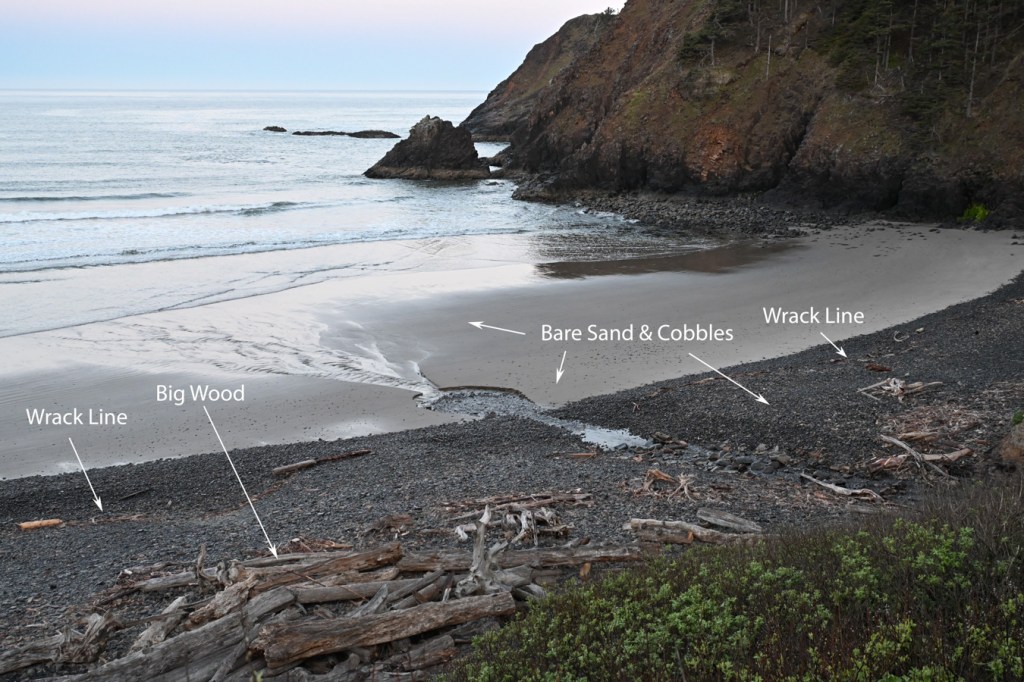
Returning to the beach and looking seaward, it’s easy to find the surf zone (unlabeled), it’s the fairly obvious band of breaking waves just above the middle left-hand side of the frame, where surfers and surfperches gather. Venturing beyond, you leave the intertidal for sister ecosystems extending out to the open ocean, to the horizon and beyond. All adjacent ecosystems have ties to the intertidal. A surf-zone-adjacent band a bit closer to shore than the breakers is the swash zone (also unlabeled); you can feel its rhythm swashing and backwashing over your ankles. Sometimes, a quiet zone of reflective sheen forms. That’s the mirror; you can see traces of it at the center of the frame. The mirror is the band where sanderlings feed, and where you see them running, just above the leading edge of the swash. (Gulls loaf in the mirror, and other shorebirds feed and spend time there too.)
Each stretch of shoreline has its own features, as do the wrack-line-associated bands on any given day, so the descriptions I’ve given here are most applicable to the scene above on the day I took the photo. Furthermore, there is nothing special about the terms I used; they’re just terms I’ve adopted and all of them have synonyms or alternatives. Likewise, the descriptions of the various bands and zones, those are mine, along with and all their idiosyncrasies, errors, and omissions.
Caveats aside, let’s compare a birds-eye-view of the wrack line at the same site—at beach level—just over three years ago when the bands of bare sand and cobbles, and the lineup and location of the wrack line, and the band of big wood look almost identical to the present example. (To orient yourself to the two images, find the small creek cutting through the cobbles.)
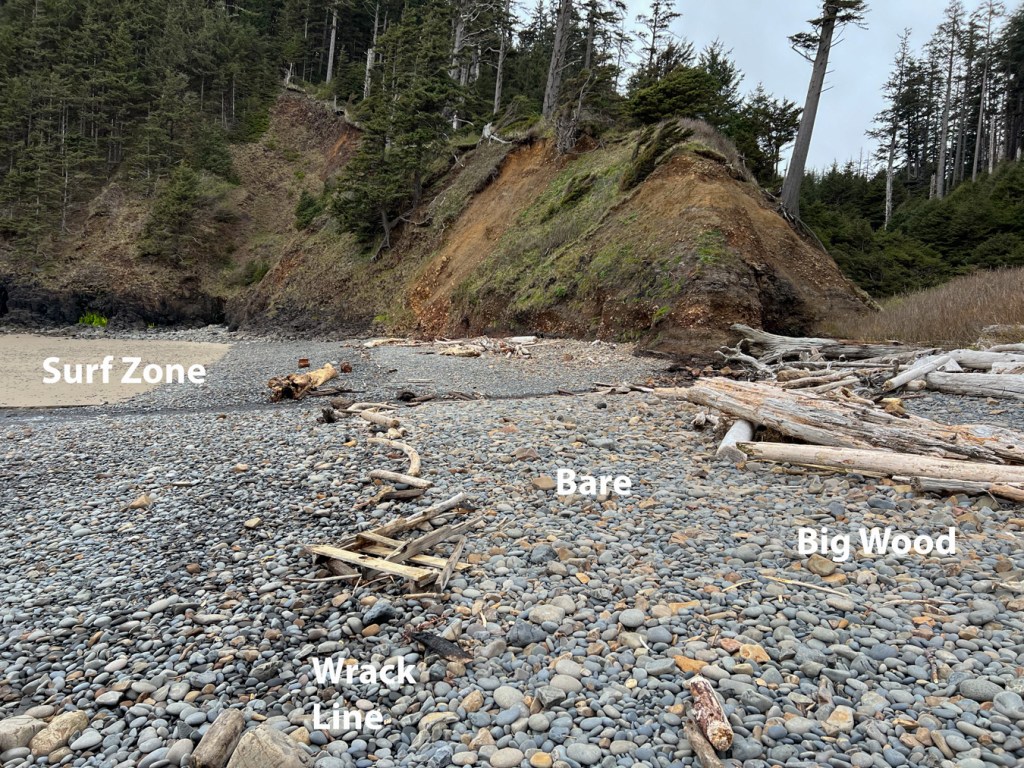
The labels on the older image translate pretty well, but there is an exception. Three years ago I put the Surf Zone label way up on the bare sand and cobbles, just below the wrack line. It makes sense now, just as it did back then, because, well, you’ve got to have surf and its swash to get a wrack line. However, at least today, I’m thinking about the surf zone as the place on the beach where the surf is breaking and the redtail surfperch are chasing mole crabs.
If you want to see some of my wrack line finds from 2025, just scroll up or down this page. For finds from previous years, go to any of my other Wrack Line pages.
***
April 30, 2025
From the swash zone up to the cobbles and the zone of big wood
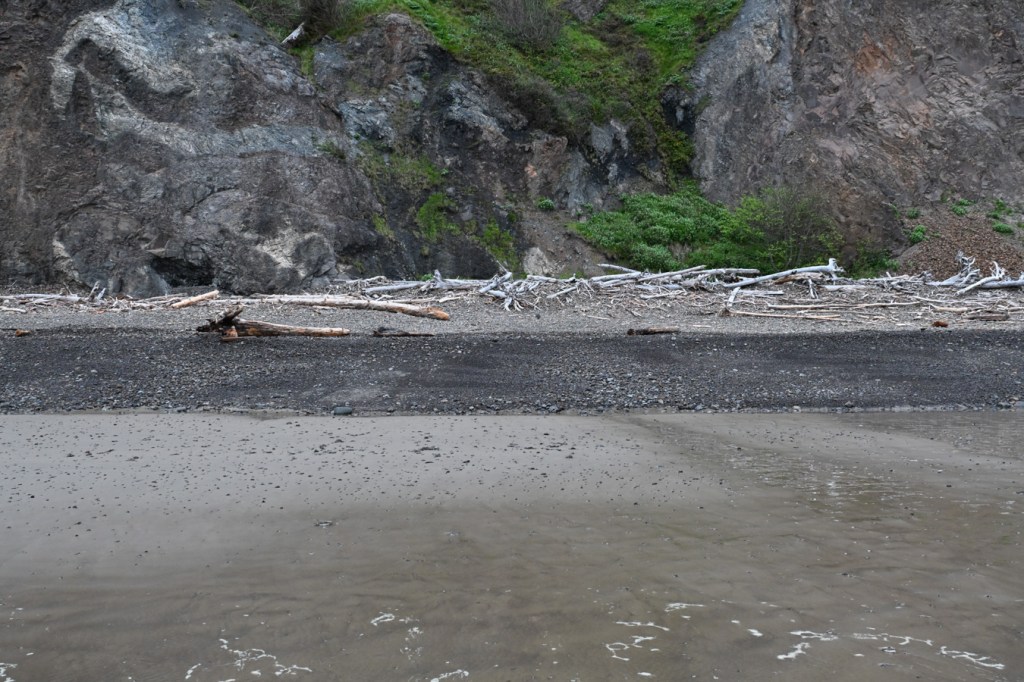
Scraps in the swash

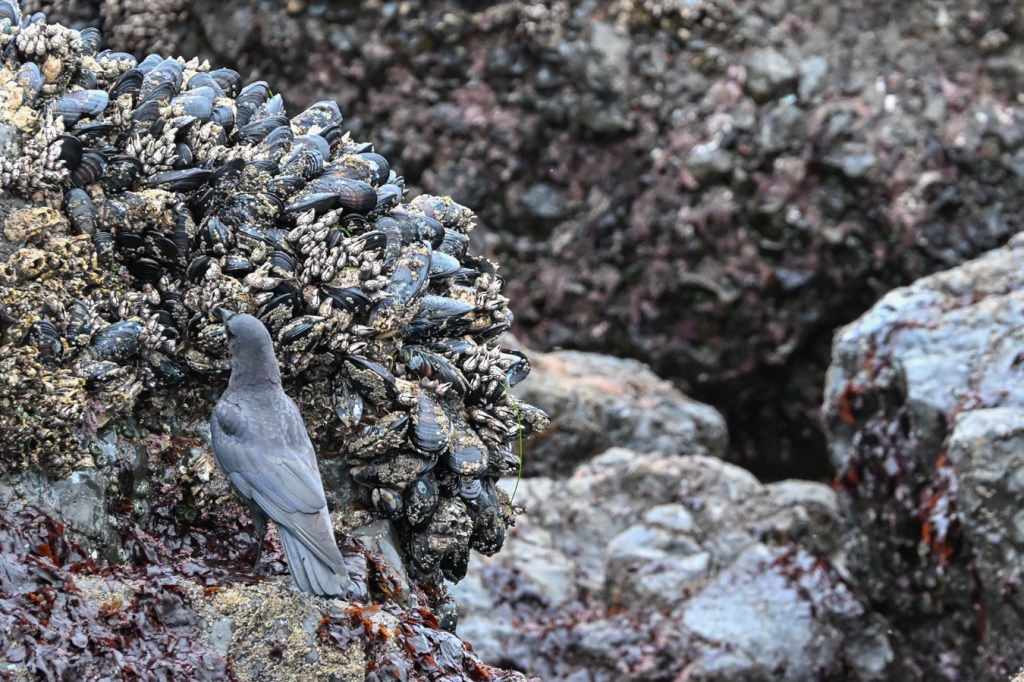
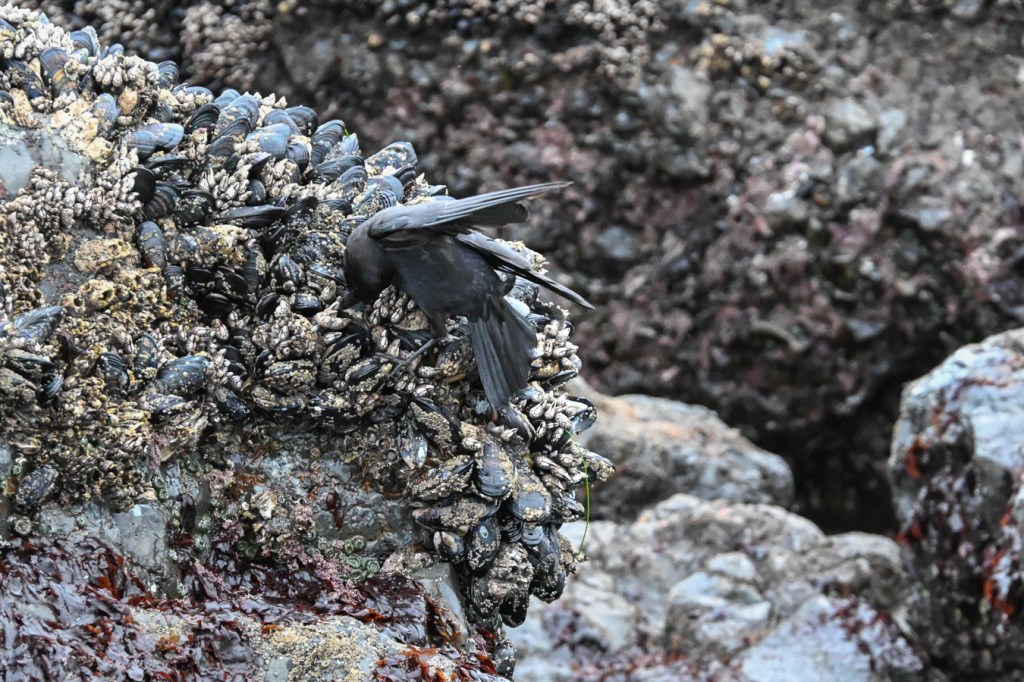
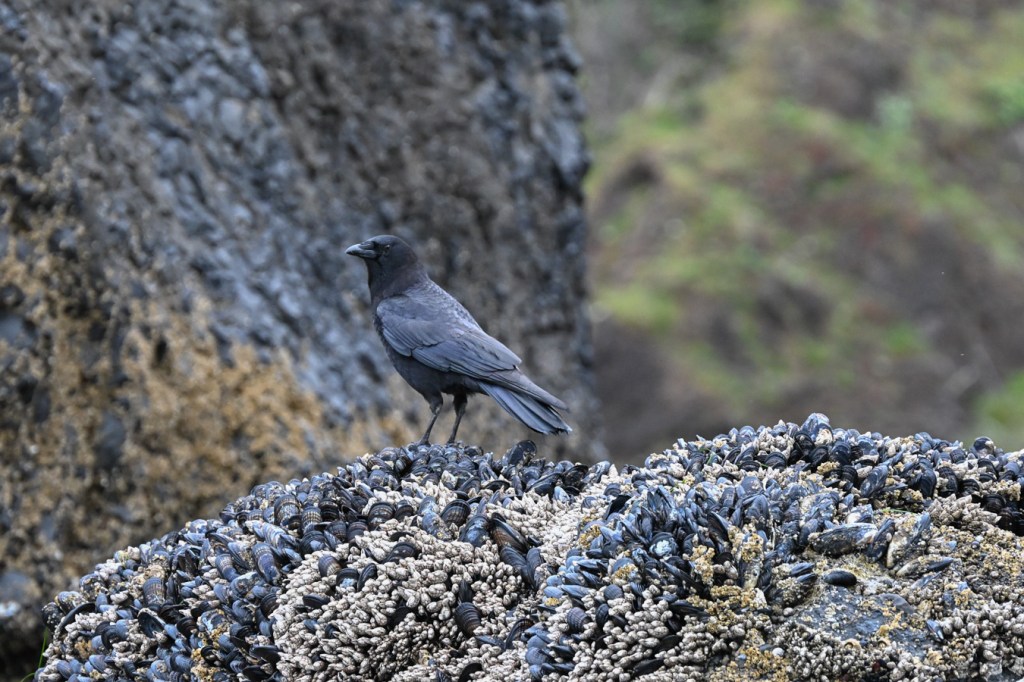
Watching a crow hunt the mussel bed and it watching me. They’ll use all their flexibility to get the right angle (upper right-hand panel).
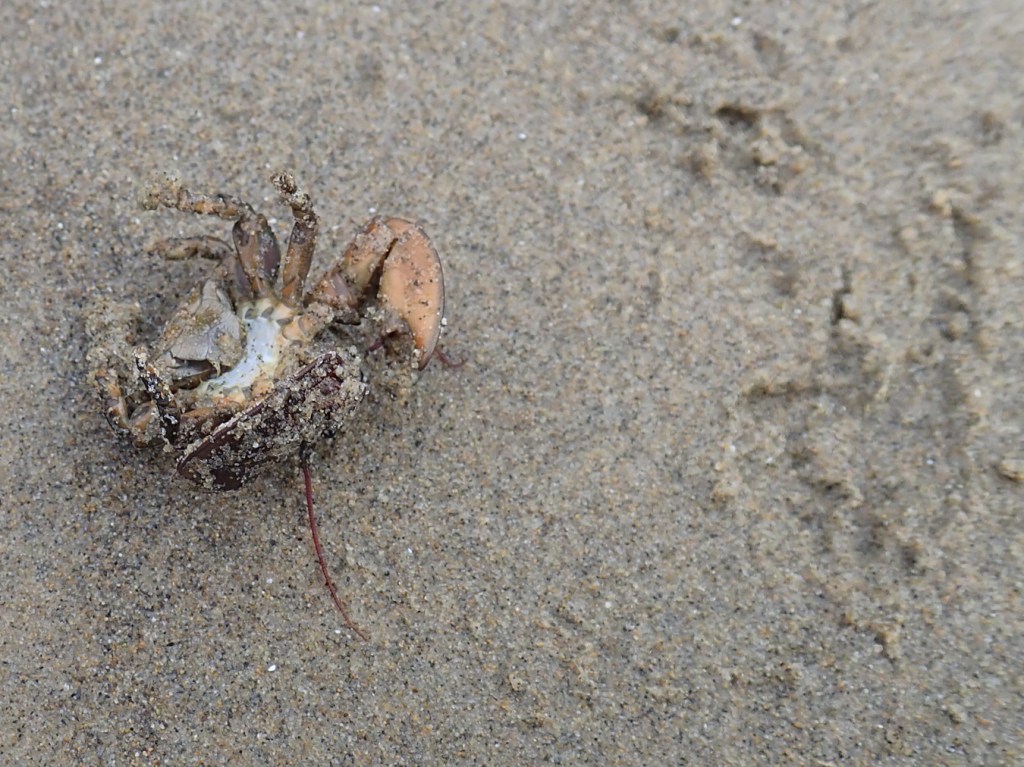
Crows have a great eye for crabs and the unsettling habit of eating the best and leaving the rest behind. Shown here are the partially-eaten remains of a granular claw crab (left-hand panel) and a flat porcelain crab (right-hand panel).

Artifacts


I’m closing this beach walk with a look at the shelf that can form at the top of the cobbles when the beach is wide enough. Backshore shelves are places of driftwood accumulation.
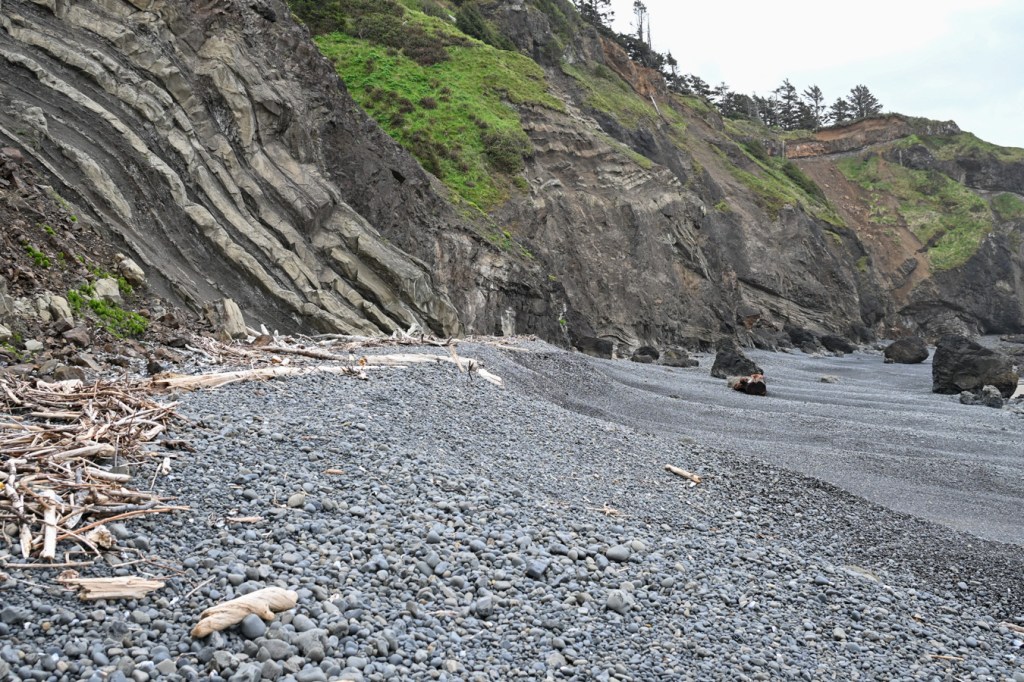
April 29, 2025
Coming to you from the zone of big wood
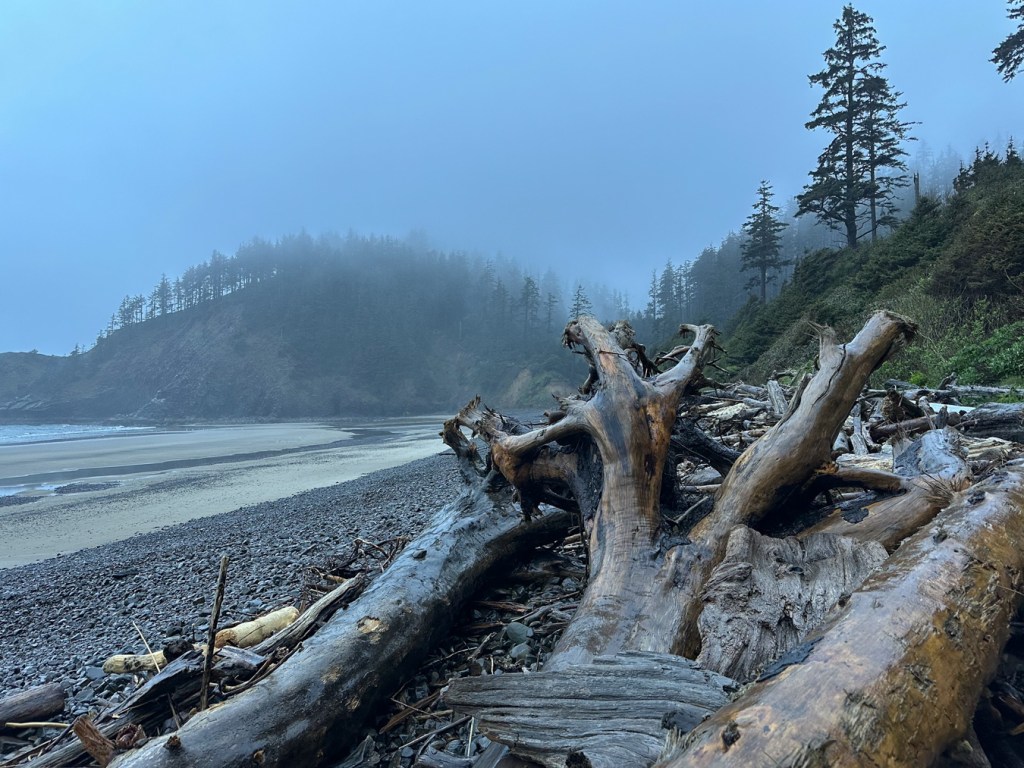
Where there is big wood, there is big human-made debris
I’m not sure it’s particularly evident in this image, but a lot of the big wood—and the fish tub lid— rests on a narrow shelf at the top of the cobbles. It takes high tides and the big waves of winter to get this wood on the move.

Perspective

Down on the beach

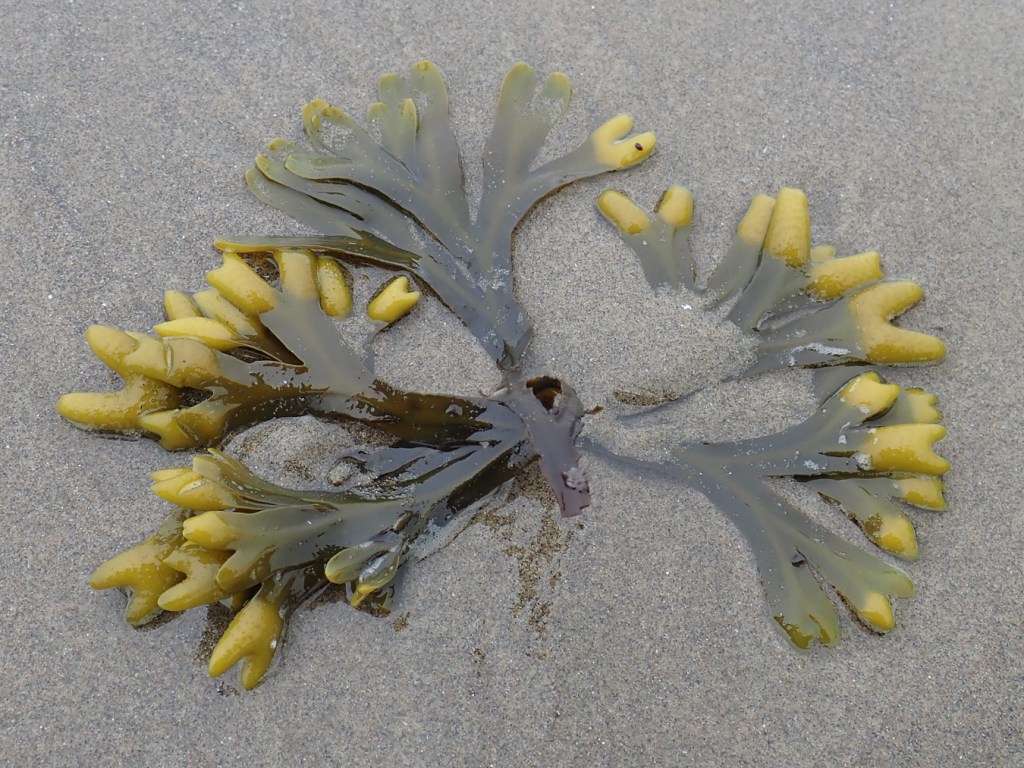
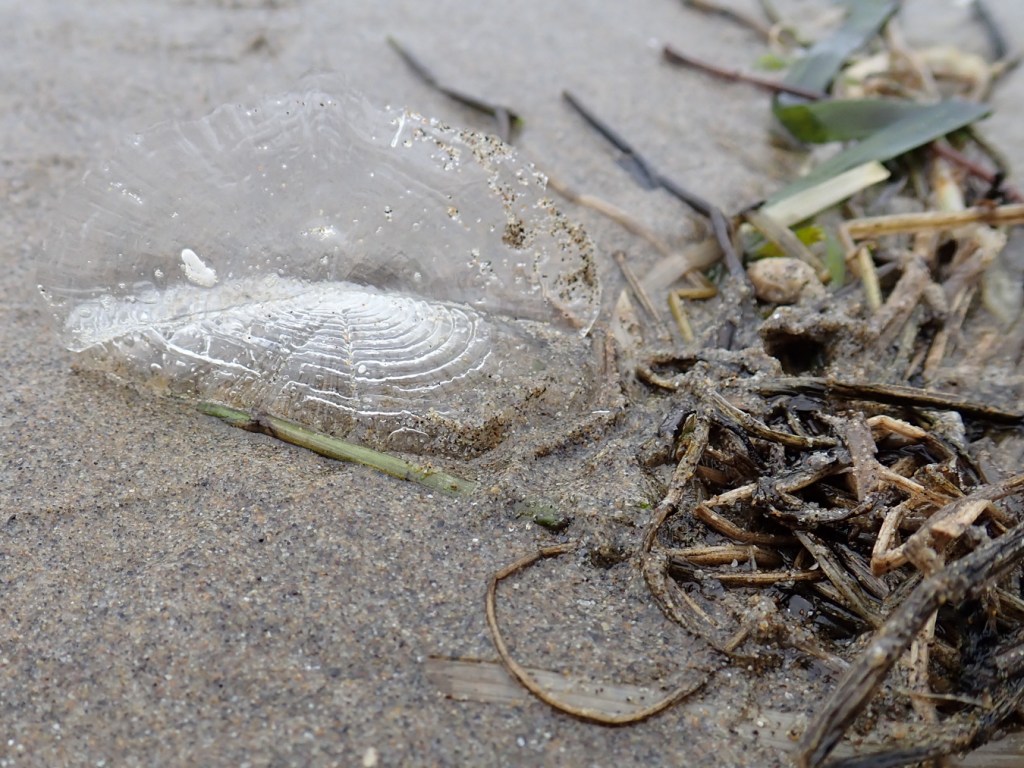



Afterthoughts

All the while, the crows, a few of them anyhow, were successfully working over the accompanying mussel beds and low rocks, mostly focusing, it seemed, on this particular morning, on crustaceans. Crows can be messy eaters and I came across a few of their discarded morsels, two of which I highlight below, because, thinking it through, there’s not much daylight between a crow’s leftovers and the other drifted specimens featured in this entry.
First, a little spot-belly Romaleon antennarium, as I found it, upside down and struggling at the base of a boulder.

Here, the same crab, washed free of sand for a better look at its namesake abdomen (left-hand panel) and the hairiness of juveniles (right-hand panel).


To see more photos of spot-bellies (including the adult version) and other crabs you might encounter on the northern Oregon shore, take a look at my Crabs page.
I’ll end this entry with one of those little broken-back shrimps, maybe Heptacarpus or something similar.

Striking when cleaned up and set upon a bed of Mazzaella.

April 28, 2025
Step right up
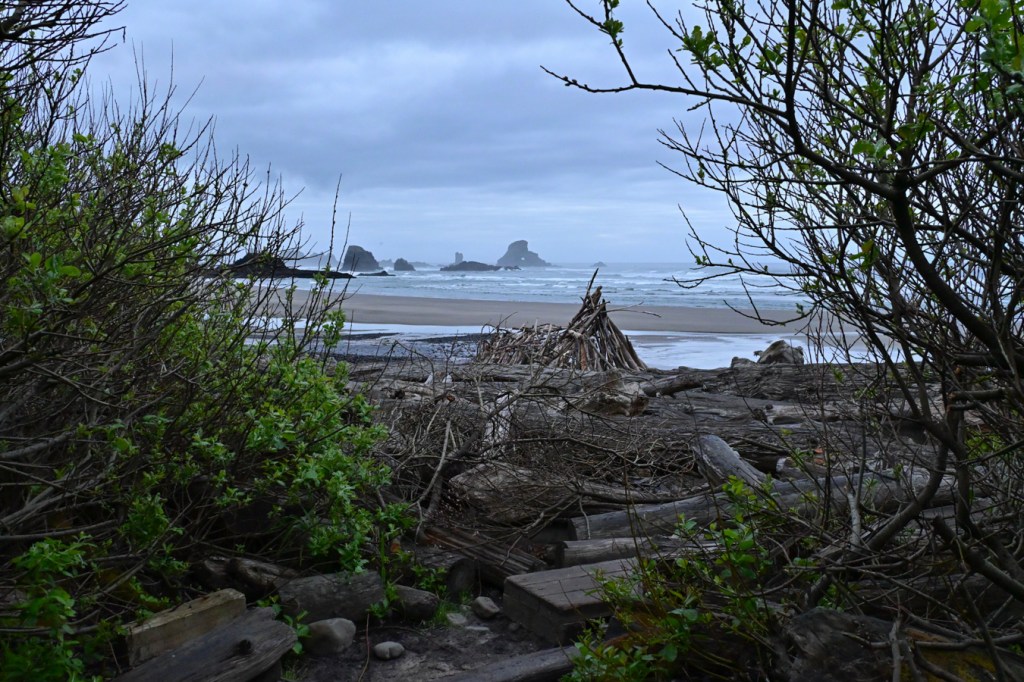
Ton of big wood up in the cobbles
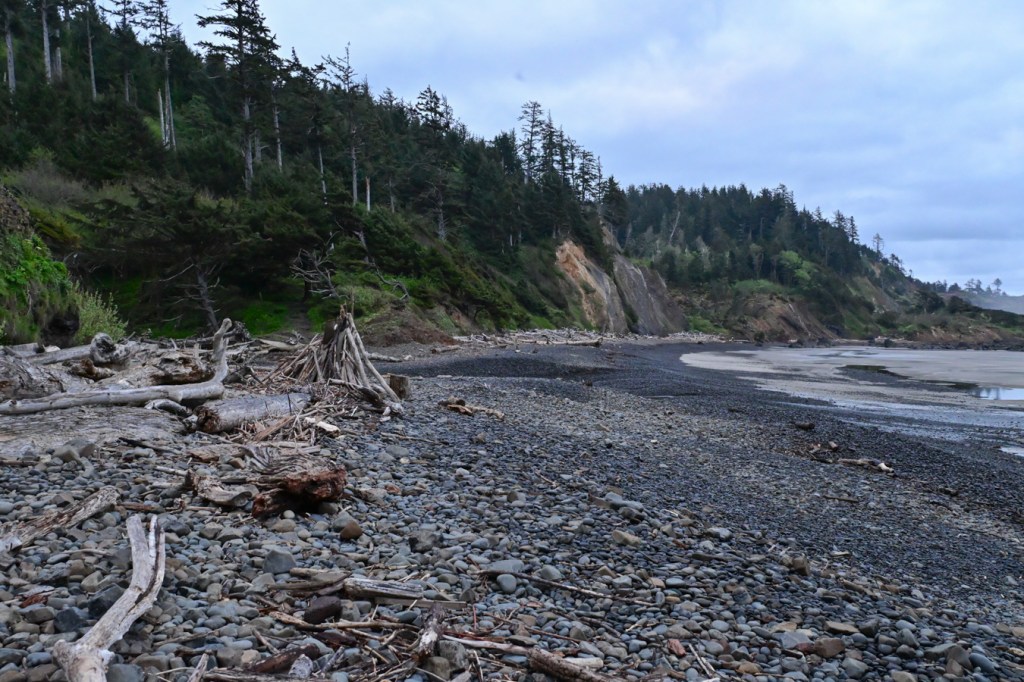
Seashells


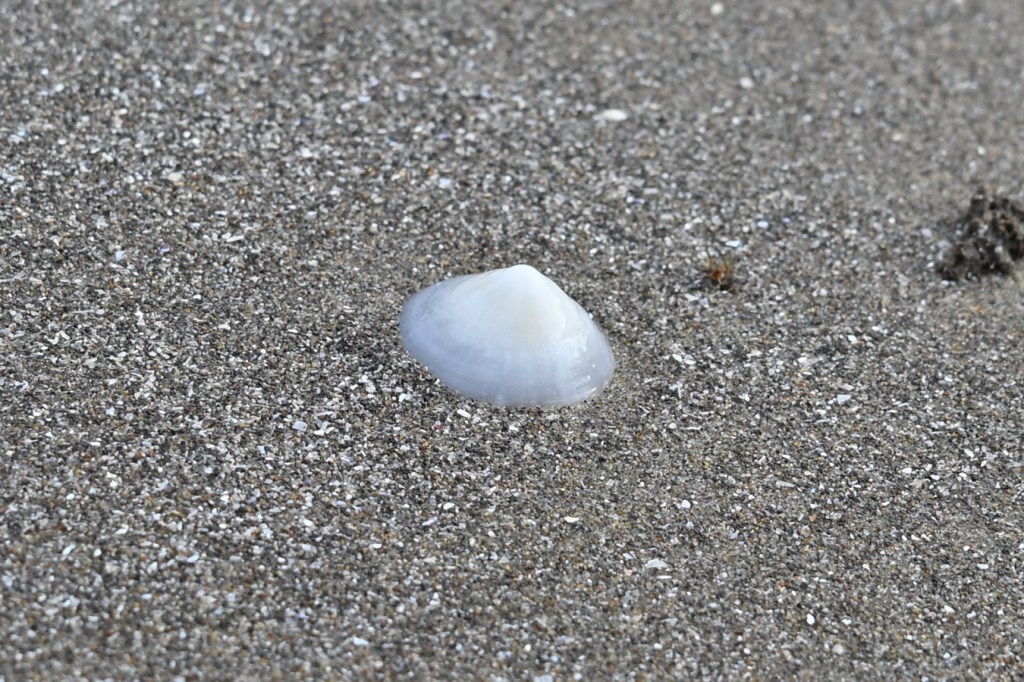

Do you feel like sand dollars are seashells? Either way, everybody’s on the lookout for a perfect find like this.
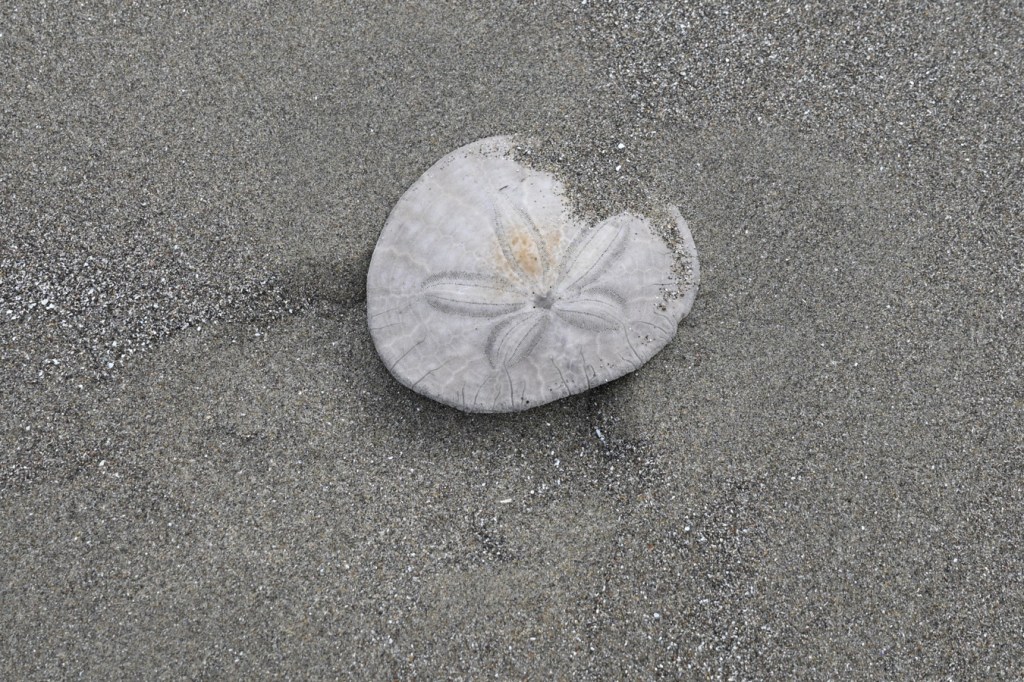
A different perspective
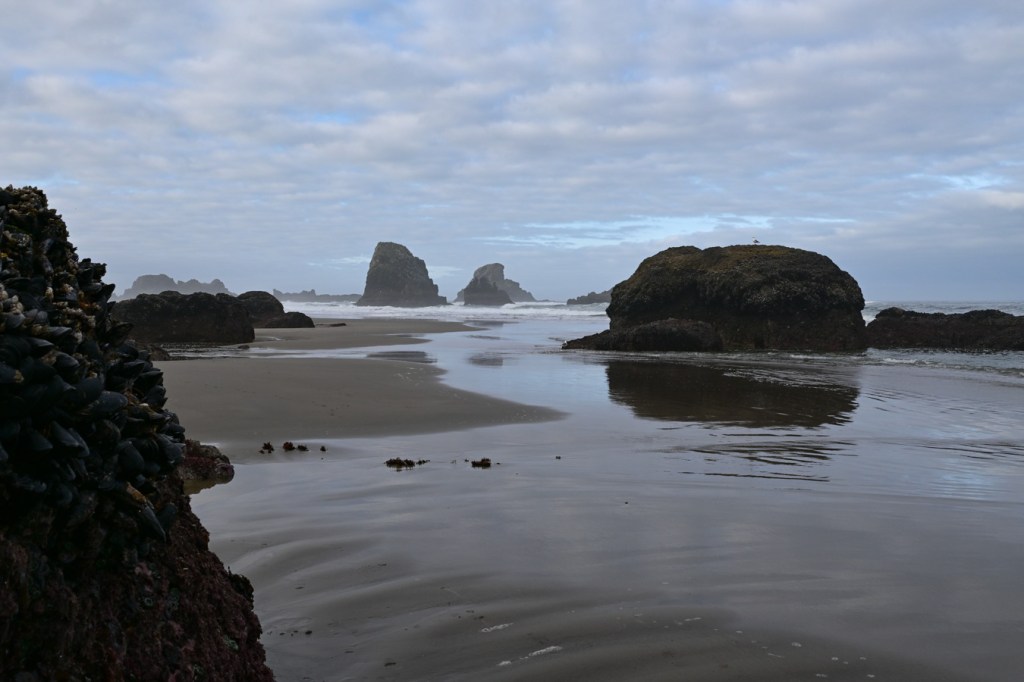
Odds ‘n ends


At times of low tide, some crows do their hunting on the shore. If they are lucky enough to find a granular claw crab—they’re pretty good at it—they pull them from their hiding place and eat their soft abdomen, discarding the rest.

Sign from the human side

March 5, 2025
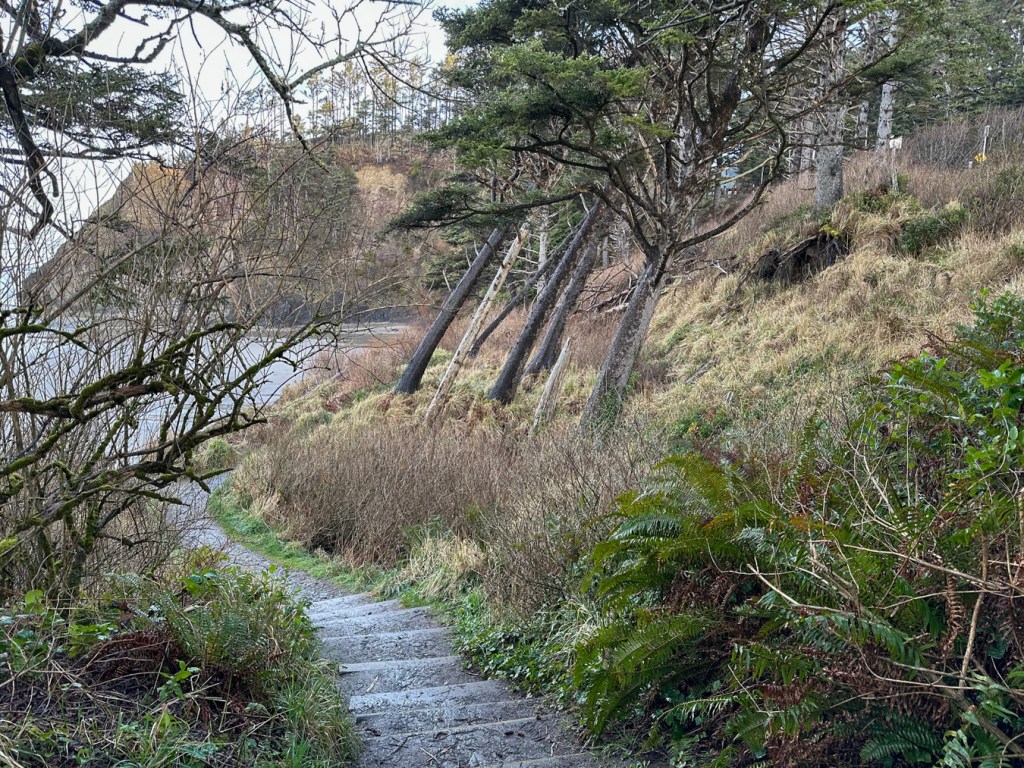
This crazy trail traverses a slide, and the slant of slip-sliding trees is a bit disorienting. Nevertheless, I’m curious about the wrack line. Does it perhaps hold a treasure or two, or maybe more?
Affirmative says the Lion.

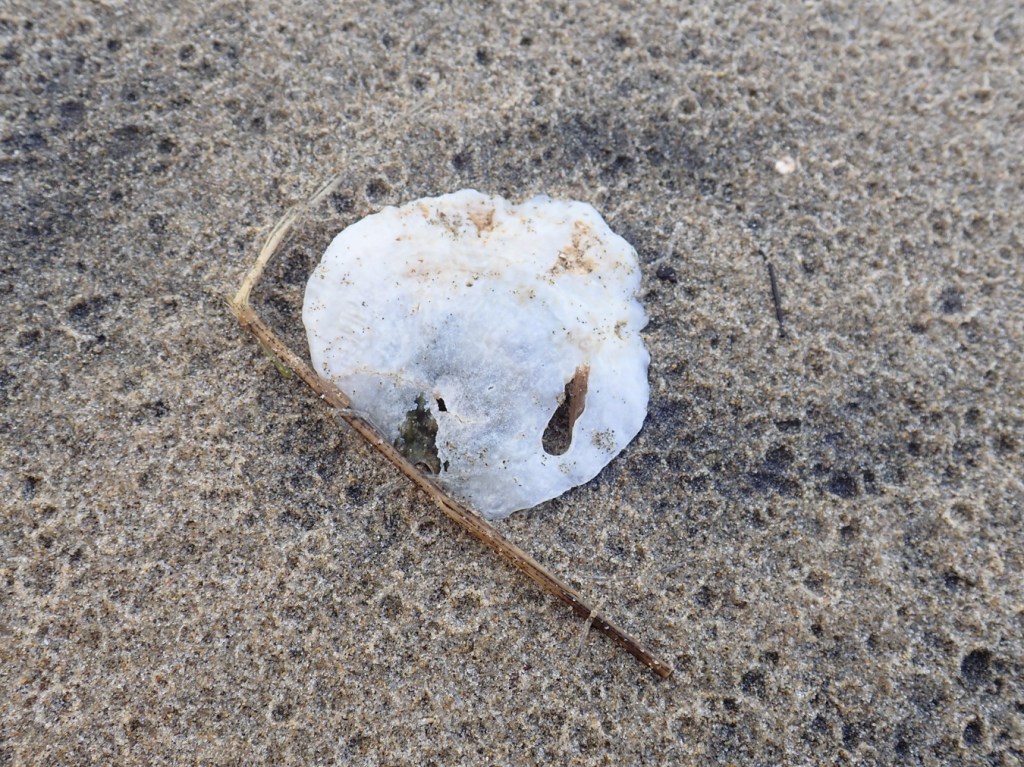
The first shell I found was a drifted green false-jingle. (Note the raindrop-dimpled sand. You’ll see that in several other images. Showers were a theme throughout the morning.) I picked it up and washed it off and laid it out on the sand for a better look at both surfaces.


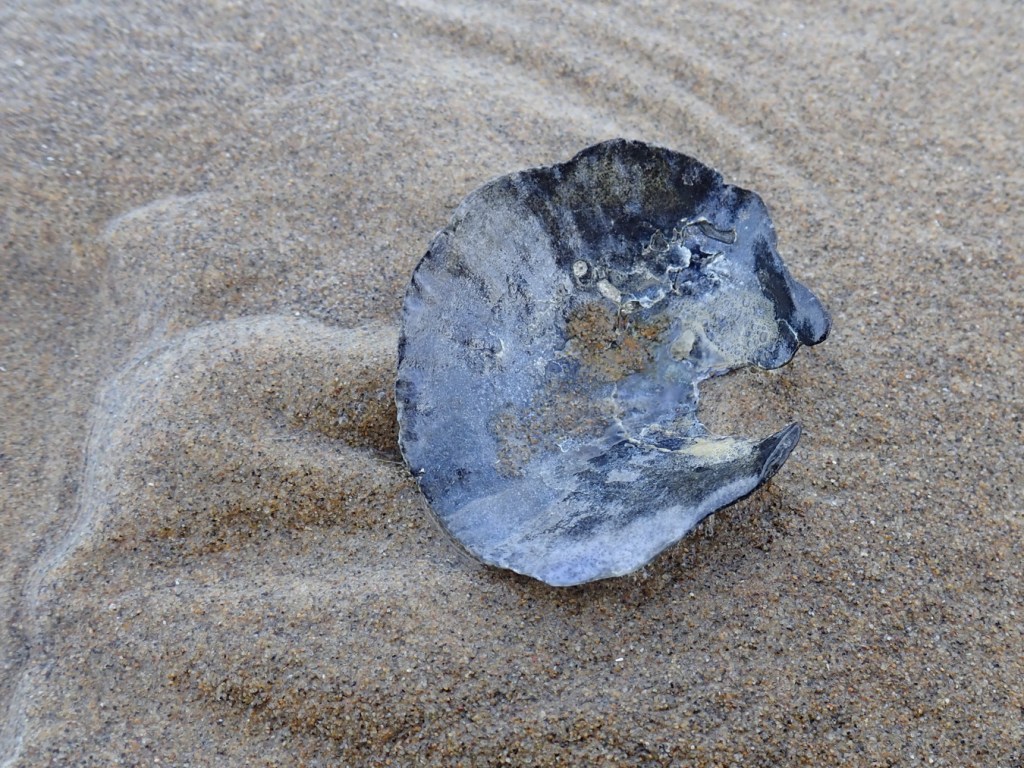
That’s worth another try. This time the Pododesmus shell is a dark blue-grey color. I’m not sure what’s up with that, but it could be the result of iron sulfide staining. It’s not too unusual to find drifted bivalve shells of this color.
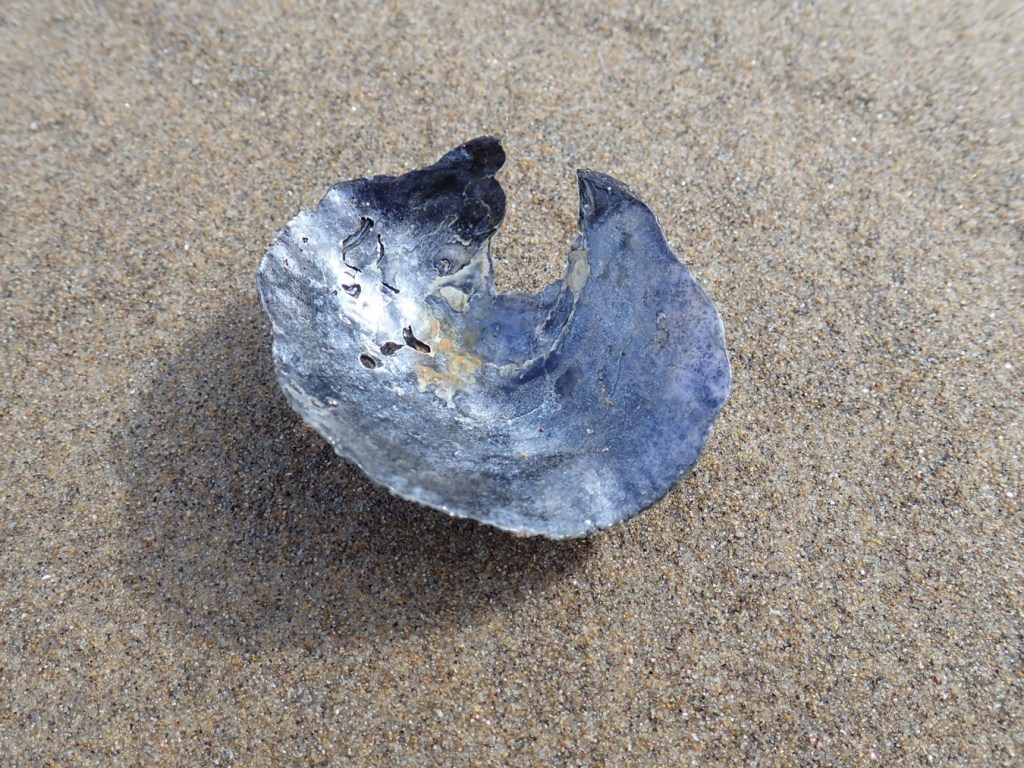

This time, both sides of the left valve (so I say) of a gaper shell, most likely a fat gaper Tresus capax.


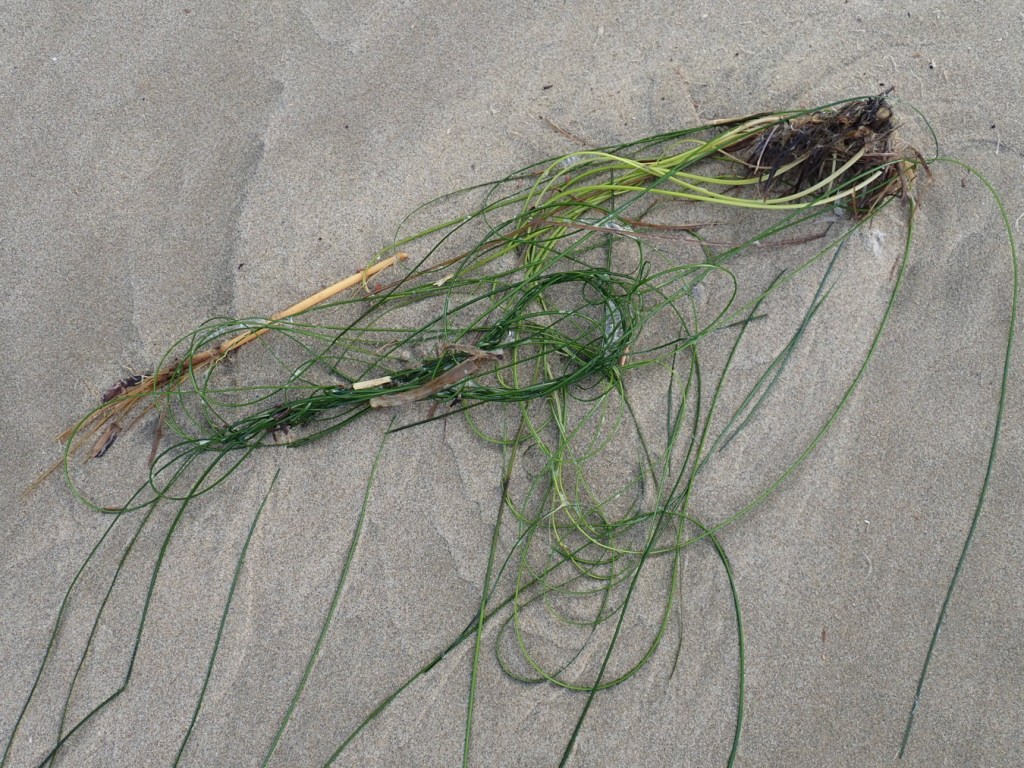
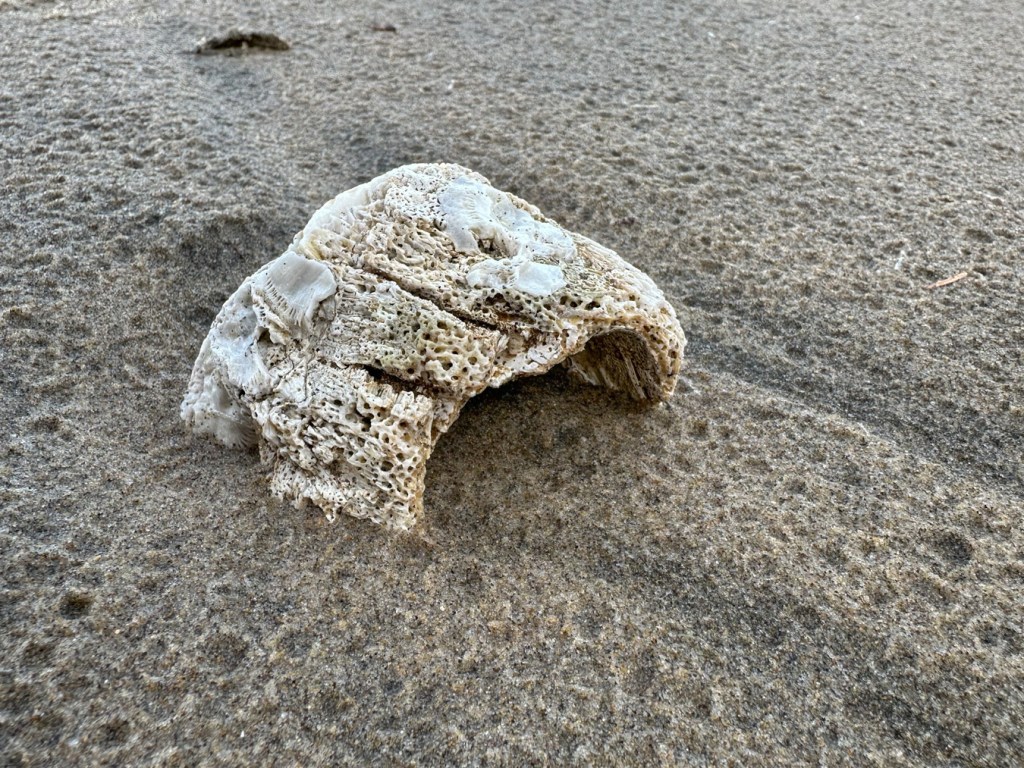
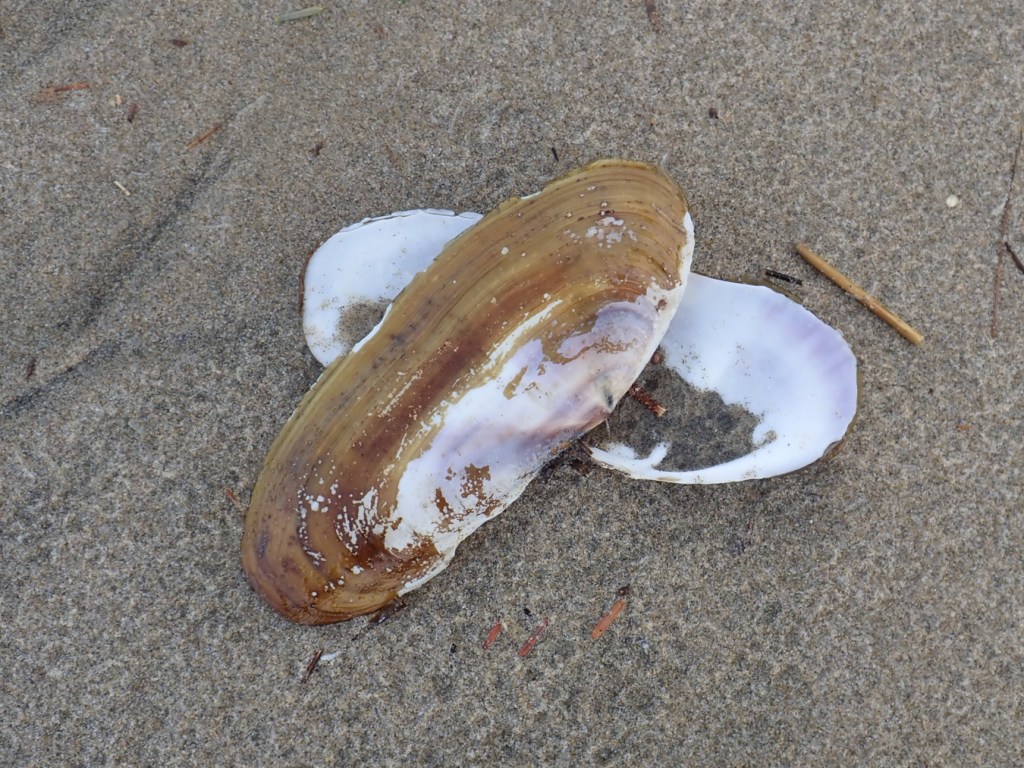
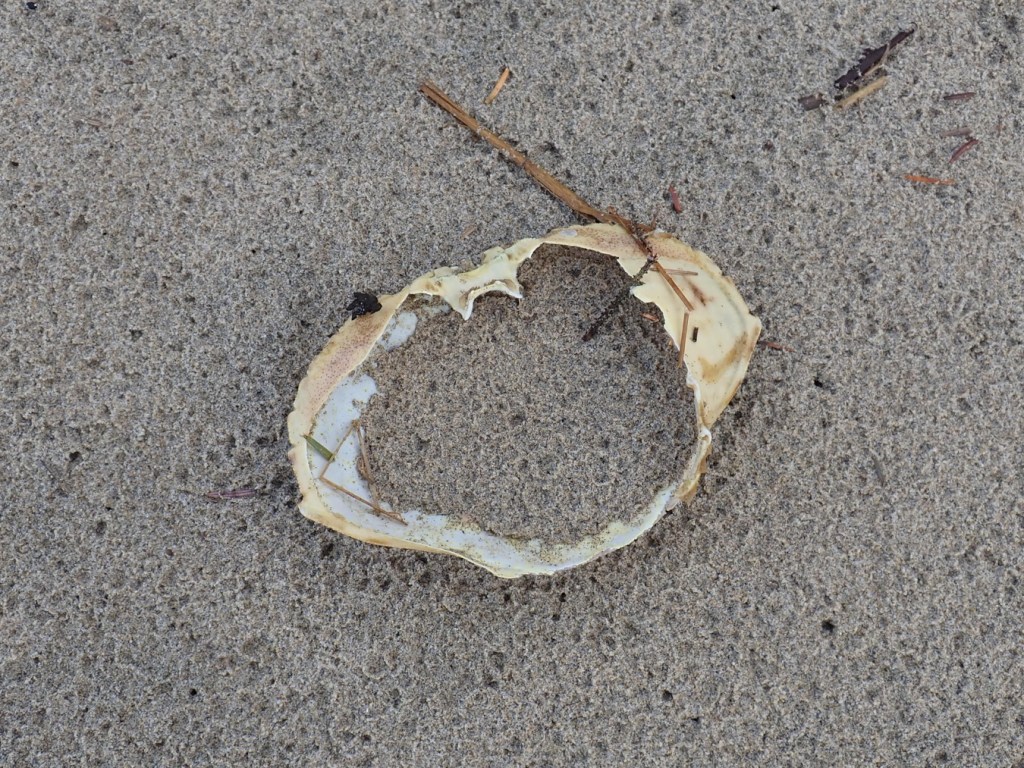
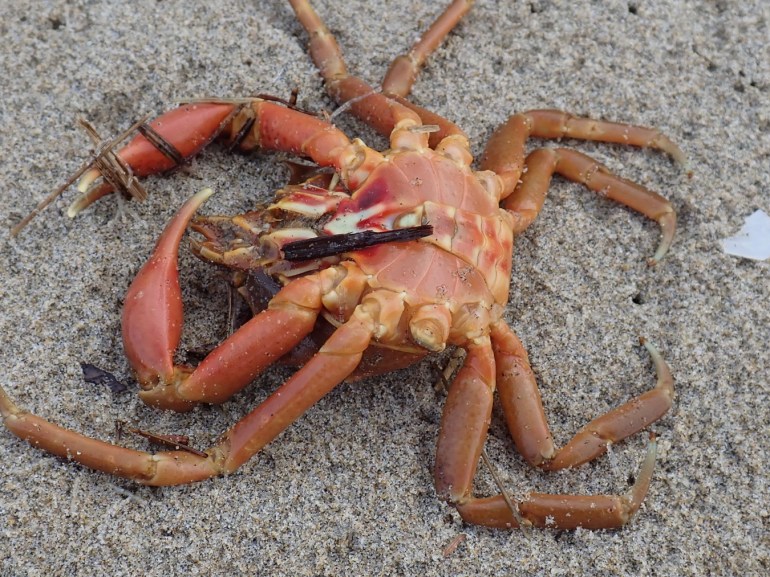
Drifted Diversity



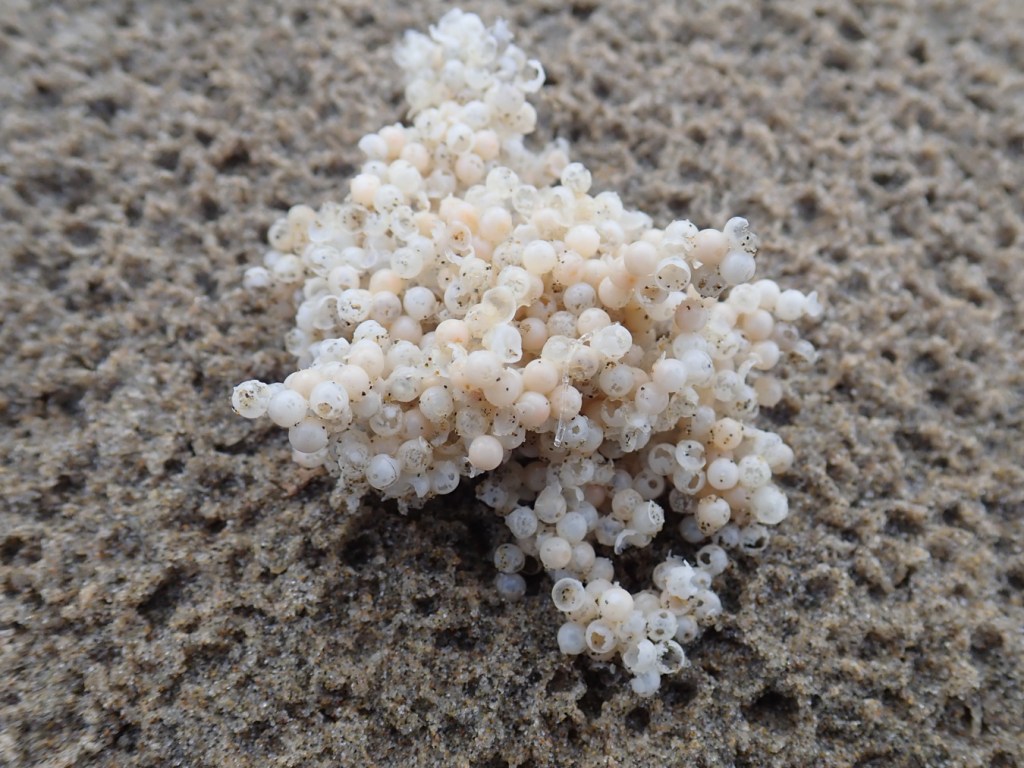


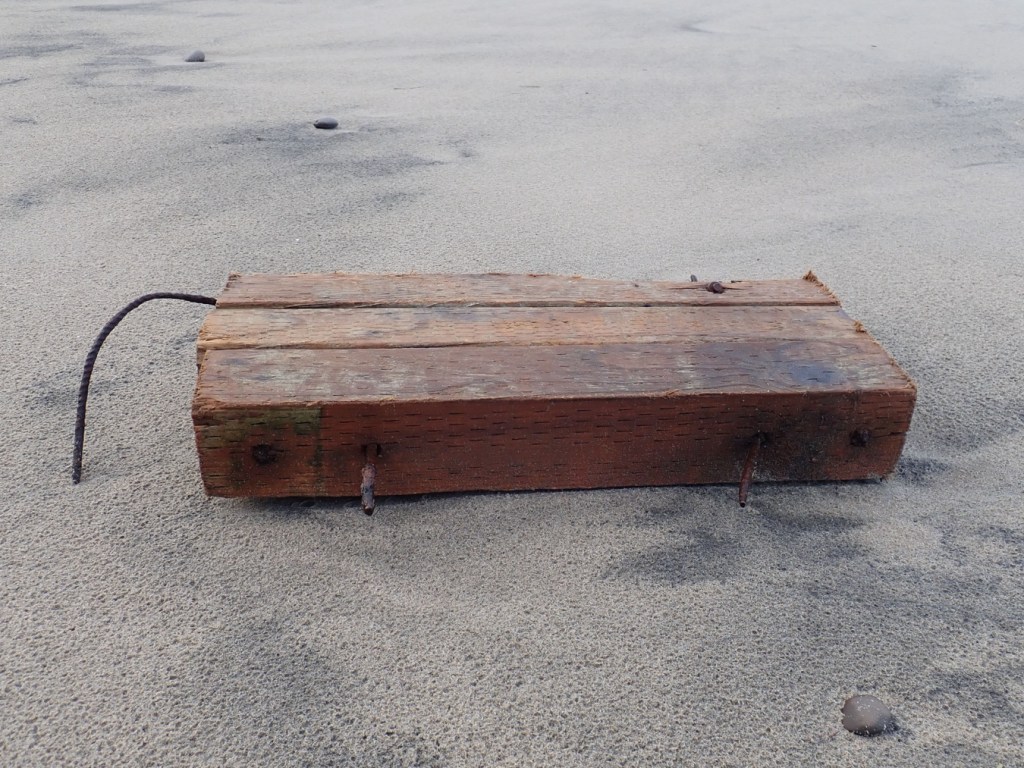
A peek at people’s contributions

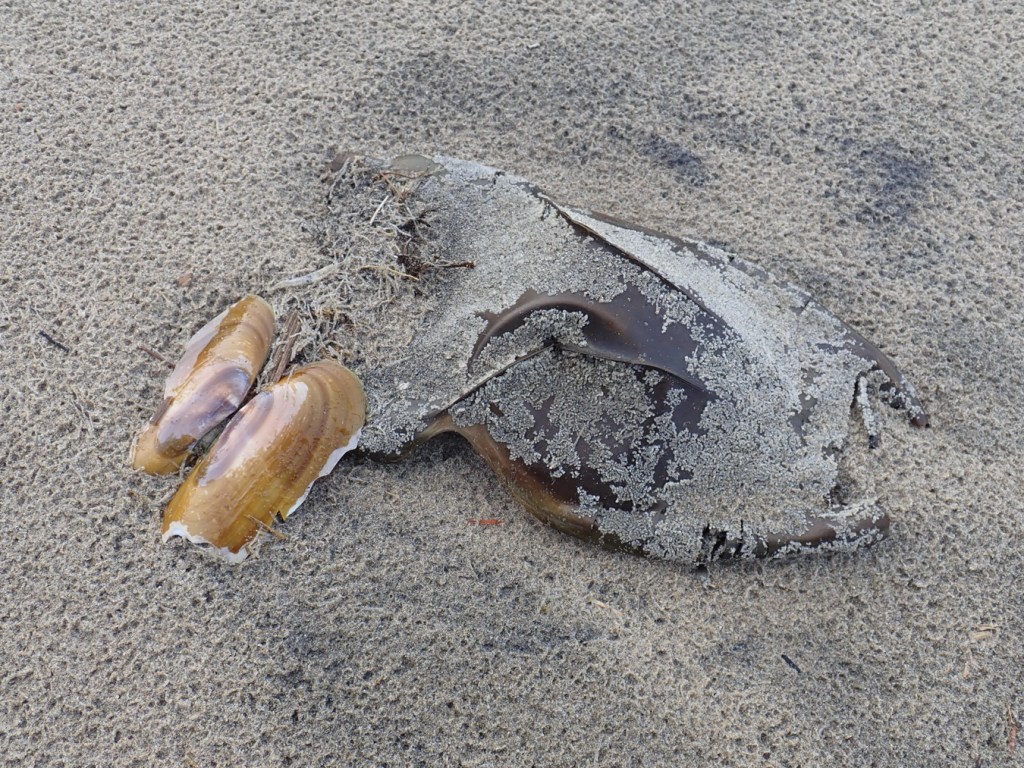
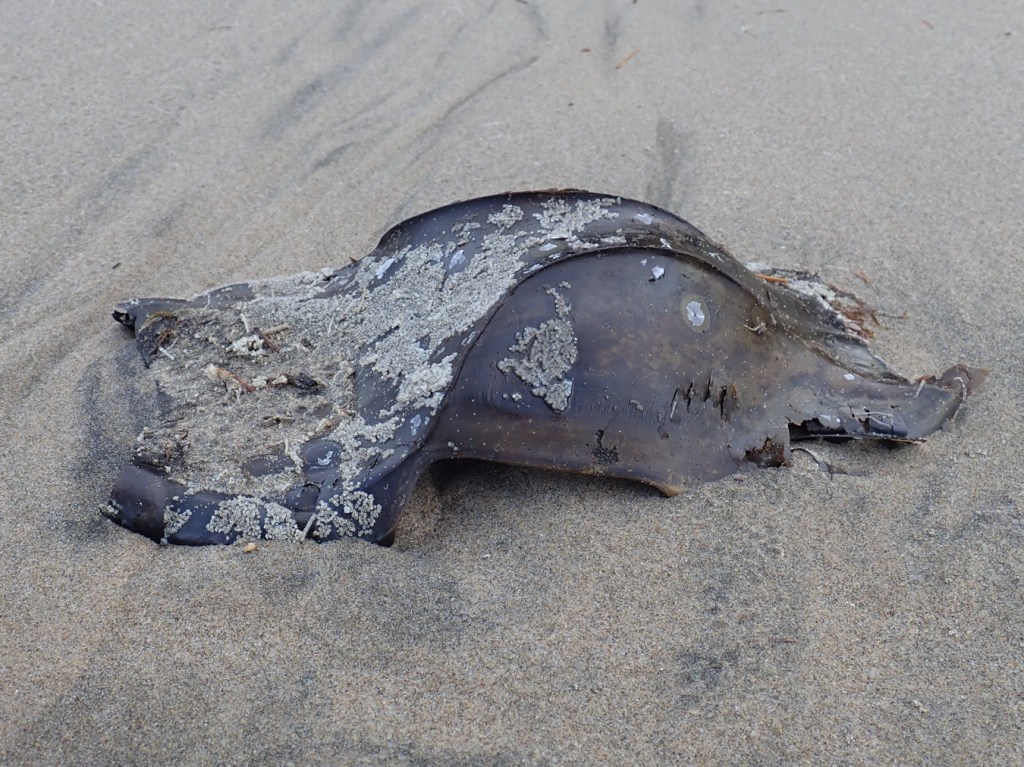
A satiation of mermaid’s purses


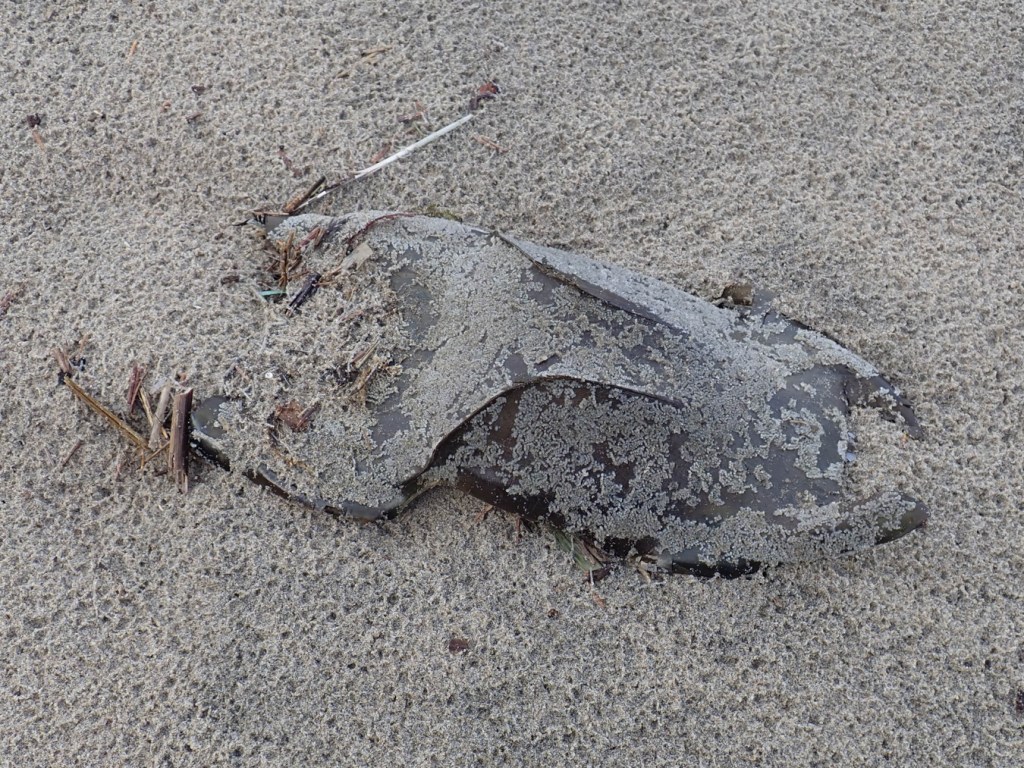


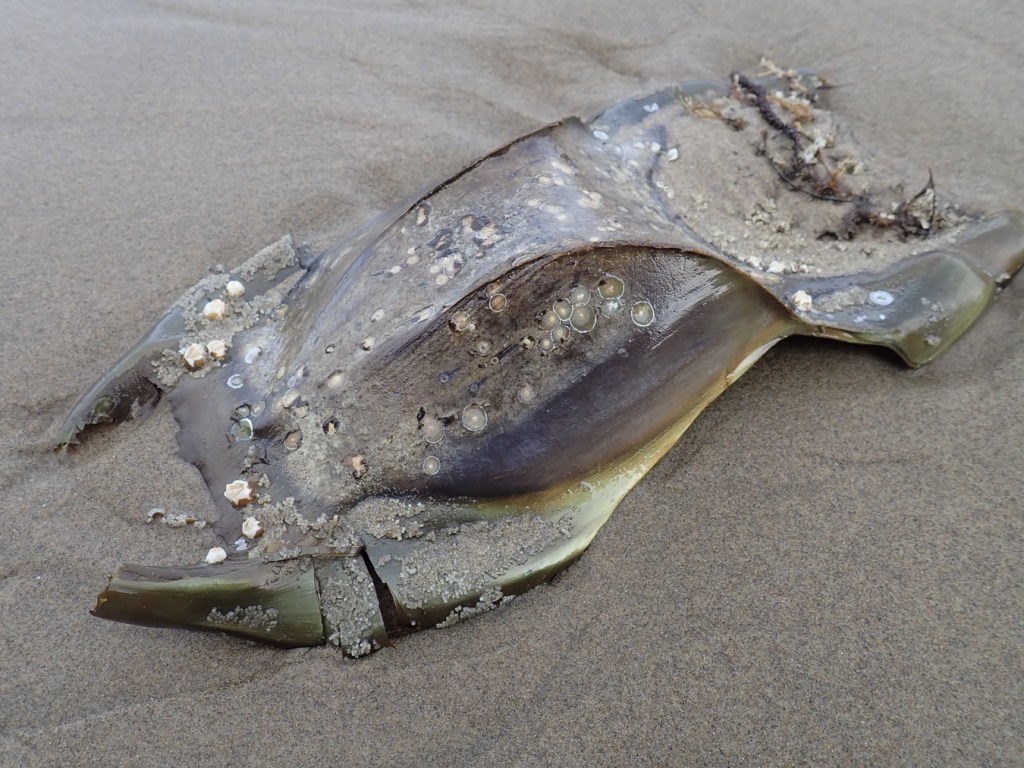
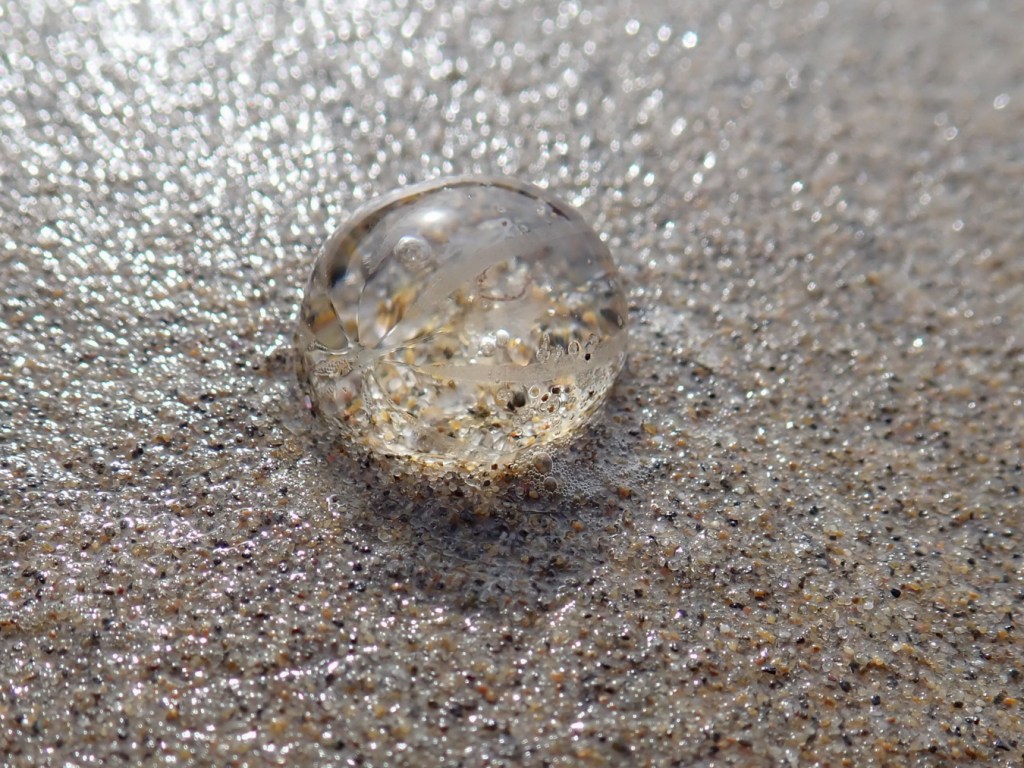
Gooseberry gallery



Local landmarks


Driftwood scenes

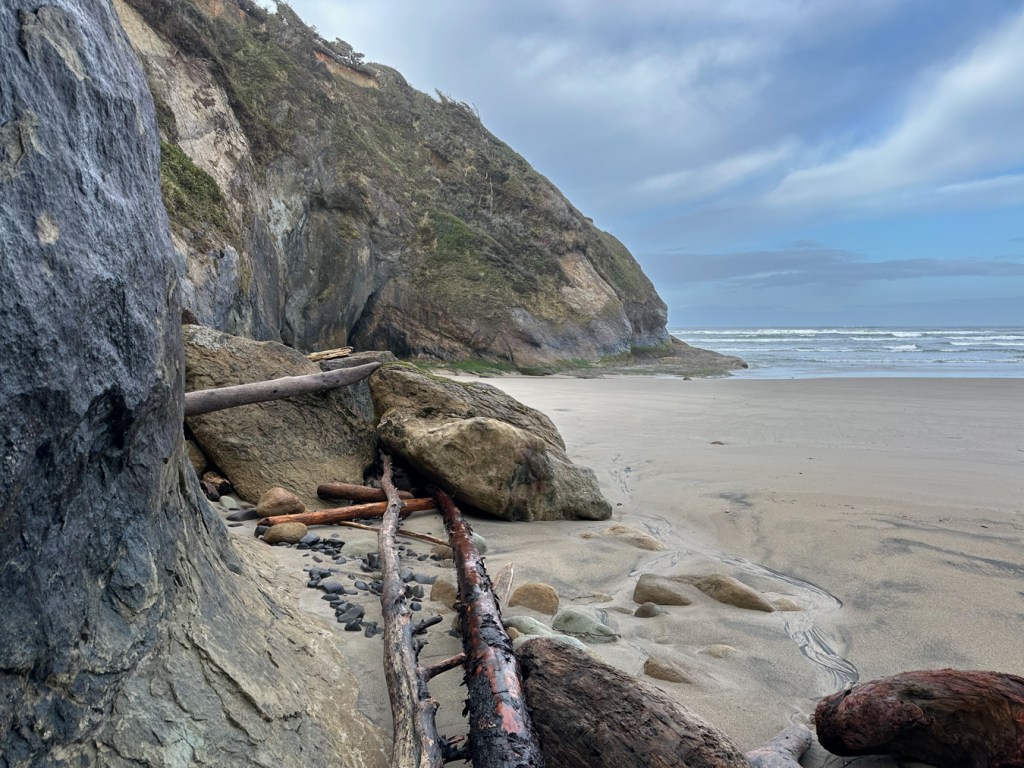
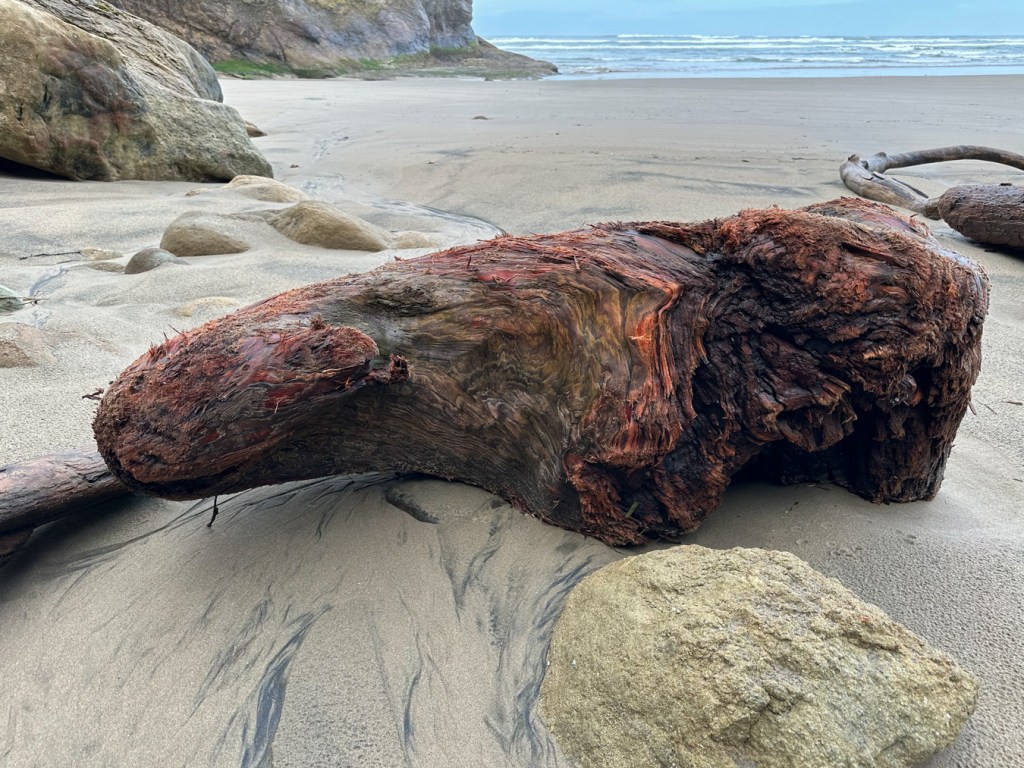
Parting shots
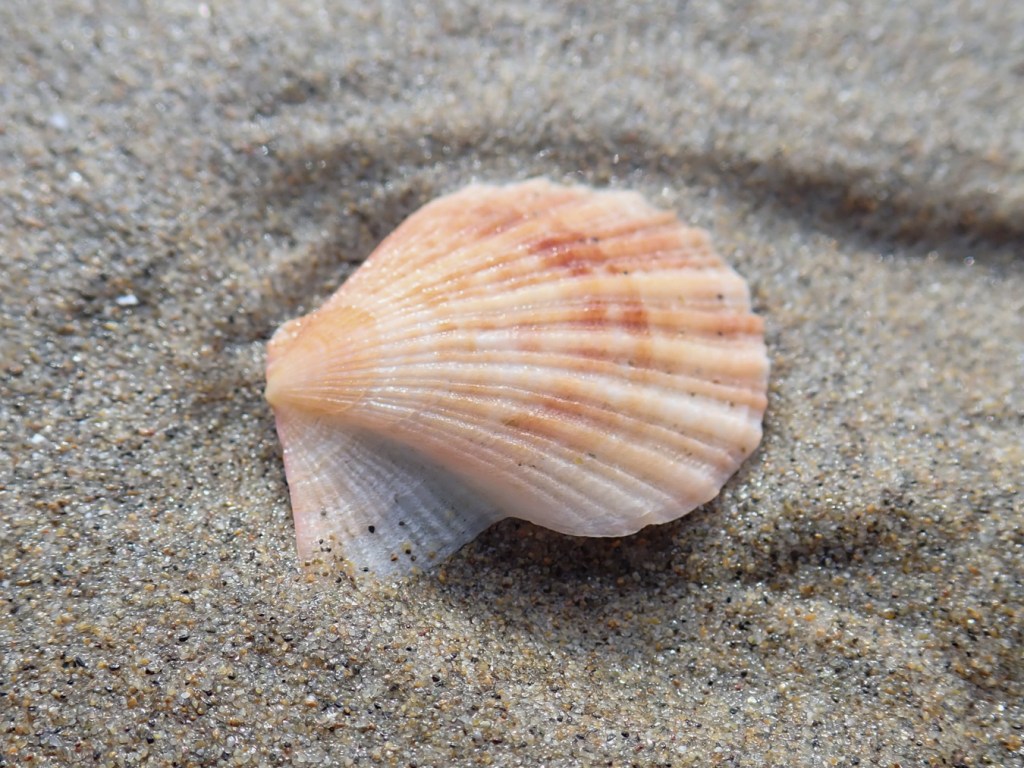


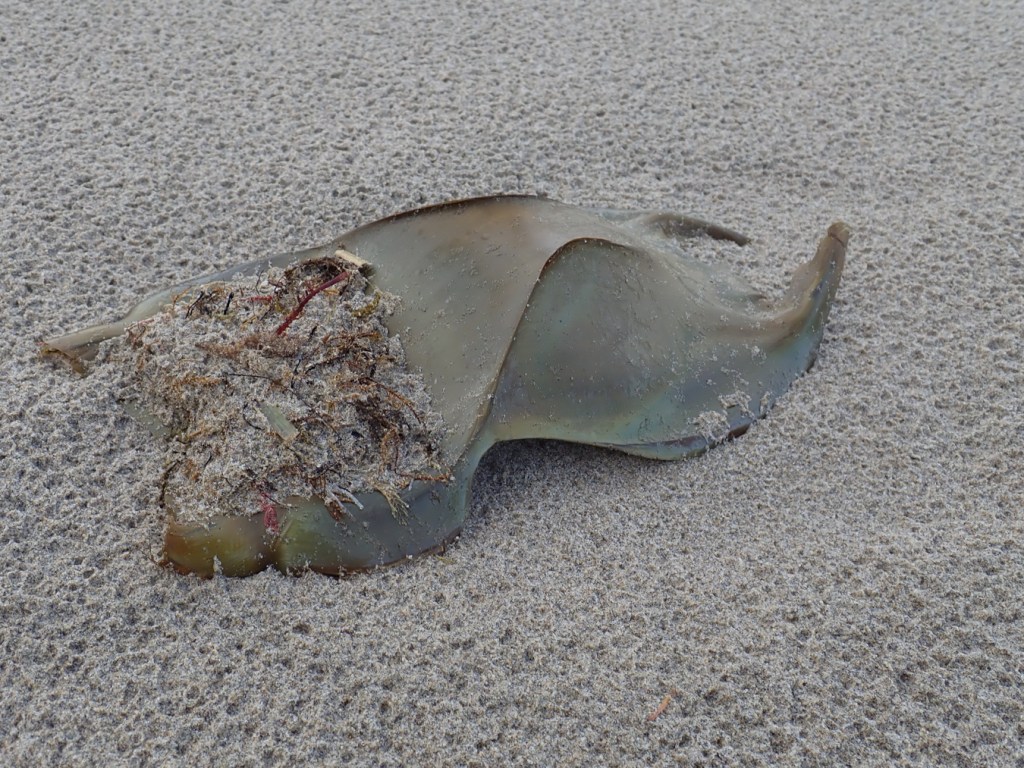
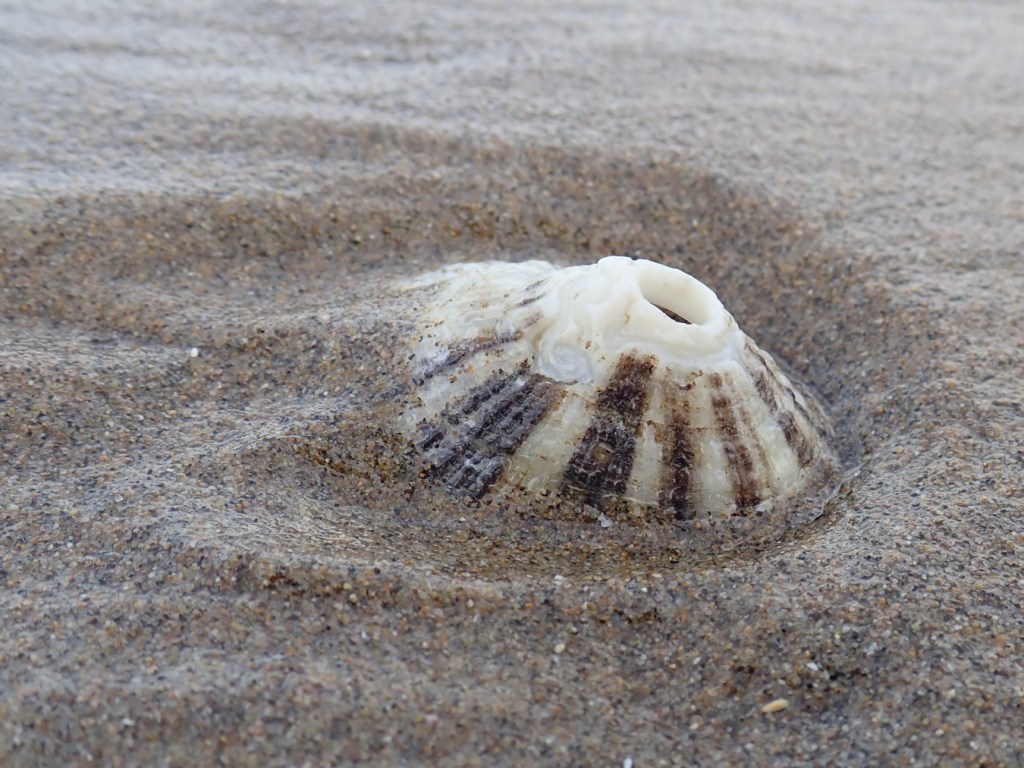
Turnaround

March 4, 2025
A sample from the tip top of the tide
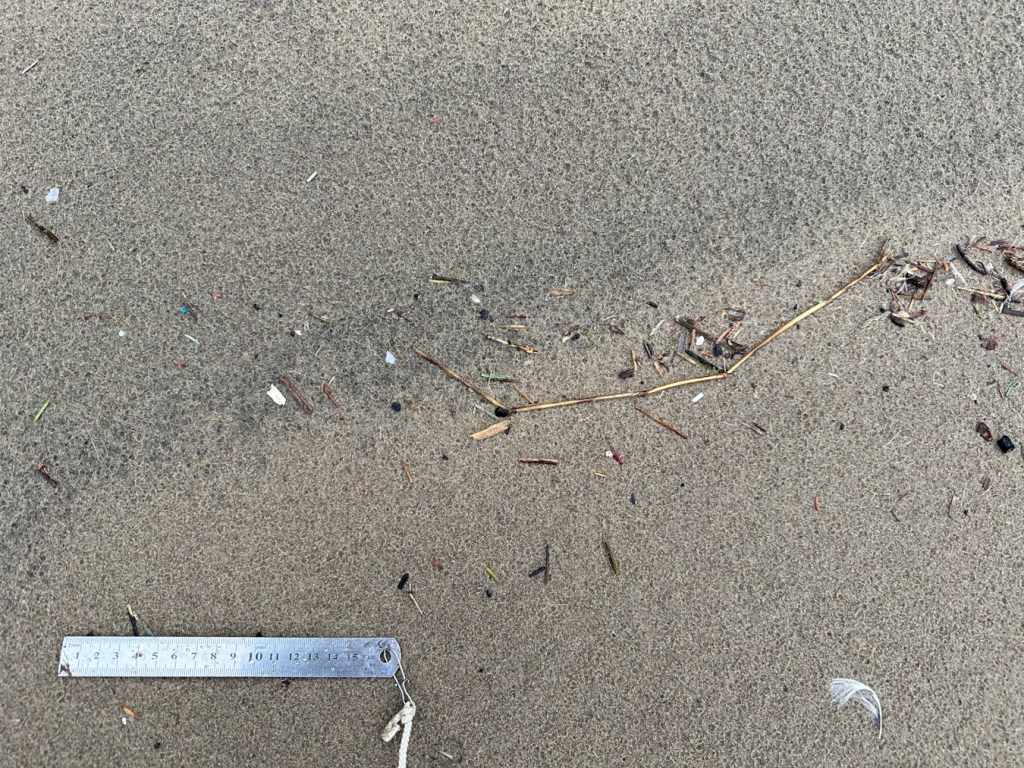
For a few years I’ve been taking a photographic sample from the top of the tideline, about 50 paces north of where I set foot on the shore, when possible. Here, raindrops have dimpled the sand above the reach of the tide. The larger items in this sample are mostly terrestrial plant material and empty marine worm tubes. A few small plastic fragments are present, and a feather appears at the bottom right-hand corner of the frame. From this starting point—kind of my anchor—I wonder, what else awaits?
In a few places along the tideline I noticed a buildup of marine worm tubes. I can’t claim certainty, but the clear segmented debris shown below might be associated with Spiochaetopterus, a little sand-dwelling polychaete that lives in a membranous tube vertically embedded in the sand. I don’t really know why buildups of empty casings sometimes occur on the shore, but they are pretty common.


Material from diverse origins meets in the magical intertidal.


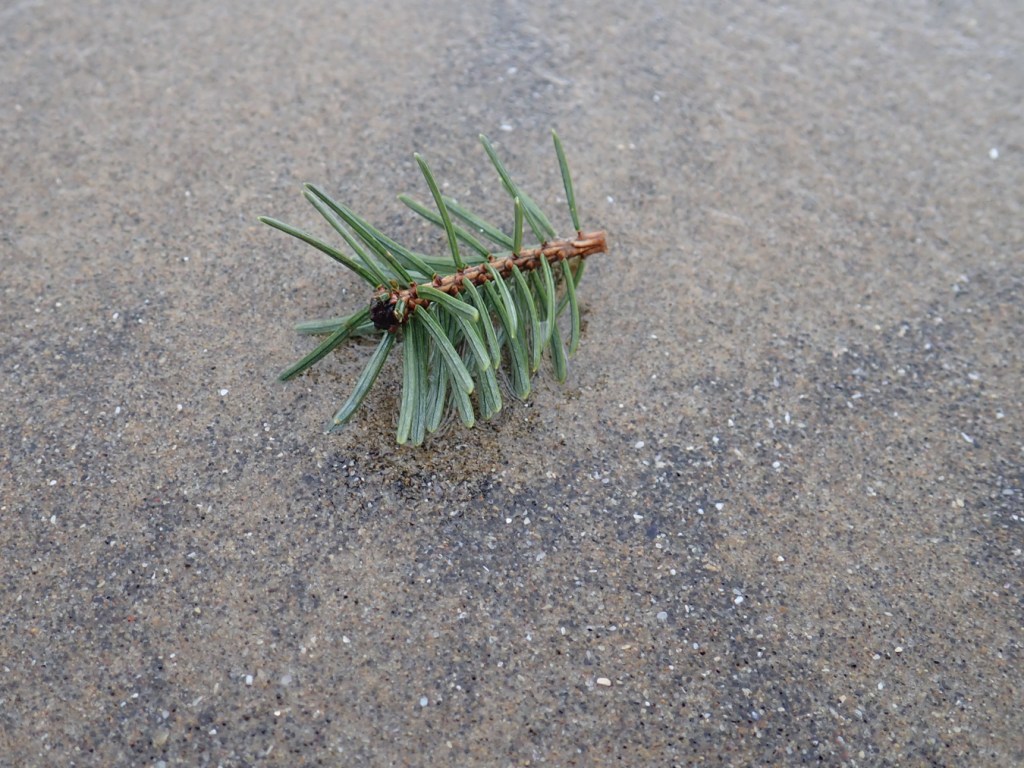


Still a little fire inside
With all the focus on close up beauty resting on the sand it’s good to break from it for a moment once in a while, if for no other reason than to refresh your perspective. I have a connection with the rock in the foreground because I’ve gotten into a habit of watching its seasonal disappearance under a buildup of summer sand, and its reappearance each winter.

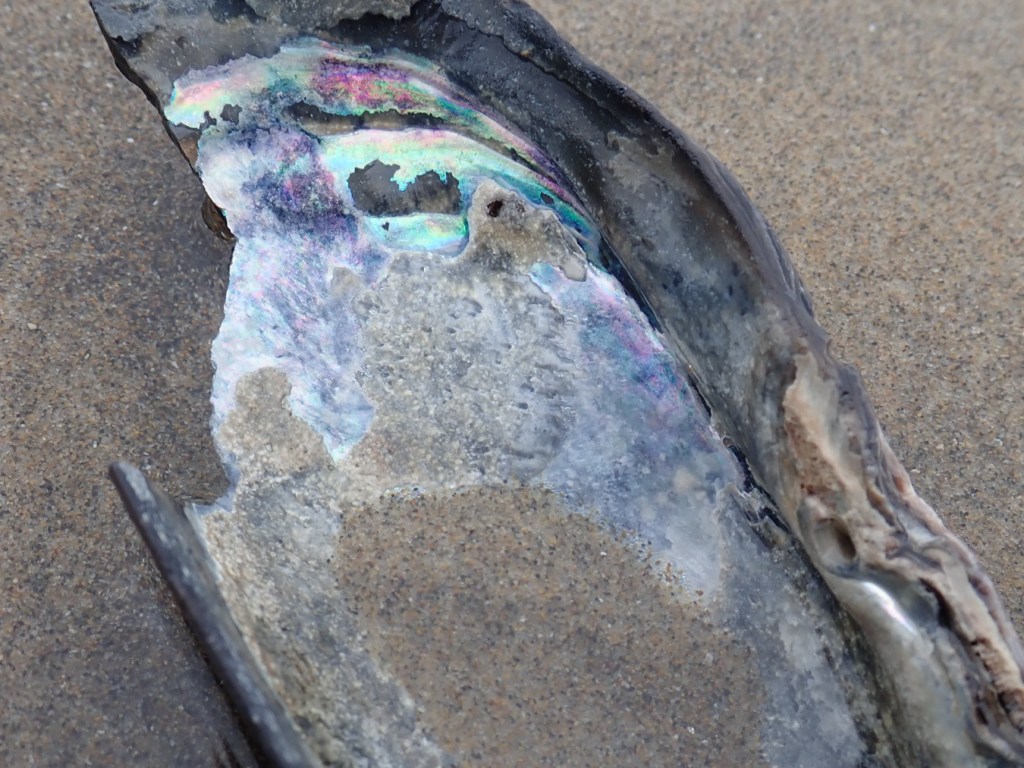
With my eyes again directed down, I picked up and cleaned off a drifted tellin, a left valve, I think, and laid it atop the sand for a good view. This shell is probably from the Bodega tellin Megangulus bodegensis, among other Bodega characters, the interior surface can have a yellow-orange blush. Concentric rings on the exterior surface are a sight of beauty.


I’m going to close this wrack line tour with another beauty of a drifted bivalve, Crassadoma gigantea. I believe the right valve is attached to hard surfaces, so this is probably a left valve. The image below shows the shell as I found it.

The image below shows the same shell washed free of sand and turned over for a look at the exterior surface. An interesting thing to notice here, is the lower portion of the shell (down by the hinge) shows the impression of its younger free-swimming self. (The demarcation isn’t nearly as evident on the shell’s interior surface.)
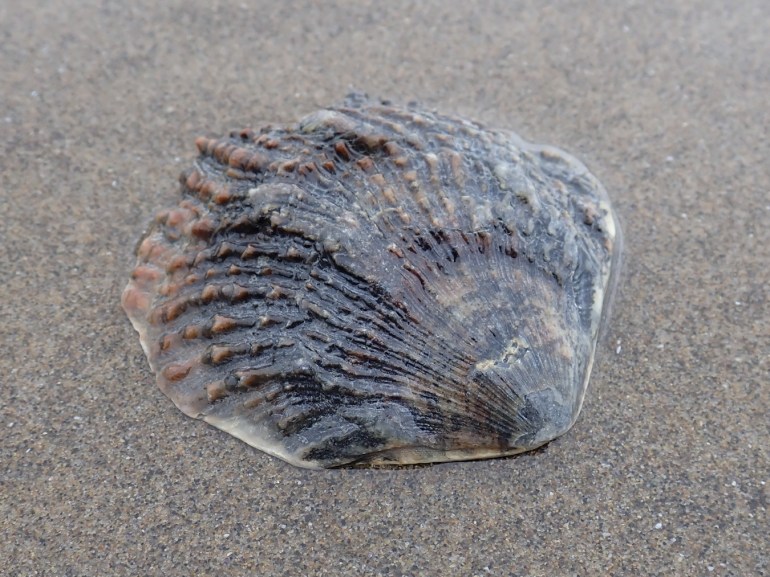
To see more images of Crassadoma gigantea and examples of other bivalves I’ve encountered and photographed on exposed northern Oregon shores, take a look at my Bivalves page.
 theoutershores