This page is a chronological curation of sea wrack, seashells, and other drifted material, along with tentative identifications, intimations of beach processes and cycles, and musings on mysteries of the Northern Oregon drift. Under each date, I present galleries with beach scenes and closeups arranged in the order they were encountered (I take liberties to aid the presentation, sometimes). Thus, each entry is kind of like a walk along the shore; I guess some entries will feel more like that than others, but providing a beach walk feel is my aspiration.
October 18, 2024
Moments like this

Drift bull kelp never disappoints.


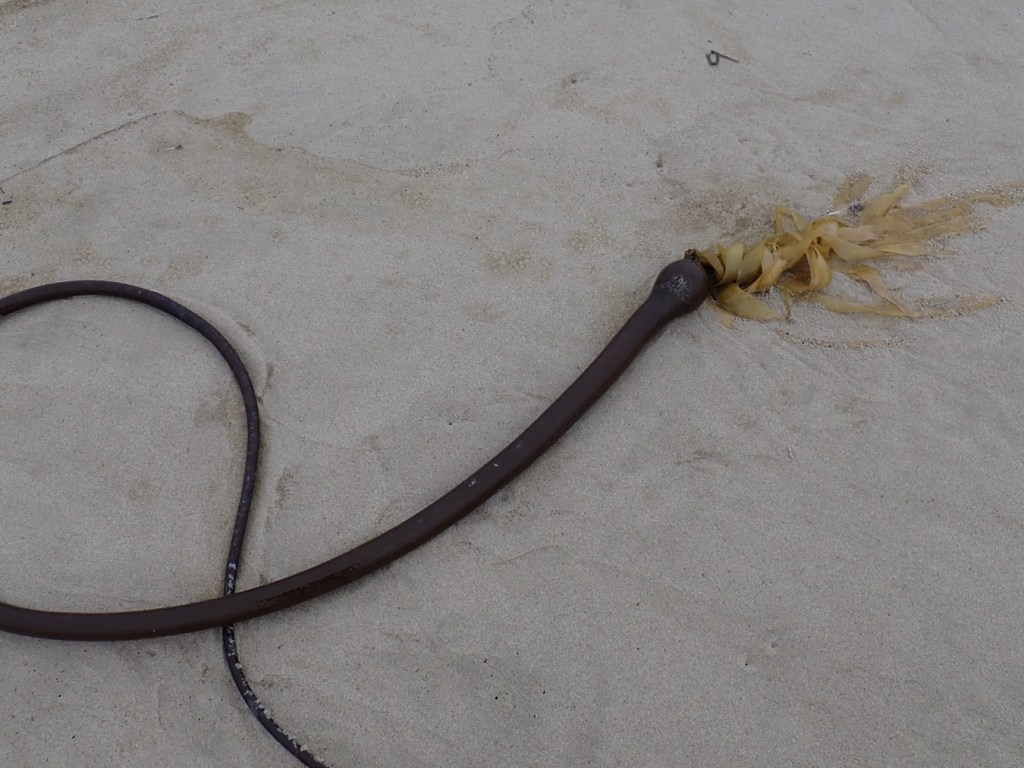
At rest on the sand, a drifted stipe conveys the form of a bullwhip in motion.
The arrow points out a remnant sorus on a tattered blade.

Bull kelp is a famously generous host, but all good things end or change. Here, the end of the drift means the host and its guests will play new roles, nutrifying the beach and its sister ecosystems.


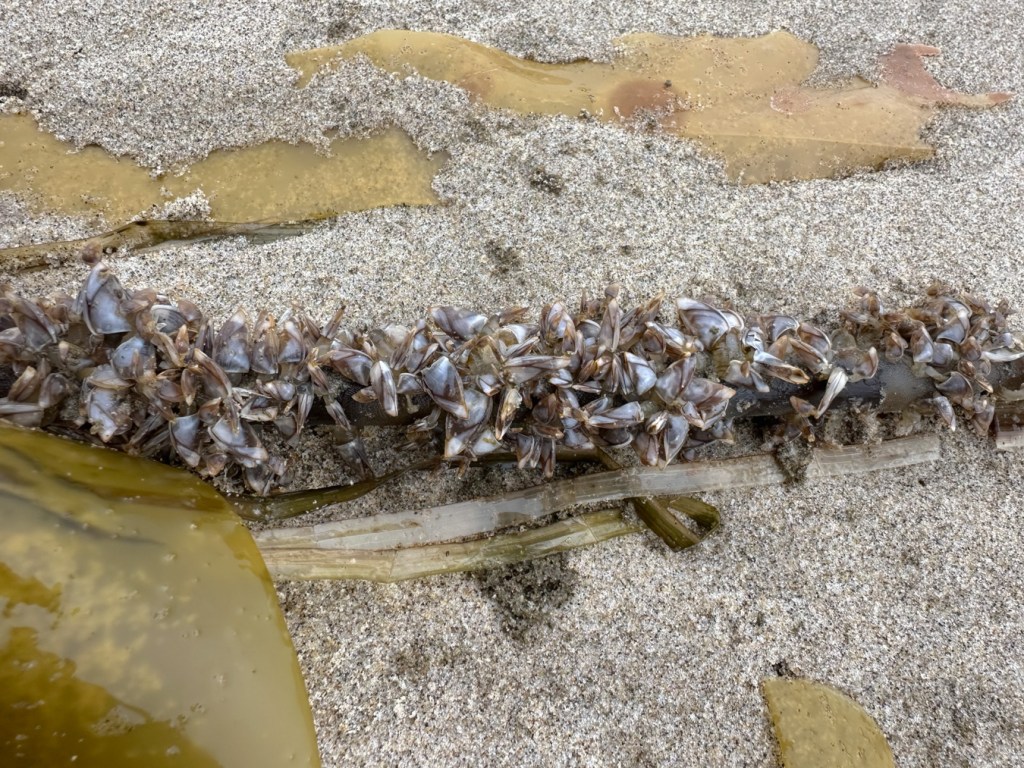
Beach hoppers are beneficiaries of drift bull kelp’s seasonal arrival on the beaches.

A tangled twosome
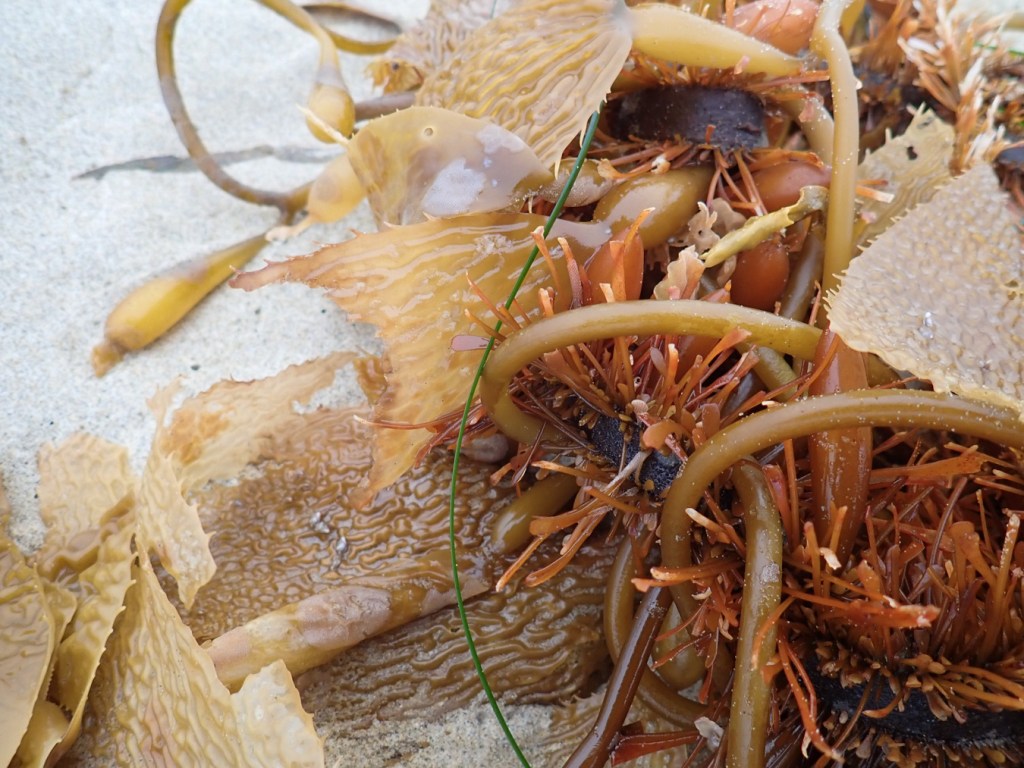

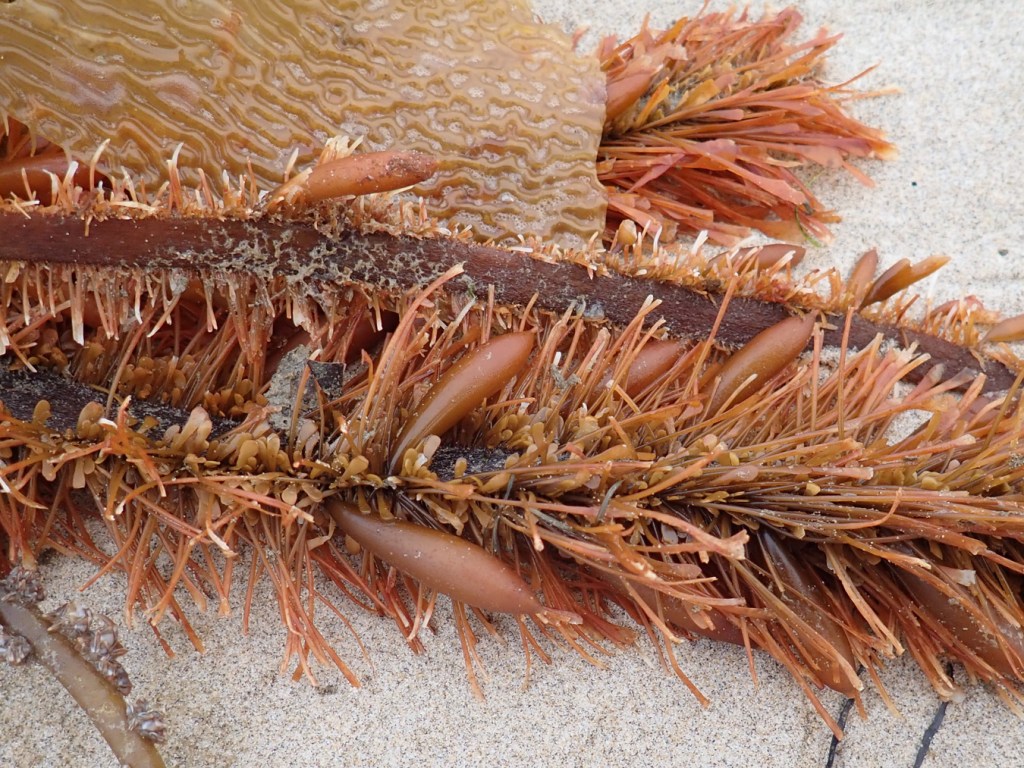
Egregia menziesii comes honestly by its common name.
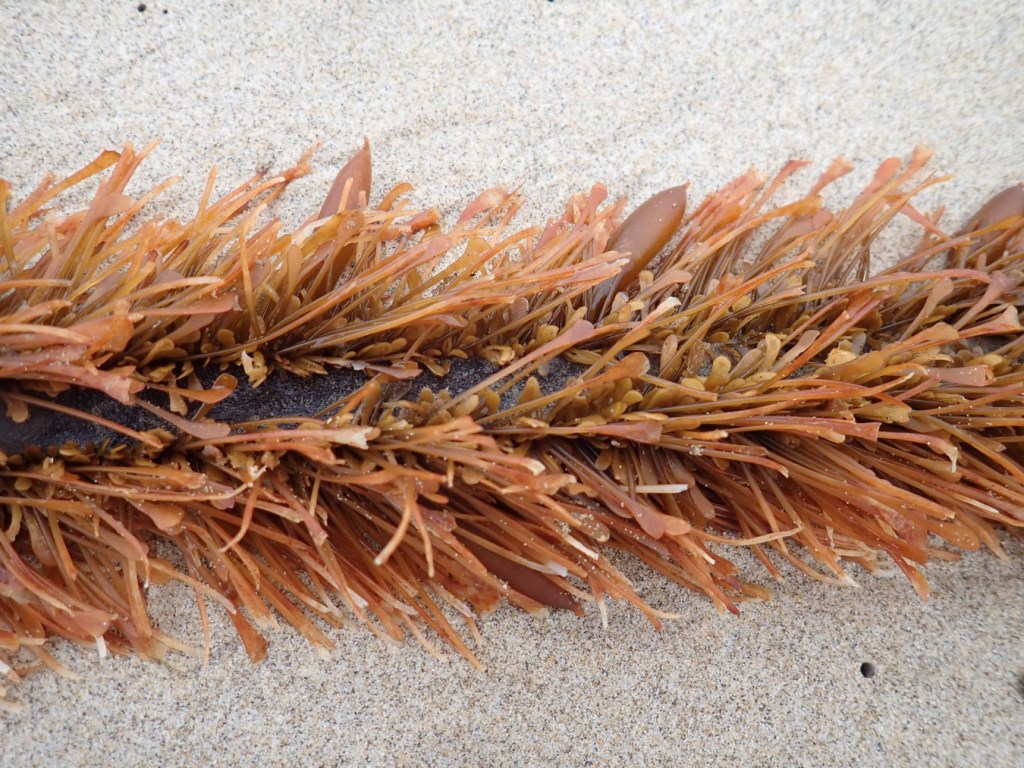
Macrocystis, drifted and dying on the shore, evokes a range of emotions, intimacy among them.

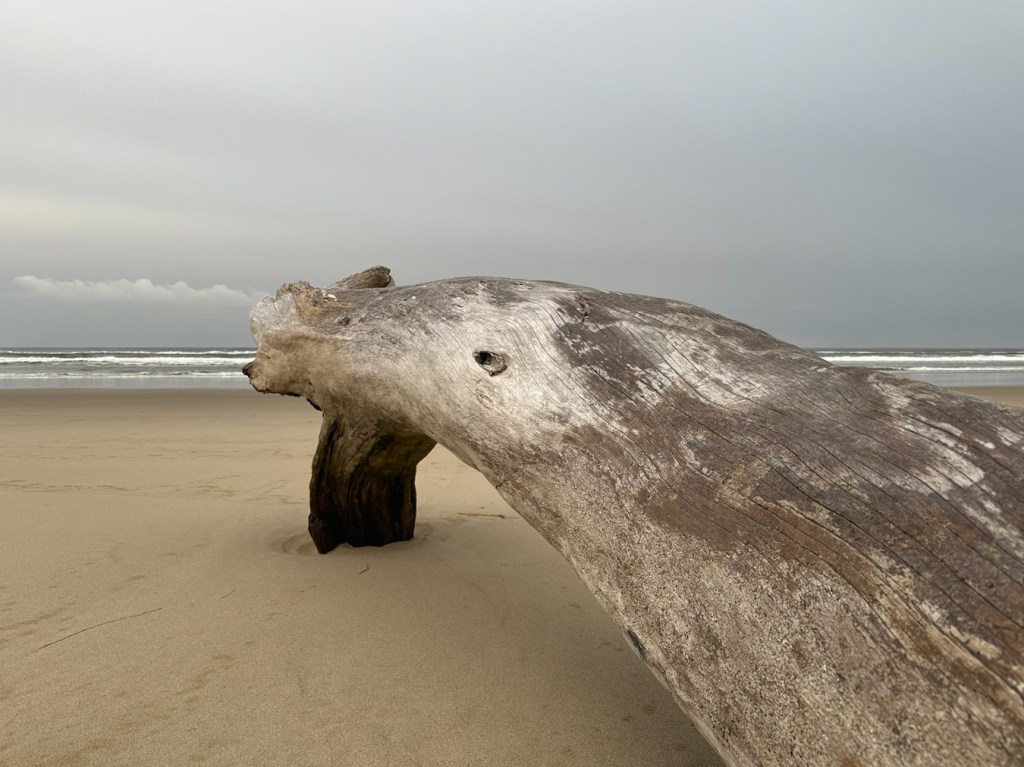
Driftwood with personality
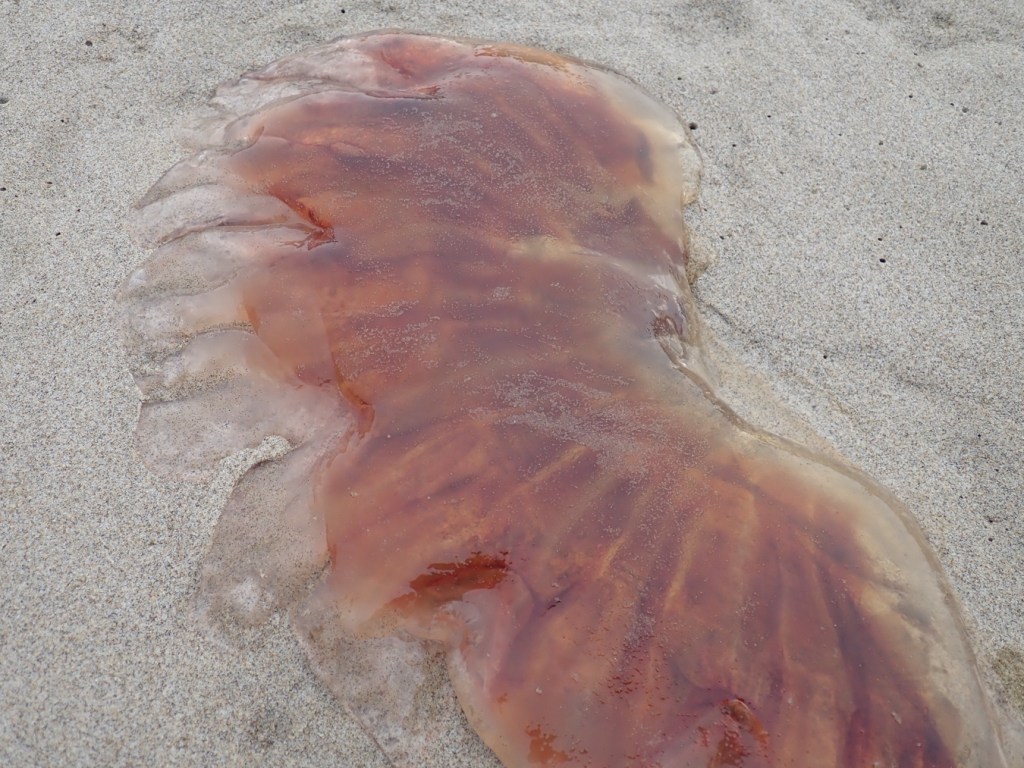
Beautiful beached jellies

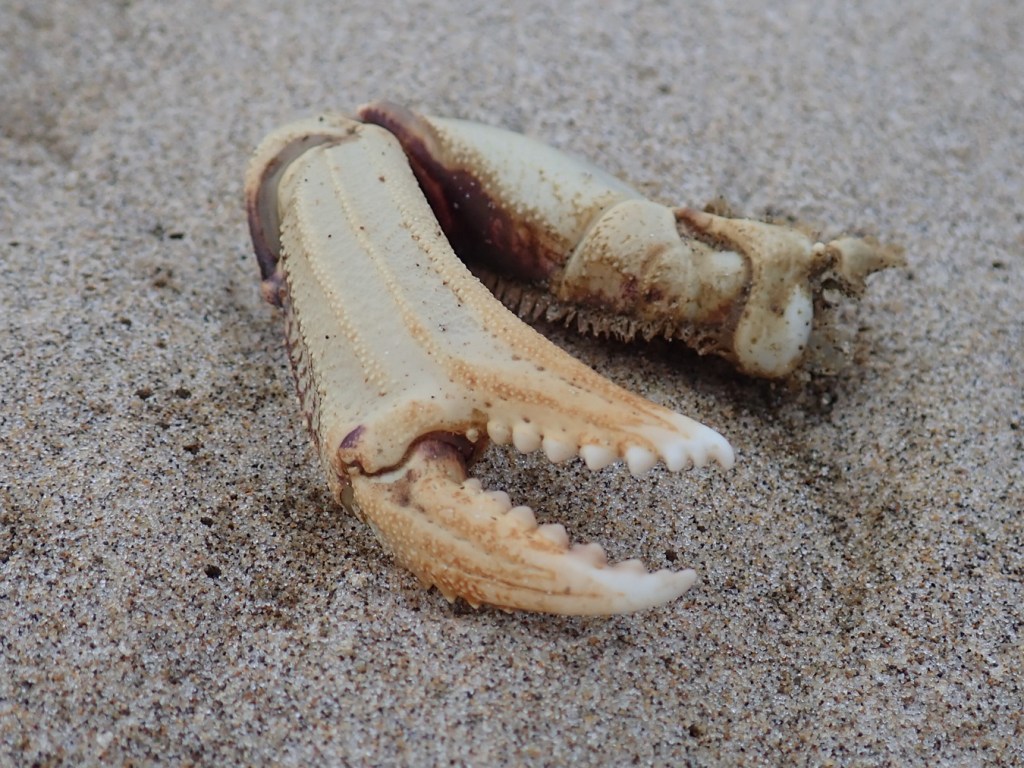
Chela
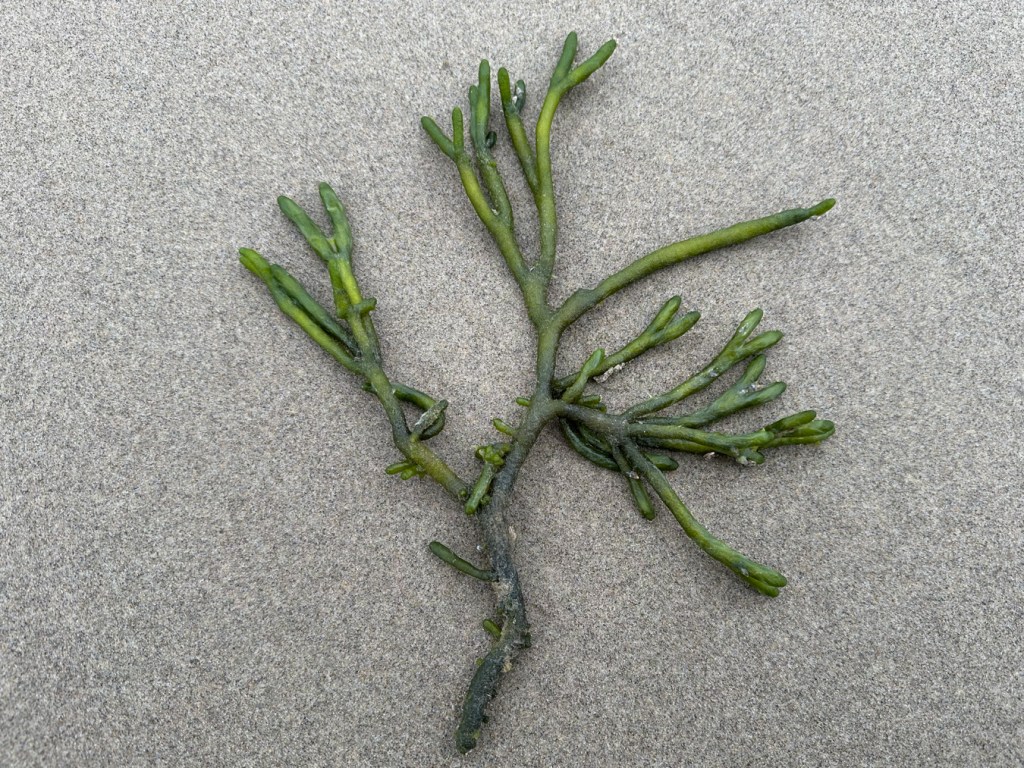
Seaweed selections



A beautiful little barnacle on a bryozoan-encrusted Macrocystis blade

The molluscs are represented by remnant shells from two of the most frequently found shells on this stretch of shore.


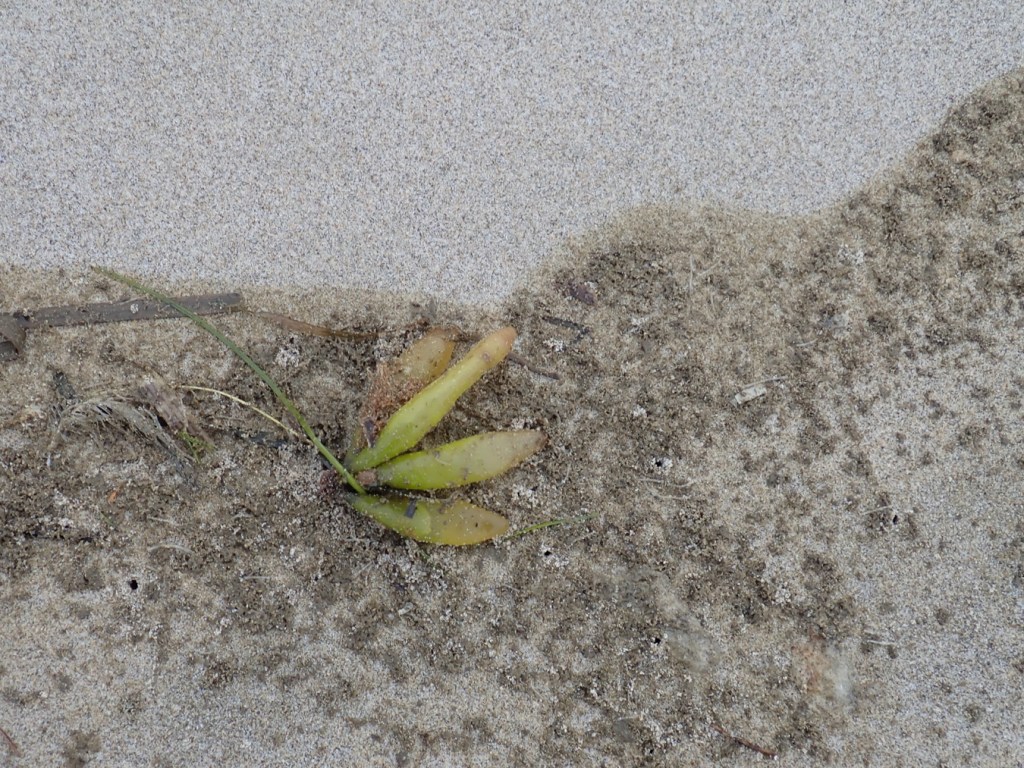
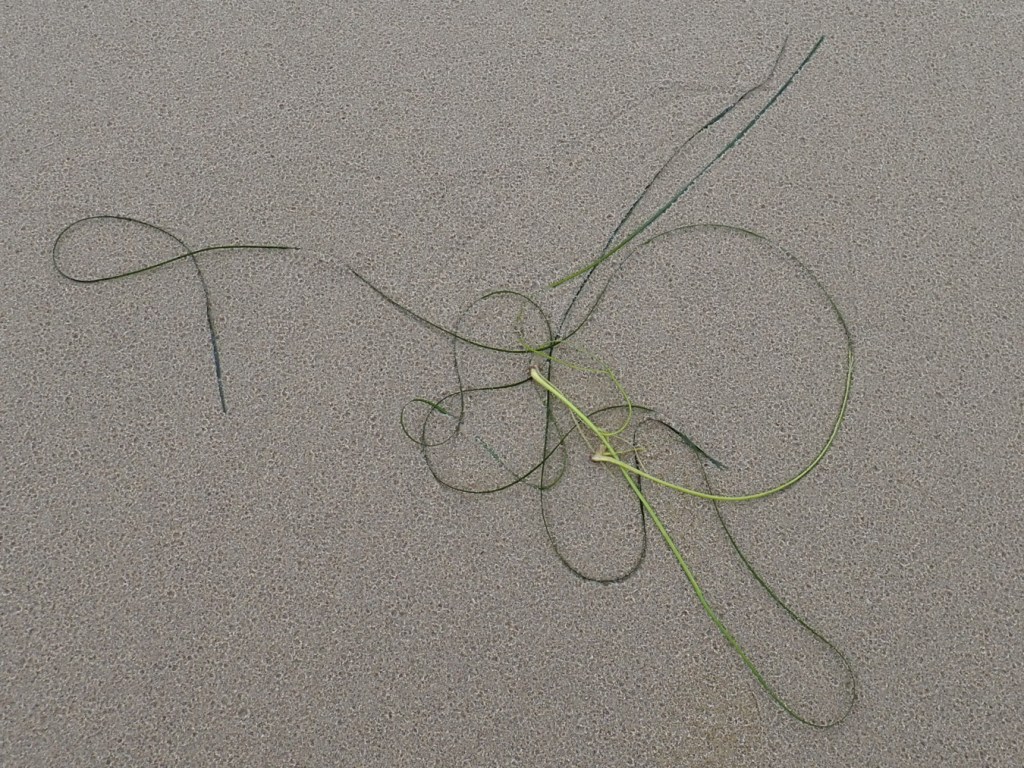
From the flowering plant side of the wrack line equation

With the turn of the tide, glances to the landward and seaward


Back on the beach, a disappearing act

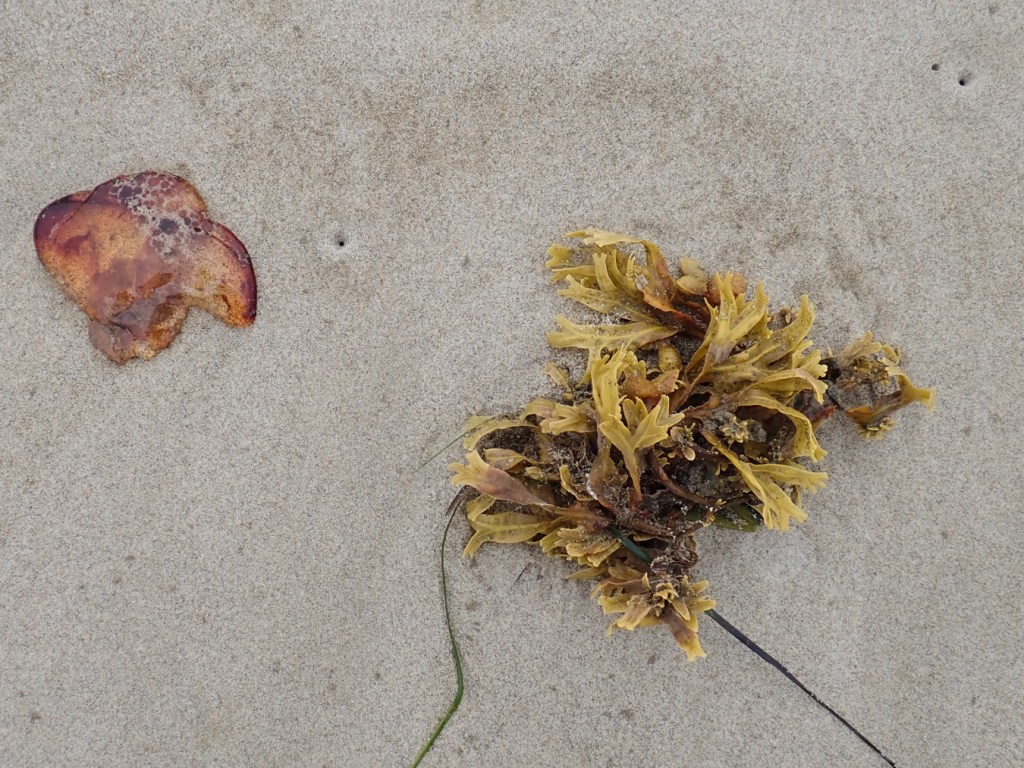
Wrack line still life
August 20, 2024
Stepping across the threshold to encounter driftwood shelters and plastic toys is the order of things.


Limitless raw material for shelters rests in the zone of big wood up against the cliff at the top of the cobbles.
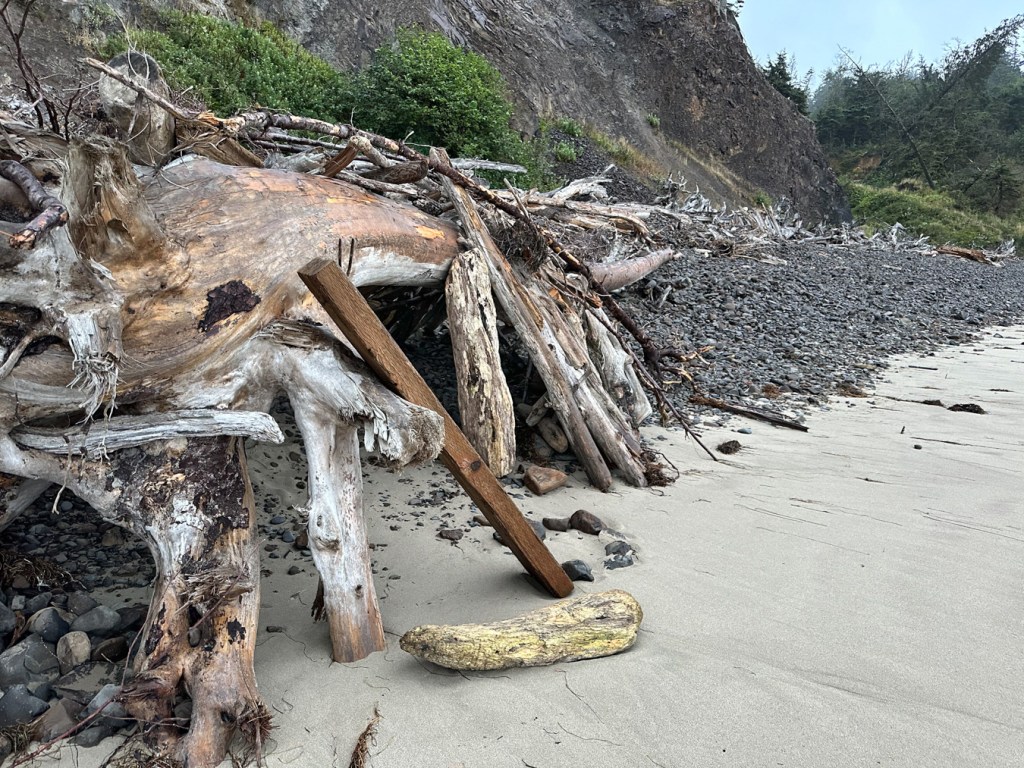
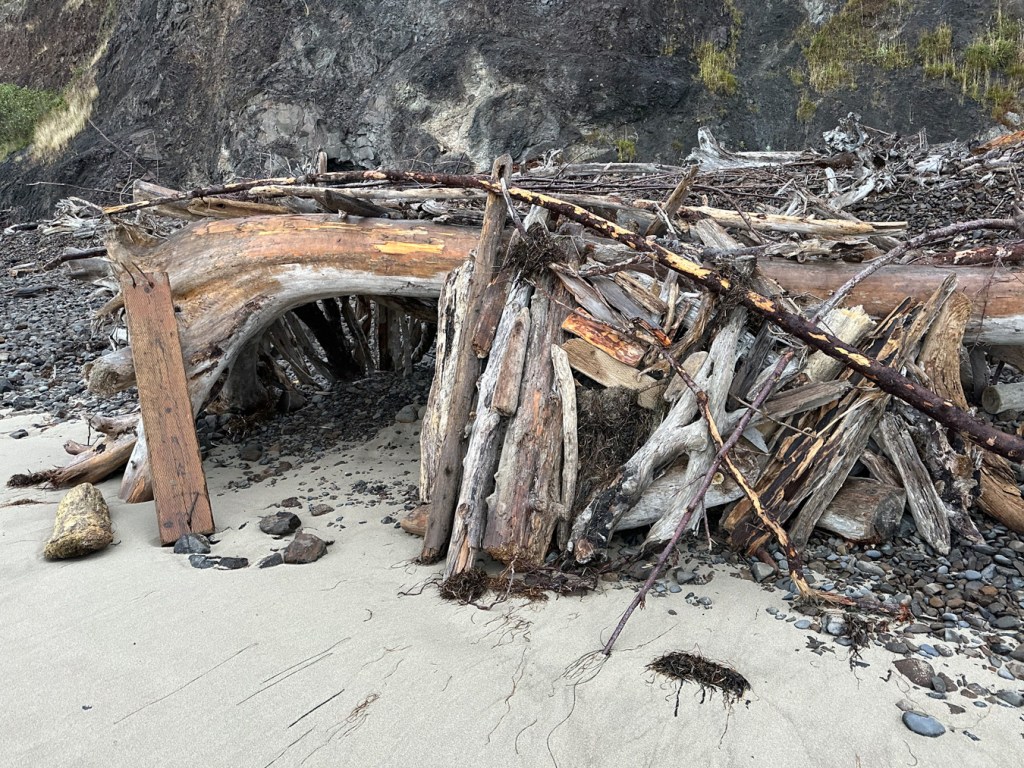
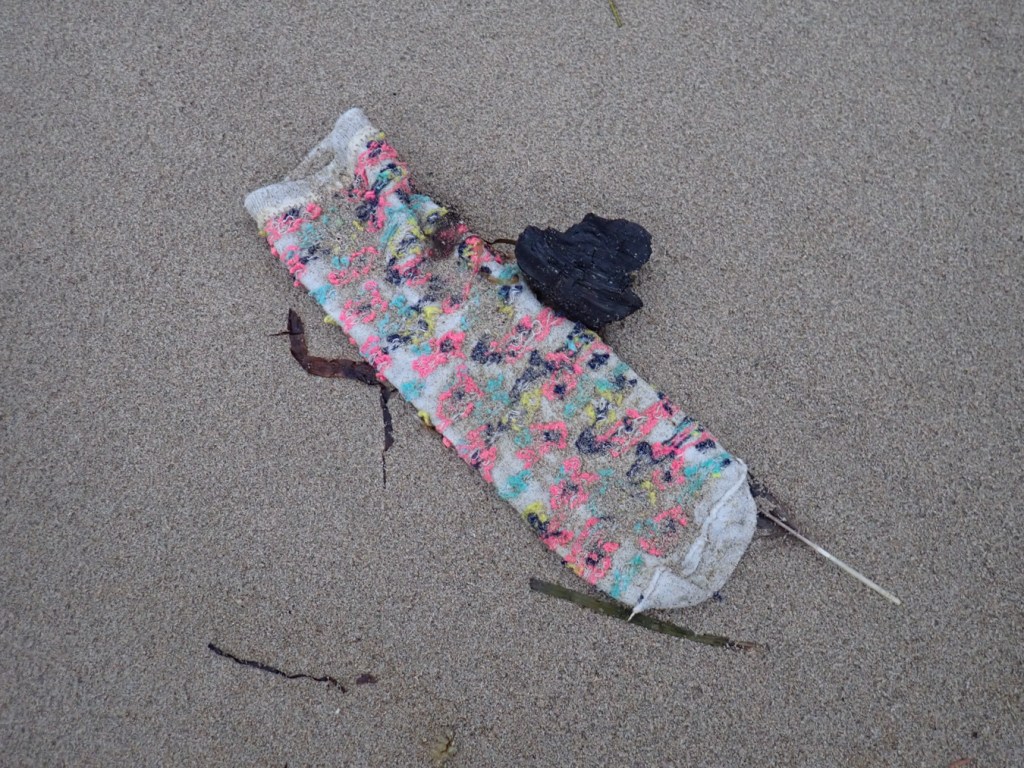
Early morning selections, all arrived here—each in their own way–from other ecosystems.


It’s wise, on the shore, to look up once in a while, because there is wonder everywhere, in the seascapes and, in this case, on the intertidal rocks, home to all kinds of life. So, as a change of pace from staring down at the drift, the image below shows an intertidal favorite, the giant barnacle. Take a look at the organisms living on the shell! The density and diversity of life on the rocks clashes with the peaceful simplicity of isolated items washed up on the beach’s undemanding sands, and that’s good. We’ll return to that seemingly simpler world with a fresh perspective.

Remains


Beachcombing took me across a stretch of dimpled sand illustrated below; not drifted remains at all, these vaulted shows are an indicator of the purple olive Callianax biplicata.

To see some photos of the snail itself and other traces they leave in exposed beach sands, head over to my Snails page and scroll down to the entry on Callianax biplicata.
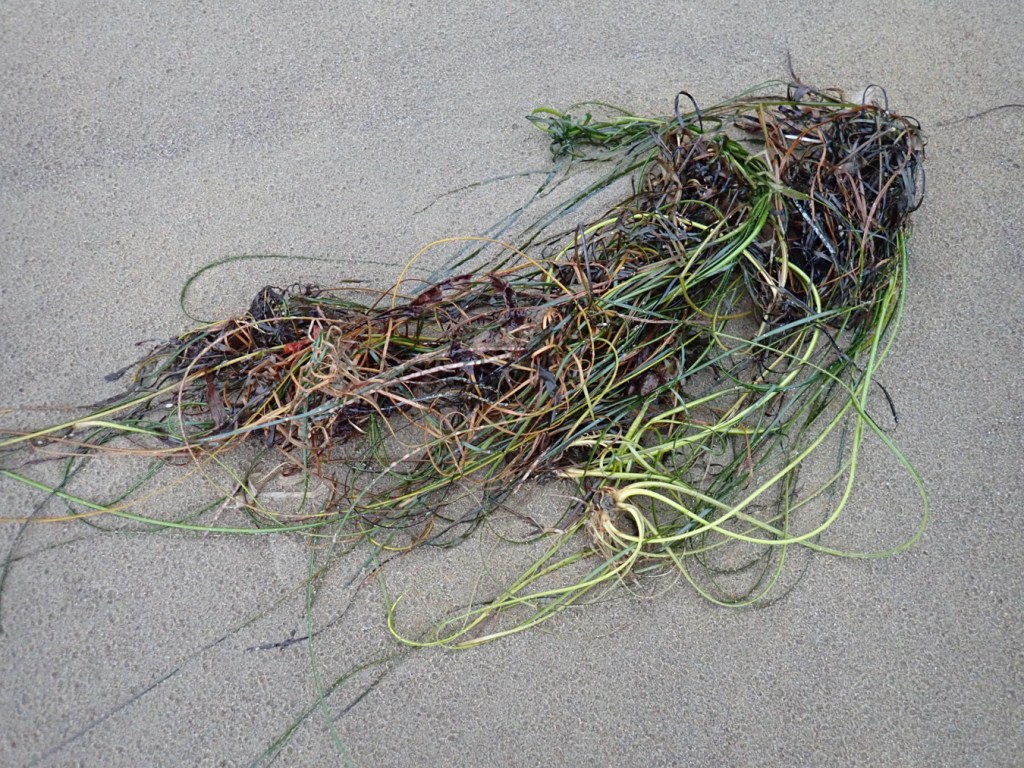
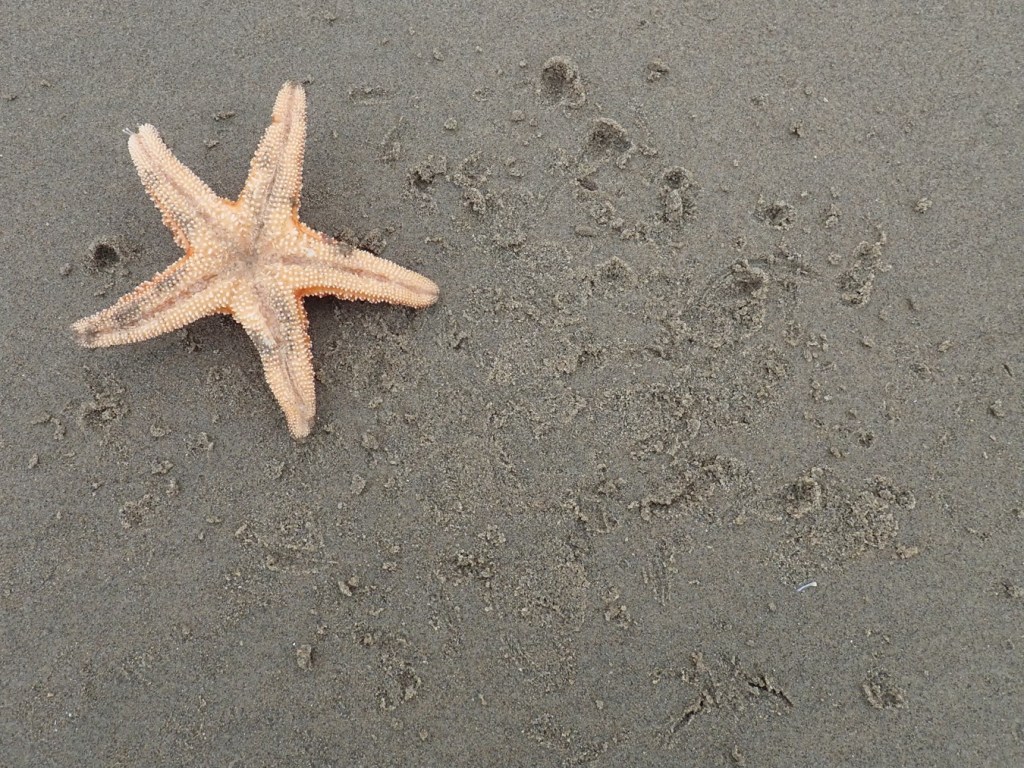
Seaweed selections


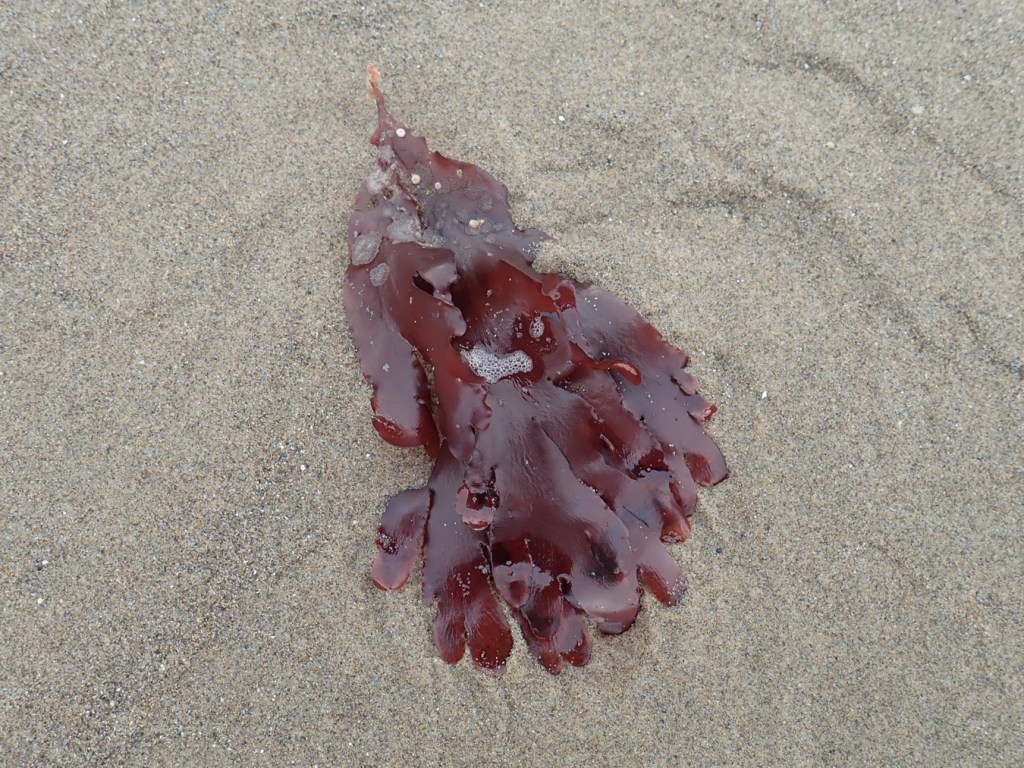
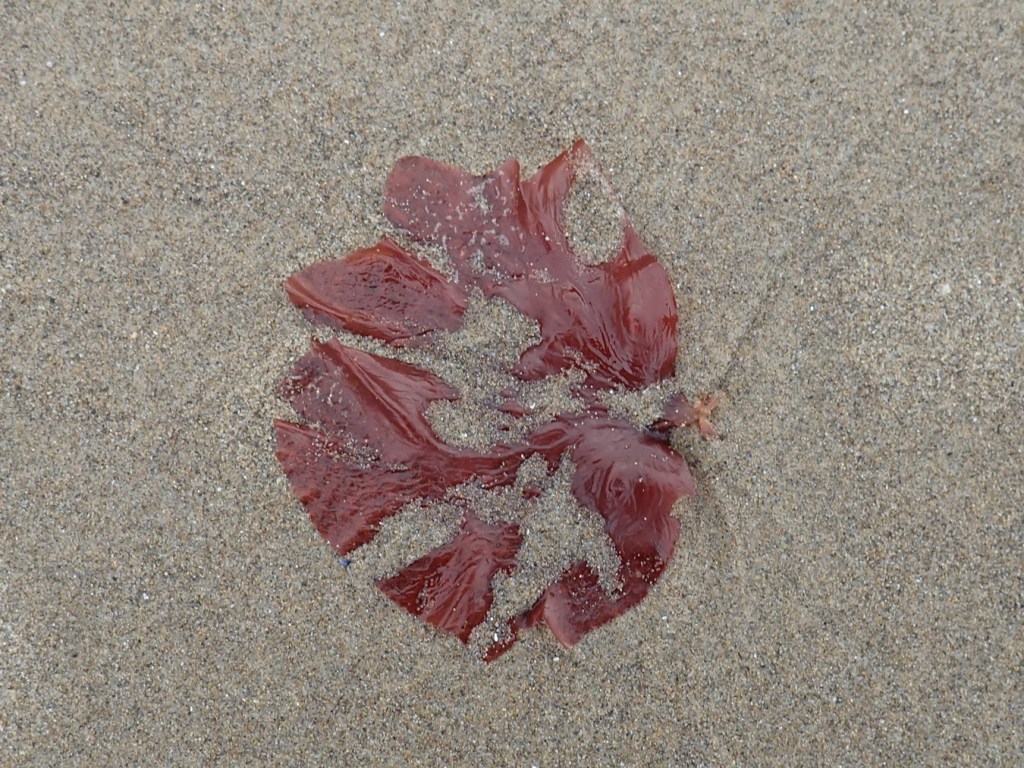

Scene of the crime
California mussels are generous when it comes to hosting barnacles and when one has the misfortune to lose its perch, its barnacles meet a sad end too. (How many different kinds of barnacles do you see on this mussel’s shell?)

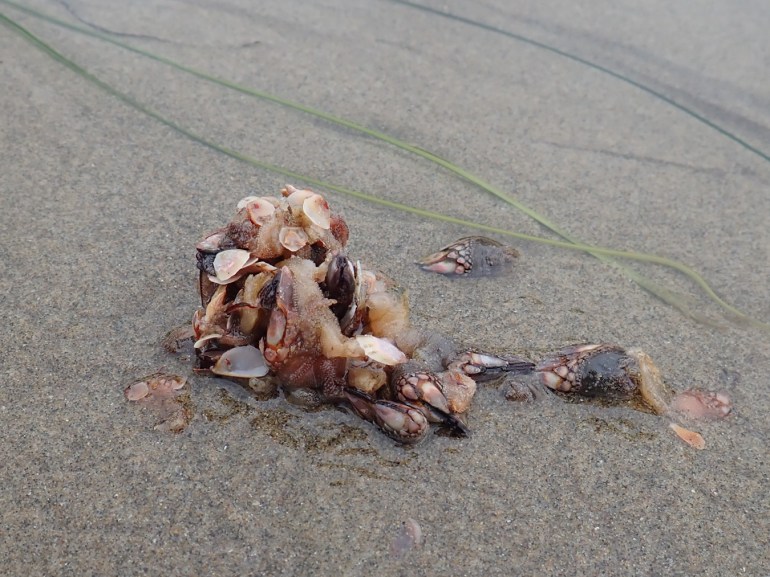
Not washed ashore, but worthy of mention, because they’re pretty common in and around the swash zone, and not everybody knows what they are, are occasional little masses of regurgitated remains, frequently consisting, as in the example below, of undigested and indigestible barnacle remains. Here, the pellet consists of Pollicipes remains, a mix of capitula and other undigested material, some free scuta and terga, and other shell plates.
And just like that, the tide had turned. So long from the shore.

July 22, 2024
Just above the zone of big wood, sea-watch lives up to the eponym underneath a lightening sky.
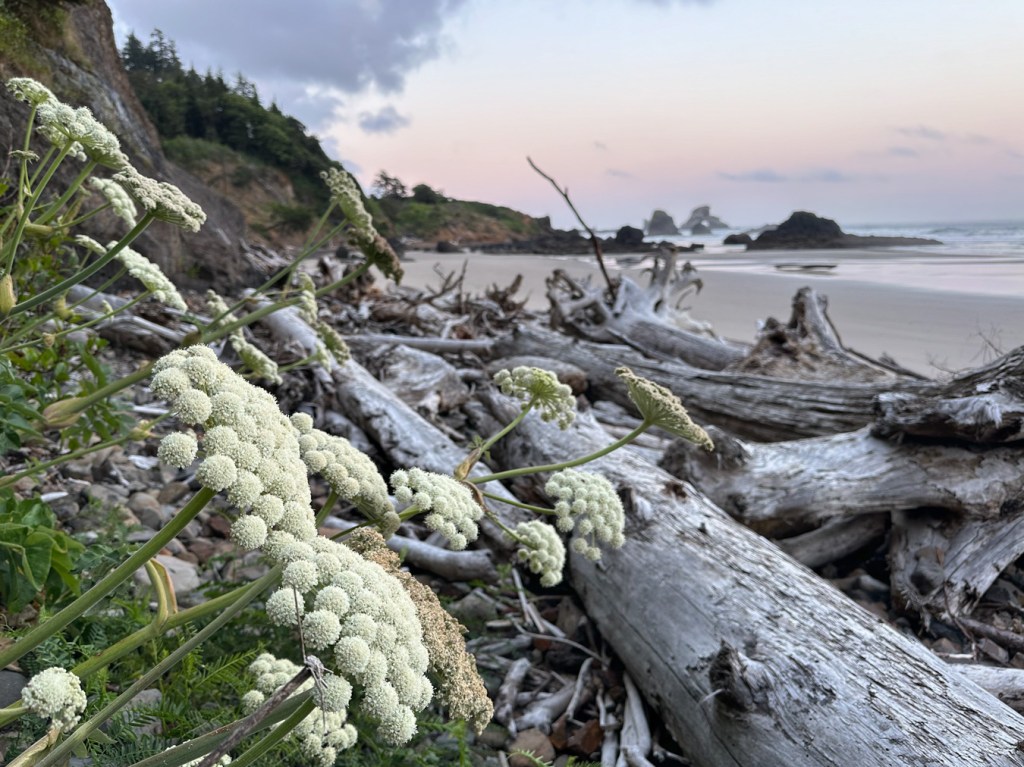
Setup for a wrack line reveal

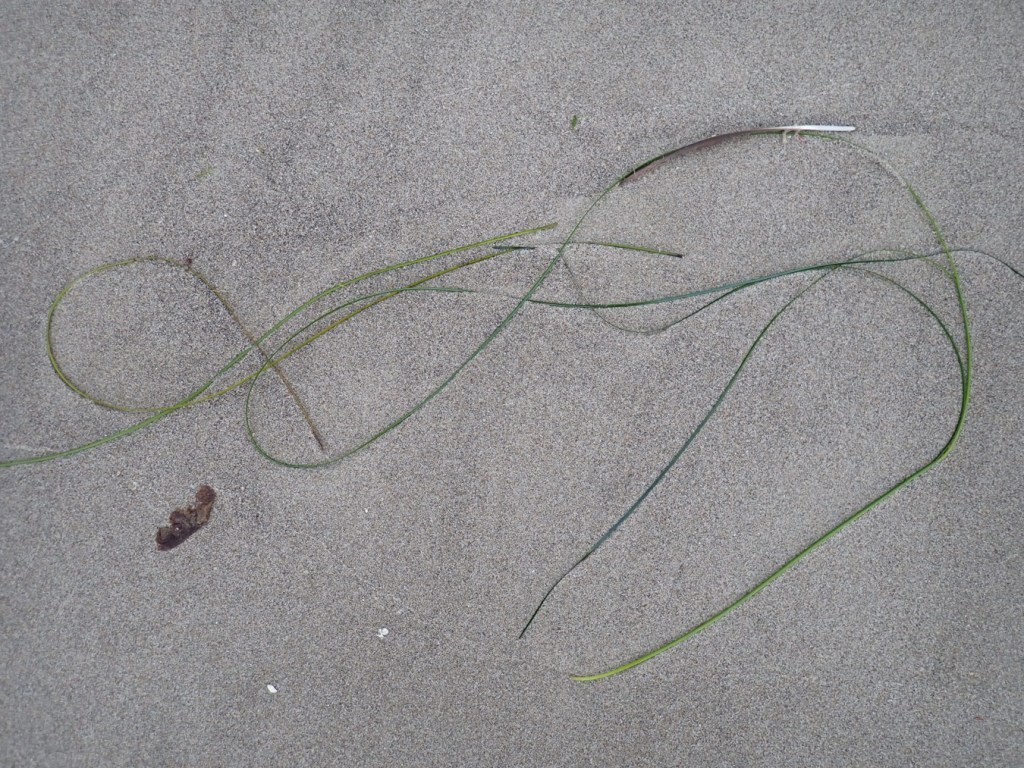
From gracefully laid blades to tumbled masses, drift surfgrass Phyllospadix, as a matter of practice, makes a showing.


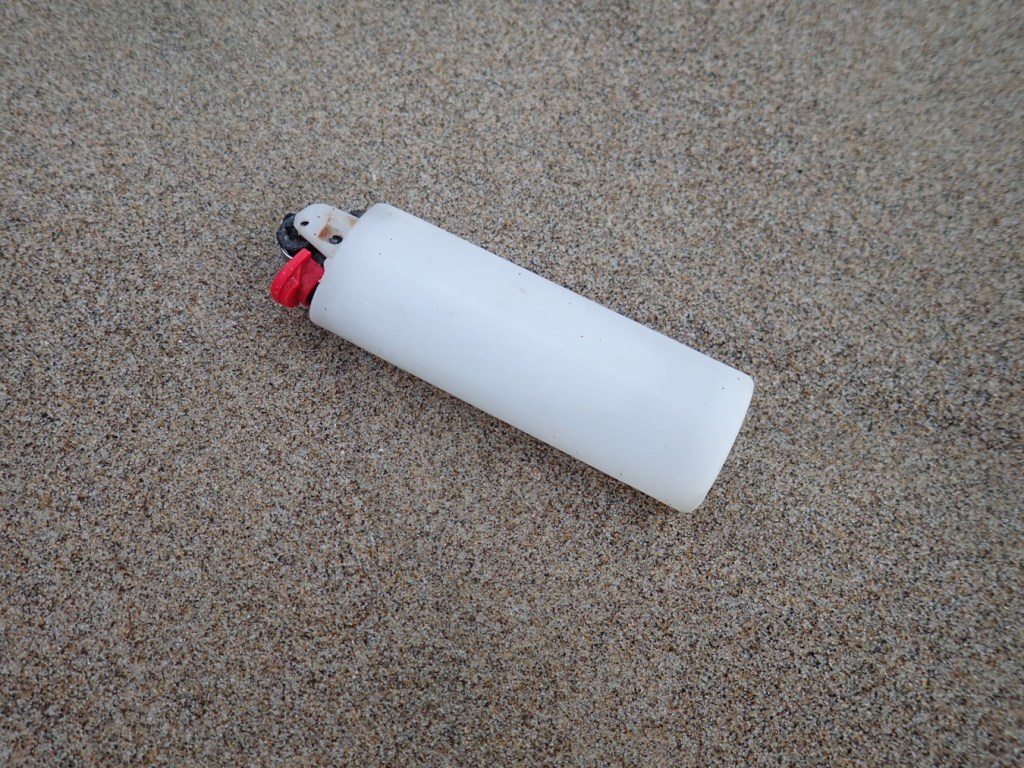
A survey of the human-made side of the wrack line ledger reveals traces of fundamental human wonts.


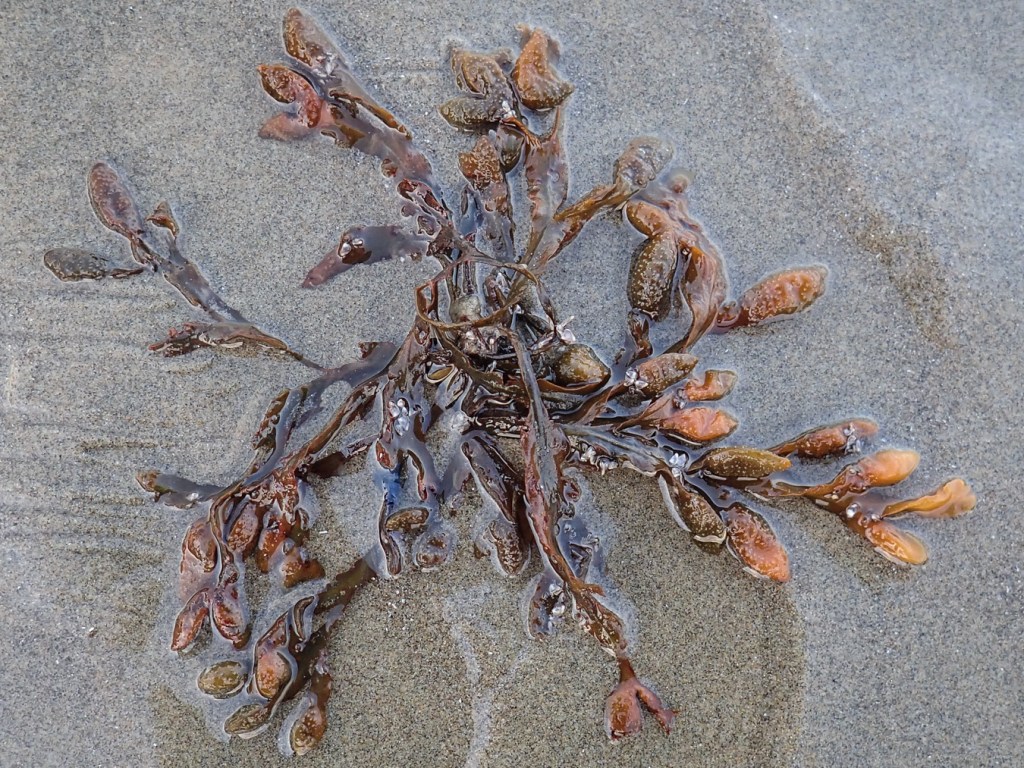
A few friends from the seaweeds side


If it’s July on this shore, the Dungeness molt is on.


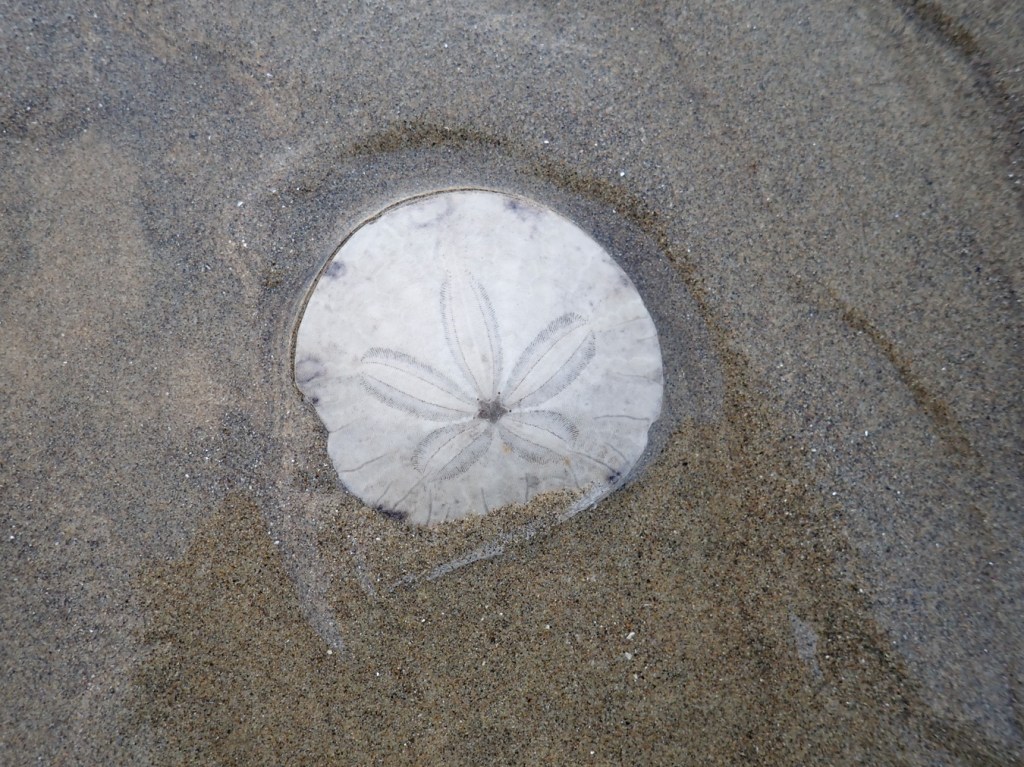
Echinoderm representation provided by the eccentric sand dollar.

July 21, 2024
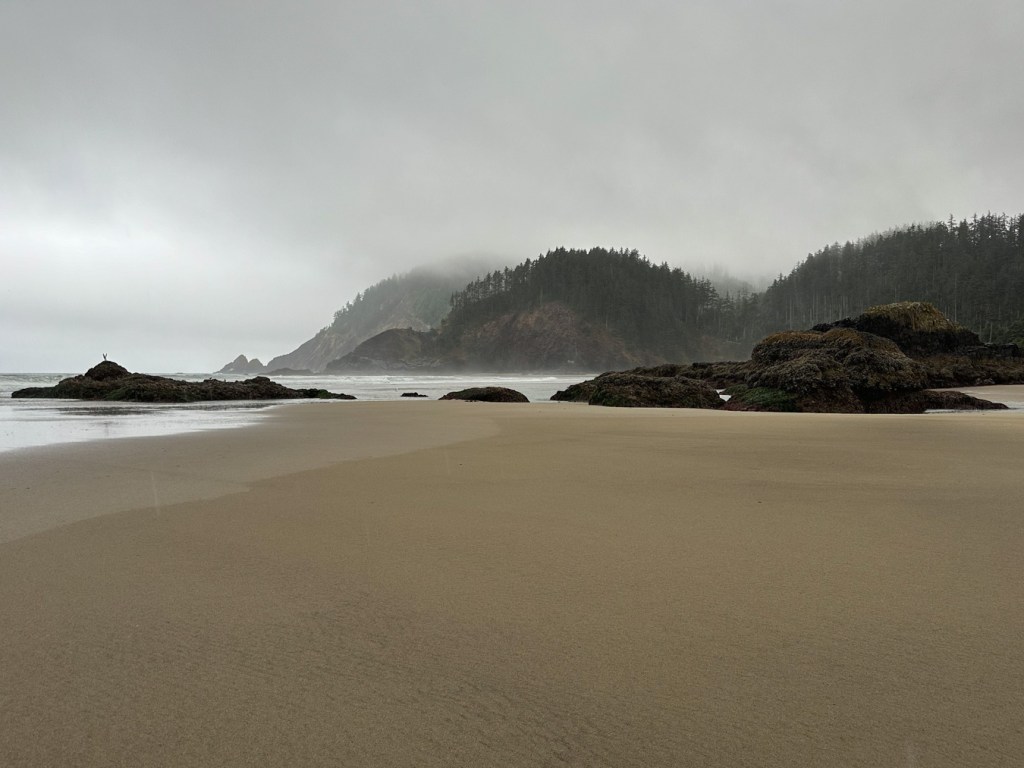
Pausing just for a moment to take in the view before dropping down into that world.

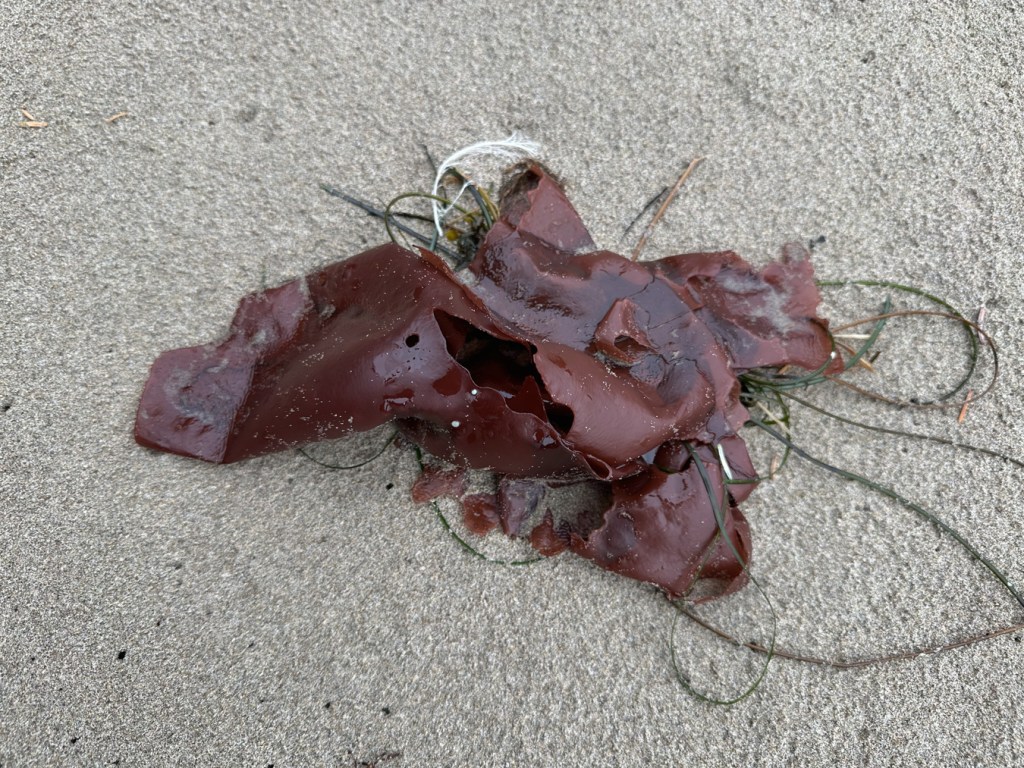
First thing the wrack line yielded was a seaweed I don’t often see.


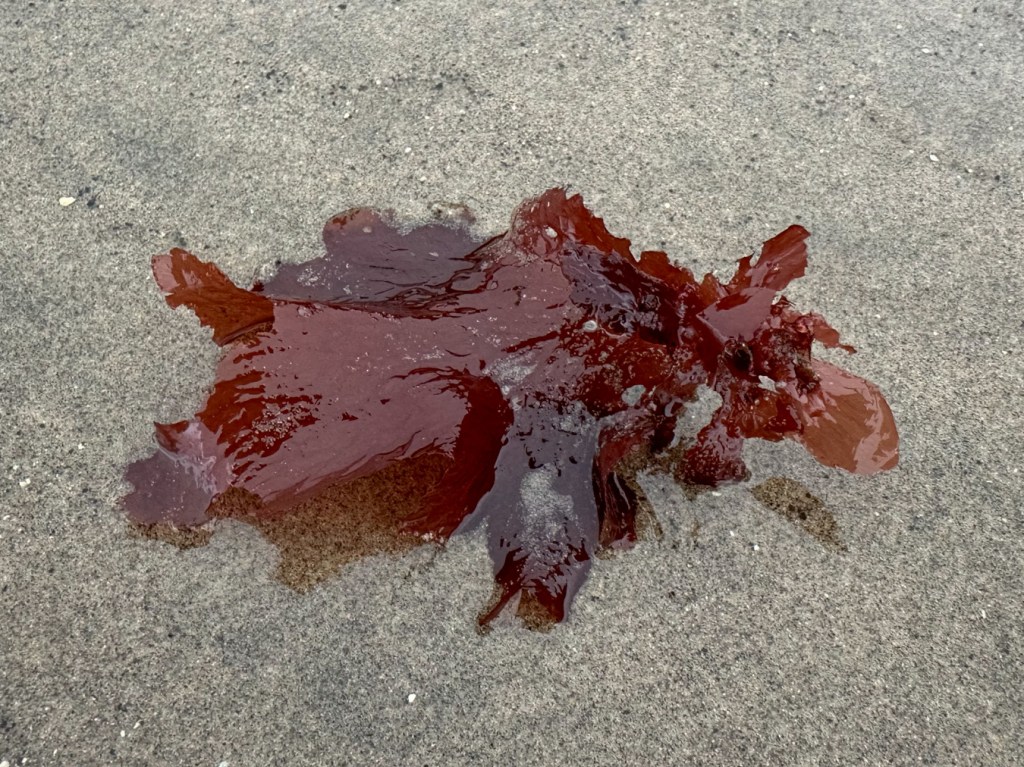
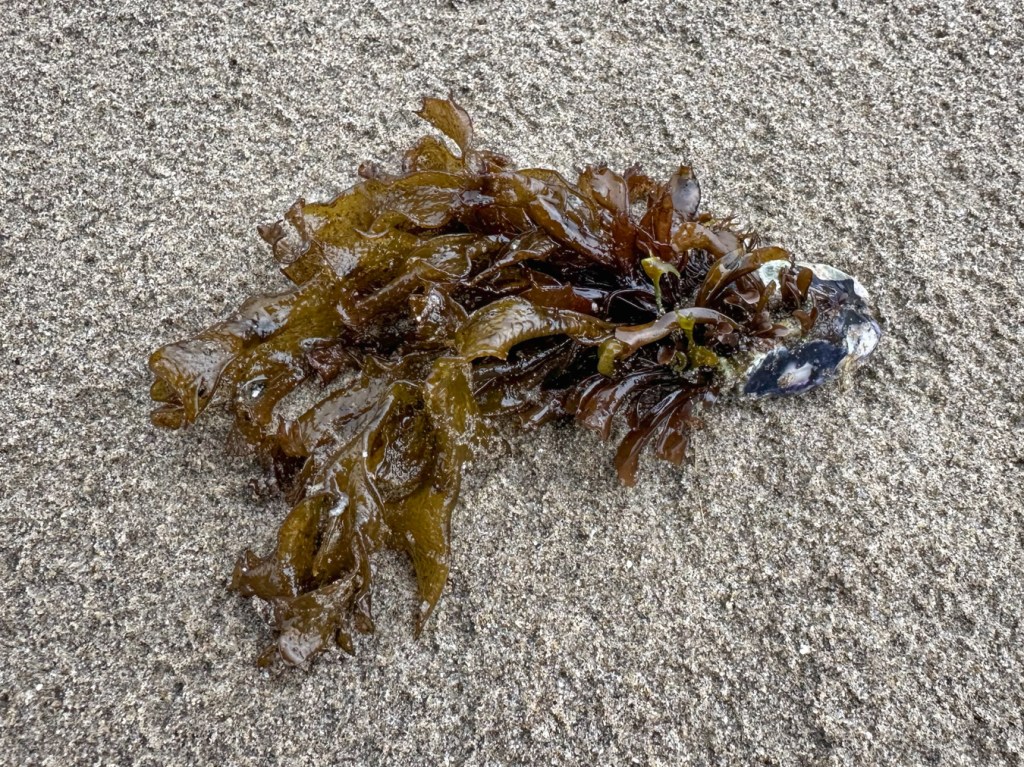
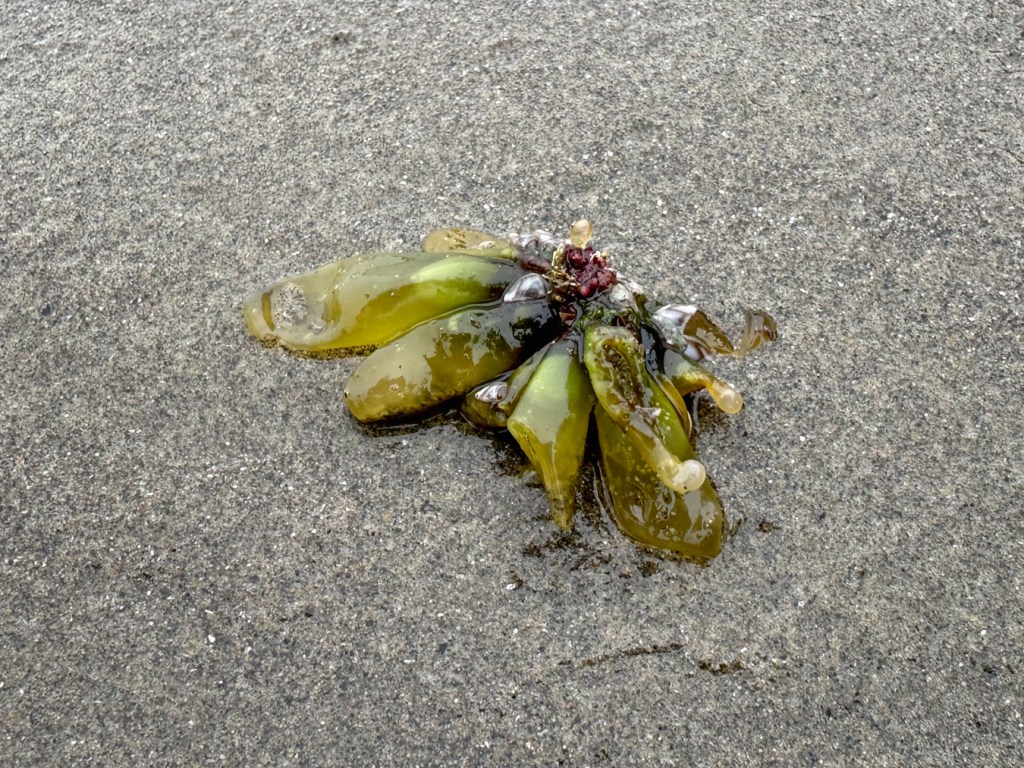
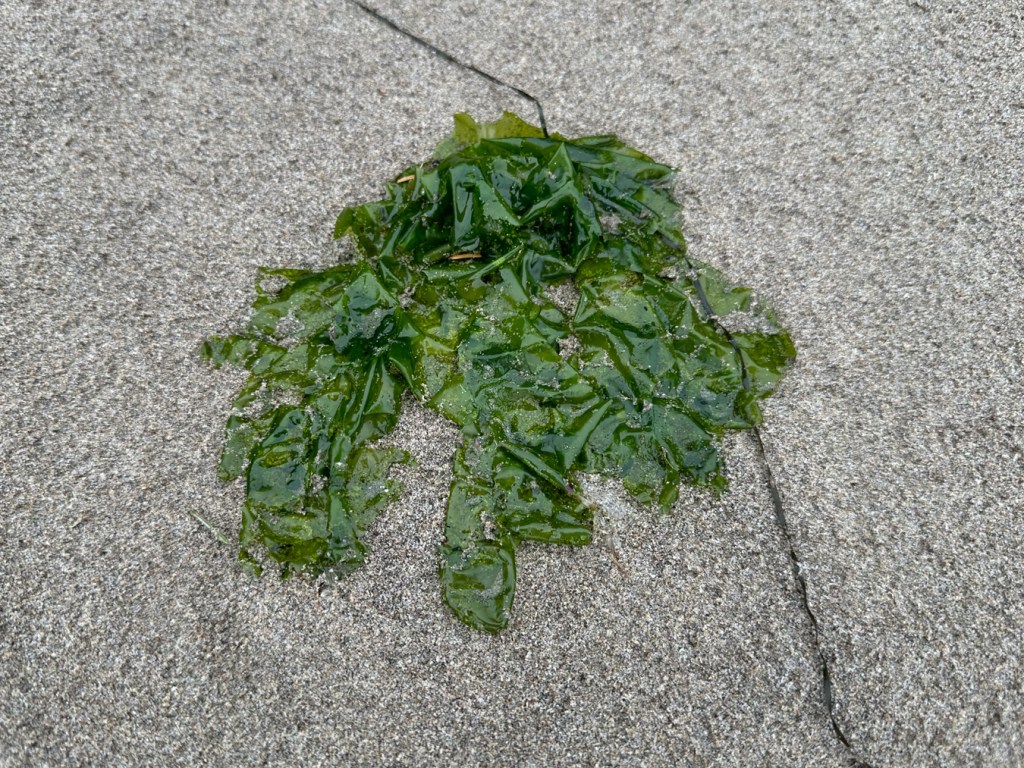
A sample of other seaweeds from the drift.

It’s worth it, every so often, to lift your face from the sand and take a look around.
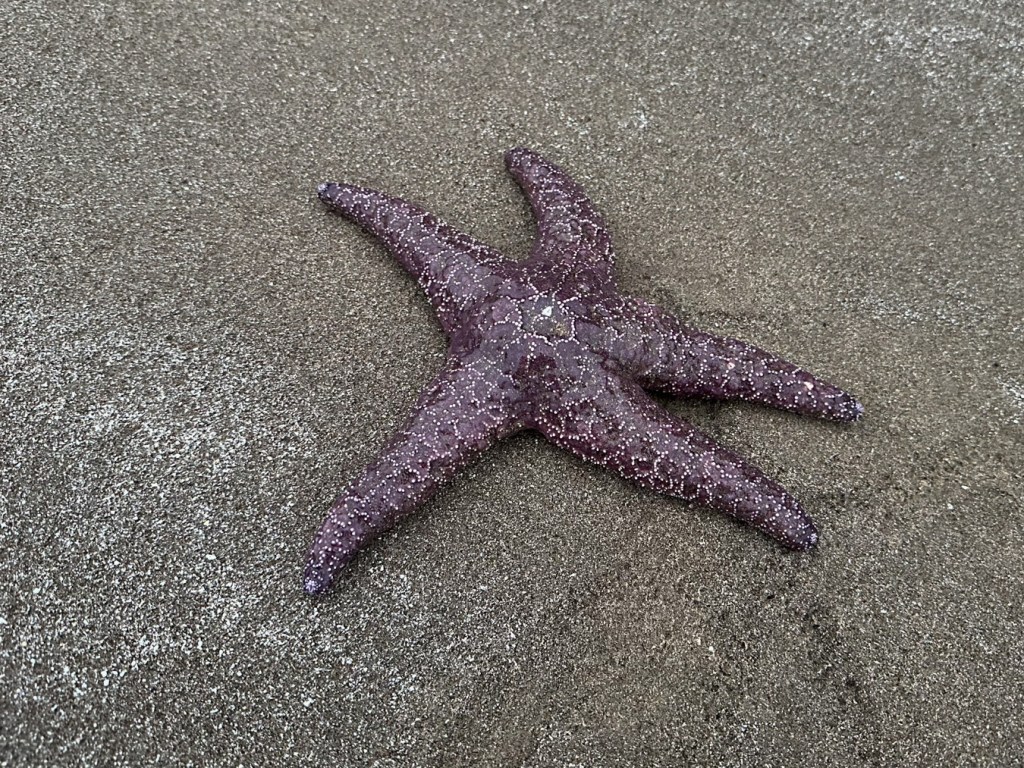
From the animal side of the drift equation.




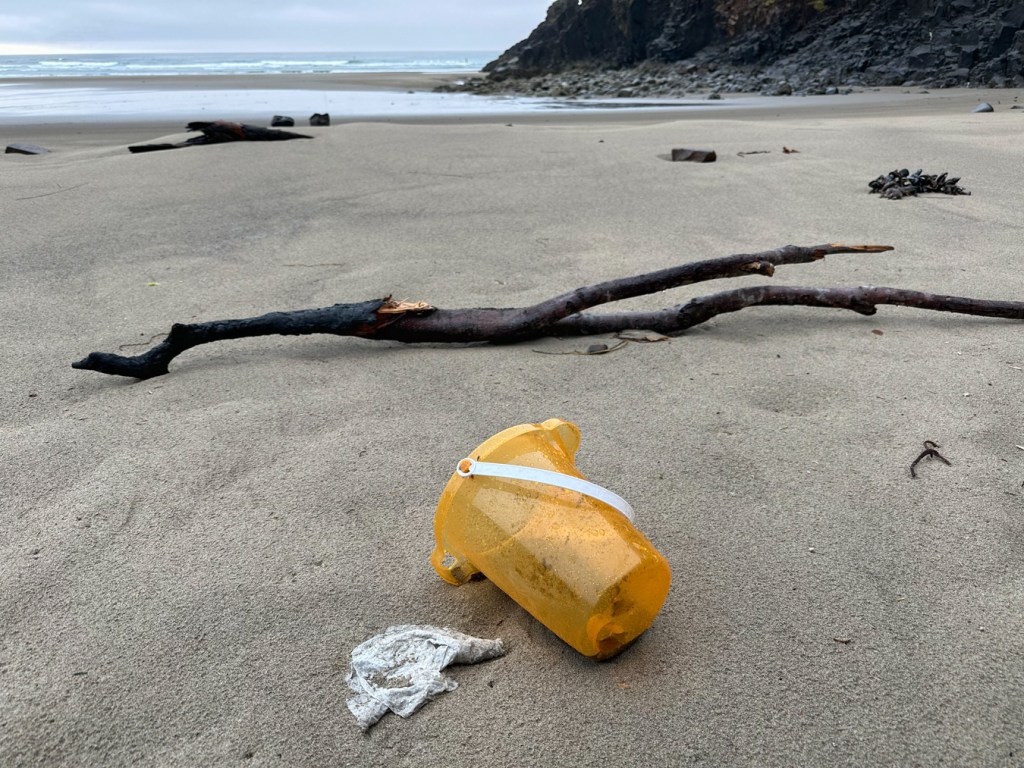
Selections from the human contribution.



May 8, 2024
Coming to you from the zone of big wood.

A sample of drifted finds.
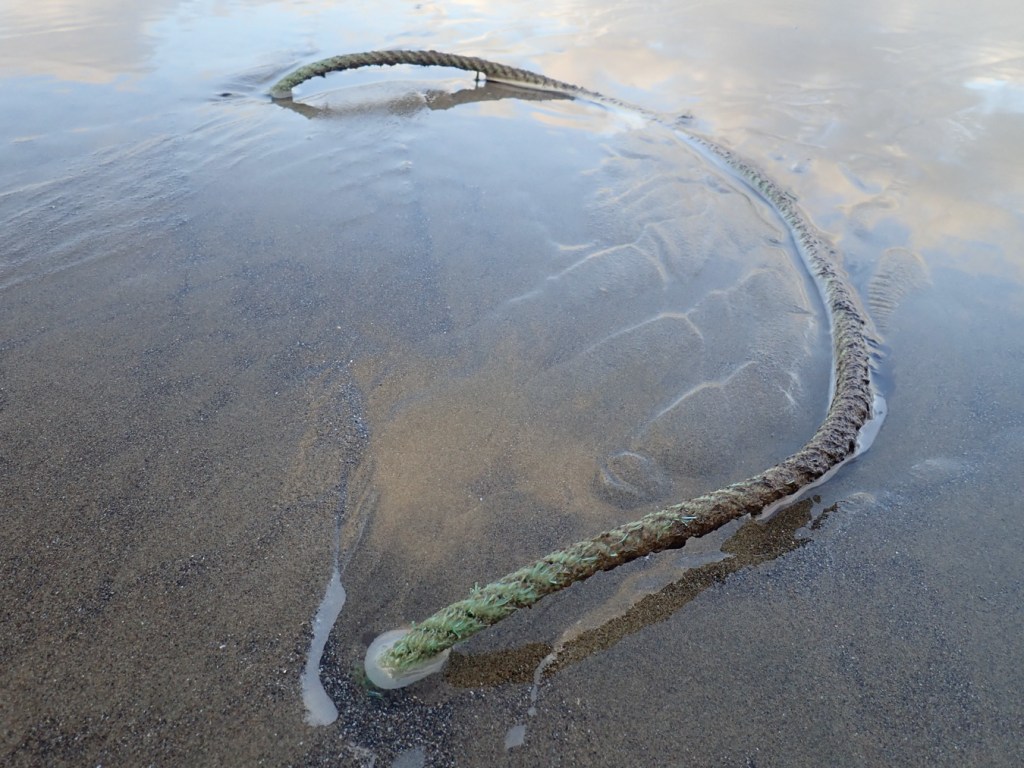


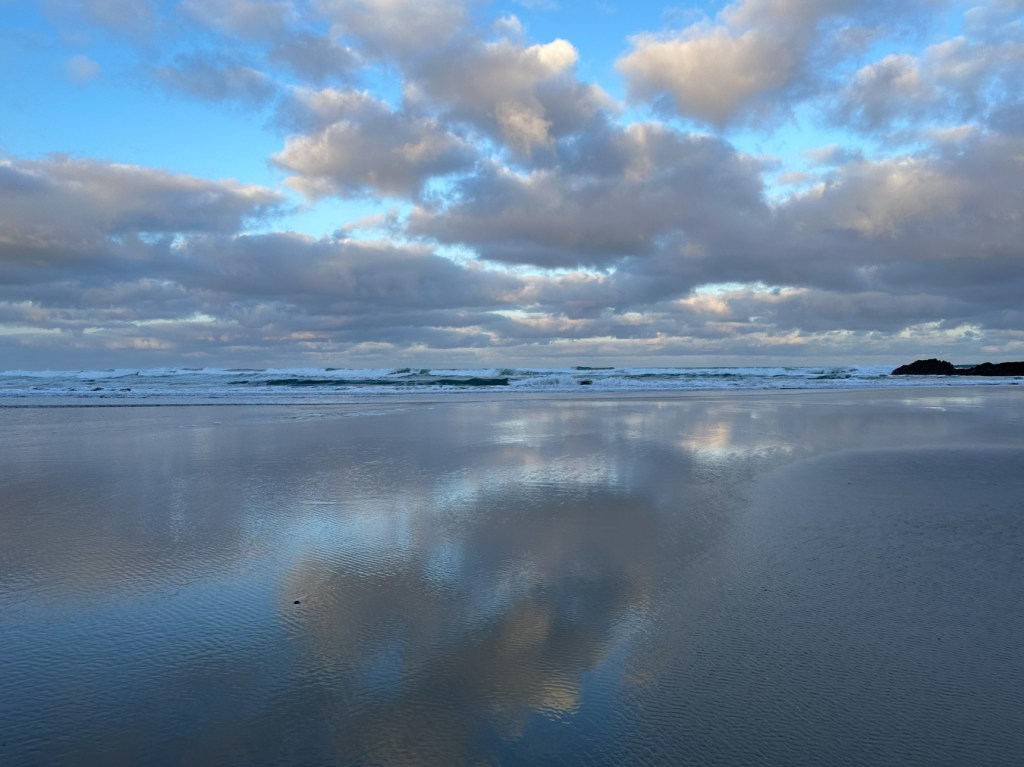
The volcano-shaped mound in the sand is a razor clam show. I love the clouds reflected in the reflective sheen we call the mirror. (You can also see it in Lost line and Macrocystis, above.)

Speaking of the mirror, it was working overtime.
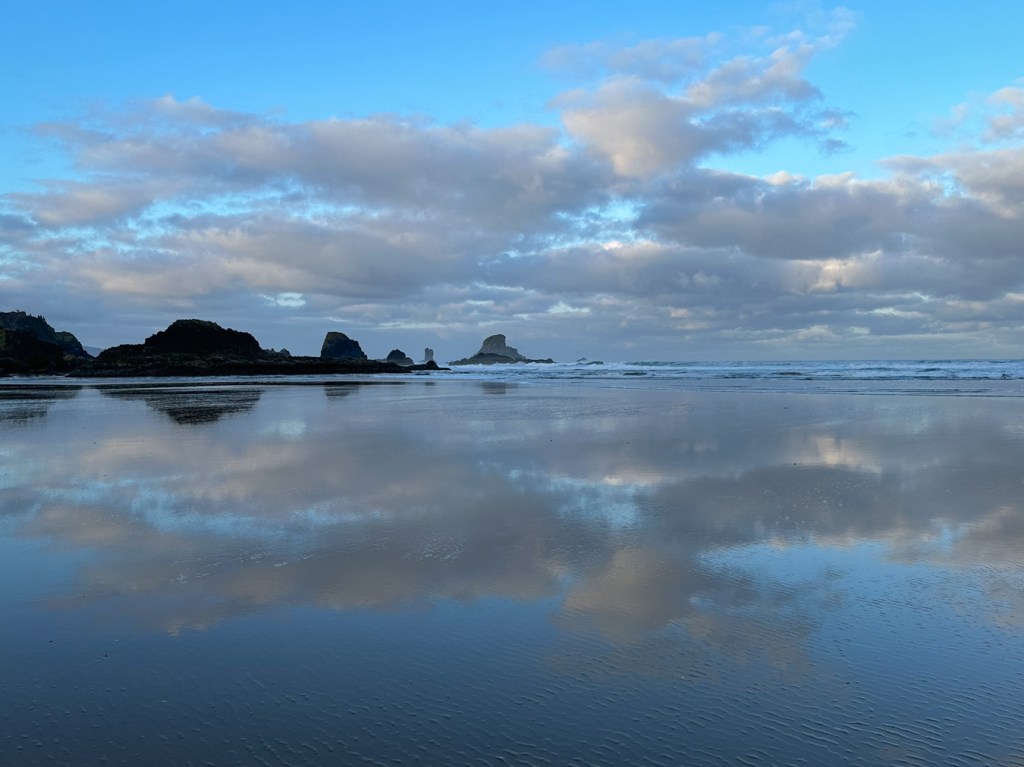

March 14, 2024
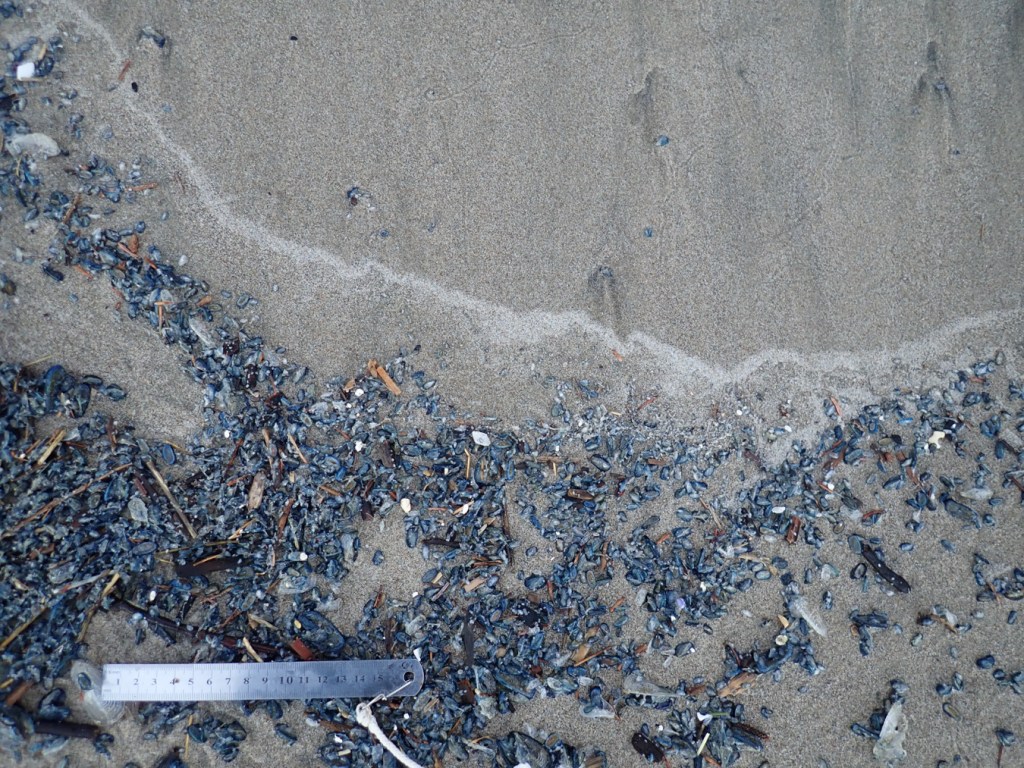
From above, lines of beached Velella set the mood.



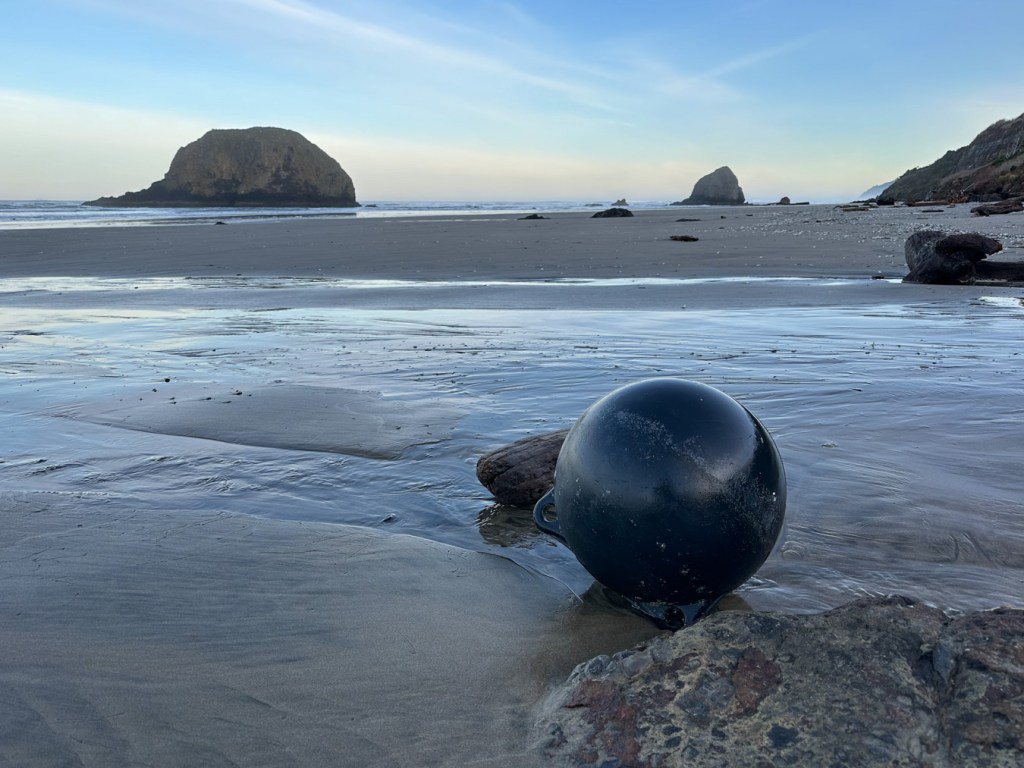
By way of encrusting flora and fauna, this particular float was lacking. It’s not too uncommon to find lost Sanshin floats of various shapes and sizes.
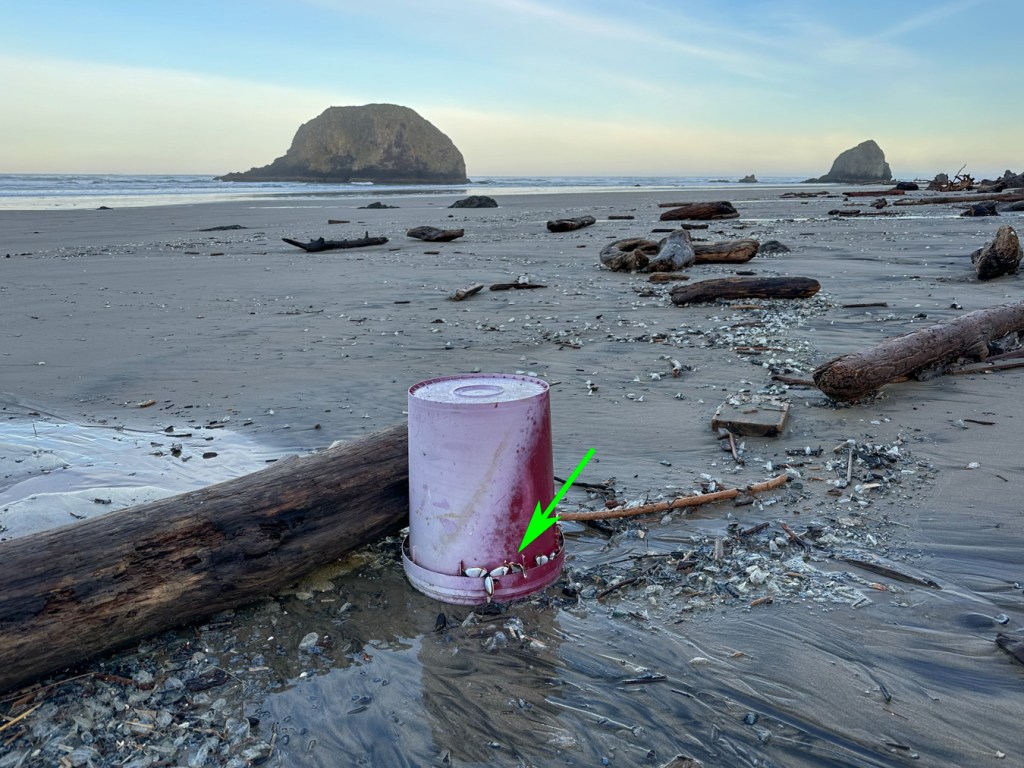
A few pelagic gooseneck barnacles Lepas rode in on their bucket.

Arrived on the Midnight Special
One way to find barnacles on exposed beaches is to look for them on drifted logs or pilings.
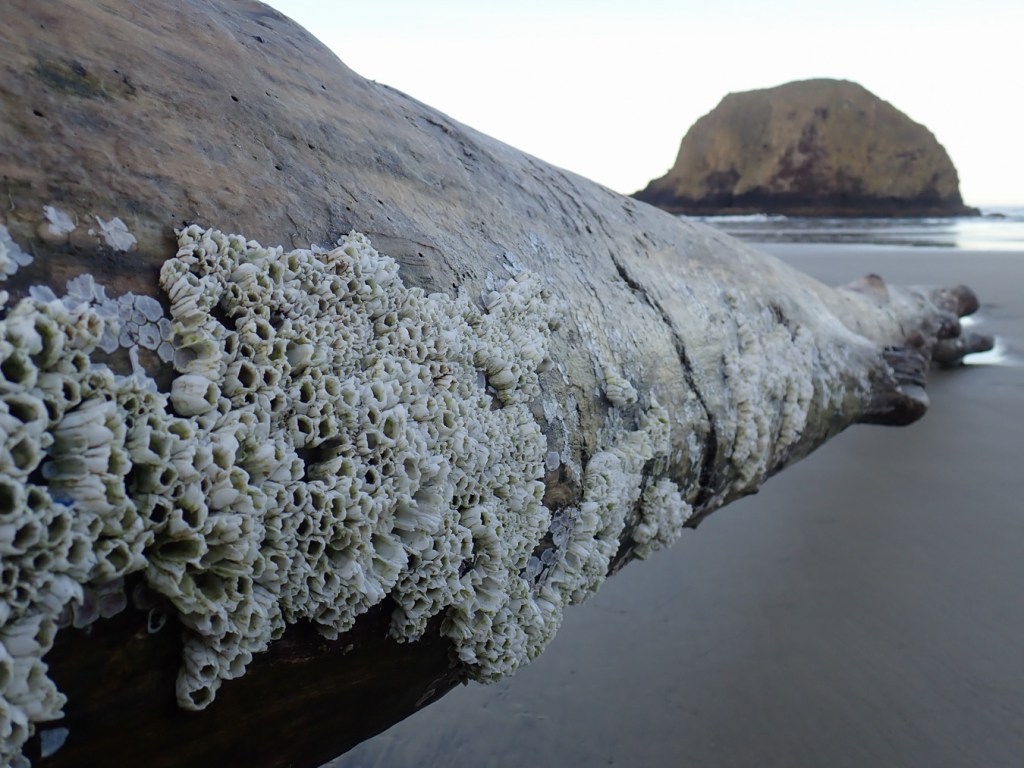

Before I leave the barnacles behind, if you’re interested in barnacles, you might enjoy visiting my Barnacles page for photos and a few words about some of the common intertidal barnacles on the northern Oregon shore.
Beyond barnacles
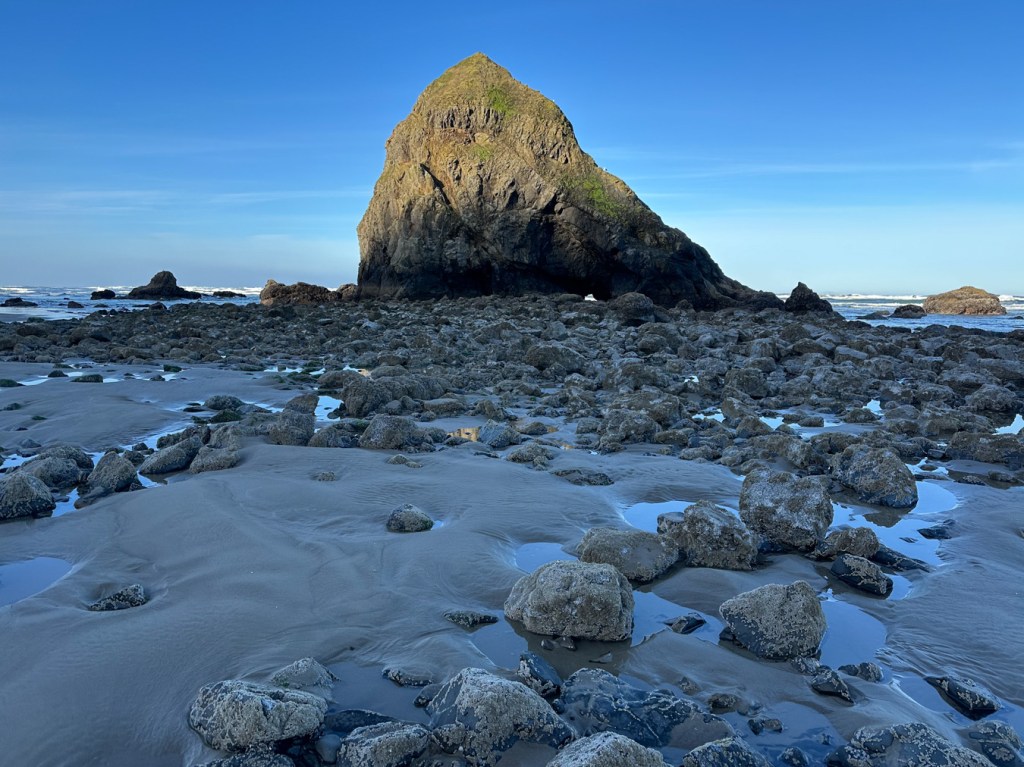

Limpets and such

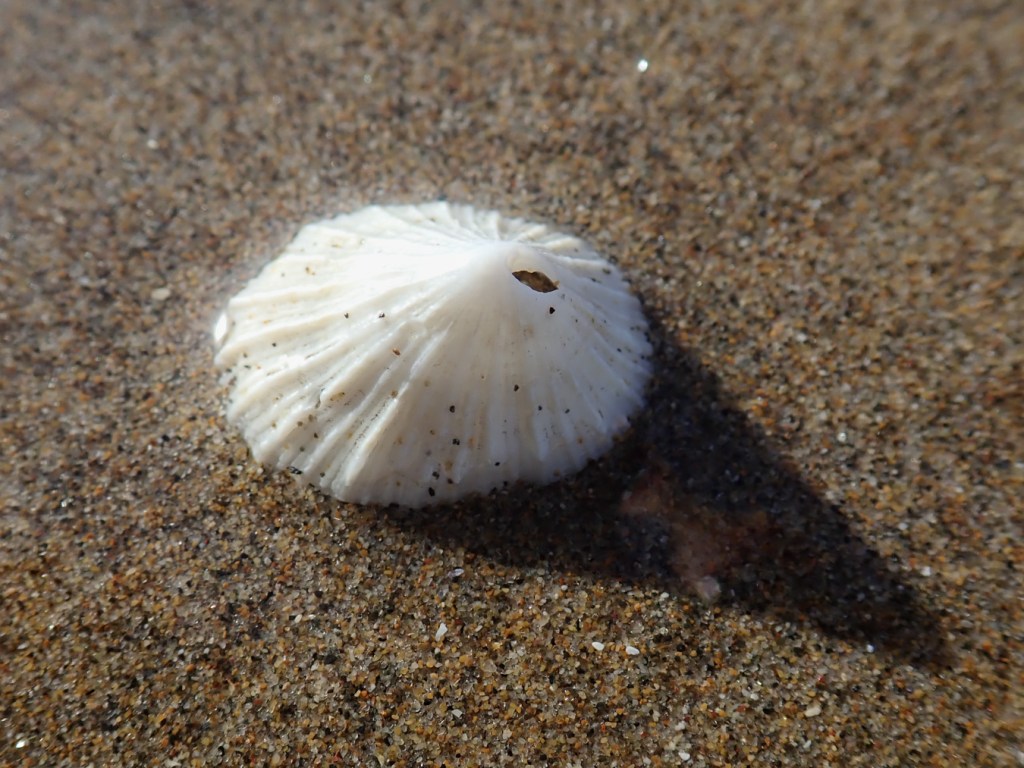
For a few more examples and my take on some of the common limpets and limpet-like molluscs, head over to my Limpets and Such page.
***
March 13, 2024
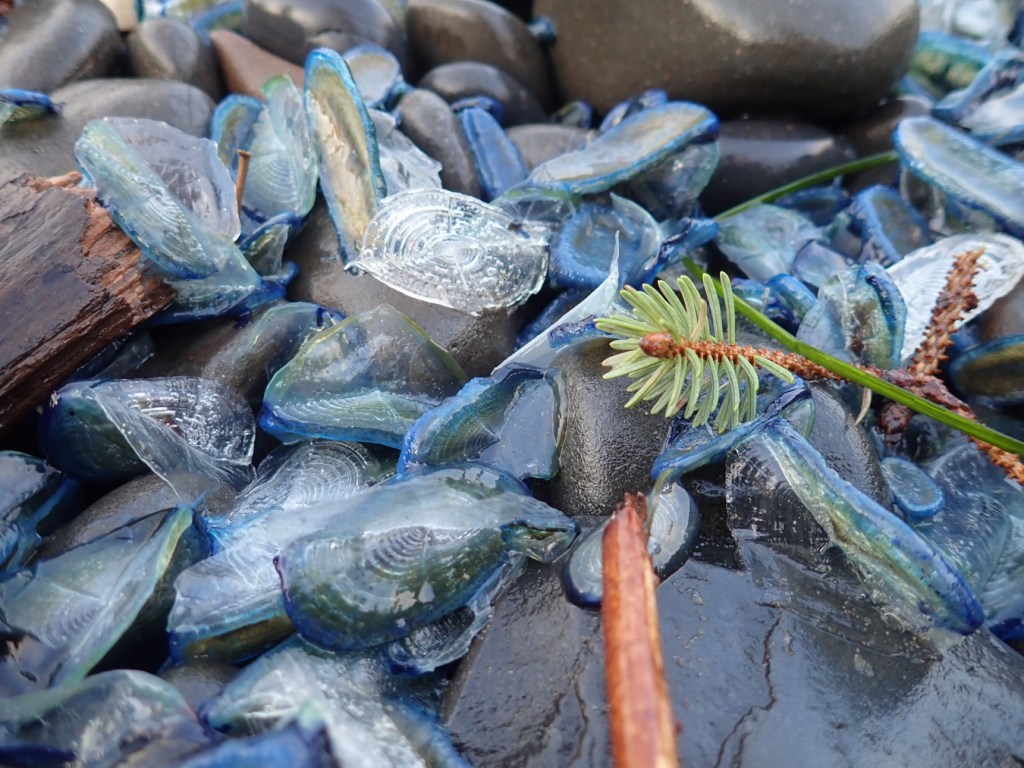
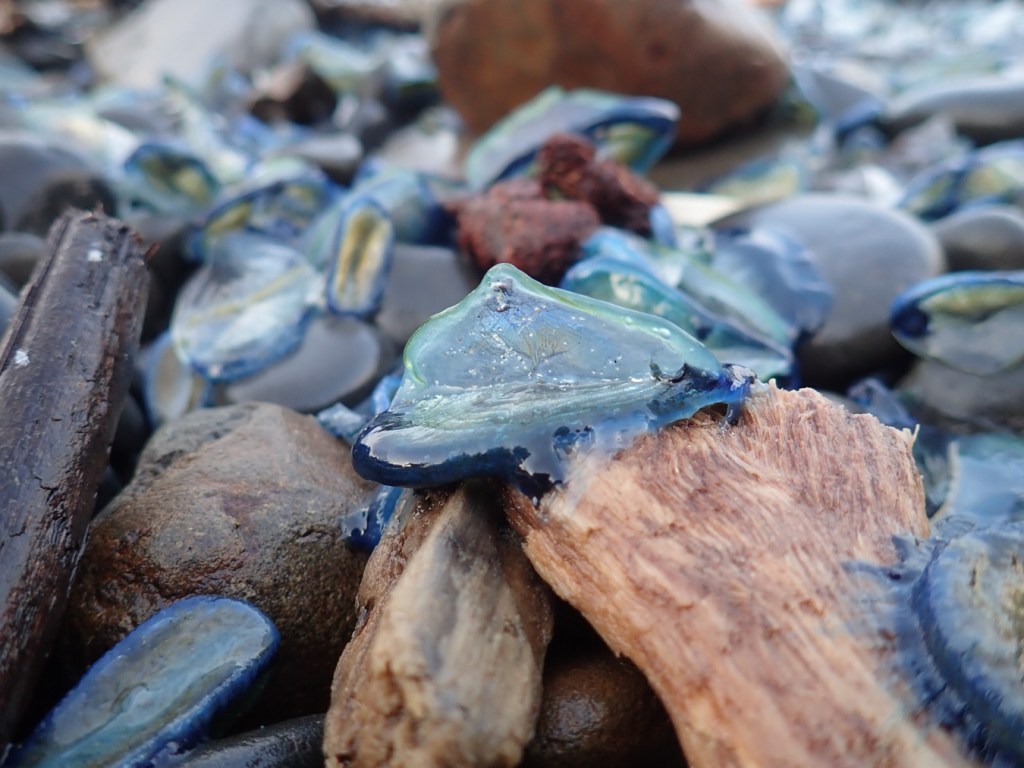
Even in dim early morning light, and at quite a distance, you can pick out lines of beached by-the-wind sailors Velella velella. Arrows point to strand lines in the cobbles; the receding tide left more Velella lines on the sand below. Read on for a closer look and to find out if there is anything besides blue bands in the drift. (Spoiler Alert: Turns out, among the cobbles and Velella, lots of pelagic barnacles had reached the end of their drift, arriving on buoys, bottles, styrofoam and driftwood.)

As expected, plenty of by-the-wind sailors. Even in scenes of beachcast death Velella is lovely and enchanting.
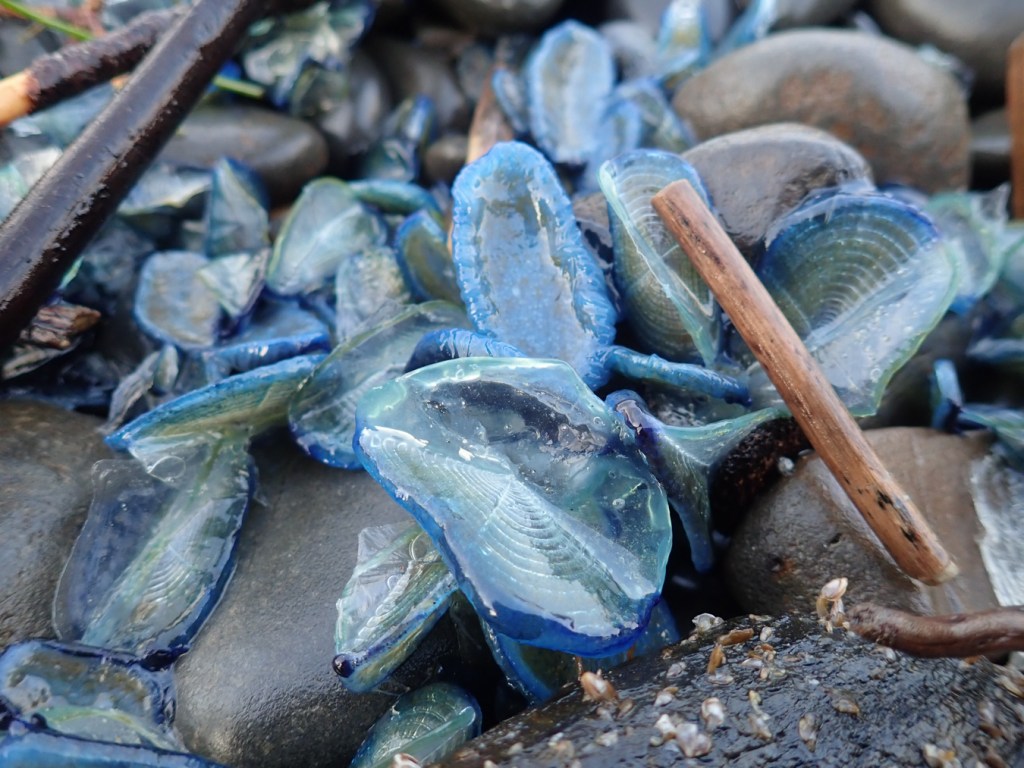
I made a couple short videos to help give a feeling of the extent of this beachcast event (on this morning on this beach). Click here to see the scene up in the cobbles. Click here for a scan of the beach loaded with by-the-wind sailors.
This event brought in a range of size classes. The biggest Velella I saw were about 5 cm in length, which is pretty common. They can grow a little bigger.
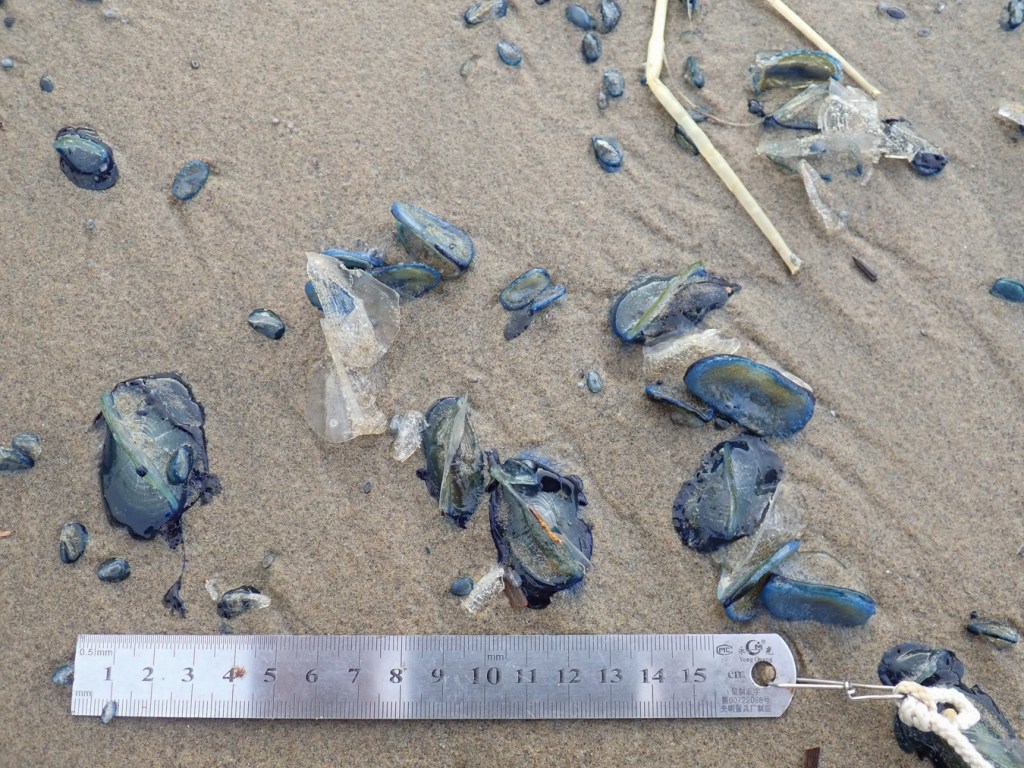
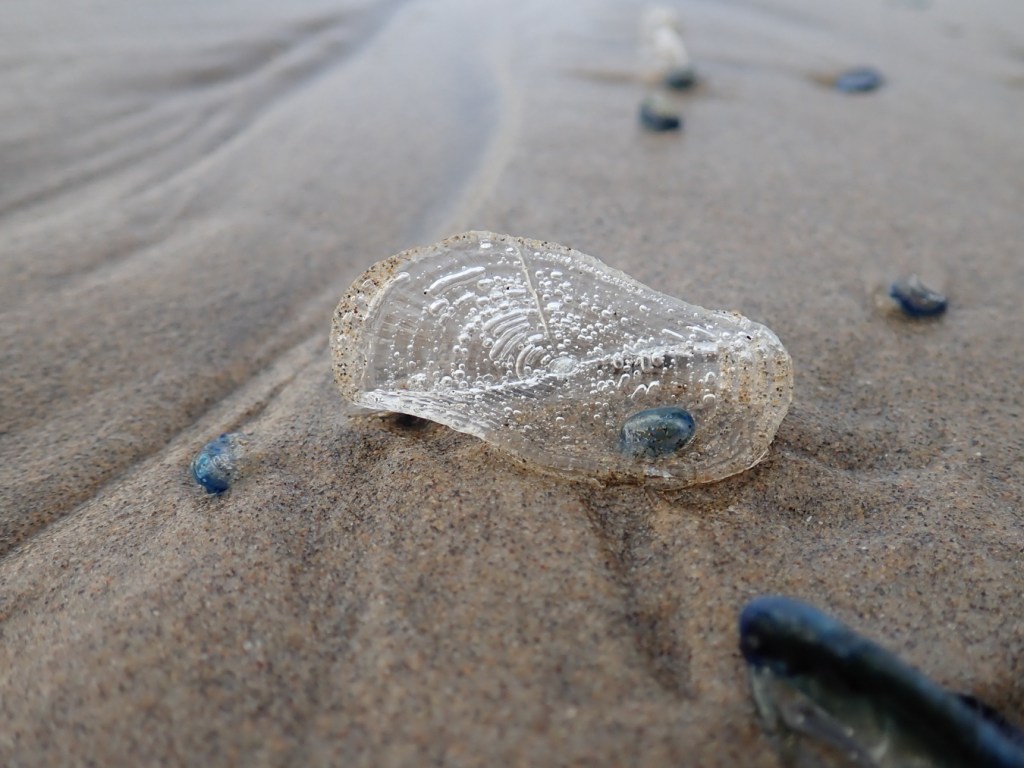
Not long after they die, all that remains are cellophane-like skeletons. It’s common to see a mix of fresh and bleached individuals, as in the top two panels, below.


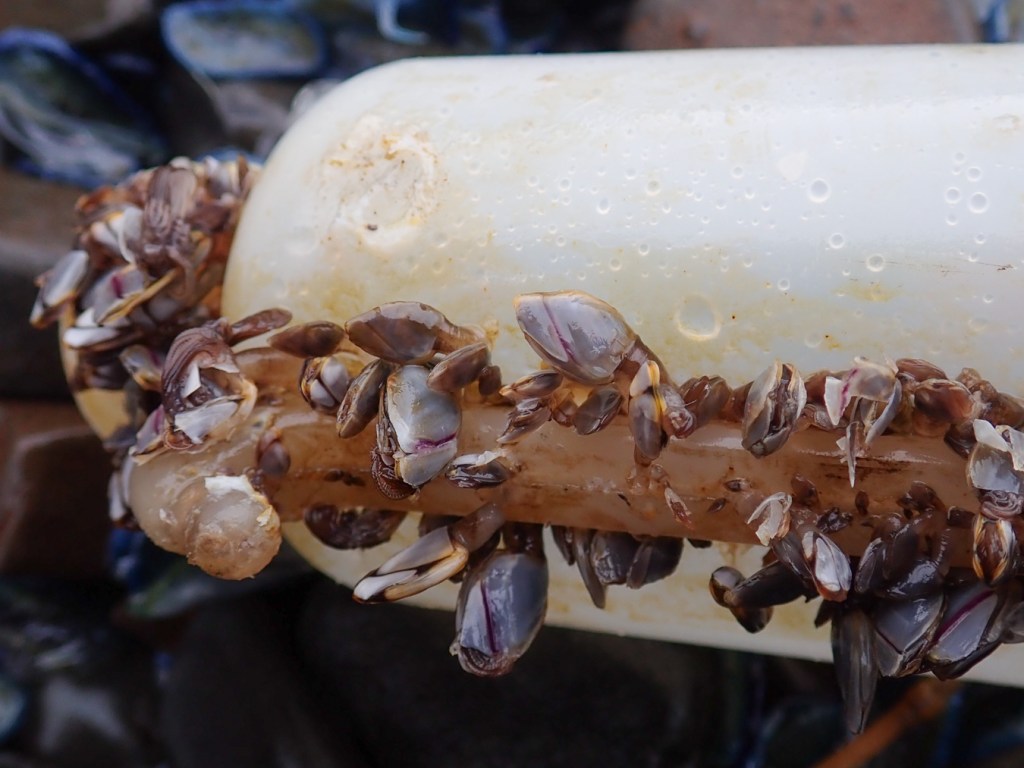
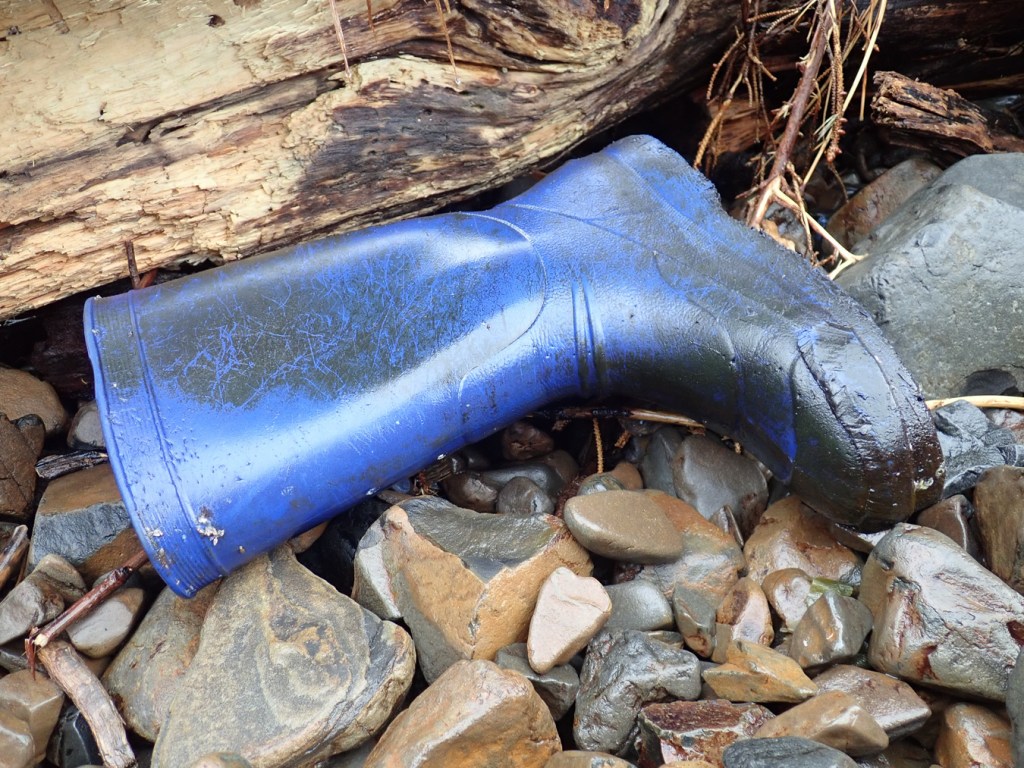
The morning wasn’t all about beachcast Velella velella. Fishing floats, bottles, a rubber boot, and driftwood were present in the wrack line and most of them hosted pelagic barnacles. Below, I show a few sets of images that highlight the barnacles and their floats.
Barnacles and their buoys
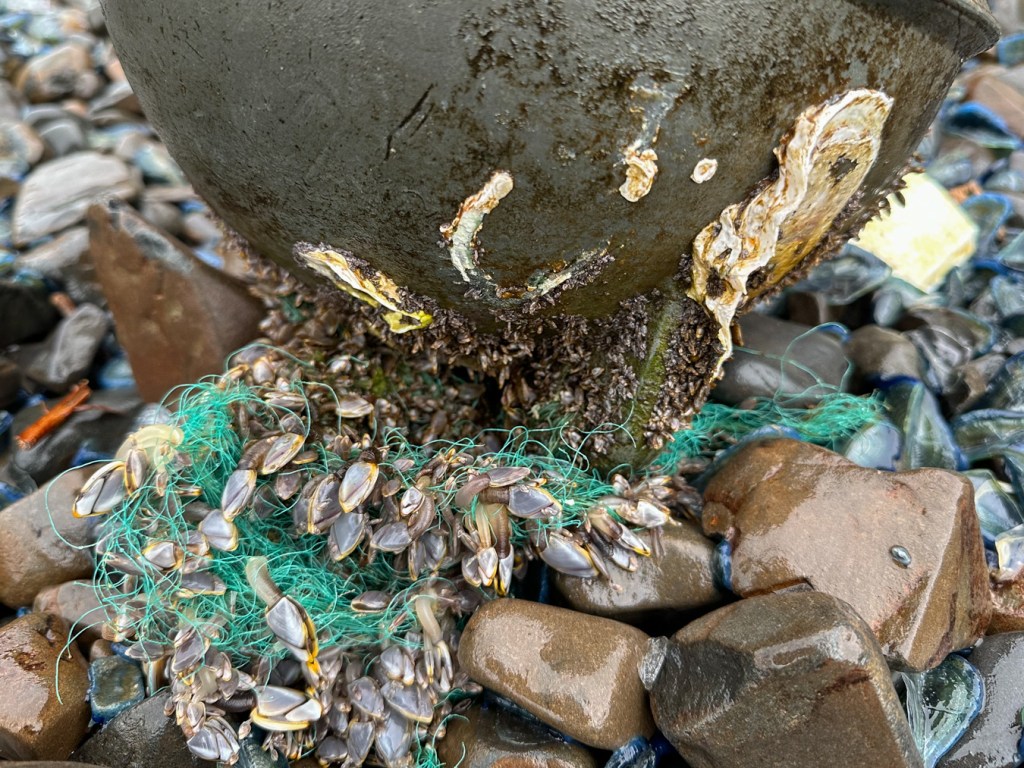
This set of five shots is from a commercial buoy that hosted a few oyster shells, some nylon net, and a ton of barnacles.


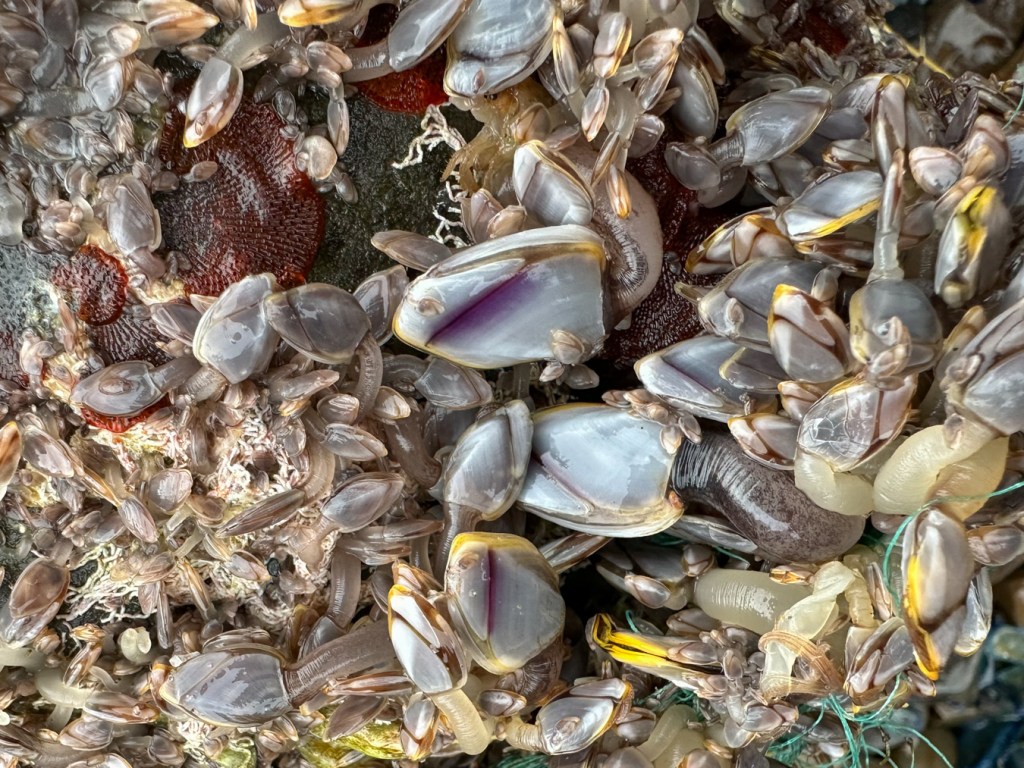

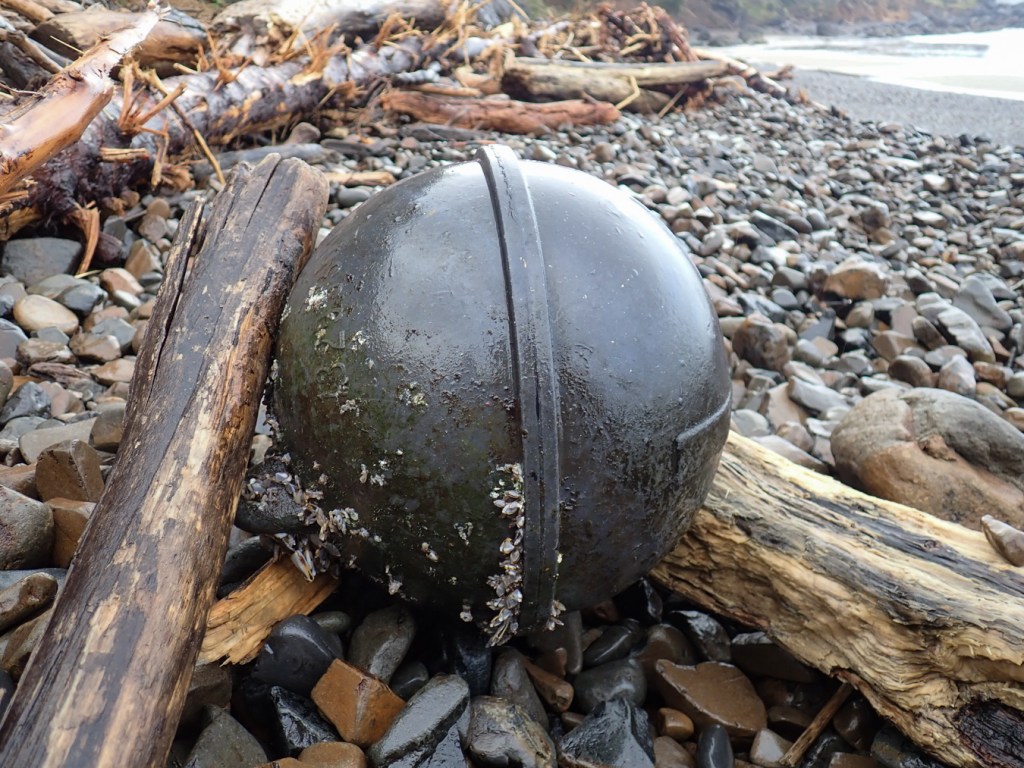
This buoy, found nearby, also hosted a trove of pelagic barnacles. (The untold stories of beached buoys fuel my wrack line imagination.)


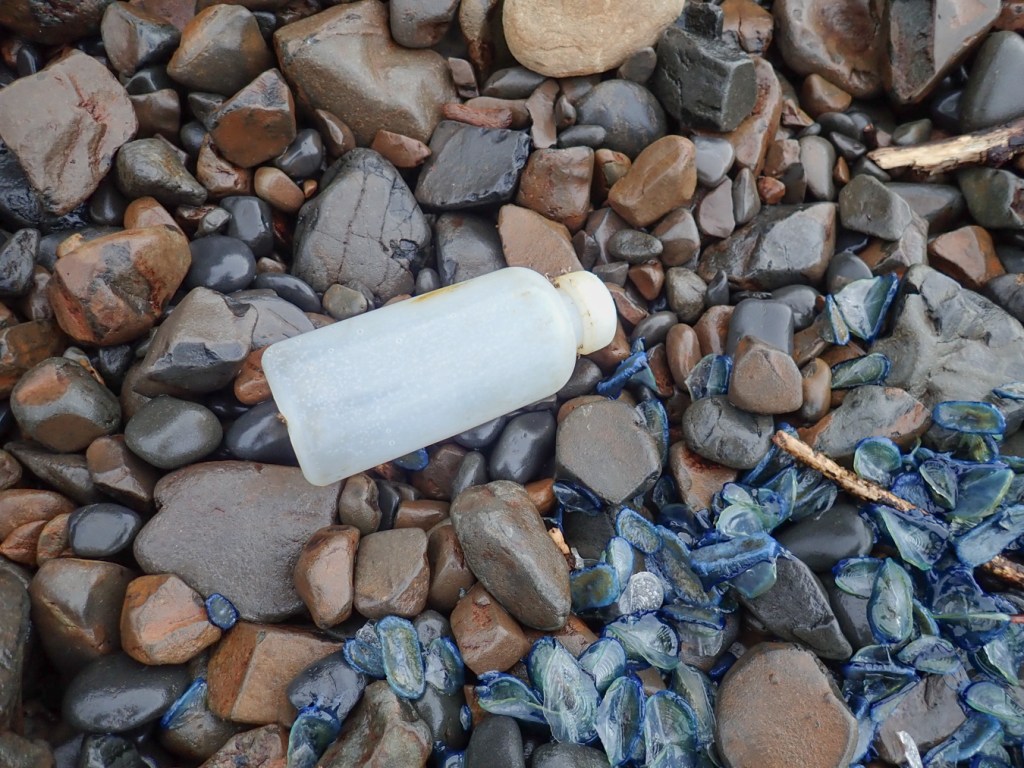
Barnacles and their bottle
The bottle is a familiar narrow mouth lab wash bottle. There’s a ridge on the backside housing the squirt. That’s where the barnacles attached themselves; and on the back of the cap (top right and bottom panel).

Barnacles and their boot
If you come upon a beached blue boot, it’s probably worth a look inside.

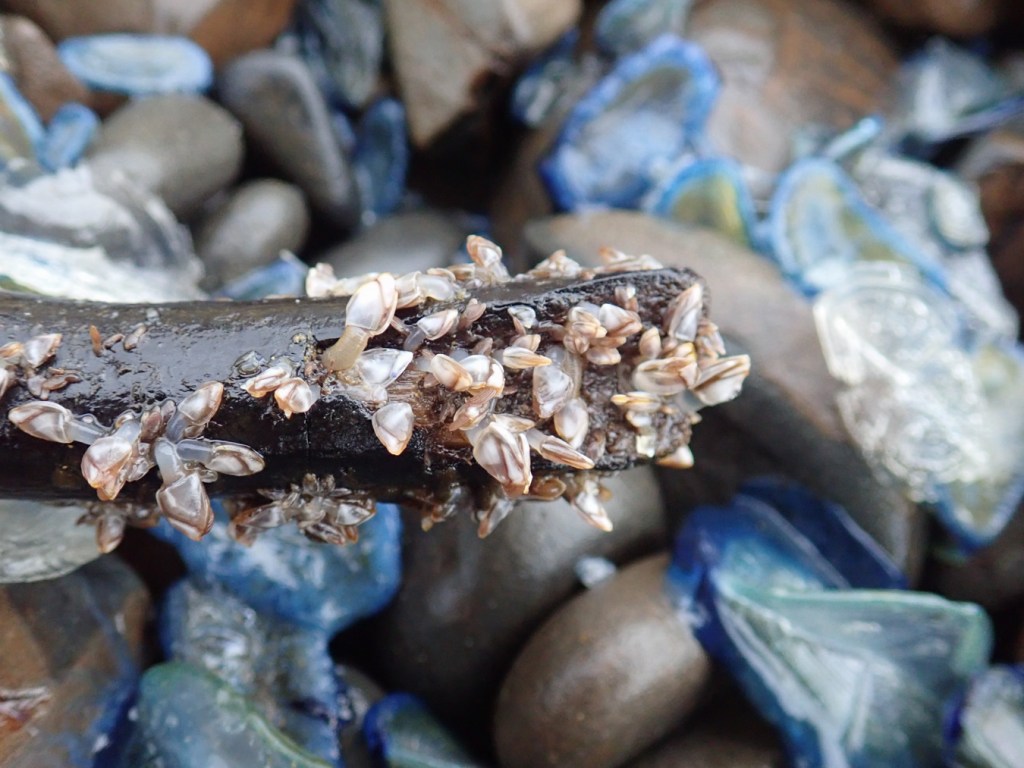
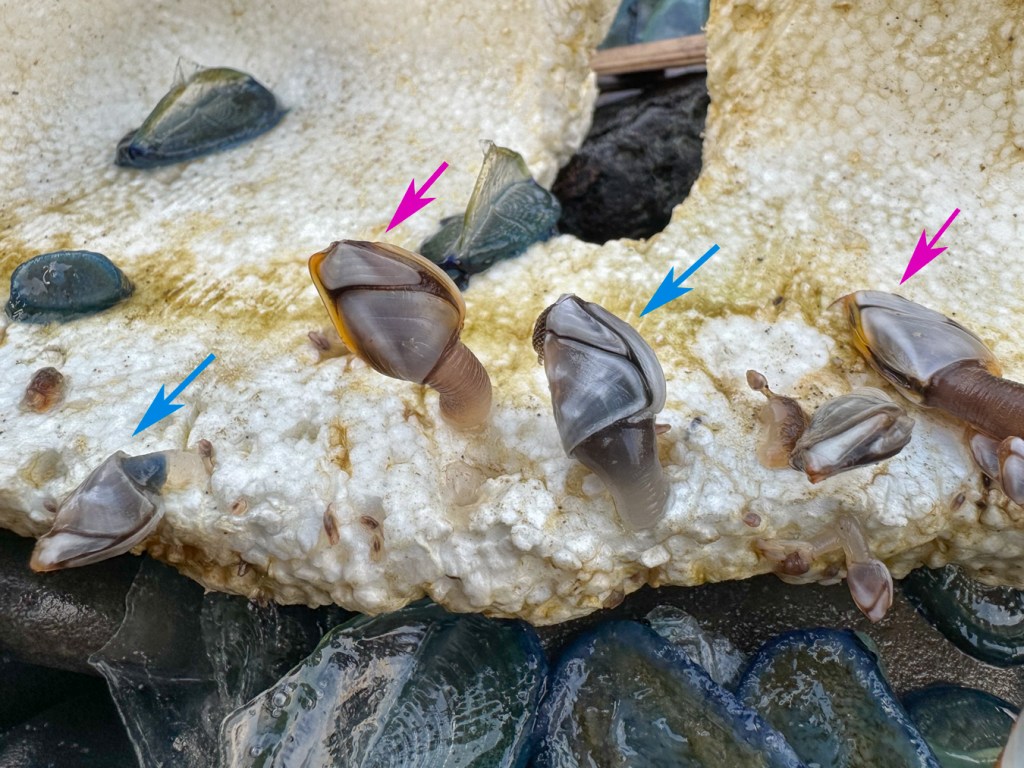
Lepas (I’m assuming all the pelagic barnacles shown in this entry are in the genus Lepas) will hitch a ride on just about any floating debris. Besides buoys, bottles, and boots (shown above), this set features a styrofoam fragment, a piece of driftwood (small branch, really), worked lumber, and a small fishing float.


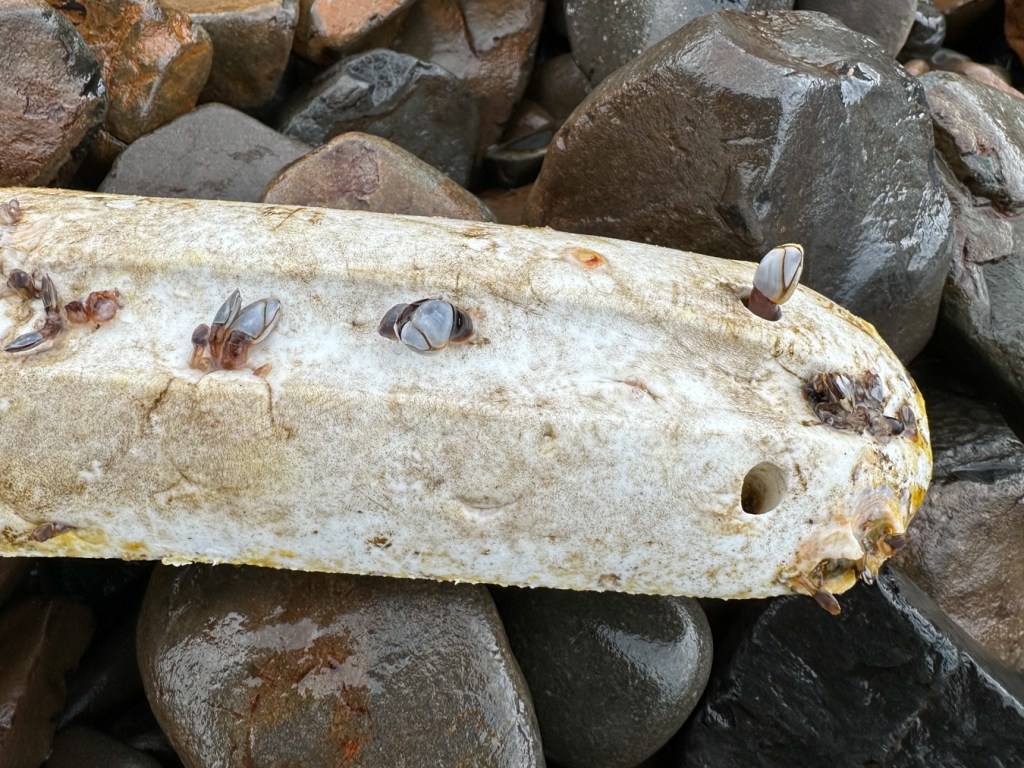
I noticed some variation in the barnacles on this piece of styrofoam, which I indicate with pink and blue arrows. There seem to be subtle differences that aren’t attributable to size, but are they meaningful? On the beach, I thought this comparative shot might help, but now I’m not so sure.
Just a side note before I leave the barnacles behind, if you’re interested in barnacles, you might try a visit to my Barnacles page for photos and a few words about some of the common intertidal barnacles on the beaches I visit on the northern Oregon shore.
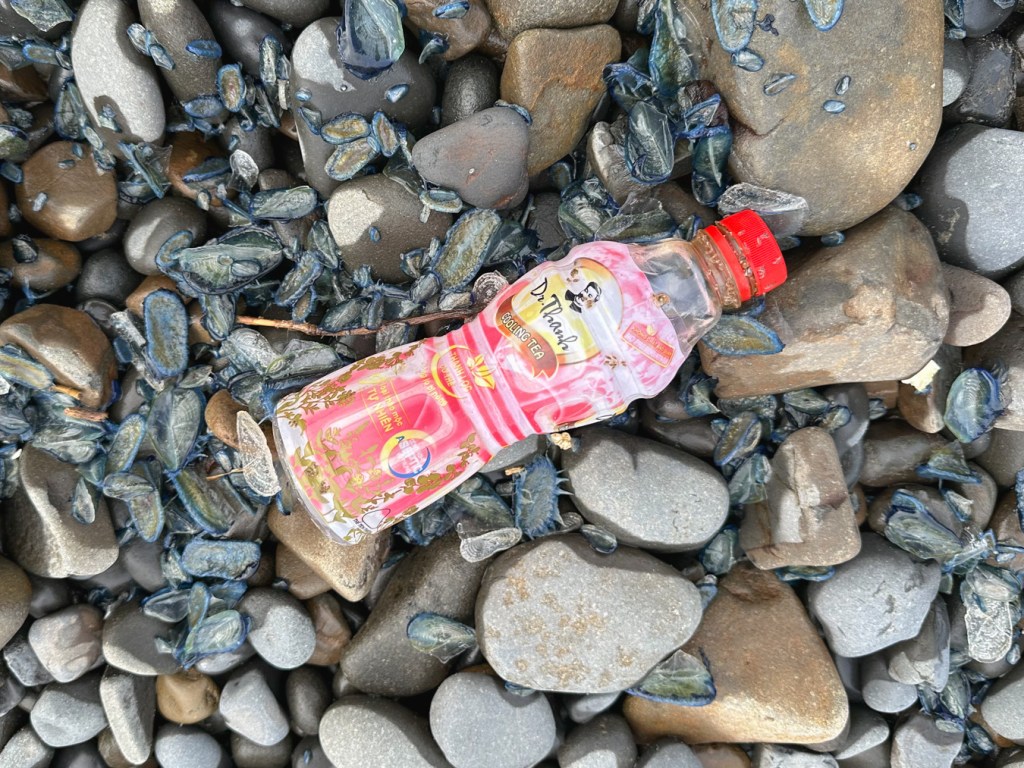
To illustrate that Velella and Lepas didn’t entirely steal the show, here are a few other things that caught my eye.


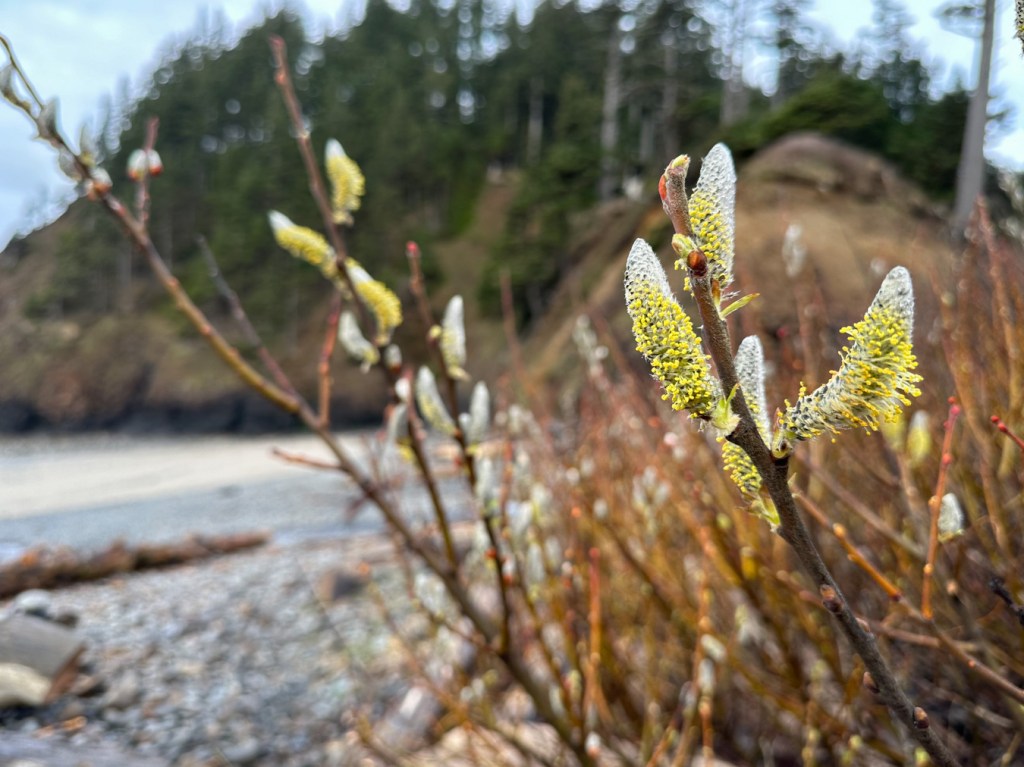
Before leaving the cobbles it’s a good idea to look up.
January 25, 2024
Anticipation
From the morning foredune I wonder how much beach will be available, and if it will be loaded with treasure, or swept clean?

The shore knows
Either way, there’s not much shore to explore.


Today it’s all about wood and sea foam, and some of it is on the move.


To see a short clip of the surf running up on this driftwood lineup, click here.
To see a short clip of the morning’s windblown sea foam, click here.
A few drifted finds
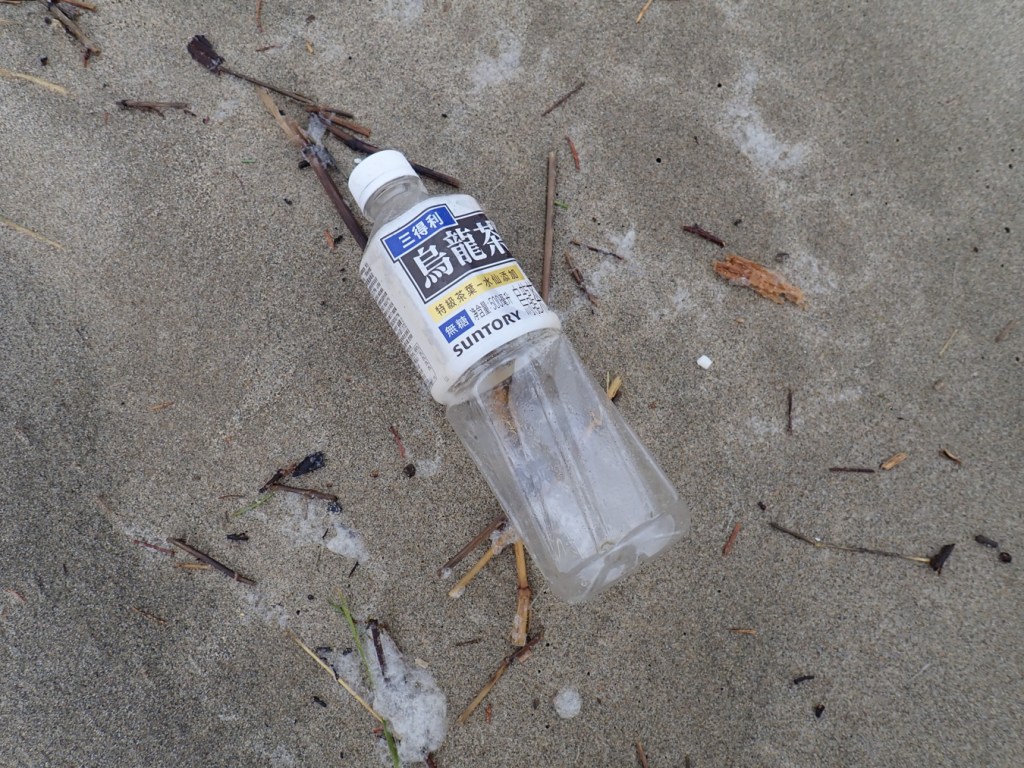
From the human-made side.

Drifted material from adjacent ecosystems.


(Note: To see more Clinocardium shells and a bunch of other bivalves, click on my Bivalves page. For more scenes of drift bull kelp, including some large drift masses and fresher specimens, and a bunch of other brown seaweeds, click on my The Browns page and scroll down to bull kelp.
Closing scenes from the backshore shelf
IIn the top panel, a lovely driftwood and sand sculpture. Below, the bottom panel compares a patch of dunegrass Leymus and beachgrass Ammophila following a fairly hard freeze on the foredune. The Leymus blades are frowsy while Ammophila looks unphased. This was the first time I thought about the difference in freeze-tolerance of the blades; now I can’t quit.


(Note: To see more photos of Leymus and Ammophila, as well as other shoreside pioneers, head over to my Flowering Plants page.)
***
January 24, 2024
With a decent swell, the morning tide left little beach for exploring, but a little can be plenty. Through light rain and a pretty good south wind, I enjoyed letting my interest drift from decaying drift bull kelp to seashells, to big wood on the move, and finally, off to a distant sea stack.
Remnants of the season.


(Note: To see more scenes of drift bull kelp, including some large drift masses and fresher specimens, click on The Browns, my brown seaweeds page, and scroll down to bull kelp.)
Without much beach to explore, I had time to make a study of a seashell I noticed, one I might have passed by on another day. Because shape provides clues for limpet identification, I made three views of the same empty, drifted shell.

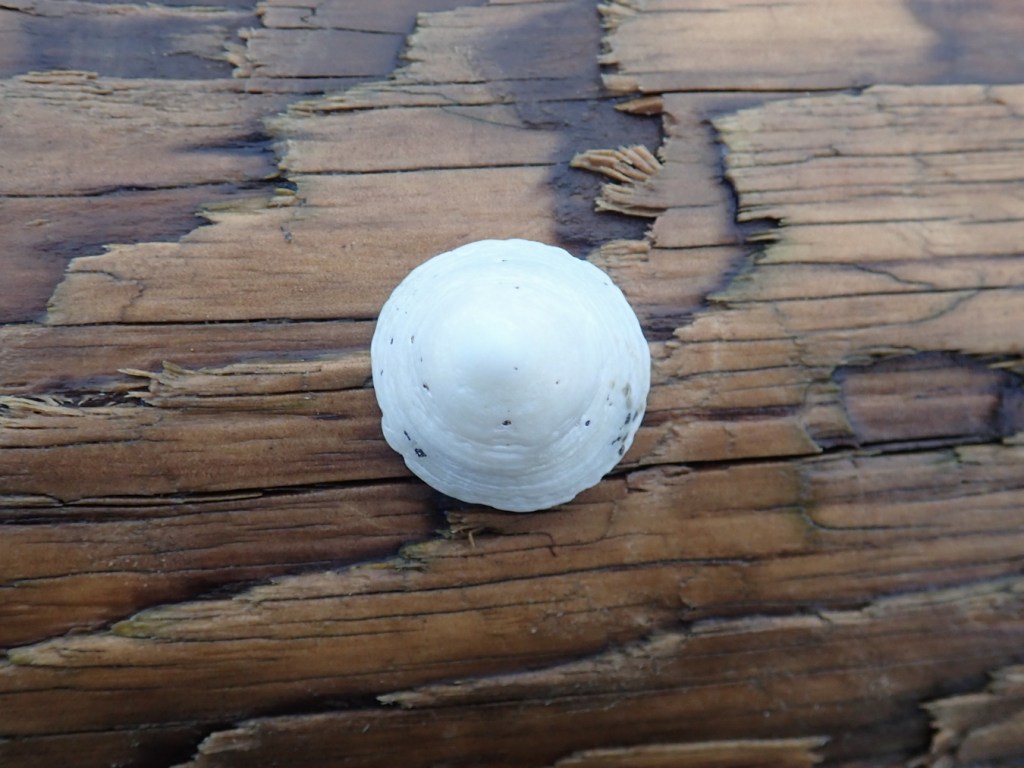

(Note: To see more examples, click on my limpets page and scroll down to Acmaea mitra.)
It takes winter’s combined surf and tides to mobilize the big wood.

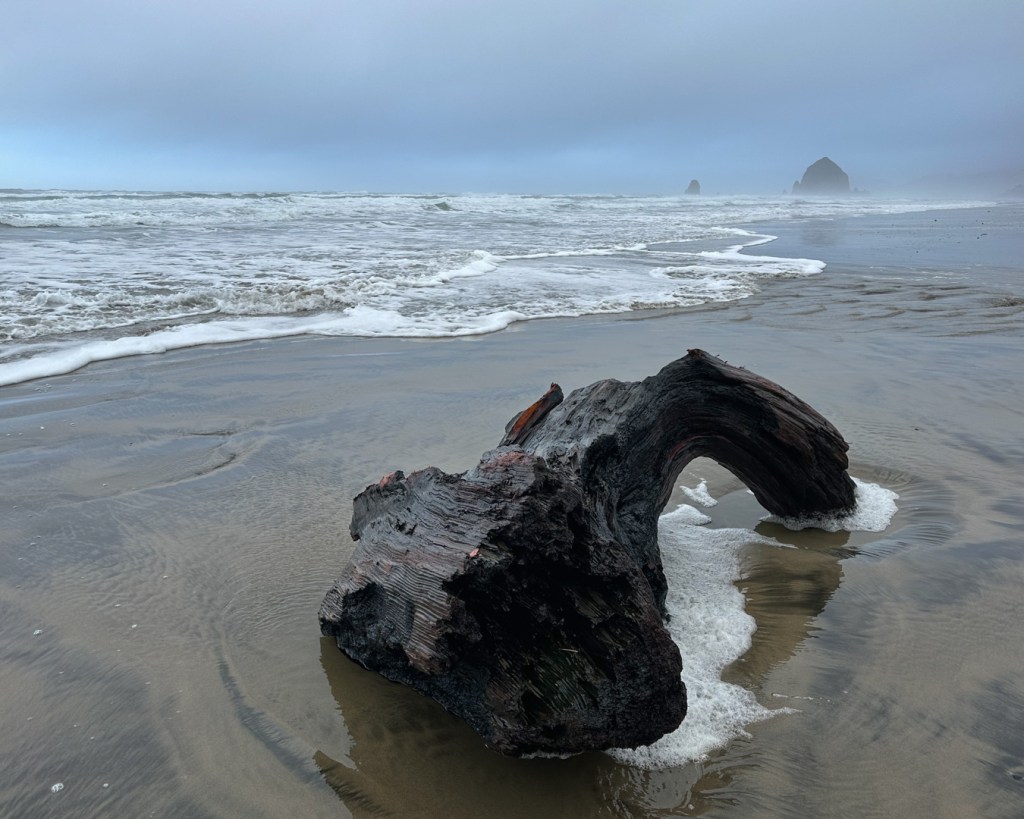

Dedicated to lovers of sea stacks and the noble corvid.

 theoutershores