Below are examples of a few starfishes that I’ve encountered on Oregon’s wave-swept rocky shores. The photos are from northern Oregon unless noted. My organization loosely follows Lamb and Hanby (2005). Common names, if I use them, are my choice. Experts cover these starfishes and many more in the books, field guides, and other resources listed at the bottom of the page.
It’s time for sea stars!
Pisaster ochraceus Ochre star
No tidepool invertebrate on northeastern Pacific shores evokes more human fascination and connection. When Pisaster’s doing well, all seems right with the world.


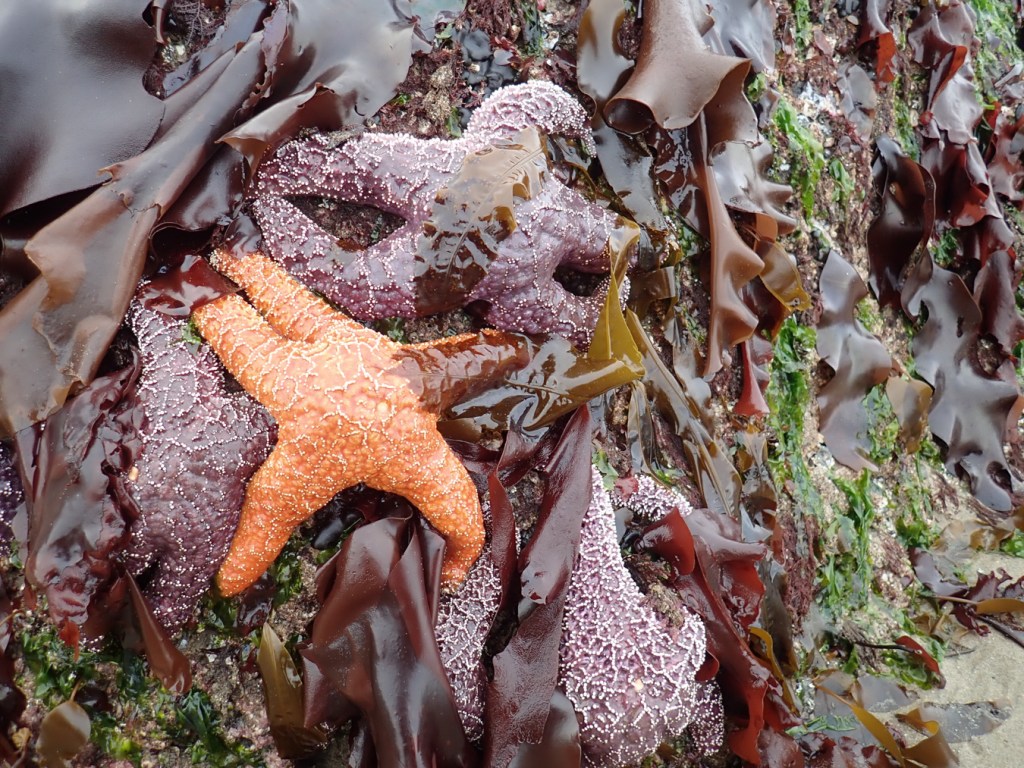
They’ll pose for you

At home at the base of the Mussel Beds
I like to look for Pisaster ochraceus along the base of the mussel beds. That lower margin is the best place I’ve found to pause and appreciate Pisaster for the part it plays.

Pisaster postures
Speaking of the part Pisaster ochraceus plays—one of the parts, anyhow—you can probably figure out what these postures illustrate.

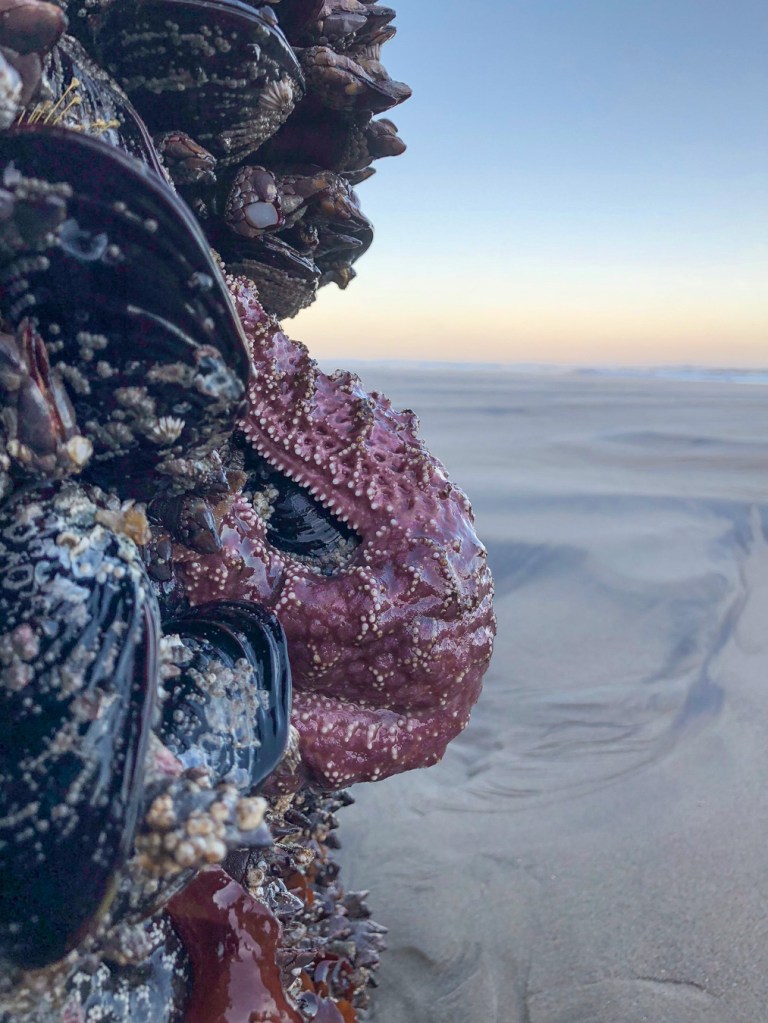

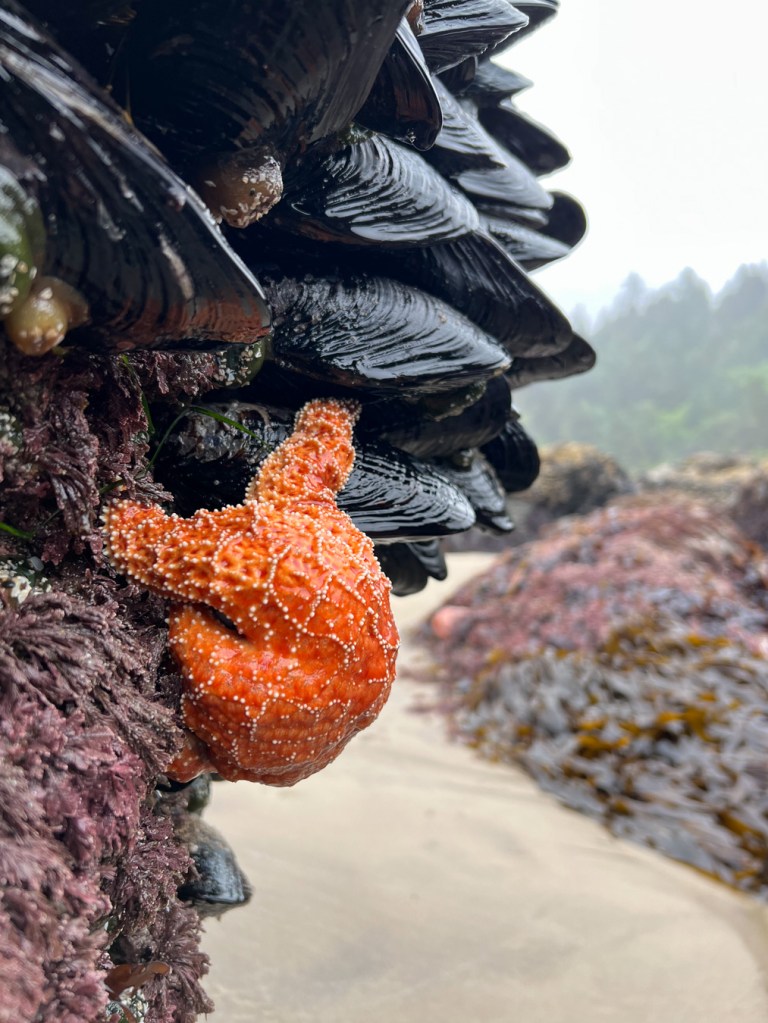


Lower, below the mussel beds—if there are places where rock meets sand—ochre stars will congregate along that sand-scoured boundary.
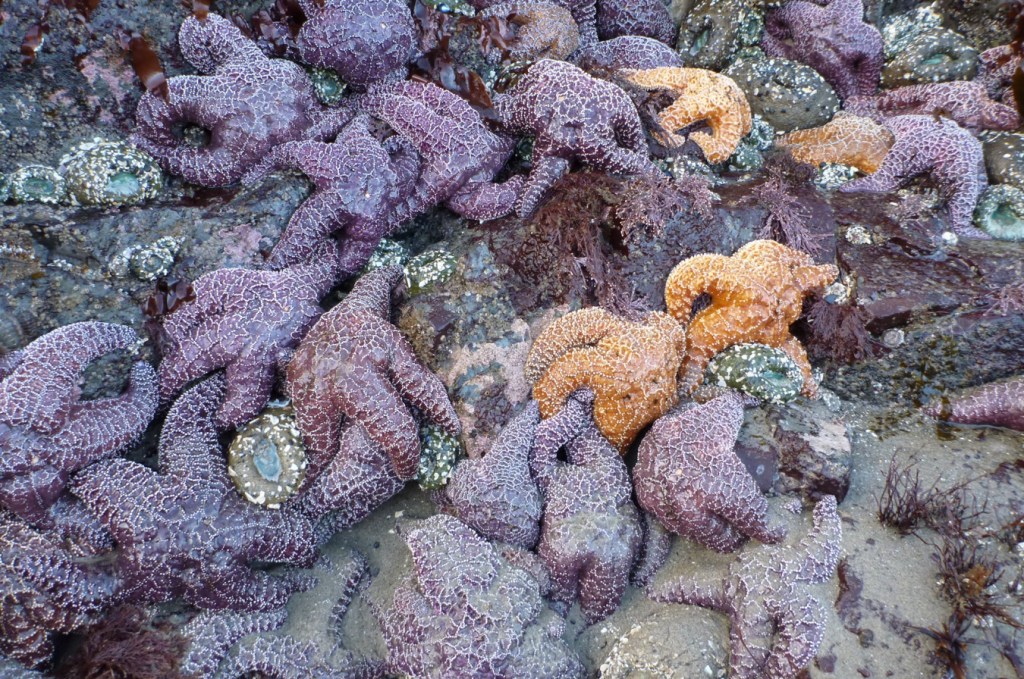

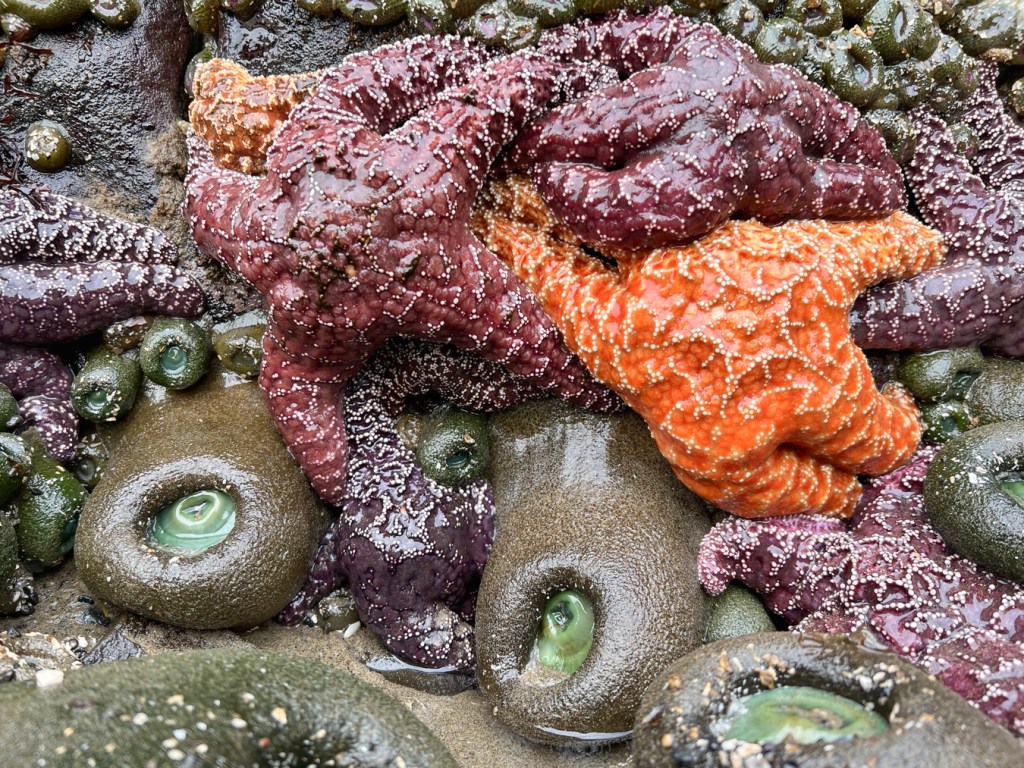
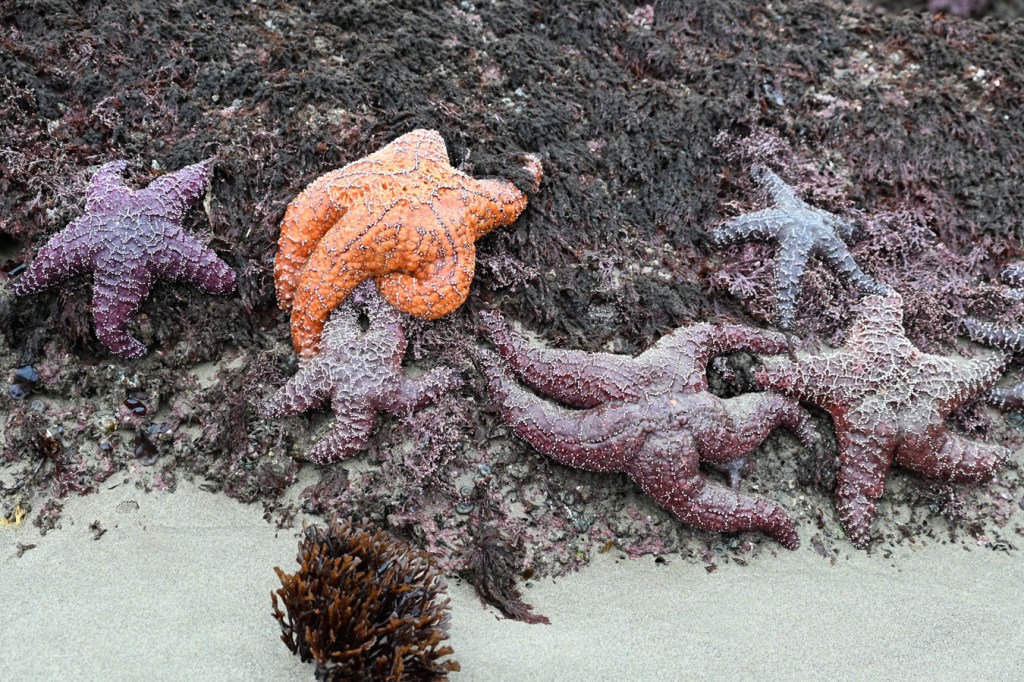

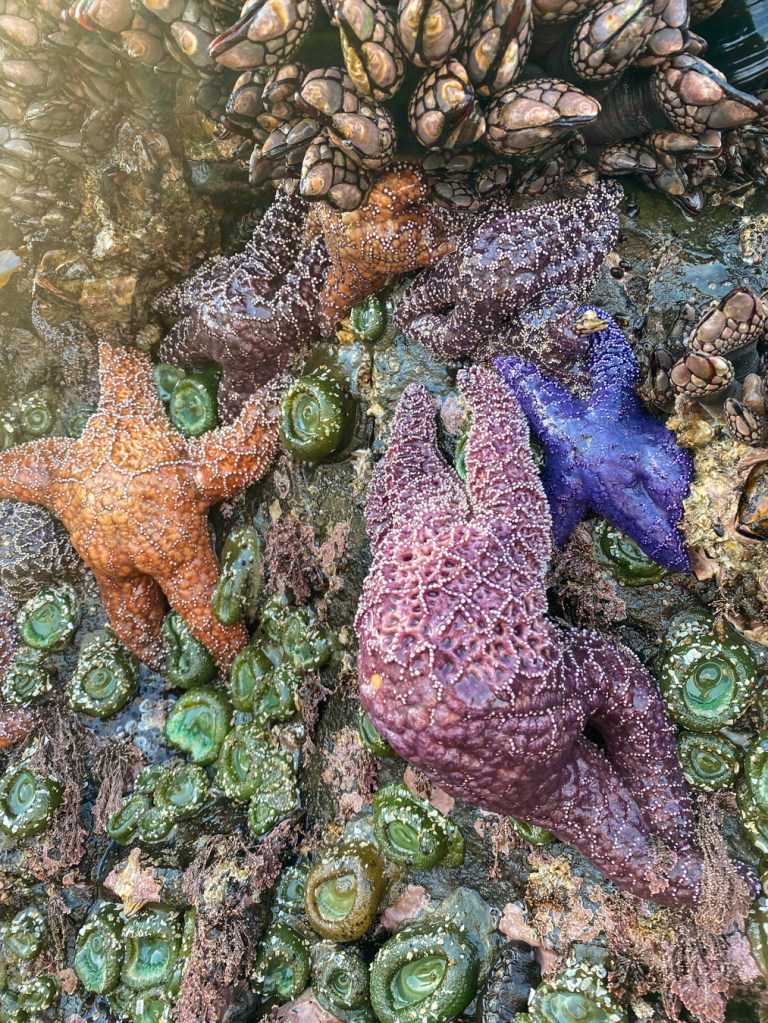
The range of colors exhibited by Pisaster ochraceus is remarkable. Among the brightest creatures inhabiting the shore are the orange stars (as seen in some of the images in this entry) are standouts. Electric indigo, when you’re lucky enough to find that form, is an eye-catcher too.
The cutest babes
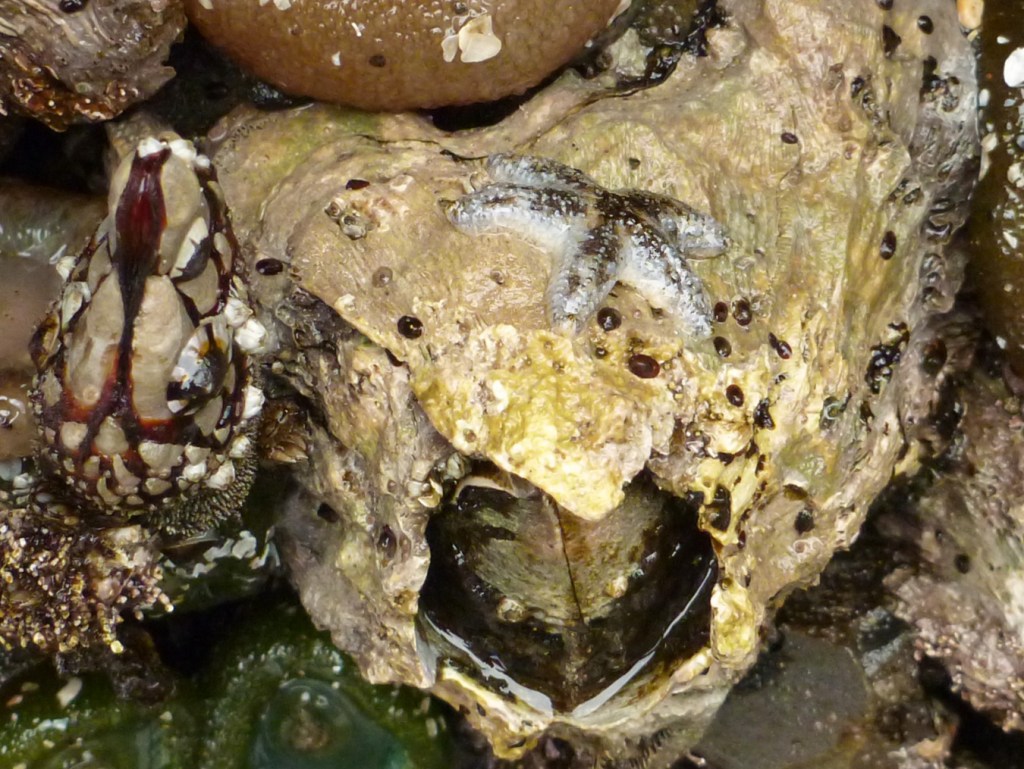
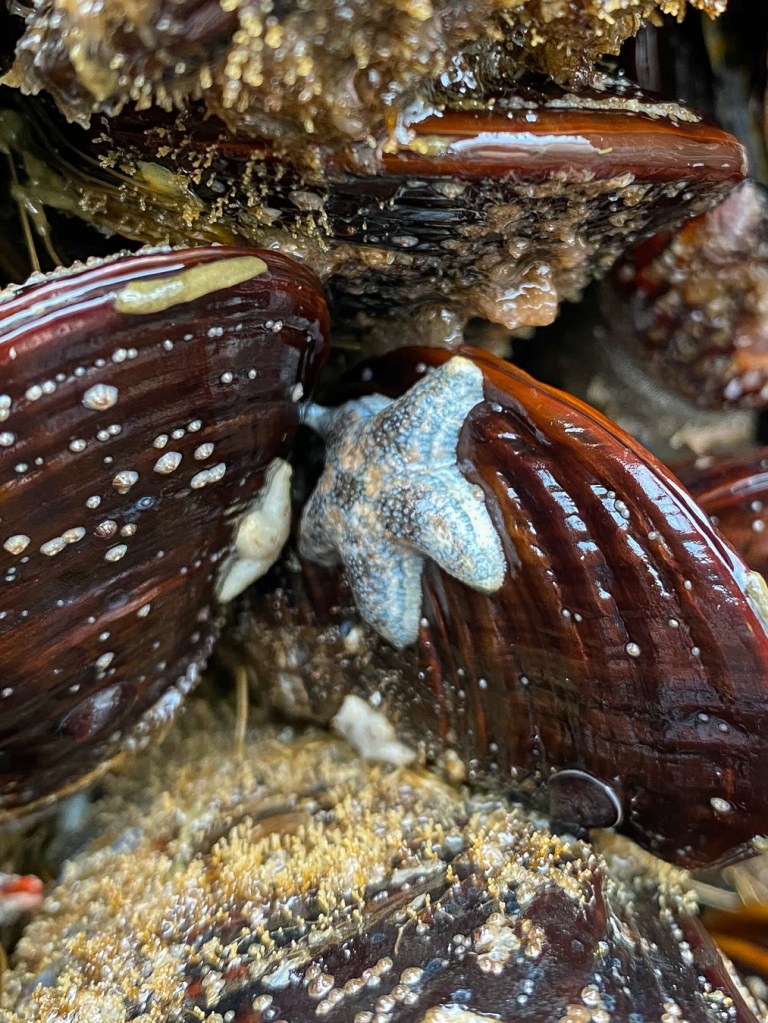


Down on the rock/sand boundary there are so many babies around this larger star.

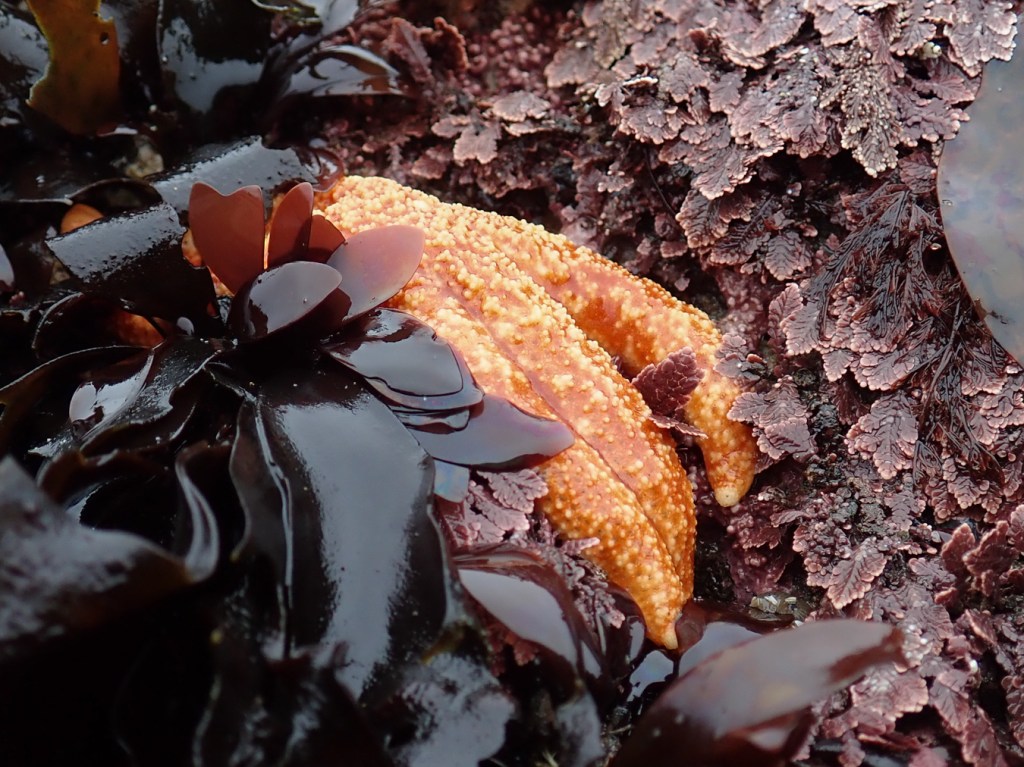
Evasterias troschelii Mottled Star
It’s unusual for me to come across large mottled stars out in the open, but this one was easy to spot from a distance. I just love how its coloration plays with those of the Bossiella and those inscrutable red blades.
Babes now, they don’t hesitate to spend their time more or less out in the open atop low-lying, sand-scoured rocks.

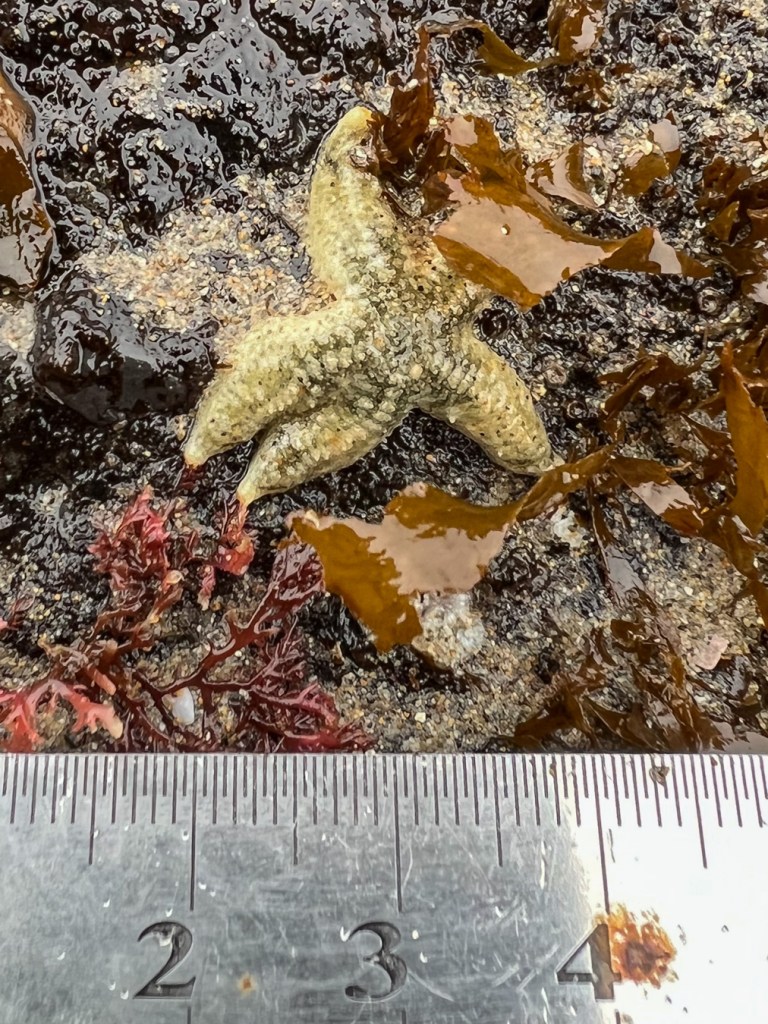


Comparative shot—that’s Pisaster ochraceus on the right
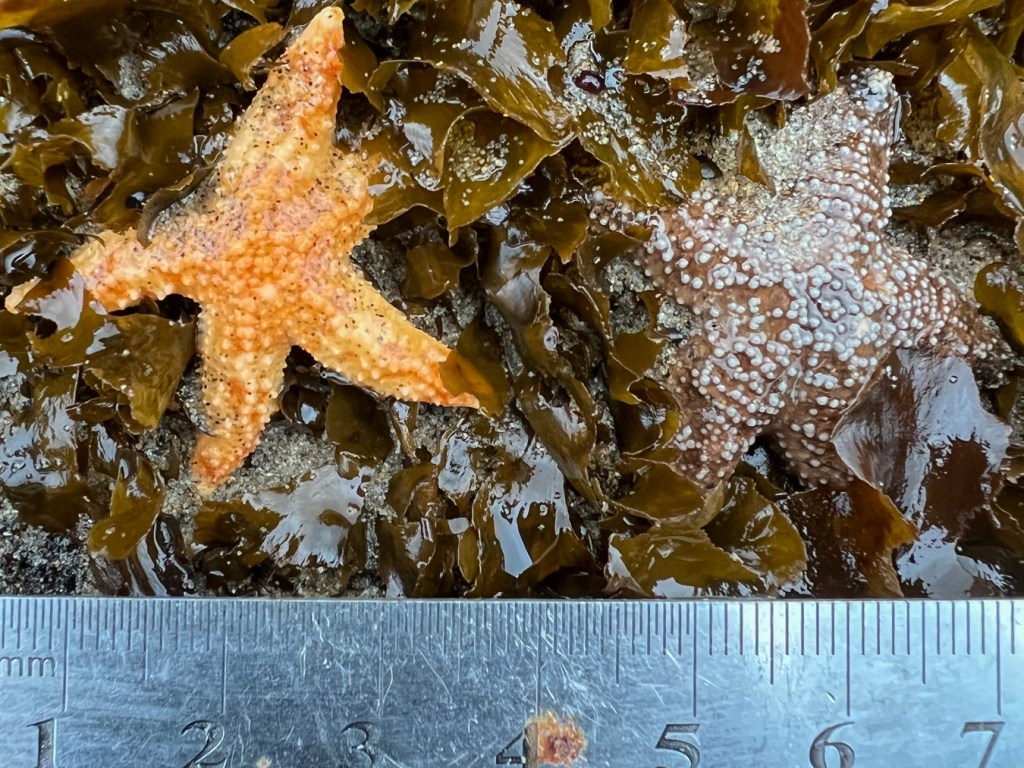
Just a couple more babes
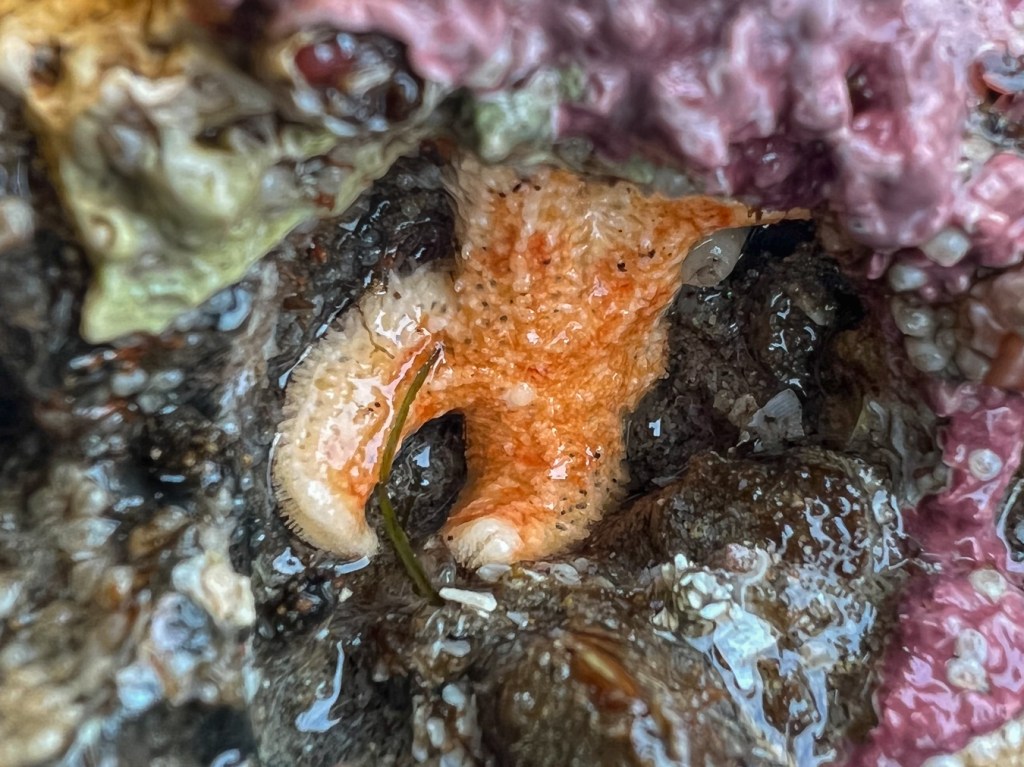

Leptasterias Six-Rayed Stars

Leptasterias is a collection of species complexes. (I think, with some uncertainty, the examples below represent Leptasterias; I know they all have six rays!)


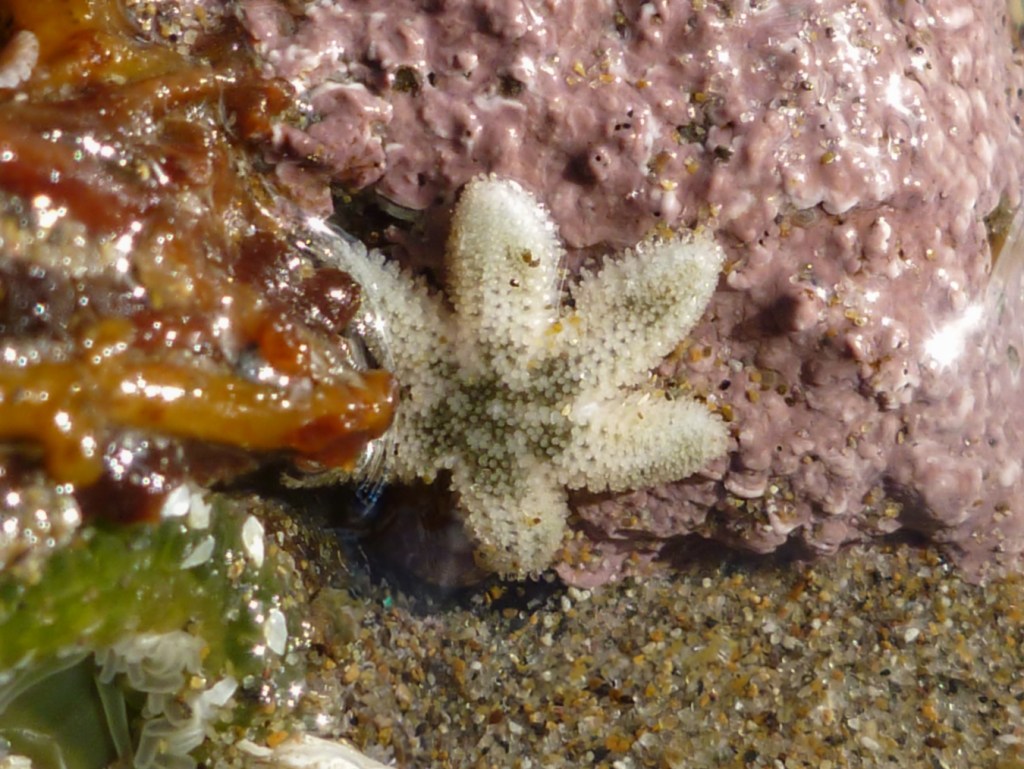

Pycnopodia helianthoides Sunflower Star
I haven’t encountered these predators in the wild intertidal since April 2013.


References
Gotshall, D. W. 2005. Guide to Marine Invertebrates, Alaska to Baja California 2nd Edition (Revised). Shoreline Press.
Harbo, R. M. 2011. Whelks to Whales: Coastal Marine Life of the Pacific Northwest. 2nd ed. Harbour Publishing Co.
Kozloff, E. N. 1993. Seashore Life of the Northern Pacific Coast. 3rd ed. University of Washington Press.
Lamb, A. and B. P. Hanby. 2005. Marine Life of the Pacific Northwest. Harbour Publishing.
Lambert, P. 2000. Sea Stars of British Columbia, Southeast Alaska and Puget Sound. UBC Press.
Sept. J. D. 2019. The New Beachcomber’s Guide to the Pacific Northwest. Harbour Publishing.
Online Resources
Friends of Netarts Bay WEBS Echinoderms page. Accessed September 6, 2025.
It’s worth scrolling down to Asterozoa (Brittle stars and sea stars), page 145, in: Common Sea Life of Southeastern Alaska: A field guide by Aaron Baldwin & Paul Norwood. Accessed September 6, 2025.
Check out Neil McDaniels’ Sea Stars of the Pacific Northwest. Accessed September 6, 2025
Species Accounts
Cowles, D. (2005). Evasterias troschelii (Stimpson, 1862). Invertebrates of the Salish Sea. Rosario Beach Marine Laboratory. Accessed September 6, 2025.
Cowles, D. (2005). Pycnopodia helianthoides (Brandt, 1835). Invertebrates of the Salish Sea. Rosario Beach Marine Laboratory. Accessed August 5, 2025.
McFadden, M. (2002 as edited). Leptasterias aequalis (Stimpson, 1862). Invertebrates of the Salish Sea. Rosario Beach Marine Laboratory. Accessed September 6, 2025.
McFadden, M. (2002 as edited). Leptasterias hexactis (Stimpson, 1862). Invertebrates of the Salish Sea. Rosario Beach Marine Laboratory. Accessed September 6, 2025.
McFadden, M. (2002 as edited). Pisaster ochraceus (Brandt, 1835). Invertebrates of the Salish Sea. Rosario Beach Marine Laboratory. Accessed September 6, 2025.
I updated this page on September 6, 2025
 theoutershores