Below you’ll see examples of sponges I’ve encountered on the surf-swept shores of the exposed Oregon coast. The photos are from northern Oregon unless noted. Organization-wise, I loosely follow Lamb and Hanby (2005). If I use common names, they’re my choice. Experts cover these examples and many more in the books, field guides, and identification resources listed at the bottom of the page, but all of them tell us identification is going to be tough for non-experts; phenotypic variation and lookalikes occur, and microscopic examination of the spicules may be needed. Thus, any identifications I give are tentative, even at the genus level, and open to interpretation.
Let’s enjoy the sponges!
Isodictya
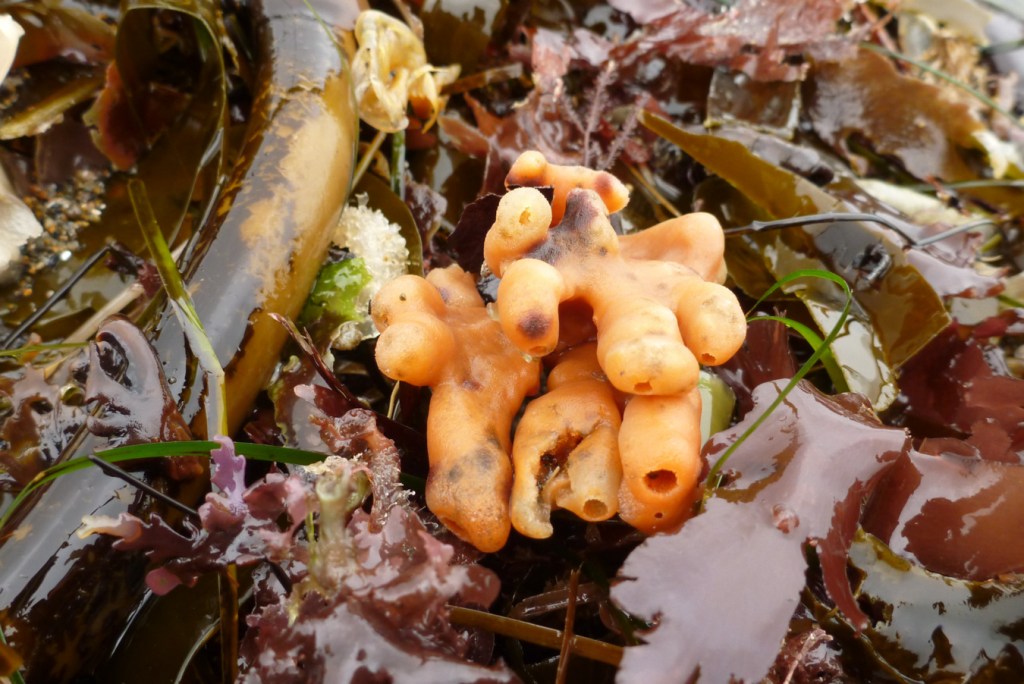
I encountered this drifted beauty among a mass sea wrack. It’s a tentative identification, but if it is Isodictya, it could be Isodictya rigida, the orange finger sponge. Whatever you make it out to be, the common name is a good fit for this specimen.
Breadcrumb sponge
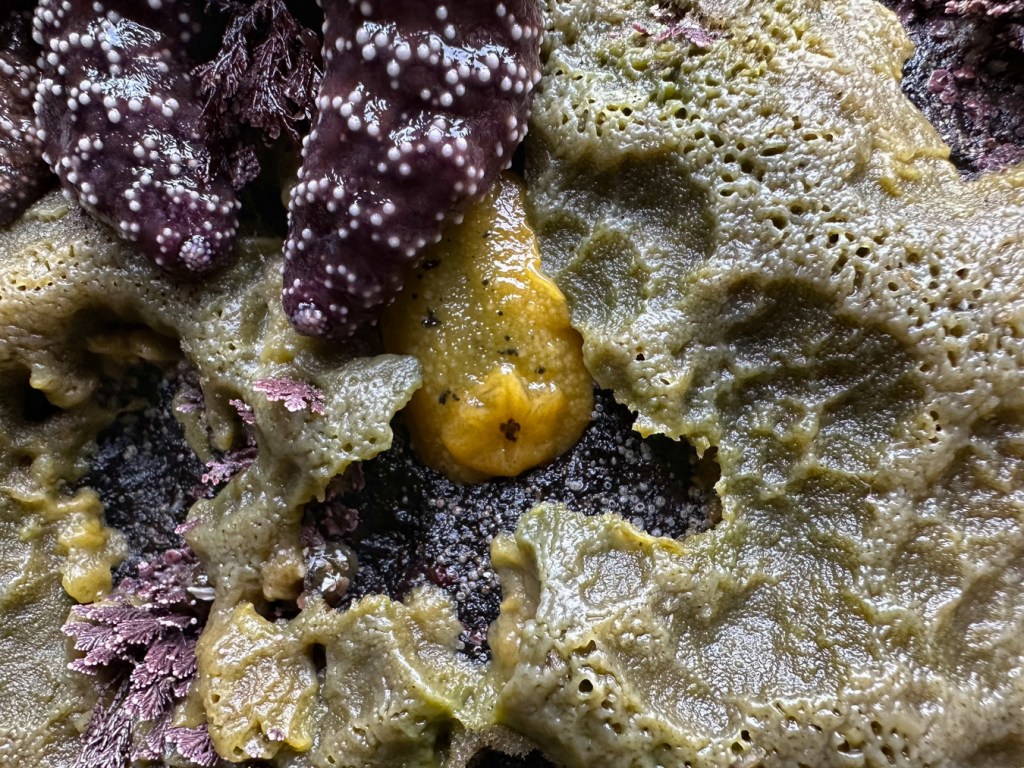
My examples closely resemble Halichondria panicea, but I say that not really knowing how many, if any, lookalikes might be around to complicate things.
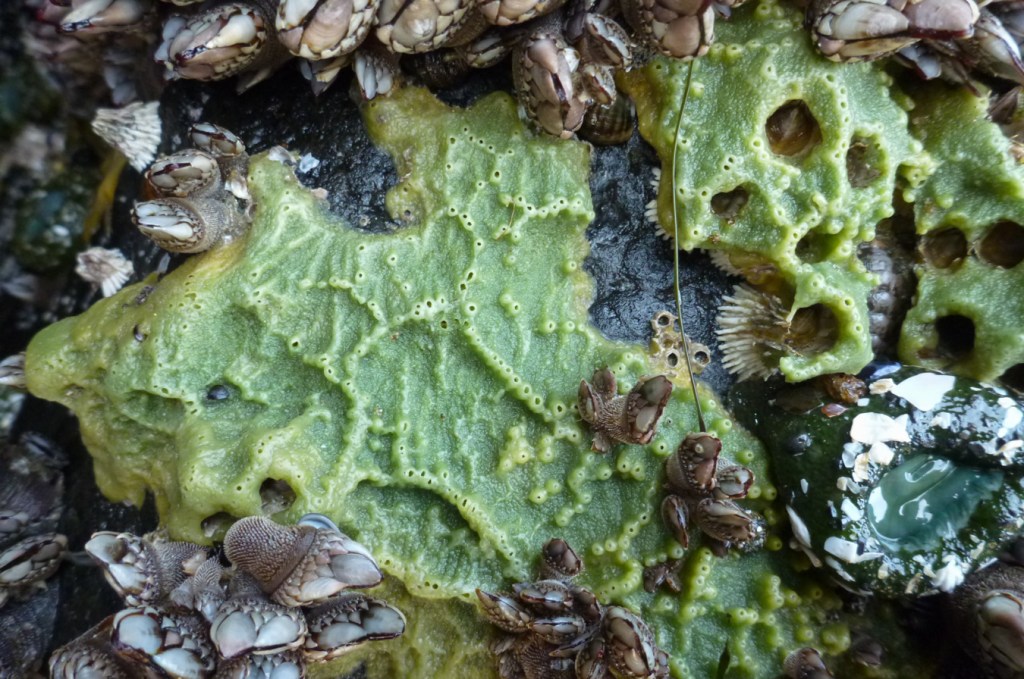
In the examples featured in this entry, you’ll see oscula concentrated along ridglines.
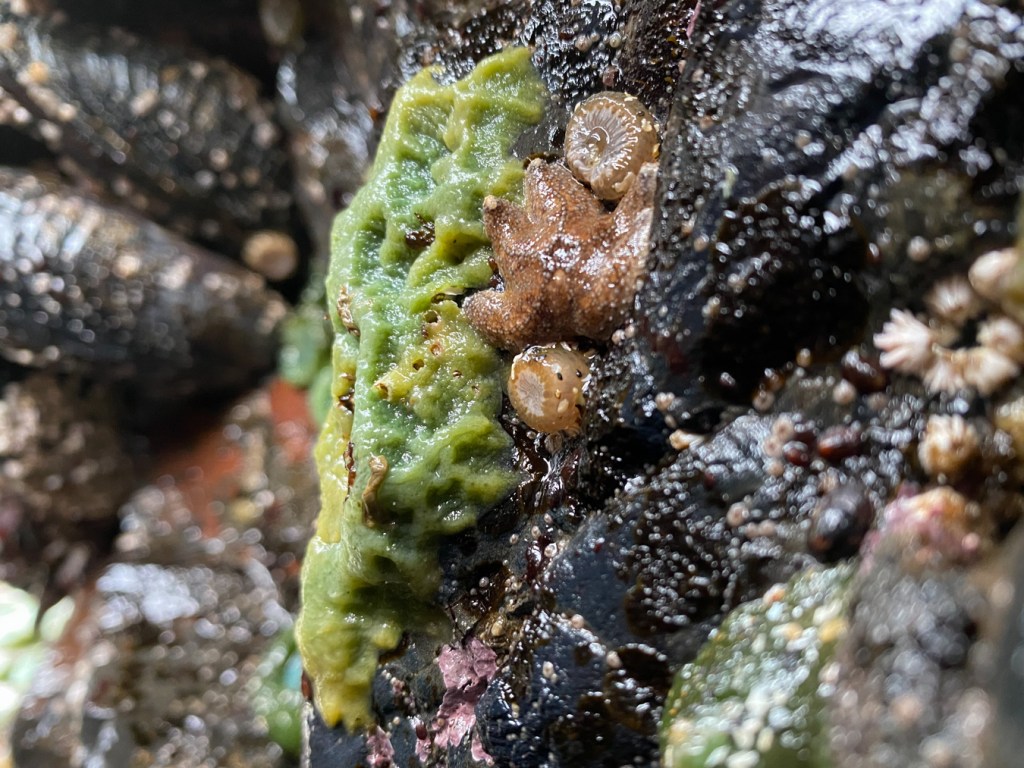
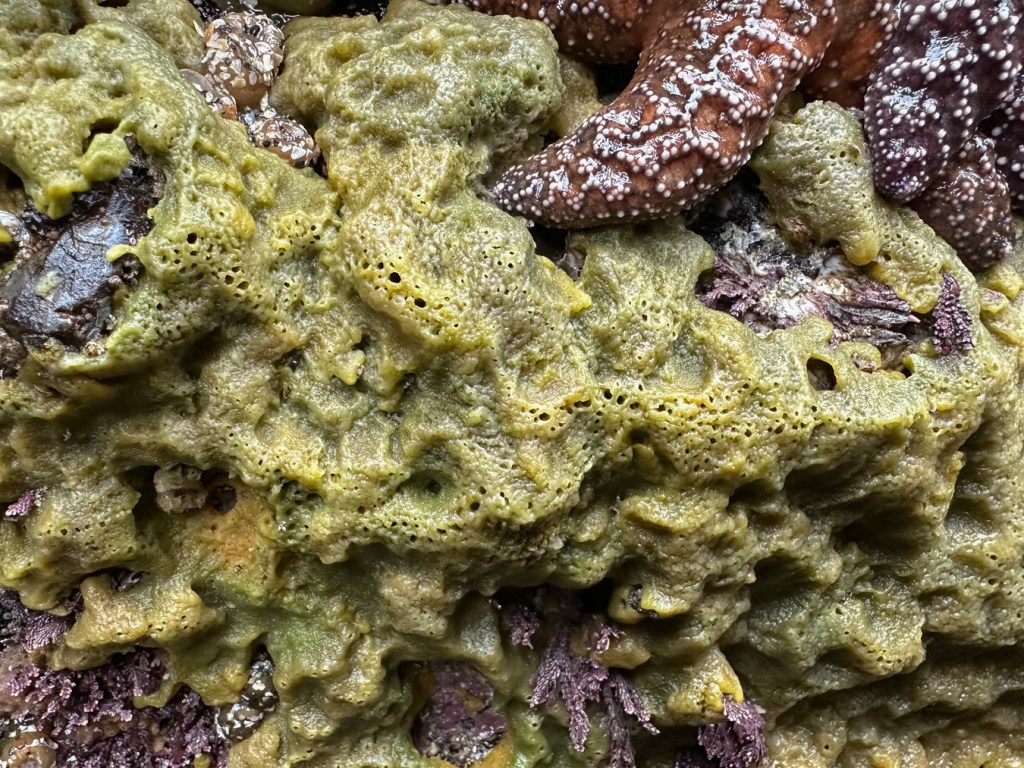
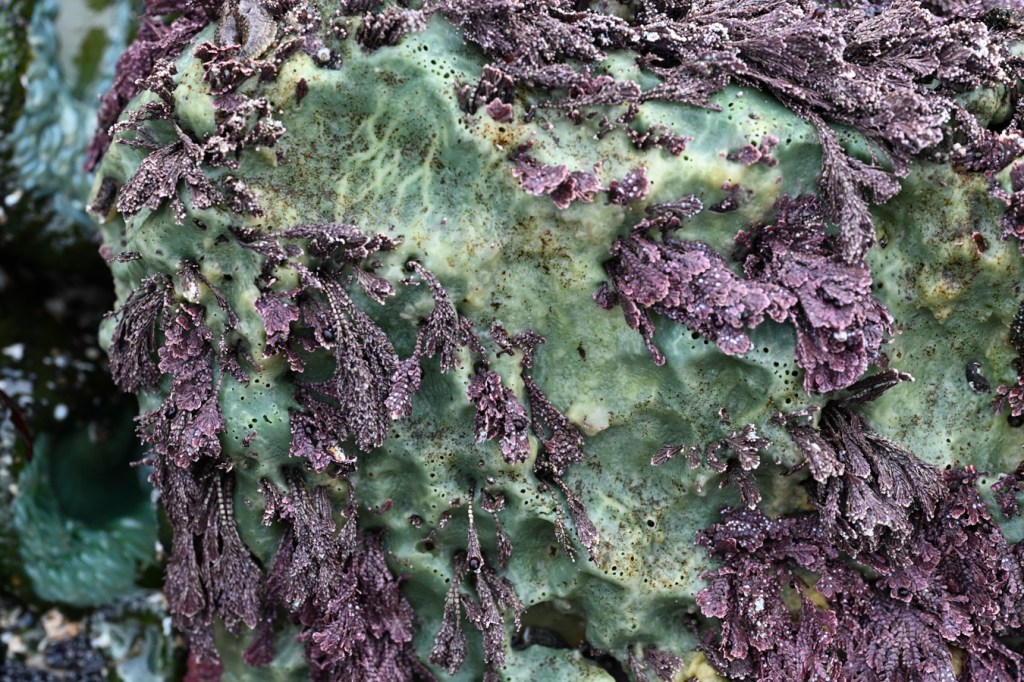
I can confirm Monterey dorids Doris montereyensis rank among breadcrumb sponge’s nudibranch predators.

Purple encrusting sponge
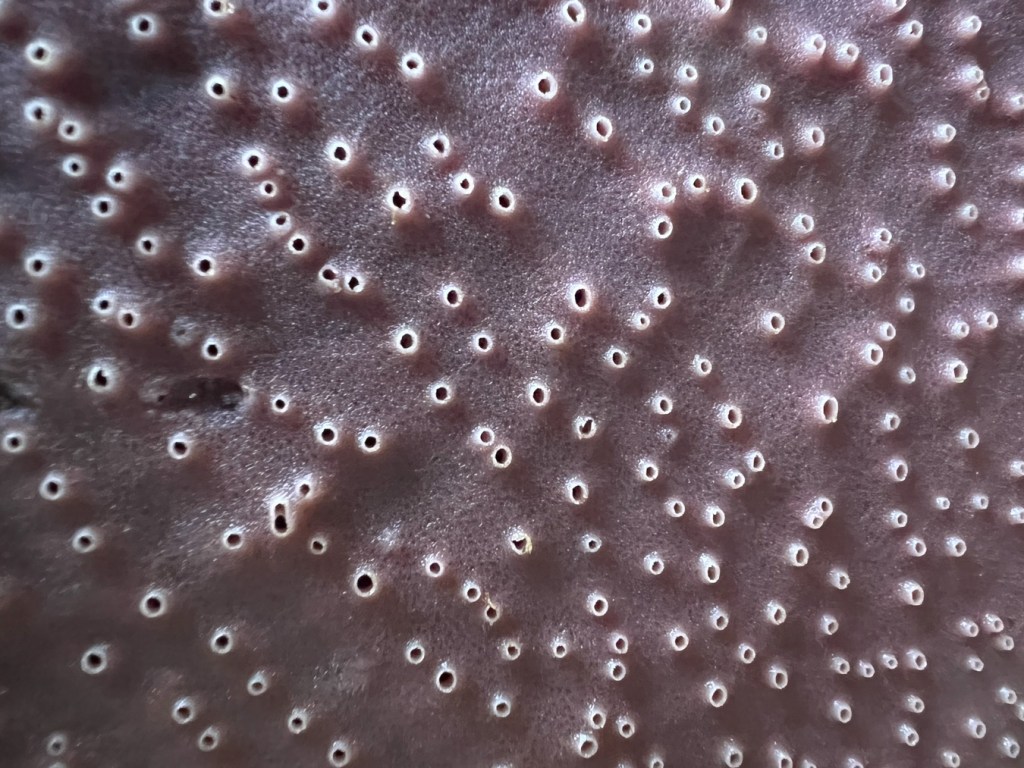
The examples shown below closely resemble Haliclona cinerea (formerly Haliclona permollis) illustrated in the resources shown at the bottom of this page.

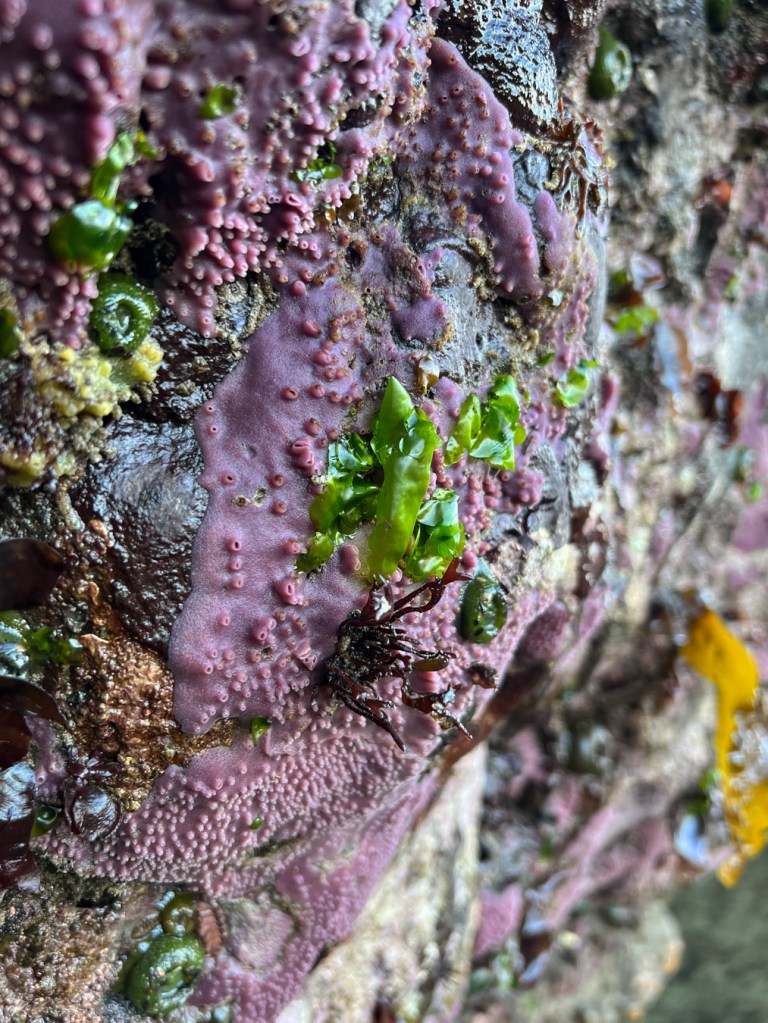
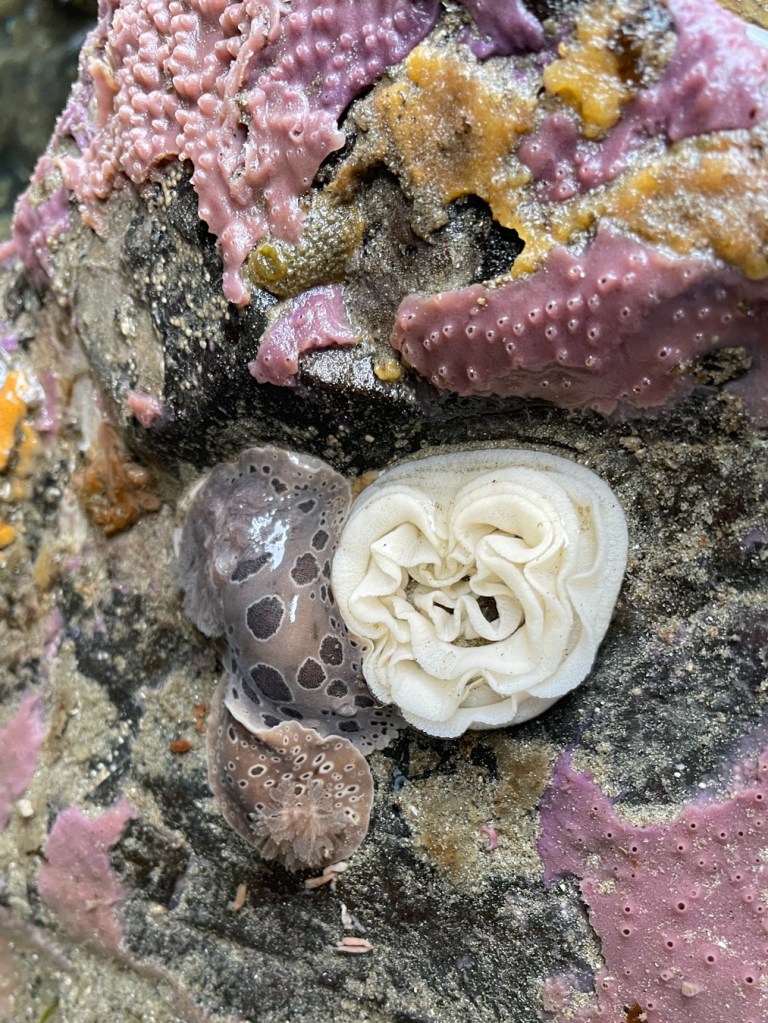
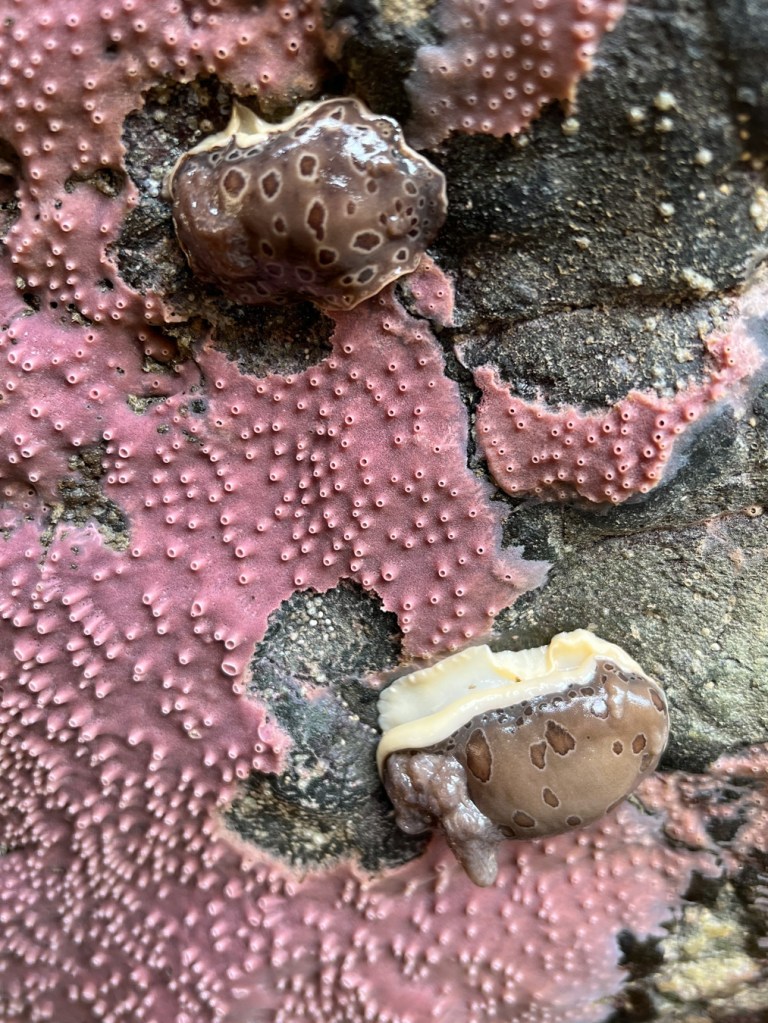
The nudibranch Diaulula odonoghuei, as widely reported, feeds on the purple encrusting sponge and will place its egg ribbon rosettes in its midst as well. (The pair of images below are from the central Oregon shore.)
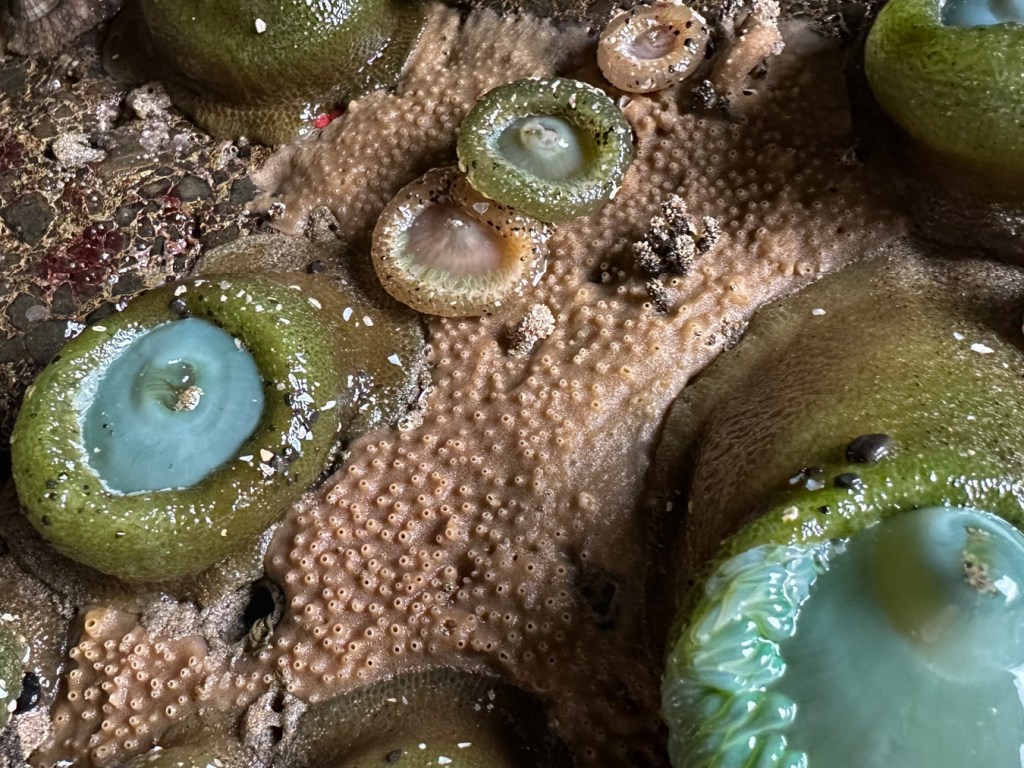
I guess this is probably a case of bleaching or worse, but it is interesting because the question of color is inevitable for a sponge named after its color.

Either way, it’s not too uncommon to find tan-colored sponges with a superficial morphology similar to the typically-colored purple encrusting sponge.
***
Red encrusting sponge
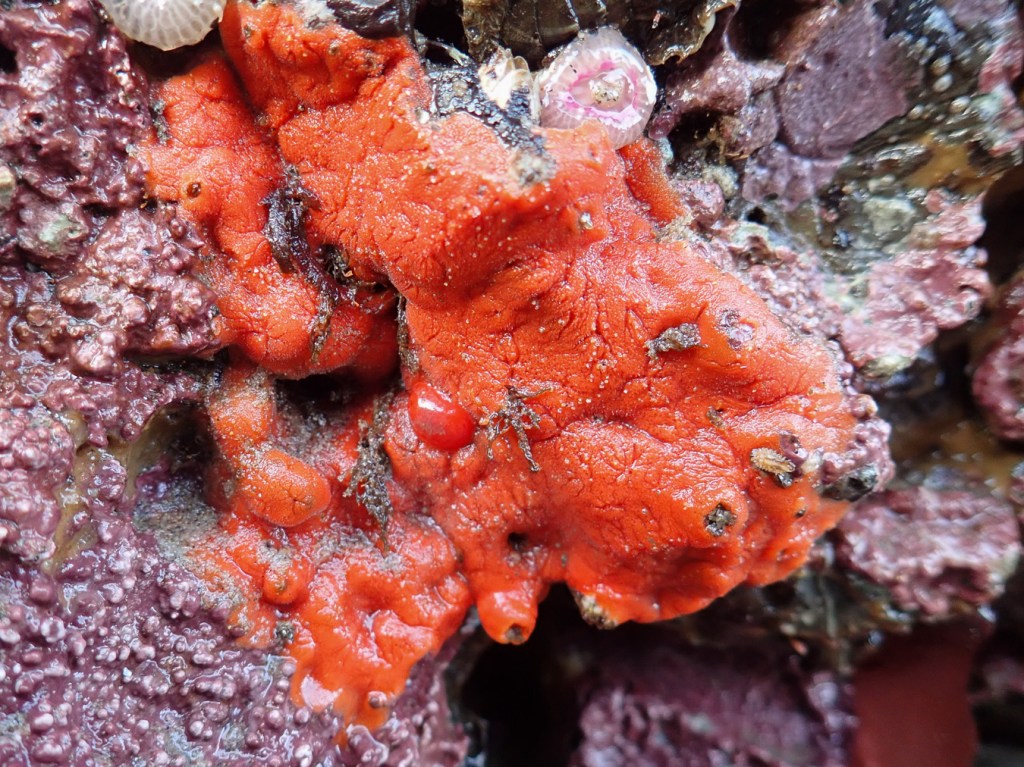
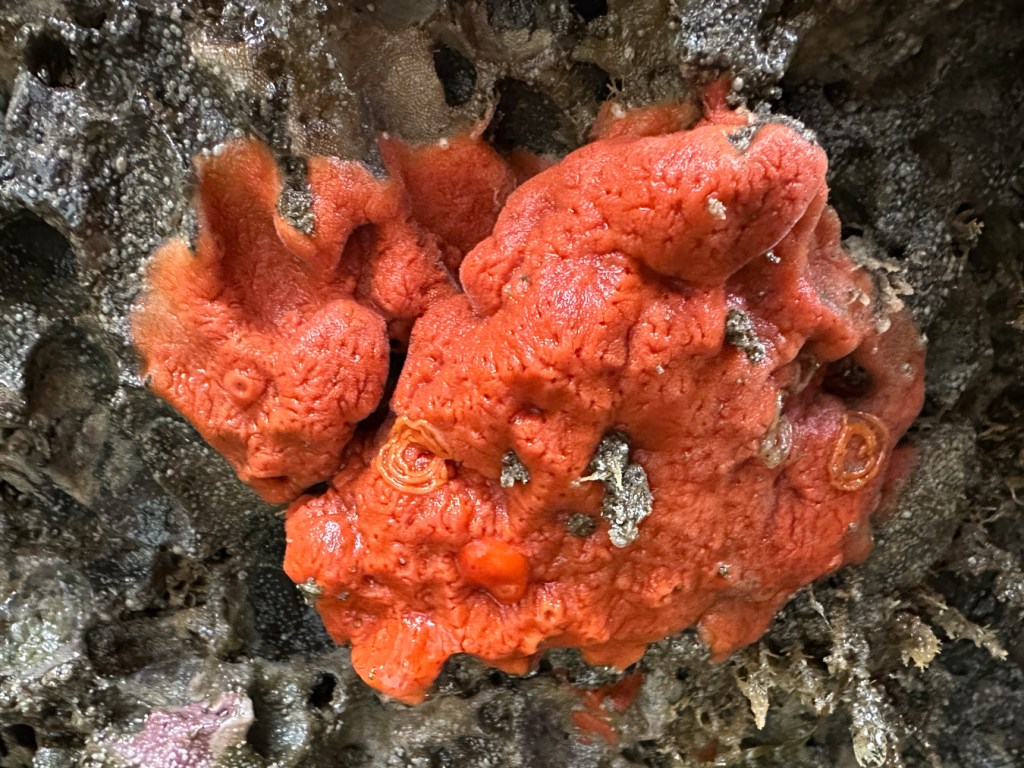
Recognizing the well of red sponge identification is fathomless for most of us, the examples below show a range of superficial red encrusting sponge looks, their backgrounds, and their mid- and low intertidal associates.
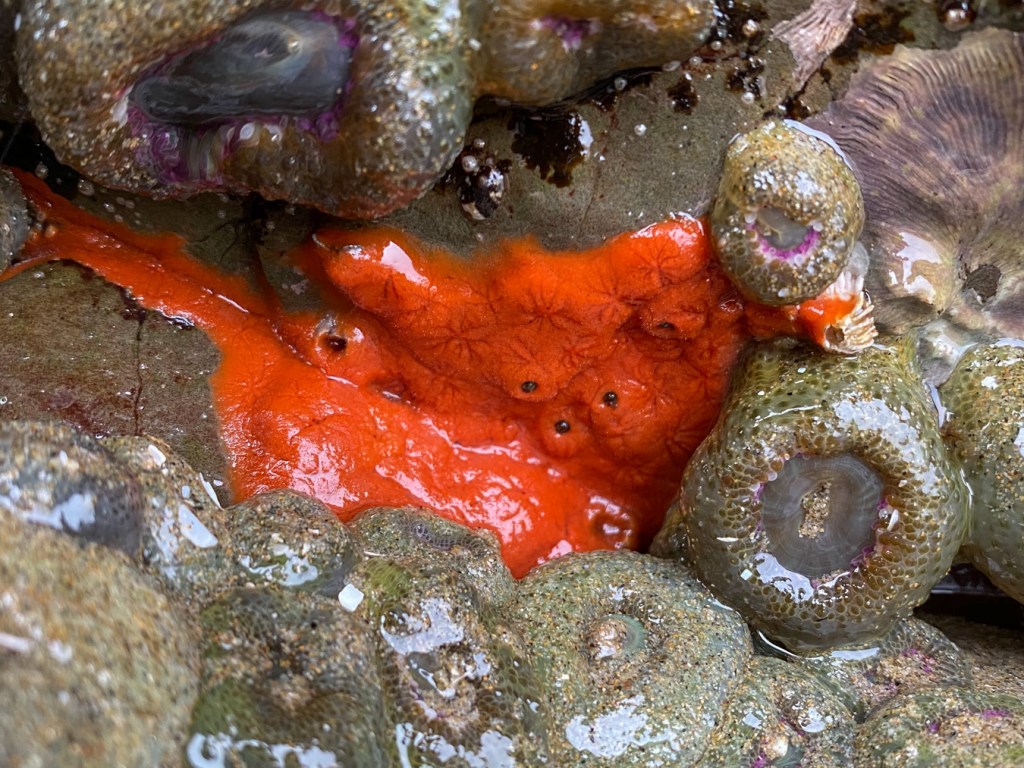
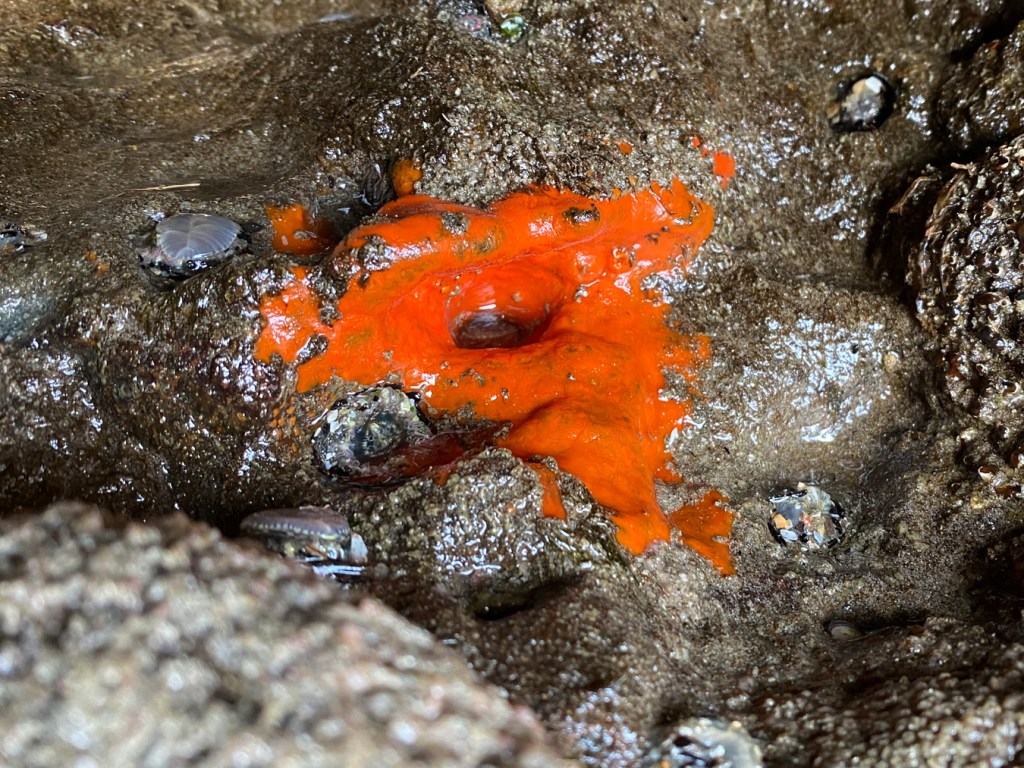
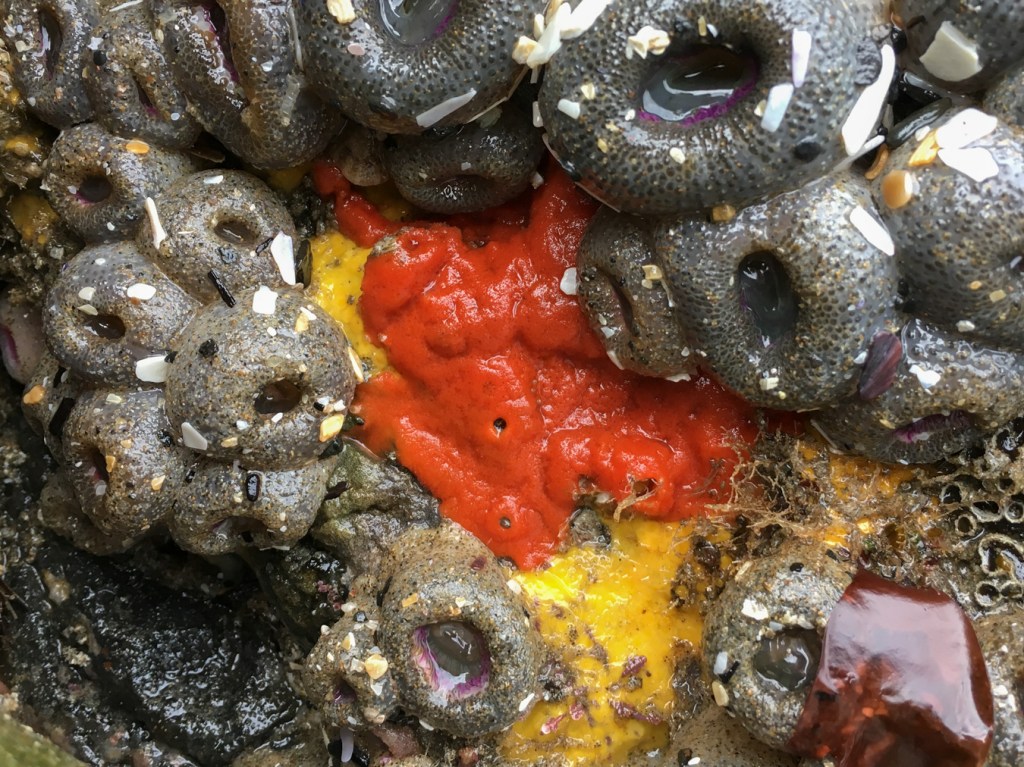

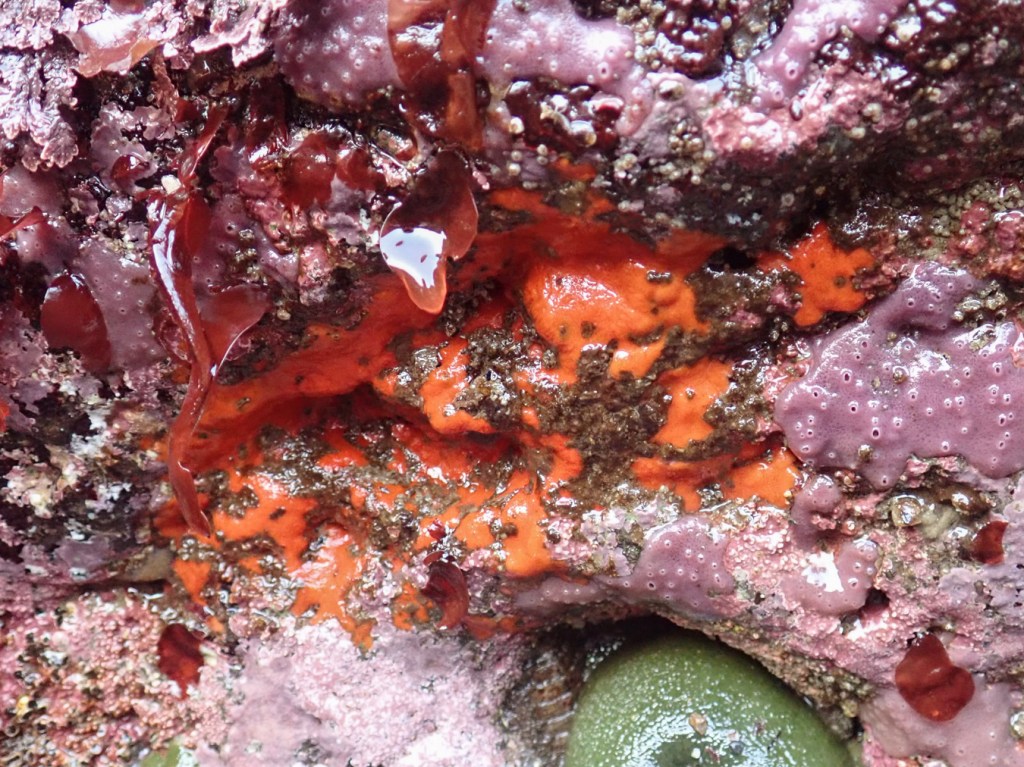
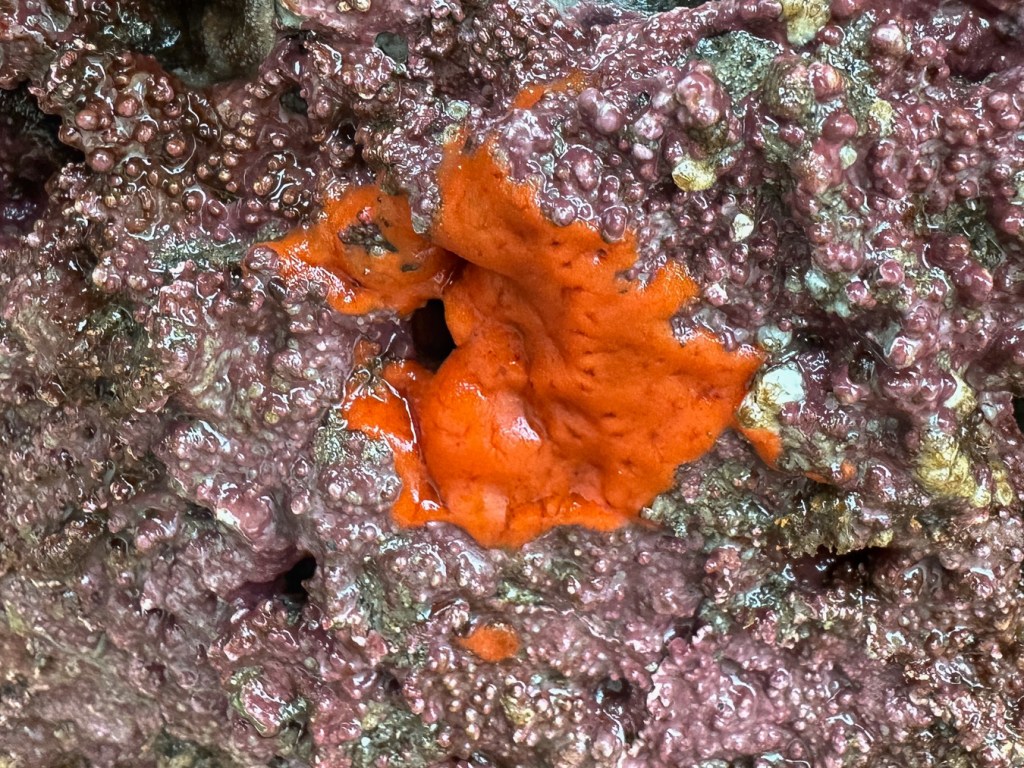

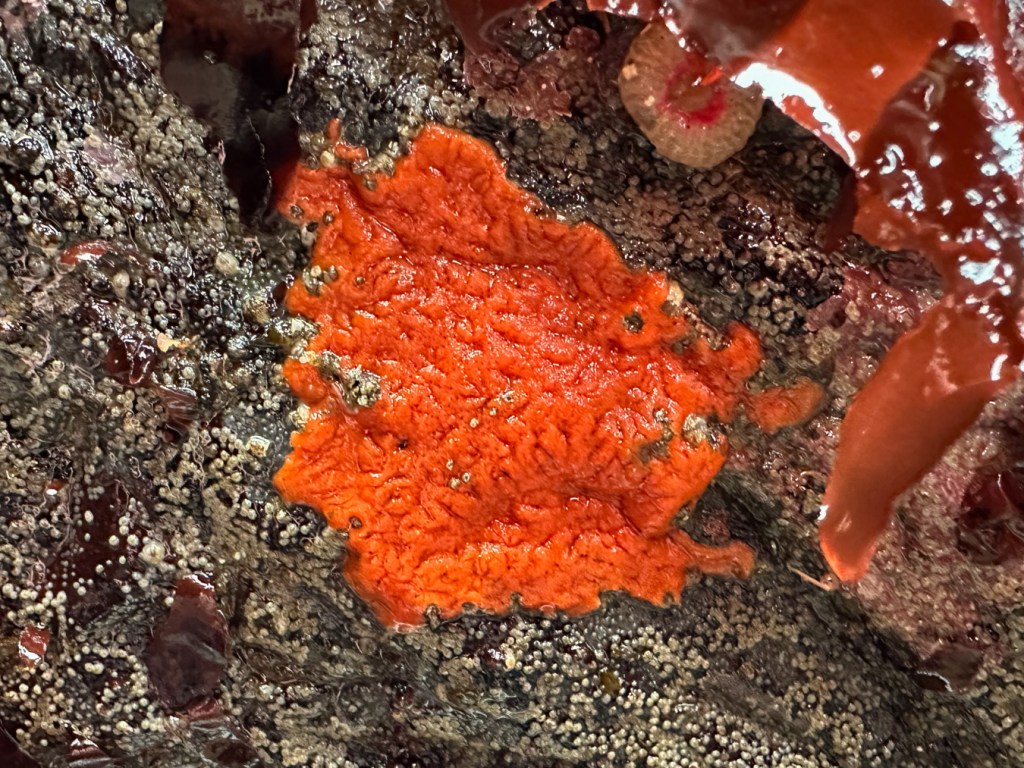
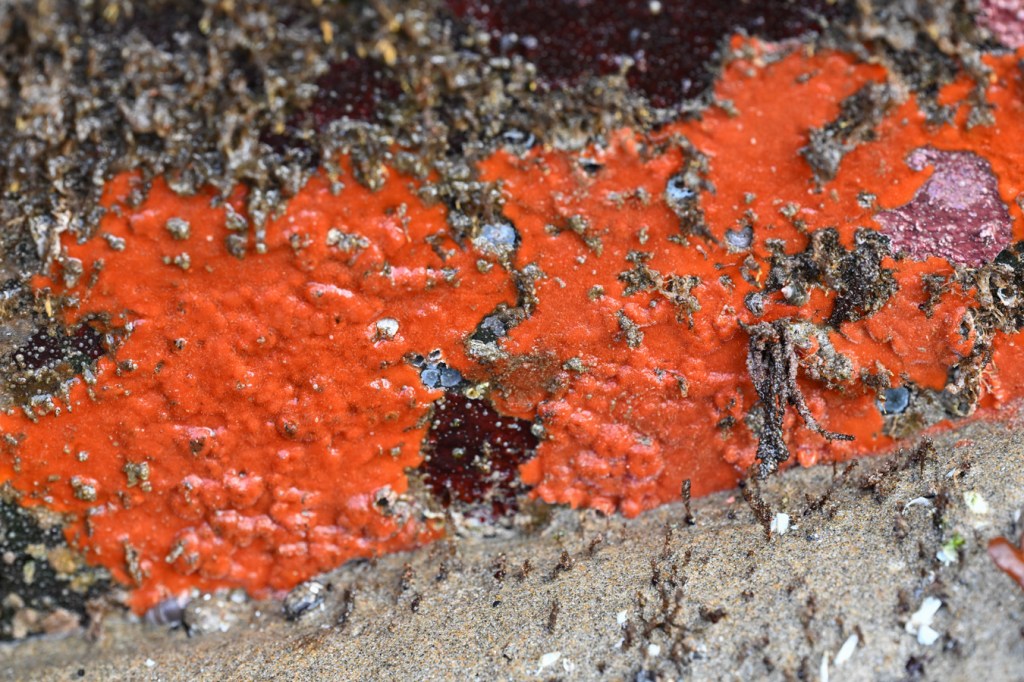
The examples below celebrate the oft-described connection between the red encrusting sponge Clathria pennata and the nudibranch Rostanga pulchra.
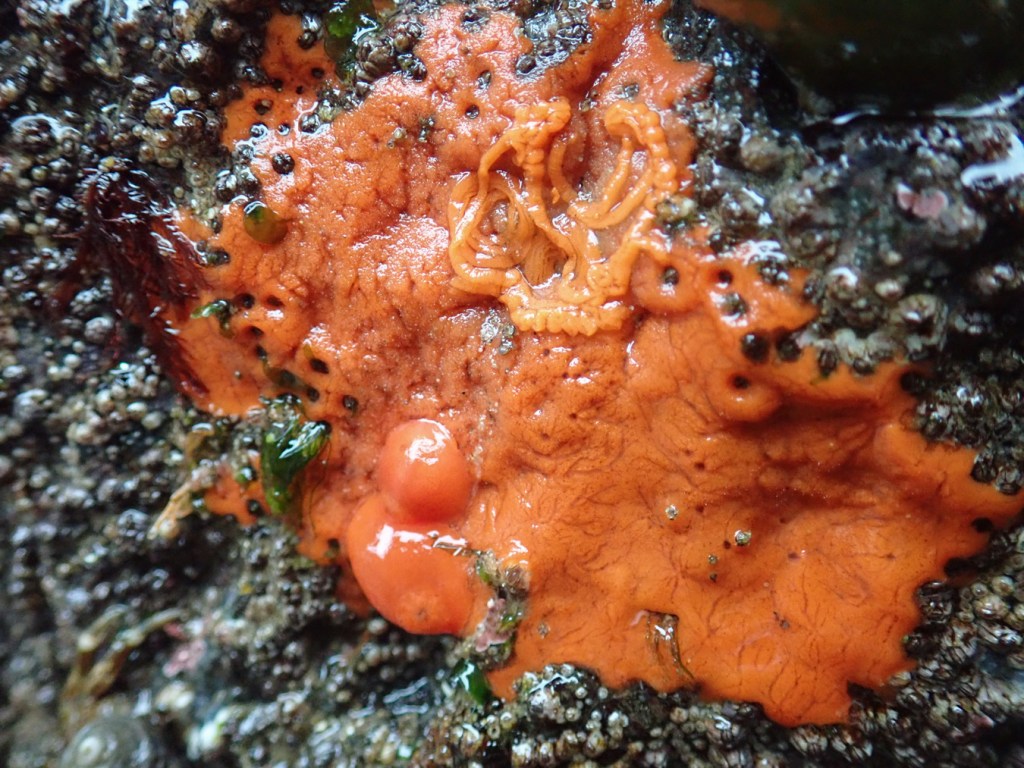


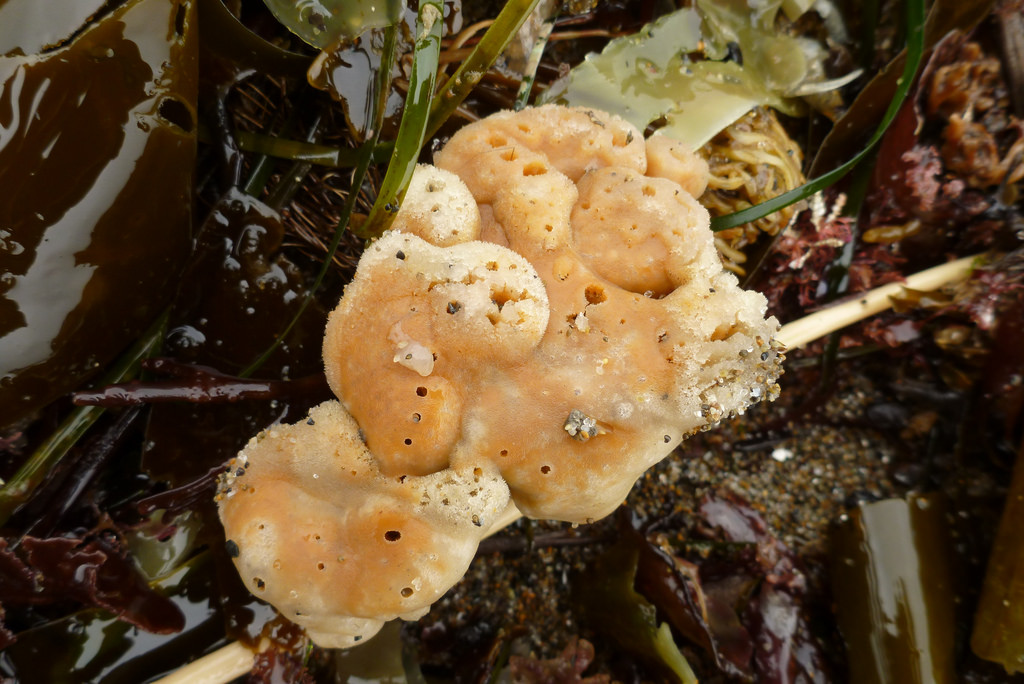
From the drift line
This velvety beauty washed up in a mass of drifted seaweed.
References
Gotshall, D. W. 2005. Guide to Marine Invertebrates, Alaska to Baja California 2nd Edition (Revised). Shoreline Press.
Harbo, R. M. 2011. Whelks to Whales: Coastal Marine Life of the Pacific Northwest. 2nd ed. Harbour Publishing Co.
Kozloff, E. N. 1993. Seashore Life of the Northern Pacific Coast. 3rd ed. University of Washington Press.
Lamb, A. and B. P. Hanby. 2005. Marine Life of the Pacific Northwest. Harbour Publishing.
Sept. J. D. 2019. The New Beachcomber’s Guide to the Pacific Northwest. Harbour Publishing.
Online Resources
Friends of Netarts Bay WEBS Sponges page. Accessed January 6, 2026.
Stanford | SeaNet’s Demospongia page. Accessed January 6, 2026.
World Porifera Database. Accessed January 6, 2026.
I updated this page on January 6, 2026
 theoutershores