
Below are a few examples of limpets living on Oregon’s exposed rocky shores. The photos are from northern Oregon unless noted. These are the most easy-to-spot limpets I’ve seen and photographed on the rocky shores I’ve visited—they’re the ones you can find with a light touch without turning rocks or creating disturbances. However, even though they are easy to spot, they aren’t always easy to identify. For tricky cases, and limpets are notoriously tricky, photos like mine (mostly undisturbed animals and not much by way of scale) I’m not sure my photos clear things up much–you might even notice some identification ambiguities among the entries in this page—but it is my hope that the different perspectives and habitat shots will be useful for thinking about these marvelous and often puzzling gastropods.
Organization-wise, I loosely follow Lamb and Hanby (2005). If I use common names they’re my choice. Experts cover these limpets and many more in the books, field guides, and identification resources listed at the bottom of the page.
Let’s have a look at some limpets!
Lottia digitalis
This variable limpet lives its life pretty much out in the open; thus, tides permitting, they are fairly easy to observe anywhere they are abundant. With lots of variability and variable look-alikes Lottia digitalis isn’t as easy to identify with certainty as you might think. (At various ages and stages, sizes, and habitats, they can be confused with similar-looking Lottia persona, L. paradigitalis, and L. pelta.) Even so—and recognizing the uncertainty—I feel like most of the limpets featured in this entry’s images are Lottia digitalis.
On the high rocks
The examples in the gallery immediately below are all from very high to the low margin of high rocks, where it’s easy to understand one of the main reasons these limpets are called ribbed or fingered limpets. (Ribbing in the shells’ exterior surface often gives the appearance of ribs or fingers, and there is no better place to see it than up on the high rocks.) These selections also serve as an introduction to the variation in shell sculpturing and erosion, color, and pattern you are likely to see among Lottia digitalis that make this zone their home.


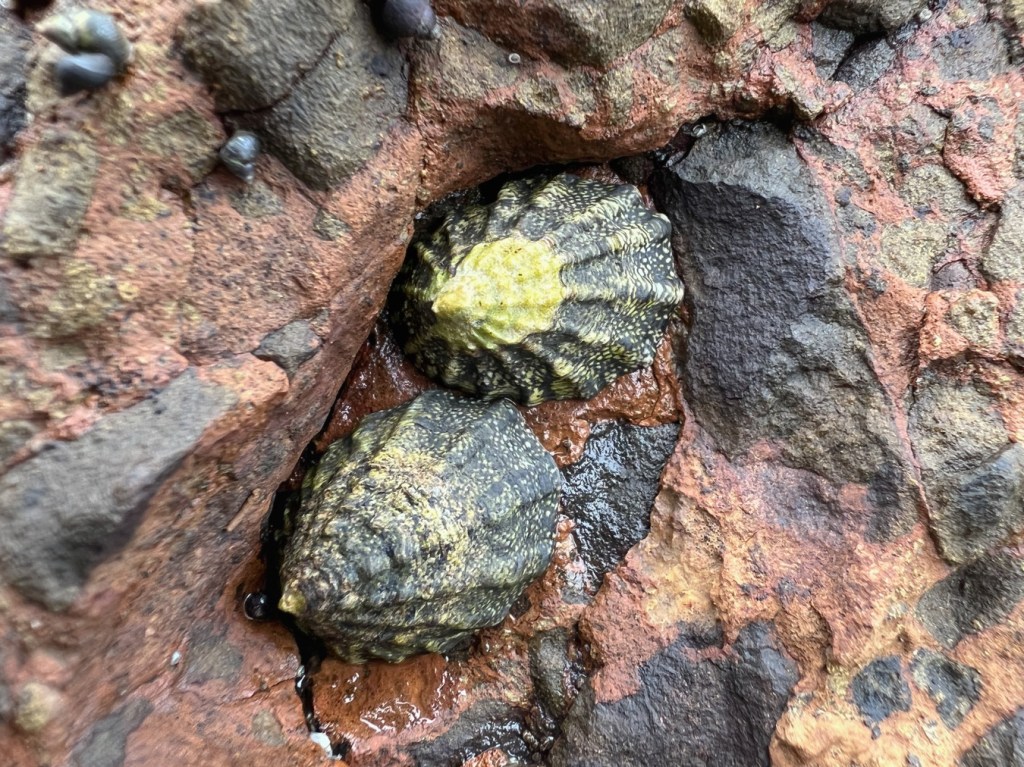
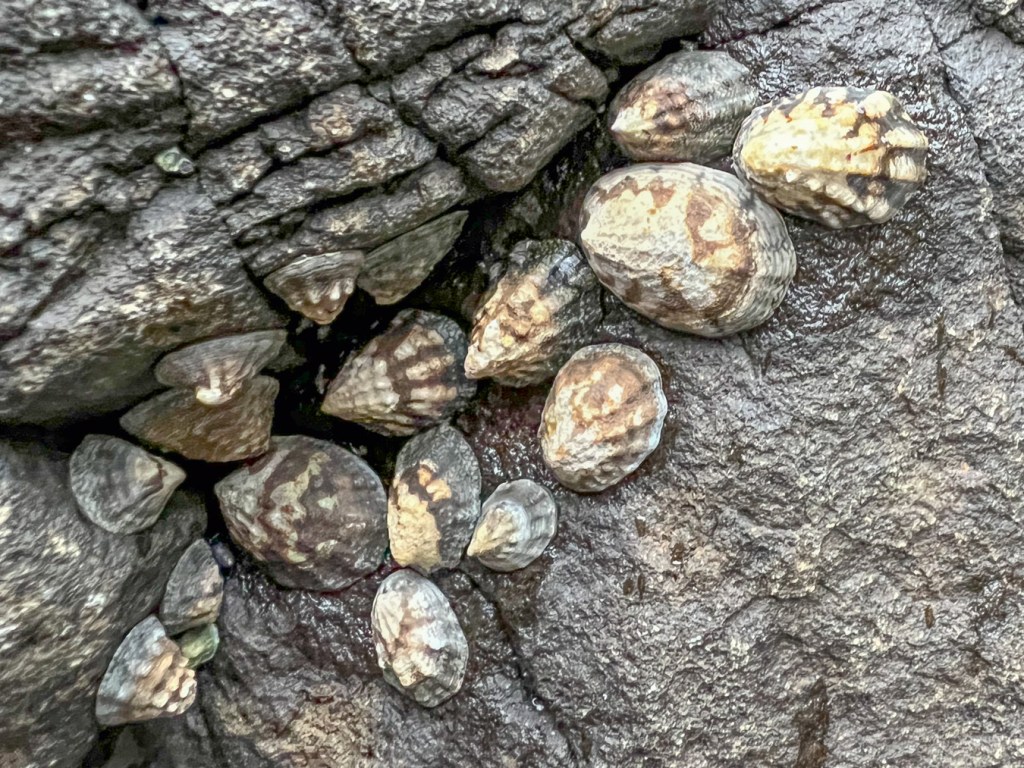

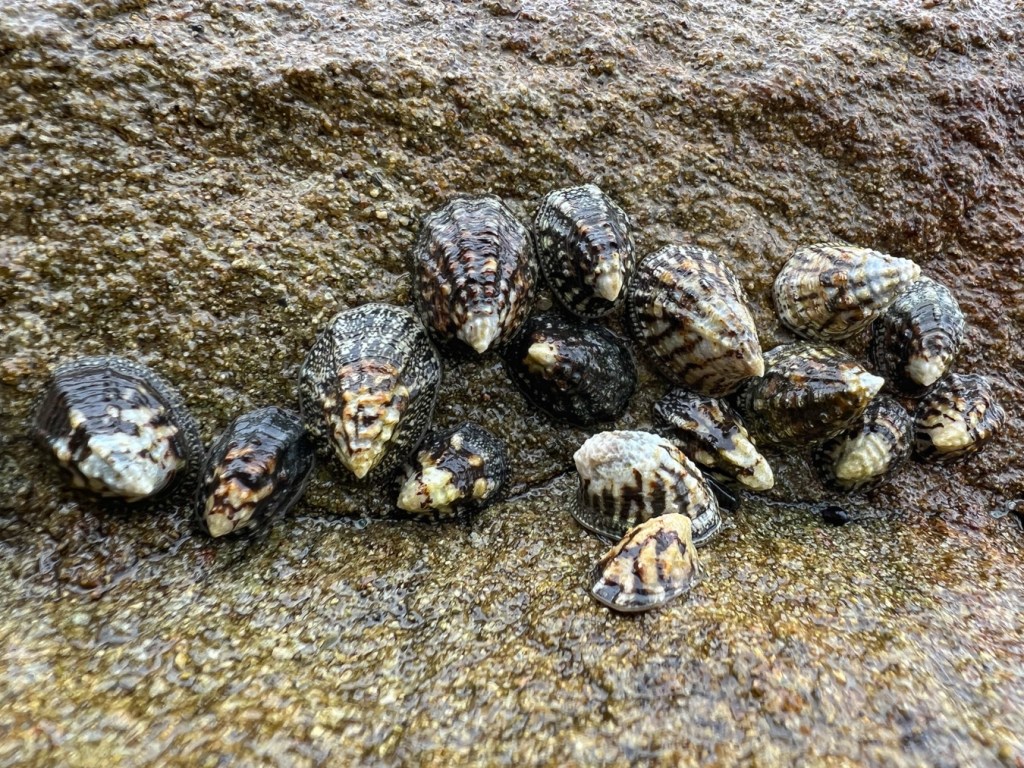
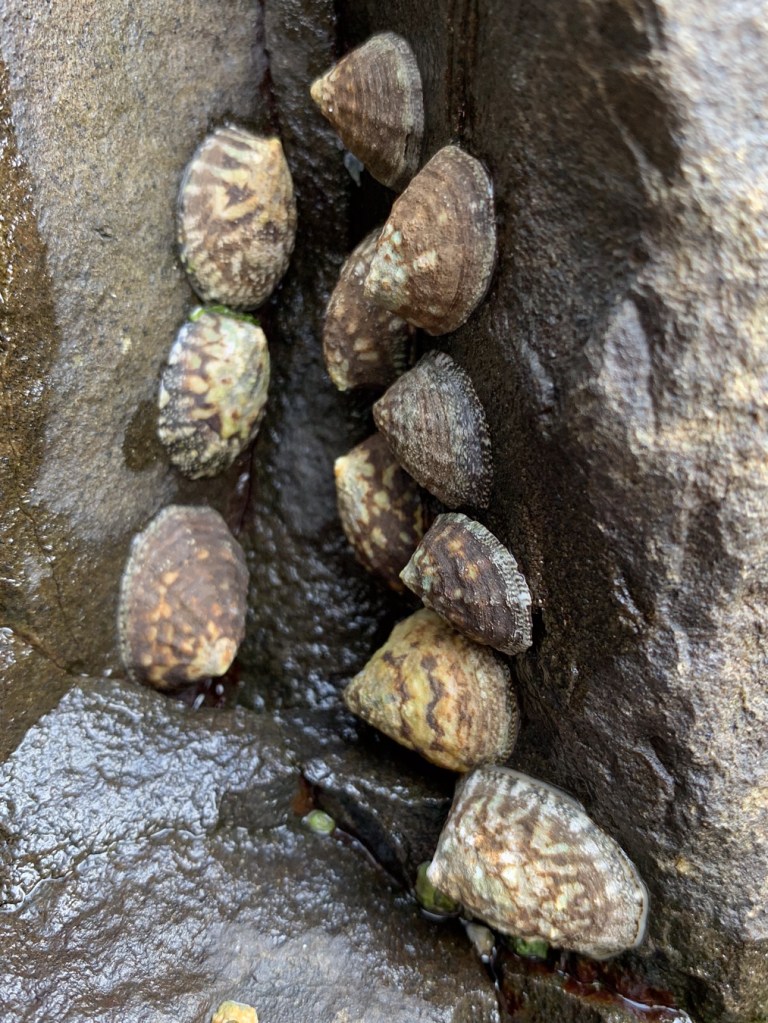
Scenes from the splash zone
Life in the splash zone means gathering in crevices and recesses.

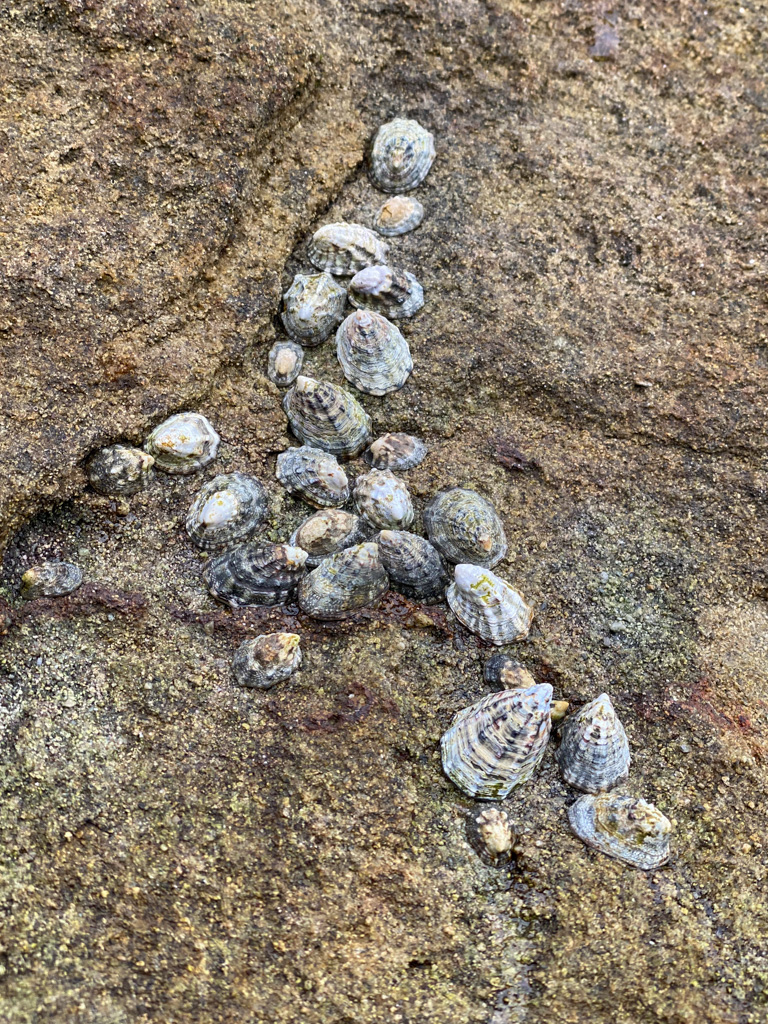

Around splash zone seeps, where there can be a growth of greens, gatherings of Lottia digitalis maintain small open spaces.


That wondrous shell
The apex is located way up front, and it might even overhang.

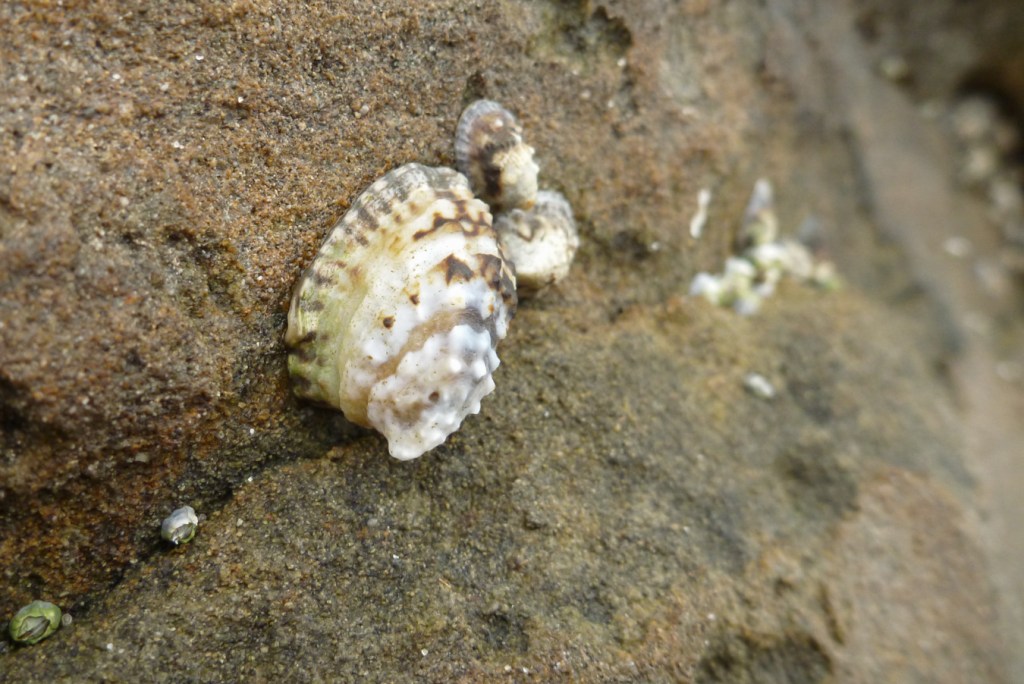

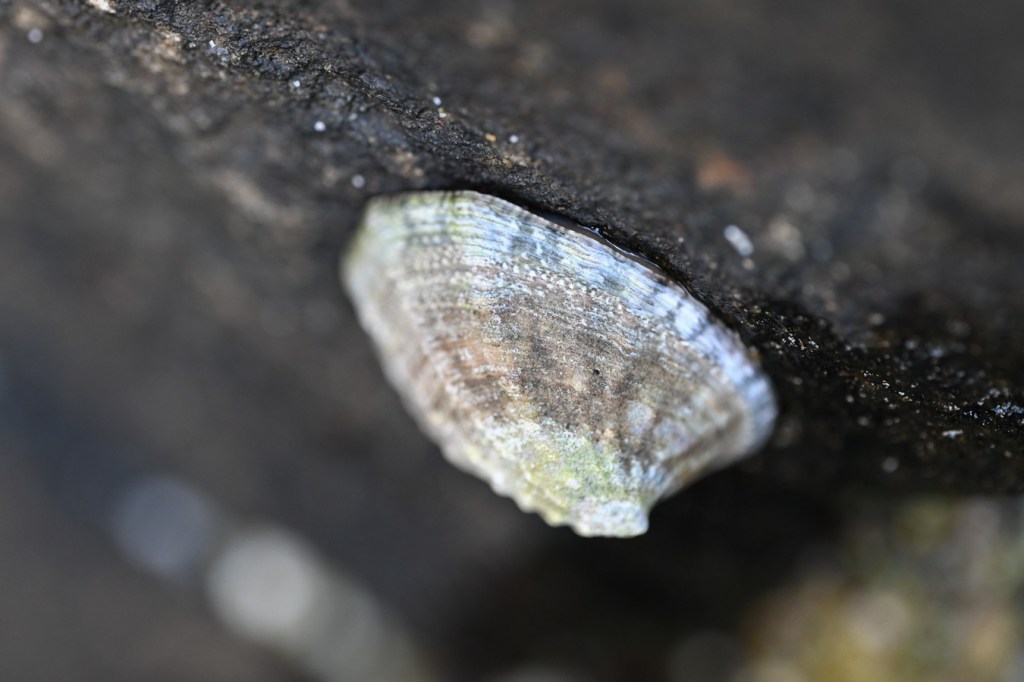
Combinations of shell pattern, shape, sculpting, and erosion (and other factors) add up to lots of diversity and beauty that probably goes a little underappreciated.



A scene from a little lower
Since you can find Lottia digitalis on rocks all the way down into the mid-intertidal, at least its higher fringes, I picked this image as an example of a scene from a lower setting than any of those shown above. I confess to having spent a decent amount of enjoyable time comparing the shell characteristics and patterns shown in this image with those on L. digitalis living on the high rocks (see above) and on Pollicipes (see below).

On Pollicipes
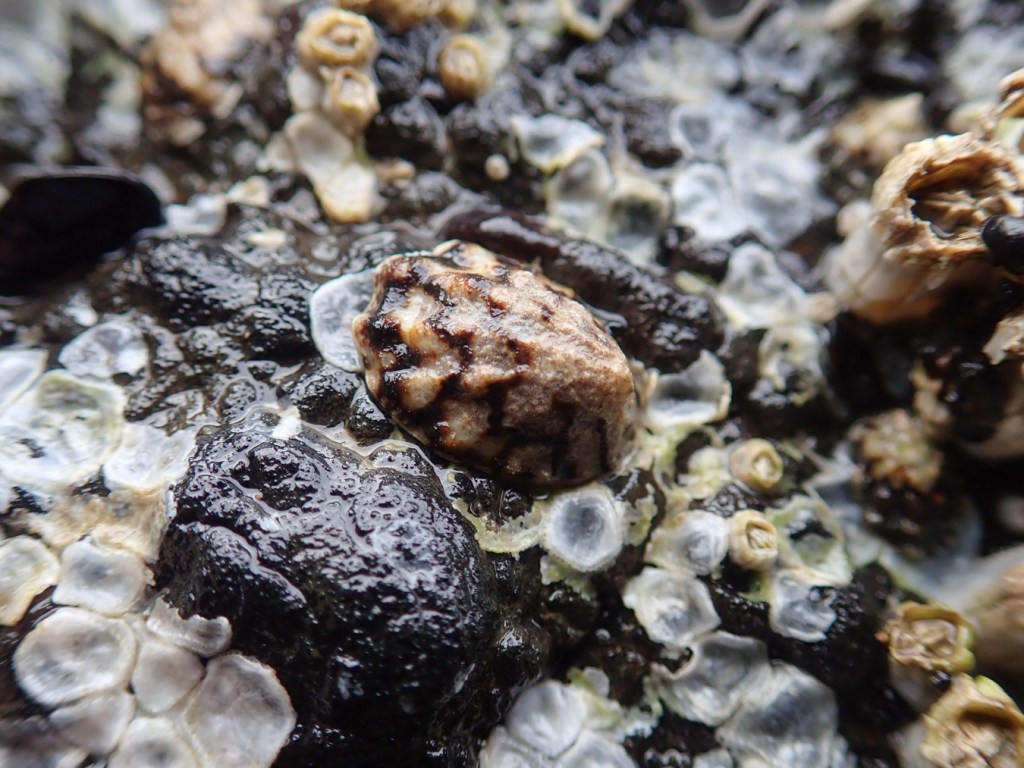
Down in the mussel beds amongst the Pollicipes, Lottia digitalis can be pretty hard to pick out when they’re at rest on the barnacles. There, their shells are usually about the same color as Pollicipes and the pattern is some version of black lines and chevrons. (Another difference is the limpets aren’t tightly clustered as they tend to be on the high rocks.) You should be able to pick out three fairly obvious limpets in the image below.

The match between the limpets and their barnacle hosts is remarkable.


I’ve lost myself for hours poking around Pollicipes, looking for Lottia.

Acmaea mitra Whitecap Limpet
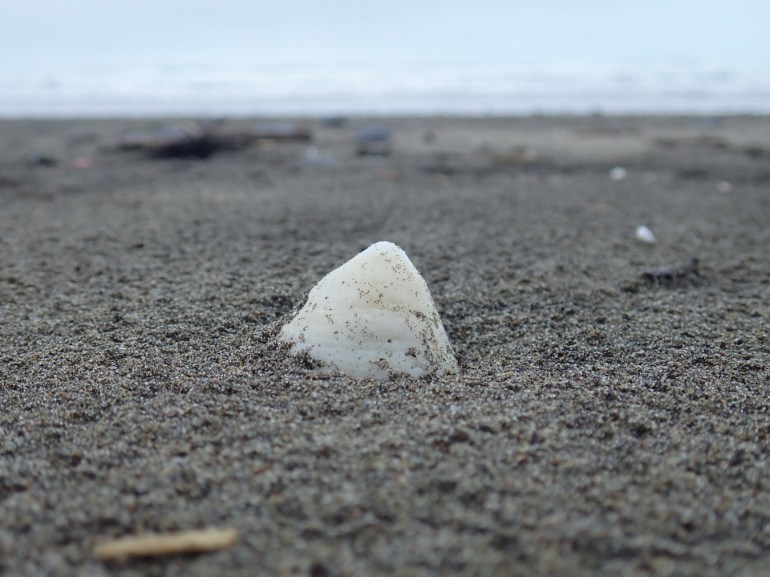
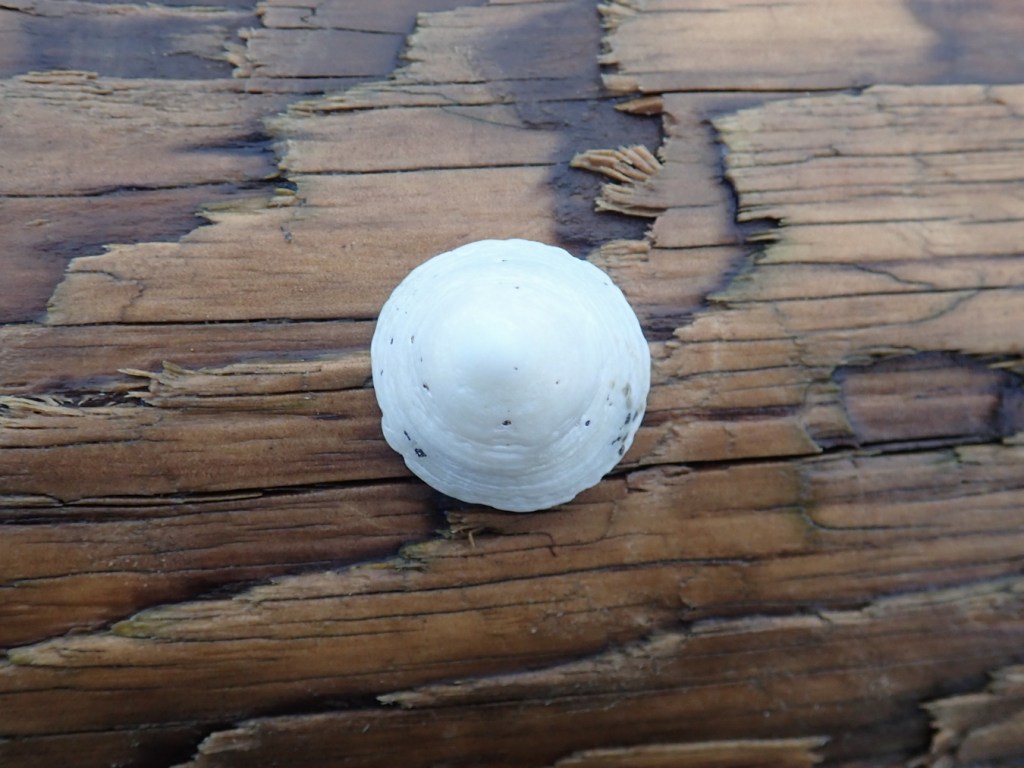
Empty and drifted whitecap shells are pretty common on some beaches. The shell is conical, on the tall side, white in color, and more or less round at the base. The four images in the gallery below are all of the same shell—as I found it in the top row, and posed in the bottom row. (Note: I think all the shells shown in this entry are Acmaea, but I’m no expert and there are other white univalves. The erosion of empty drifted shells adds more uncertainty, thus there’s a chance I’ve made a misidentification.)


According to experts, the shell interior has a horseshoe-shaped scar and I’ve pointed this out (at least portions of it) at the arrows in the two examples below.


Hosting an encrusting coralline is one of the whitecap’s signature moves. (This shell was resting in the swash when I found it. I washed off some clinging sand and set it up on higher ground to show off the coralline crust.)

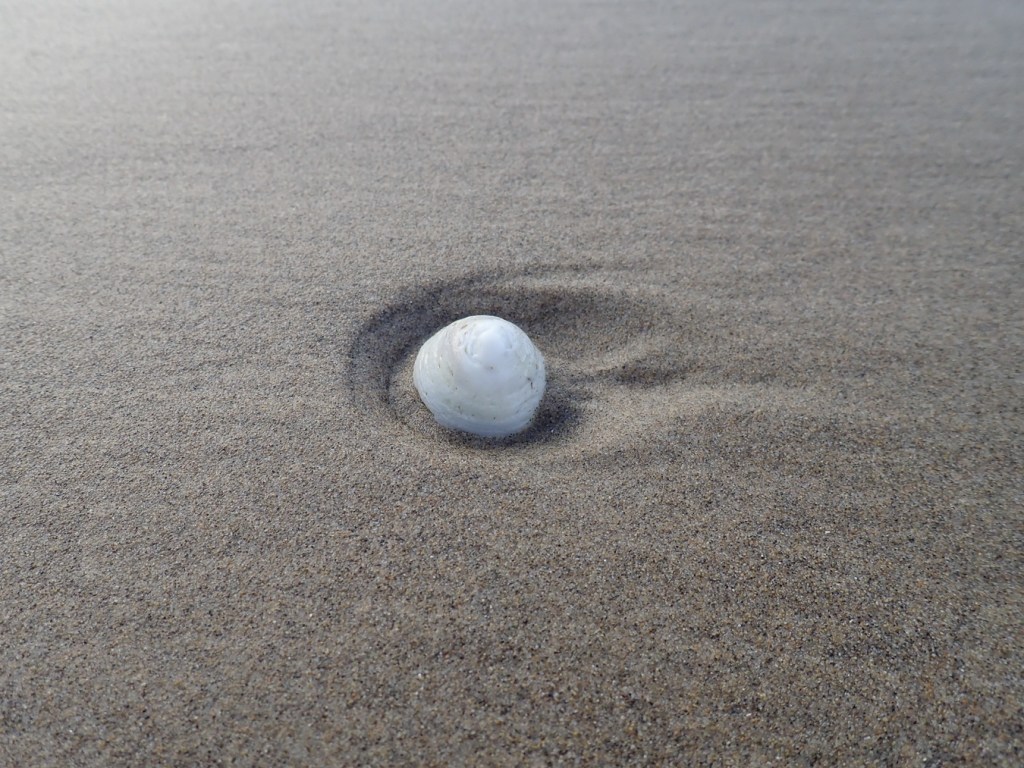
Whitecap shells are said to be thicker than some of the common limpets they share the rocks with; I wonder if maybe their drifted shells don’t erode and break up quite as easily. If true, it might help explain why empty and drifted whitecap shells tend to be comparatively common on the beaches I visit. (Drifted shells of the rough keyhole limpet Diodora aspera (see entry below) are also commonly found on the beaches.)

Diodora aspera
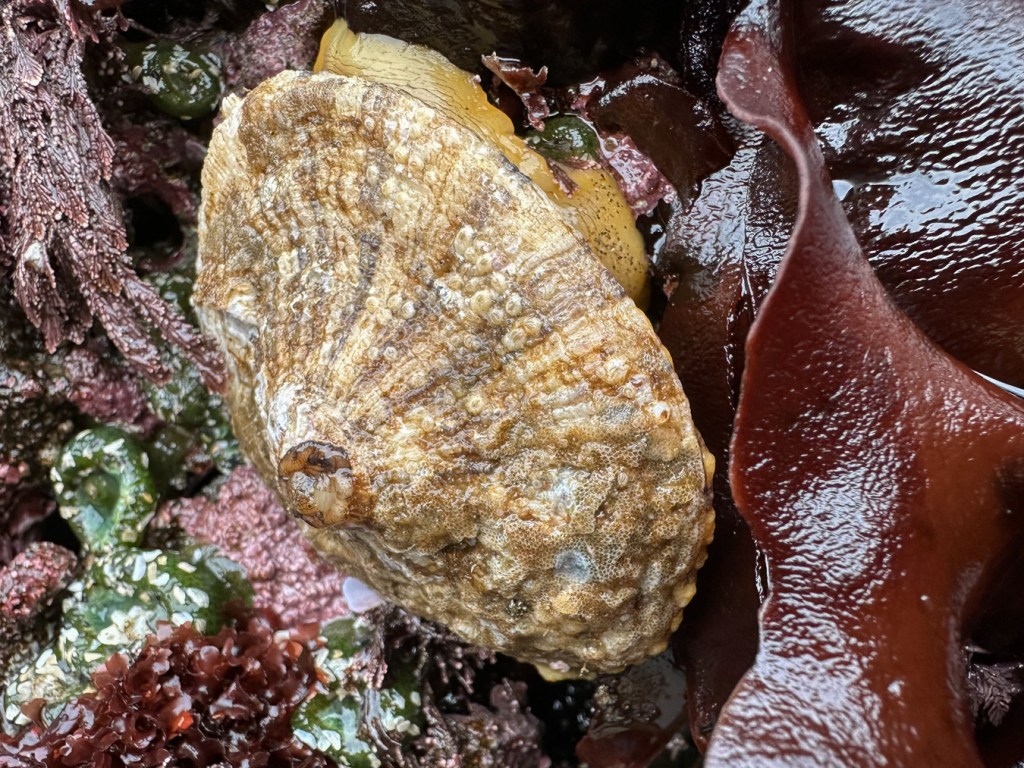

If the shells are encrusted, as they tend to be, they blend in well with the background making Diodora easy to overlook.


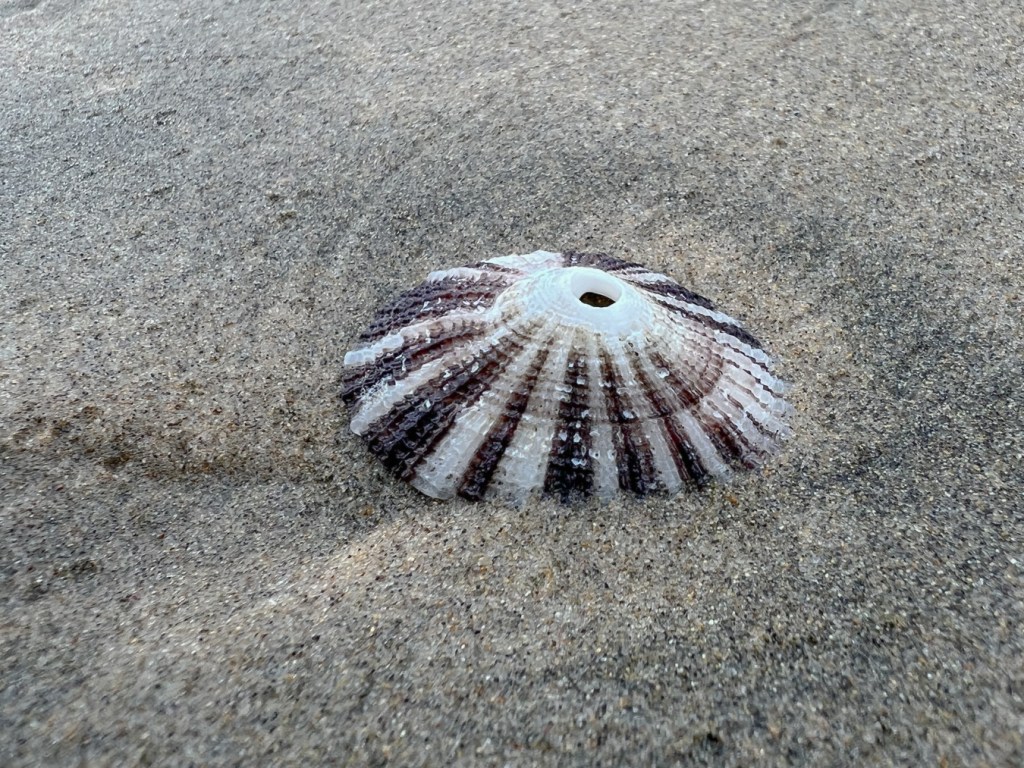
On the beach, drifted shells get tumbled and sand-scoured, which reveals their radiating dark purplish-brown stripes. The bigger shells are something of a beachcombing treasure. Crafty folks make them into Christmas tree ornaments but drifted Diodora shells are at their best on the beach, where they make their play with pebbles and patterns in the sand.



Puncturella
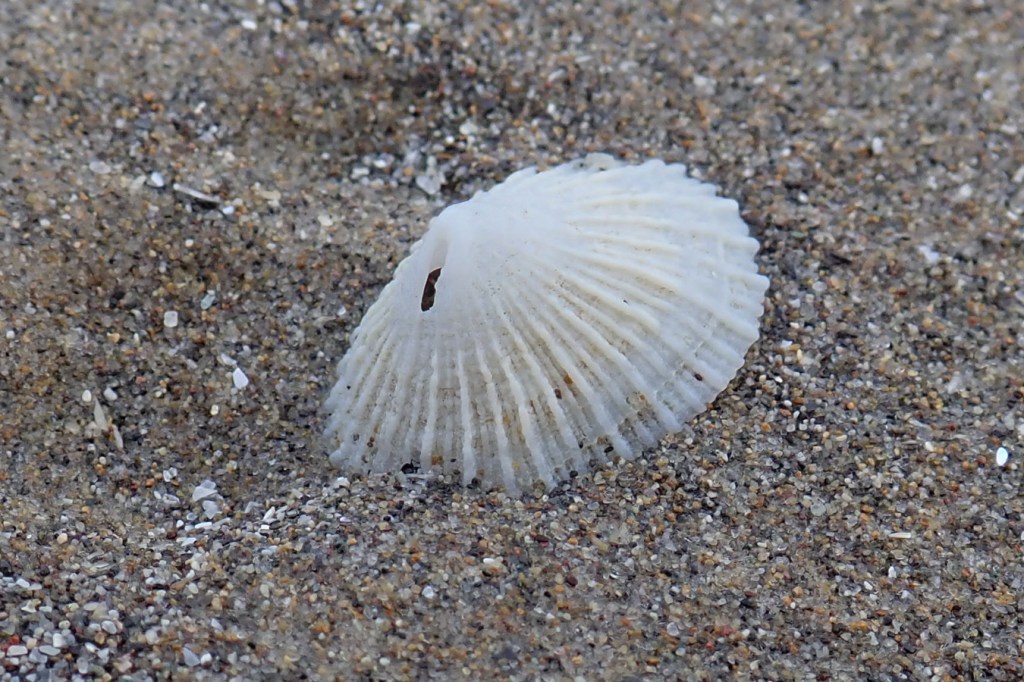
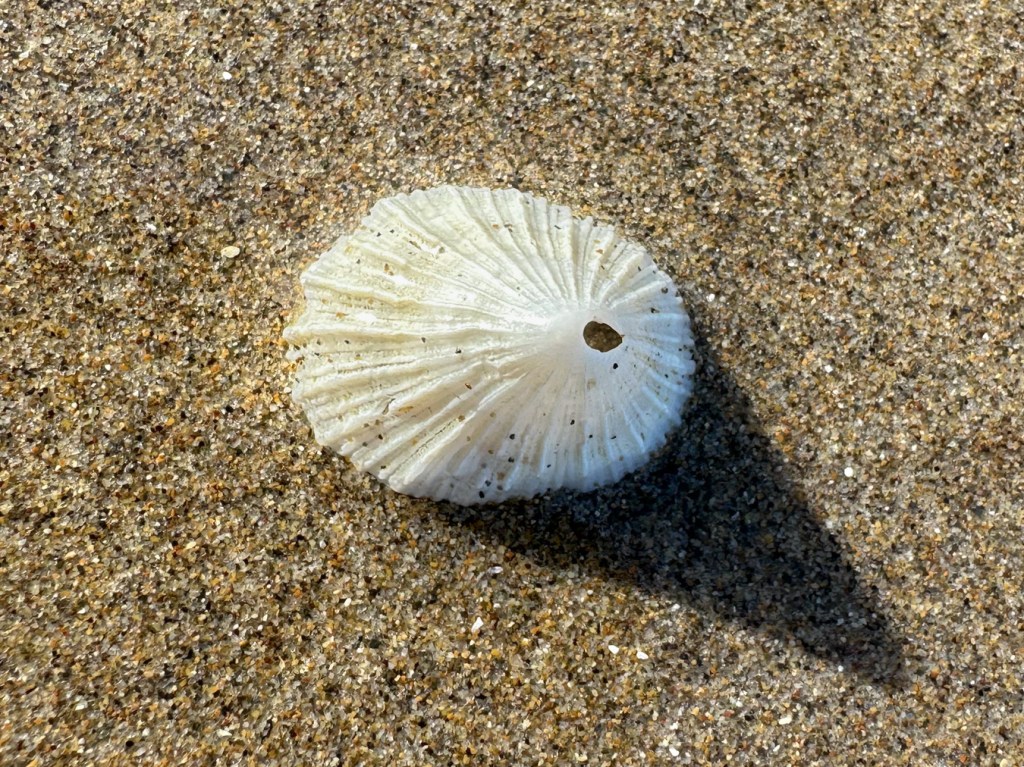
I’ve only encountered empty and drifted shells. I think the examples below are those of Puncturella multistriata.
References
Gotshall, D. W. 2005. Guide to Marine Invertebrates, Alaska to Baja California 2nd Edition (Revised). Shoreline Press.
Harbo, R. M. 2011. Whelks to Whales: Coastal Marine Life of the Pacific Northwest. 2nd ed. Harbour Publishing Co.
Kozloff, E. N. 1993. Seashore Life of the Northern Pacific Coast. 3rd ed. University of Washington Press.
Lamb, A. and B. P. Hanby. 2005. Marine Life of the Pacific Northwest. Harbour Publishing.
Sept. J. D. 2019. The New Beachcomber’s Guide to the Pacific Northwest. Harbour Publishing.
Online Resources
Biodiversity of the Central Coast’s Molluscs page. Accessed May 20, 2025.
Common Sea Life of Southeastern Alaska A field guide by Aaron Baldwin & Paul Norwood. Accessed May 20, 2025.
Friends of Netarts Bay WEBS Mollusks page. Accessed May 20, 2025.
Pacific Northwest Shell Club’s Gastropods of the Pacific Northwest page. Accessed May 20, 2025.
Oregon Estuarine Invertebrates: Rudys’ Illustrated Guide to 140 Common Species, 3rd ed. T.C. Hiebert, B.A. Butler and A.L. Shanks (eds.). University of Oregon Libraries and Oregon Institute of Marine Biology, Charleston, OR. Accessed May 20, 2025.
Stanford|SeaNet’s Limpets page. Accessed October 3, 2025.
Selected Accounts
Cowles, D. 2004. Diodora aspera. Invertebrates of the Salish Sea. Rosario Beach Marine Laboratory. Accessed May 3, 2024.
Cowles, D. 2005, as edited. Lottia digitalis (Rathke, 1833). Invertebrates of the Salish Sea. Rosario Beach Marine Laboratory. Accessed February 25, 2024.
Cowles, D. 2006. Puncturella galeata (Gould, 1846). Invertebrates of the Salish Sea. Rosario Beach Marine Laboratory. Accessed May 20, 2025.
Lunsford, R. 2002 as edited. Acmaea mitra. Invertebrates of the Salish Sea. Rosario Beach Marine Laboratory. Accessed February 25, 2024.
I updated this page on June 3, 2024
 theoutershores