On this page, I show living birds I’ve been lucky enough to photograph on the exposed northern Oregon shore and dead birds I’ve found washed up on the beaches. For help with bird identification I consult the National Geographic Field Guide to the Birds of North America, the Audubon Bird Guide App, and the Merlin Bird ID App. Then, if I’m not satisfied, I bother my birder friends. Identification mistakes are mine.
Let’s check out some birds!
Brant
I read that Yaquina Bay old-timers called brant China goose, but I haven’t heard this myself. I mostly think of them wintering on the estuaries with eelgrass beds, but there are always a few birds summering singly or in small groups on the exposed outer coast. Bald eagles take advantage of summering brant, which are vulnerable during the molt. I came across this lone bird in late June. I love its early morning shadow.

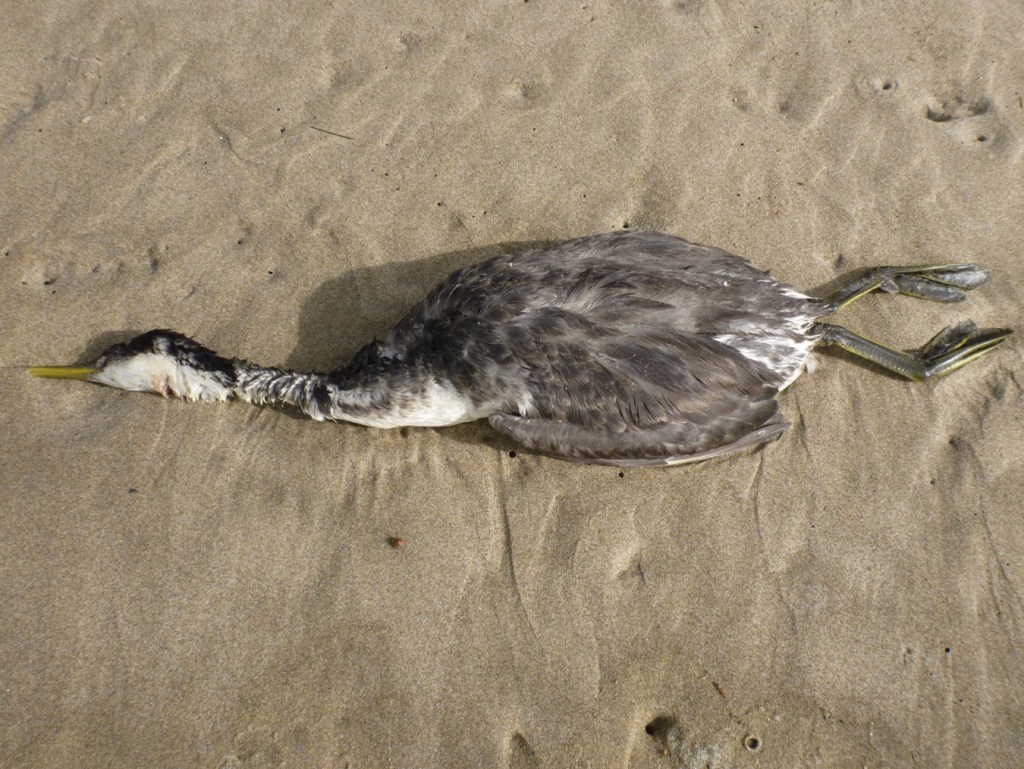
Western Grebe
Short-tailed albatross
This rare find washed up on March 26, 2021. Folks that know say it’s a short-tailed albatross.

Northern fulmar
Fulmar carcasses are a common winter find. Scavengers really go for the breast meat.

Murphy’s petrel
This rare Oregon beach find was made on January 16, 2021. Folks who know say it’s probably a Murphy’s petrel.

Fork-tailed storm petrel
When I found this carcass on a large drift log, I noticed the head was missing. I’ve been told owls favor the heads. Thus, I wonder if an owl took this one.

Bald eagle
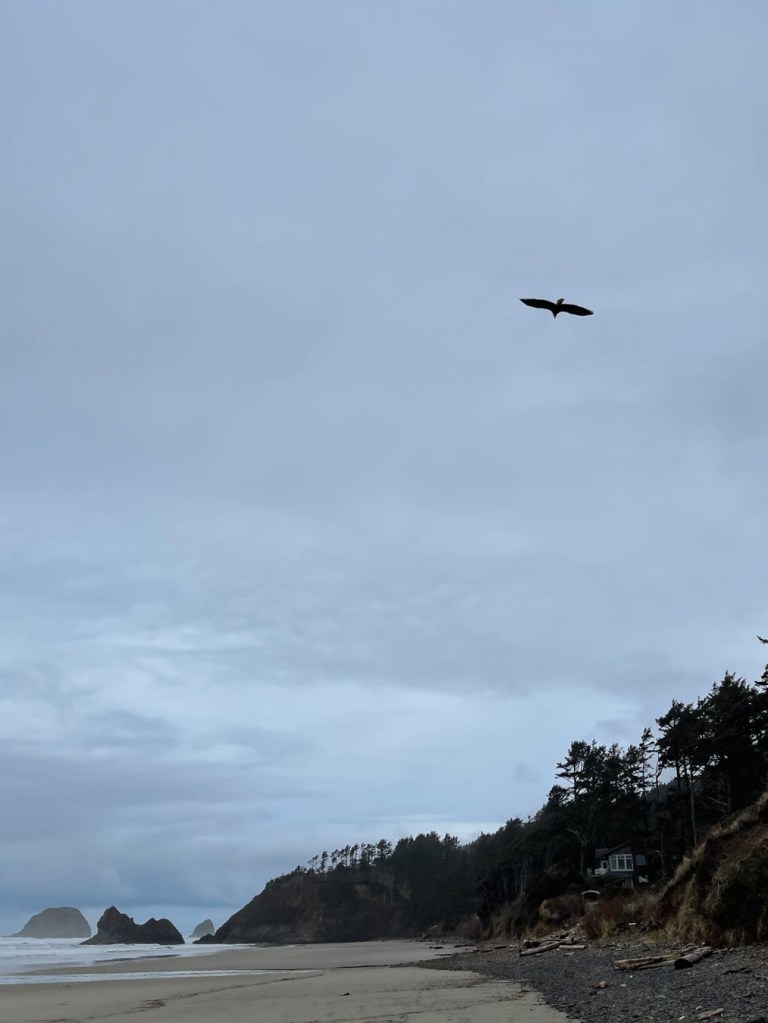
Bald eagles patrol the grounds between the maritime forest and the open sea. Down on the beach, it’s not unusual to see one or more attending a carcass.


Peregrine falcon
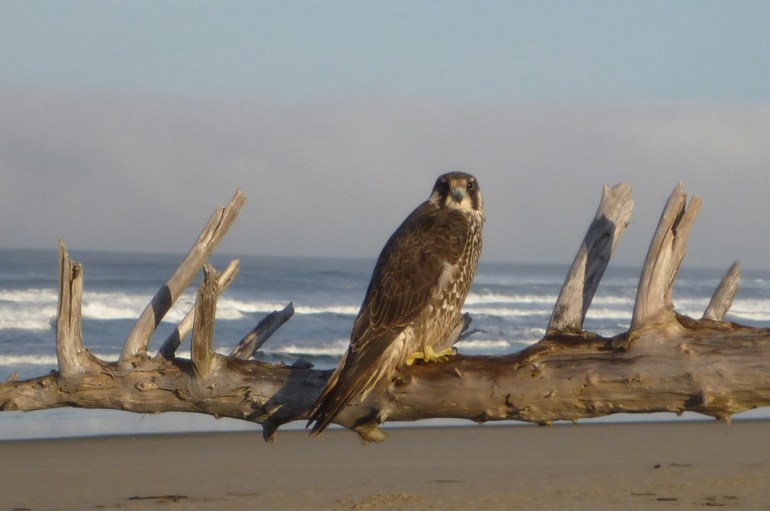
Peregrines cruise the beaches year round. They take advantage of drift logs for perches.
Black oystercatcher
It’s always a treat to see and hear oystercatchers.

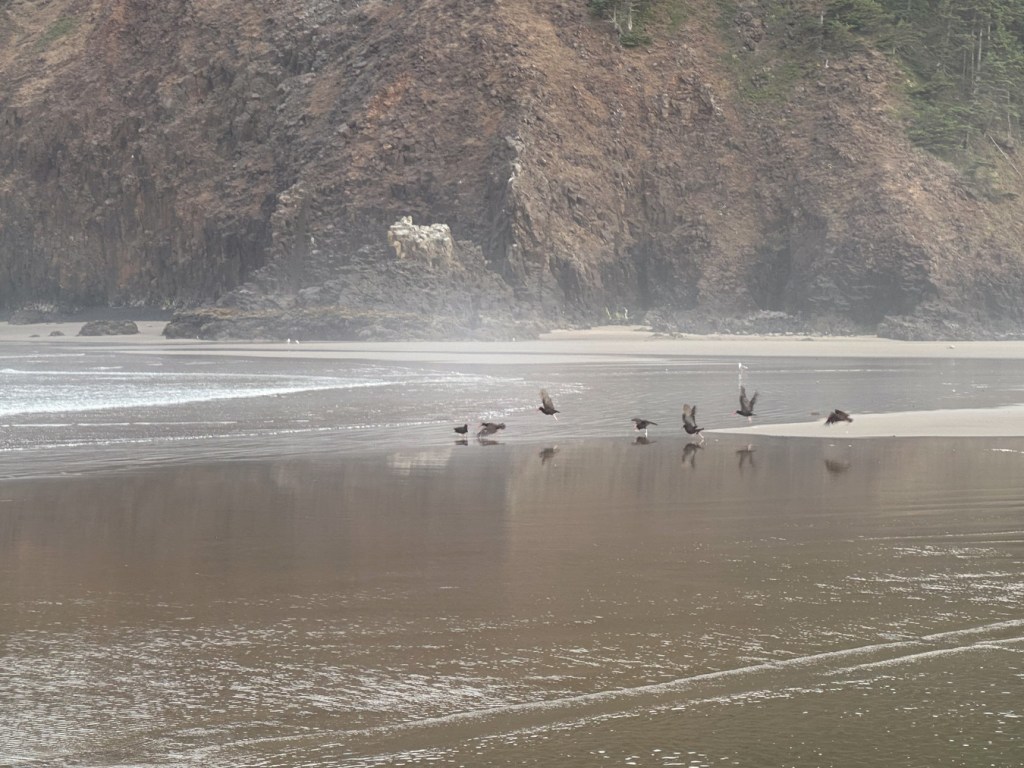

Surfbird
Surfbirds winter on rocky intertidal shores. They are featured in Surfbirds Live Up to Their Name on the Winter Range. Can you spot a black turnstone or two lurking in the back of this flock? You will often find these two species together during the winter.

Red Phalarope
These fragile little birds take the fall storms hard. They’re called gray phalaropes in Europe, an apt description of the winter birds we’re most likely to see in the drift line.
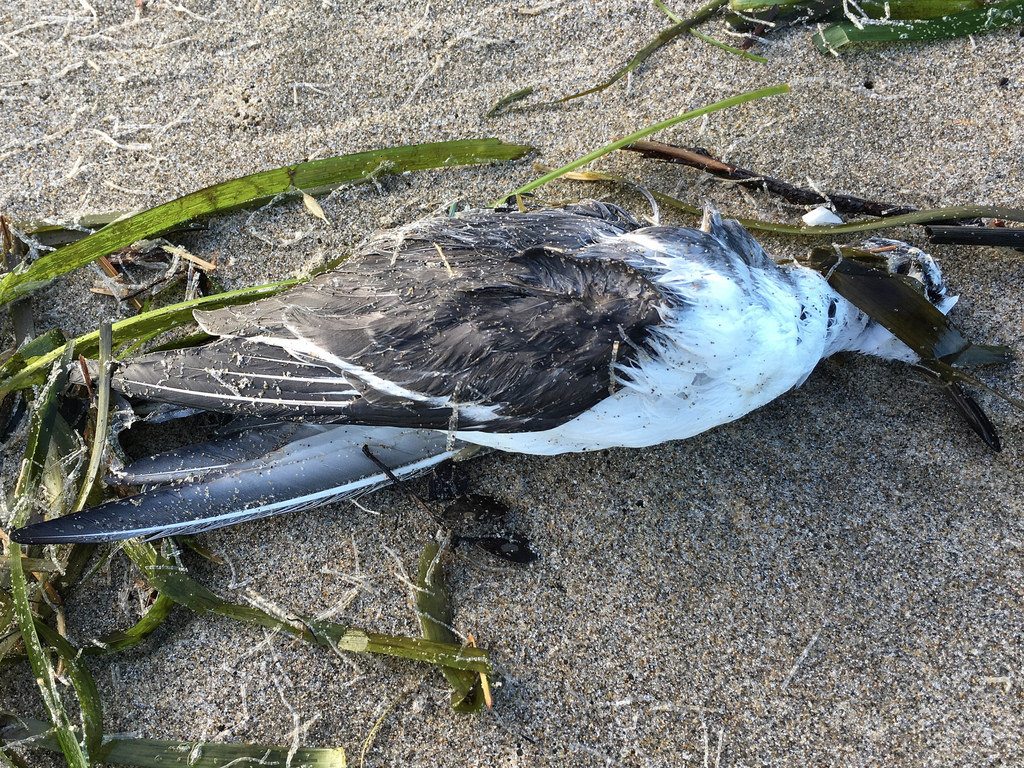
Black-legged Kittiwake
A pelagic gull. You might find a carcass in the winter drift line. Look for wing tips that seem to have been dipped in black ink. Black legs.

Heermann’s Gull
I came across this trio in June.

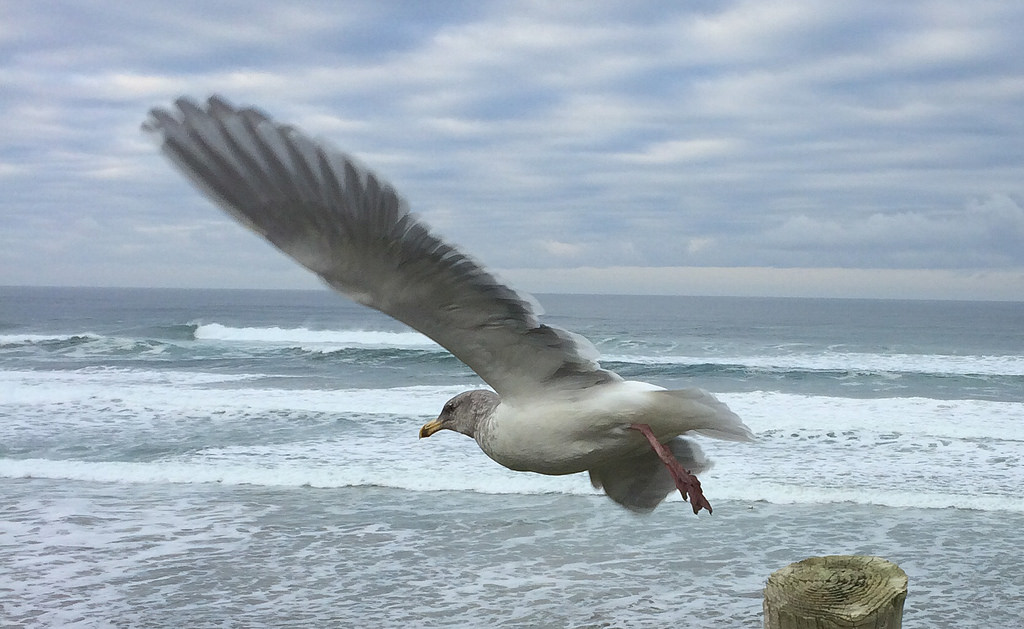
Western Gull
Pink legs, dark mantle, and black wing tips; it’s probably a western gull.


Olympic Gull
Olympics are western gull x glaucous-winged gull hybrids. I think this is one, so I wrote a few words about Olympics in Waiting Out High Tide With an Olympic Gull. We see a lot of Olympics here. We’re in that transition zone where western gulls breed mostly south of us, and glaucous-winged gulls breed north of here, so we get a lot of mixing.
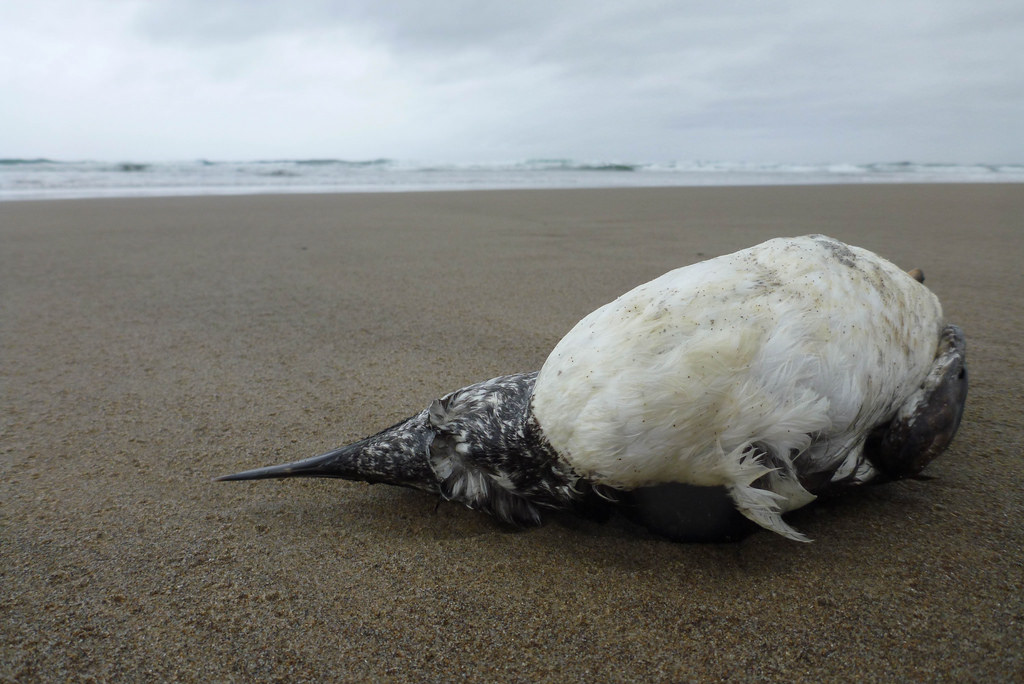
Common Murre
Murre carcasses wash up frequently.
Pigeon Guillemot
Though they are abundant on their northern Oregon breeding grounds, I don’t see many guillemot carcasses wash ashore.

Cassin’s Auklet
Sometimes dead Cassin’s wash ashore in great numbers. Fall 2014 was such a case. I can’t get over their blue legs.

Marbled murrelet
It’s unusual for marbled murrelet carcasses to wash ashore. I came upon this winter plumage adult in January.Not too common in the drift line. This is a winter plumage adult from January.

Rhinoceros auklet
Fairly common in the drift line, especially in fall and winter. In the lower image, you’ll the breast meat has been eaten. Gulls and ravens go for the breast meat first.


Tufted Puffin
I don’t see many puffin carcasses on the beaches. Puffins have deciduous bill sheaths that drop off during the winter, which is why this one doesn’t have the big, brightly colored bill you see in the photos of breeding birds.

American crow
Crows love low tide as much as I do and I’ve come to feel like some of the crows that share their home beach with me are intertidal specialists.
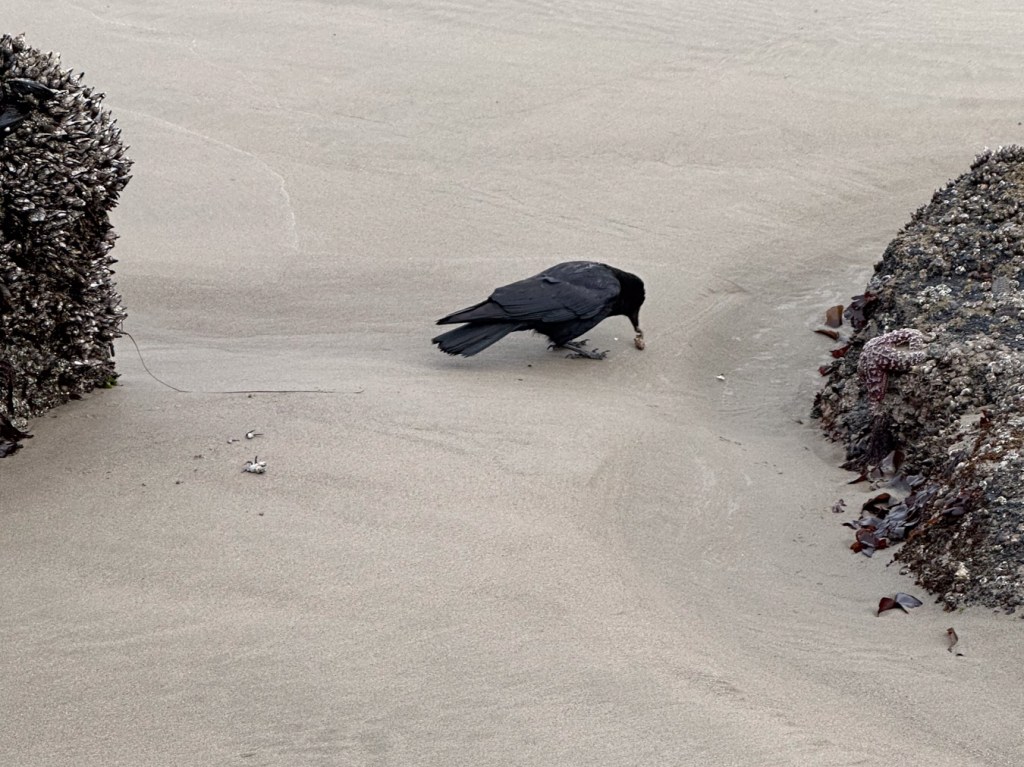
The crow in the image below was so intent on the hunt it didn’t seem to notice me for a while. (To be fair to crows, and this one in particular, it probably noticed me long before I noticed it.)
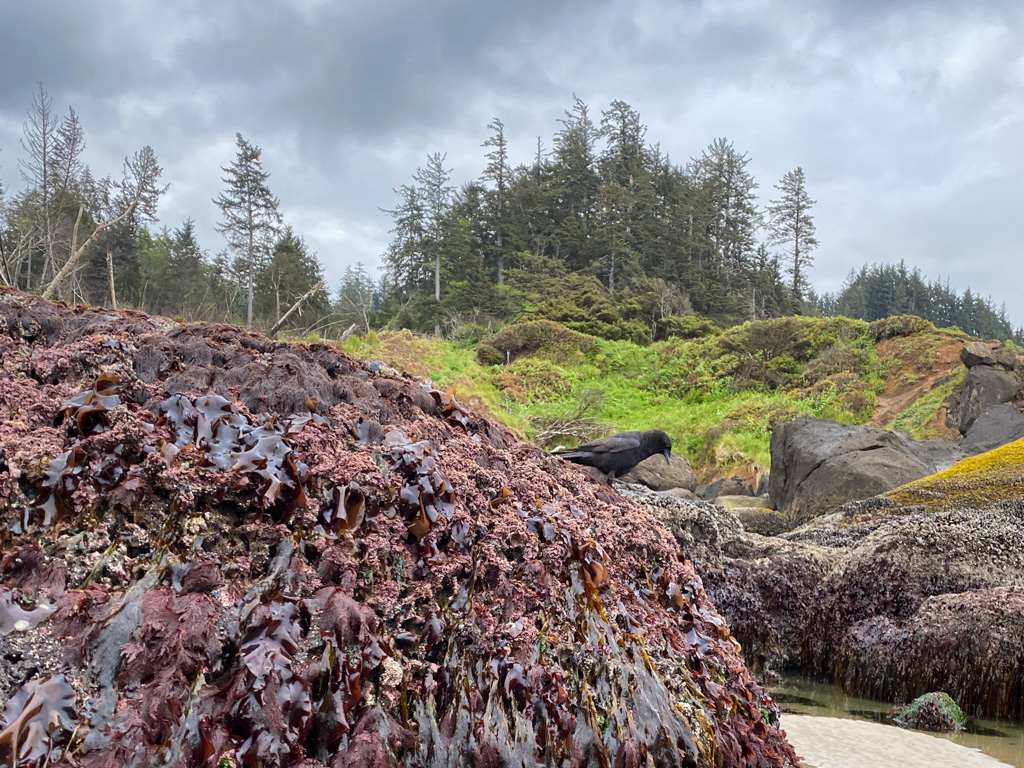
Something (probably a small crustacean) is about to meet its match
In the scene below, the crow has detected, and is about to nab, a small crustacean. If you want to watch a short video of this crow hunting and handling prey, click here.

When it comes to crabs—and they are good at finding shore crabs, porcelain crabs, and granular claw crabs—crows are kind of messy eaters.
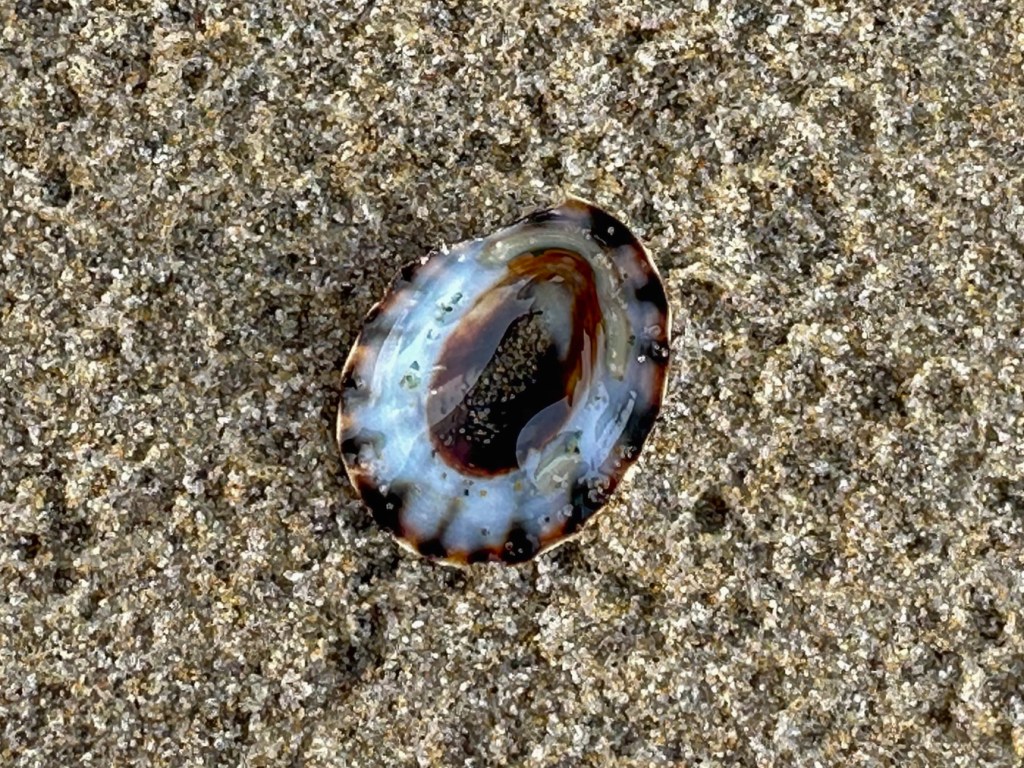
Some crows have a talent for finding limpets and seemingly a taste for them too. The closeup scenes below show discarded shells after the soft tissue has been eaten. You can still see remnant scraps of tissue on the inside anterior of both shells. Another thing worth noticing is a bit of chipping along the margin of both shells. It’s my guess that when necessary, crows chip just enough of the shell to provide purchase for lifting limpets off their perches (often rocks or mussel shells).

Hopeful in the swash

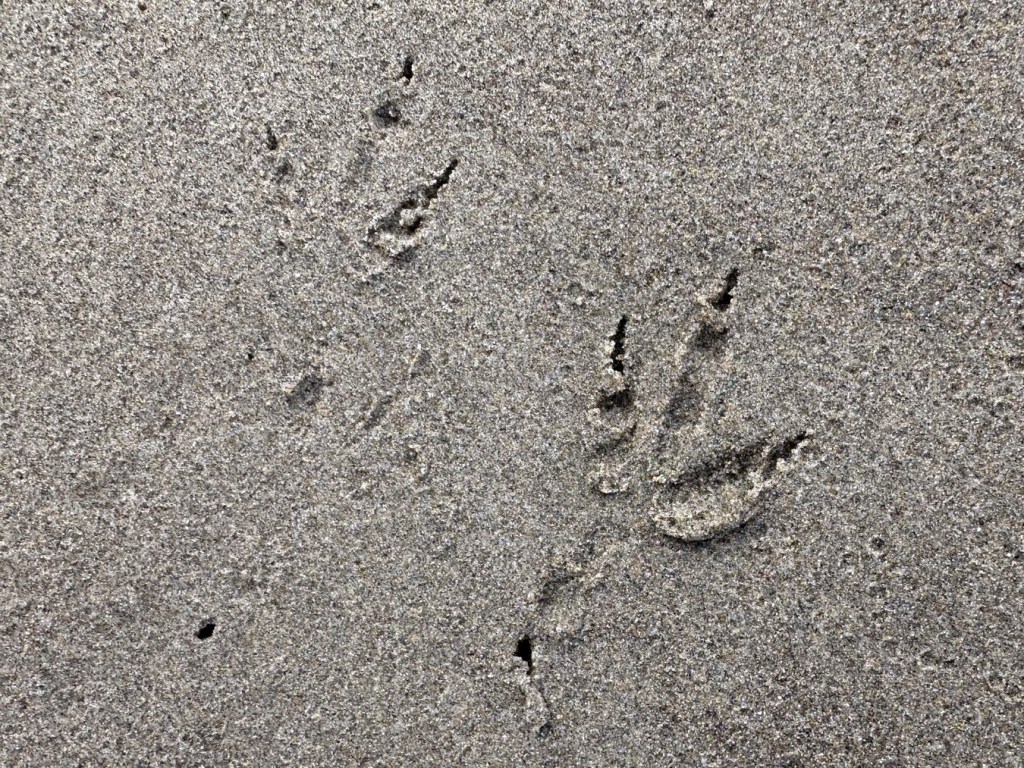
Traces

I updated this page on July 10, 2022
 theoutershores