Here I feature a sample of the fish diversity I’ve been lucky to find and photograph on beach walks, in and around tidepools, and fishing the exposed northern Oregon shore. The species I’ve highlighted don’t include the surfperches, which I honor with their own page. The common names and my organization are more or less those of Miller and Lea (1972) and Love (1996). The examples I show here are a small haphazard subset of what’s possible. Experts cover these fishes and many more in the books, field guides, and identification resources listed at the bottom of the page.
Let the fishes be upon you.
Blue shark Prionace glauca
This beautiful blue washed ashore on December 8, 2019, on Samoa Beach, California. It looks like a casualty of bycatch.

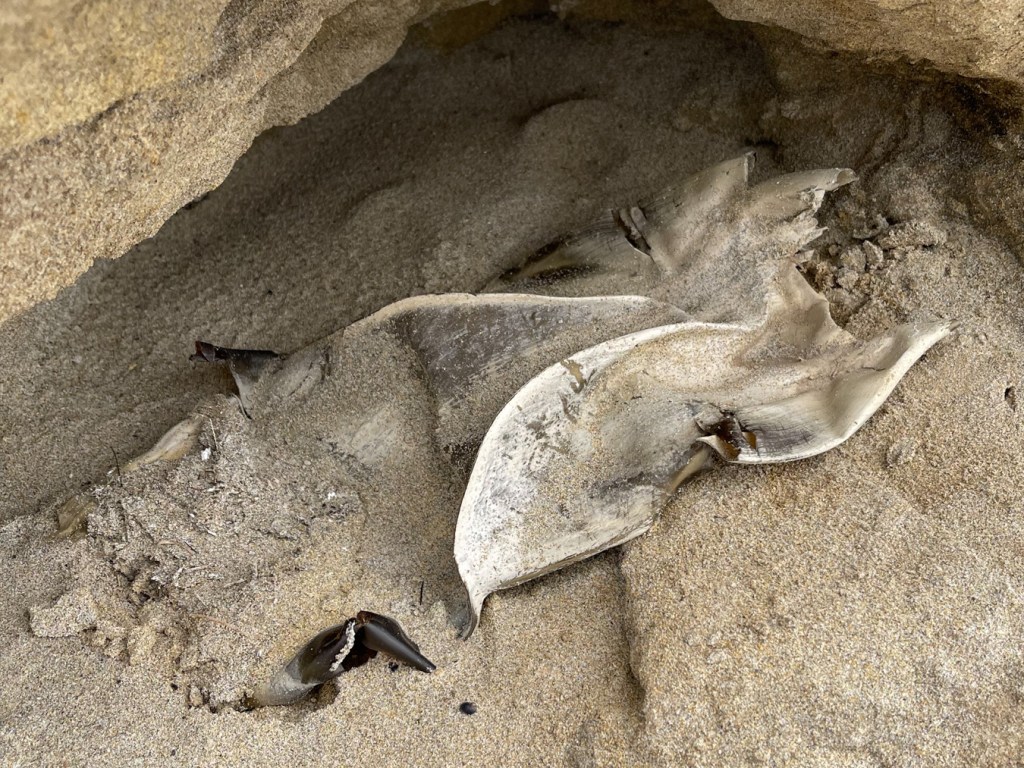
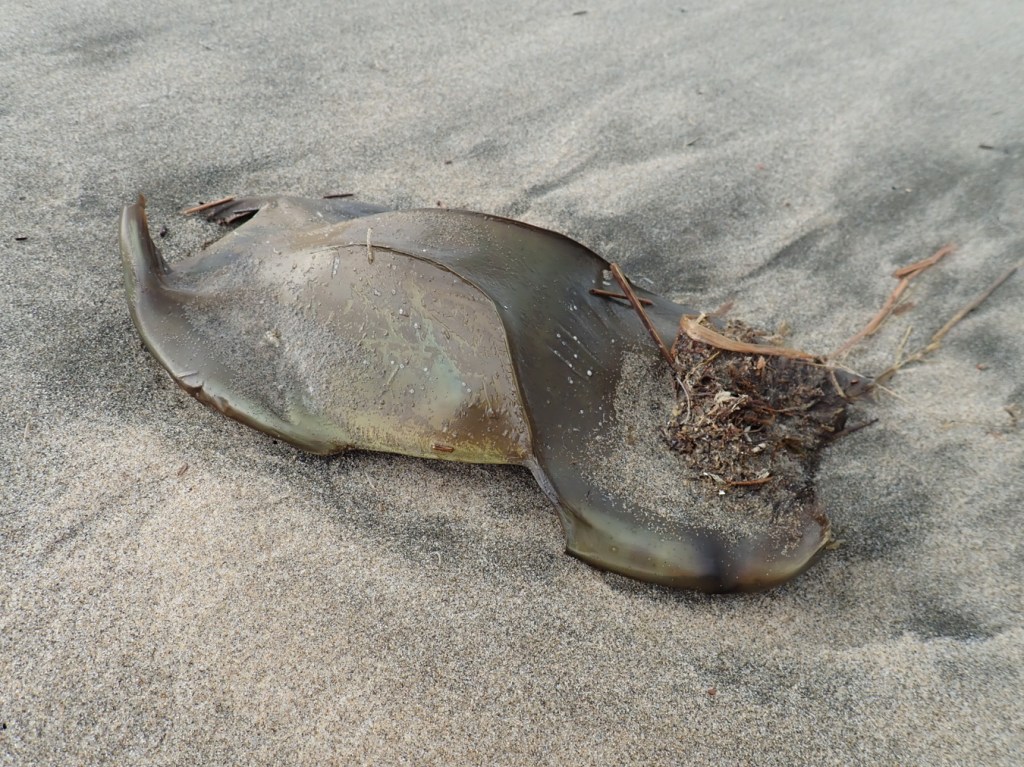
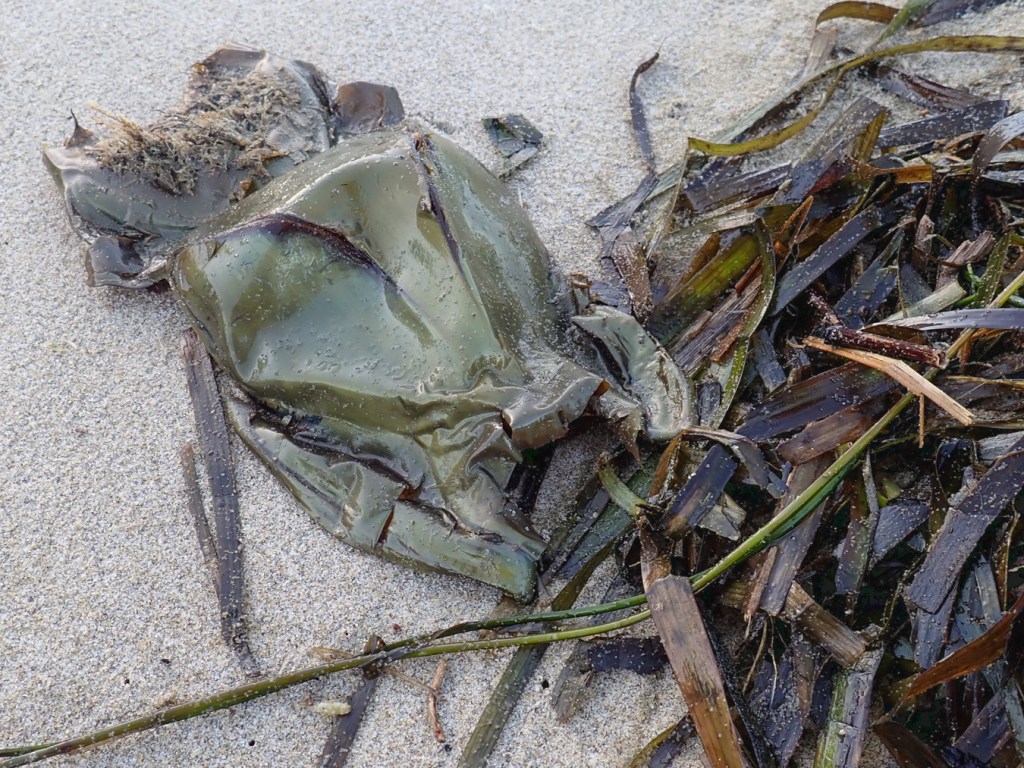
Mermaid’s purse (Big skate Beringraja binoculata)
Every so often, beachcombers encounter a mermaid’s purse washed up on the beach and they are a legitimate curiosity. The Marine Detective’s post, Big Skate Egg Case/Mermaid’s Purse, gives some natural history and examples of other egg cases you could encounter in the Pacific Northwest.

Spotted ratfish Hydrolagus colliei
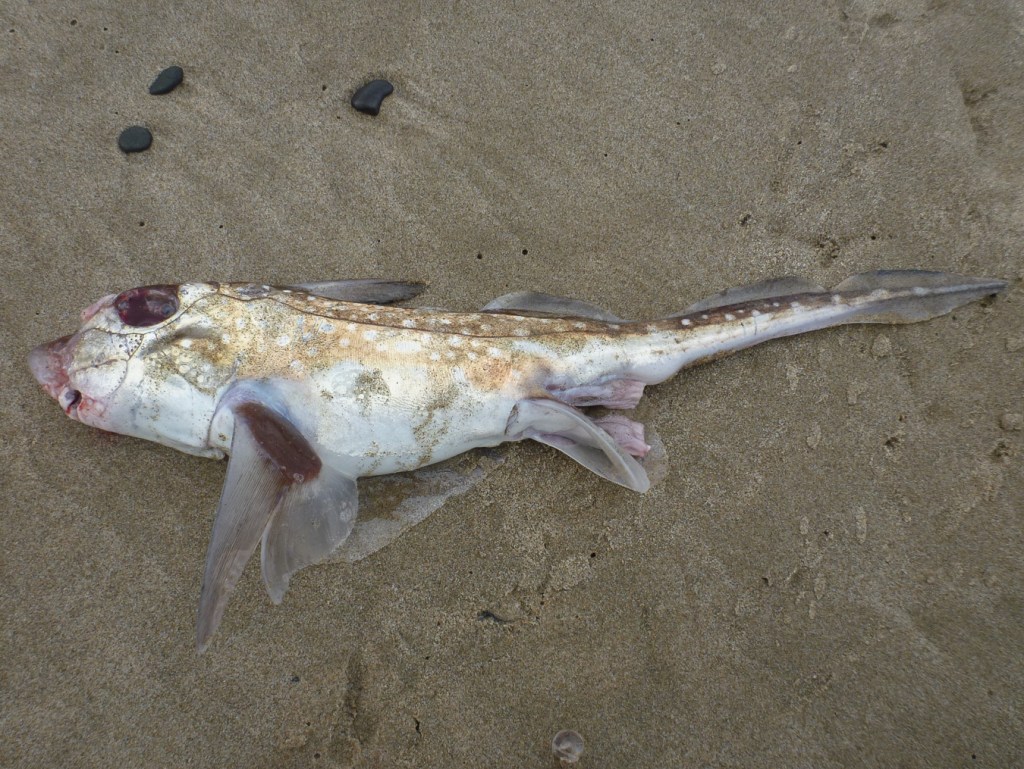
The clupeids, herrings, shads, and sardines can pose identification problems for non-experts like me. The examples below are my best ID bets, but I’ll confess there is some uncertainty.
Have a a look at the clupeids I’ve found washed up on the beaches.
Pacific herring Clupea pallasi (so I say)
My examples are small immature fish in the 2.5-4 inch range.
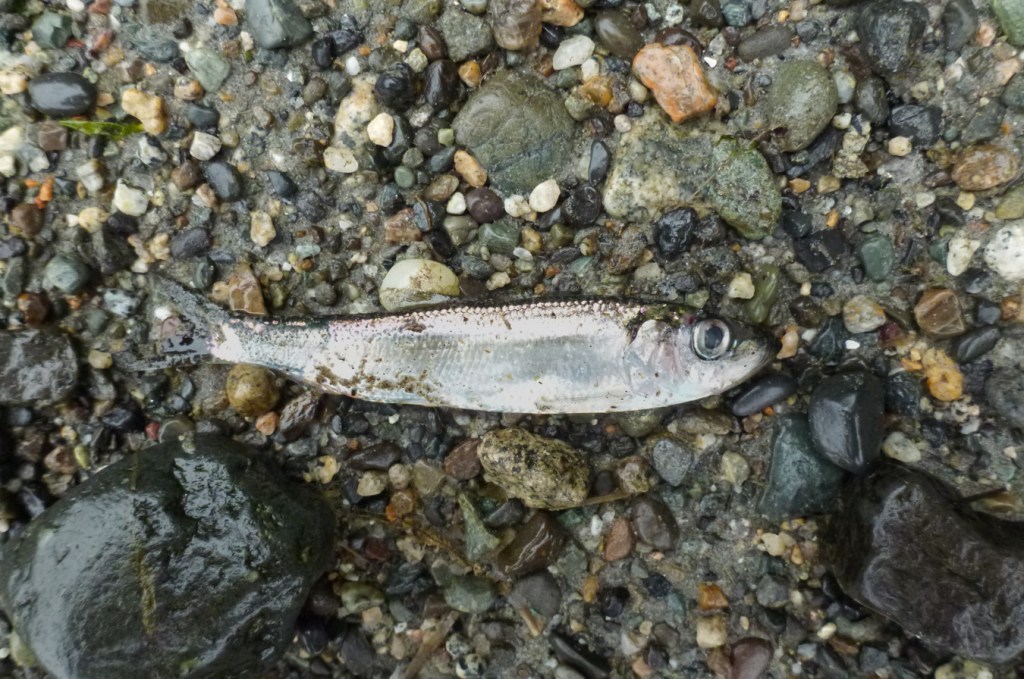


Pacific sardine Sardinops sagax
Sardines have spots on their backs and striations on the gill plate. Their body is less deep than American shad, which also has spots and gill striations.


The fish immediately below is a puzzler. It’s got a spot on its back and sharp-keeled ventral scales that look like they would catch your finger. (But would they?) And it’s hard to say if there is much in the way of striations on the gill plate.
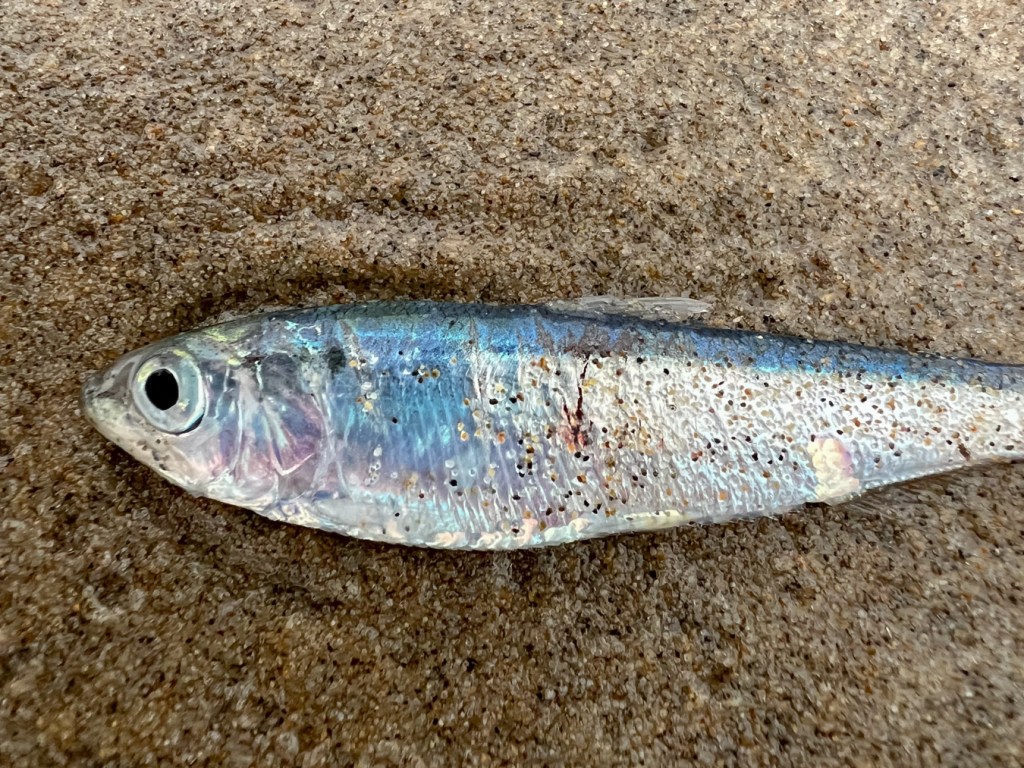
American shad Alosa sapidissima
Shad bodies are deeper than herring or sardines.

Silver or coho salmon Oncorhynchus kisutch


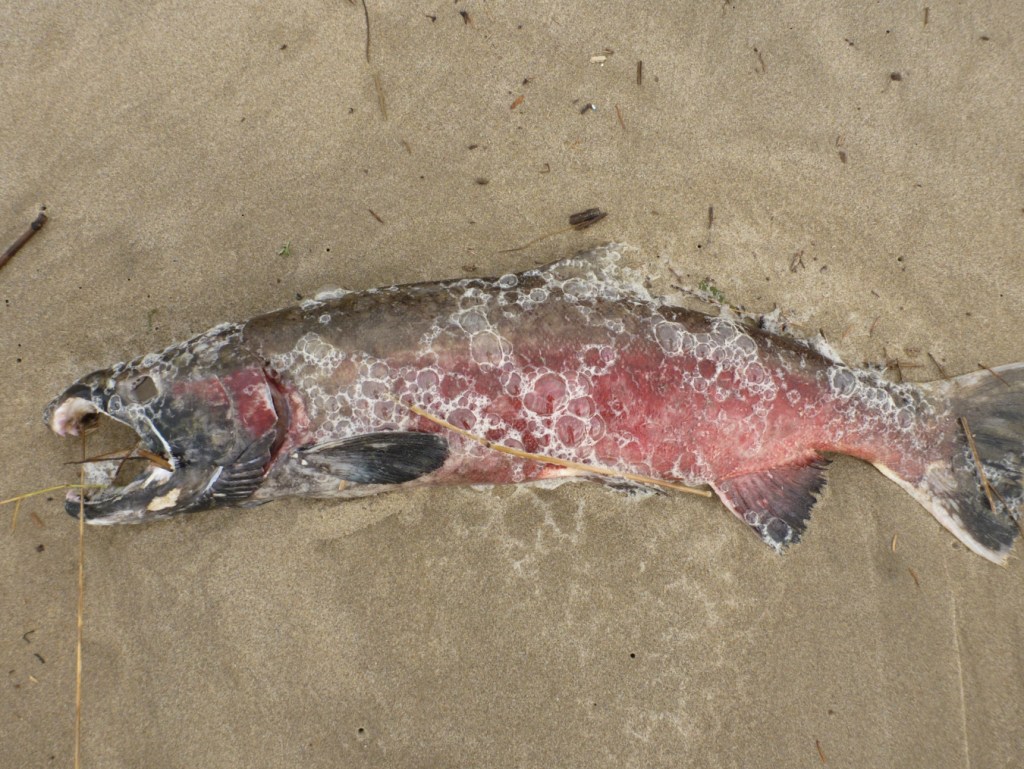
Try your hand at this one if you’re inclined to tilt at spent salmon windmills. I came upon it on November 23, 2013, and gave it little thought, not even a ruler for scale.

Juvenile salmonids are tough to identify on the beach, too. I showed photos of the example below to a few people who think about this kind of thing, and the consensus was chum parr, with some uncertainty. If you’re looking for help identifying juvenile salmonids, Pollard, Hartman, Groot, and Edgell (1997) is a valuable aid.

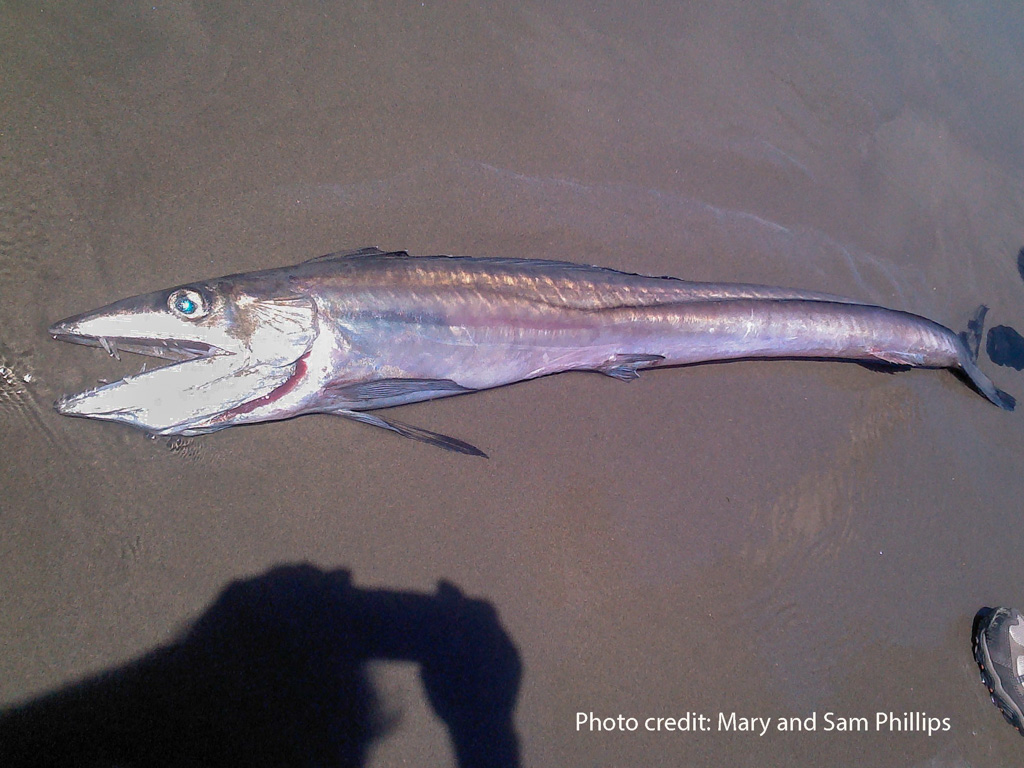
Longnose lancetfish Alepisaurus ferox
Lancetfish wash up every so often, and it always causes a stir.


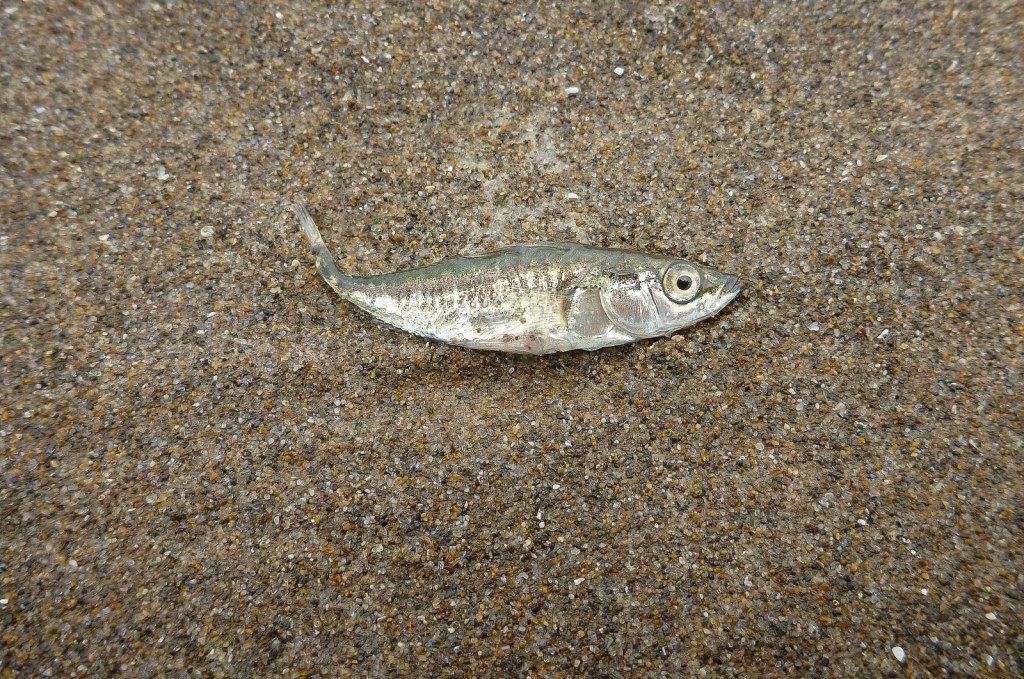
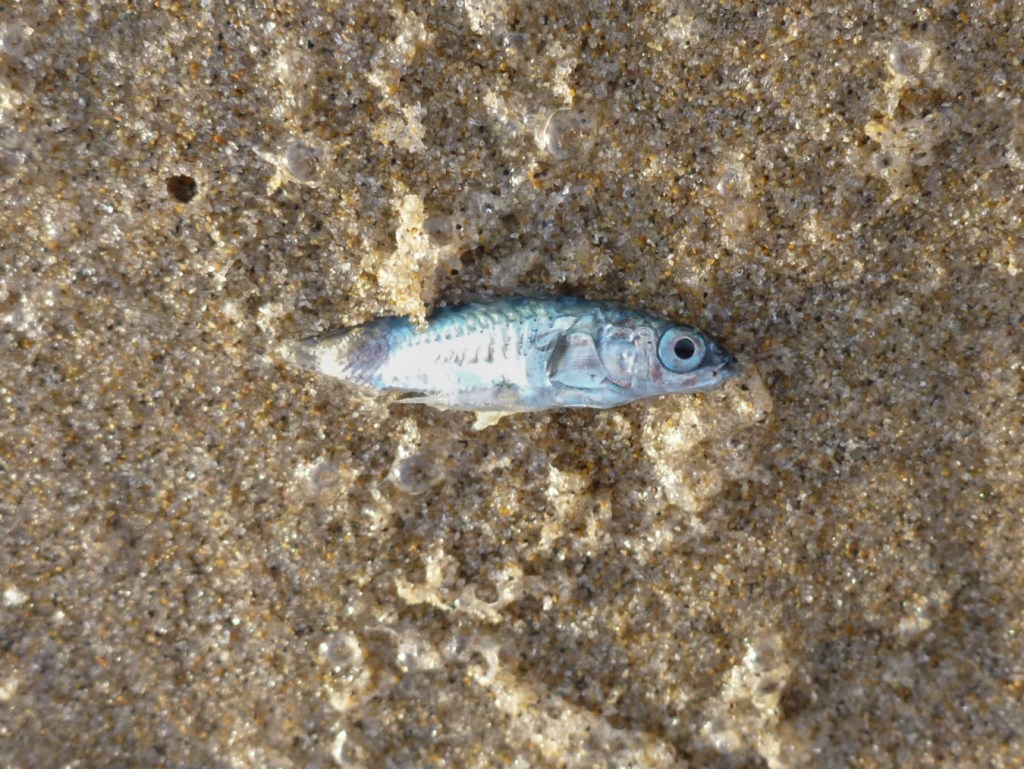
Three-spined stickleback Gasterosteus aculeatus
Three-spines live in almost every coastal stream. Those shown in the set below were cast onto the beach. What are they up to in the surf zone?


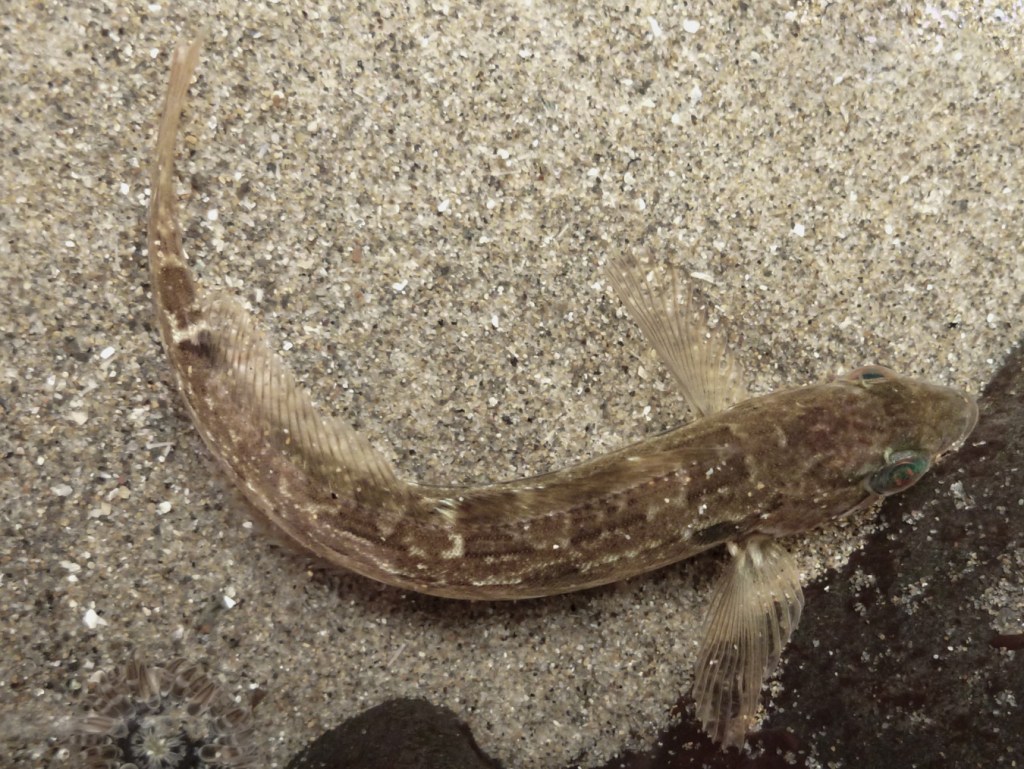
This beach cast beauty is a puzzler. Among the folks I consulted, there was a leaning toward juvenile greenling Hexagrammos with some uncertainty, so I’m showing four images of the same fish in hopes someone will recognize it.



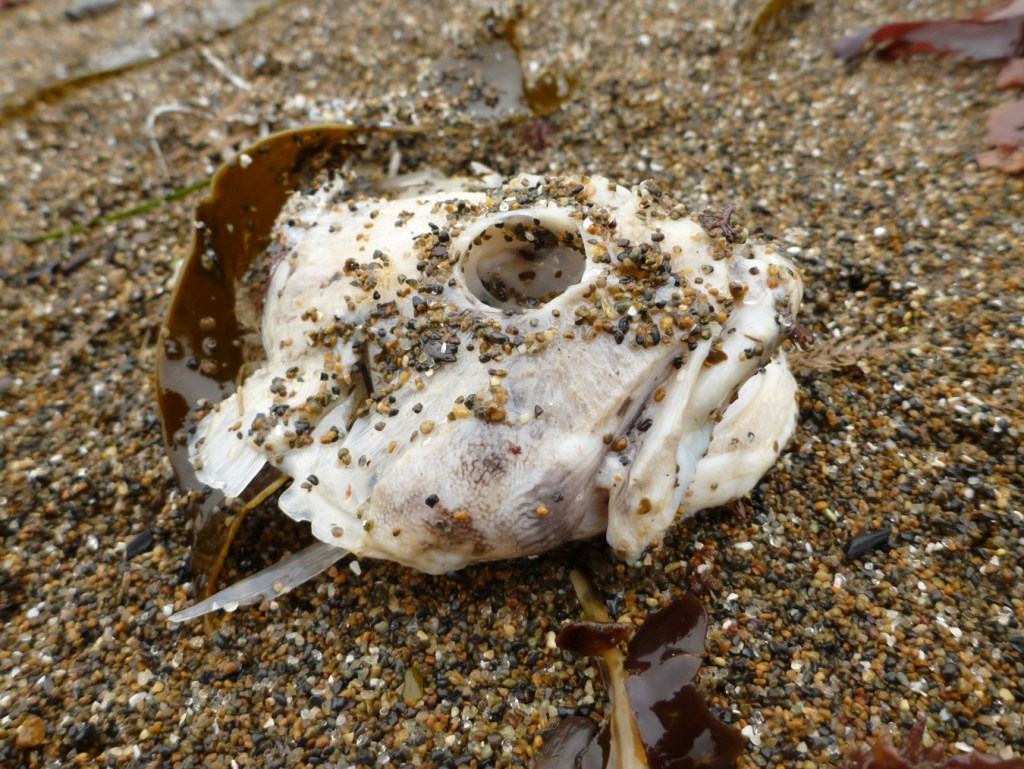
Cabezon Scorpaenichthys marmoratus
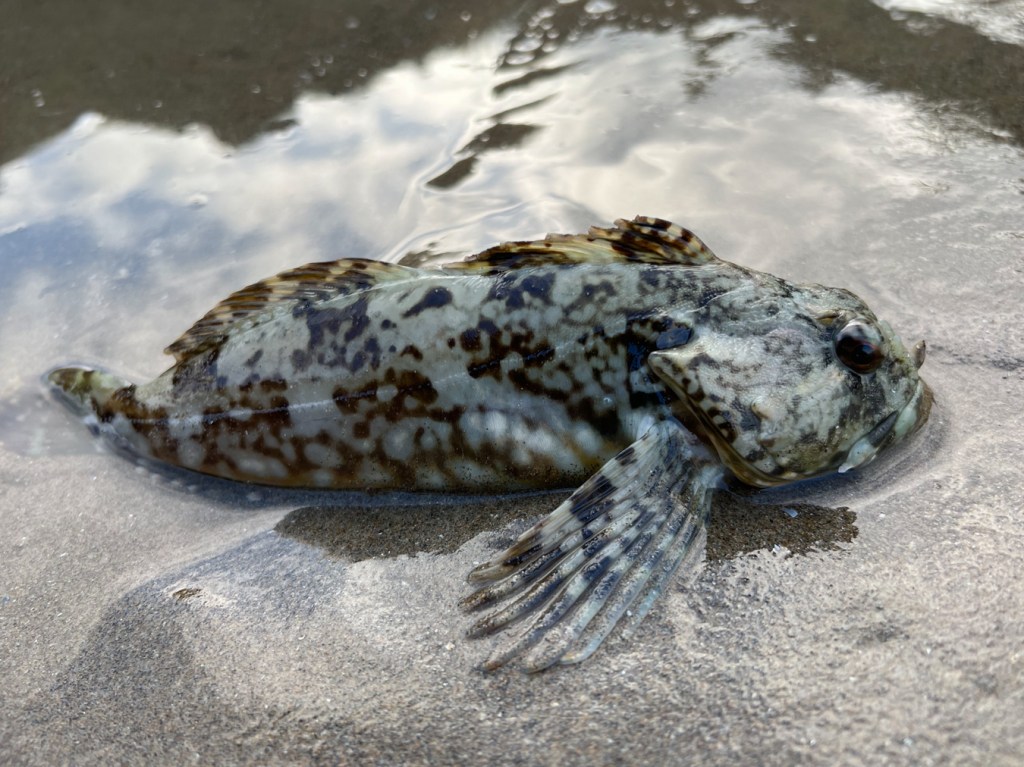

This decent-sized skull has the cabezon look, but there are reasonable alternatives.
Pacific staghorn sculpin Leptocottus armatus

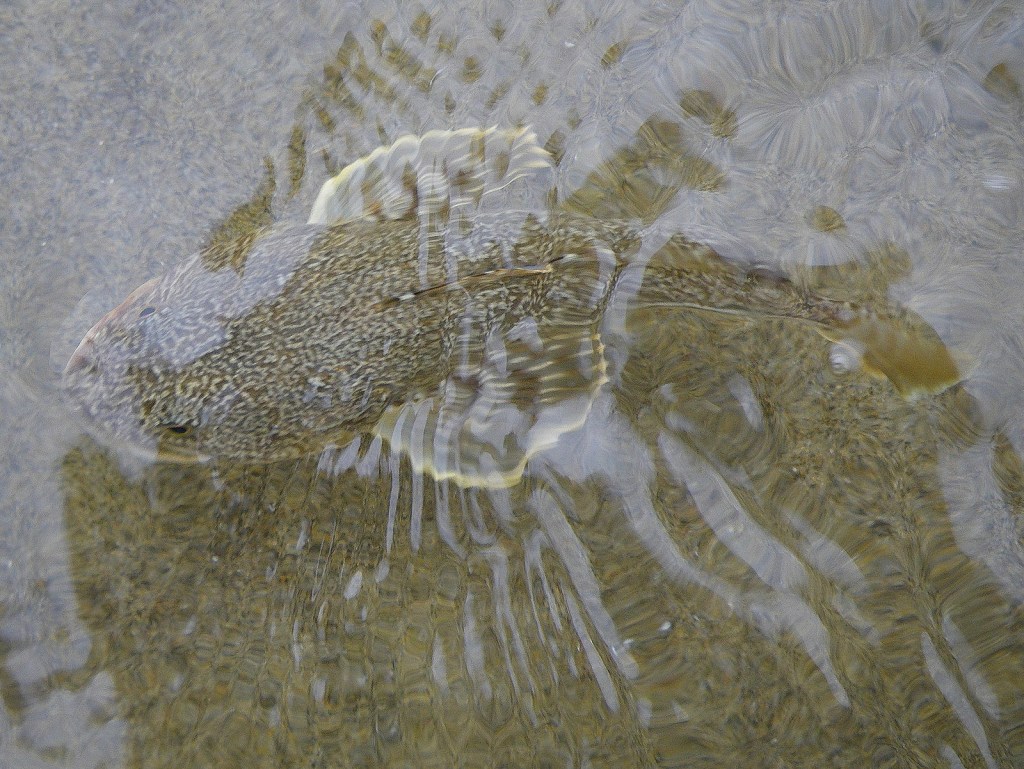

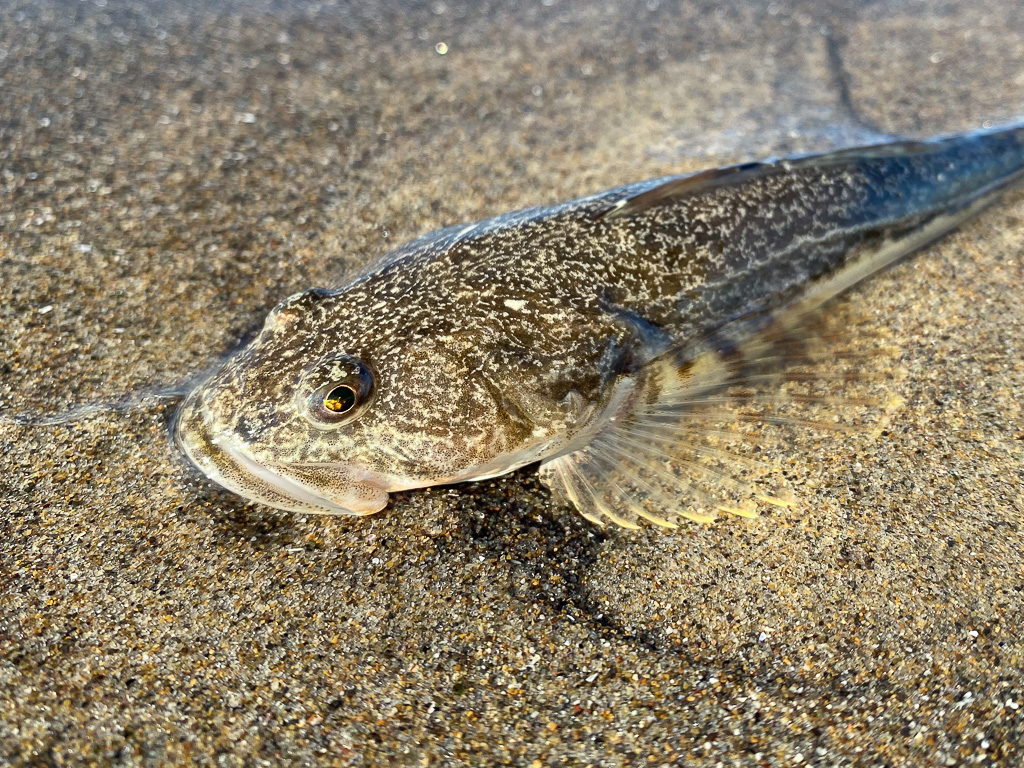
The little hard to identify sculpins, the ones Jensen calls little saddlebacked dudes (LSDs).
I met this one (same fish in both panels) out early one summer morning, a couple feet from its home pool. It didn’t move while I watched.


This little sculpin blends in so well with the Ulva in it’s pool, you could overlook it.

Surfperches
Redtails, silvers, and walleyes are the big three on exposed sandy beaches of the northern Oregon shore. For more photos and a few words about these and other embiotocids you might encounter on or near the Oregon shore, head over to my Surfperches page.


Pacific sand lance Ammodytes hexapterus
The image below shows two sand lance in a sand-filled tidepool.

The video below shows the same two sand lance swimming around, waiting for the turn of the tide.
Sand sole Psettichthys melanostictus

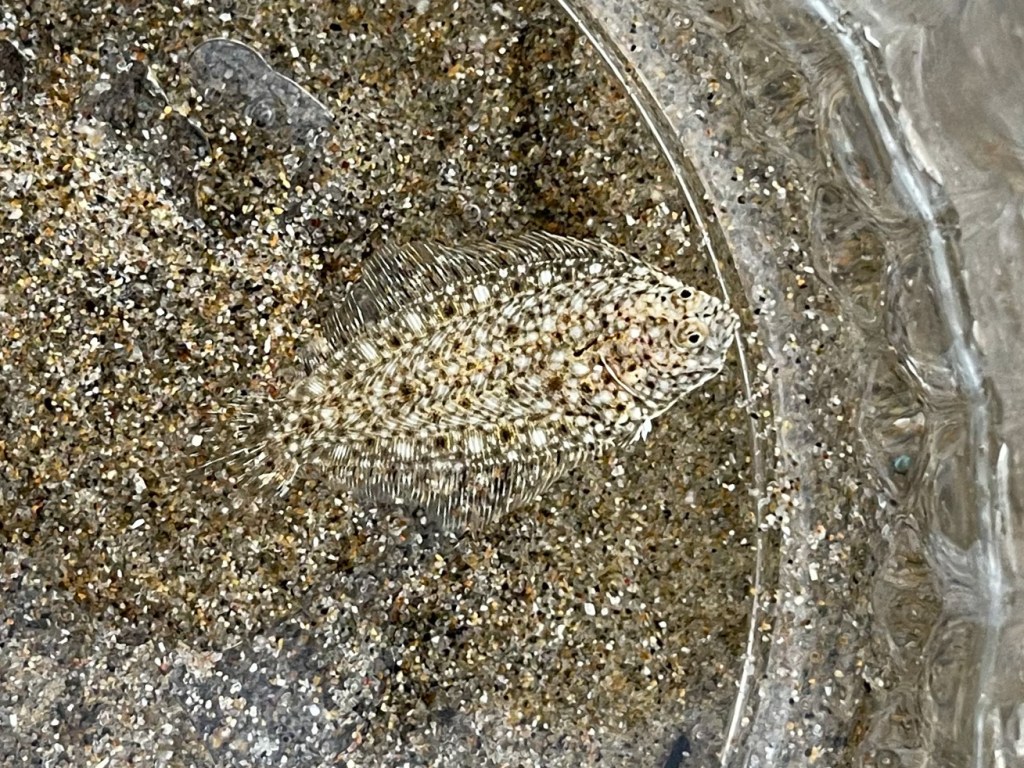
I found this nearly transparent beachcast juvenile flatfish in July 2018 on the central Oregon coast.

The suggestions I’ve gotten for this beauty are starry flounder and maybe curlfin turbot. Do I hear any other suggestions? Just a few centimeters long, and this is another beachcast fish.


Common mola, Ocean sunfish Mola mola

References
Love, M. 1996. Probably more than you want to know about the fishes of the Pacific coast. Really Big Press, Santa Barbara, California.
Miller, D. J. and R. N. Lea. 1972. Guide to the Coastal Marine Fishes of California. California Fish Bulletin Number 157. California Department of Fish and Game, Sacramento.
Pollard, W.R., Hatman, G. F., Groot, C., and Phil Edgell. 1997. Field Identification of Coastal Juvenile Salmonids. (Third printing 2006.) Harbour Publishing.
More Resources
For sculpins, Gregory C. Jensen’s Pacific Northwest Sculpins (3.1) is a must. Accessed September 29, 2023.
Note: I updated this page on September 14, 2023.
 theoutershores
You have misidentified a Shad as a Sardine.
Hey there, Adam. I believe you are right. I am grateful to you for pointing that out. – Steve