Below are the brown seaweeds I’ve been lucky enough to find and photograph on Oregon’s exposed rocky shores or cast up on the beaches. I’ve organized them loosely after Kozloff (1993) and Lamb and Hanby (2005), in the order you might encounter them on intertidal rocks from highest to lowest. If I use common names, they’re my choice and my photos are all from northern Oregon unless noted. Experts cover the seaweeds shown below, and many more, in the resources listed at the bottom of the page.
Let the browns be upon you!
Fucus Rockweed
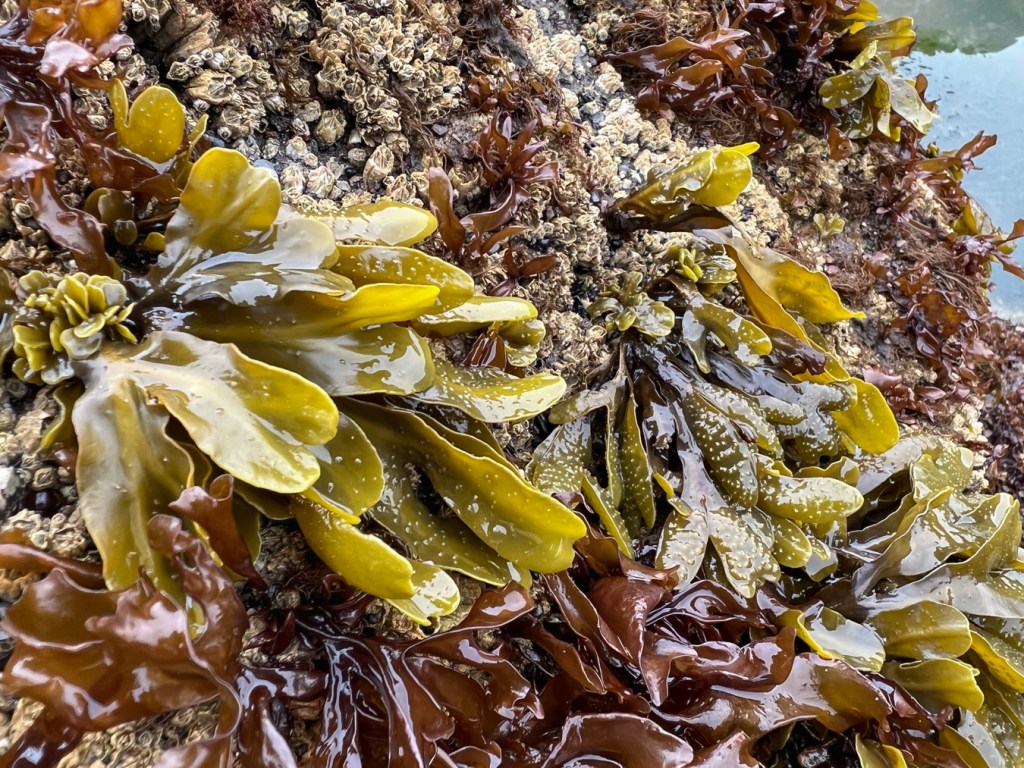
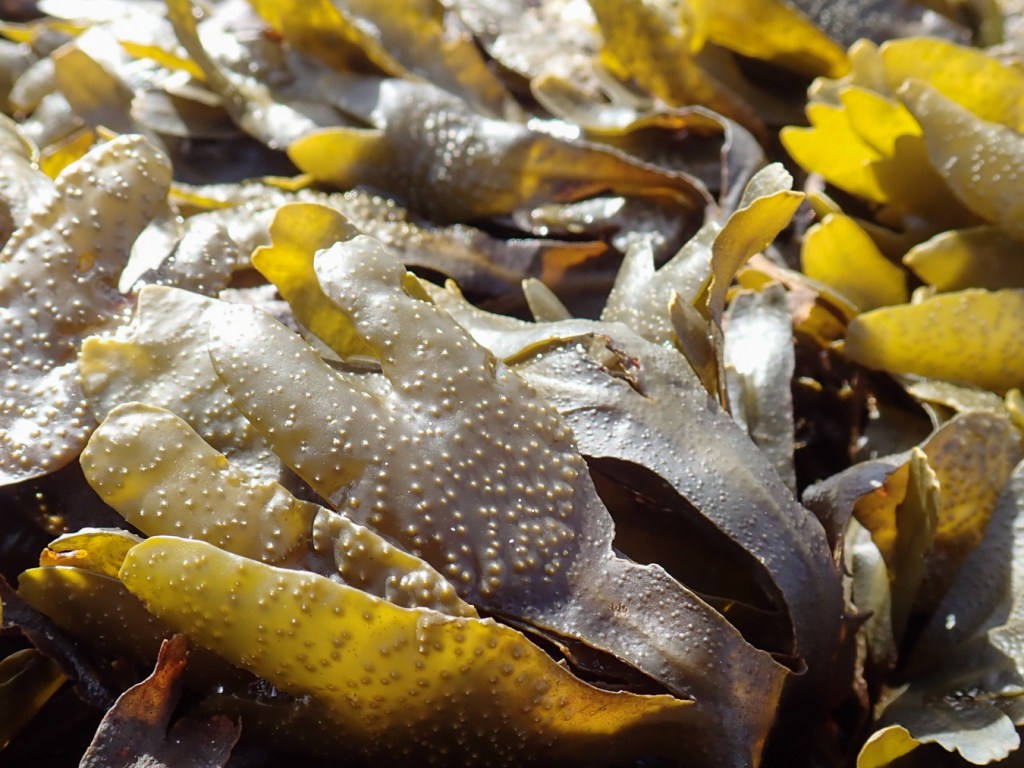
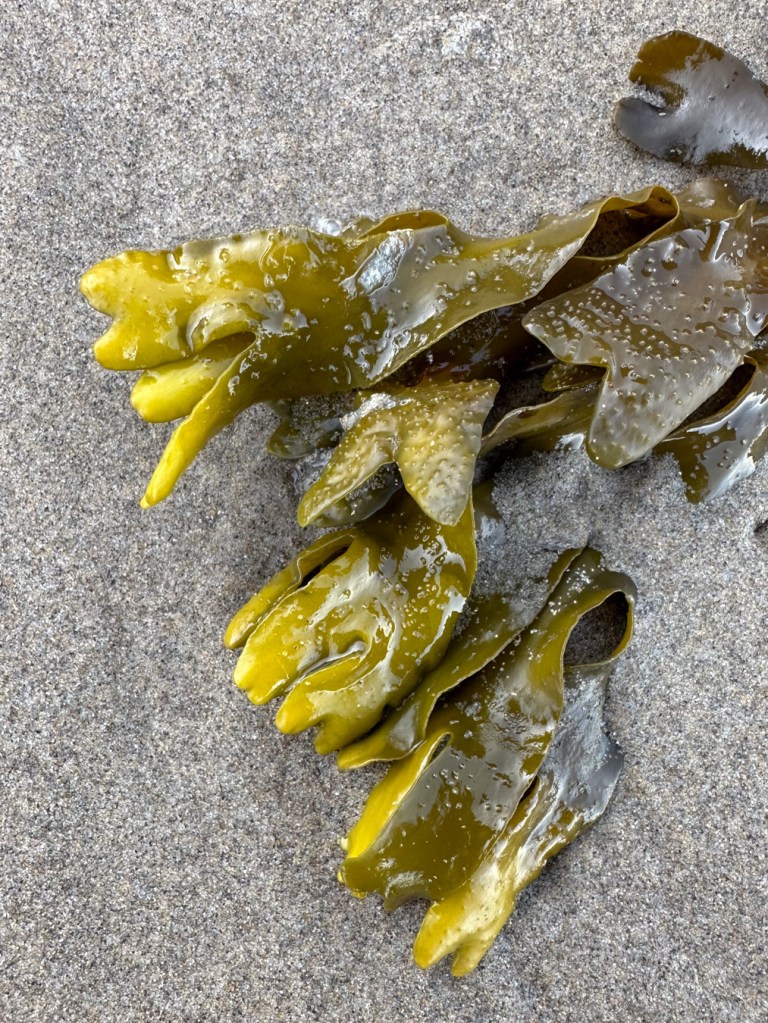
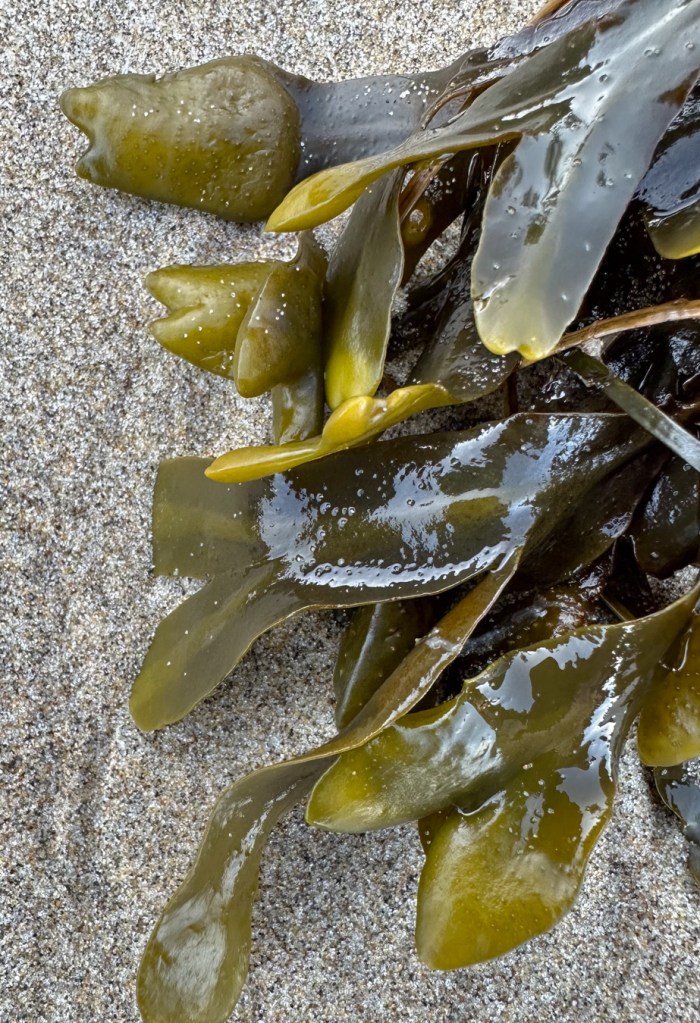
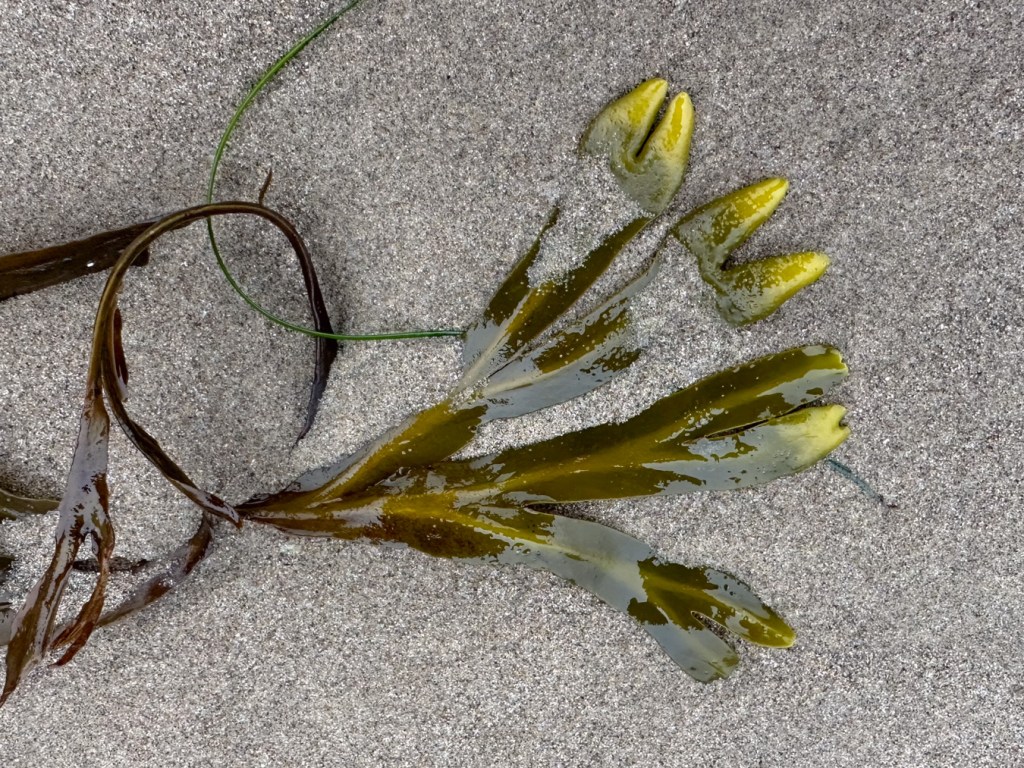
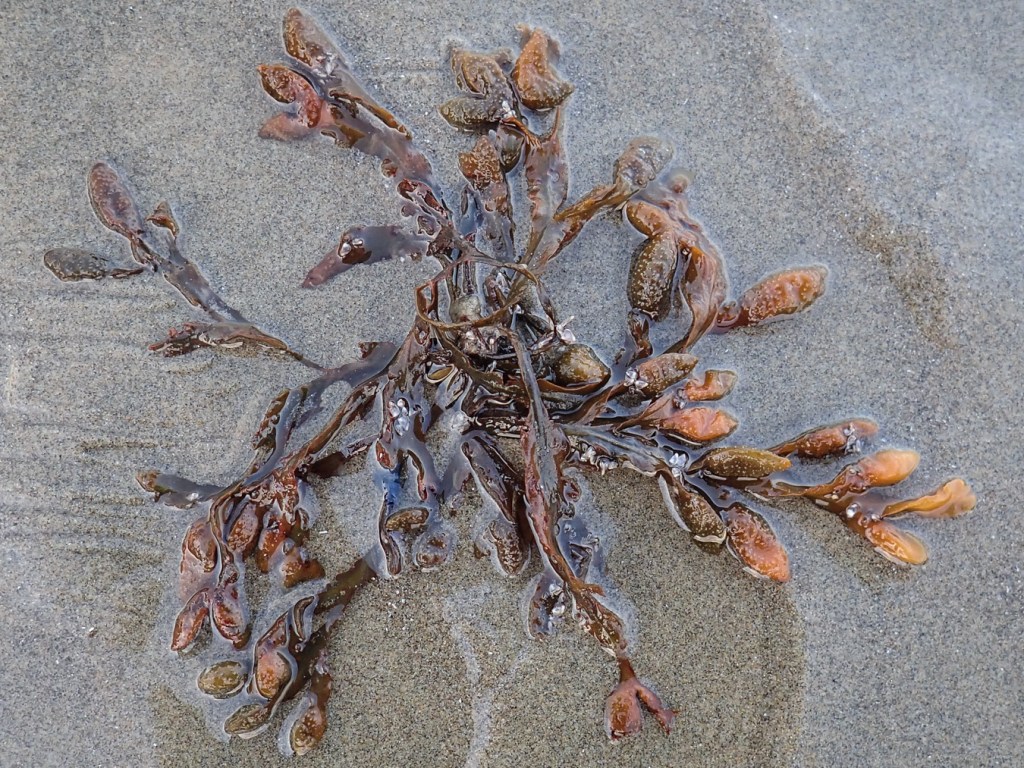
Most mid- to high intertidal rocky places on the outer coast host Fucus distichus, but its extent and appearance is variable. The images in this entry provide a peek at just some of the variety you might see in selected habitats on exposed Oregon shores.
In the scene below, Fucus perches atop the high rocks above the mussel beds and breakers.

Out here on the exposed surf-swept rocks, Fucus is likely to be interspersed with Cladophora, Endocladia, Mastocarpus, Pelvetiopsis, and other mid- to high intertidal associates.



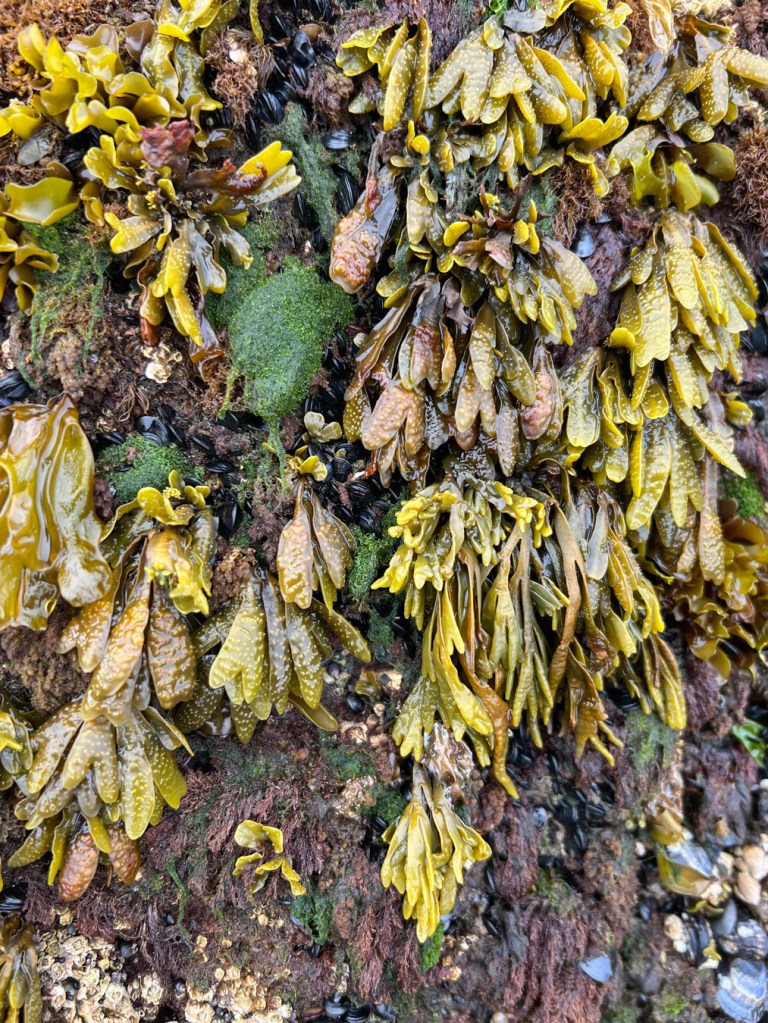

By contrast, the high wall shown below seems a bit protected. Its northwest exposure may deflect, somewhat, what otherwise might be direct hits from the most forceful of winter’s storm- generated surf, but that’s just a guess. Either way, even though it can’t escape the higher surf of late fall, winter, and spring, I feel like it gets more spray and splash than surf much of the year. In a wonderful example of high intertidal zonation, the wall hosts a narrow but notable band of Fucus.
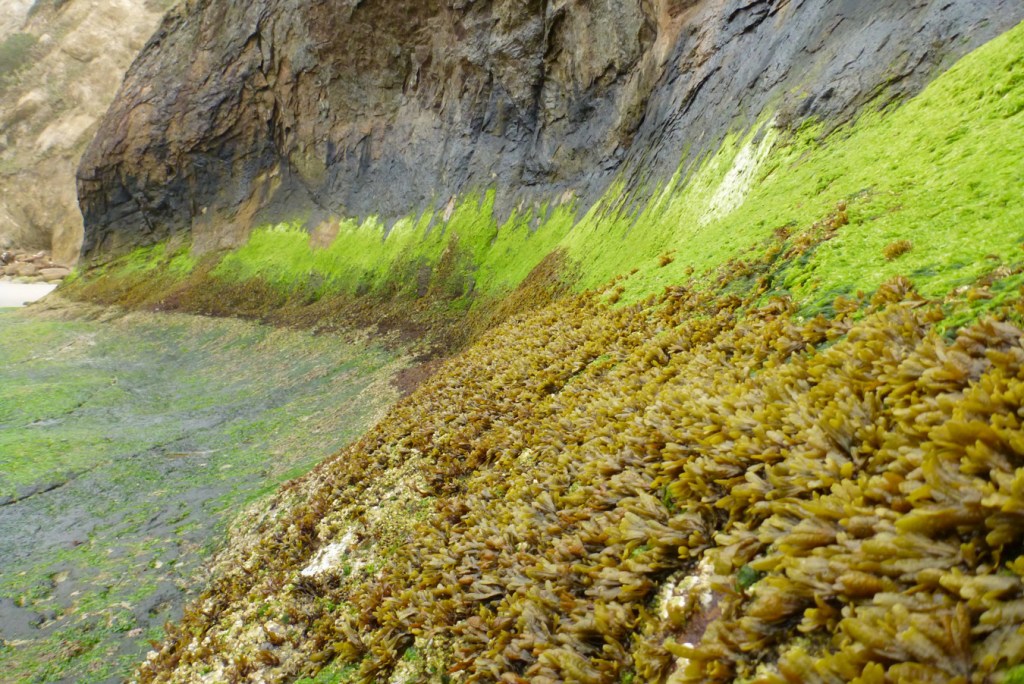
Below, are a few closer-up scenes highlighting Fucus and a few of its neighbors on the wall and its immediate surroundings.

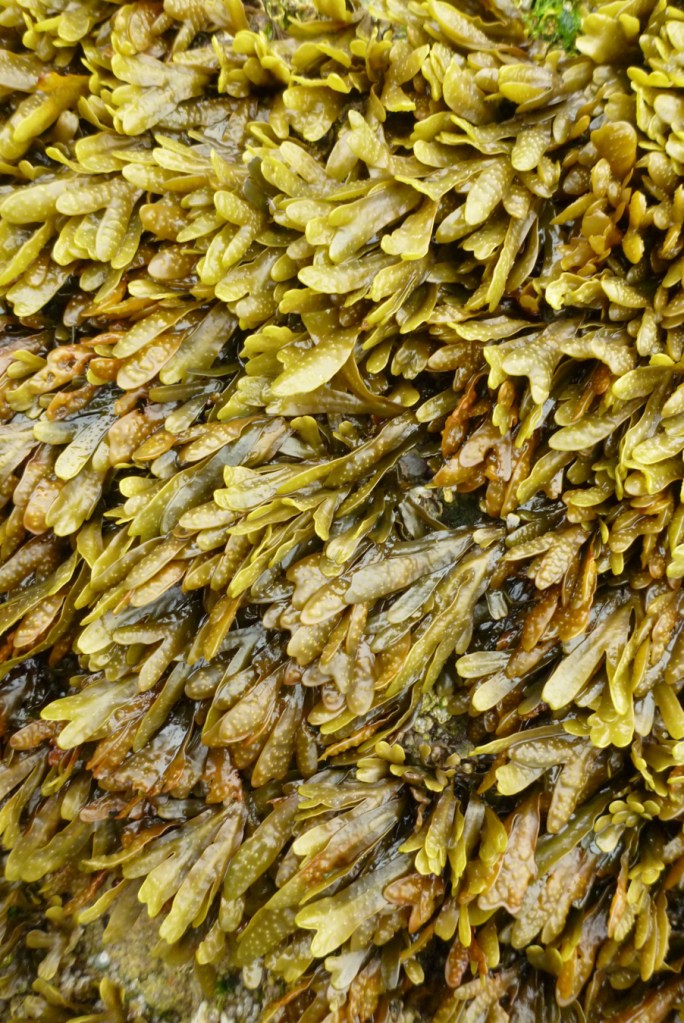

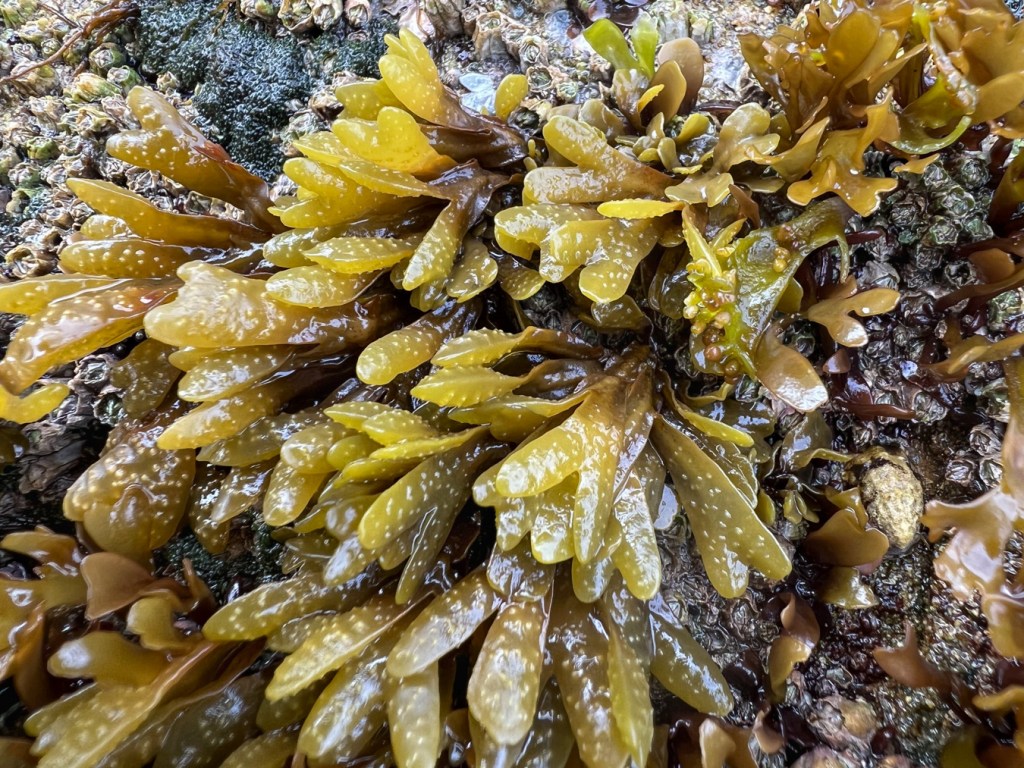
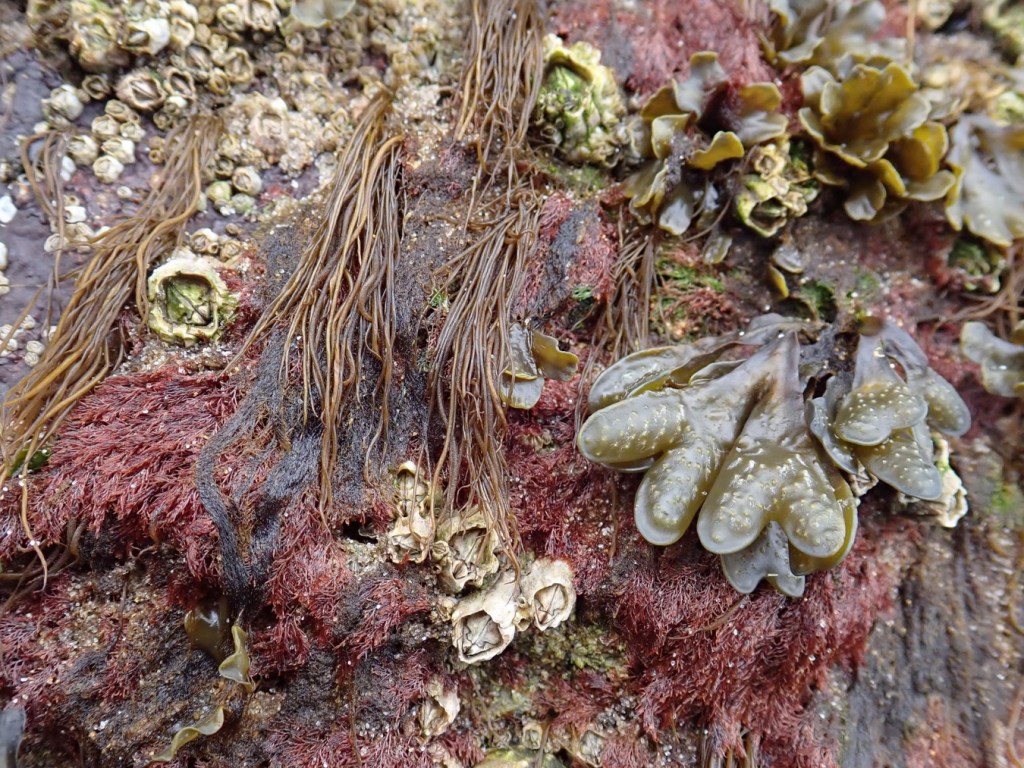
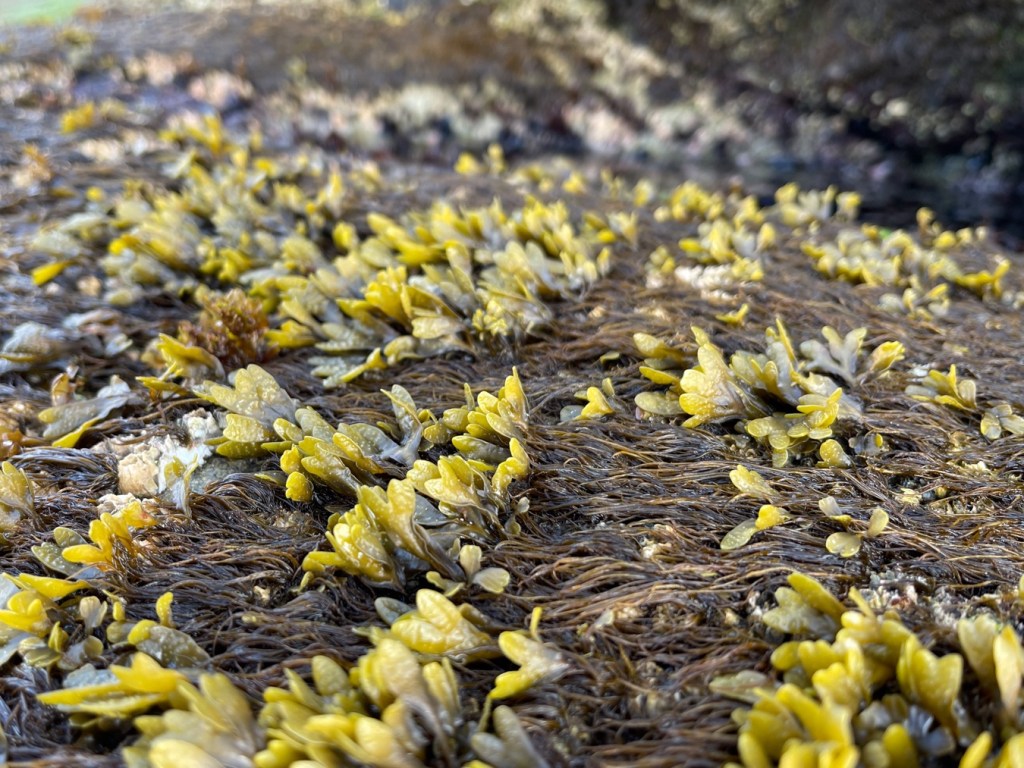
Lush stands of Fucus are most likely in areas that are a bit protected or set back away from the full force of pounding surf, as illustrated in the scene below from the central Oregon coast.

In such places, Fucus can grow large and lush, sometimes in fairly extensive stands.


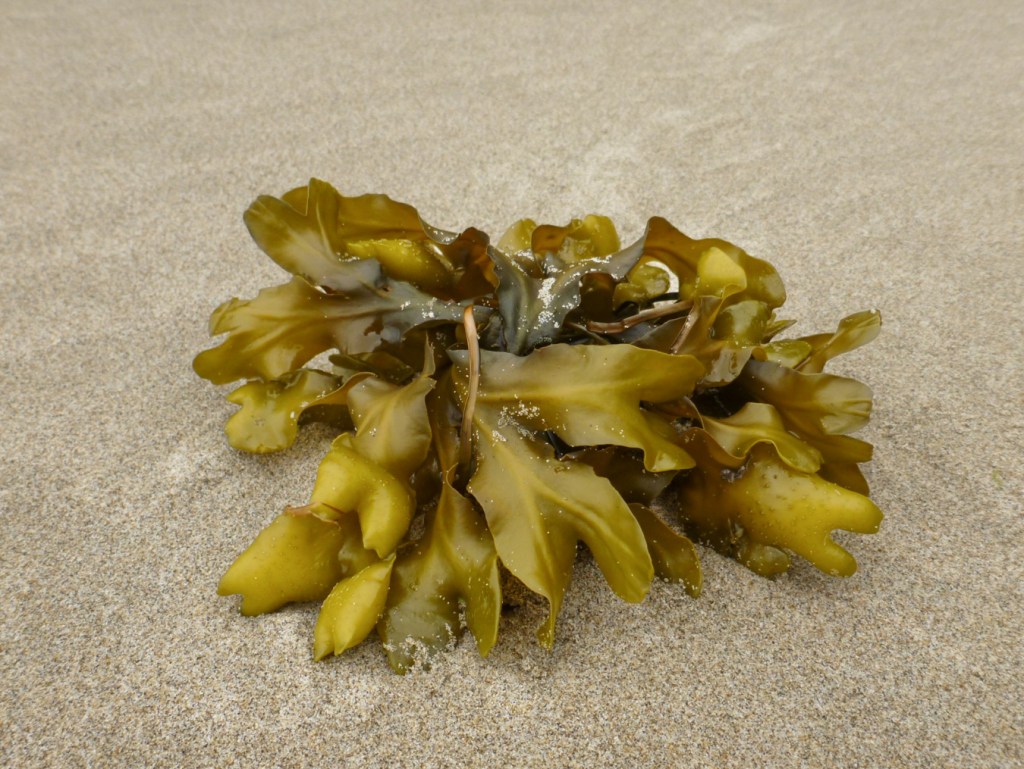
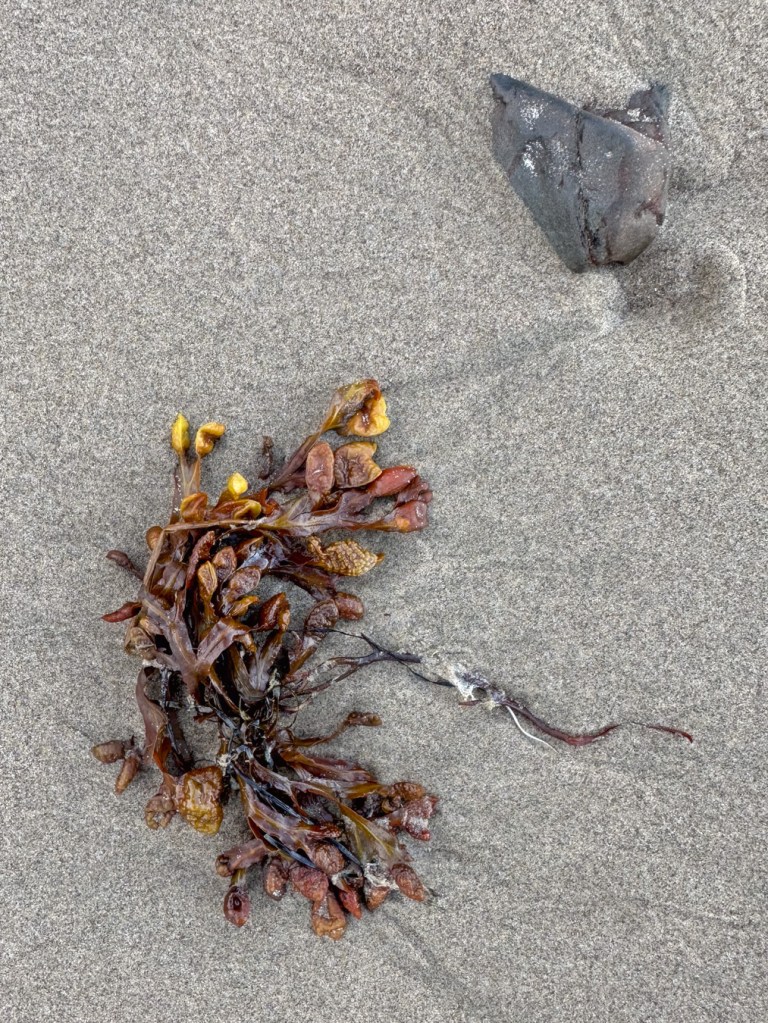
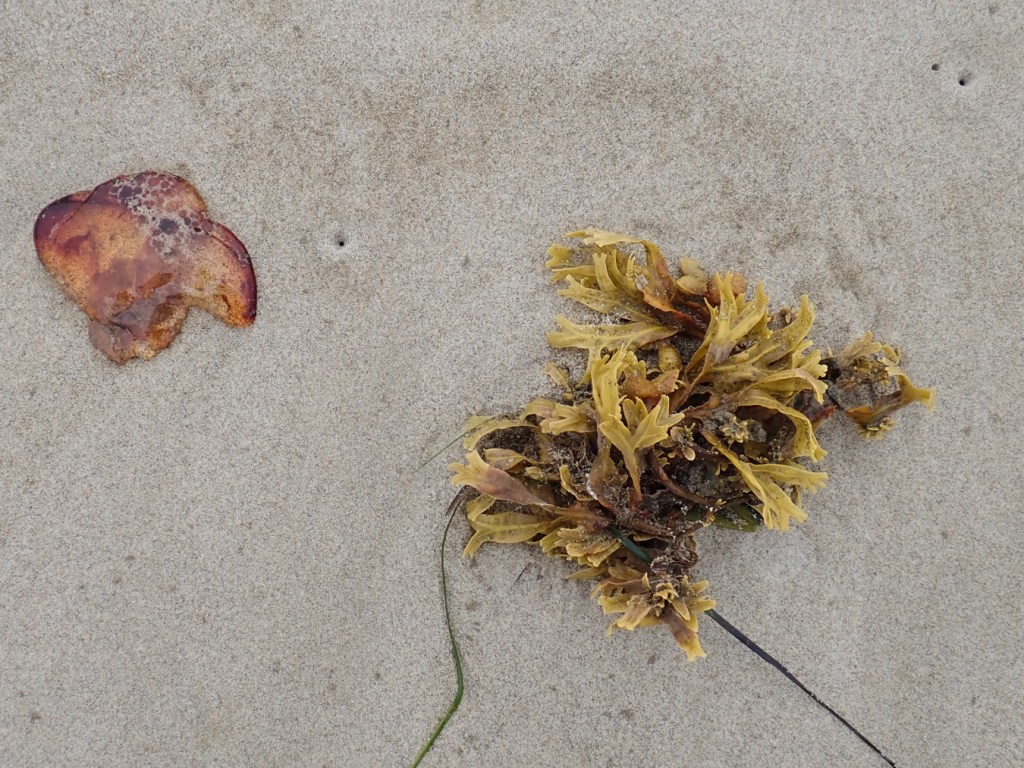
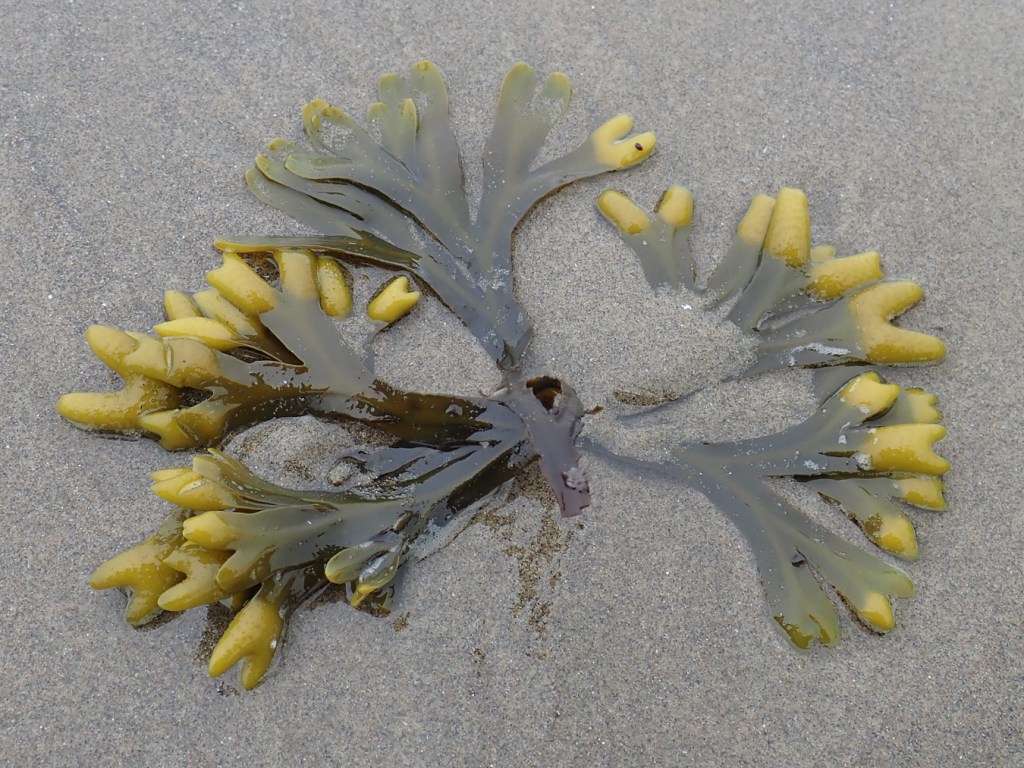
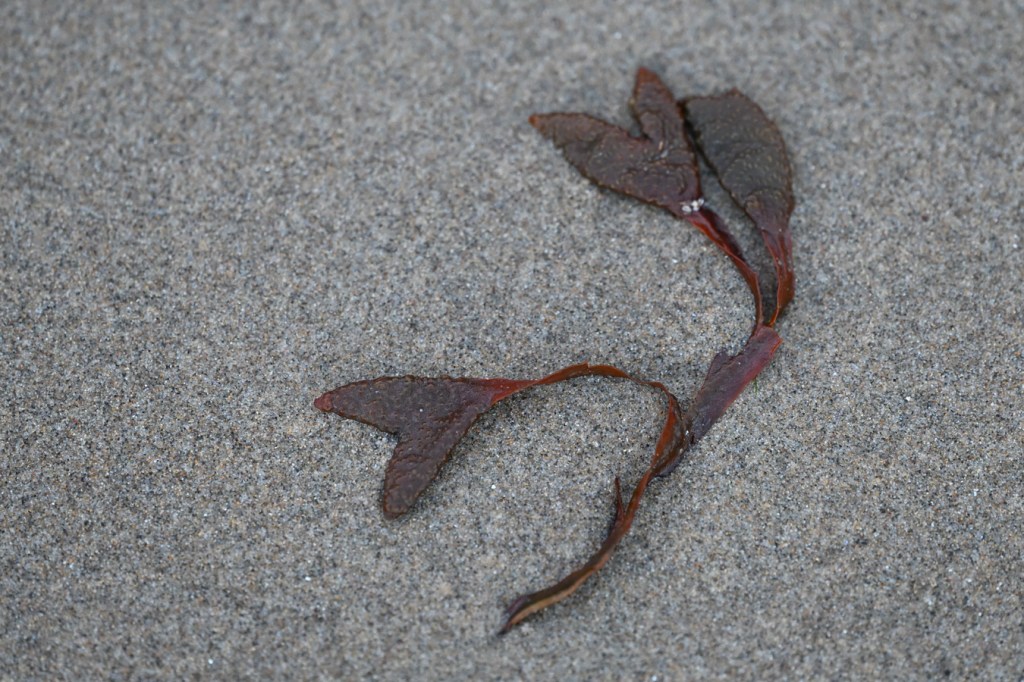
Drift Fucus washes up abundantly on sandy beaches where, just like on the rocks, its variety doesn’t disappoint, and weathering adds even more visual breadth.




Pelvetiopsis Dwarf Rockweed
Pelvetiopsis is most at home on the surf-swept outer coast where it can be abundant on the tops of high intertidal rocks. It’s not too common to find drift Pelvetiopsis on the beaches.


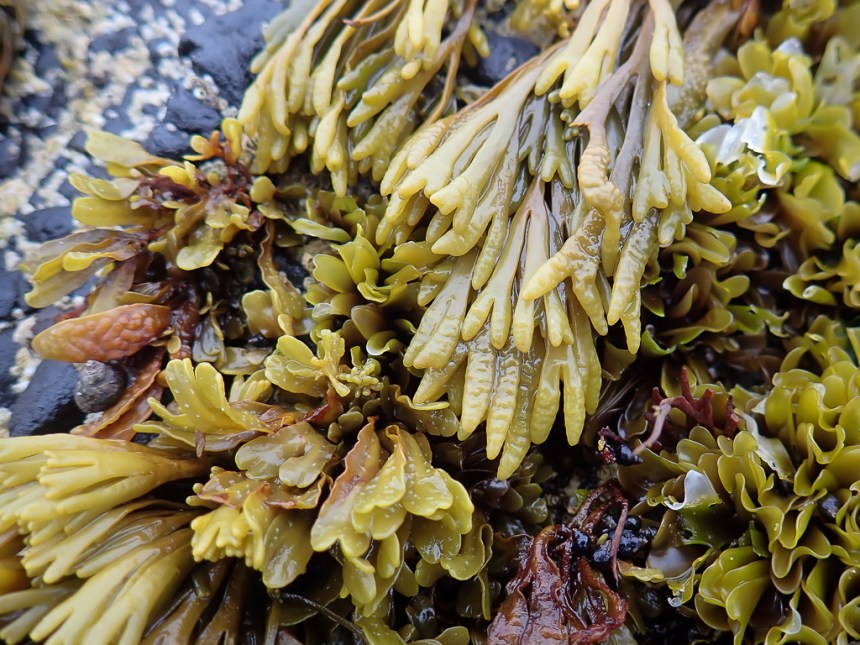


Before leaving Fucus and Pelvetiopsis, here’s a labeled comparative photograph from April of them living together on a high intertidal rock. Below that, try your hand at an unlabeled image from August.


Brown cylinders
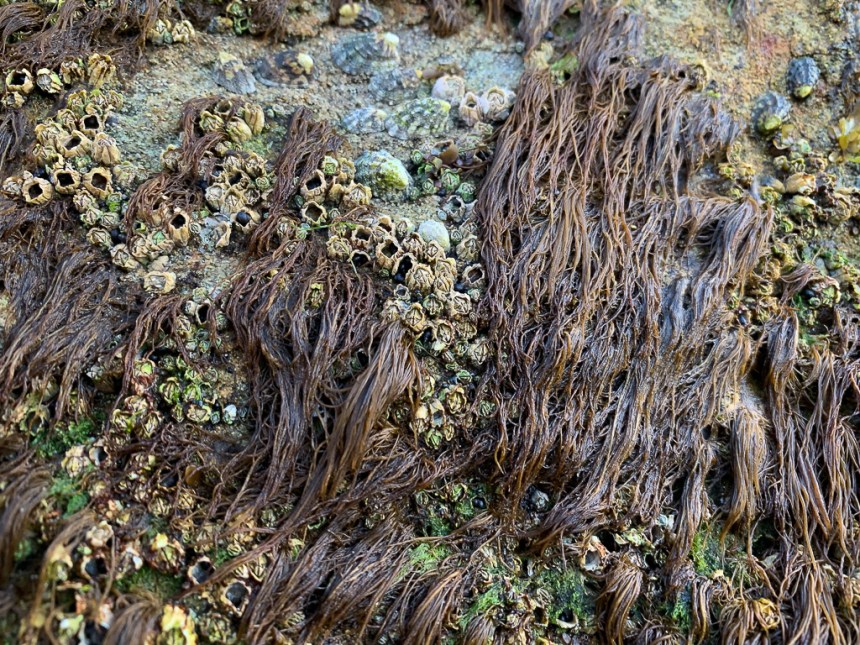
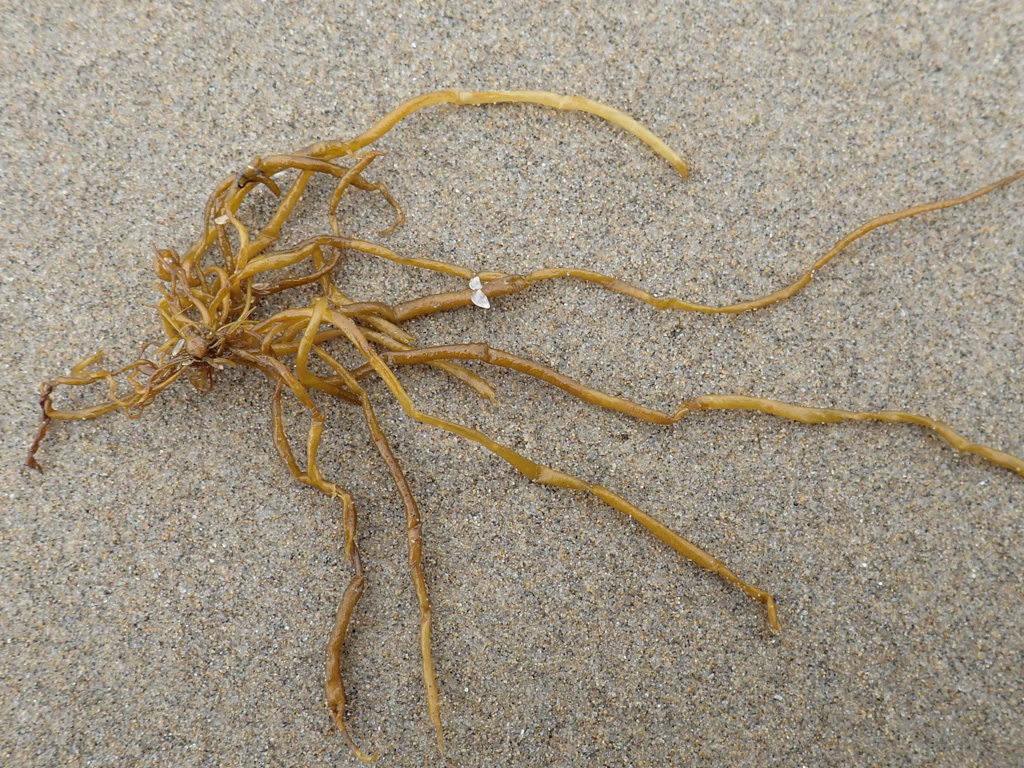
On northern Oregon shores, brown cylinders like those shown below are represented by Melanosiphon, Scytosiphon, and maybe Hapterophycus. (Any others?) So far, the cylinders I’ve observed are unresolved mysteries.
The five images below are from March on a high vertical wall that gets spray, splash, and a rare winter dunking. From a distance, large patches are distinctly yellowish-brown. Up close, individual cylinders vary from dark yellowish-brown to dark reddish-brown, and some cylinders are noticeably twisted.



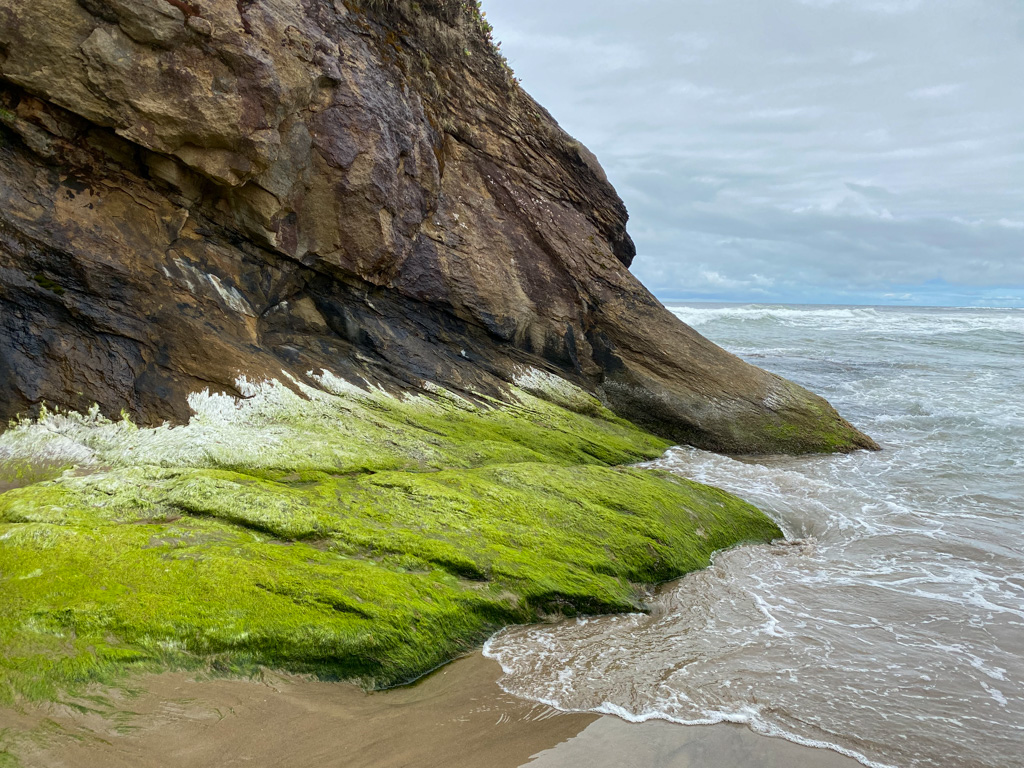
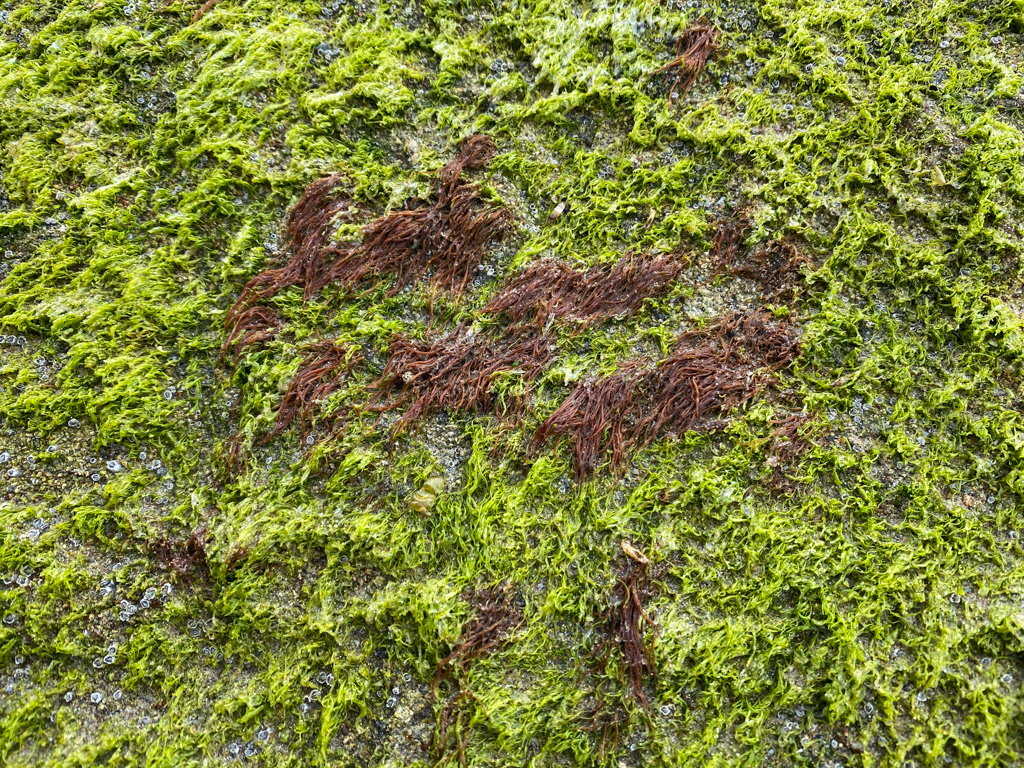
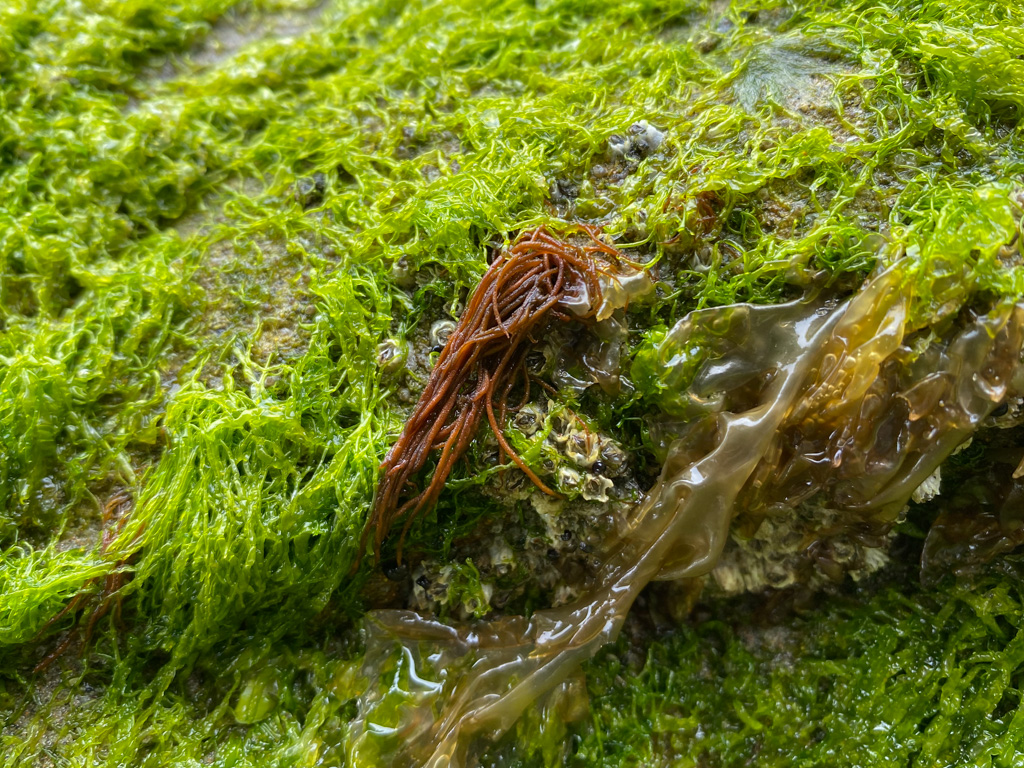
The three images in the set below are from late May, high in the intertidal zone. Here, the cylinders are much shorter and redder than the examples above, and there’s not much twisting. In addition, the tufts grow in a matrix of high intertidal Ulva (I think), somewhat isolated from each other, so at a distance, there aren’t visible patches.
The three images in the set below are from late May in a tiny pool on a high boulder surrounded by sand and cobbles. The cylinders are distinctly straw-colored and hollow, and they bear constrictions.


And it’s not unheard of to find drifted straw-colored cylinders on the beach.
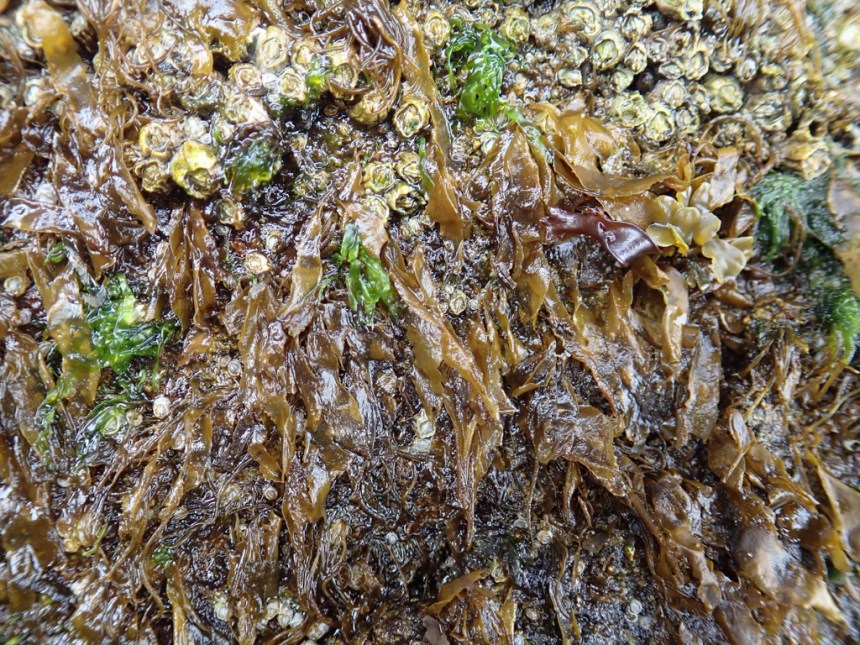
Petalonia
In these parts, as far as I know, it’s just Petalonia fascia.


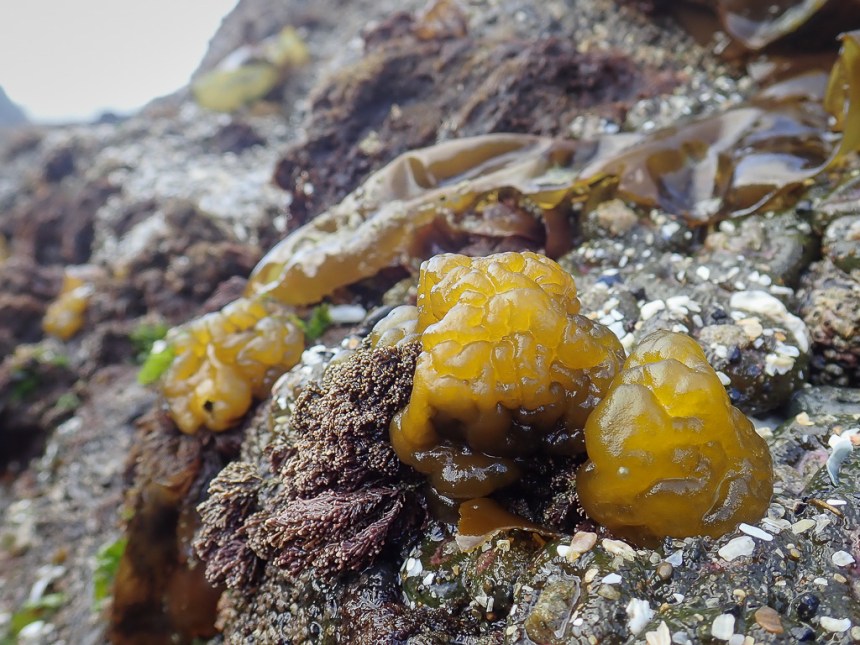
Leathesia Sea Cauliflower
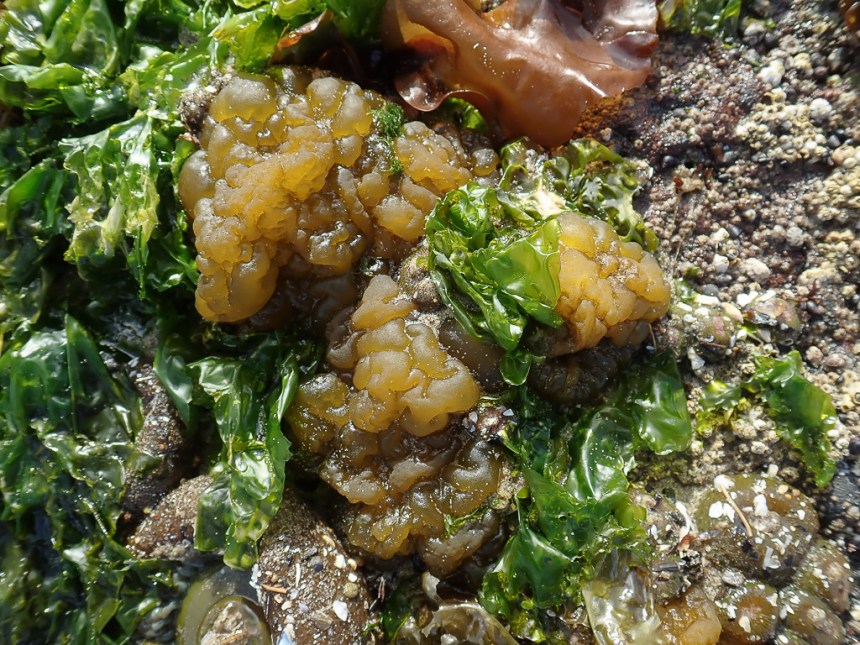
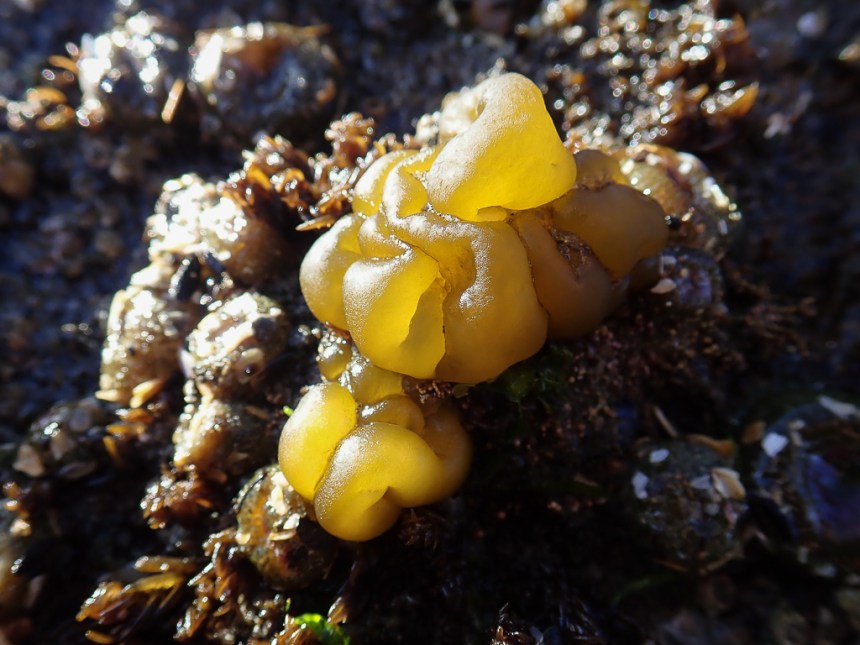
There are other saclike epiphytic browns, but I’m pretty sure the examples below are Leathesia, and in these parts that would be L. marina. Sea cauliflower can live attached to rocks or it can live the life of an epiphyte.

Soranthera ulvoidea Studded Sea Balloon
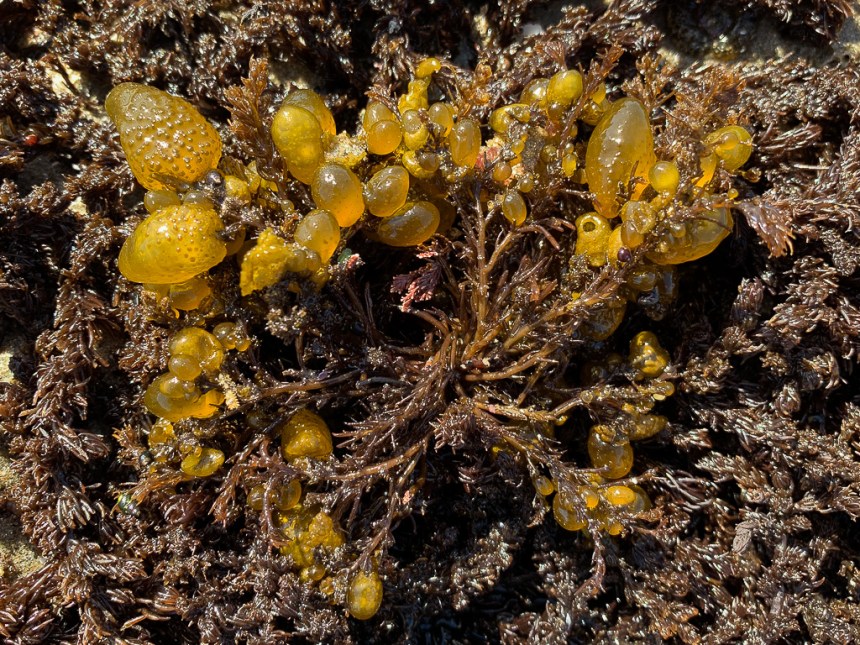
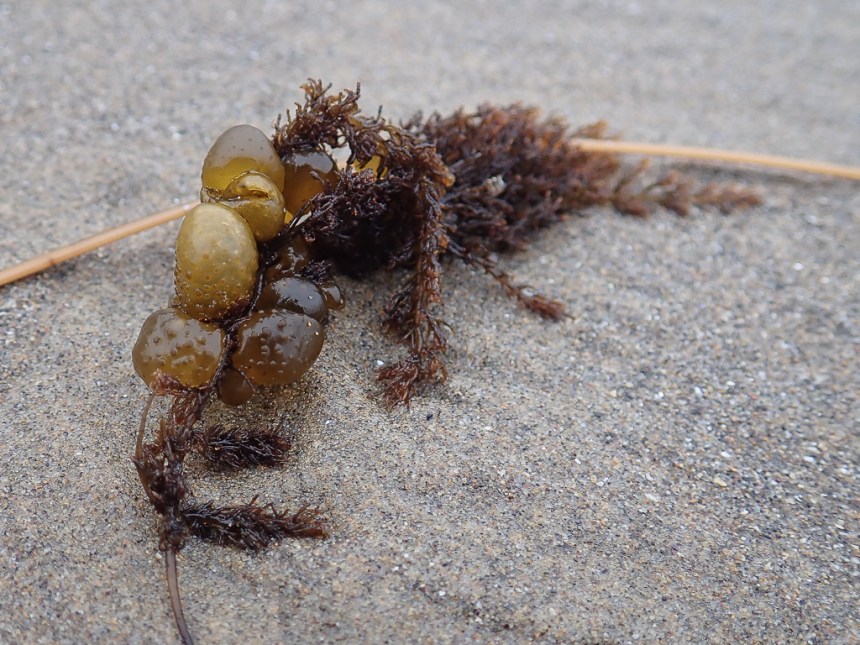
Soranthera is an epiphyte on Neorhodomela and Odonthalia. It’s not too uncommon to find Soranthera on the beach, attached to its drifted host.
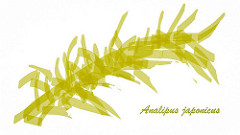
Analipus japonicus Fir Branch
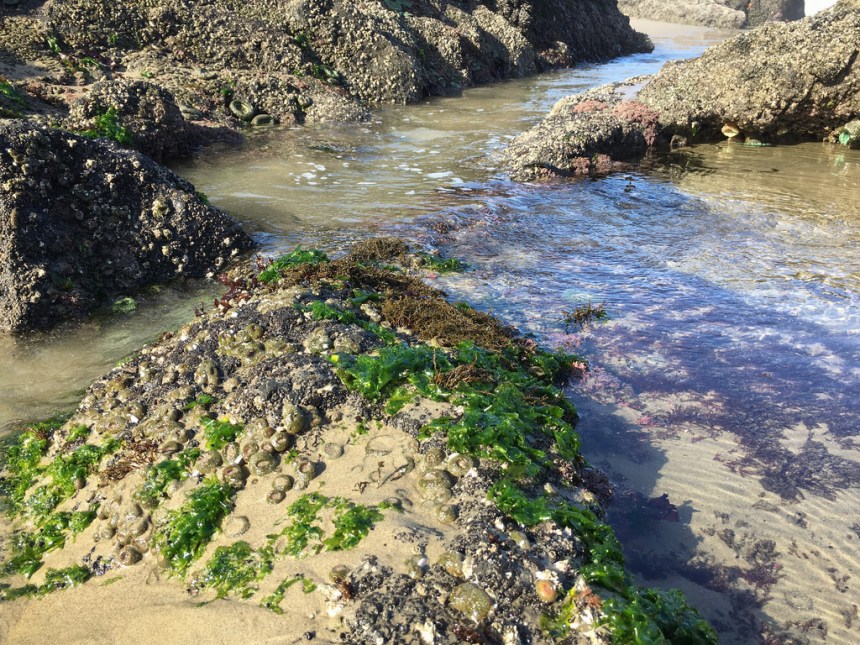
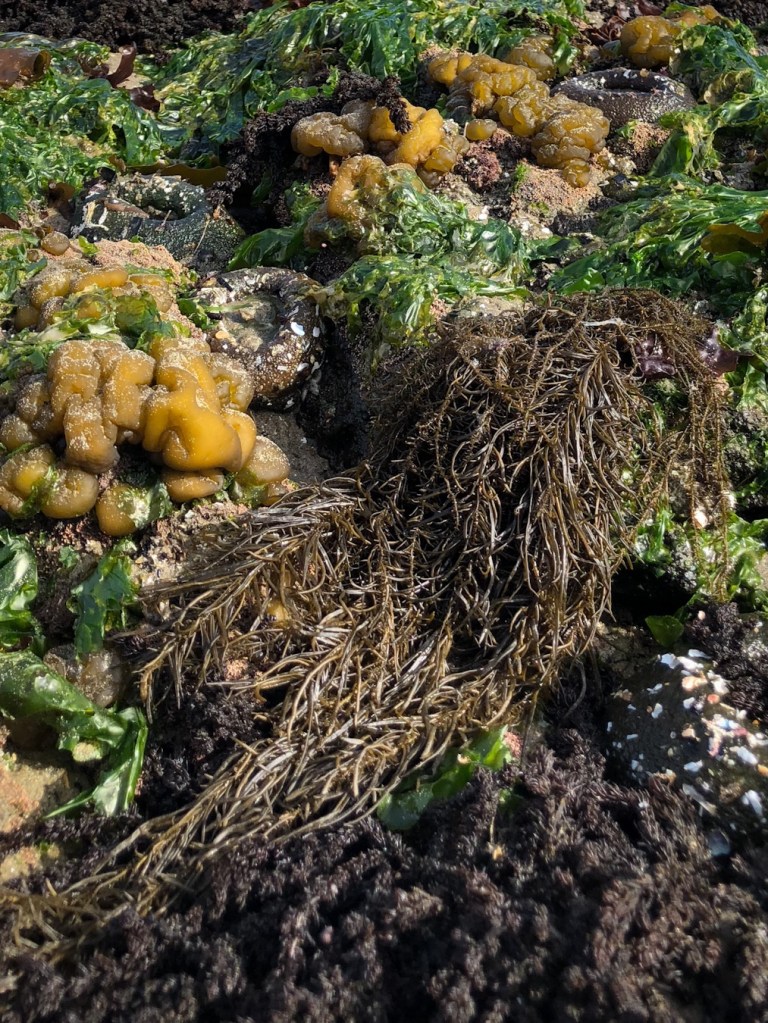
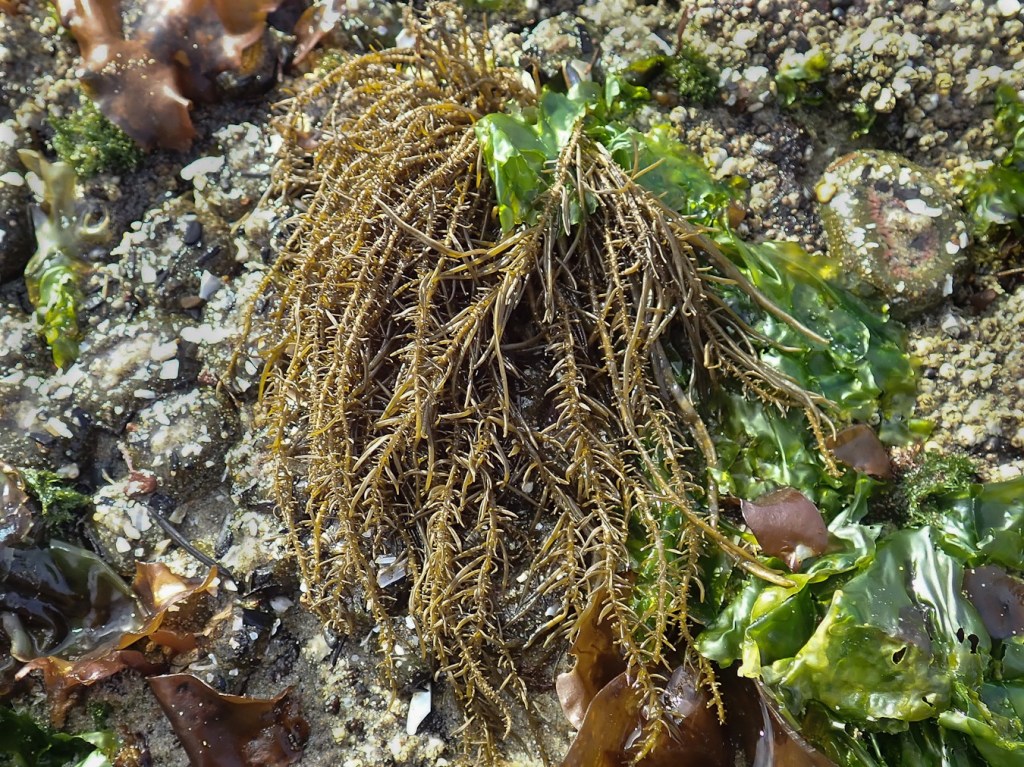
I don’t think I’ve bumped into Analipus on the northern Oregon shores I’ve visited. Hence, the examples shown below are from central Oregon, where it’s been easier for me to find. Analipus has many common names; one is bottle brush—my sketch looks like a bottle brush, so I must mention that. Look for Analipus in the mid-intertidal (maybe a little higher or lower).




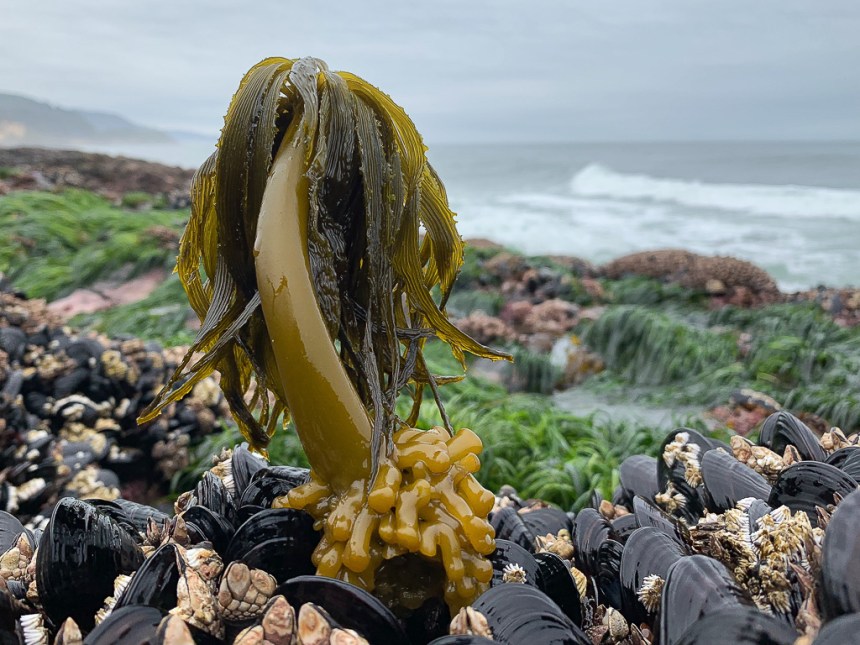
Postelsia palmaeformis Sea Palm
It’s a treat to see stubby sea palms bobbing and poking through wicked surf. They live on exposed rocky places where reaching them is often tricky, even on the lowest of tides. Postelsia is fairly common as sea wrack.


Hedophyllum sessile Sea Cabbage
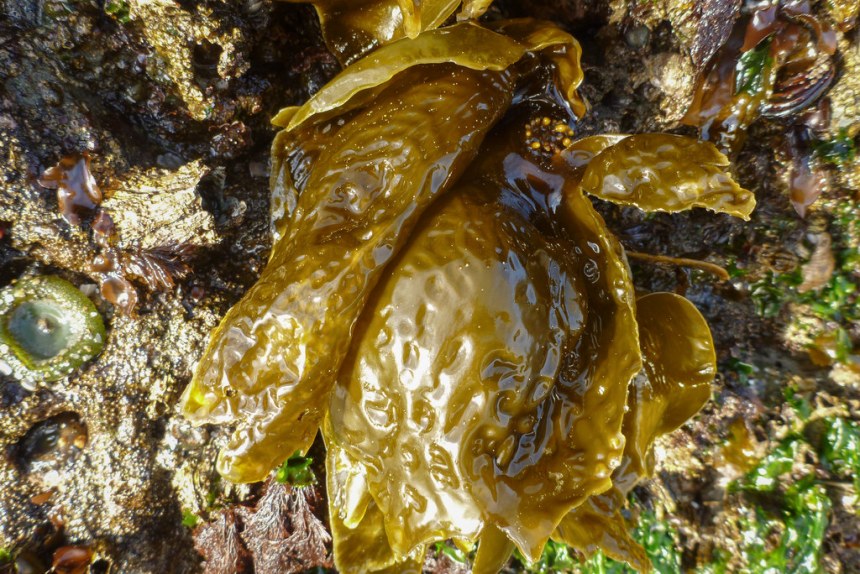
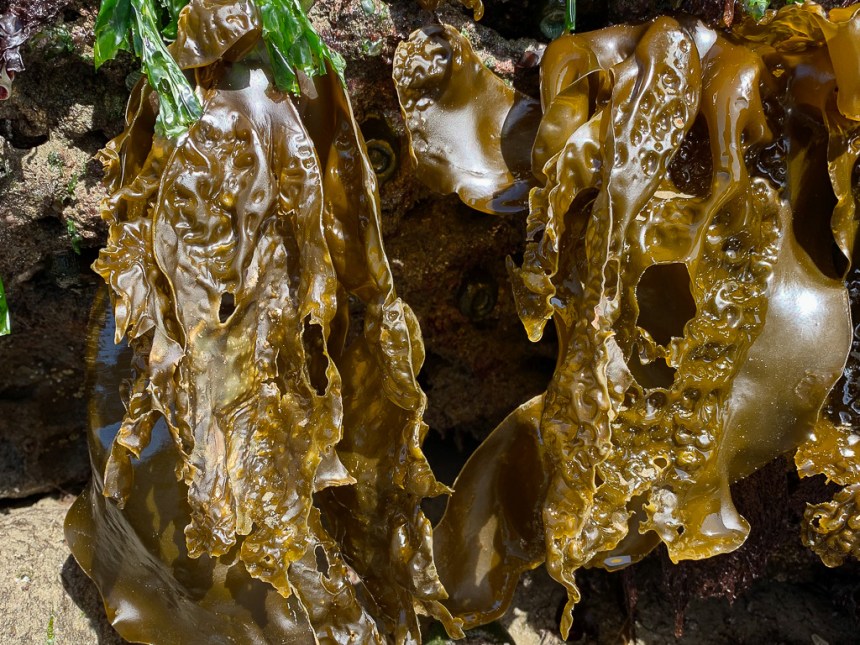
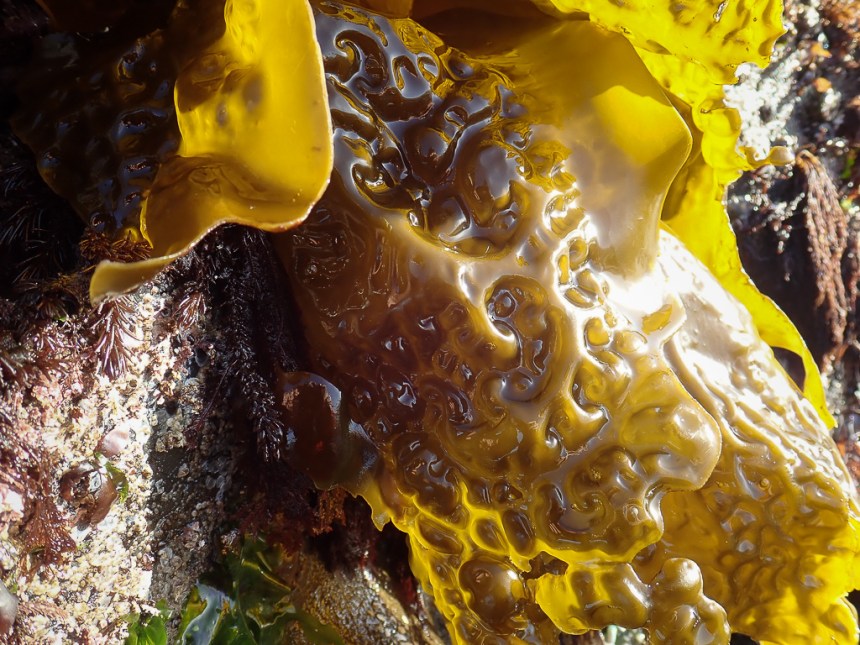
Depending on the age of the blades and wave exposure, Hedophyllum will give you different looks (see below). Nevertheless, it always lacks a noticeable stipe, which is kind of a fun trait and it might help with identification. I don’t see much drifted sea cabbage on the beaches.


Egregia menziesii Feather Boa
Feather boa is common on mid to low intertidal rocks and it’s pretty common as sea wrack too.


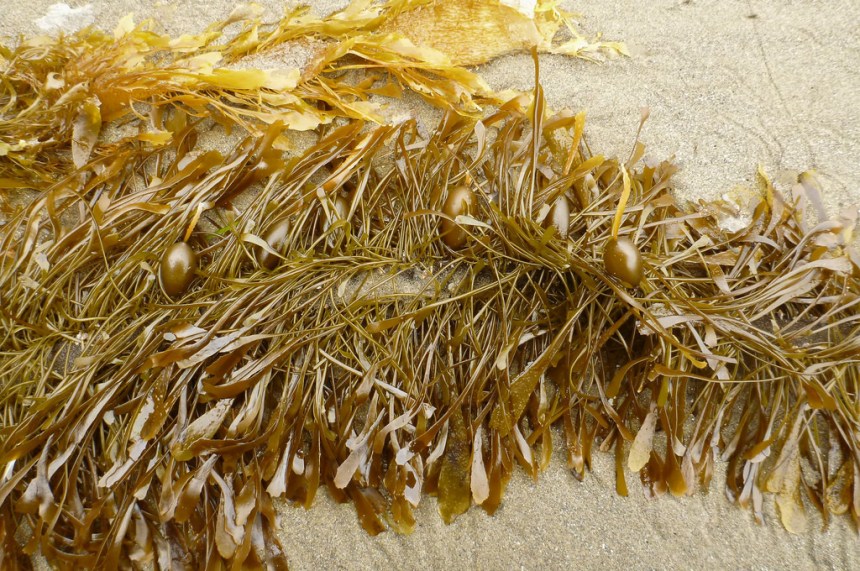


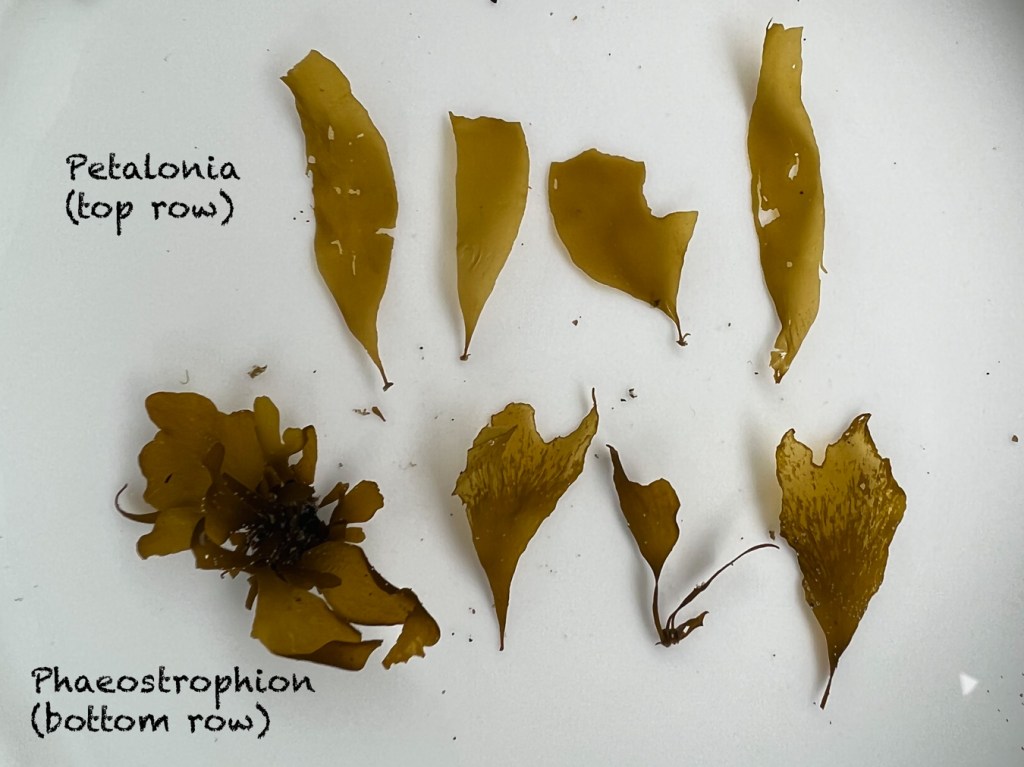
Phaeostrophion irregulare Sand-Scoured False Kelp


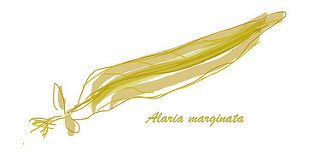
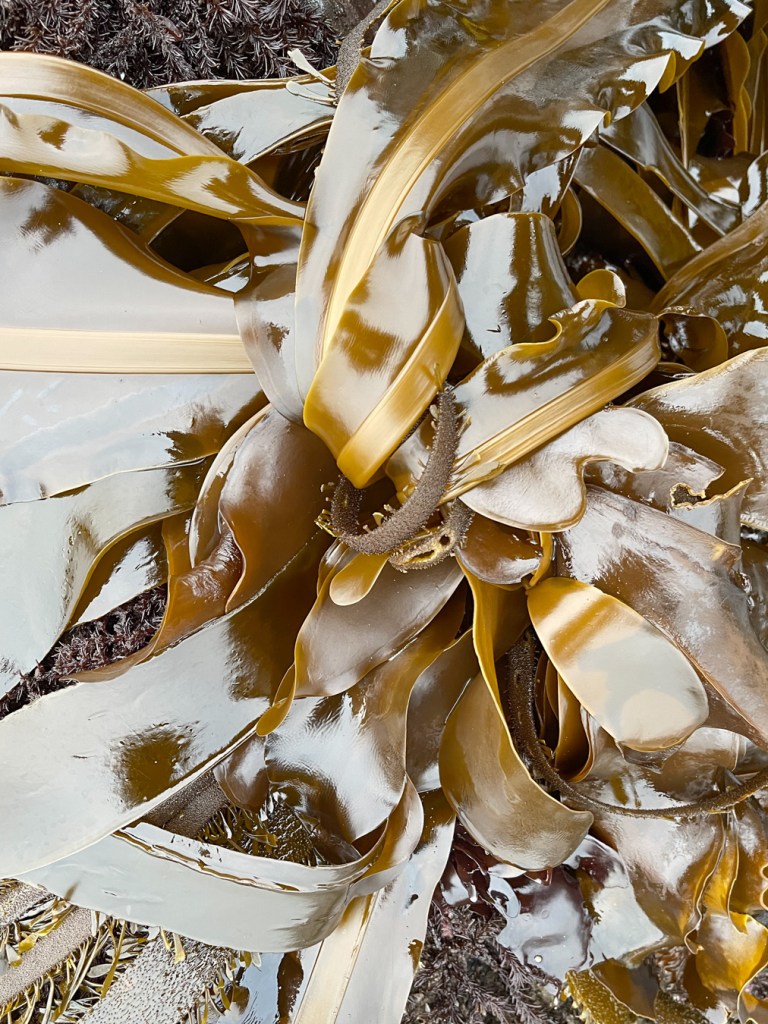
Alaria marginata Winged Kelp


The broad midrib never gets old.

A not-super-great photograph of the wings, short stipe, and holdfast with finger-like projections.

In exposed places with low rocks and active sand, Alaria can experience partial seasonal sand burial.

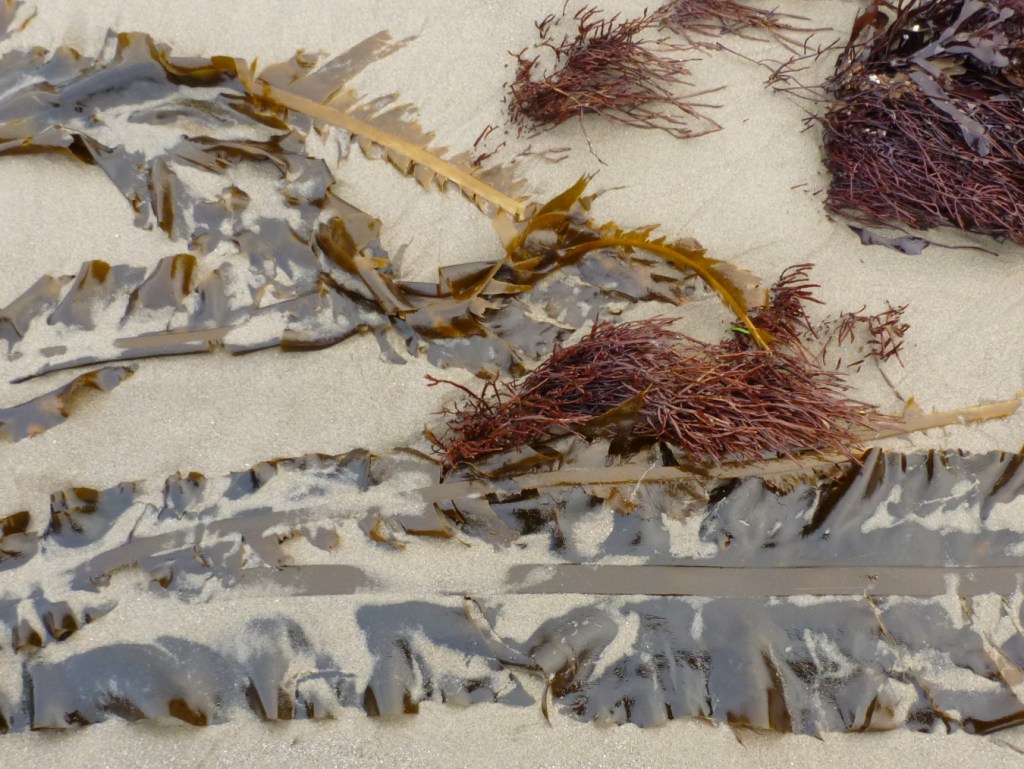


Alaria is pretty common in the drift.


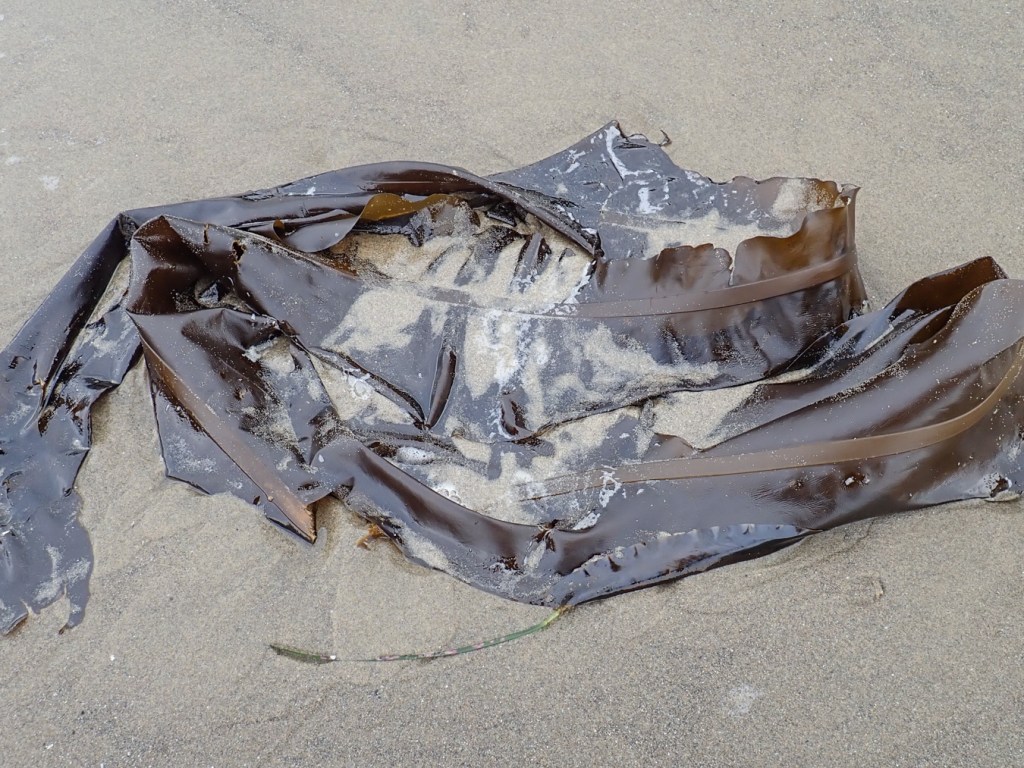
Costaria costata Five-Rib Kelp
In the two images immediately below, Fresh Costaria is mixed among a large mass of drift Nereocystis.
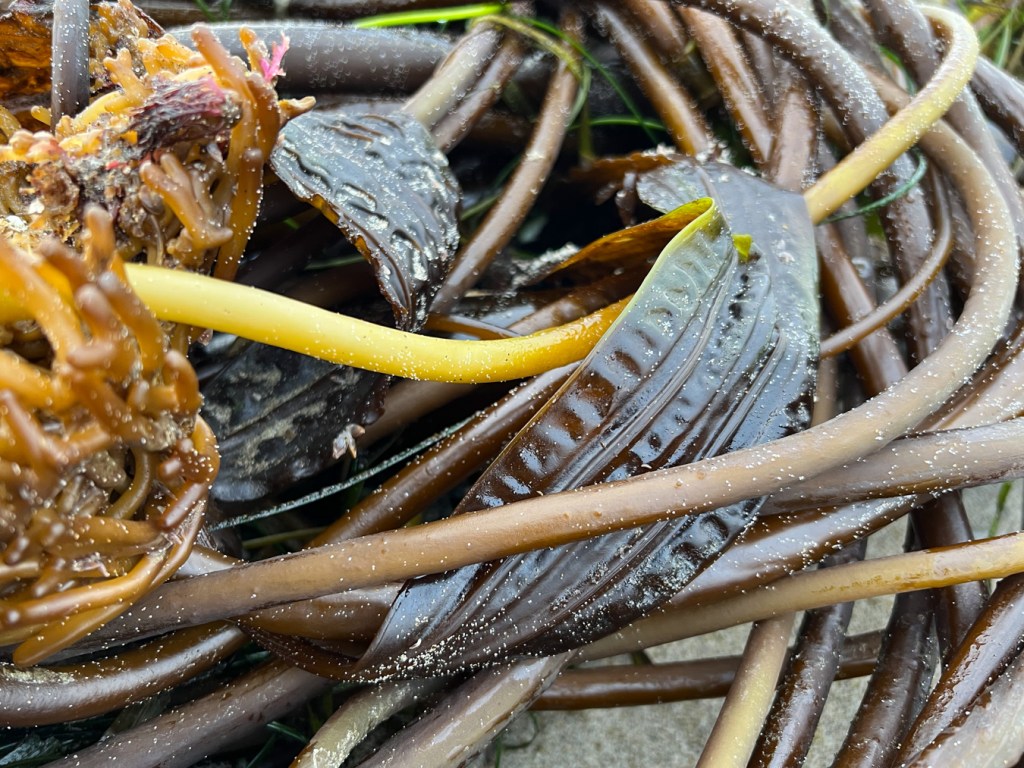

Here, weathered drift Costaria among more common Alaria would be easy to miss. (In fact, at first glance, I did pass it by.)


Laminaria setchellii
It takes a proper low tide to go eye to eye with a stand of Laminaria setchellii
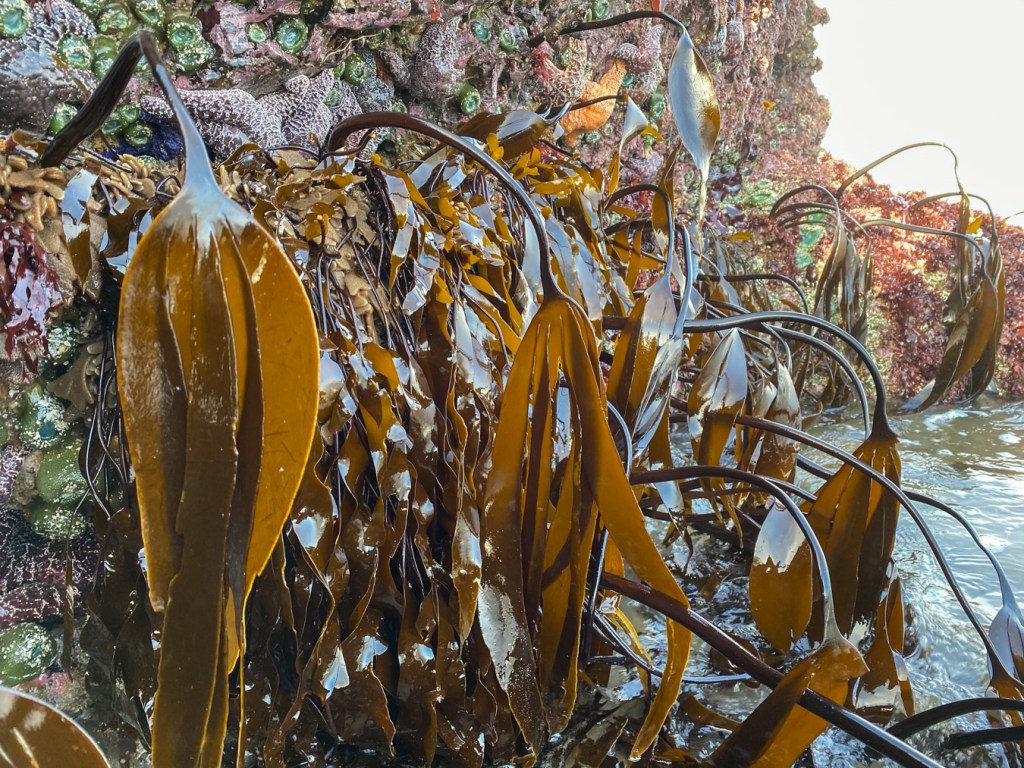
The image below is one of the early photographs I took of Laminaria setchellii. It’s not too good, but I’m a fan of any scene with a view from the low intertidal up to the forest above, and beyond. (And I do like the little cluster of Laminaria setchellii poking out from the surfgrass.)

Showing off Laminaria setchellii


I like this view from above illustrating a Laminaria setchellii forest waving in a sand-filled pool.

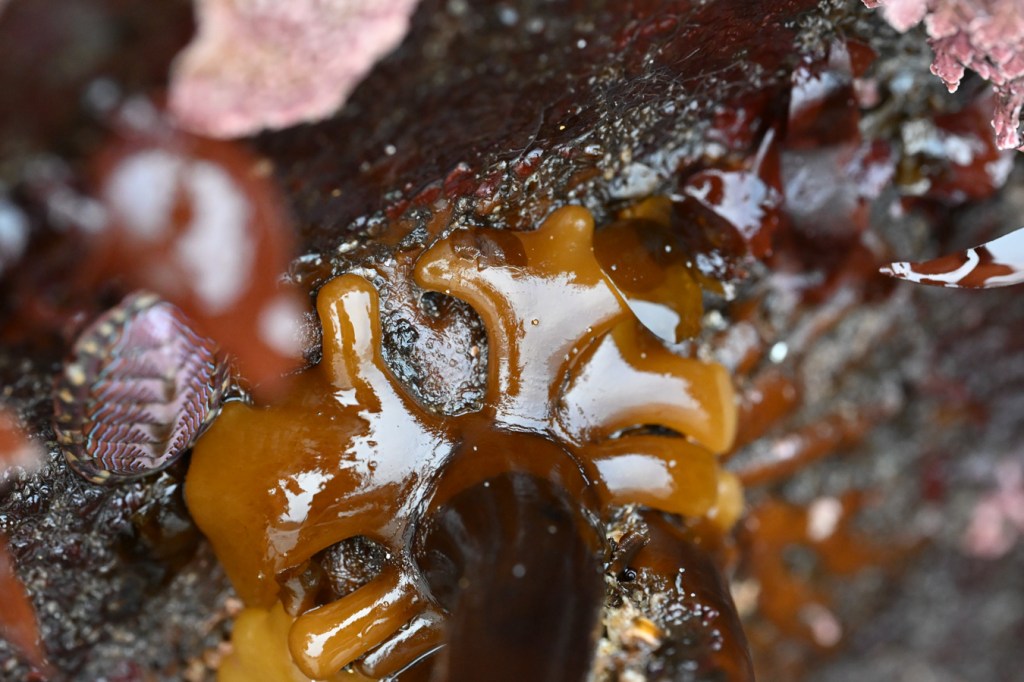
The holdfast


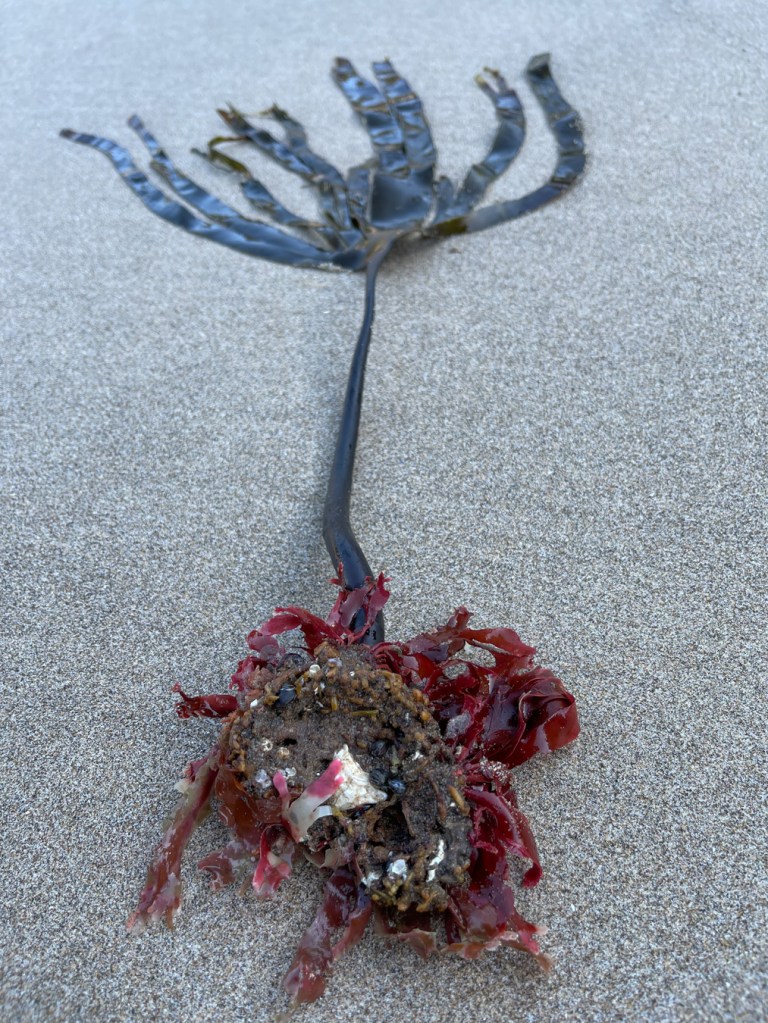
Compared to some other big browns, on the beaches I visit most, Laminaria setchellii doesn’t seem super common in the wrack line. Below are two examples I laid out on the sand.

Laminaria sinclairii
In northern Oregon, if I’m reading Kozloff right, Laminaria sinclairii is a good marker for mean lower low water. You can see it and judge for yourself in the scene of mid- to low intertidal zonation shown below.

Laminaria sinclairii is known for its many stipes arising from rhizome-like holdfasts.

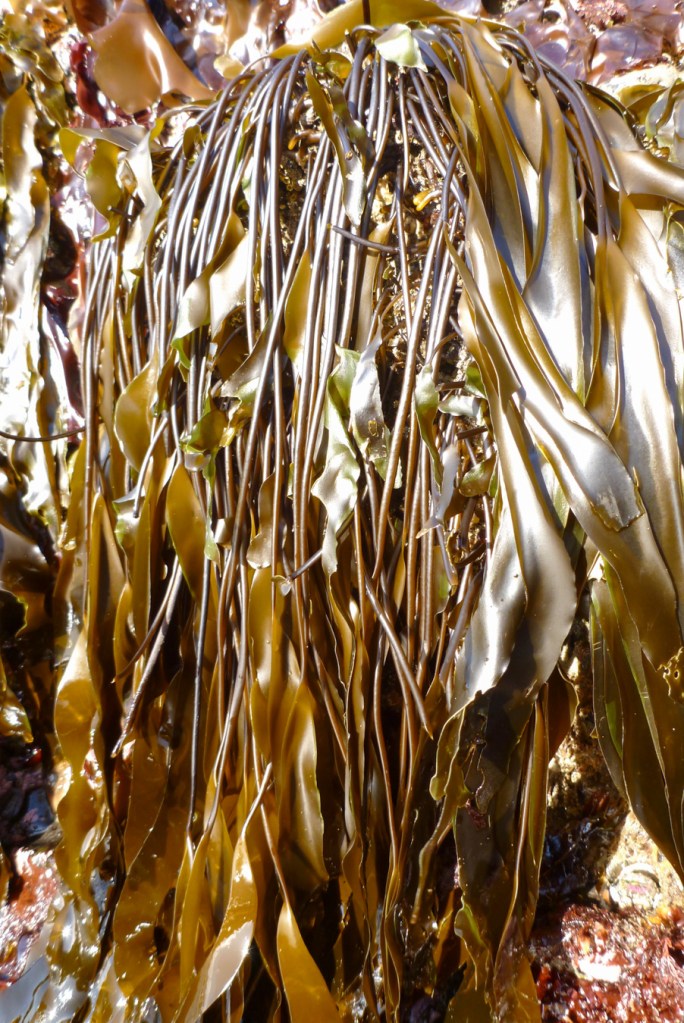


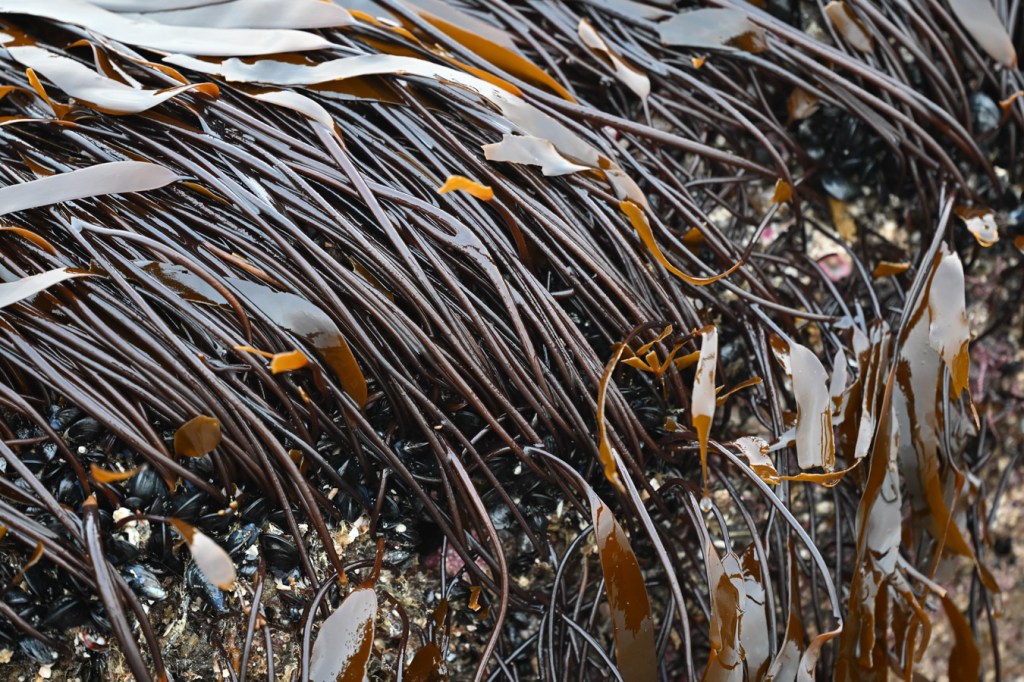
For the love of Laminaria (sinclairii)
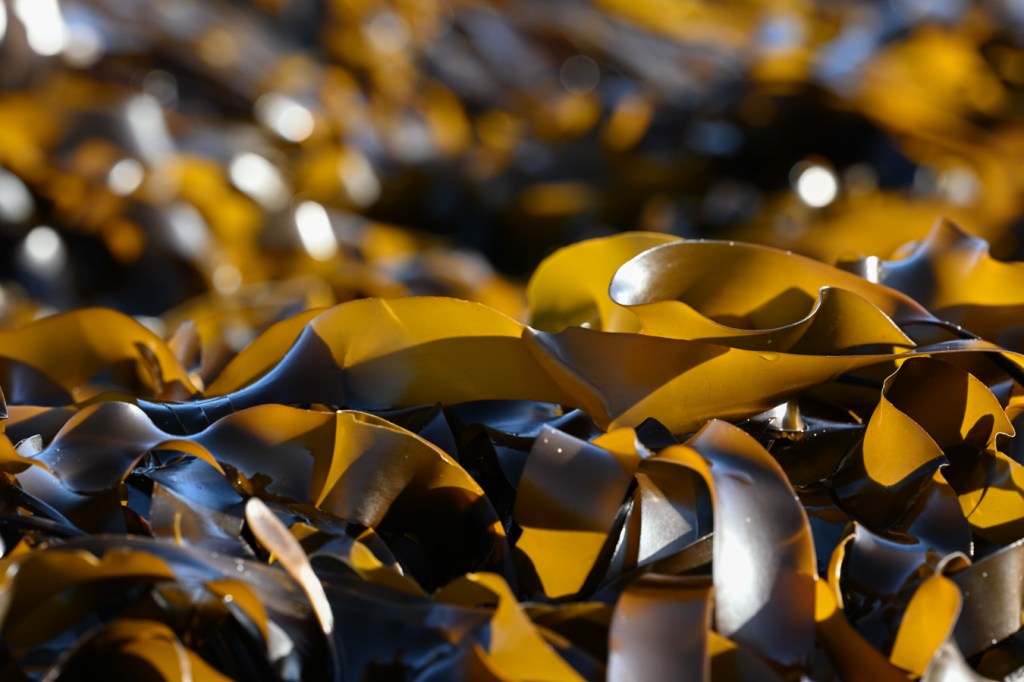


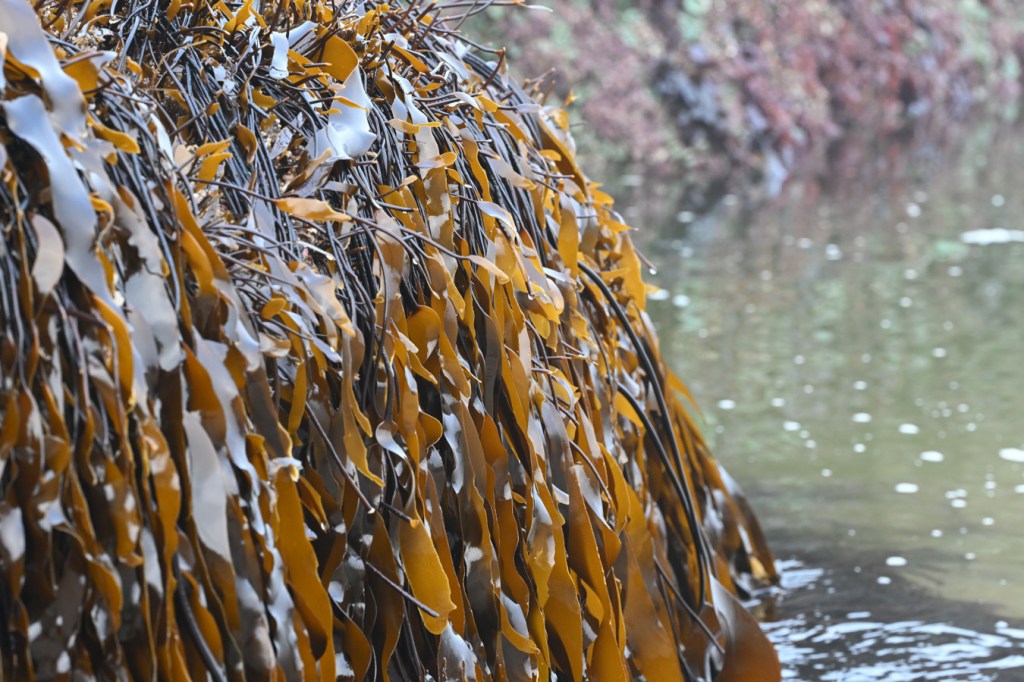
It’s not terribly uncommon to find Laminaria sinclairii washed up on the beach.


I love the look of this freshly-beached example, holdfast and all, laid out on clean sand in the early morning light.

Lessoniopsis litoralis
You can’t really fault anyone who calls Lessoniopsis litoralis tree kelp.
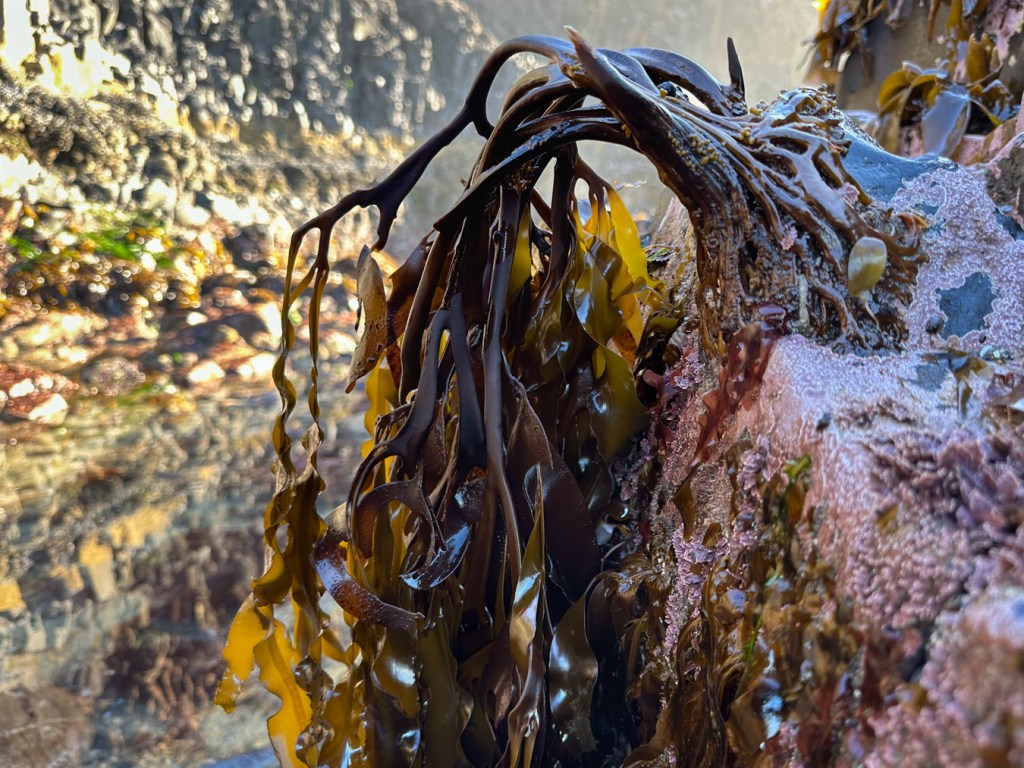
You know you’re on an exposed shore when you run into Lessoniopsis litoralis.
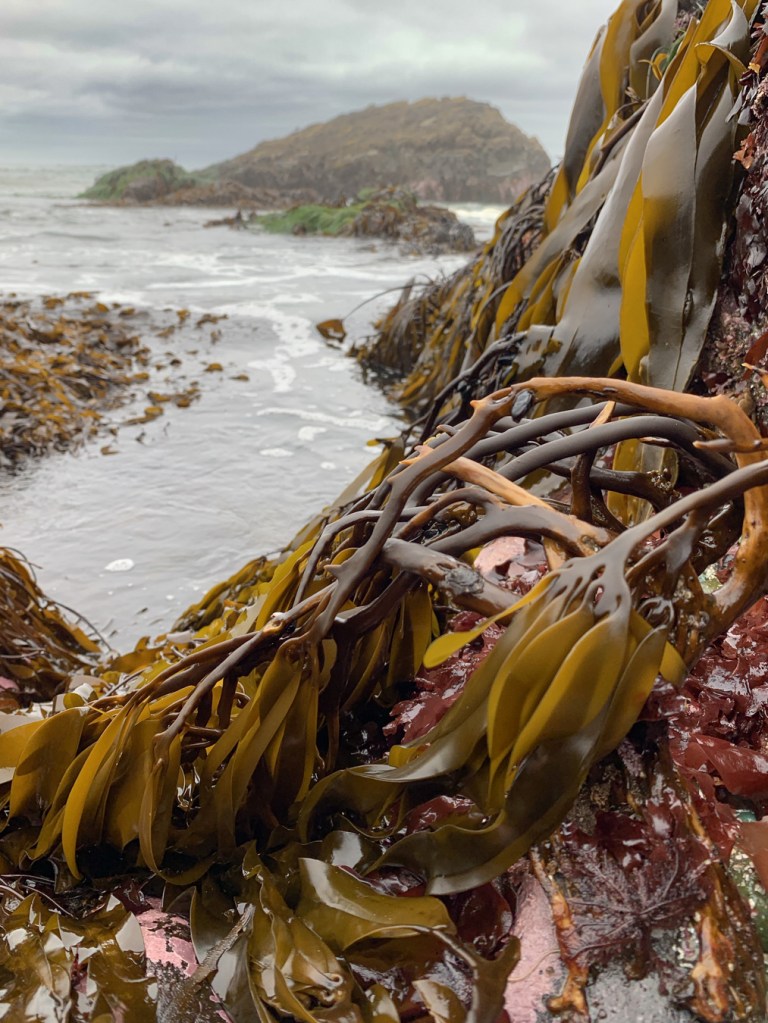

Lessoniopsis is known for its Y-branches.


No such thing as too many looks at Lessoniopsis


While not super common on the beach or in the wrack line, drifted specimens of Lessoniopsis litoralis appear now and then.


The Lessionopsis holdfast can get a grip and keep it. This one managed to carry a few pounds of barnacles up onto the beach.

Remants
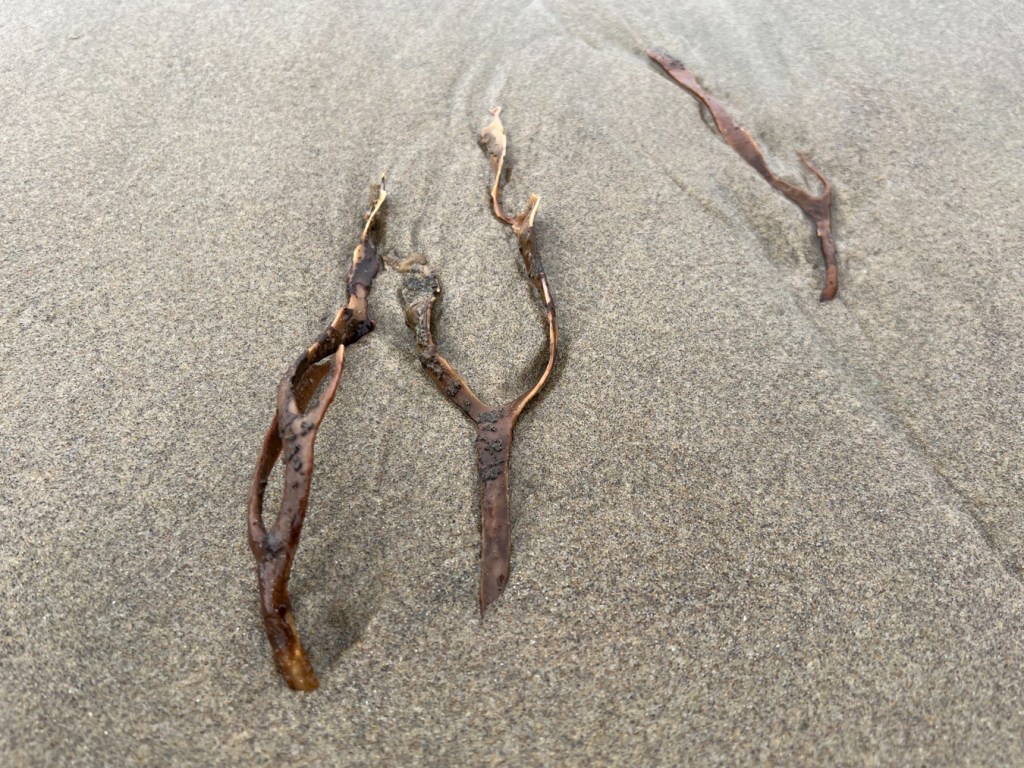

Spreading out the lanky specimen, below, seemed like a good idea.

Stephanocystis osmundacea Bladder Chain
My home beaches are a bit north of bladder chain strongholds. I only know it from the drift.
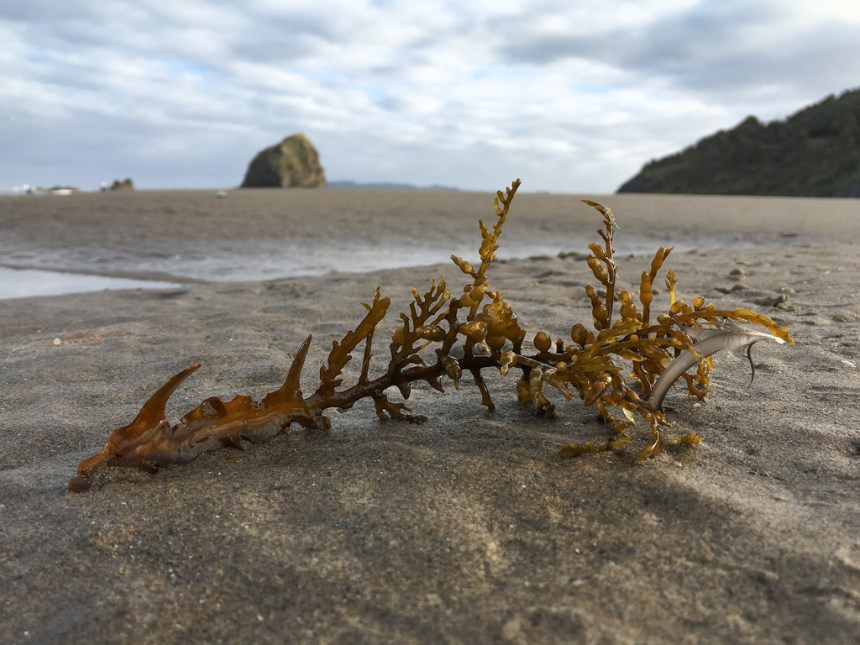
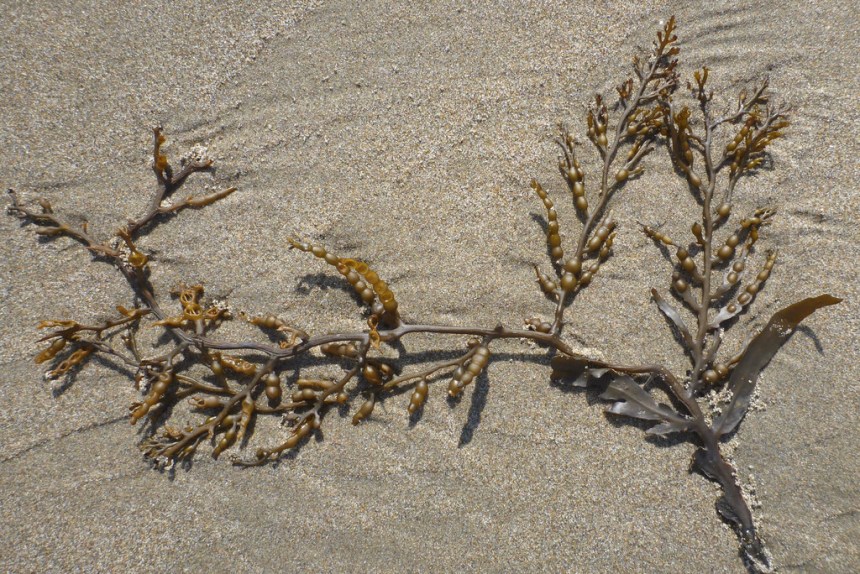

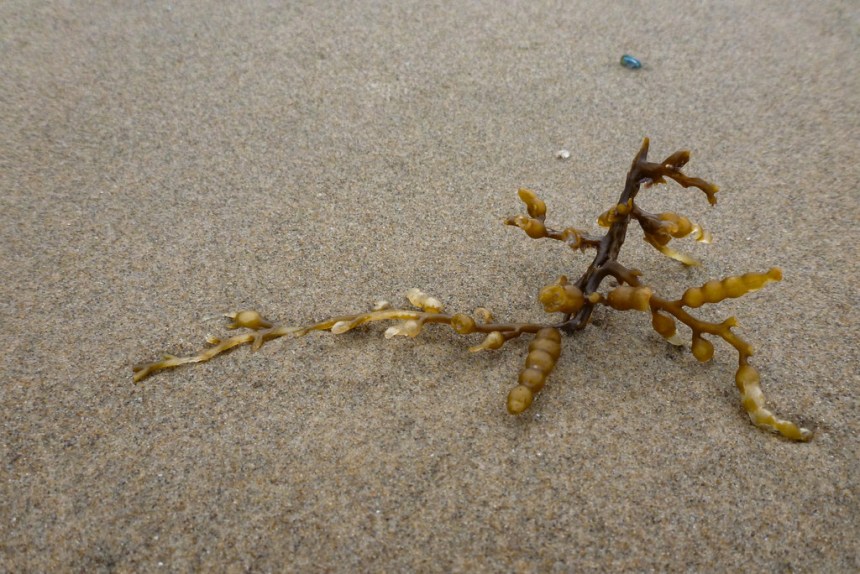
Sargassum muticum
Not really at home in exposed surf-swept settings, it can be dense in protected waters and semi-protected pools. Drifted Sargassum is common on beaches.
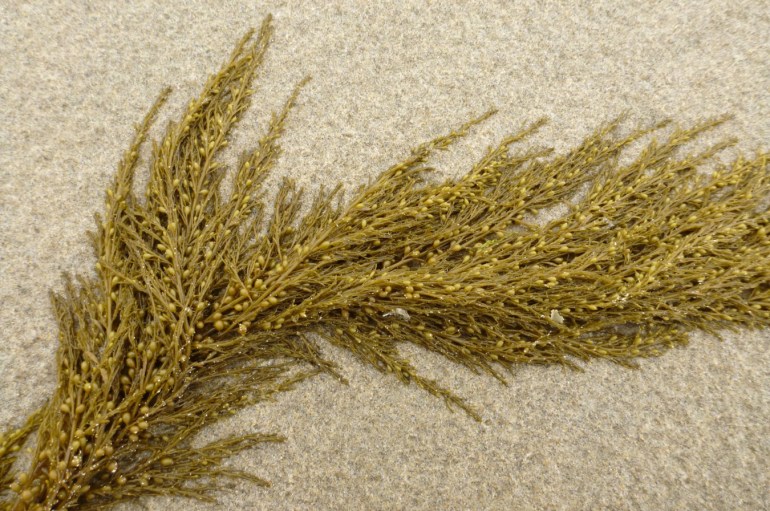
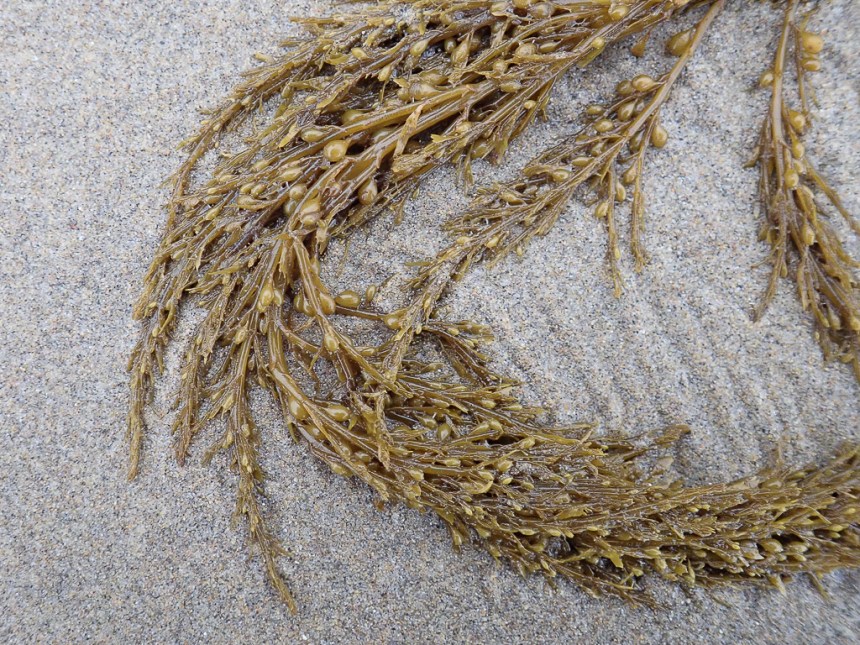

Desmarestia Flattened Acid Leaf
I’ll use the common name flattened acid leaf in this entry until I master distinguishing the flattened forms (e.g., Desmarestia ligulata, D. herbacea). My examples are from low intertidal rocks or fragments that washed up on beaches.
Below, flattened acid leaf cascades down the rocks among other seaweeds illustrating how limp the blades are. From a distance, the thin, limp blades tend to blend in on the rocks, where they are easy to miss. (However, as shown a few galleries down, you will notice them when they lay out on clean sand!)


Closer up, the golden or olive-green blades stand out, but they are likely to mat together, obscuring their fine detail or adding to their beauty, depending on your frame of reference.

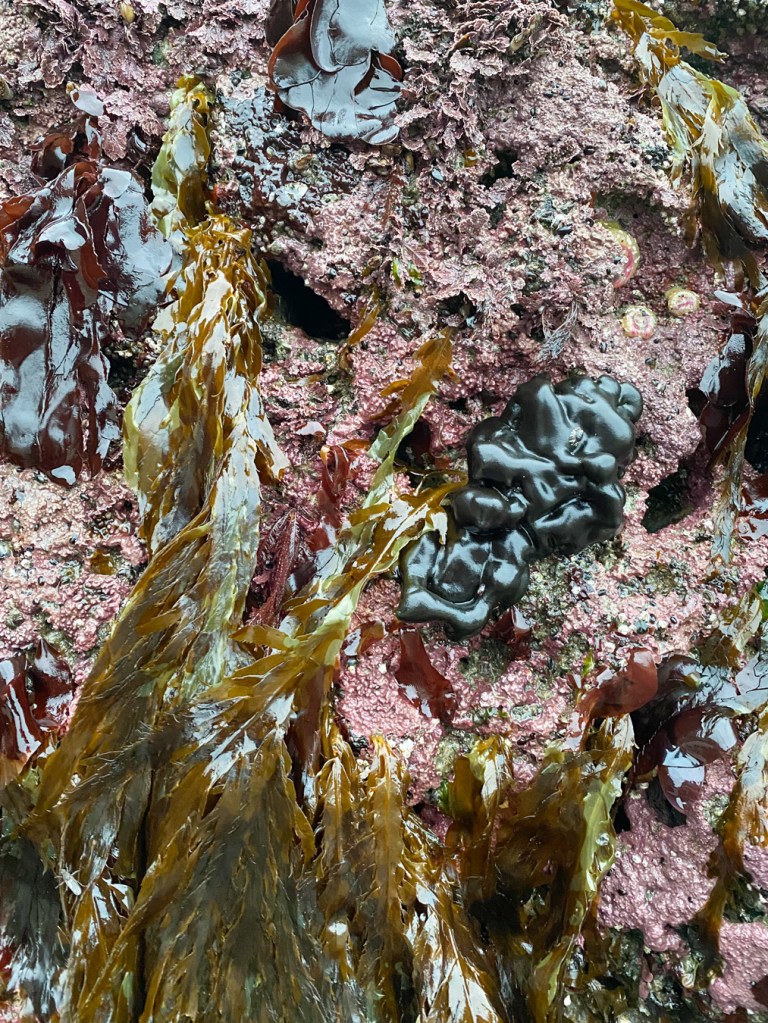
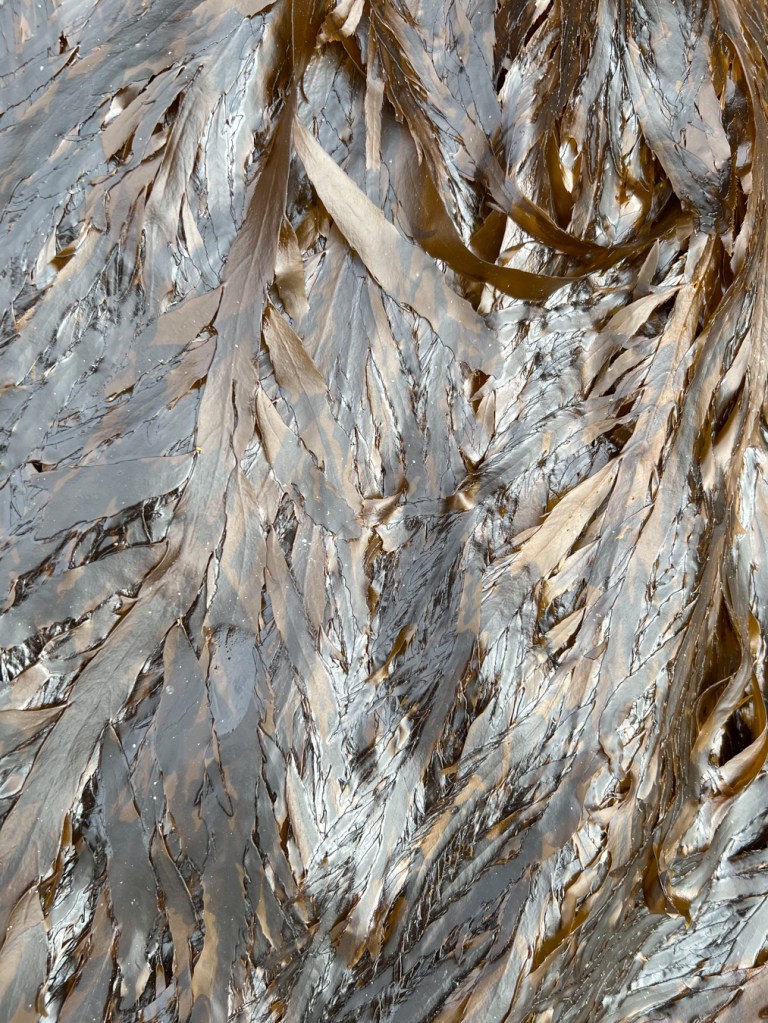
Flat acid leaf’s finer details emerge when its branches float in shallow, sand-filled pools.


Flattened acid leaf frequently lives in areas of active sand. Enough so that I feel like it’s tolerant of at least some scouring and some seasonal burial. Is this its habit, or just what’s available on the shores I frequent? Either way, it lays out so beautifully on the sand I can’t resist showing a few examples.
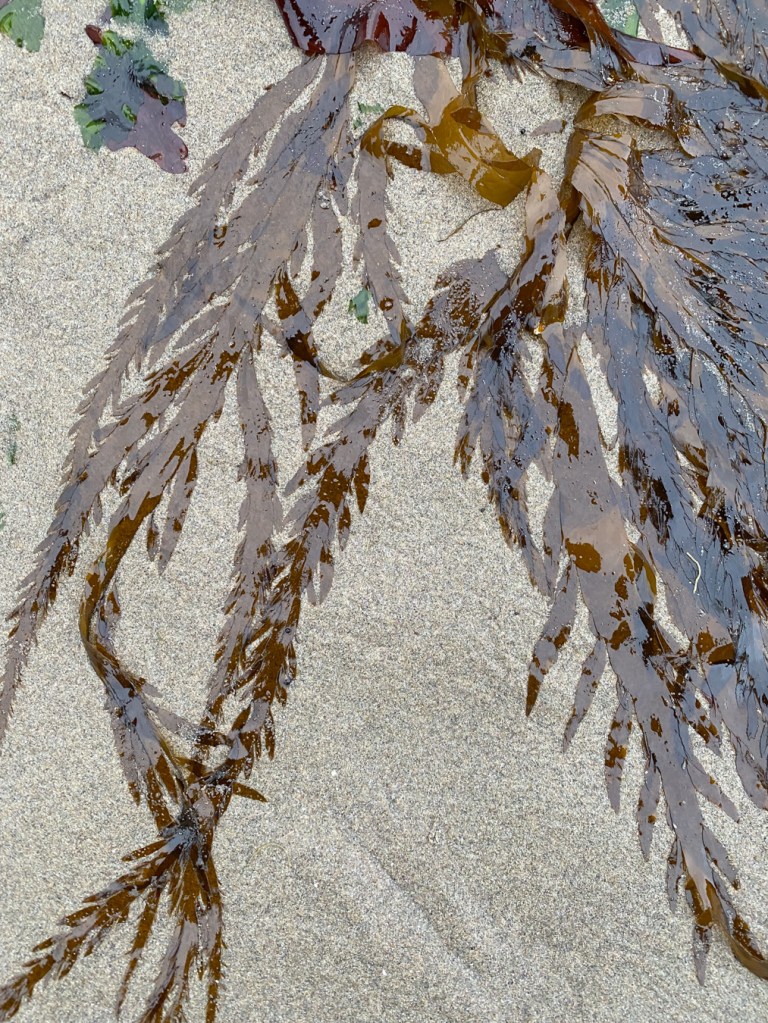
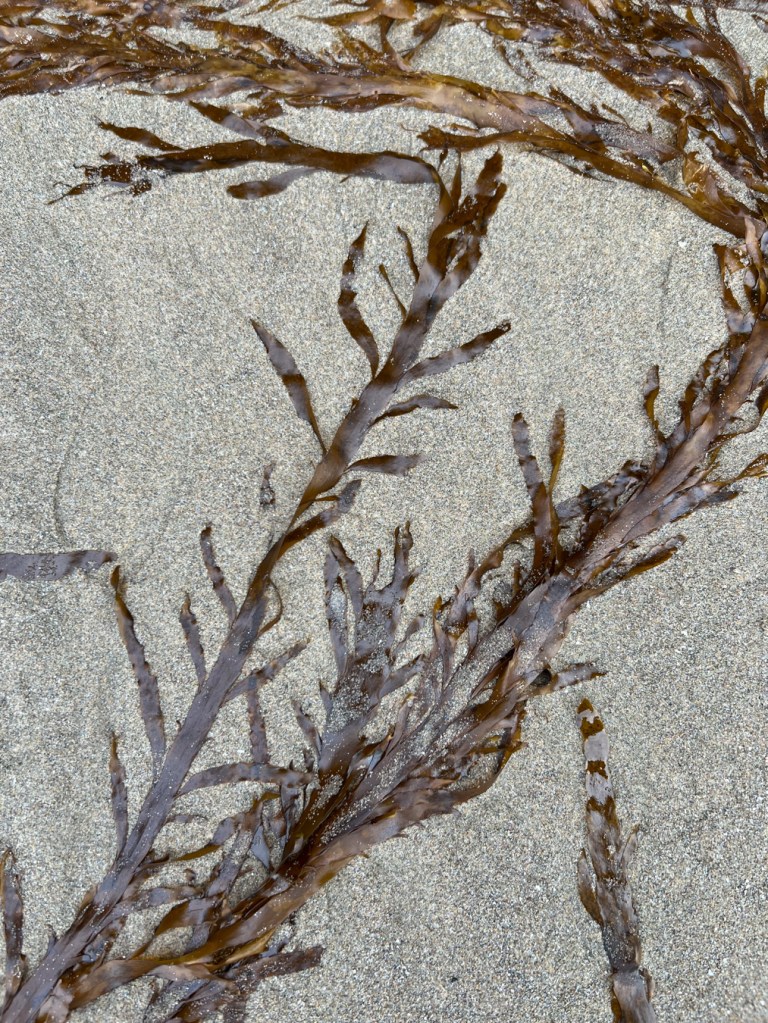
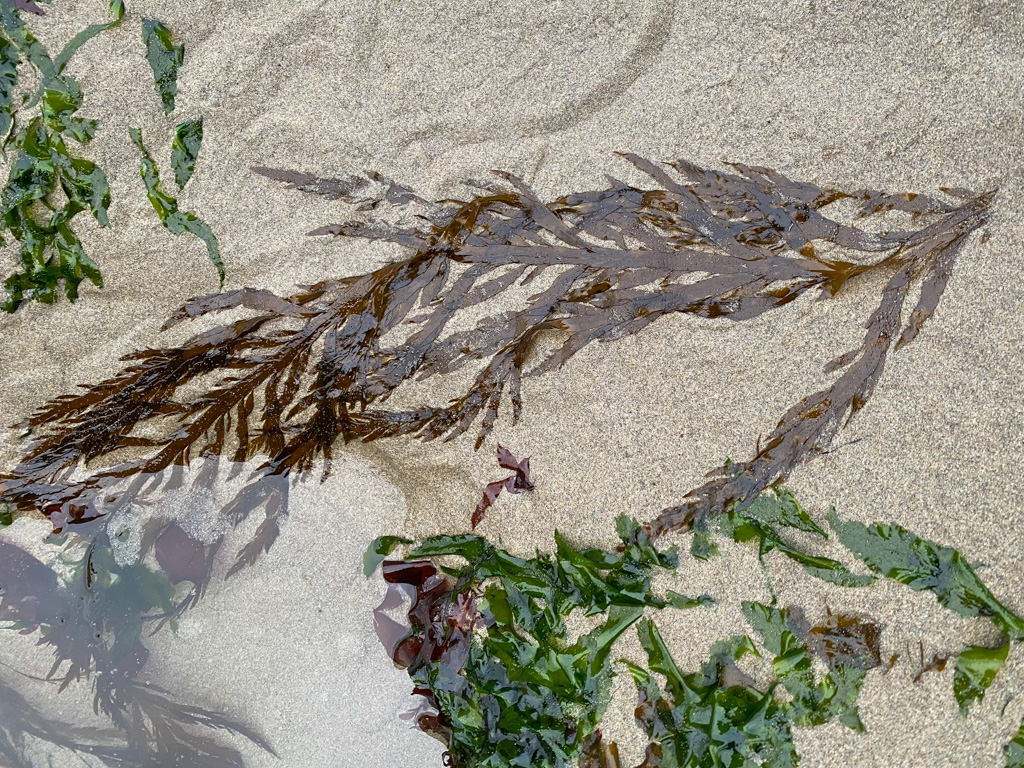
If you encounter enough flattened acid leaf washed up on the beaches, you’ll notice quite a bit of color and morphological variation. Intriguingly, I’ve seen “color changer” listed among the common names for Desmarestia herbacea, but I don’t know the context.
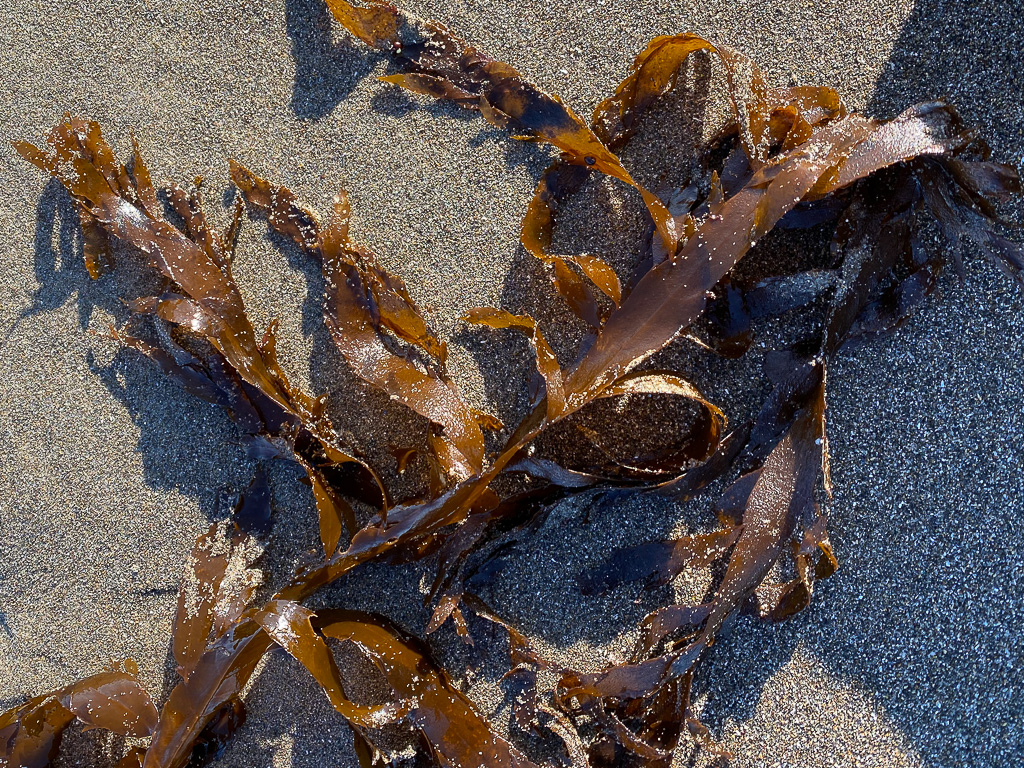
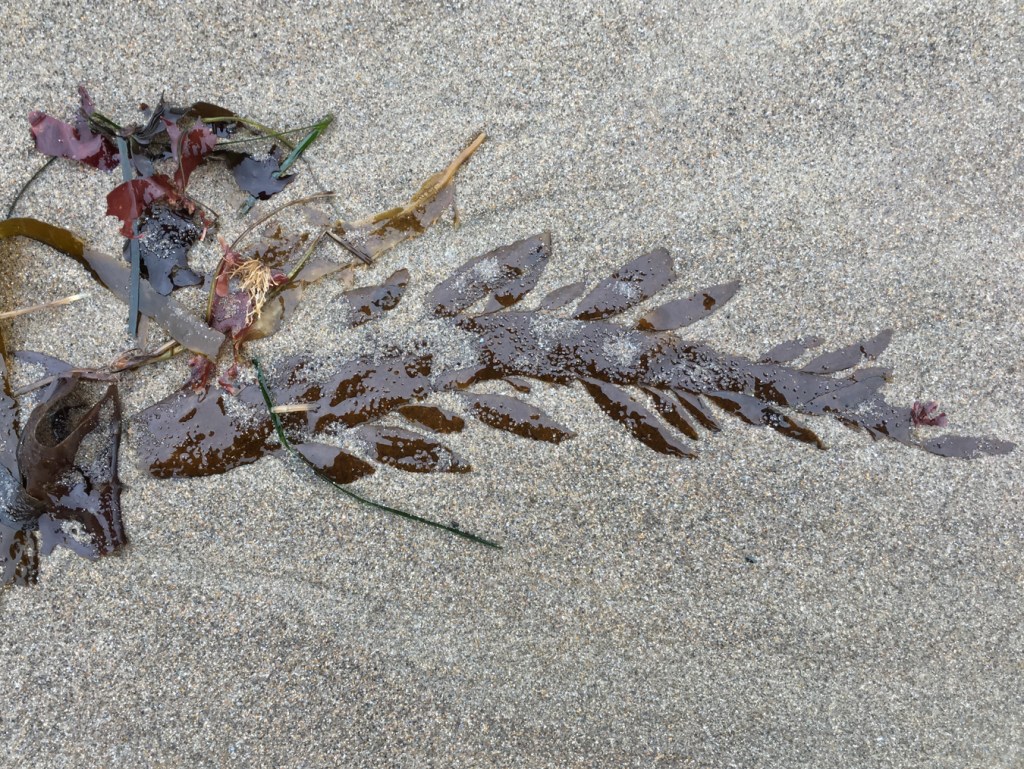
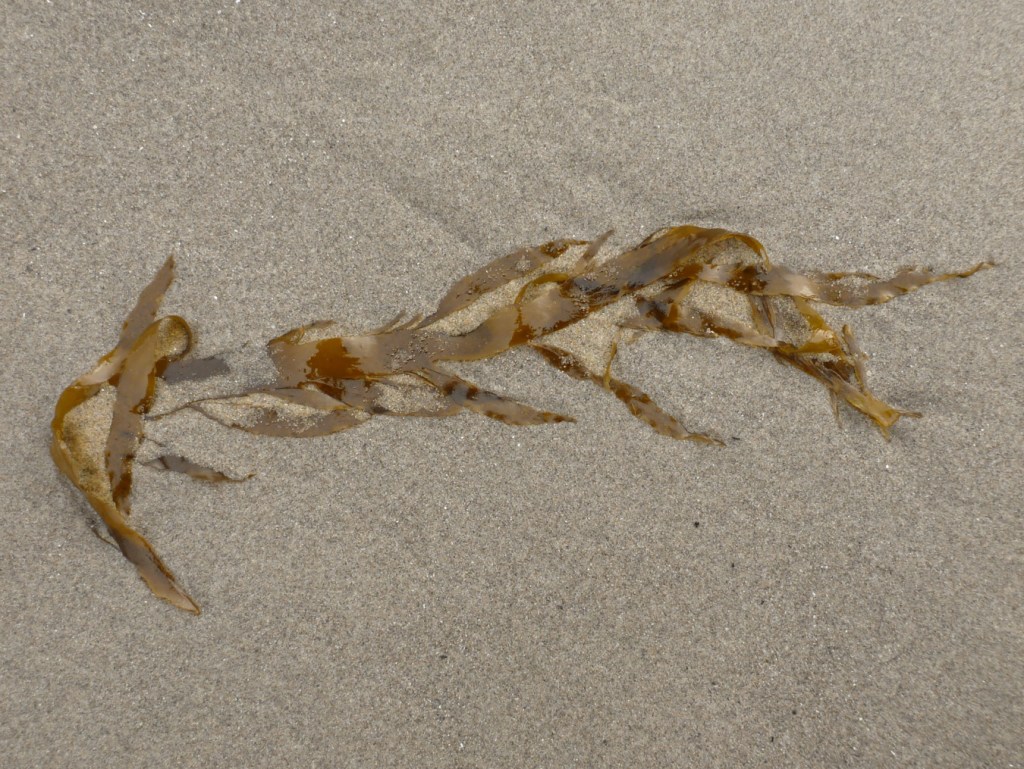

The examples below have a markedly wide main blade and wide branches with midribs.


Pterygophora californica
Pterygophora is mostly subtidal in Oregon.


Macrocystis
As far as I know, my home beaches in northern Oregon are a lot of miles from the nearest Macrocystis beds, but drift masses wash up fairly abundantly on the beaches. An interesting bit of Macrocystis trivia is that it’s the seaweed featured on the Monterey Bay Aquarium Logo.
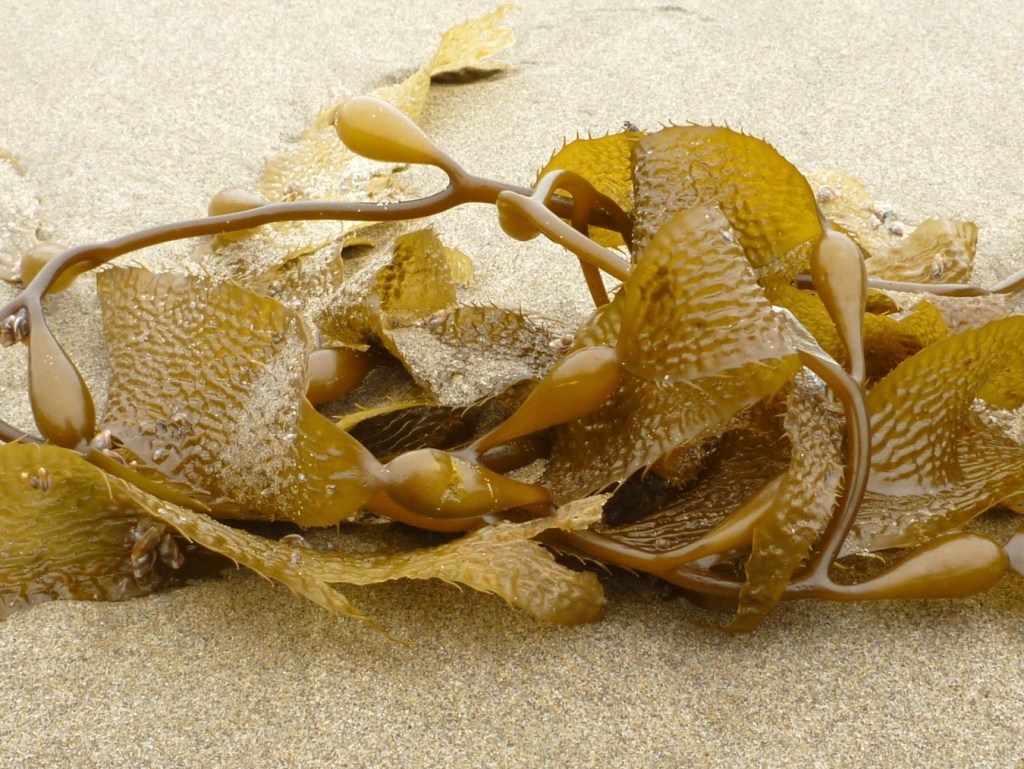


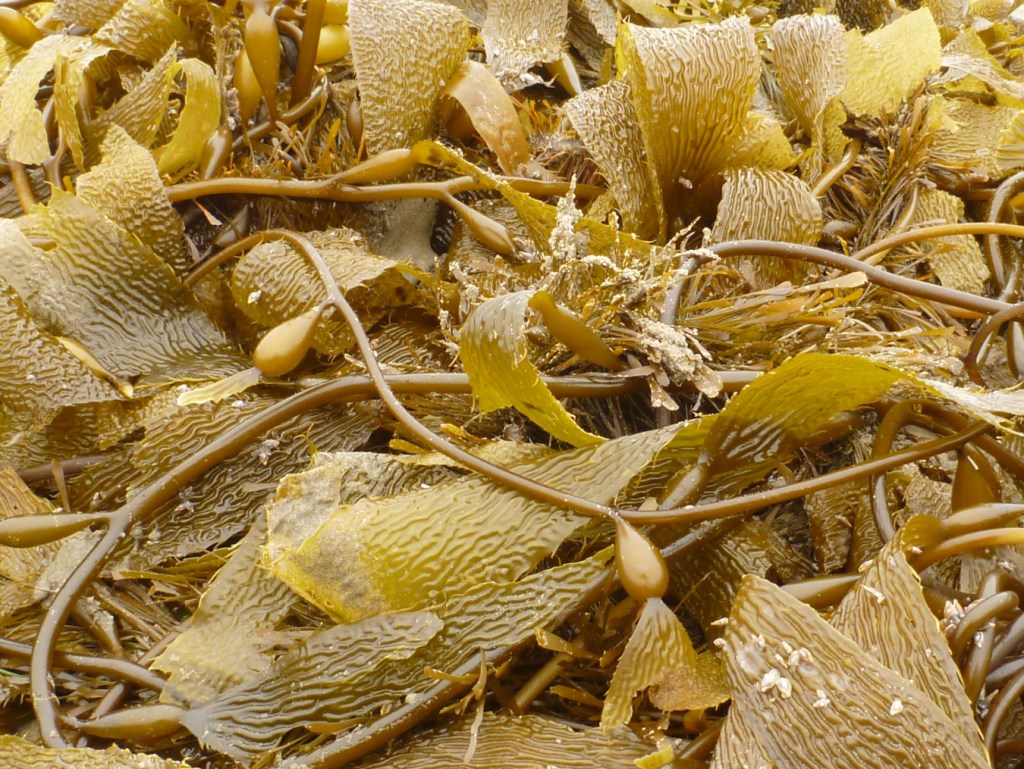
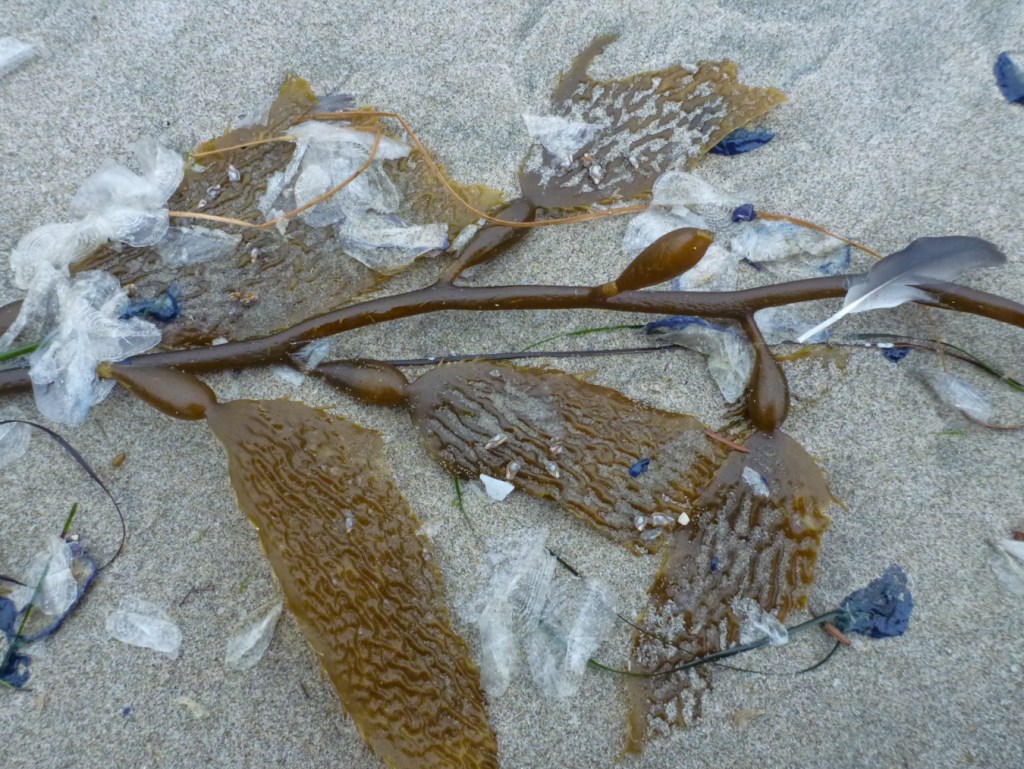
Closeups of the everchanging form of drift Macrocystis. (If there is a constant, it’s that there’ll come a time when beach hoppers participate in drift Macrocystis breakdown (upper right-hand panel).


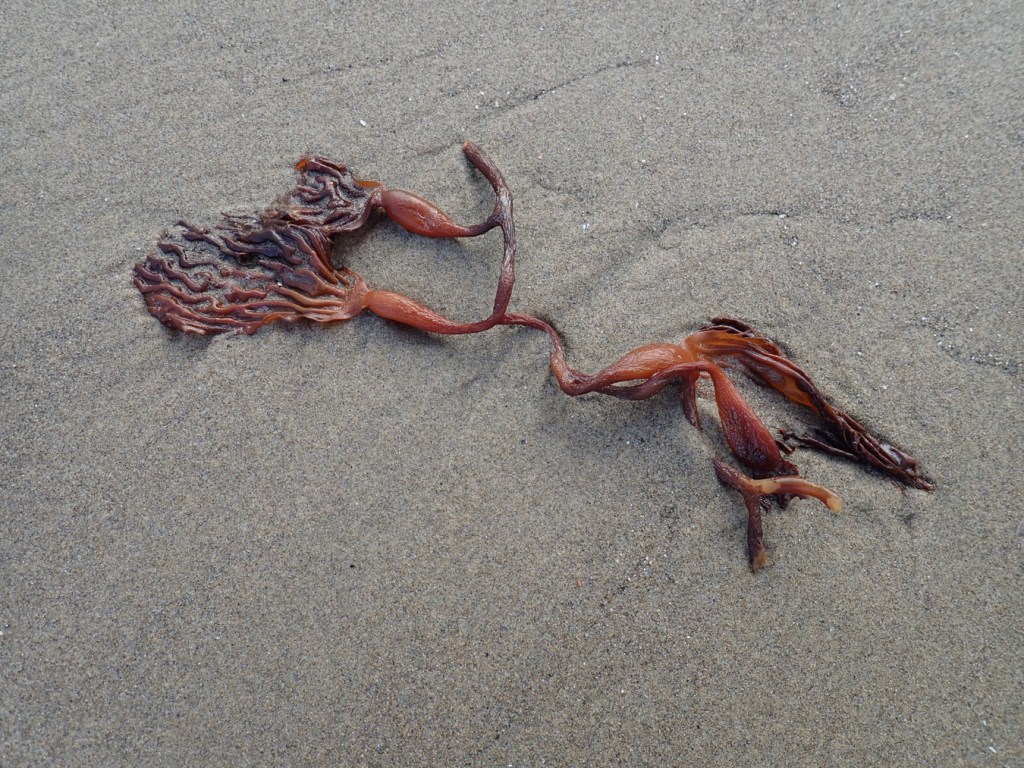
Macrocystis, drifted and dying on the shore, evokes a range of emotions, intimacy among them.

Nereocystis luetkeana Bull Kelp
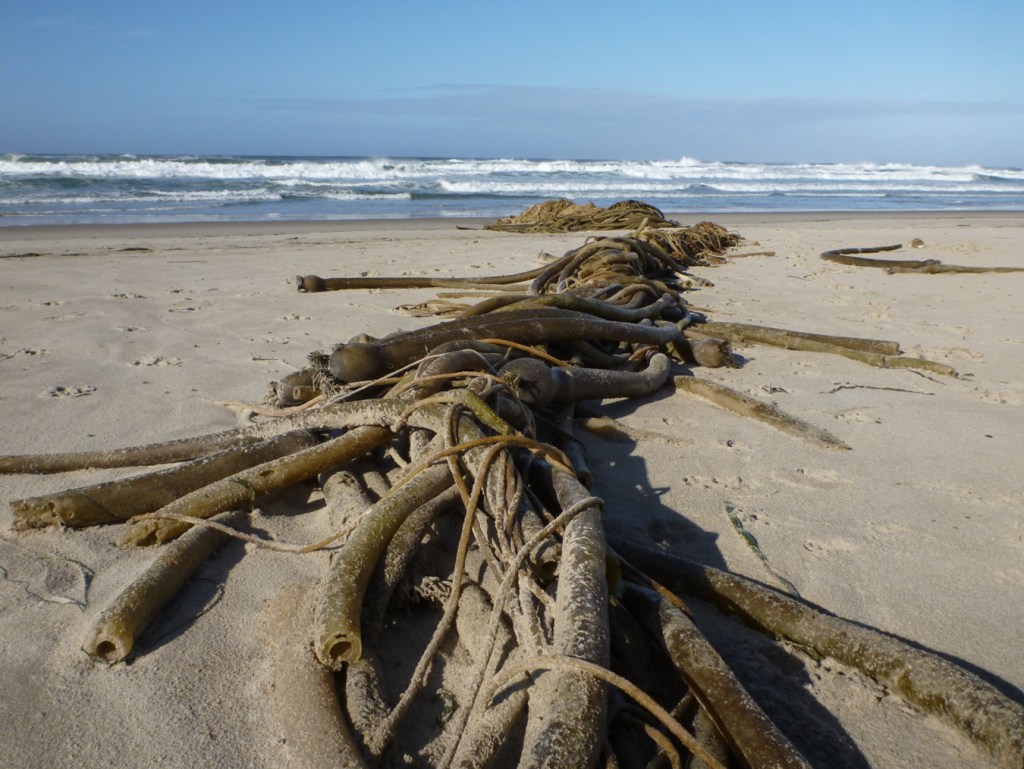
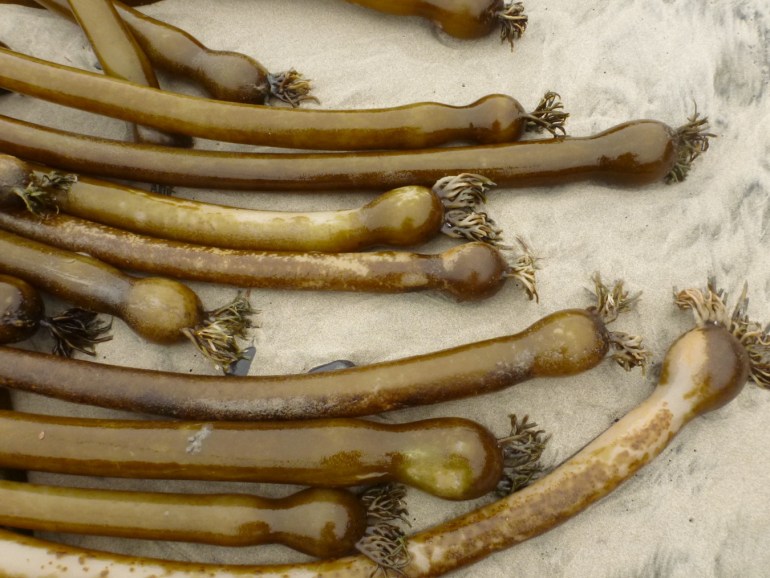
Bull kelp is subtidal, pretty much so, but it’s important to intertidal and beach ecosystems as sea wrack, and it serves as a seasonal source of emotion, beauty, wonder, and curiosity for humans.





Below, the arrow points out a remnant sorus on a tattered blade.

There’s something intimate about drifted and decaying bull kelp

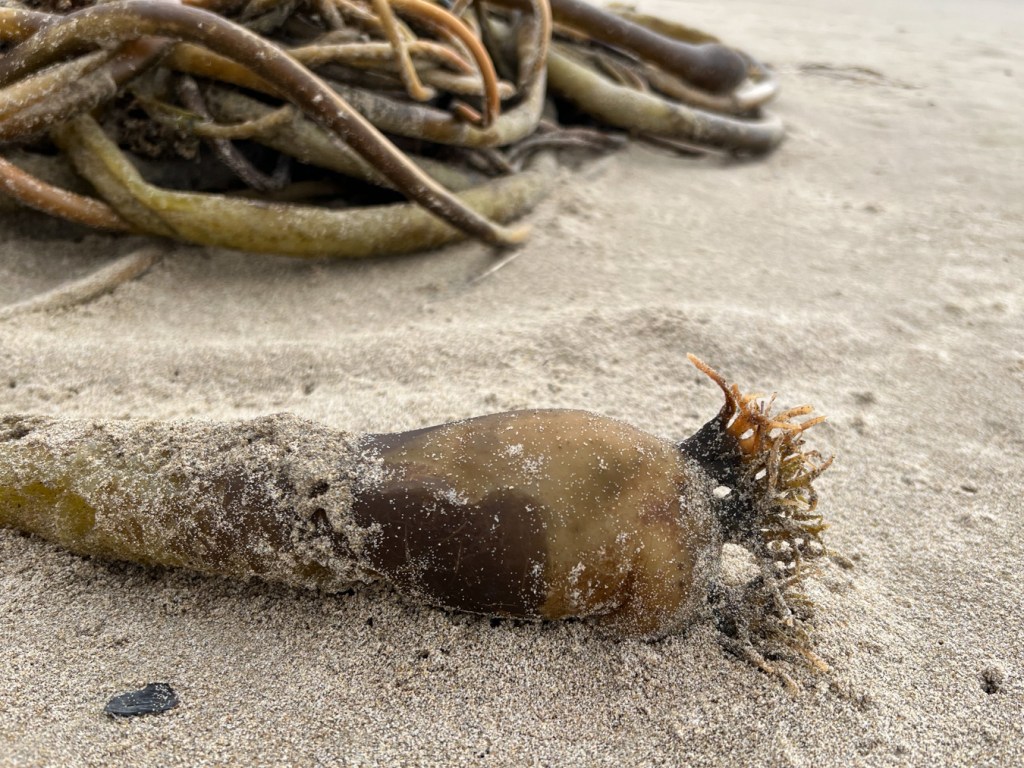
By breaking down drift bull kelp, beach hoppers play a prominent role in one of shoreline’s most dramatic cycles of life.
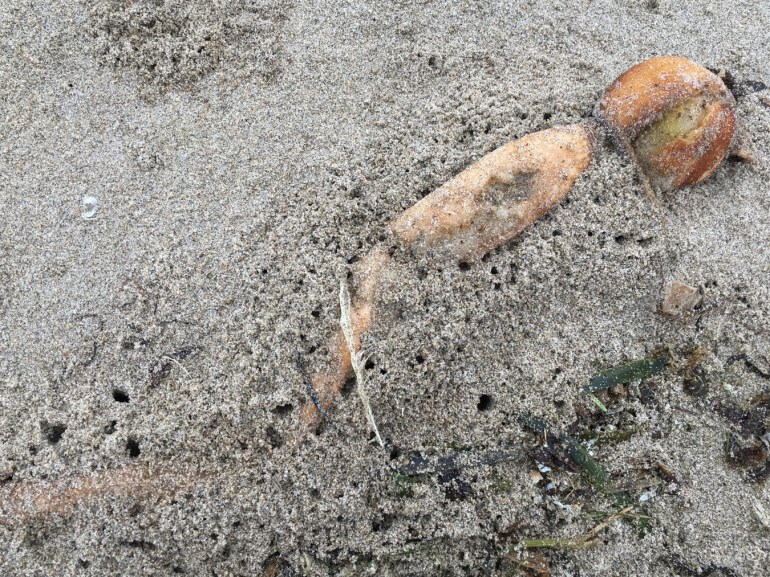
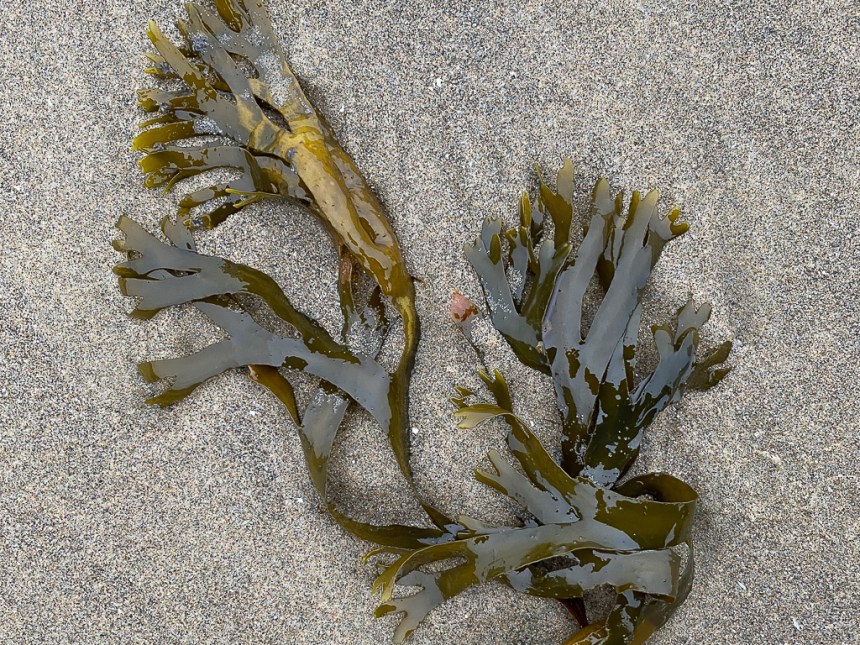
I think this is Dictyota.

References
Abbott, I. A. and G. J. Hollenberg. 1976. Marine Algae of California. Stanford University Press.
Druehl, L. D. and B. E. Clarkston. 2016. Pacific Seaweeds: A Guide To Common Seaweeds of the Pacific Coast. 2nd ed. Harbour Publishing Co.
Harbo, R. M. 2011. Whelks to Whales: Coastal Marine Life of the Pacific Northwest. 2nd ed. Harbour Publishing Co.
Kozloff, E. N. 1993. Seashore Life of the Northern Pacific Coast. 3rd ed. University of Washington Press.
Lamb, A. and B. P. Hanby. 2005. Marine Life of the Pacific Northwest. Harbour Publishing.
Mondragon, J., and J. Mondragon. 2010. Seaweeds of the Pacific Coast. Shoreline Press.
Sept. J. D. 2019. The New Beachcomber’s Guide to the Pacific Northwest. Harbour Publishing.
Web Resources
Friends of Netarts Bay WEBS— Brown Seaweeds page. Accessed January 28, 2025.
Seaweeds of Alaska— Seaweed: Ochrophyta. Accessed January 28, 2025.
The Seaweed Sorter app is fun and very useful!
I updated this page on January 28, 2025.
 theoutershores
Just stunning! Who could ever get tired of seaweed?!? It is so beautiful Thank you.
You’ve got that right! What a source of joy. Thanks!