Below are examples of some barnacles you will run across on Oregon’s exposed rocky shores or washed up on the beaches. It’s not a complete catalog, just the barnacles I’ve been fortunate to find, my photographic take, and a few words if I’ve thought of something that resonates with me. The photos are from northern Oregon unless noted, my organization follows Lamb and Hanby (2005), and the common names are my choice. Experts cover these barnacles and many more in the books, field guides, and online resources listed at the bottom of this page.
Chthamalus dalli Little brown barnacle
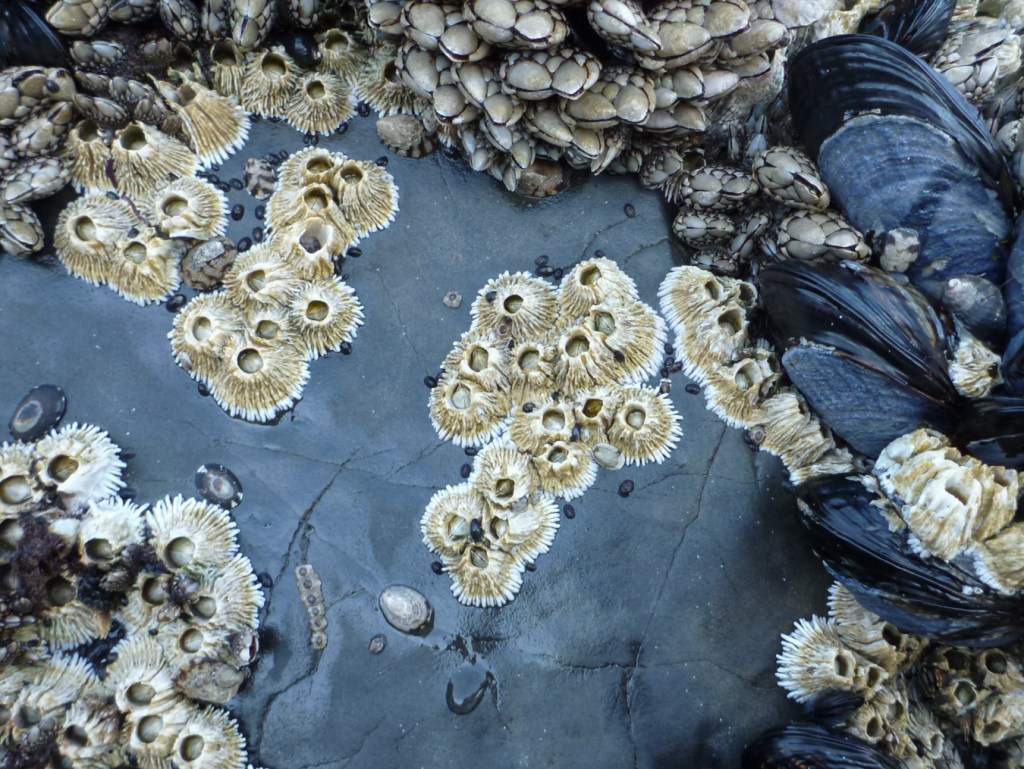
You will find little browns on high, mid, and low intertidal rocks where they are indeed small and brown. Ricketts and Calvin say they are “a definite and clean-cut form, never crowded and piled together…”, and that’s true, compared to the other barnacles they share space with. Their wall plates usually look a little inflated to me, and in the lower panel of this set you can see the oft-mentioned crosslike appearance of the perpendicular sutures between terga and scuta (compare with the same sutures in Balanus glandula, next entry.)
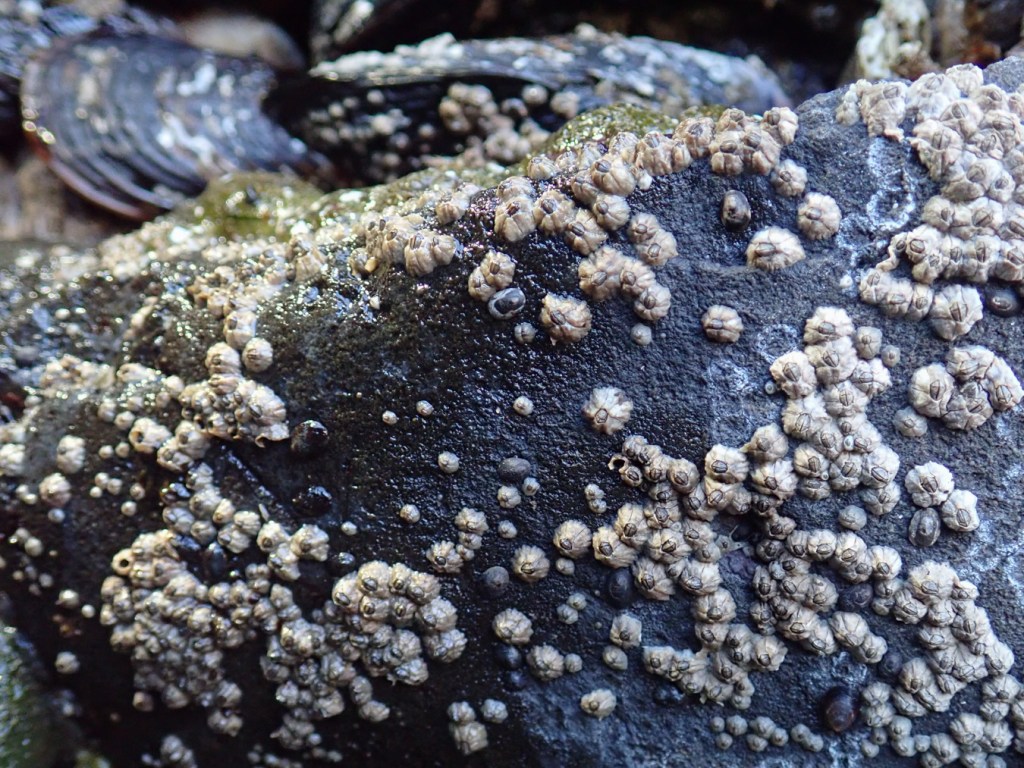
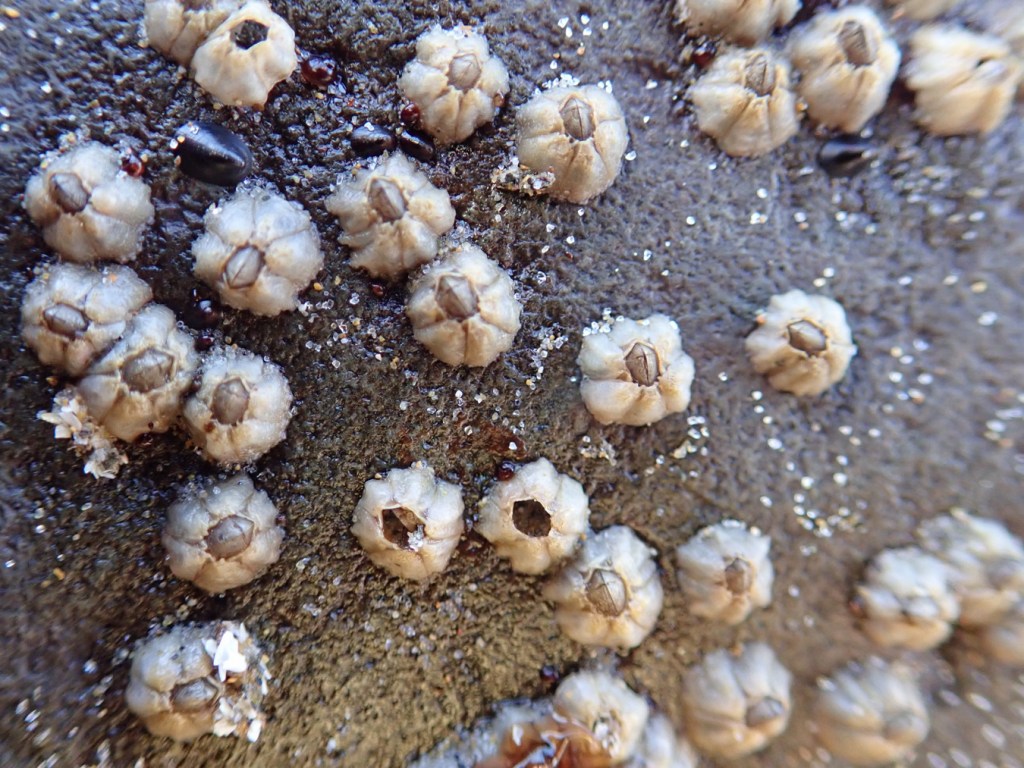
They may not crowd as closely as Balanus glandula or pile up like Semibalanus cariosus, but when conditions are right a lot of little browns can reside in a small amount of intertidal real estate. (Both images show mostly little browns on the same rock. The right-hand panel is a closeup of the bottom right corner of the left-hand panel.)
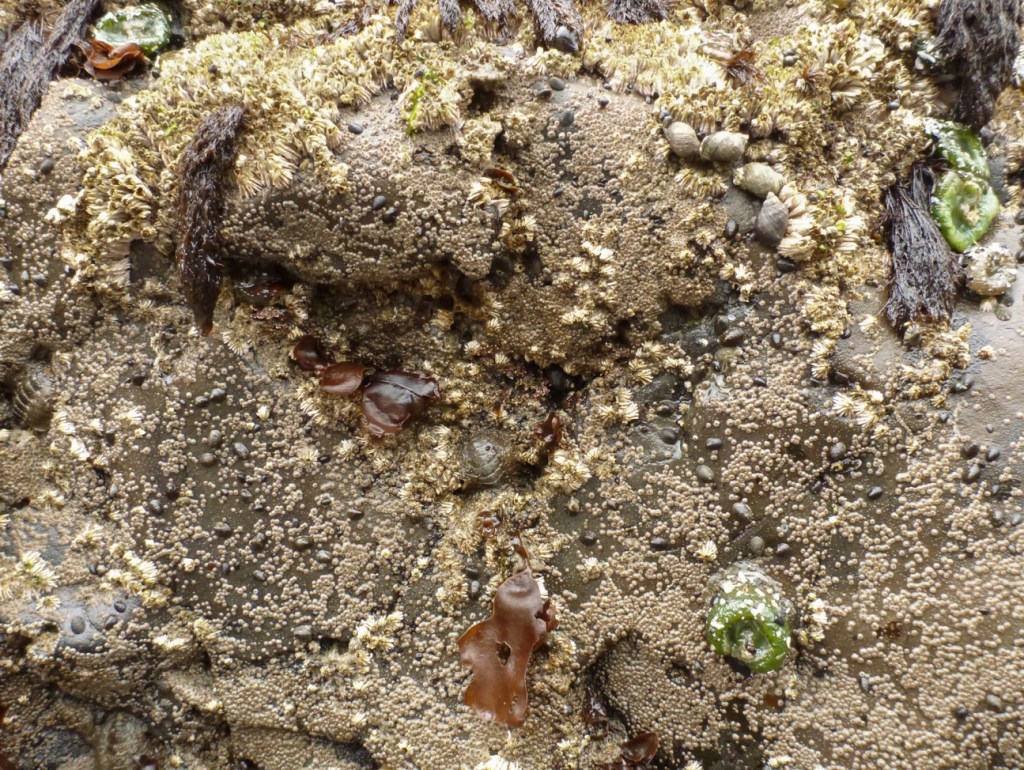
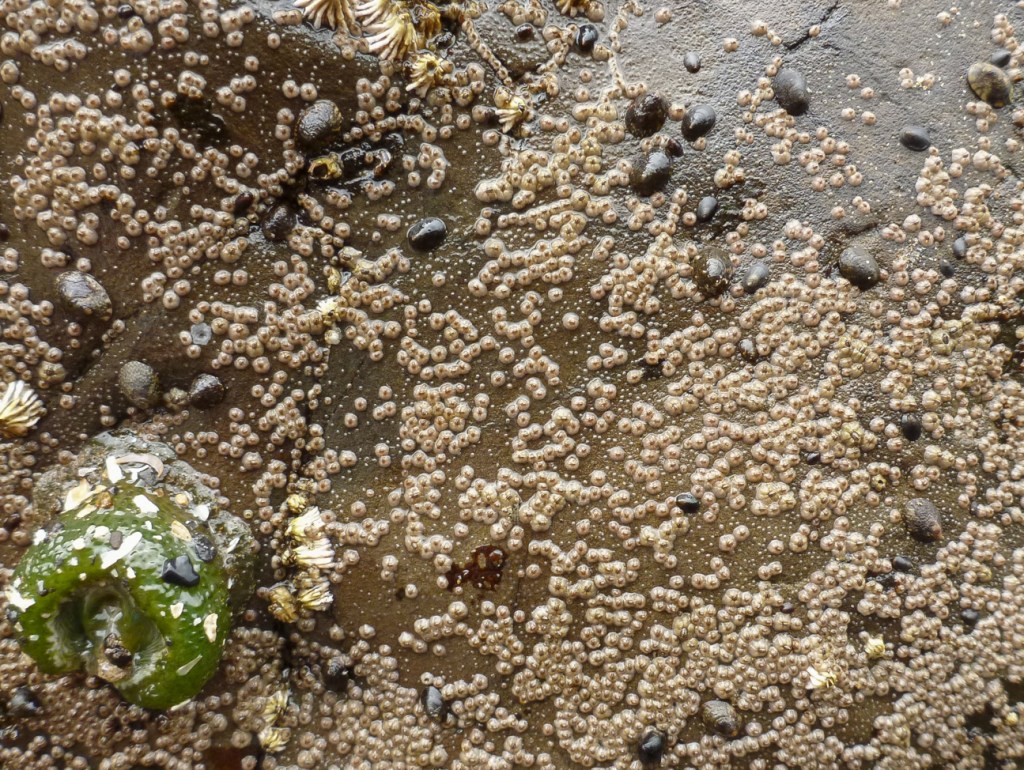
Little browns aren’t shy about settling on mollusc shells. Below, I love how they bejewel the concentric growth rings on shells of two California mussels.
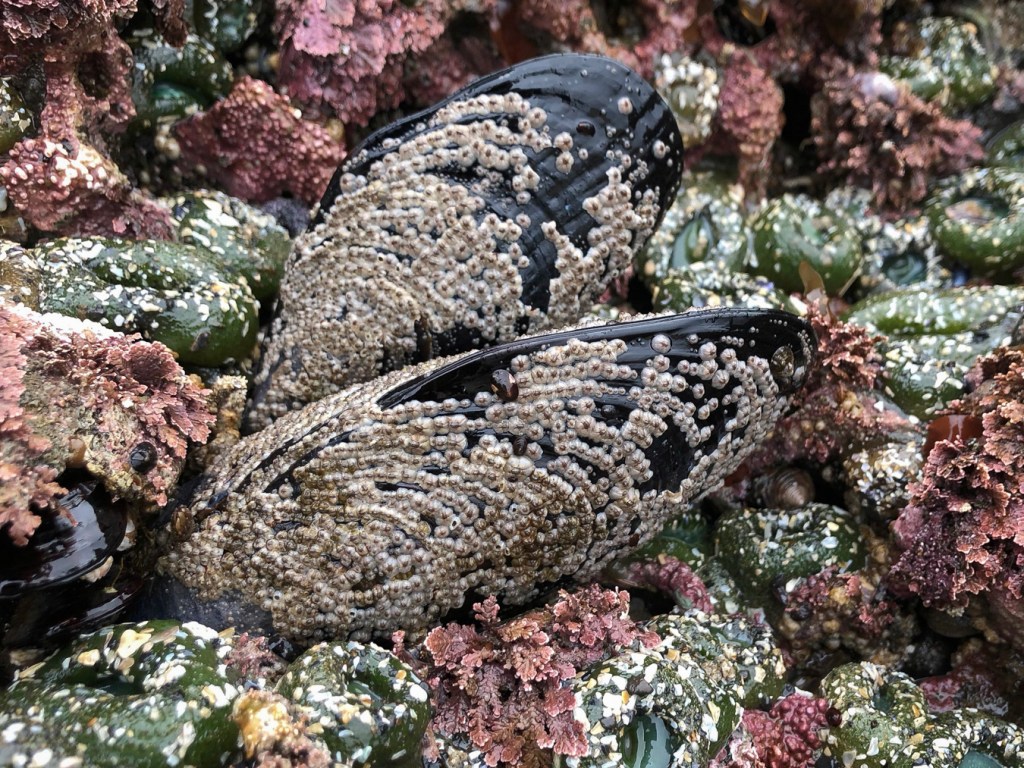
Among other barnacles, it’s usually not too hard to pick out Chthamalus dalli. (Most of the other barnacles in the images below are acorn barnacles, Balanus glandula.)
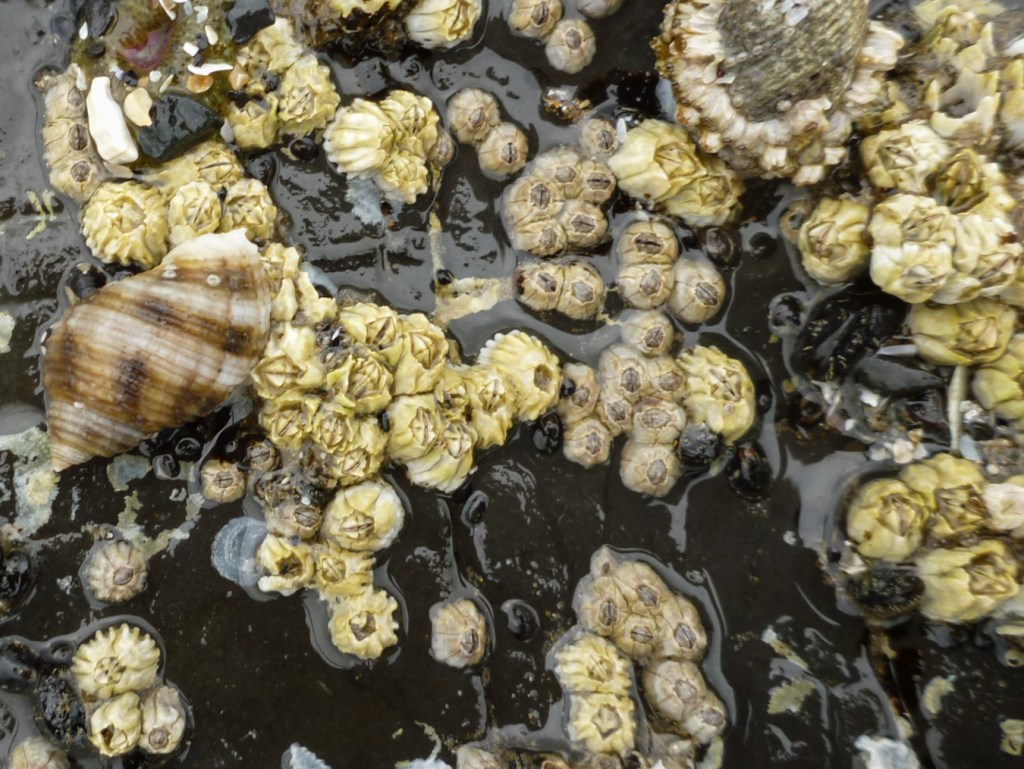
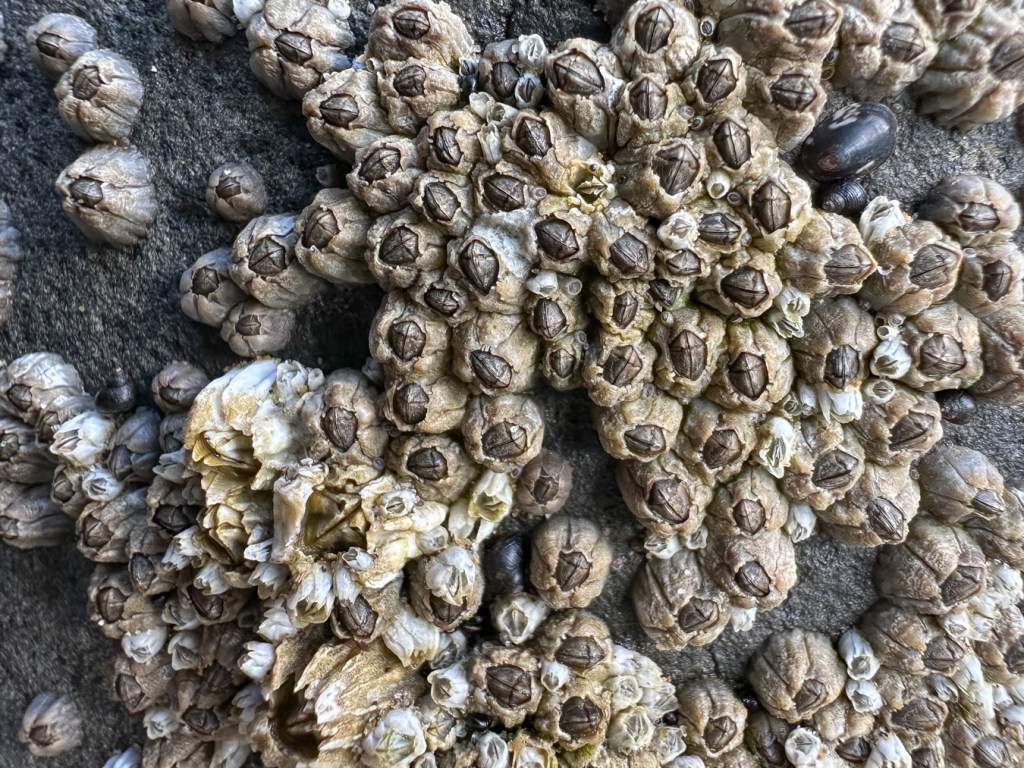
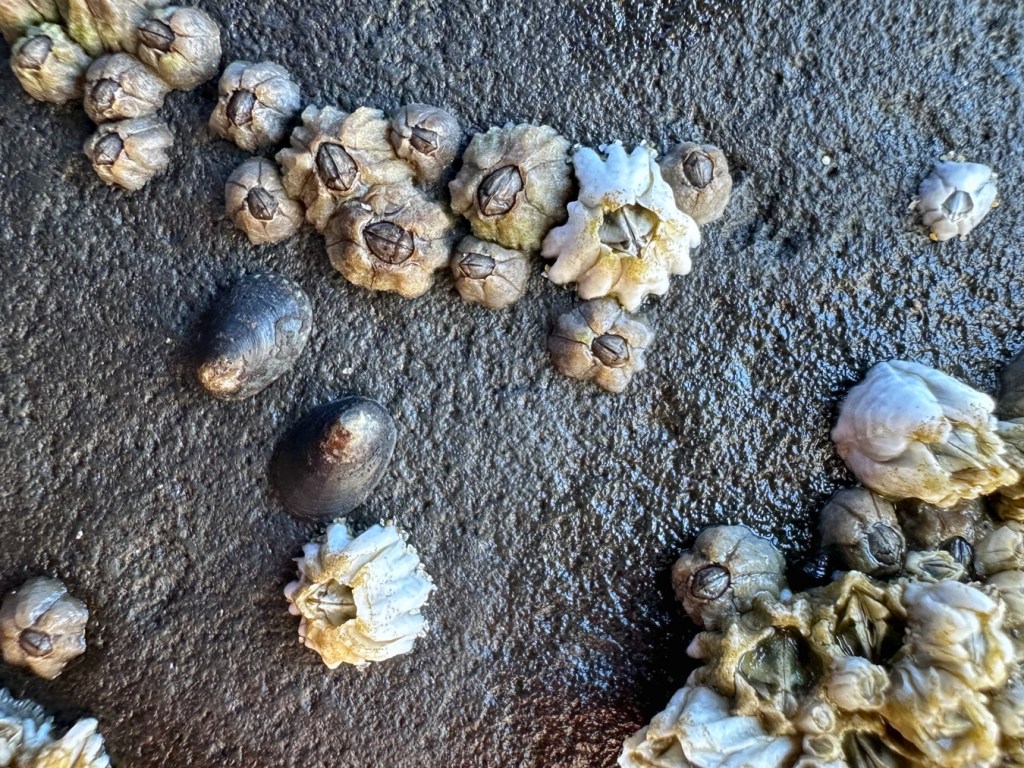
Balanus glandula Acorn barnacle
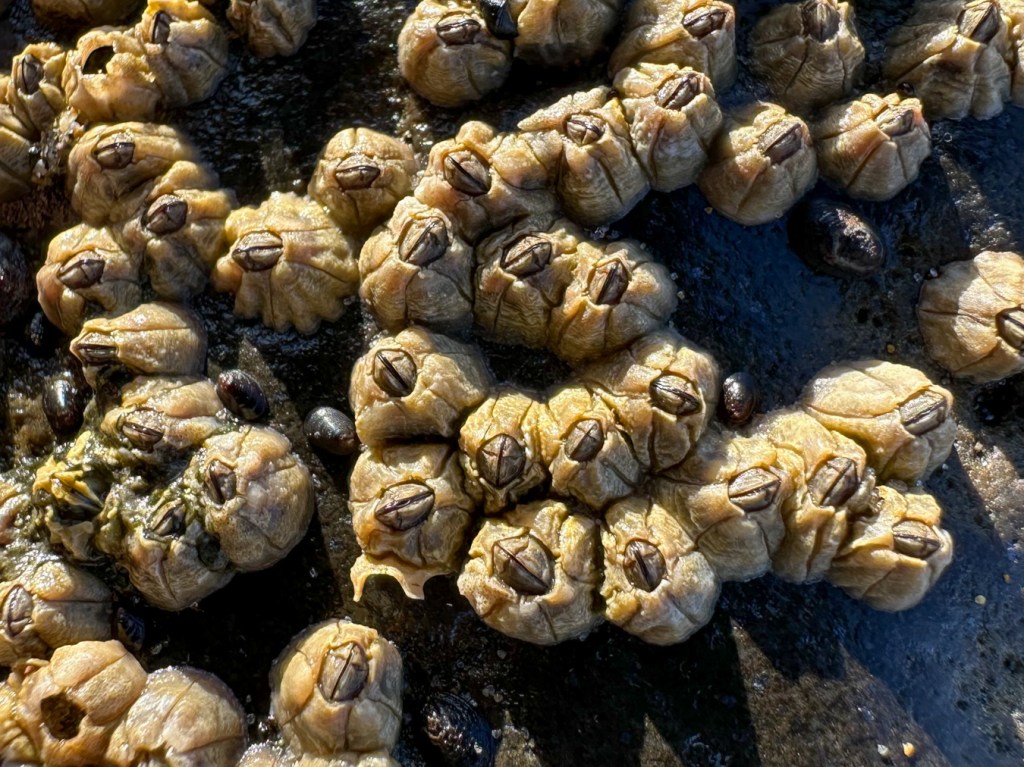
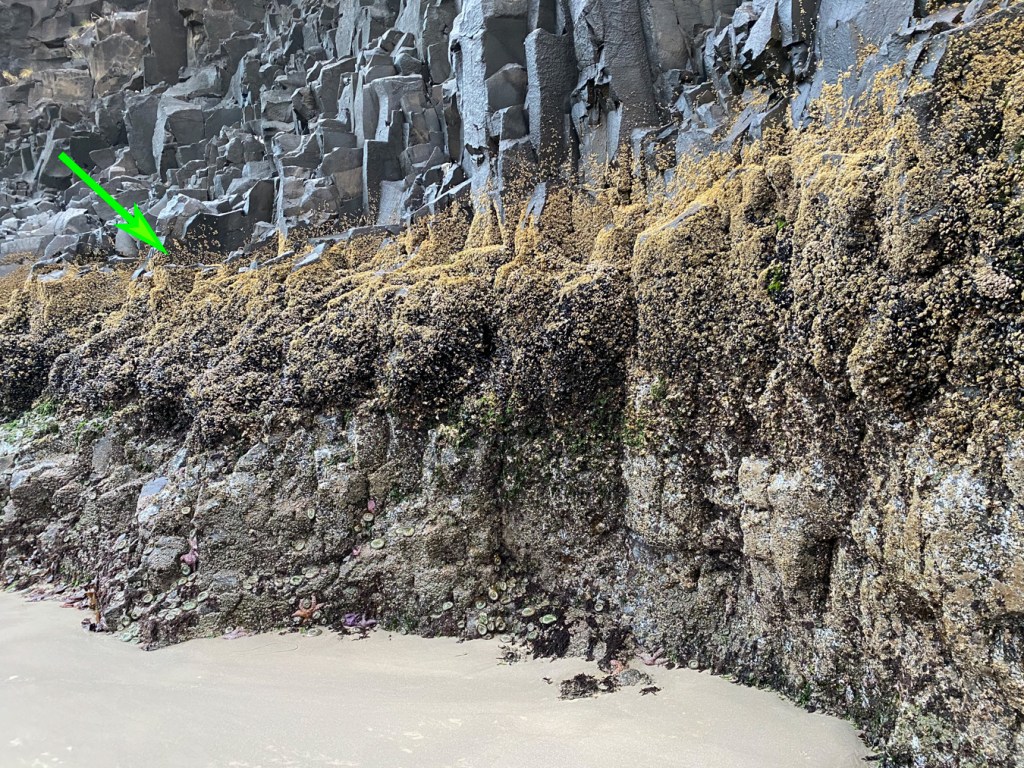
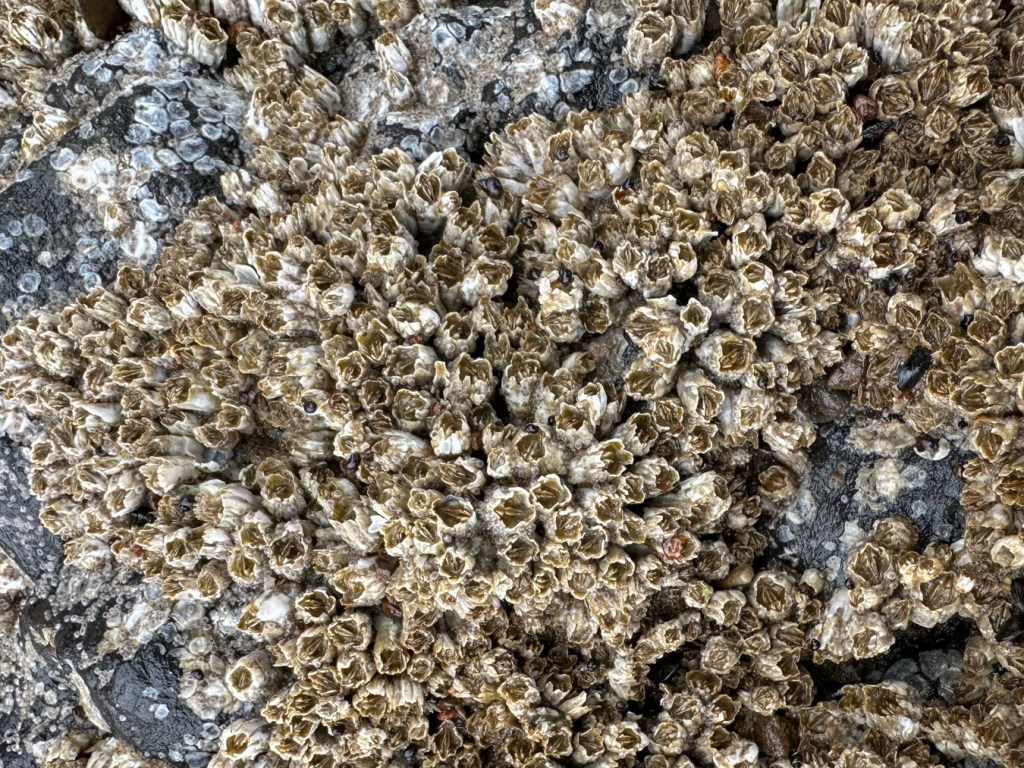
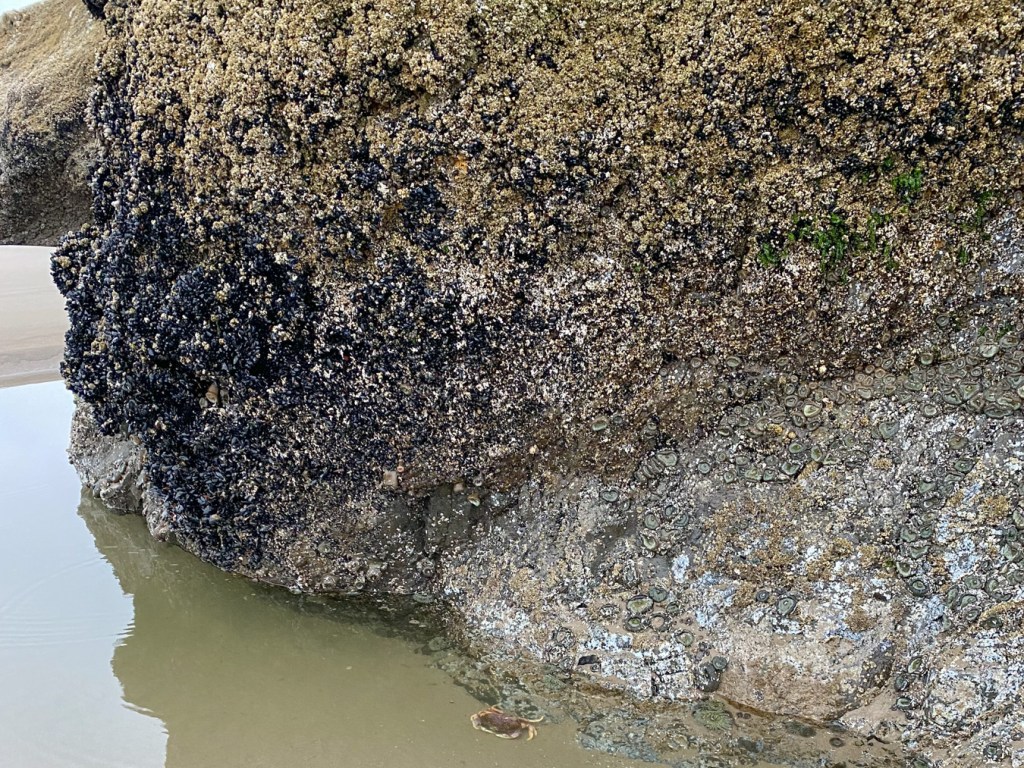
Acorns are often the most noticeable high intertidal barnacle and they frequently appear in scenes of high zonation. When conditions are right, you can identify a band of acorn barnacles at a distance.
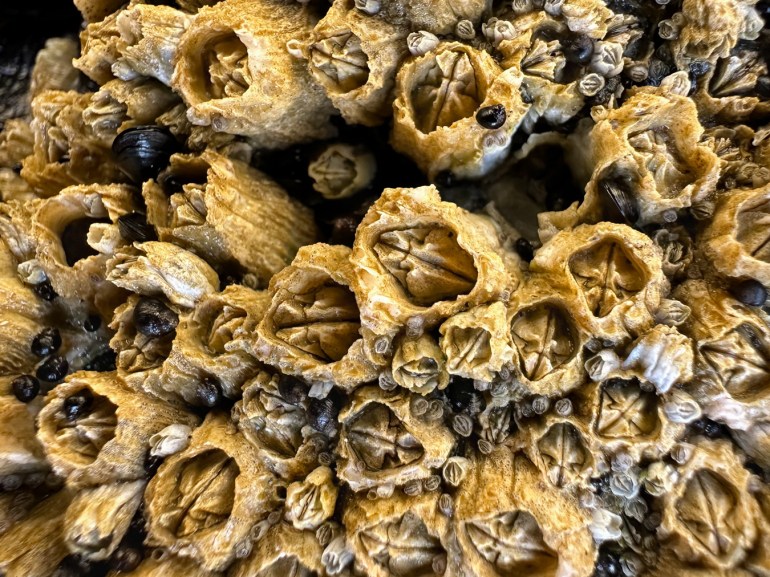
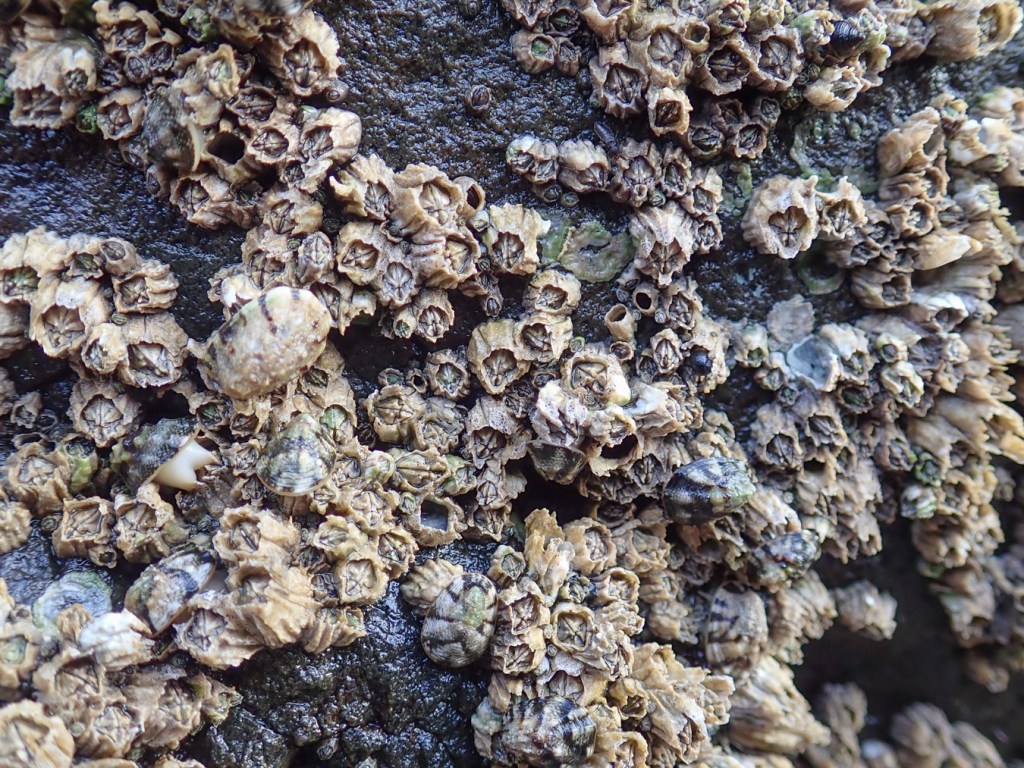
Up close, the sinuous lines of contact between the terga and scuta can help with identification.

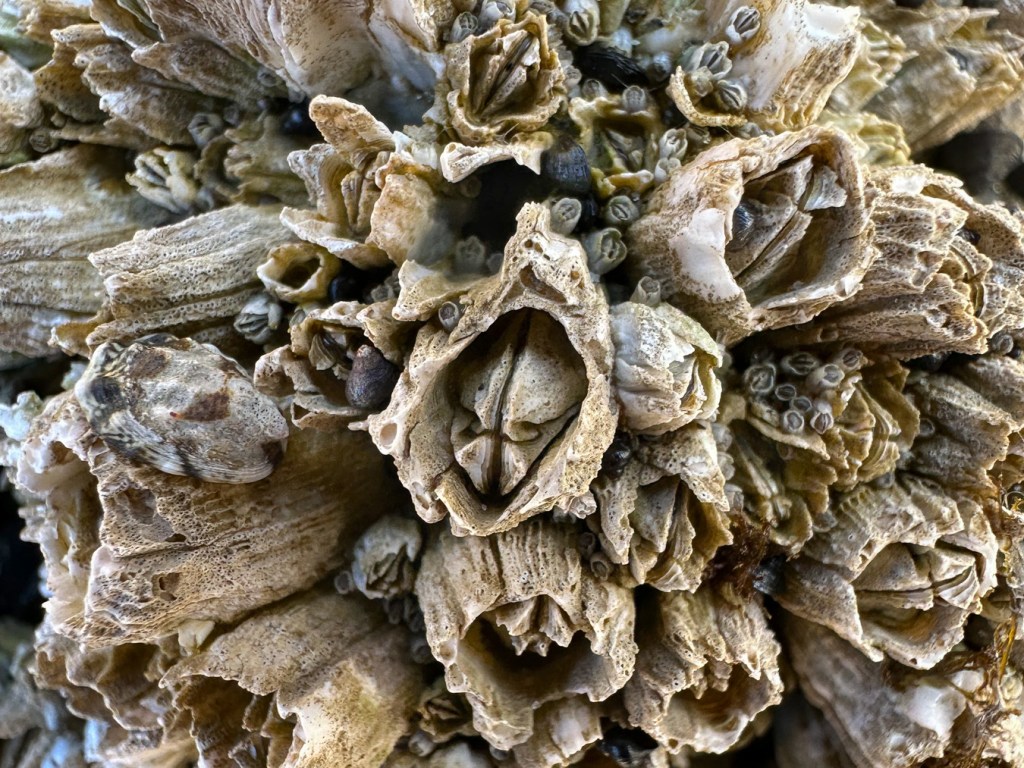
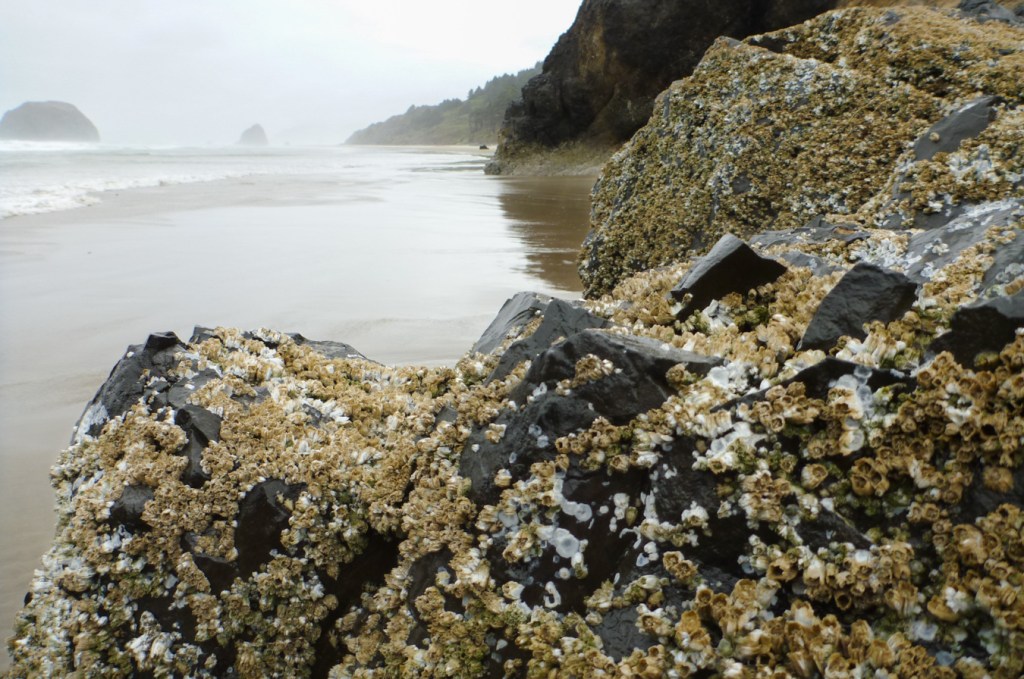
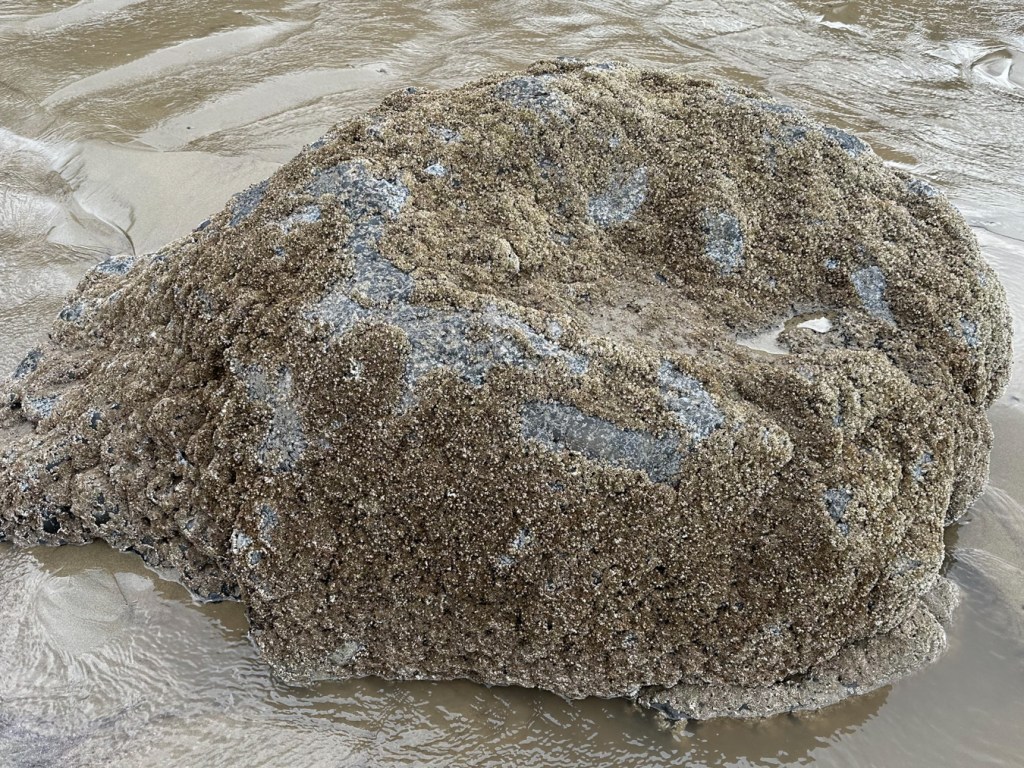
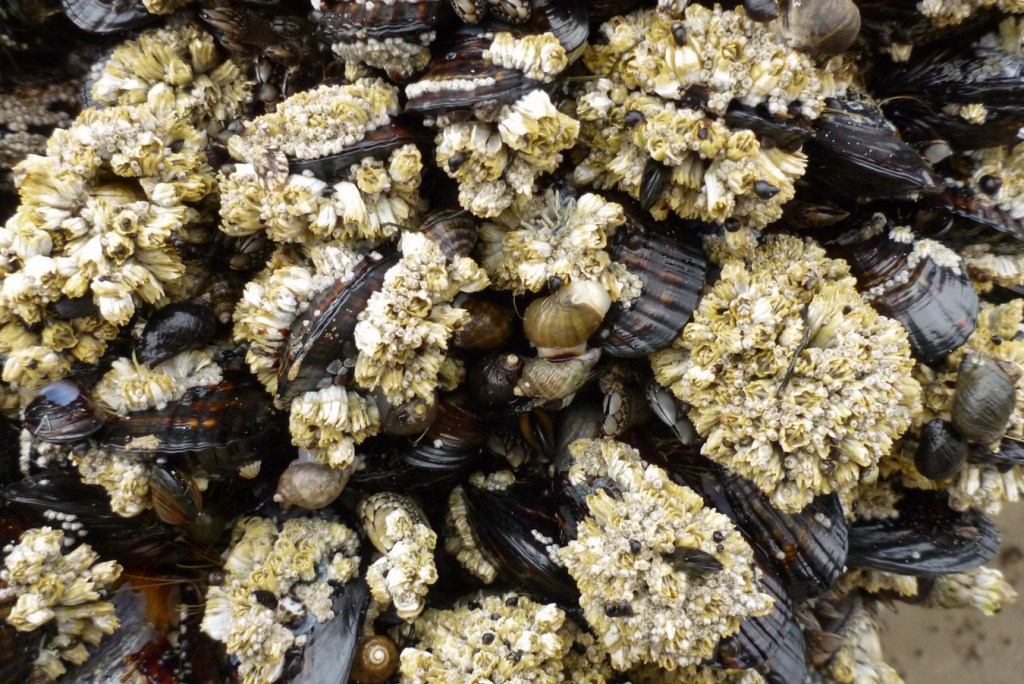
Acorn barnacles can be an encrusting force on high rocks and the upper reaches of mussel beds where, if you’re not thinking about their sharp surfaces, they might remind you with a scratch.
On high rocks
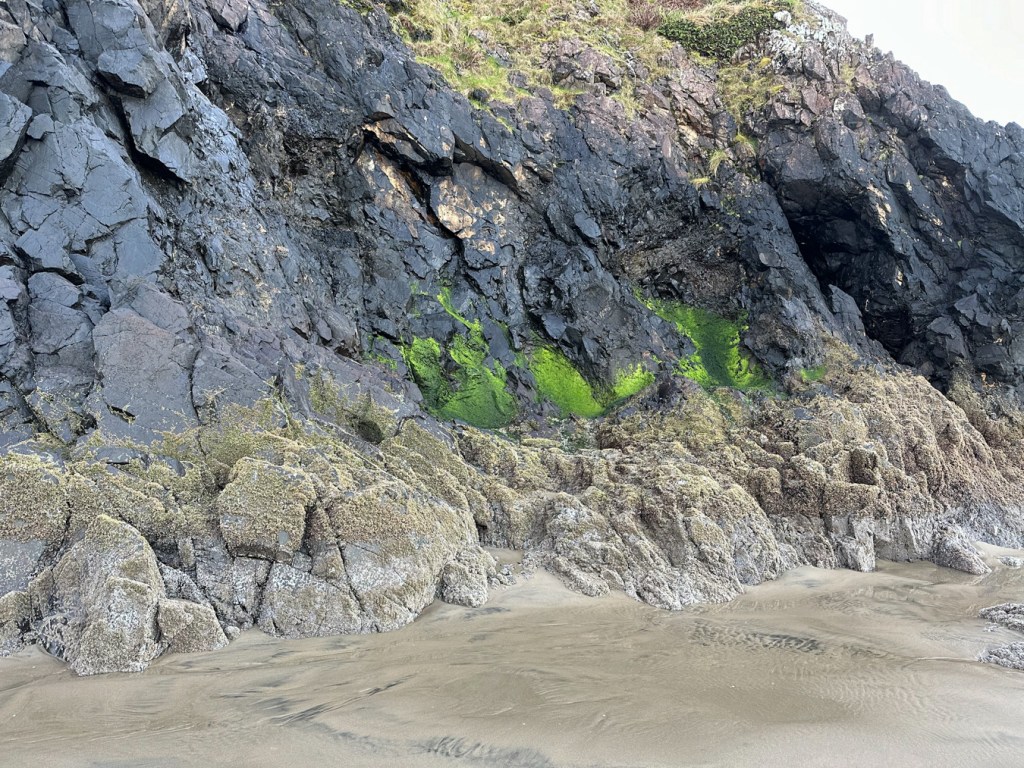
On the upper reaches of mussel beds
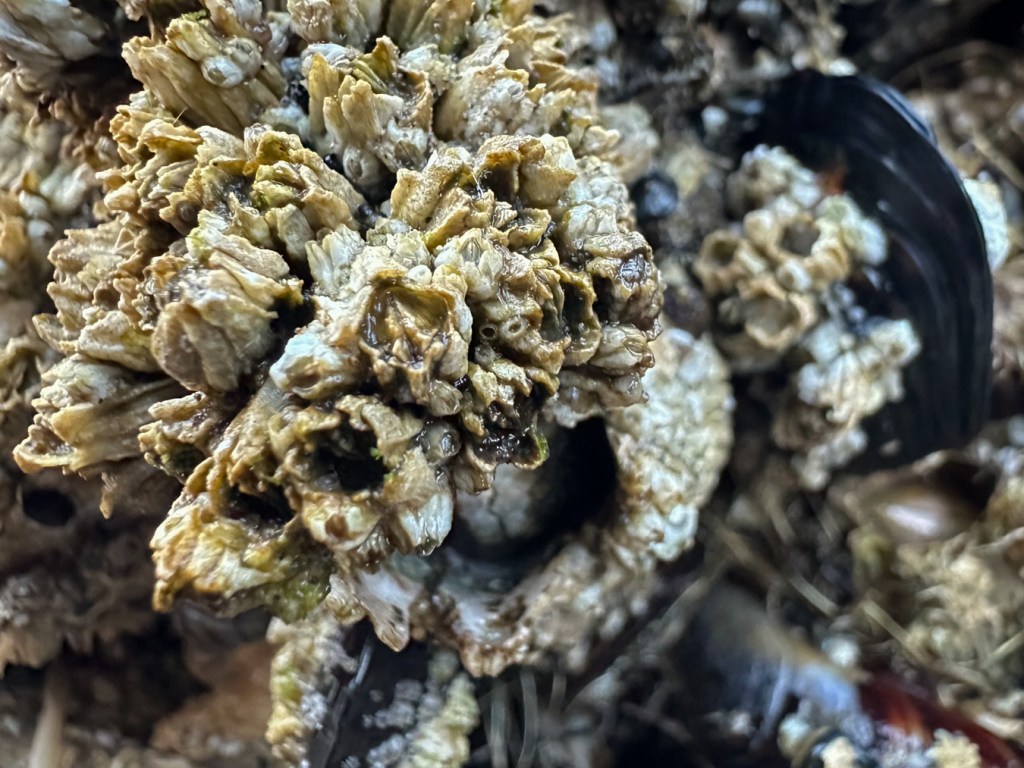
In a crowd, which is pretty common, acorns grow tall and slender. (Besides the columnar shape, note the individual scars left behind on the rocks where barnacles have been somehow knocked off or cleared away.)
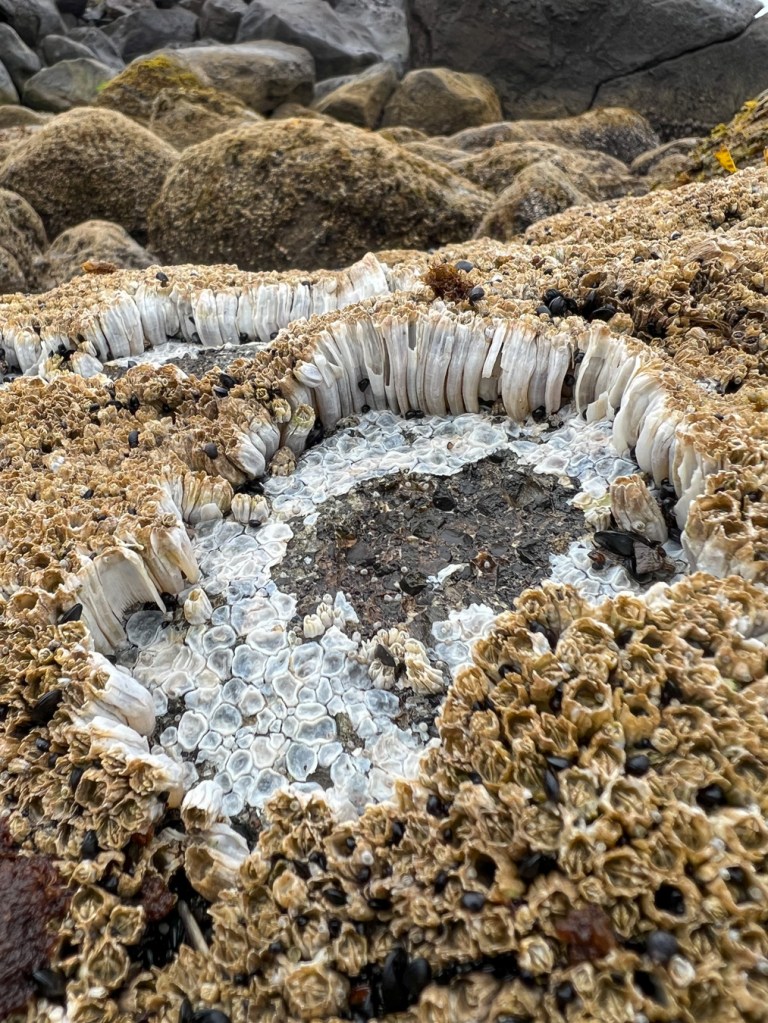
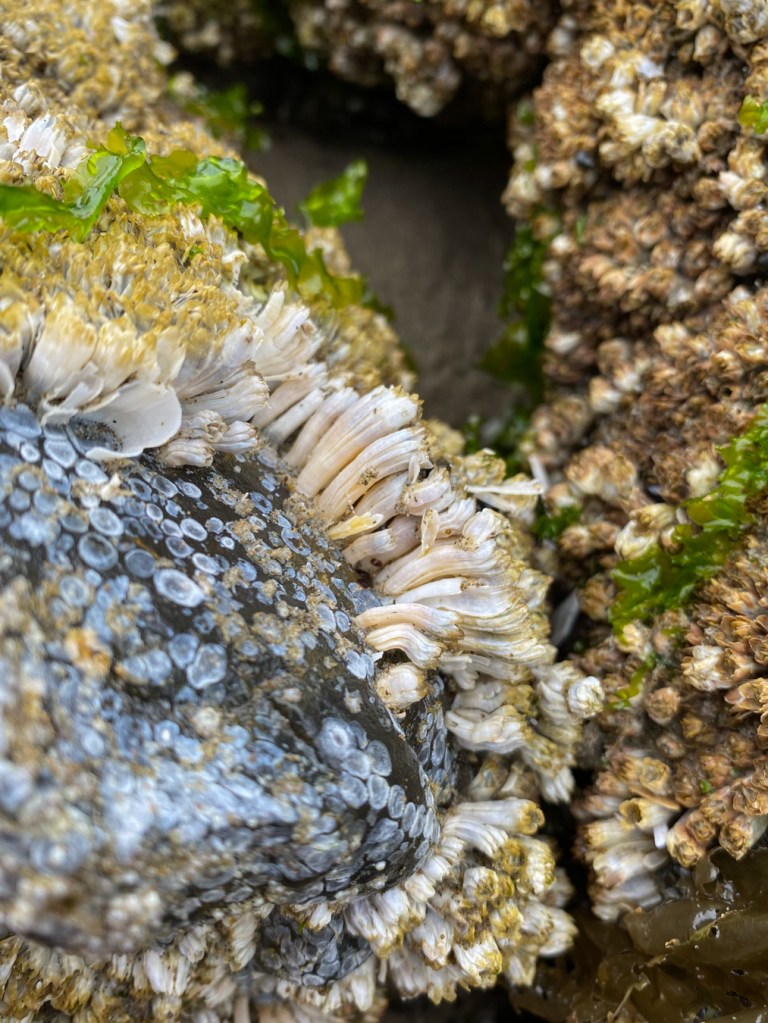
Given some space, other shapes emerge.
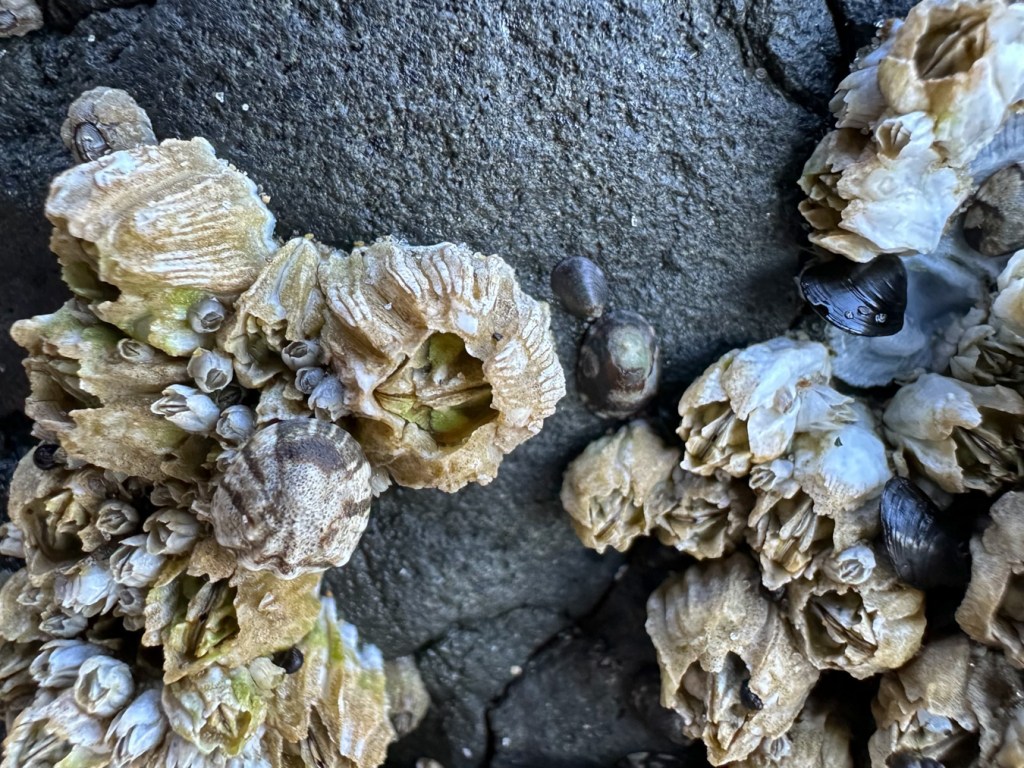
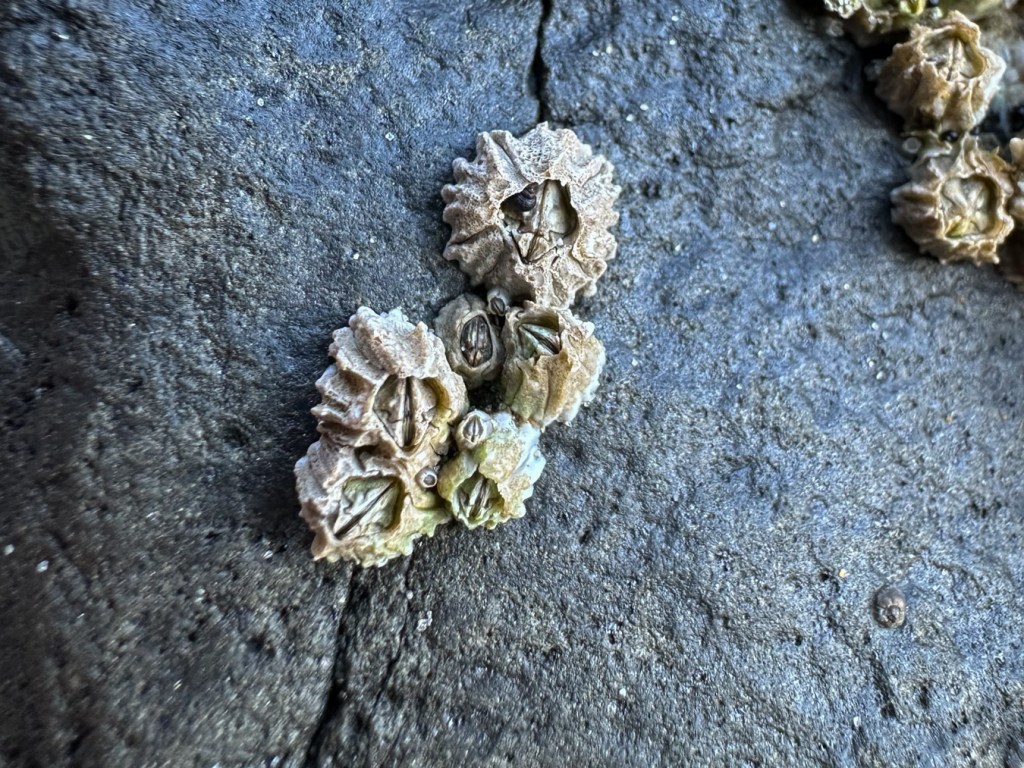
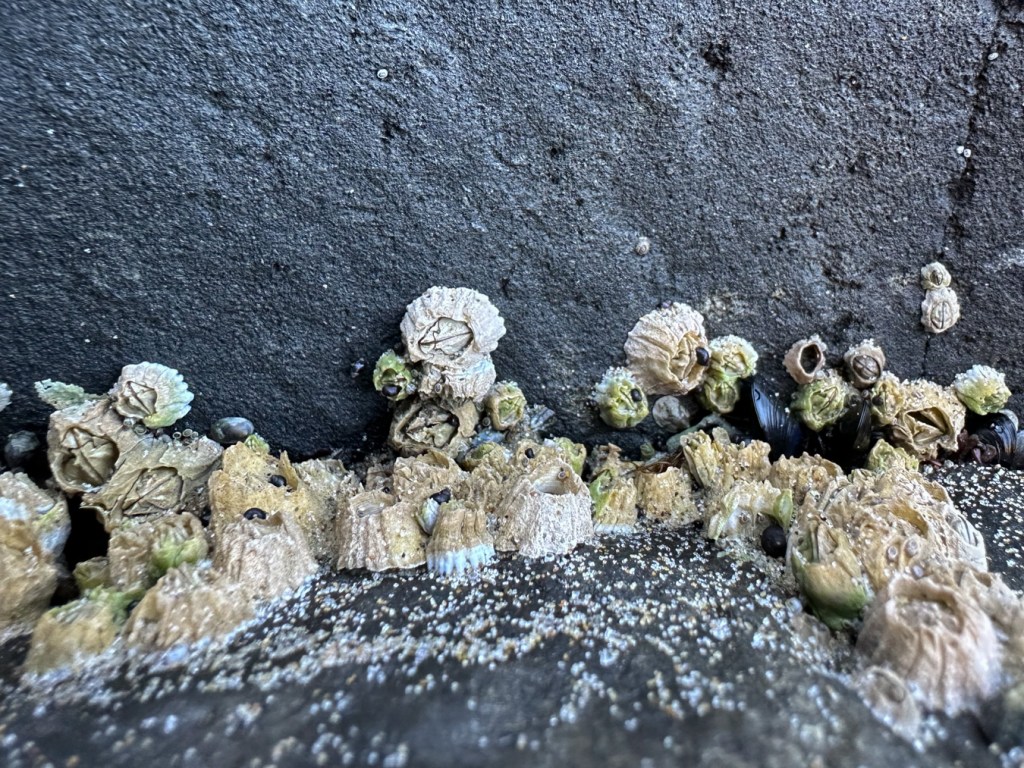
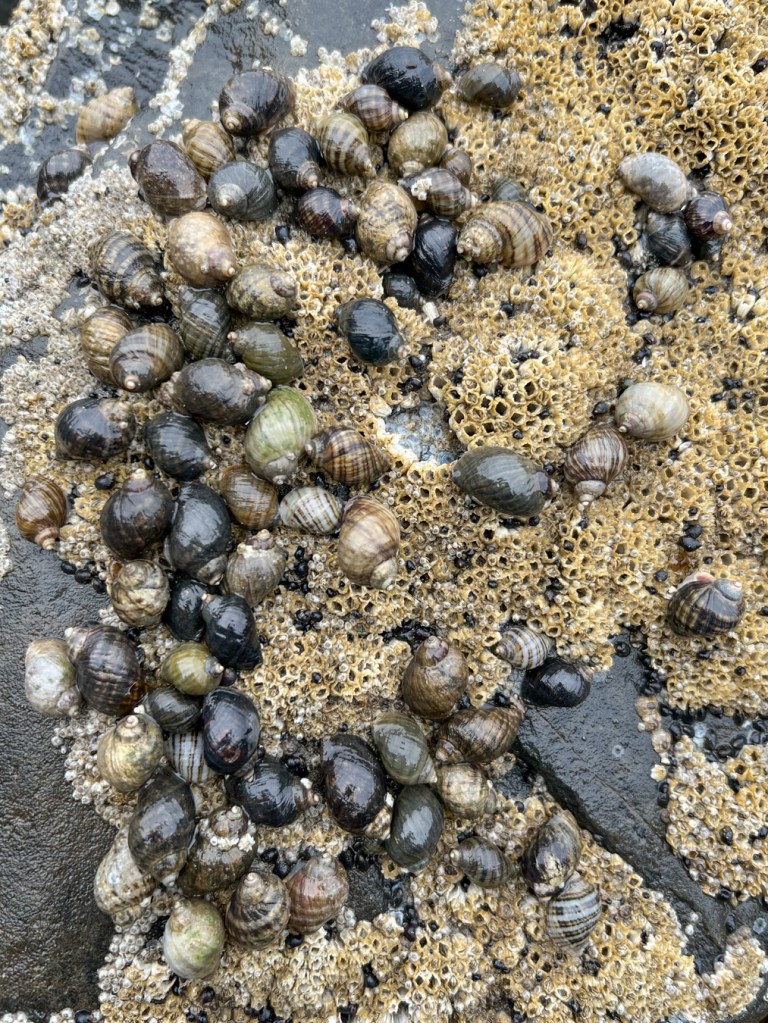
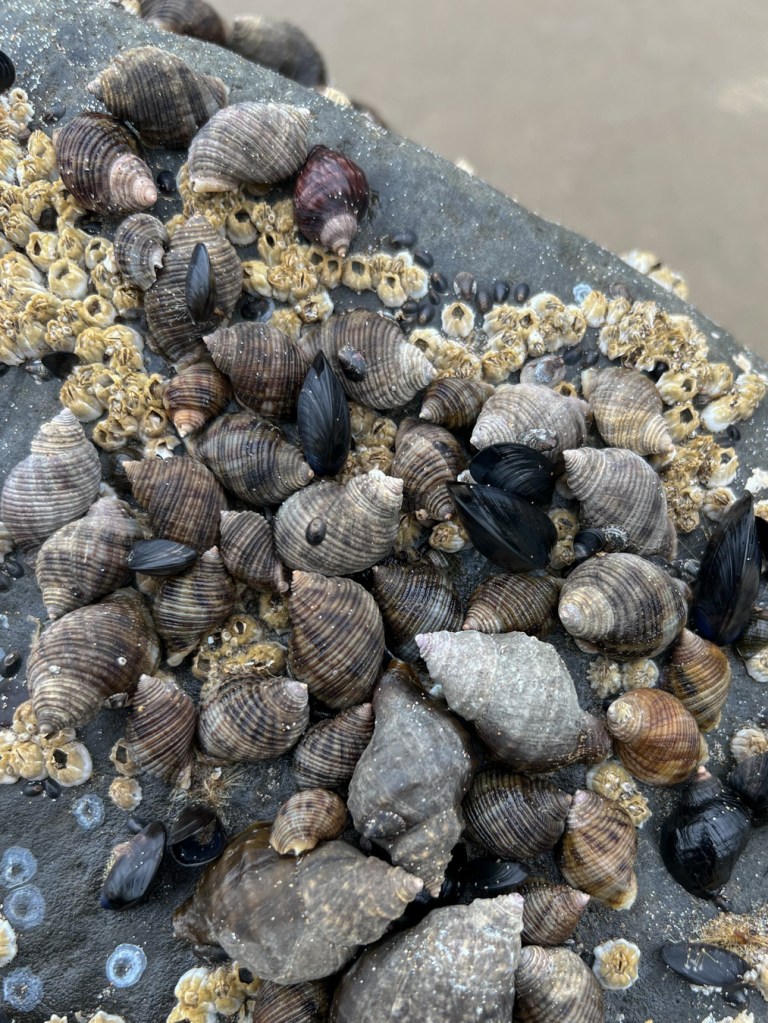
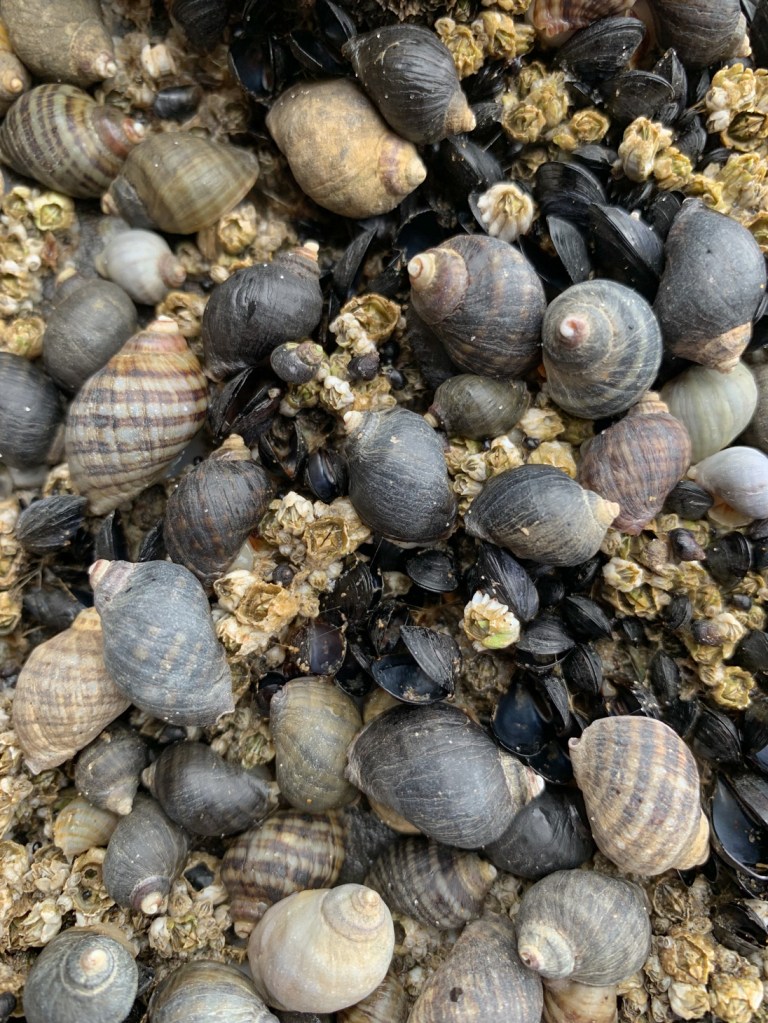
Dogwinkles warrant mention as important predators on Balanus glandula. It’s not unusual to encounter conspicuous aggregations of these predatory snails on and among the the barnacles.
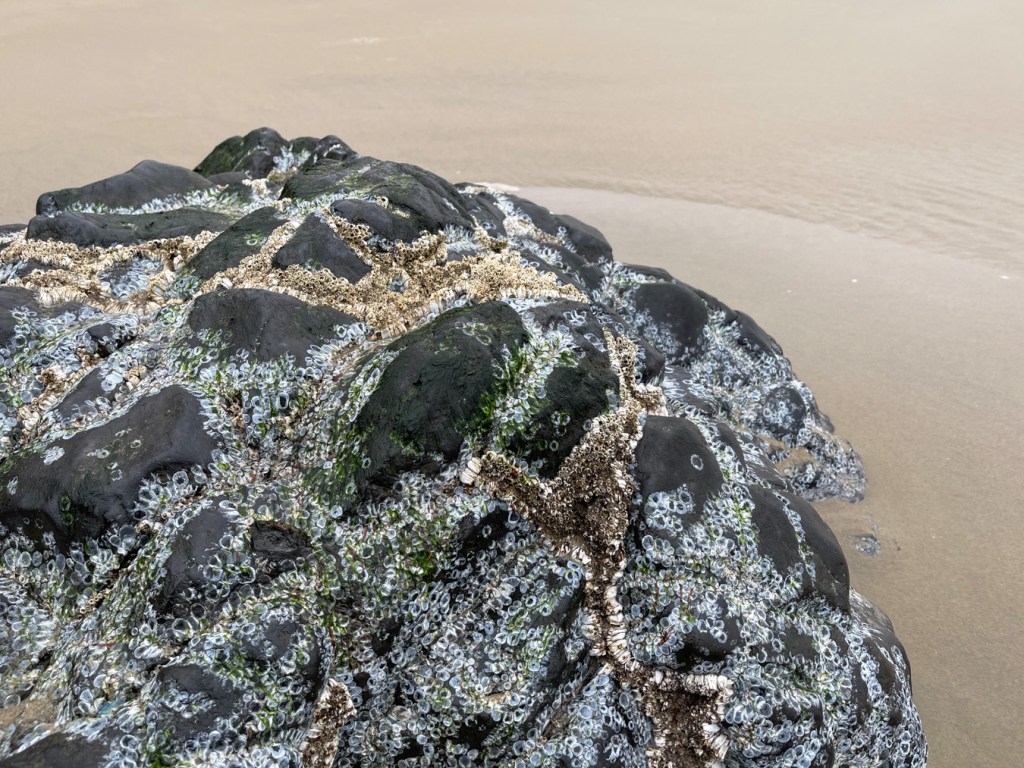
Acorn barnacles don’t fare too well under sand burial, which can be a factor on surf-swept shores. The exposed rock below, seen in February, hosts scars and dead barnacles after being buried by accumulating sand the previous summer. If the rock remains above the sand’s surface long enough it will be recolonized.
Balanus nubilus Giant barnacle
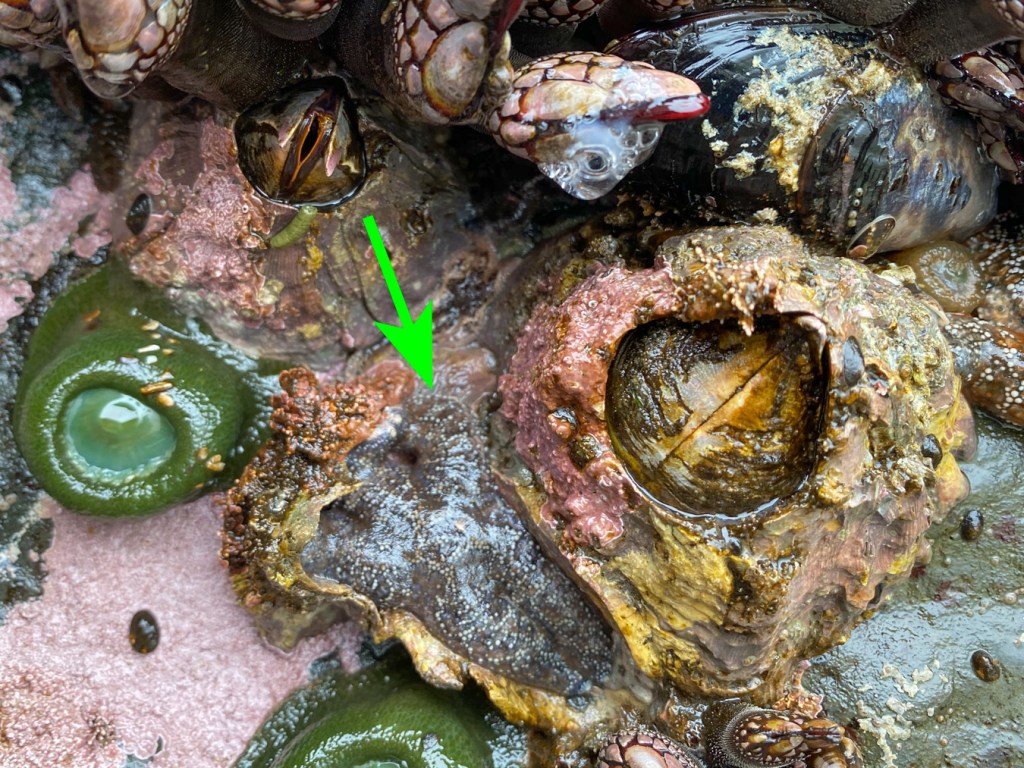
Look for giants in the low intertidal or lower. They can get large, the biggest barnacle you’ll find on the Pacific Northwest’s rocky shores.
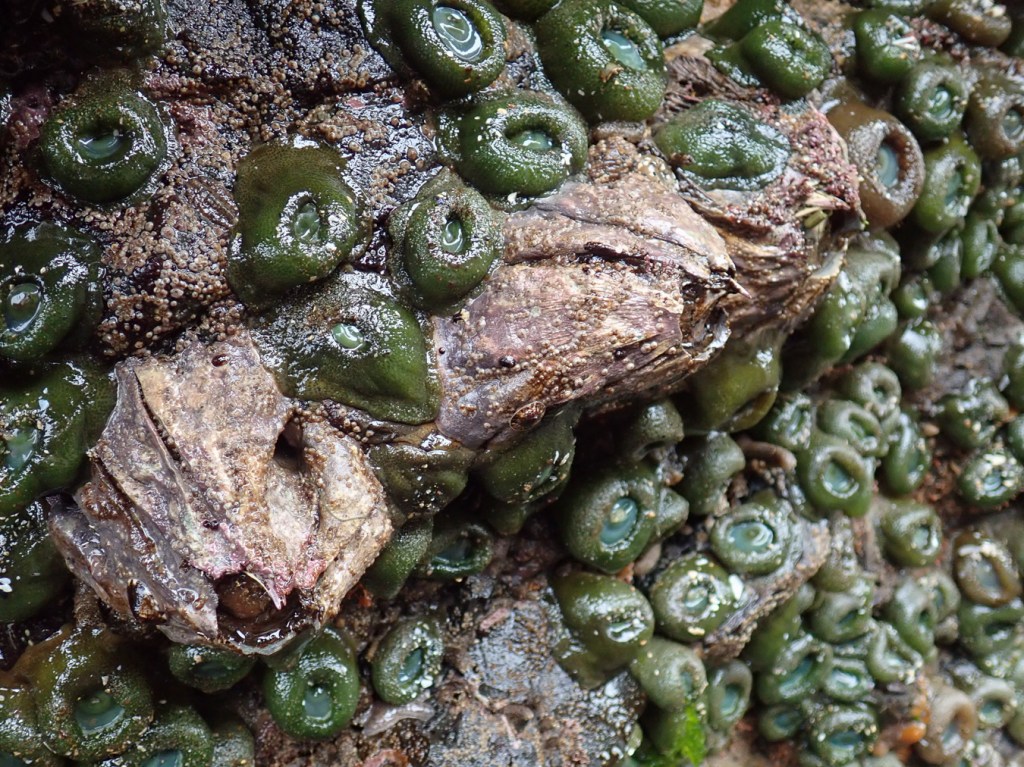
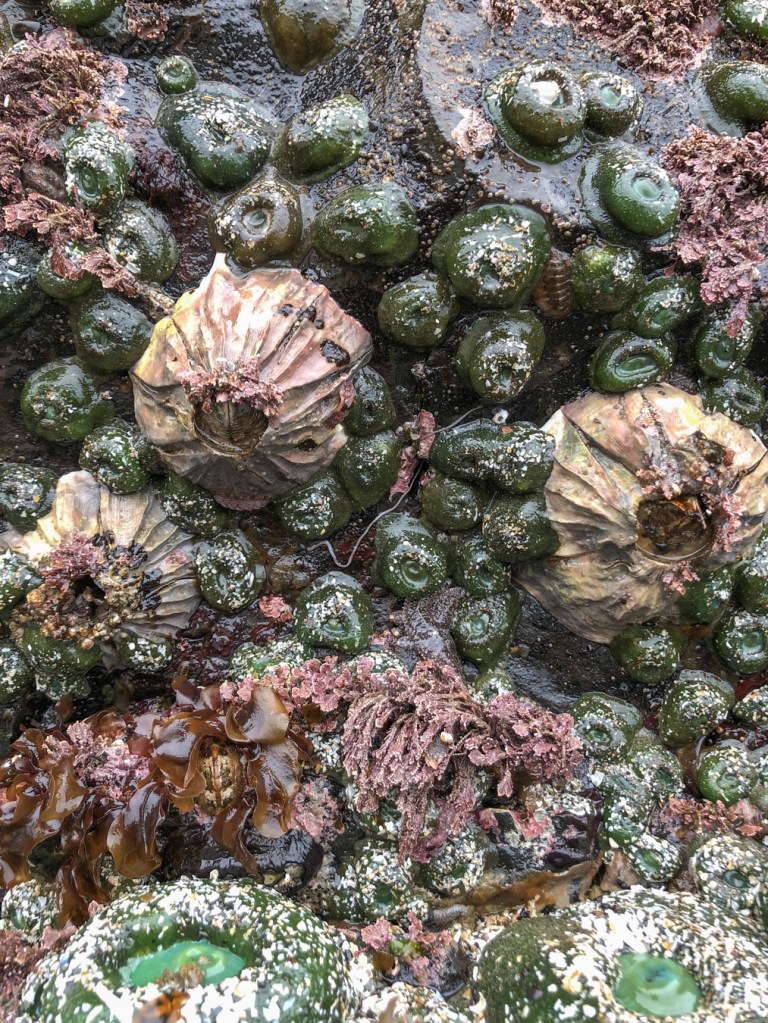
Living giants are such generous hosts they can be hard to pick out among their guests.

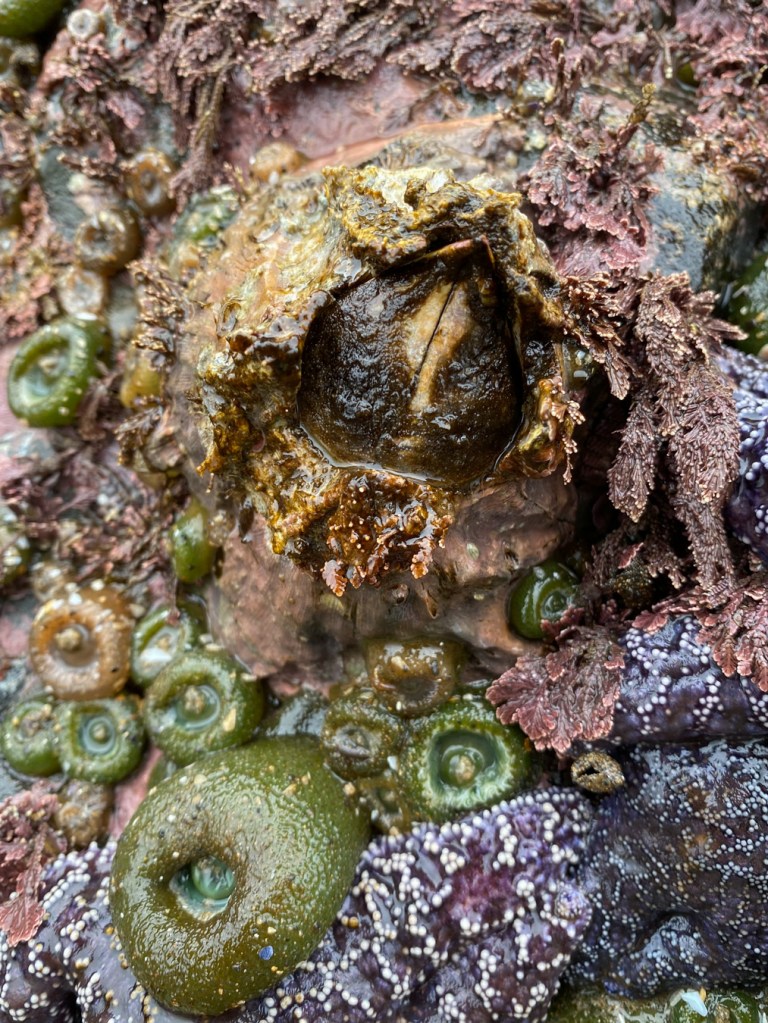
After death the empty shells still serve.
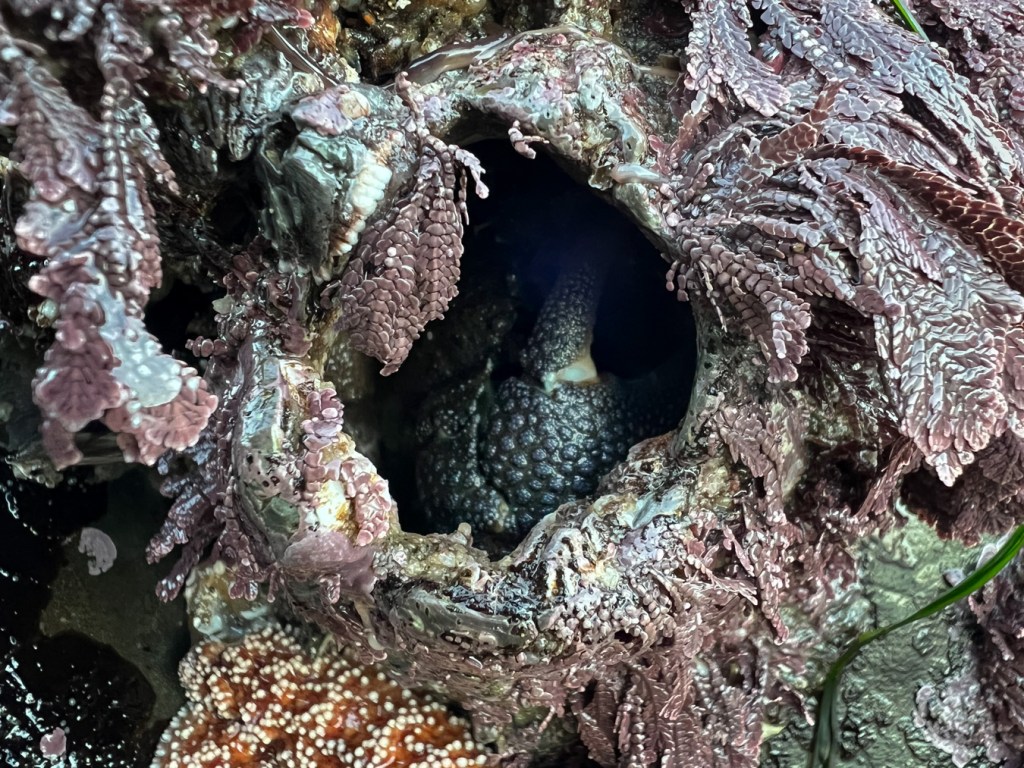
When not too heavily encrusted, the shell’s exterior is a surface to admire.


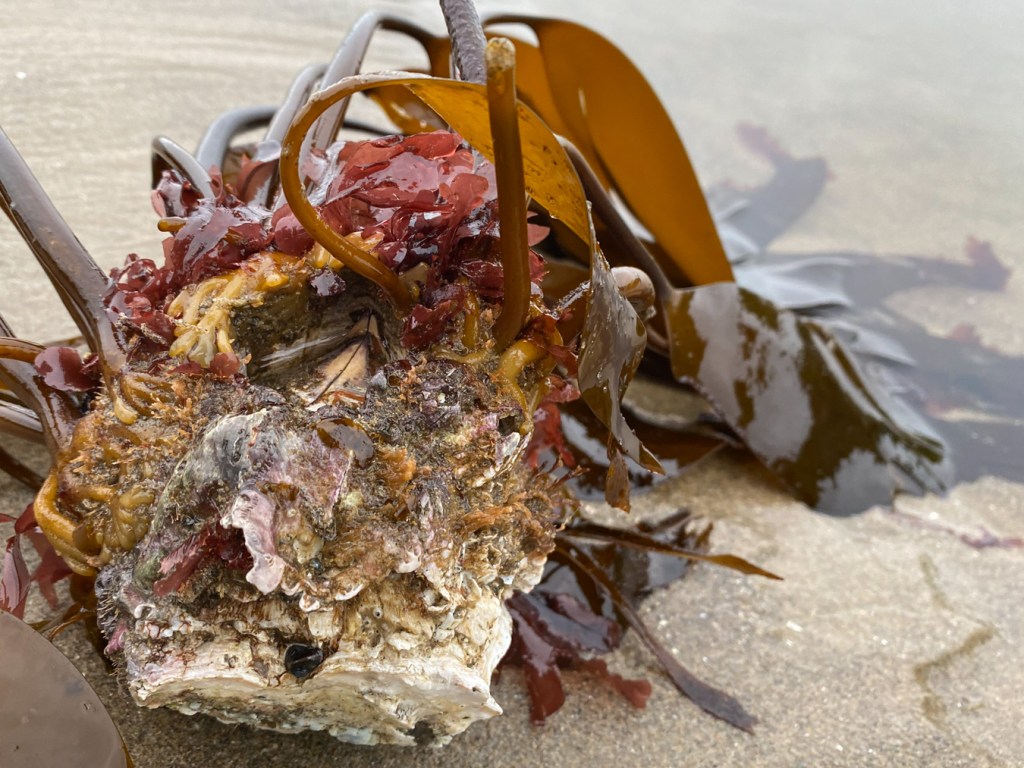
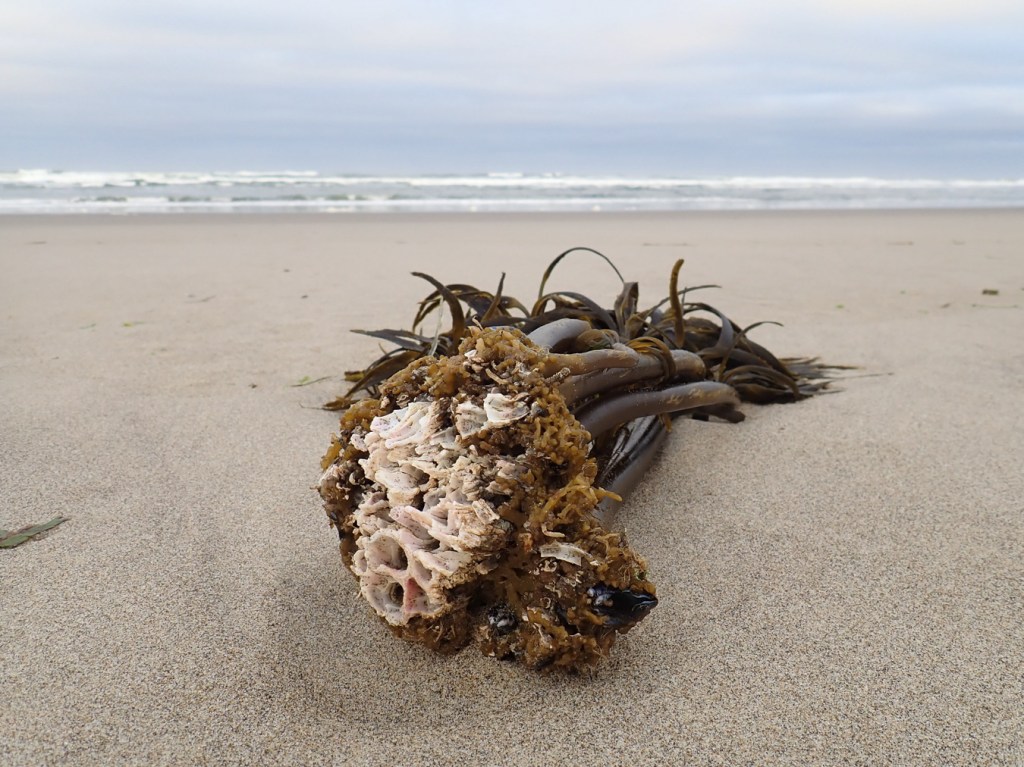
Empty shells and live barnacles can be found on the beach, where they sometimes wash ashore under the grip of kelp holdfasts.

Semibalanus cariosus Thatched barnacle
The derivation of the thatched barnacle’s specific epithet, cariosus, is decayed, rotten, or crumbling. If it’s a reference to the outward appearance of the wall plates, it’s a worthy description. Either way, as they age, their walls acquire a charmingly rustic aspect.
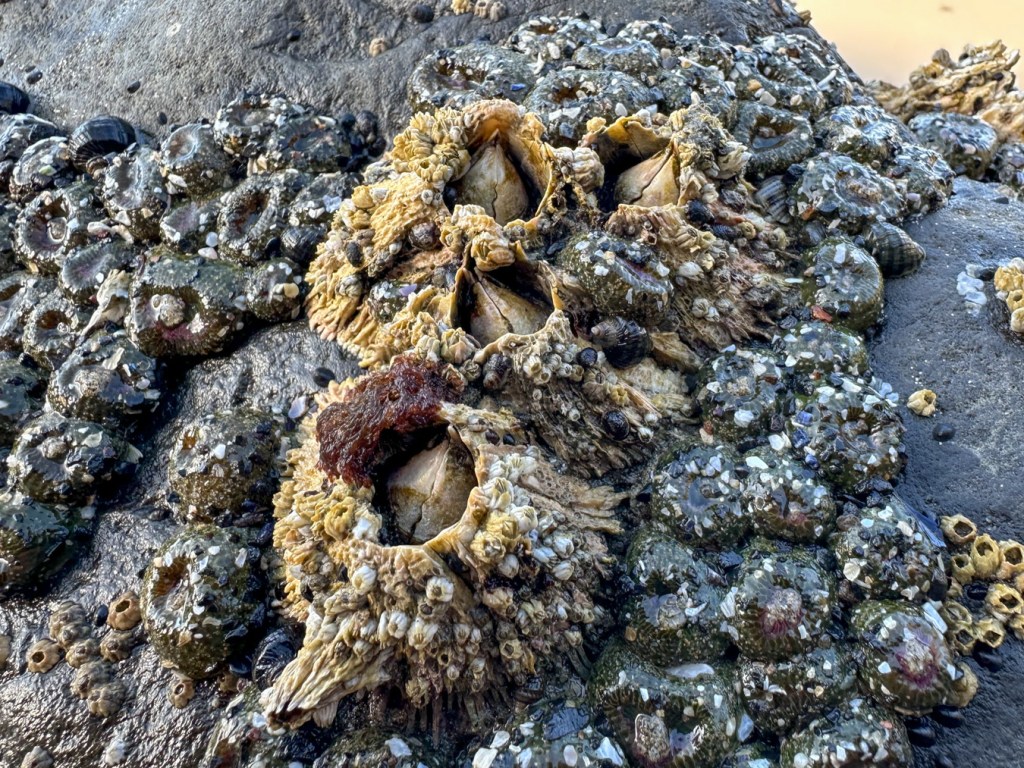
If you’re on the hunt for thatched barnacles, try poking around the California mussel beds.
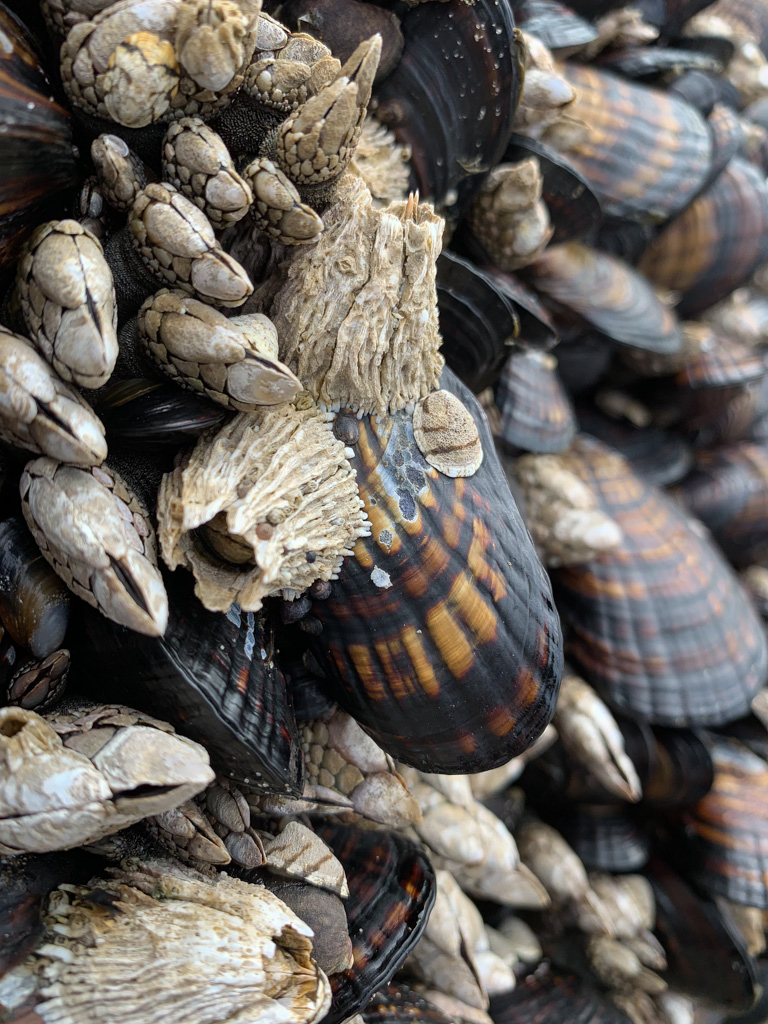
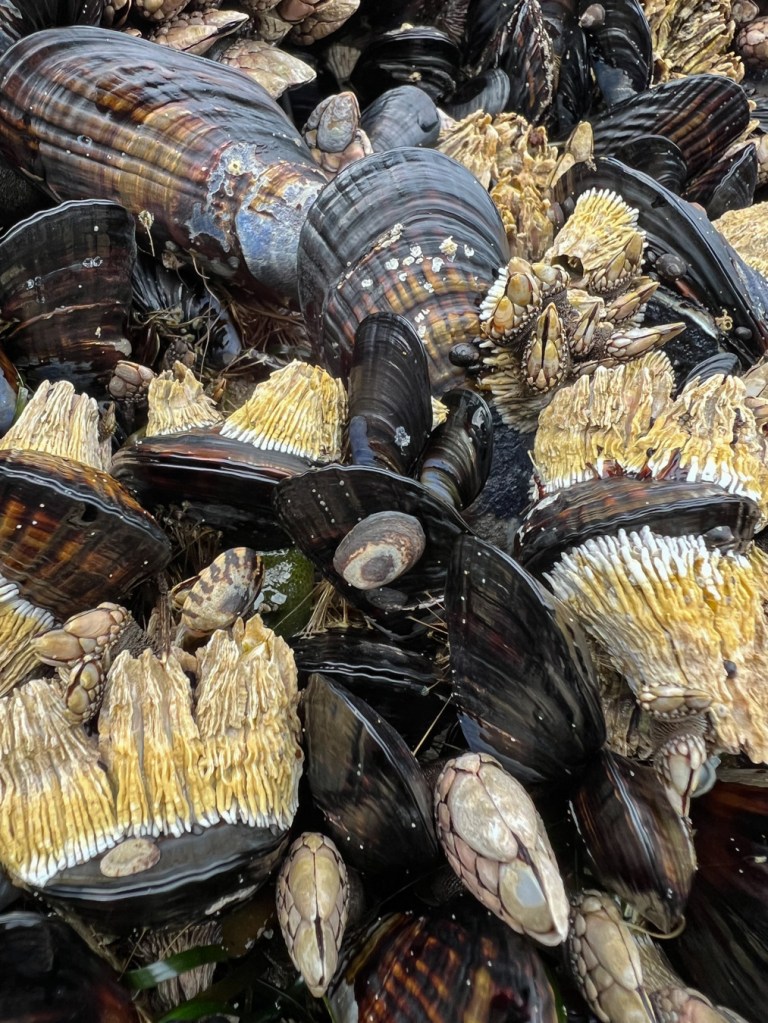
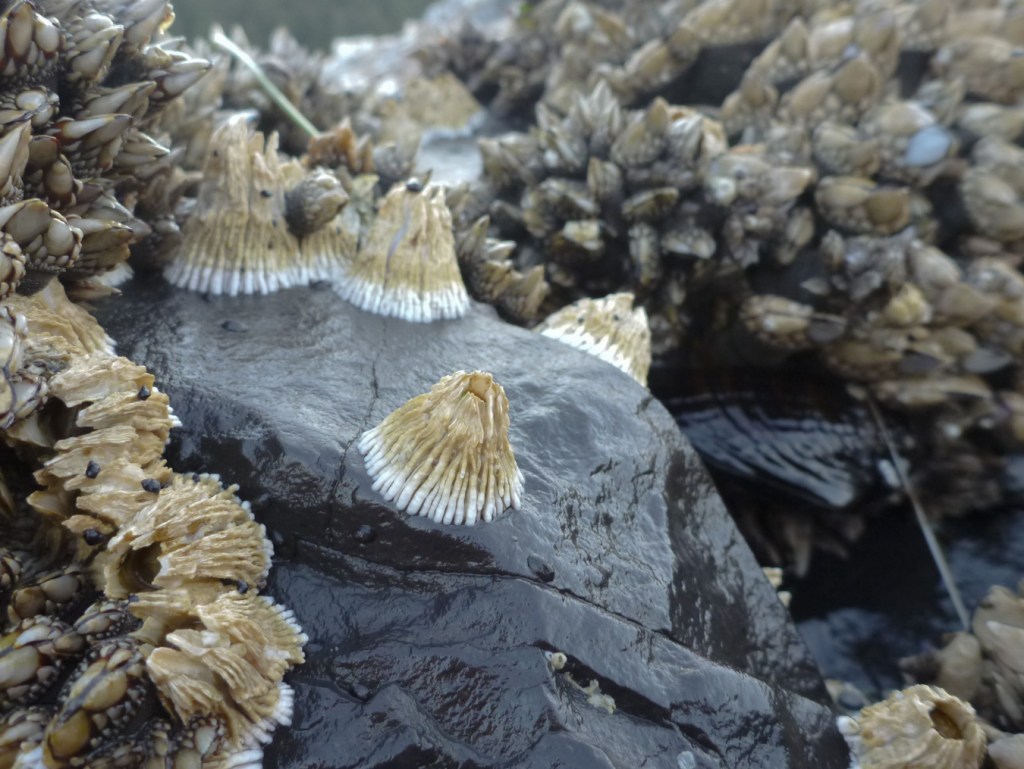
They don’t call ’em thatched barnacles for nothing. When they’re prominent, the ribs on the wall plates resemble a thatched roof or maybe a haystack (upper panels). In older stands, erosion wears down the ribbing (lower panels).
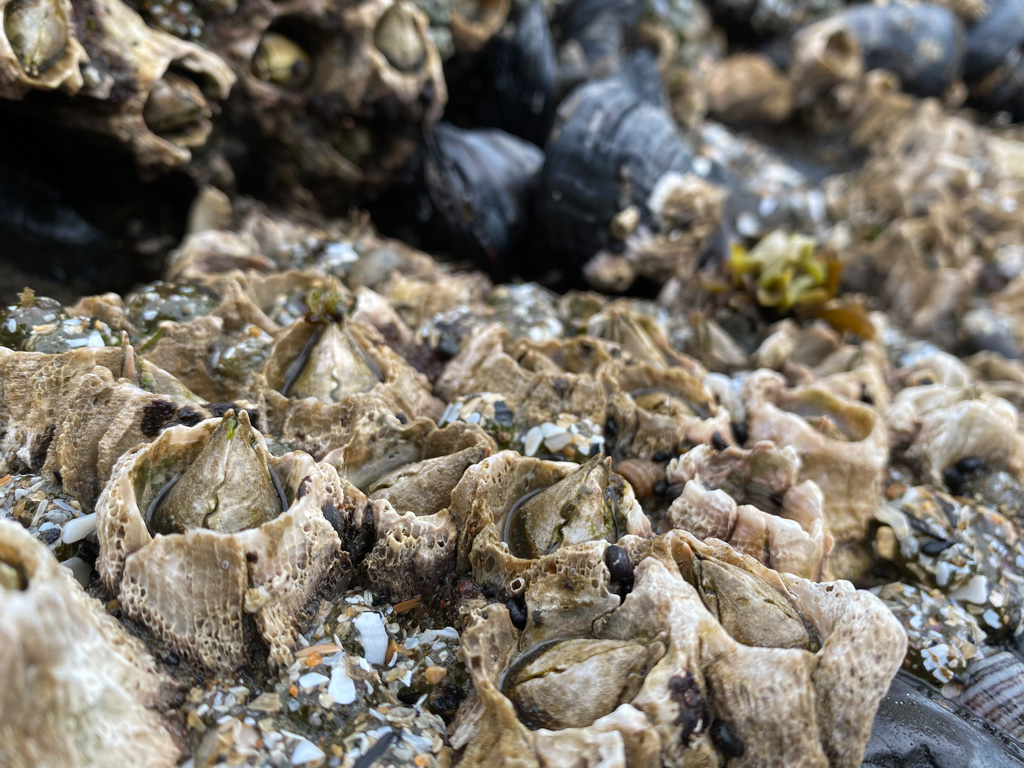
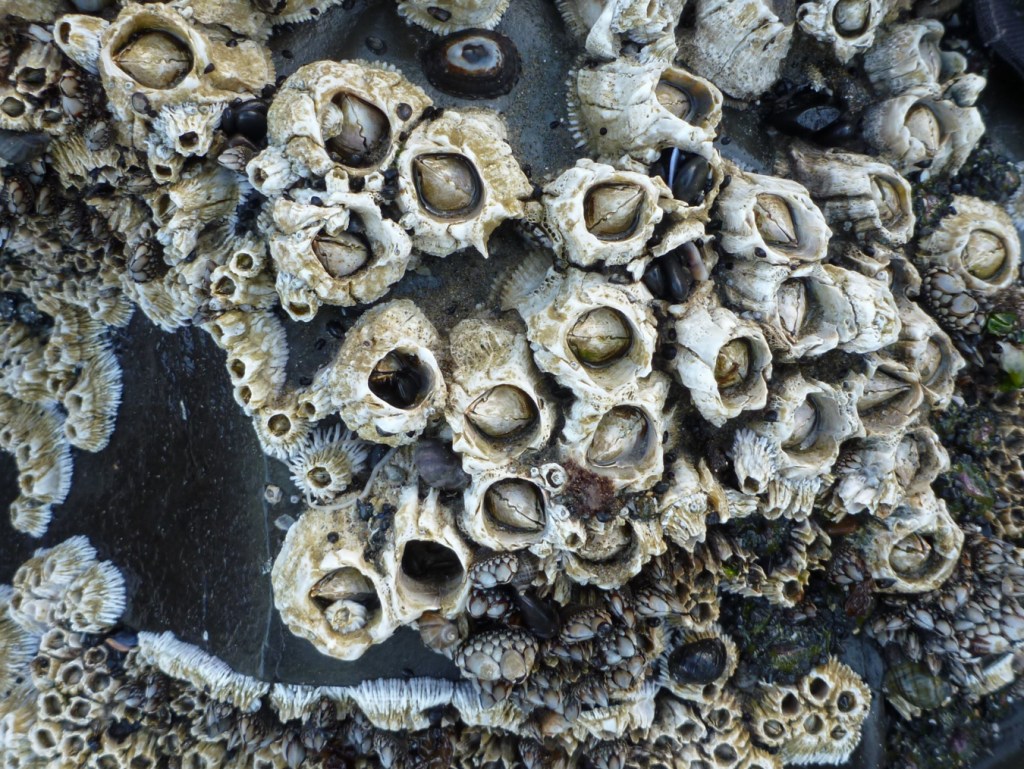
Older individuals won’t look very thatched under crowding or when their walls are densely occupied by smaller barnacles (often acorn barnacles Balanus glandula, as seen in the lower panel).
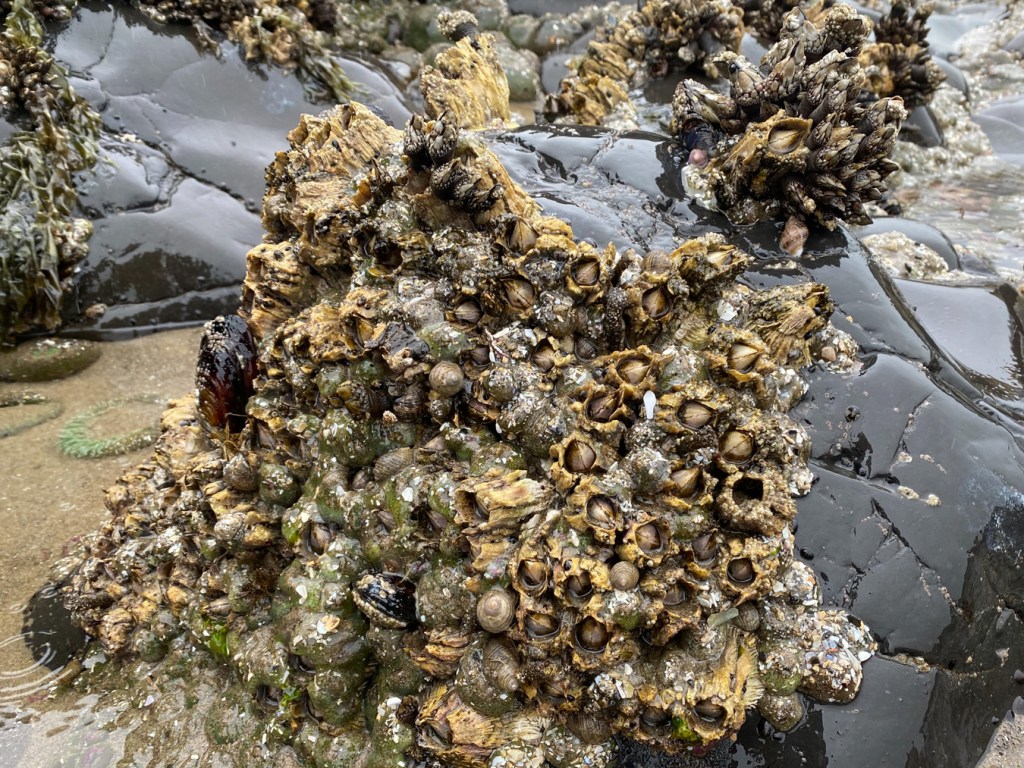

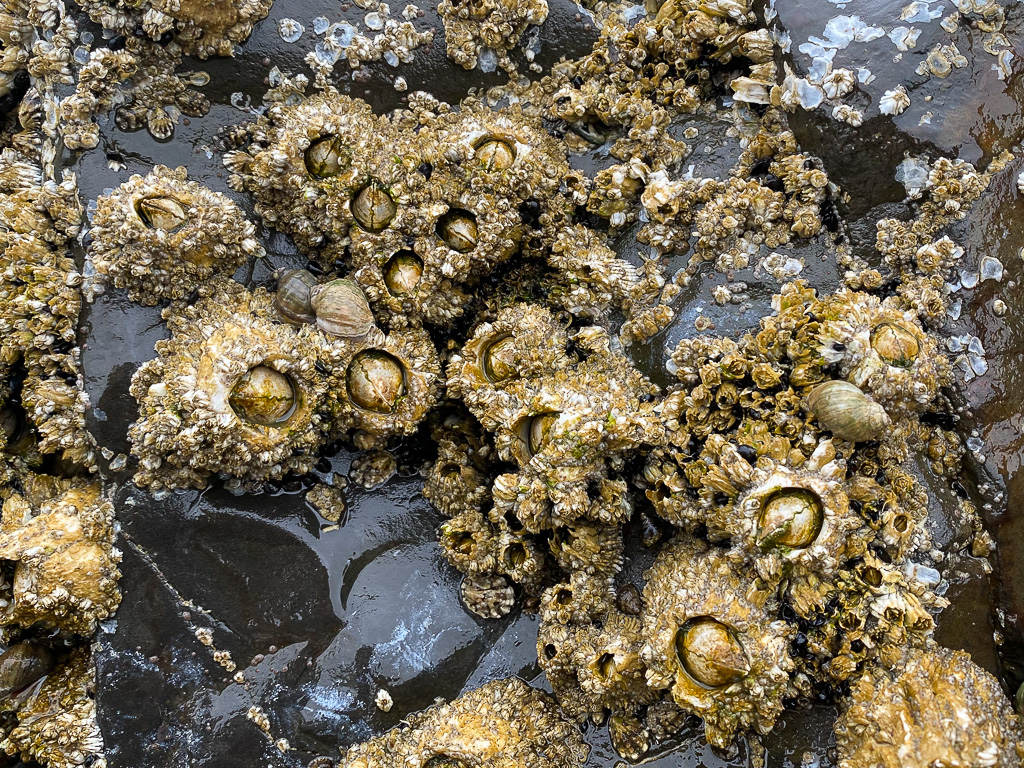
Below, various size classes of acorn barnacles Balanus glandula have so densely settled on two fairly large thatched barnacles that they have almost completely obscured them in places. Where the acorns settled only sparsely, the characteristic thatched appearance of Semibalanus cariosus is beautifully revealed, along with a little wear and tear. A few little brown barnacles Chthamalus dalli also appear in the scene.

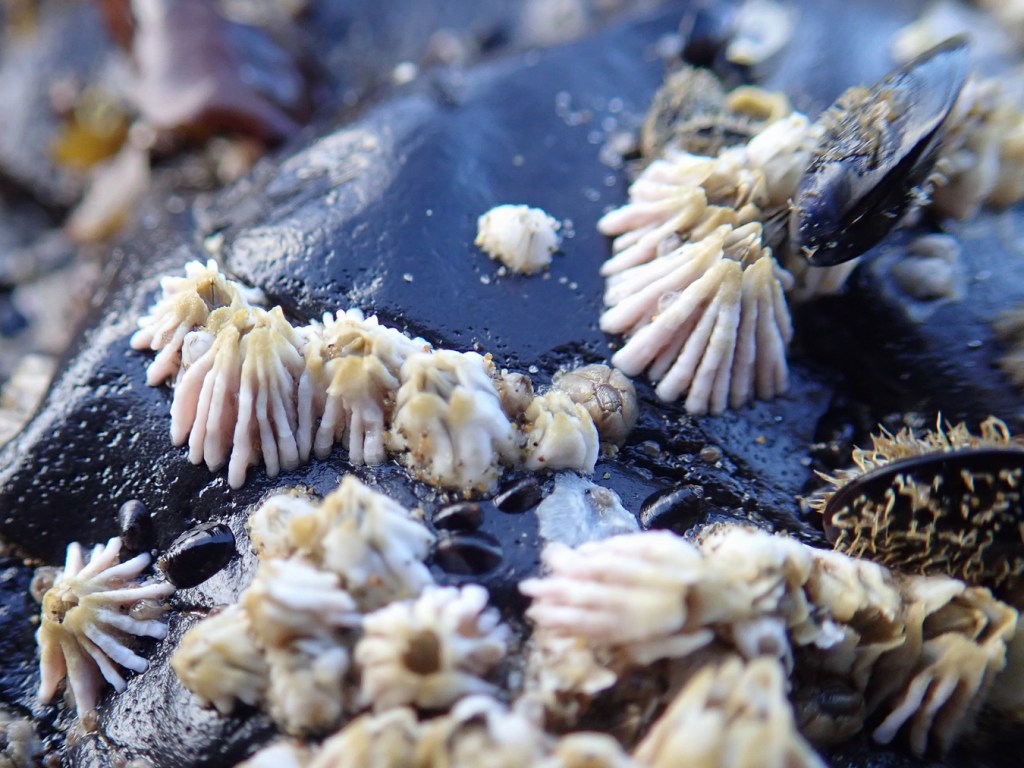
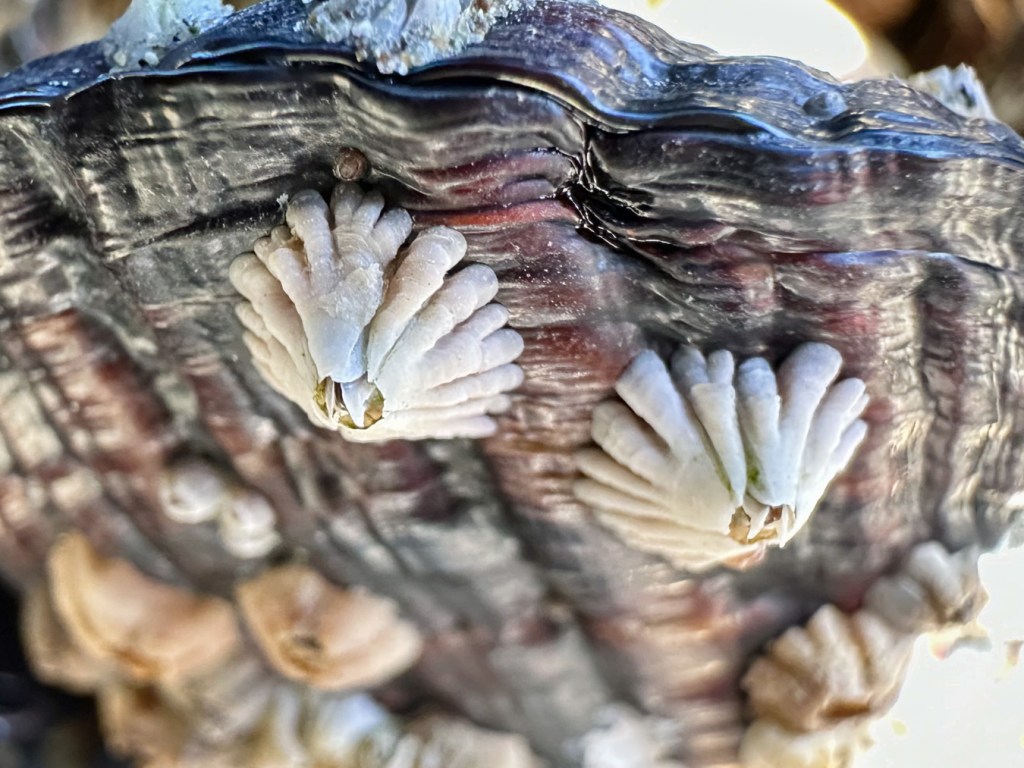
With their heavy ribs and symmetrical stellate form, these youngsters are just the cutest, and they look great against the wavy backdrop of a California mussel shell (lower panel). (I’m not trying to imply here that identifying babies or small barnacles is easy, but I feel like those featured below are showing off Semibalanus cariosus characteristics pretty well.)

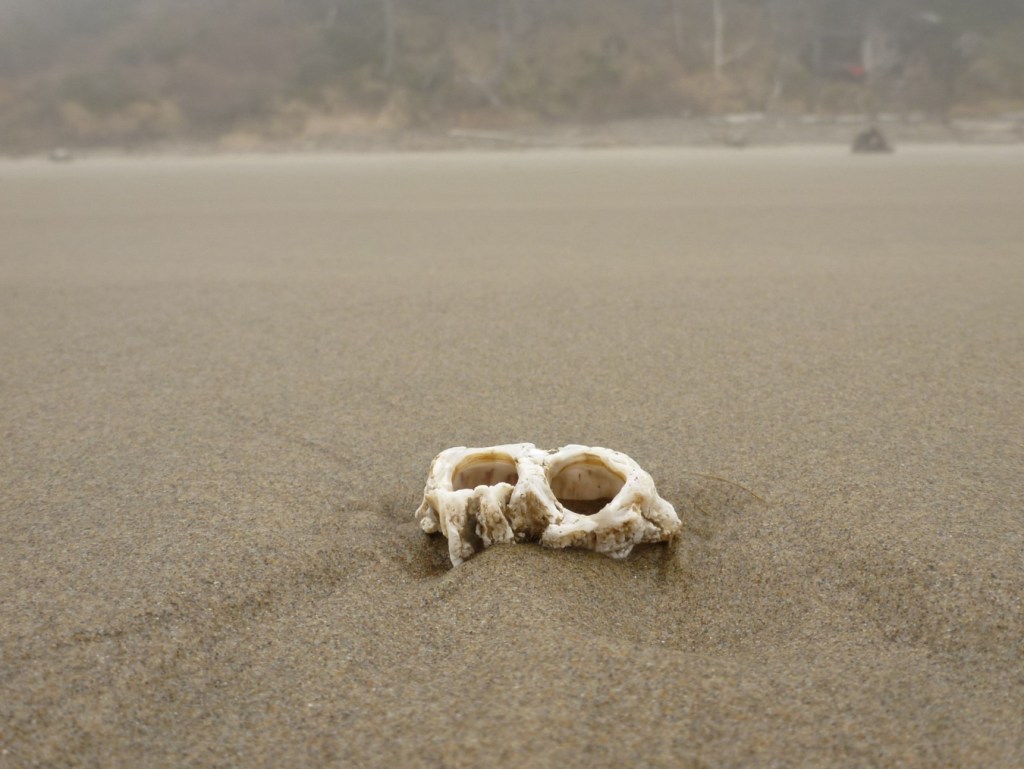
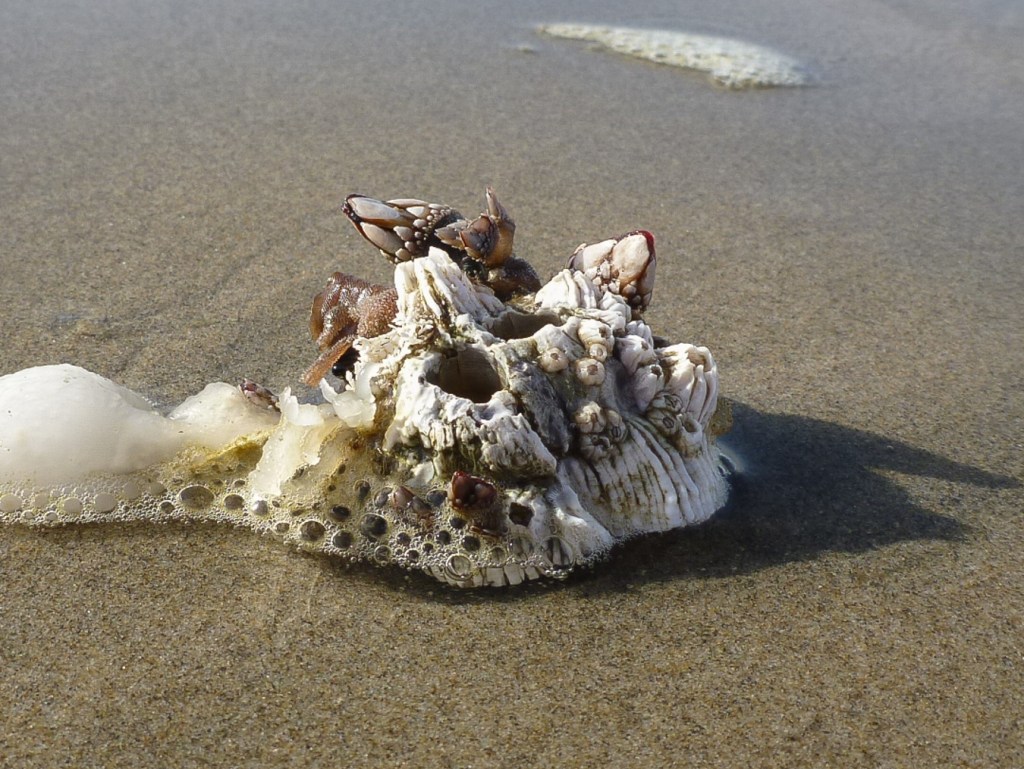
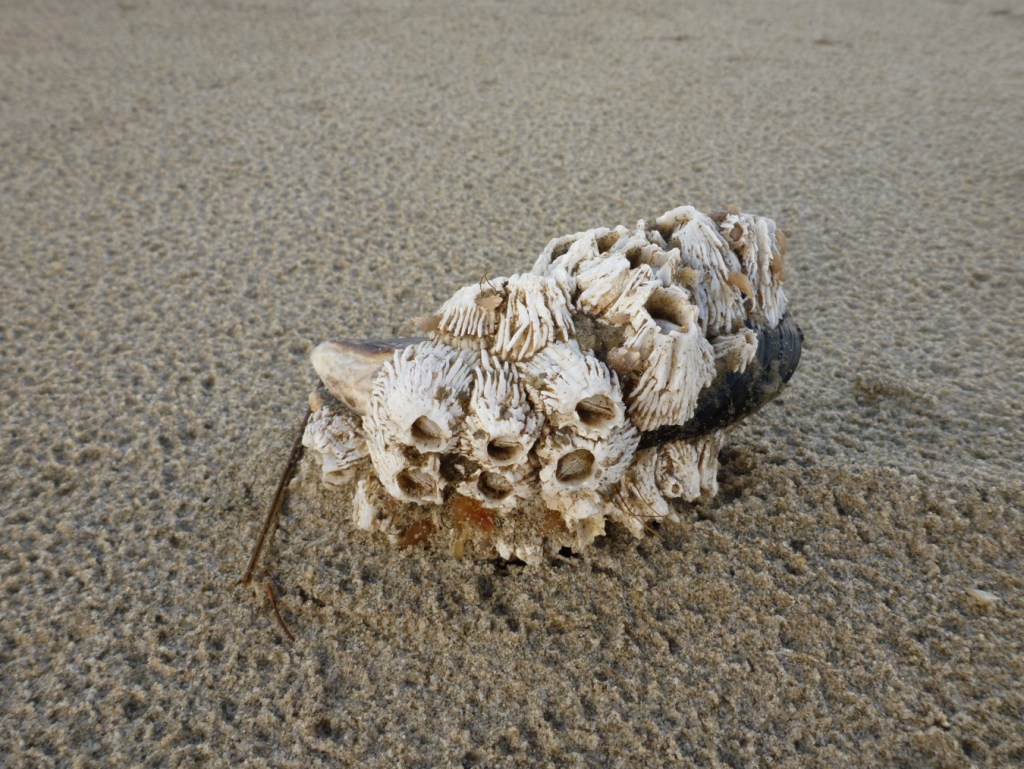
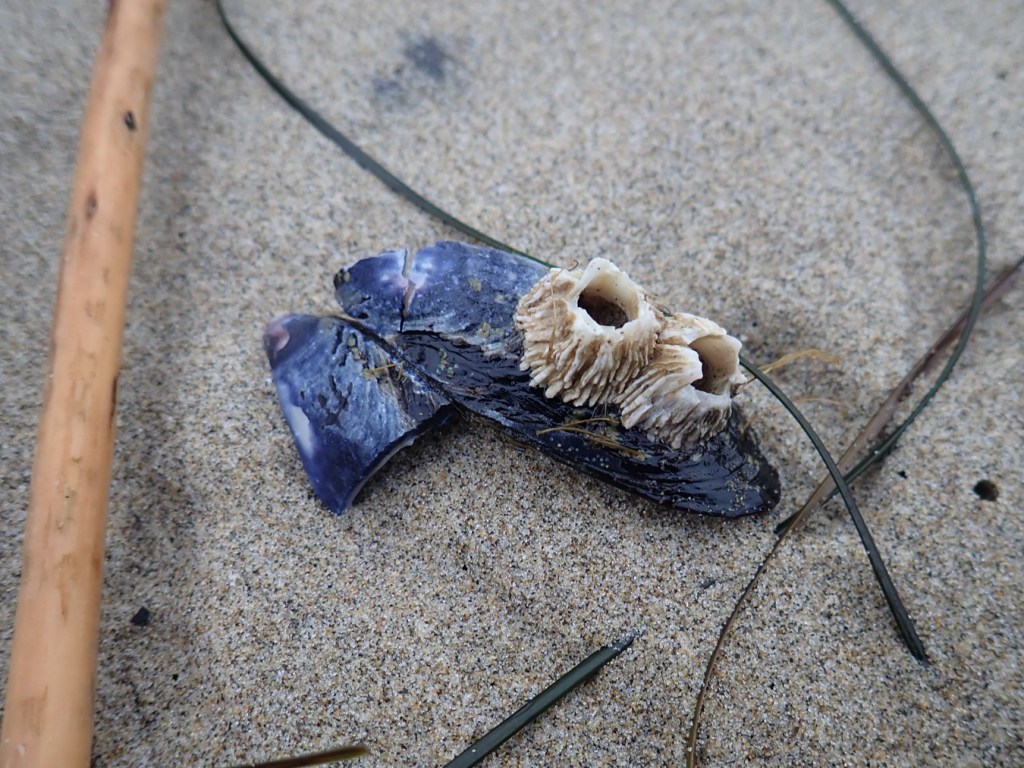
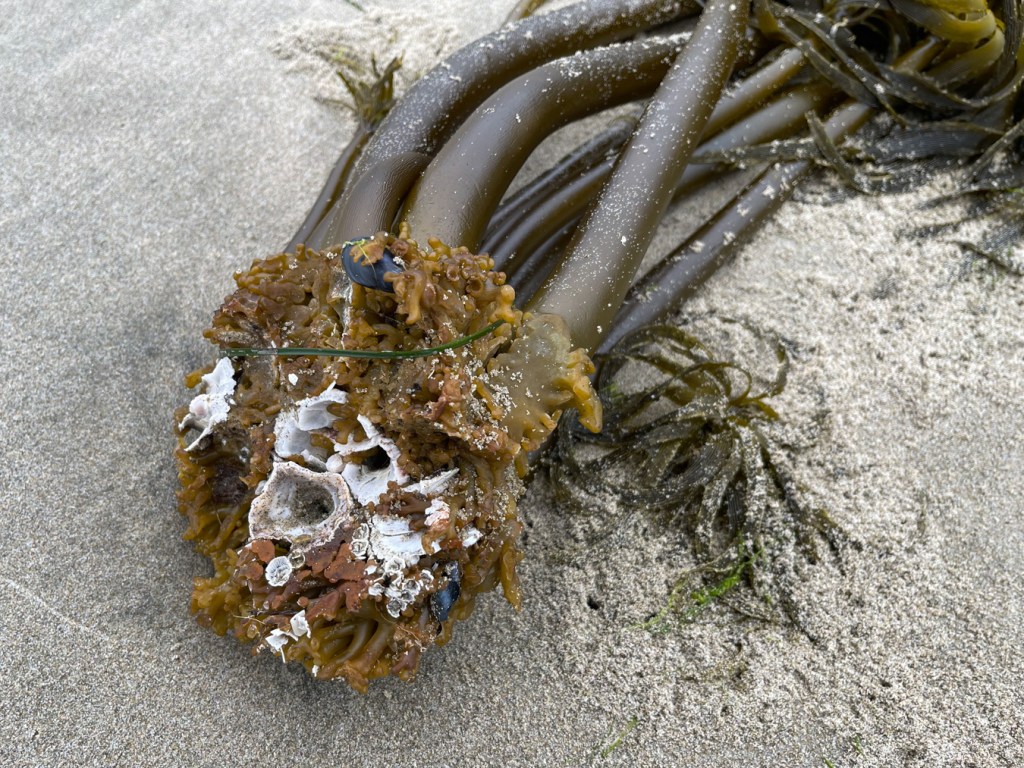
It’s pretty common to find detached drifted thatched barnacles washed up on the beach; you’ll find them on their own or attached to California mussel shells. And it’s always a good idea to check for their presence in drifted Postelsia holdfasts.


Pollicipes polymerus Gooseneck barnacle (also Goose, Leaf)
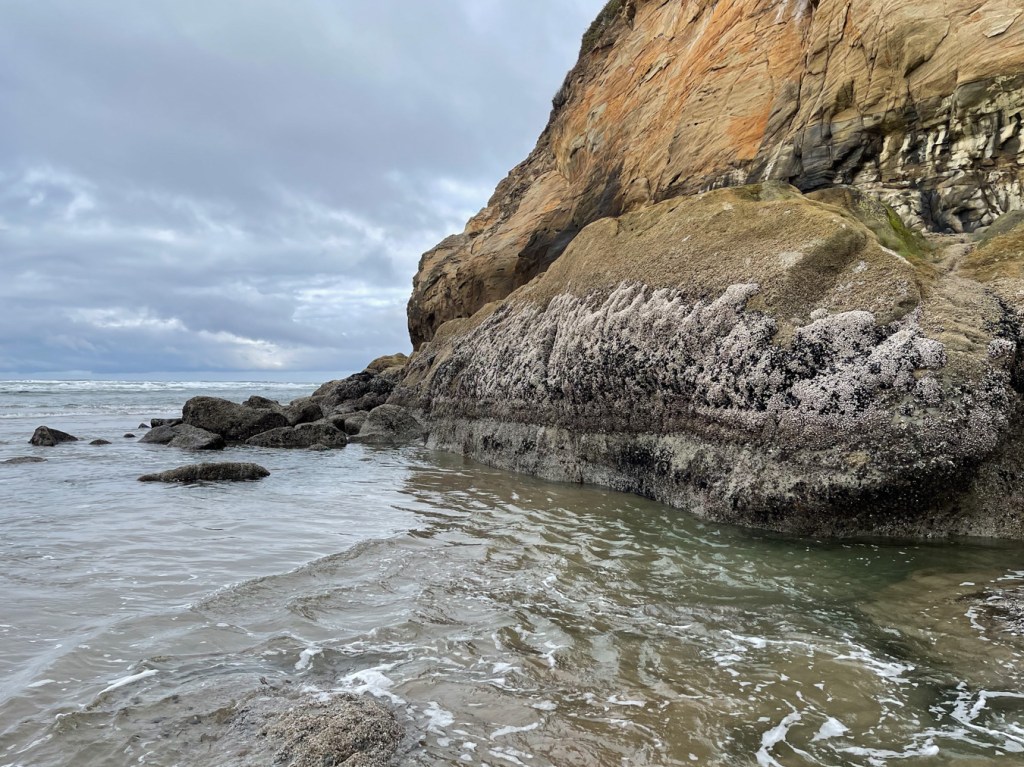
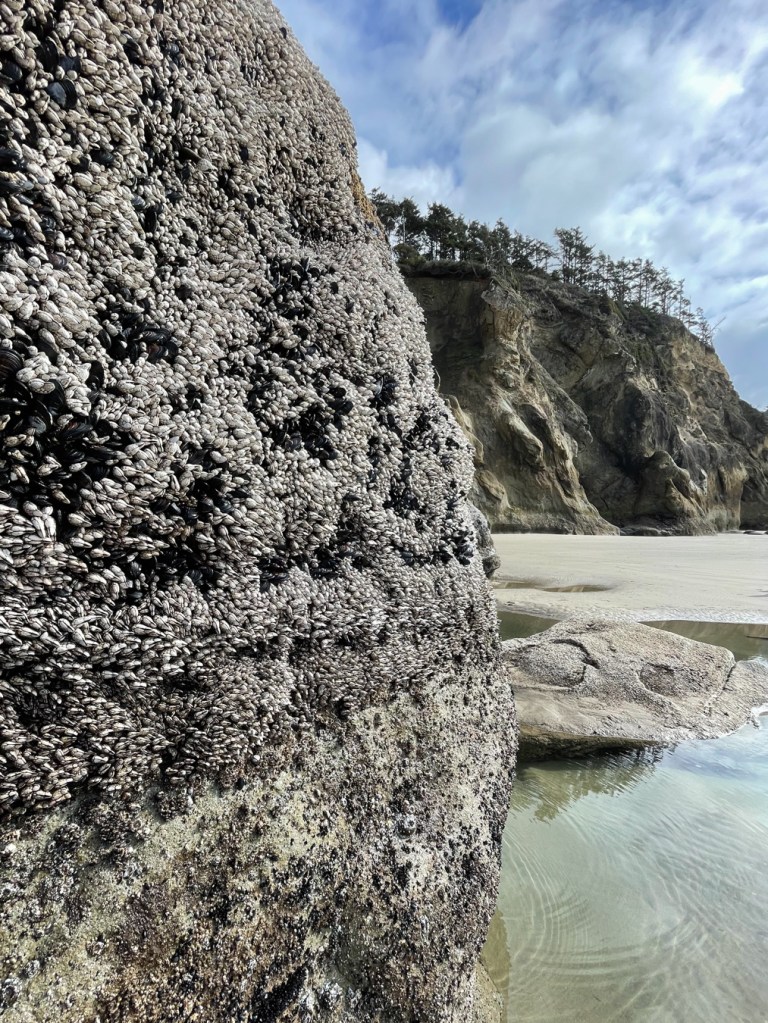
On the exposed coast, goosenecks can be prominent in mussel beds. They can also be found below the mussel beds, and they pioneer higher, into the high intertidal, where surge and splash conditions allow it.
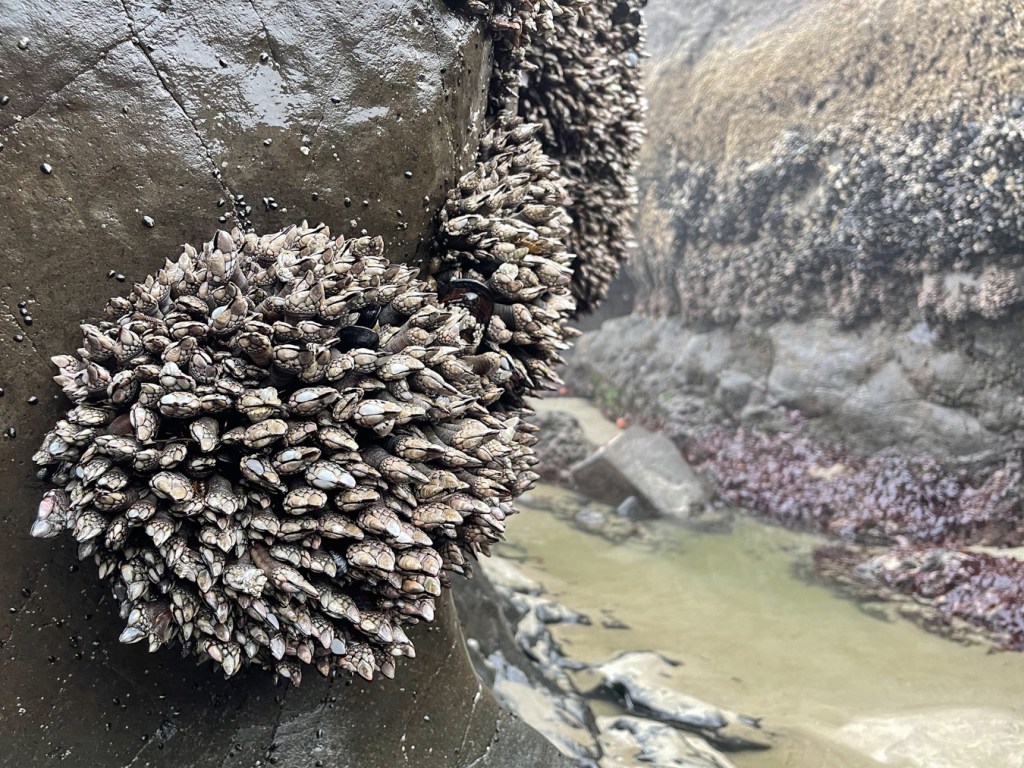
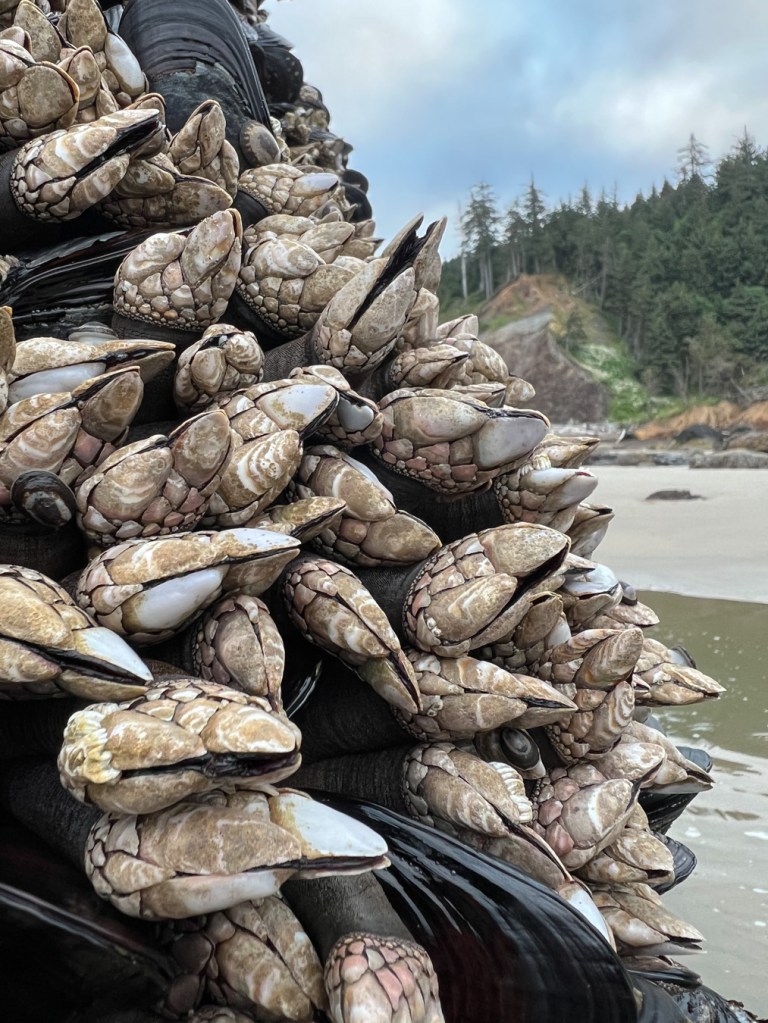
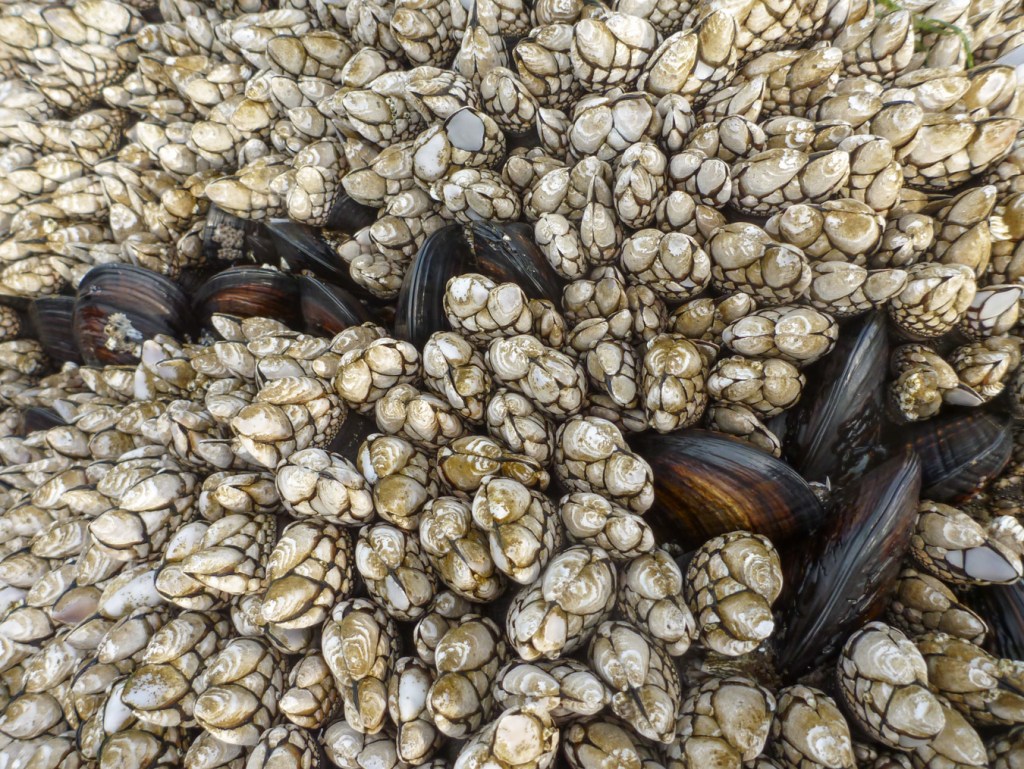
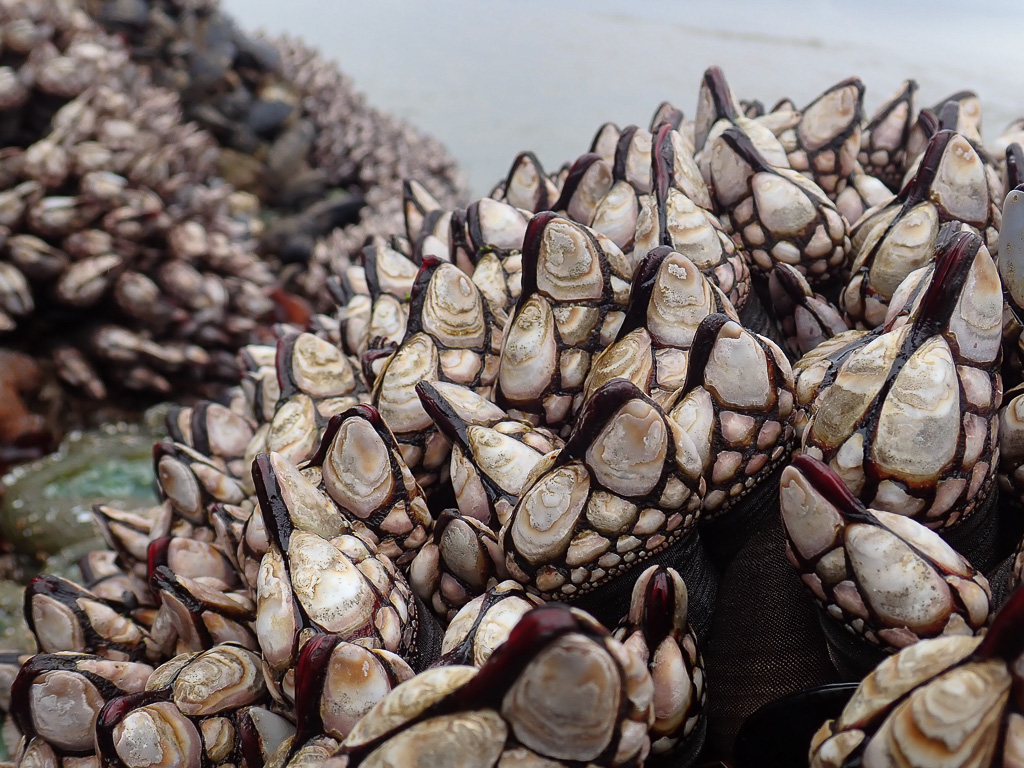
Sometimes you’ll see exposed Pollicipes showing off quite a bit of red. I have a sense that red goosenecks are more prevalent in sheltered or low-zone settings, but I can’t say for sure. I wrote about the reddest goosenecks I’ve come across in Pollicipes, Magical in the Morning.
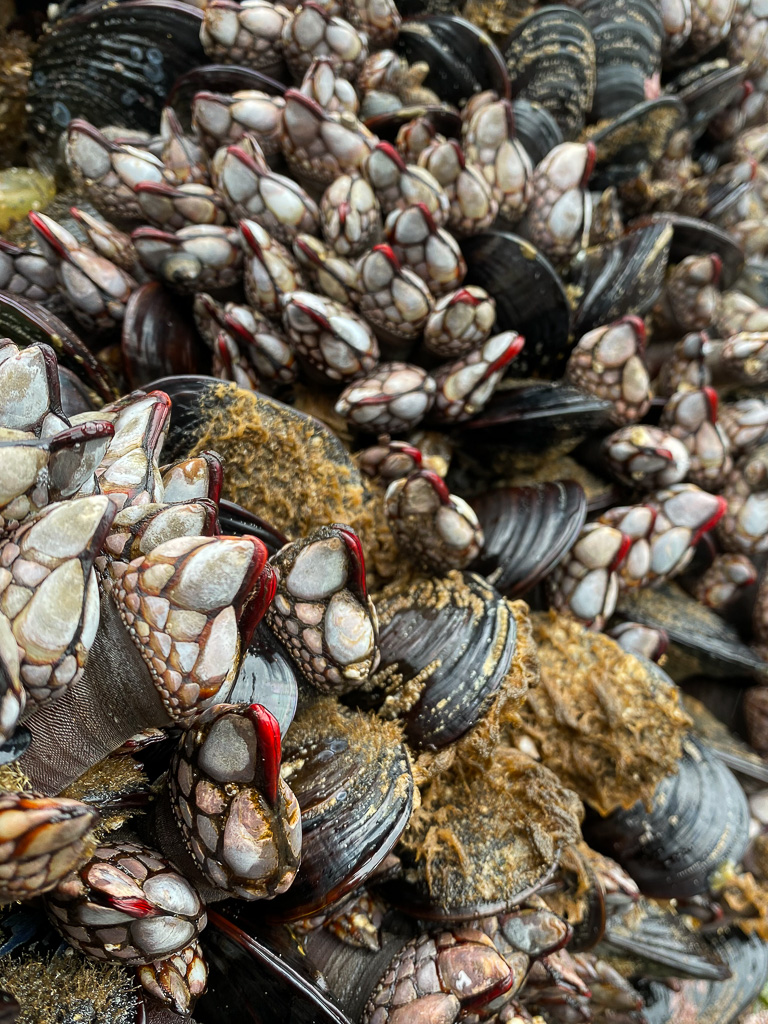
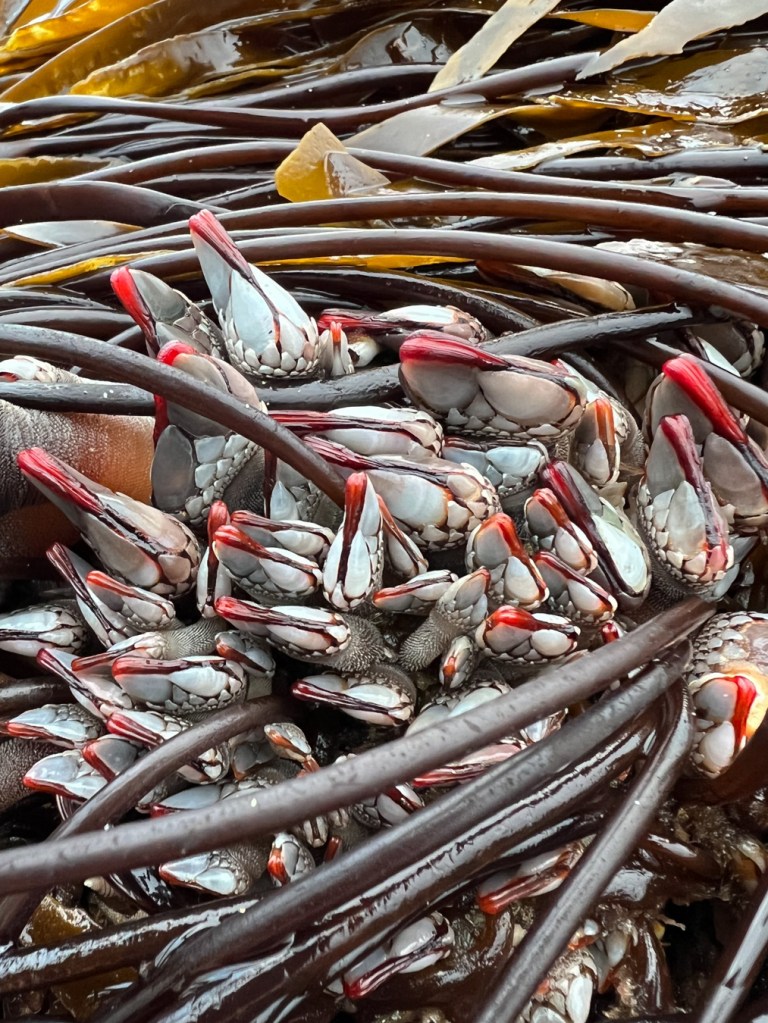

Some gulls make a point of exploring exposed clusters of Pollicipes polymerus, and they will sometimes eat them. Large Larus gulls pluck them off the rocks without much trouble. Thus, it’s not unusual to find regurgitated plates, capitulums, and even more or less whole barnacles, including their stalks.
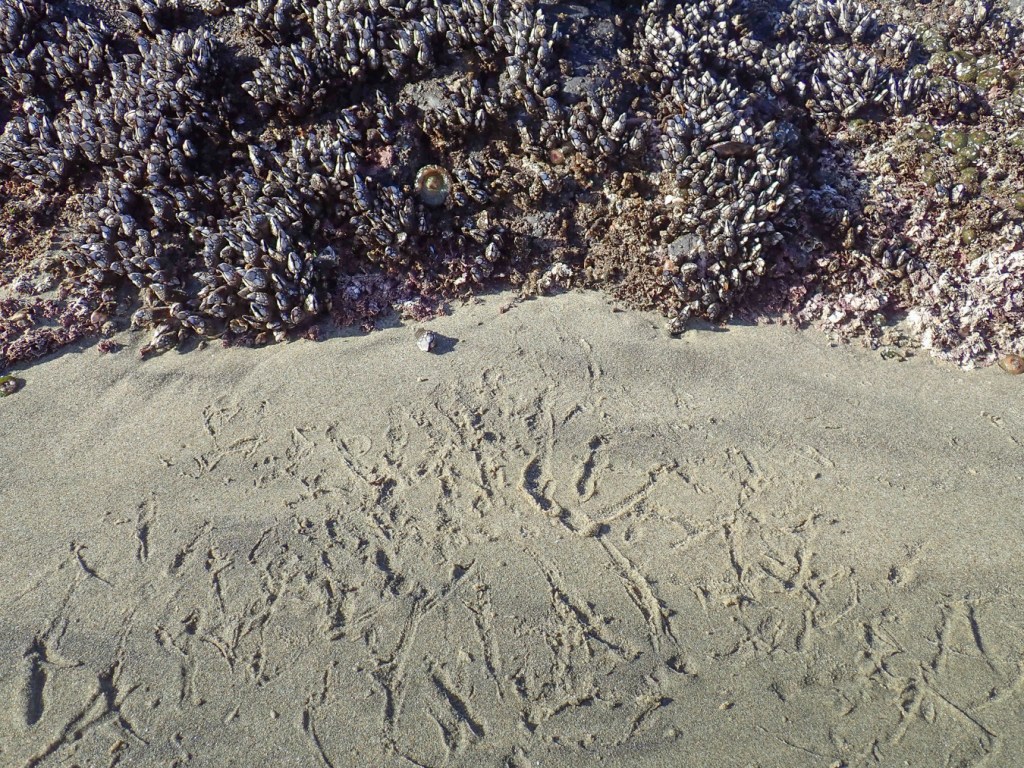
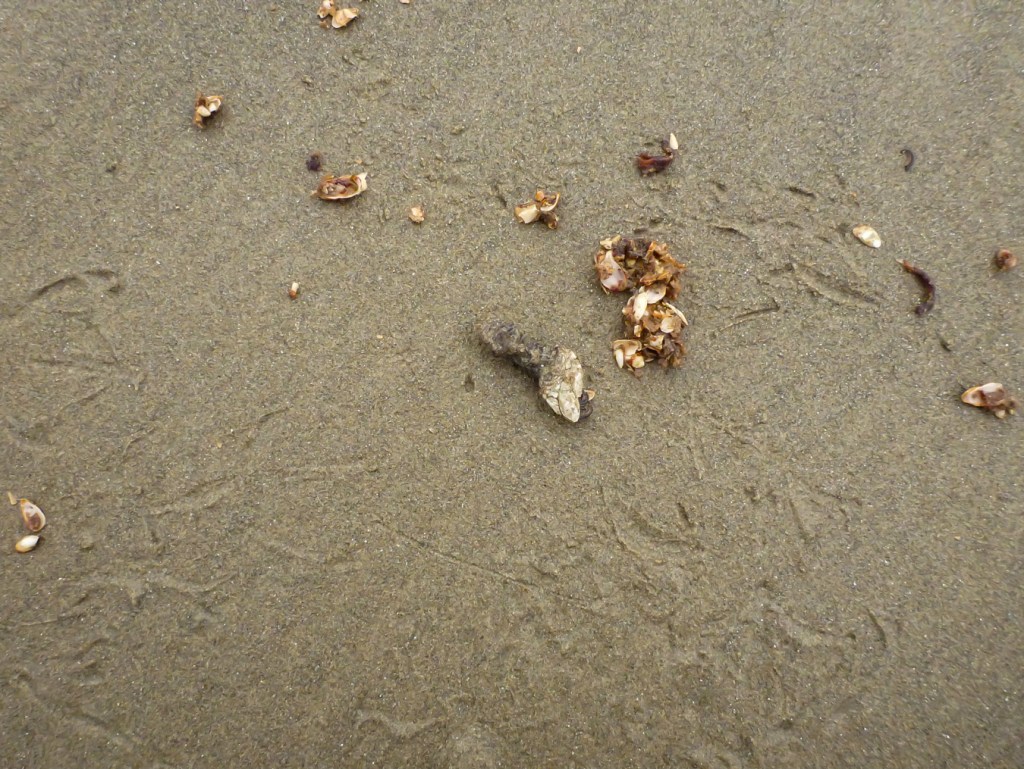
Once you get used to looking for them, you’ll find that gull pellets with Pollicipes parts are pretty common on some beaches.
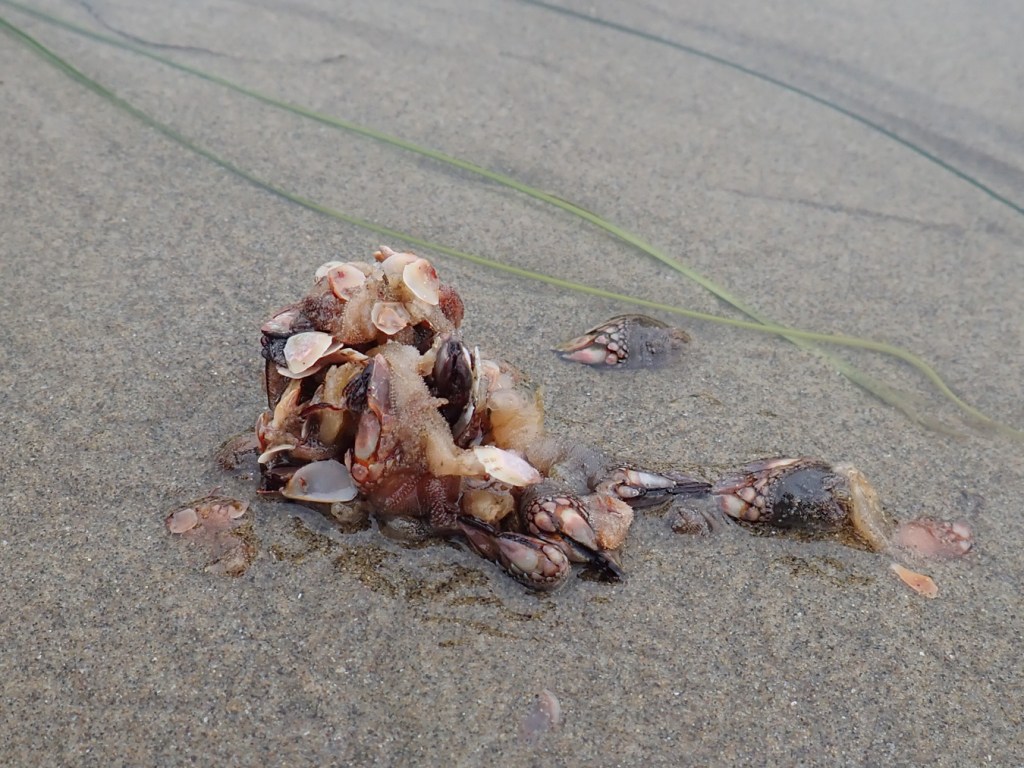
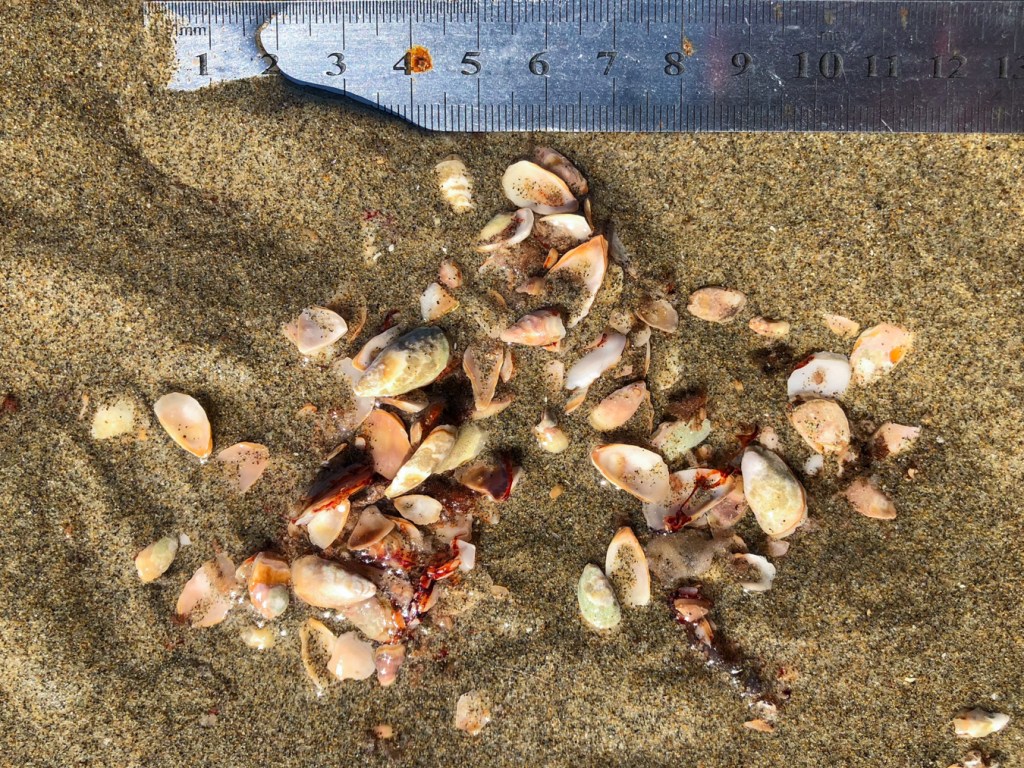
Redtail surfperch are a Pollicipes predator I hadn’t thought of until I found one had eaten these.

You can occasionally find Pollicipes polymerus among drifted material on the beach, but you’ve got to move quickly to beat the gulls to them.
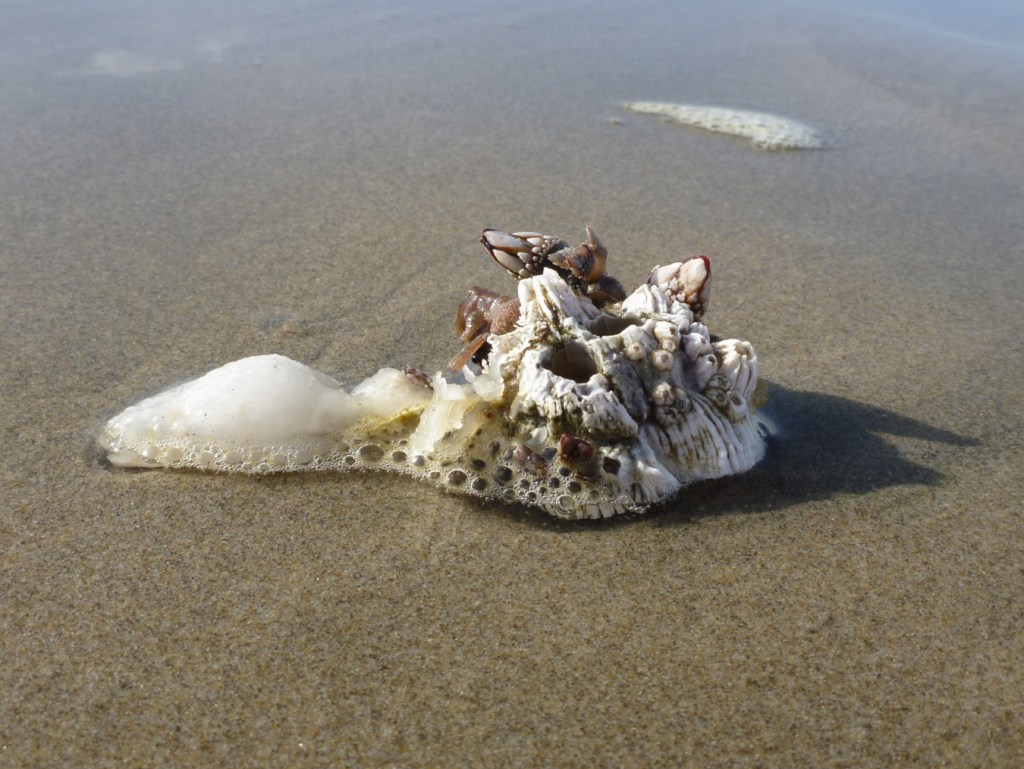

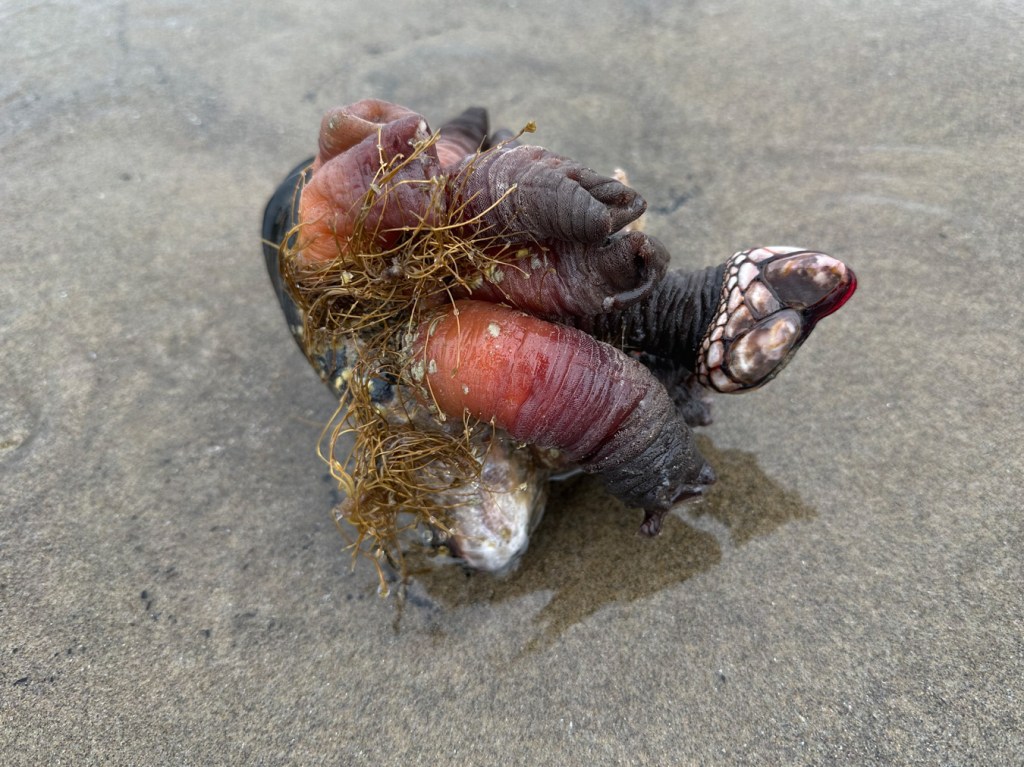
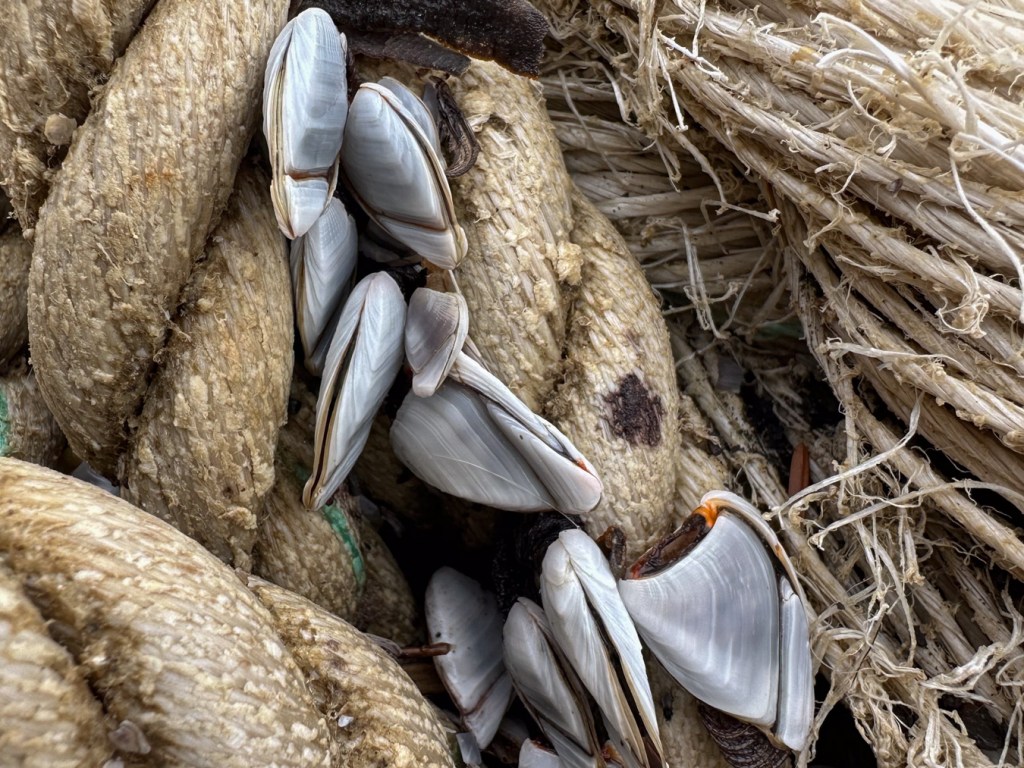
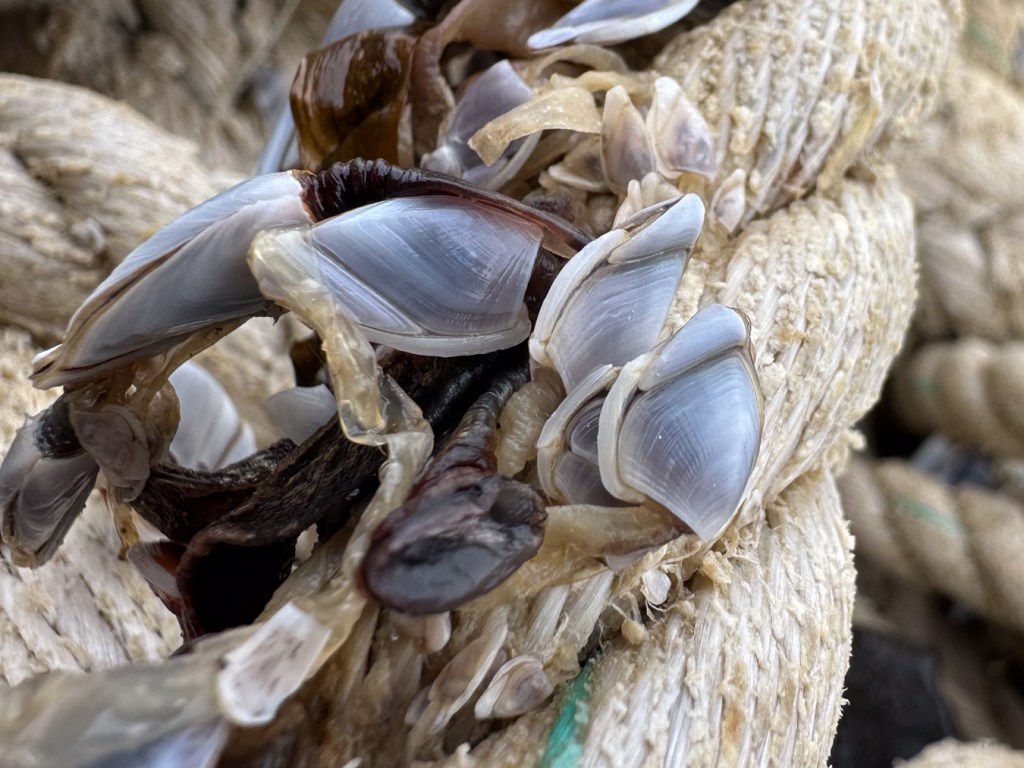
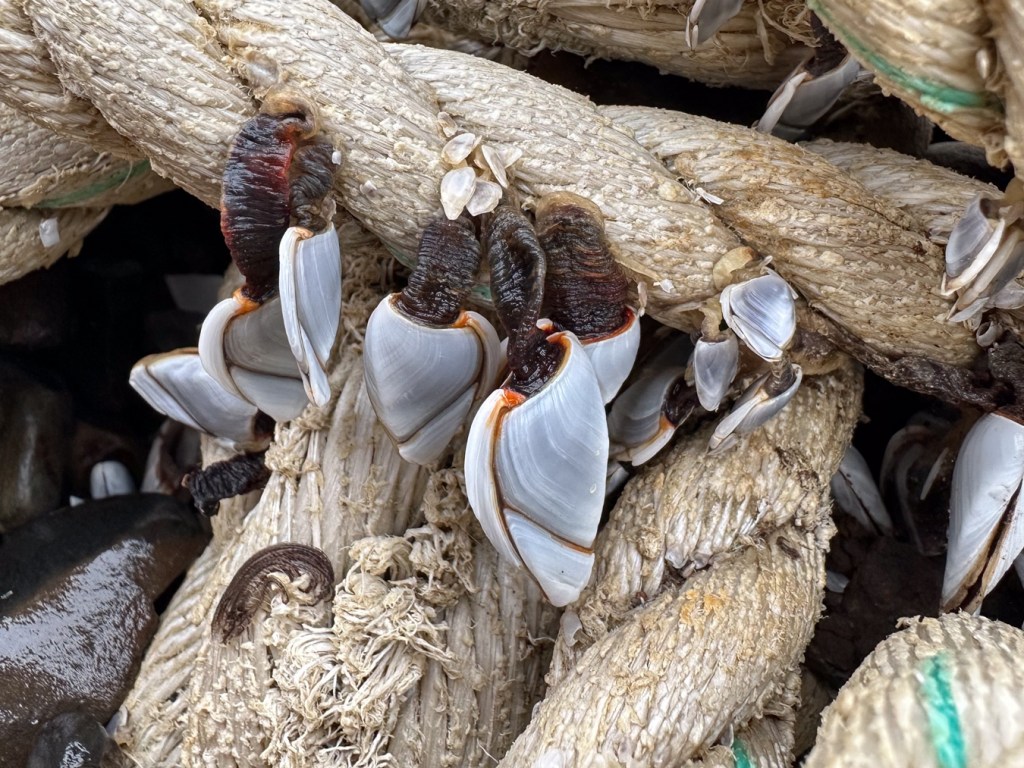
Lepas Pelagic gooseneck barnacles
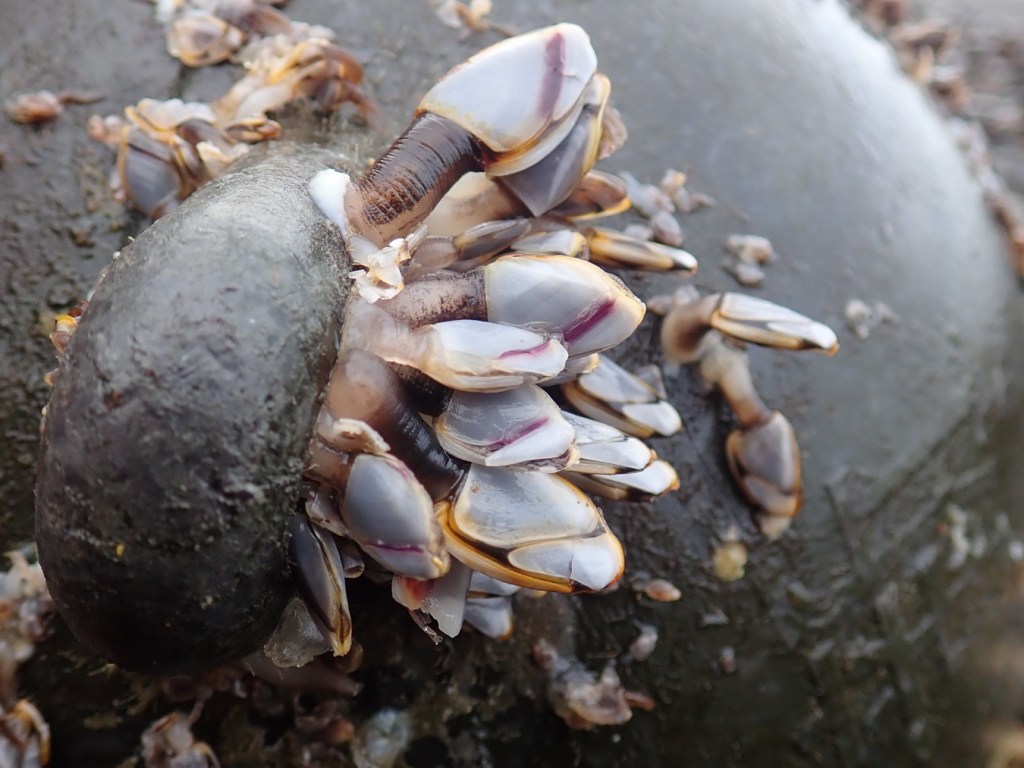
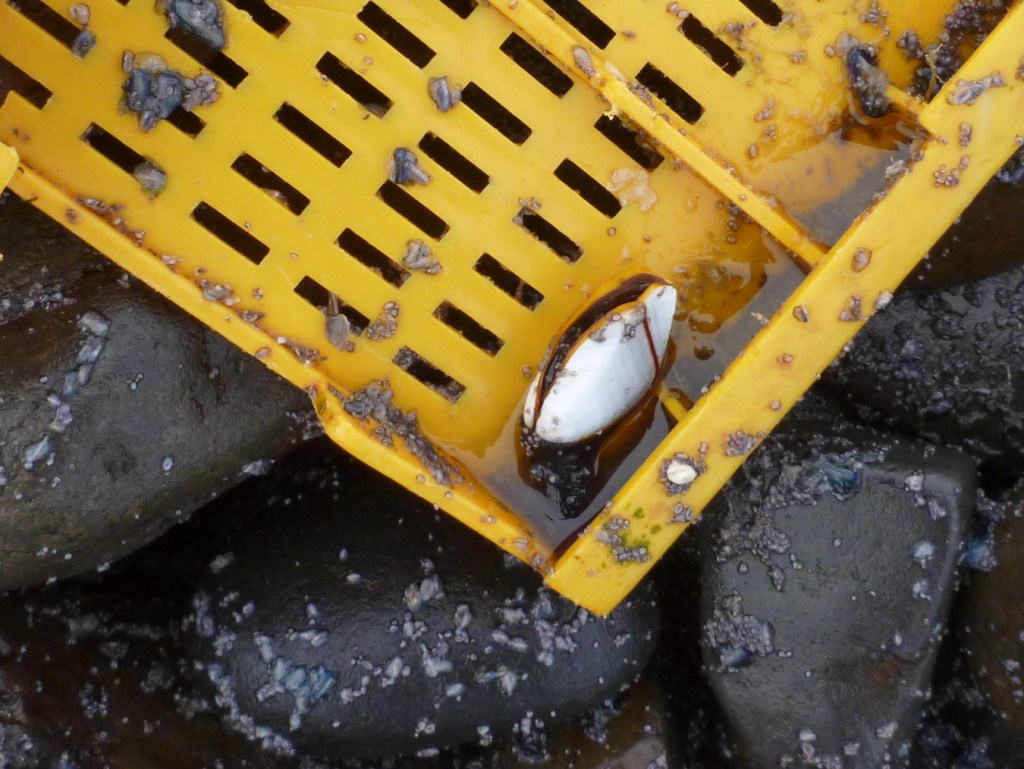
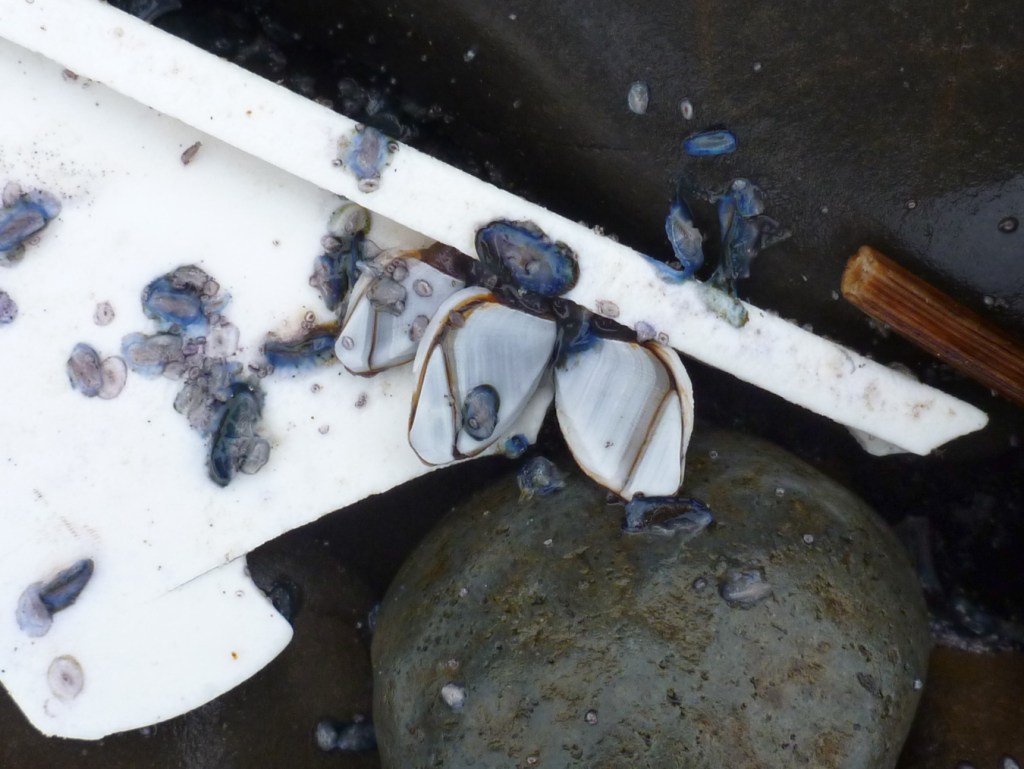
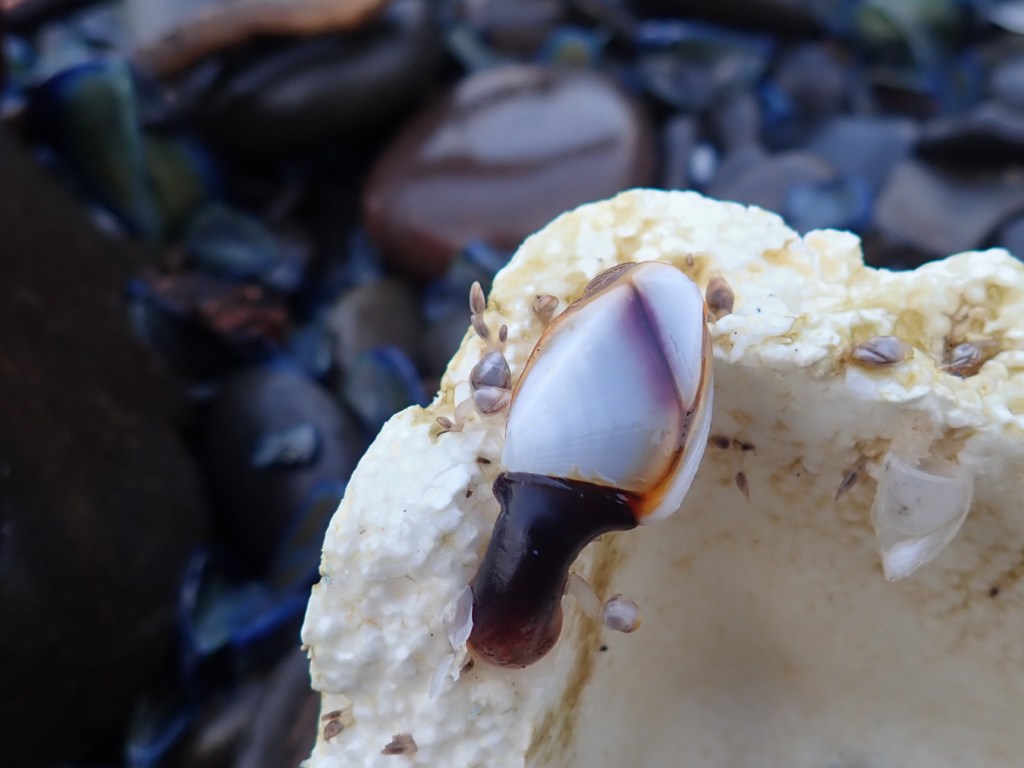
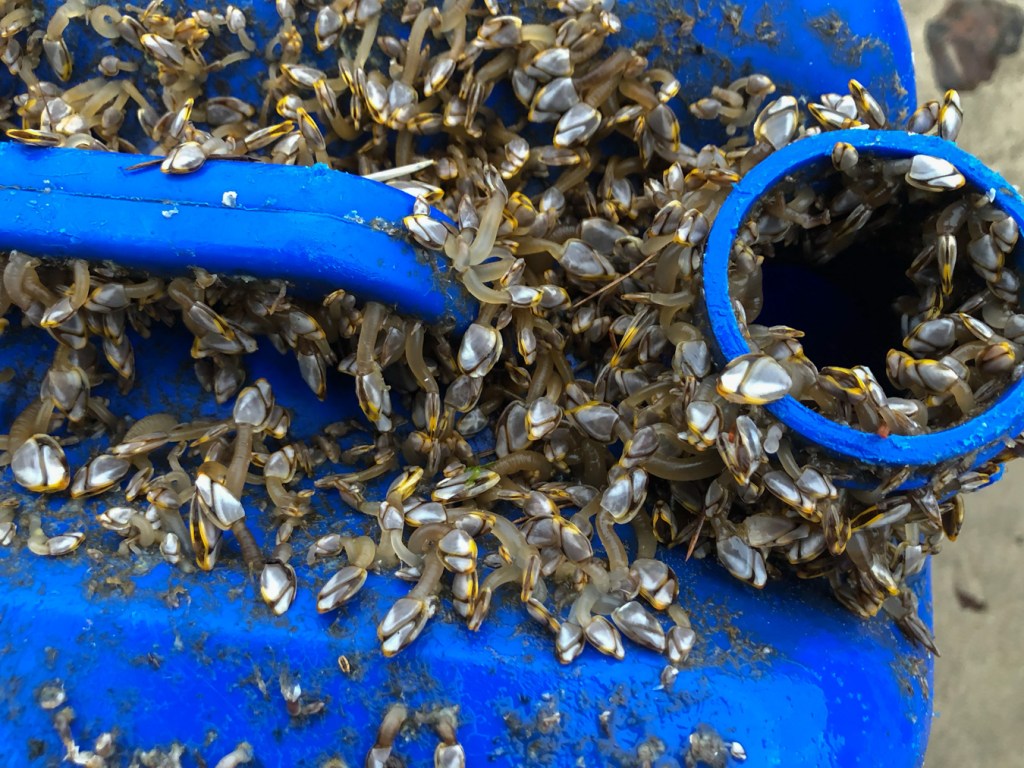
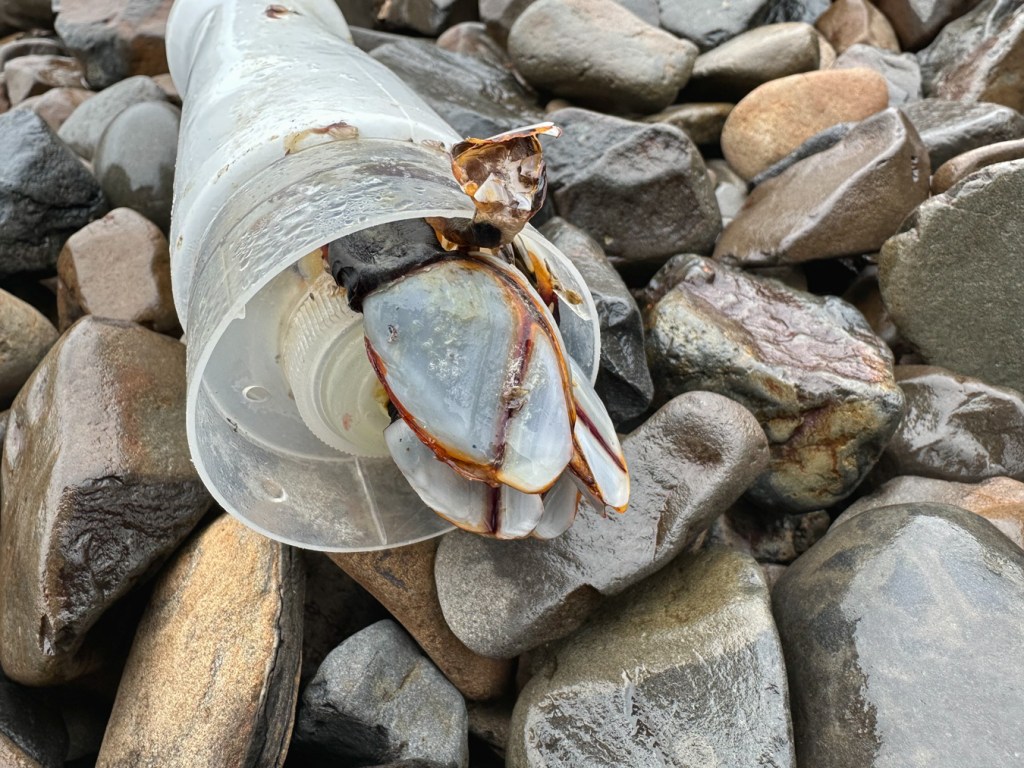
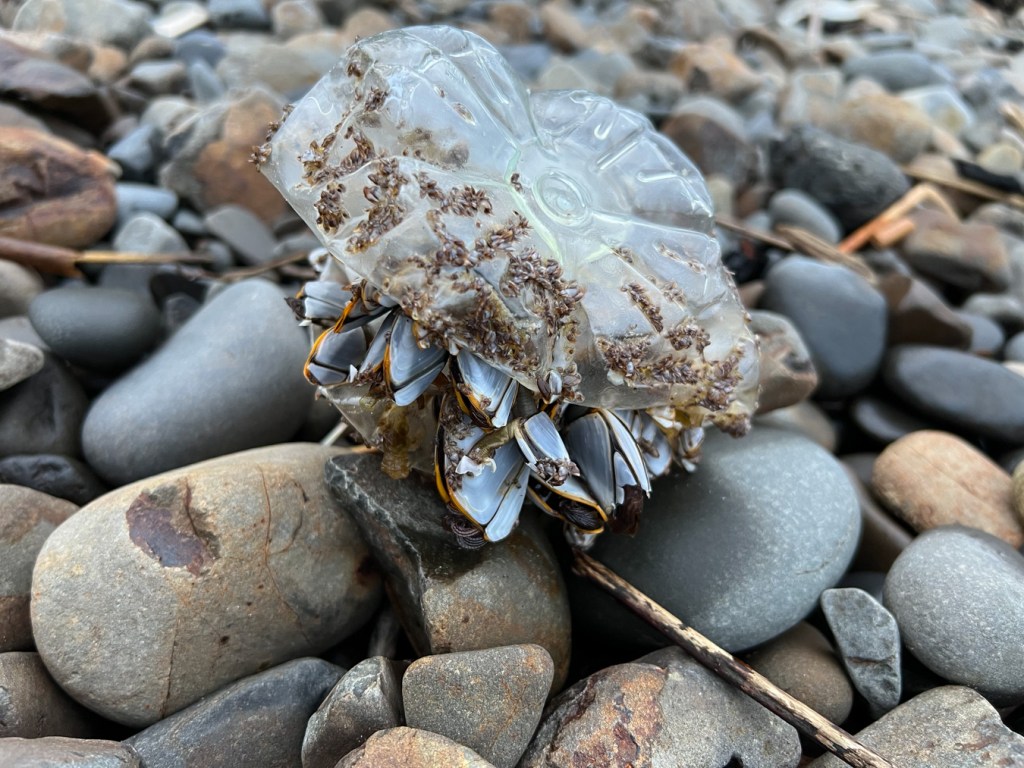
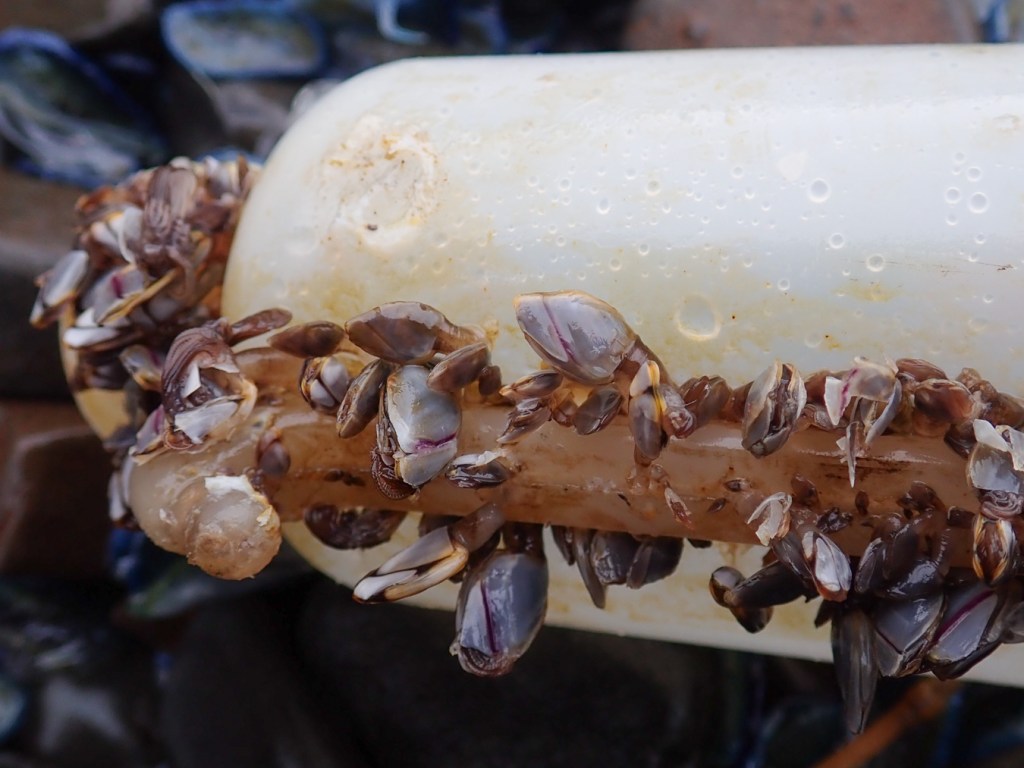
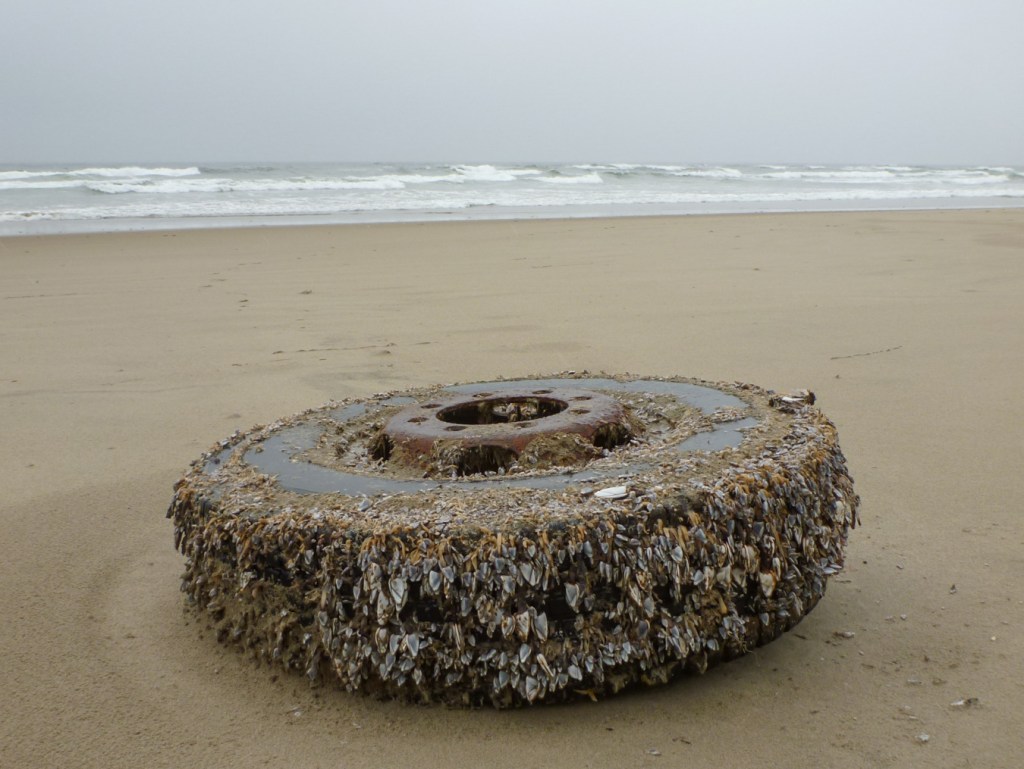
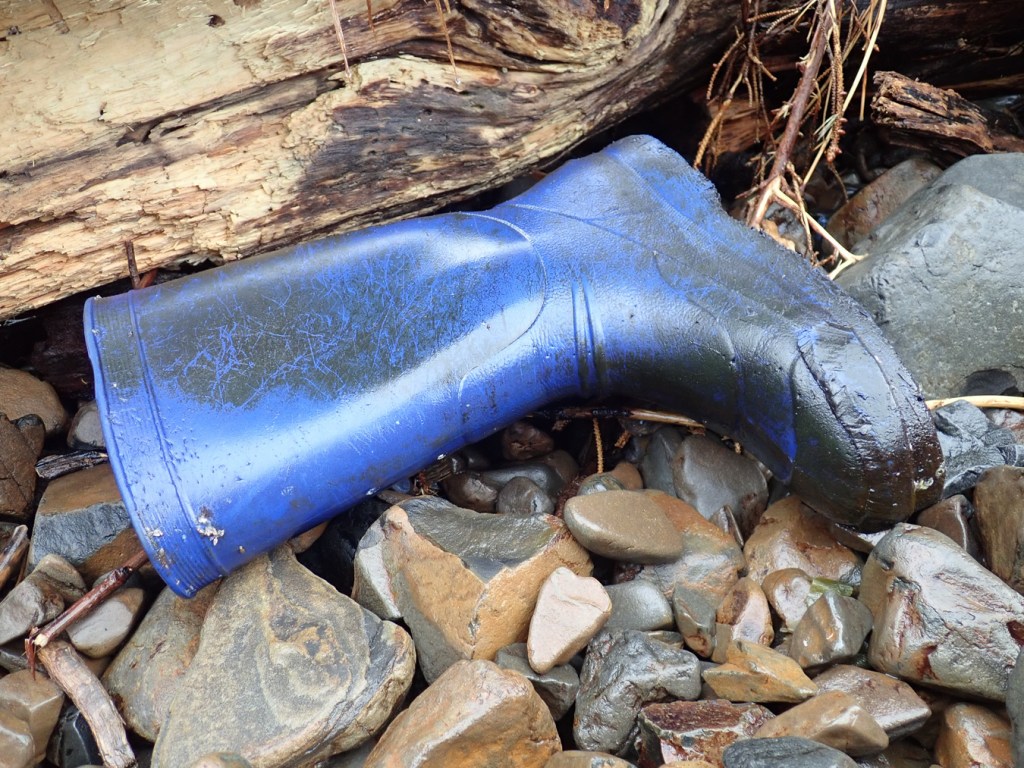
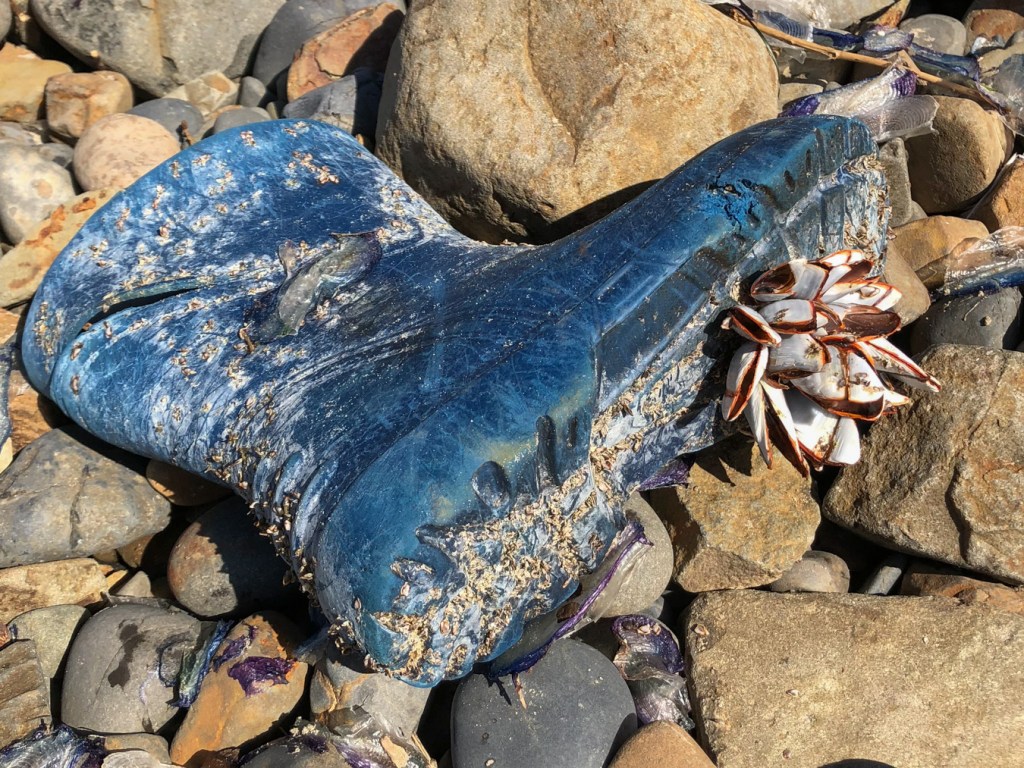
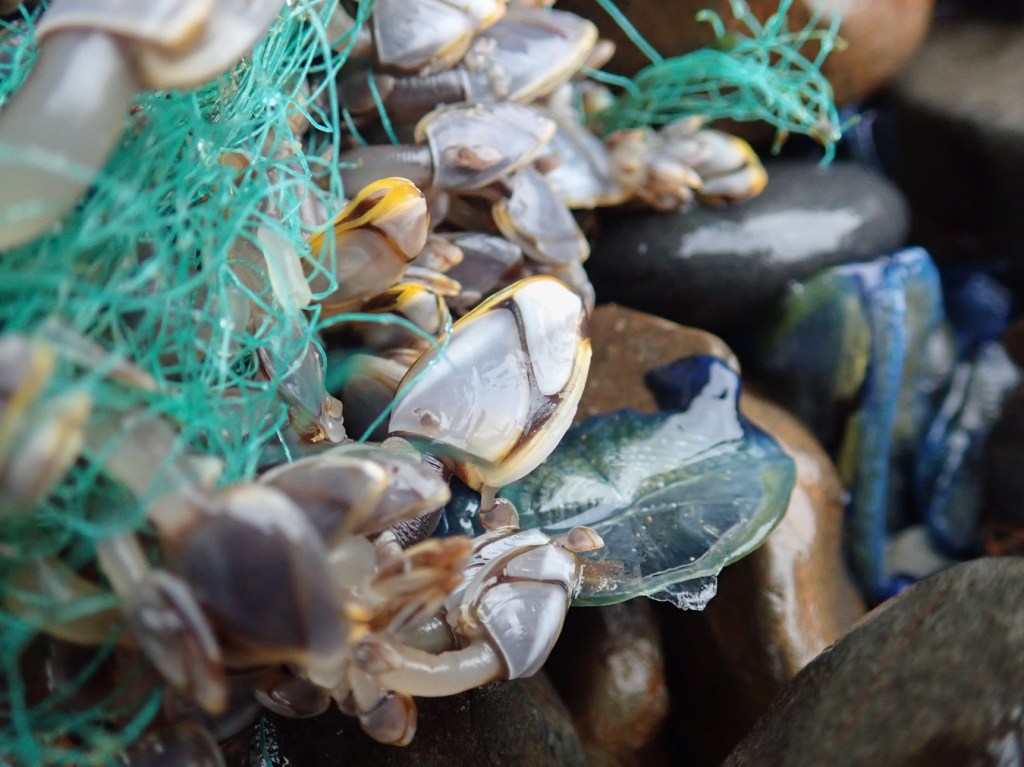
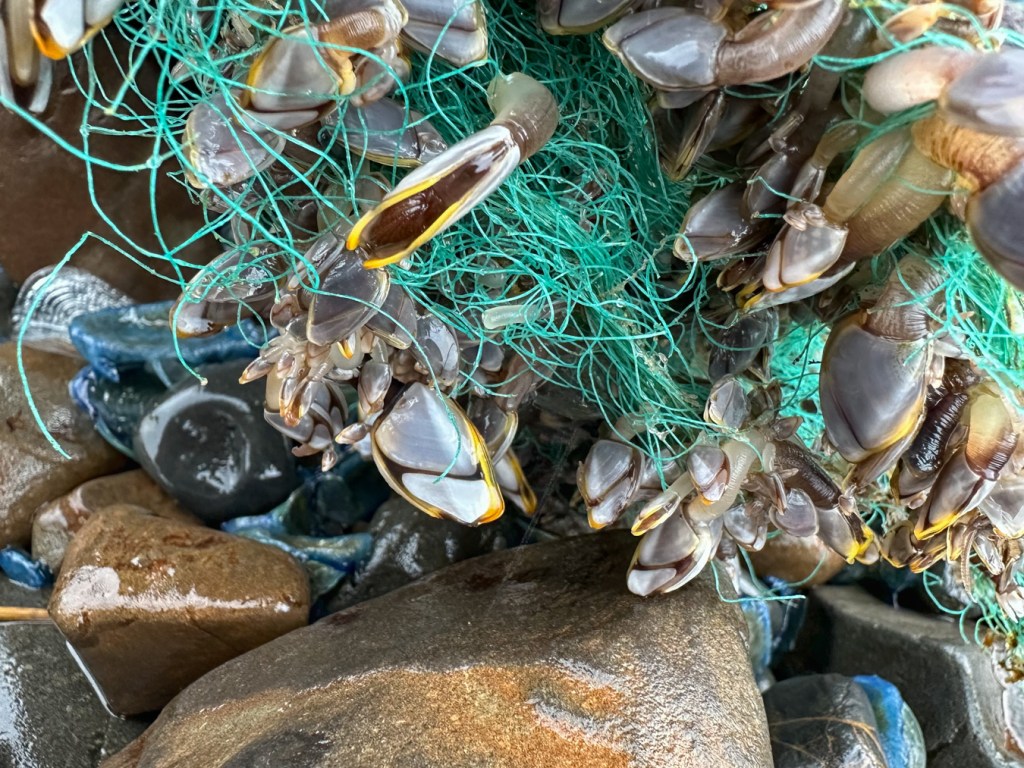
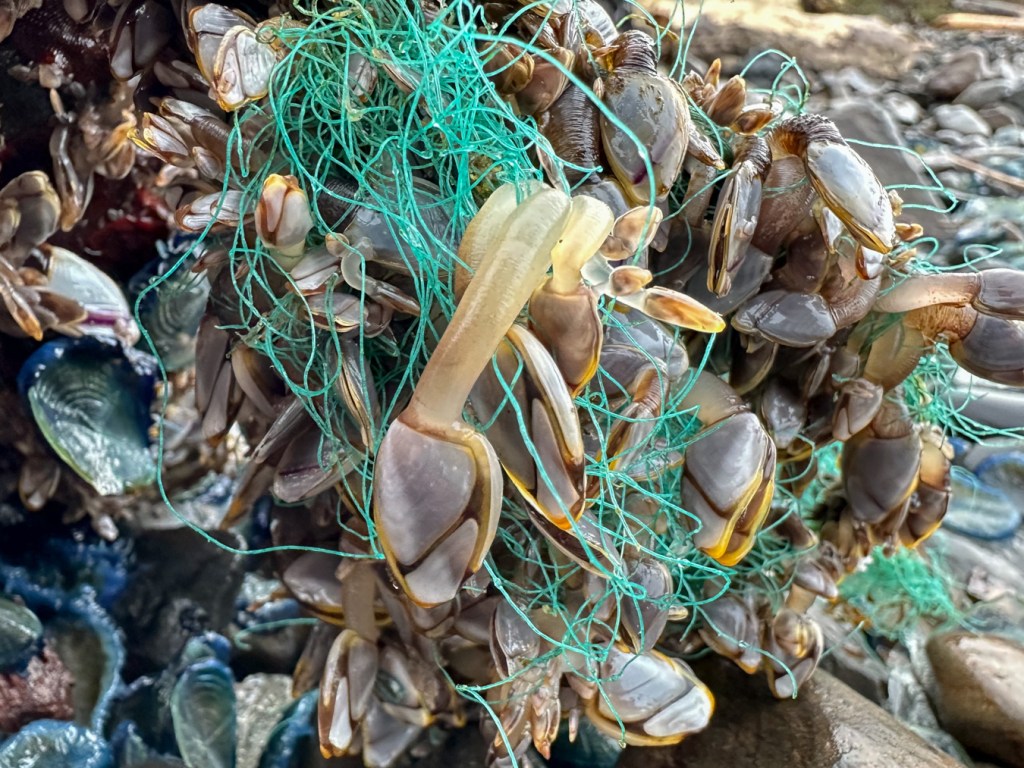
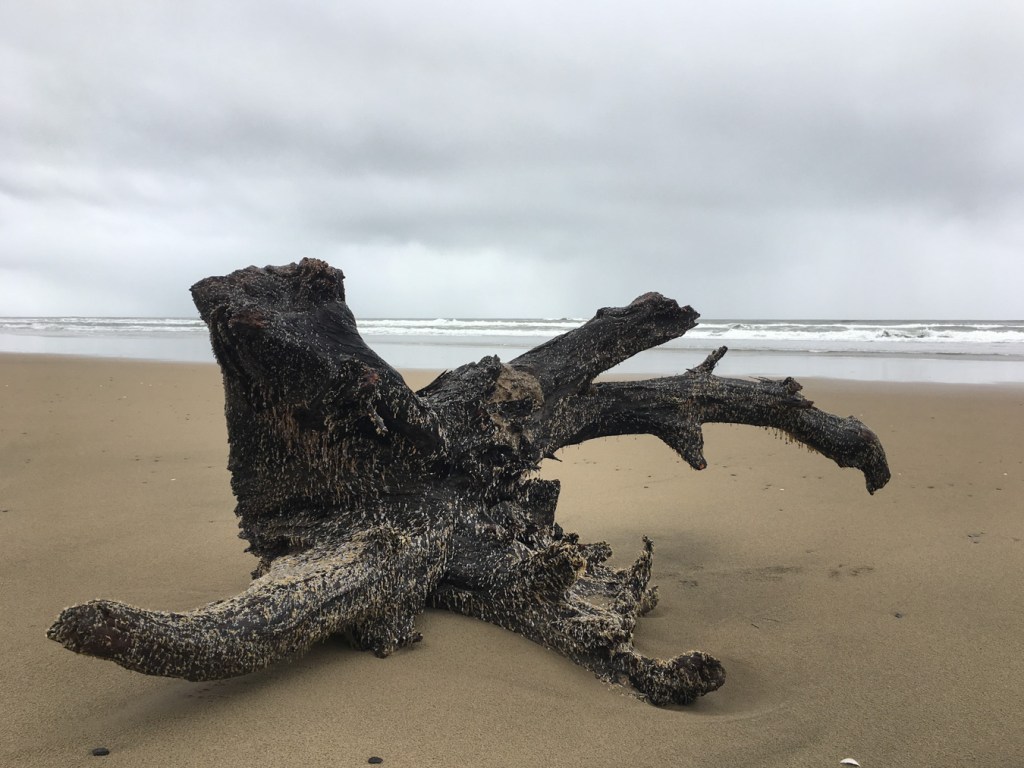
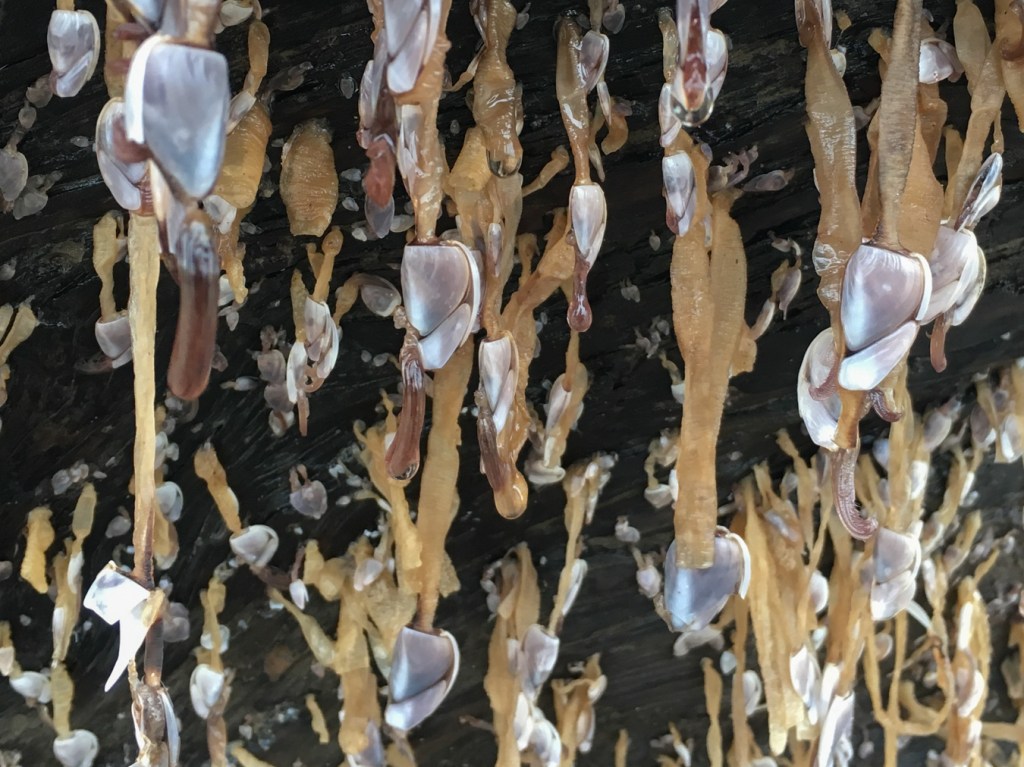
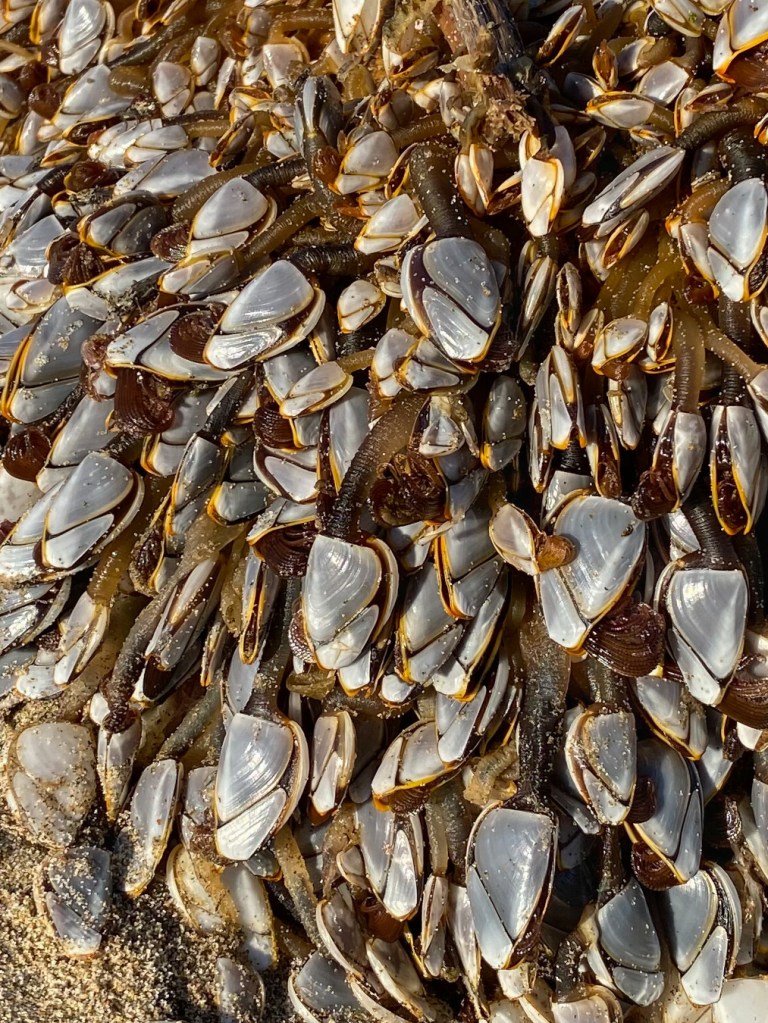
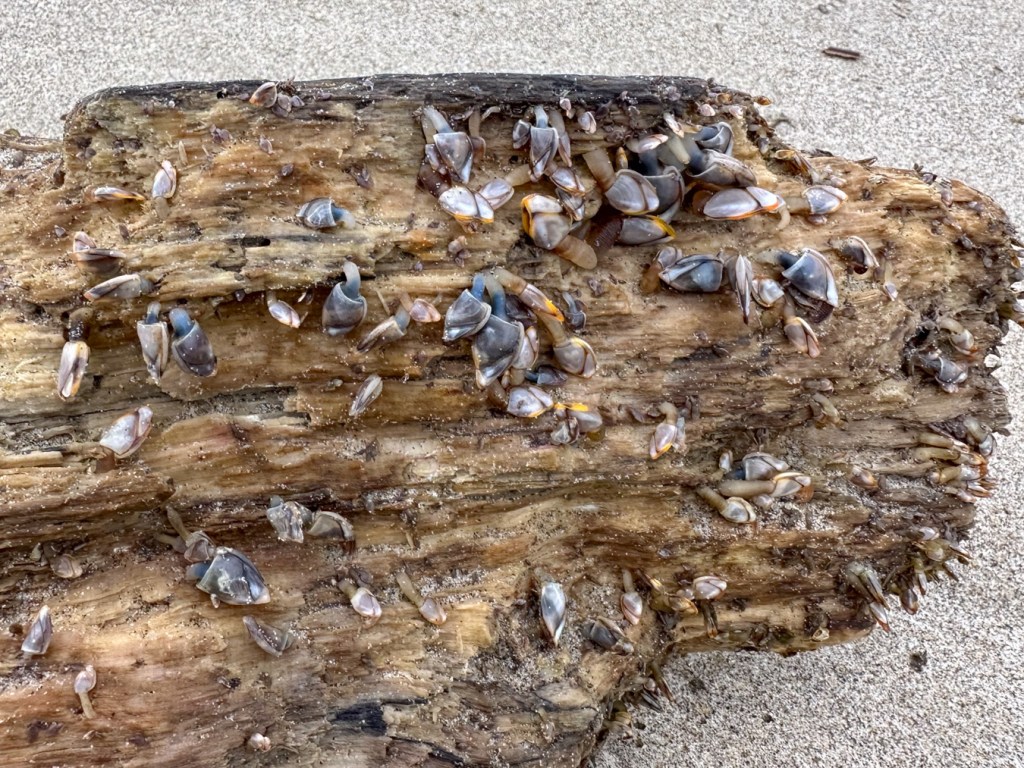
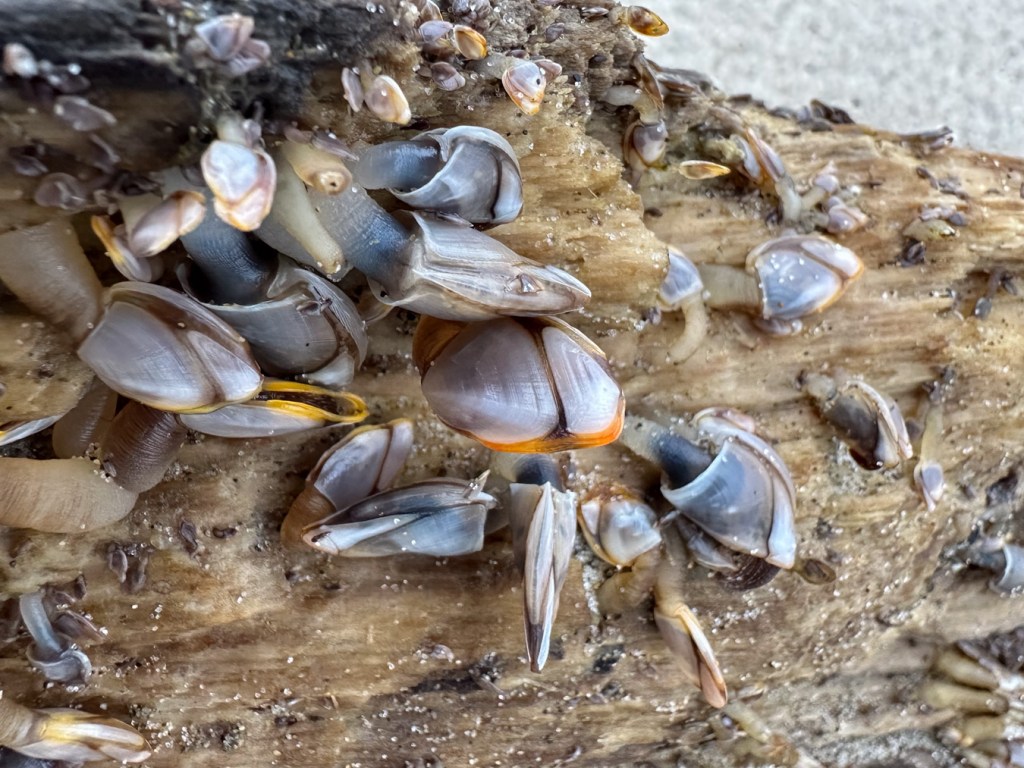
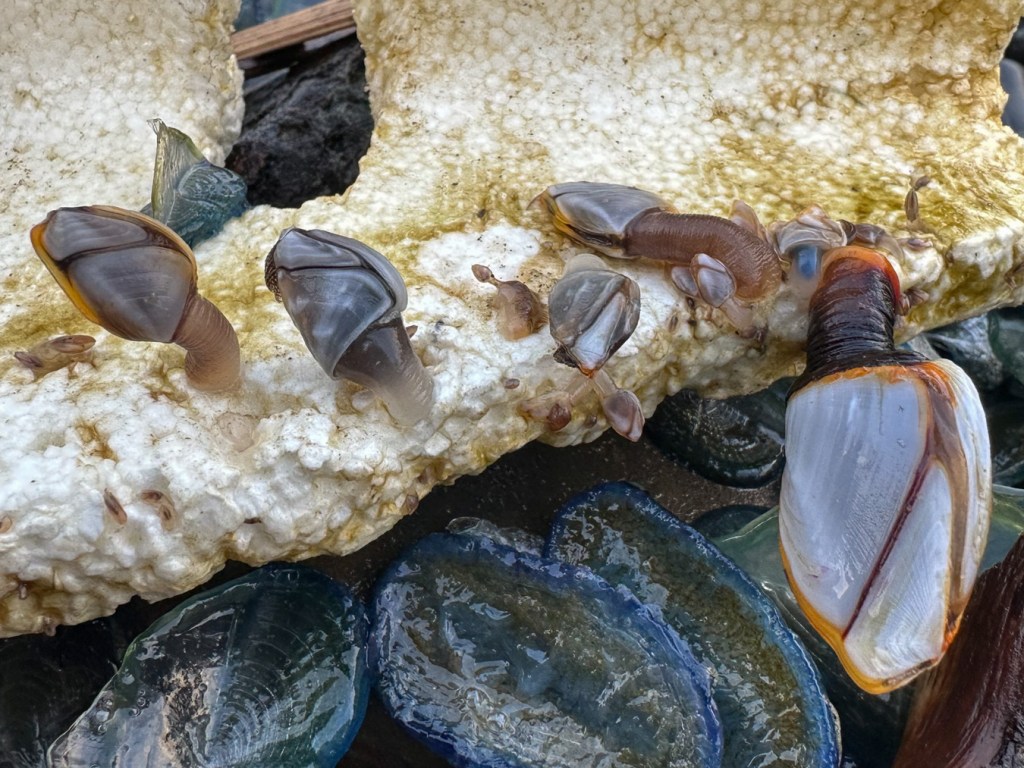
Pelagic goosenecks are rafters that arrive on the shore attached to beachcast debris where they become, briefly, a source of wonder to anyone encountering them.

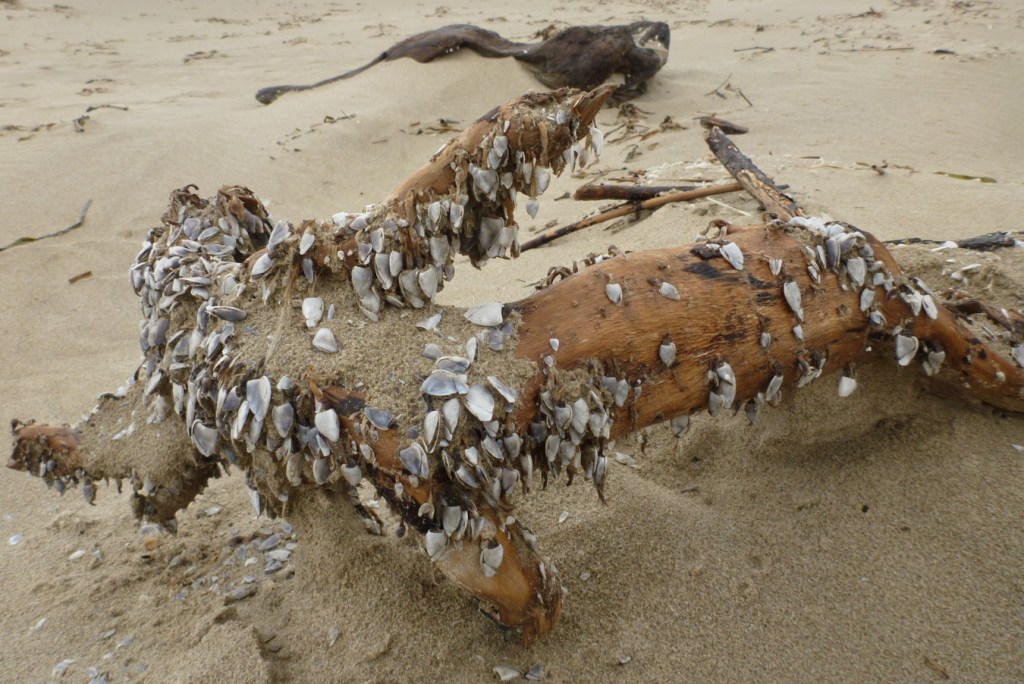
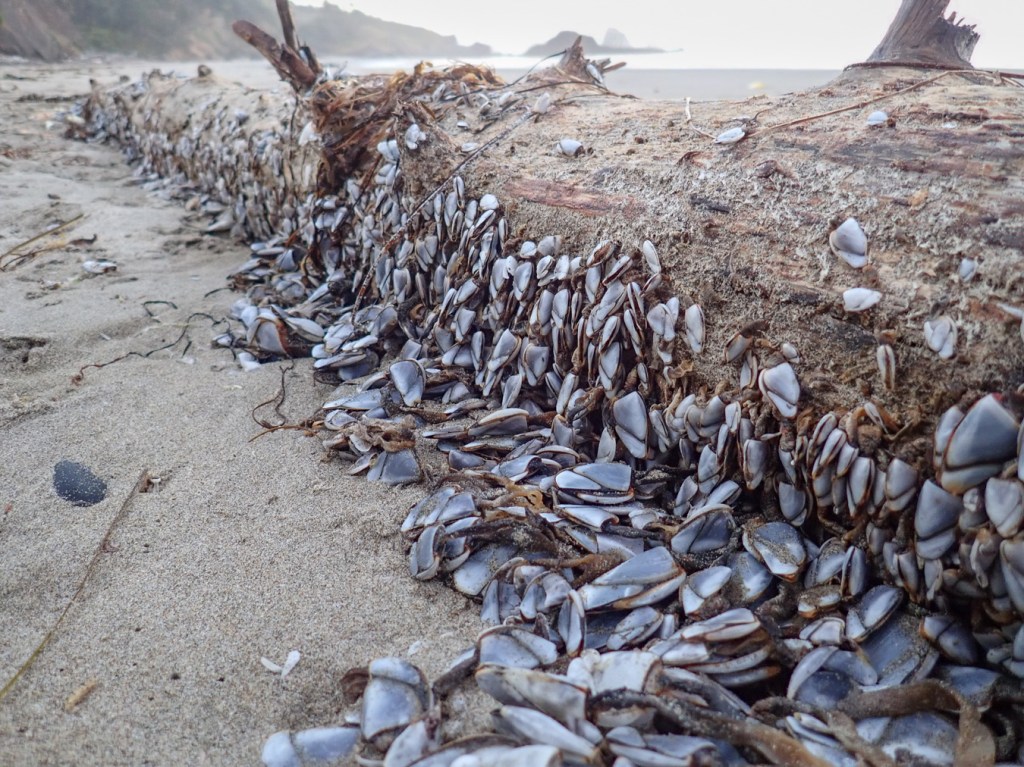
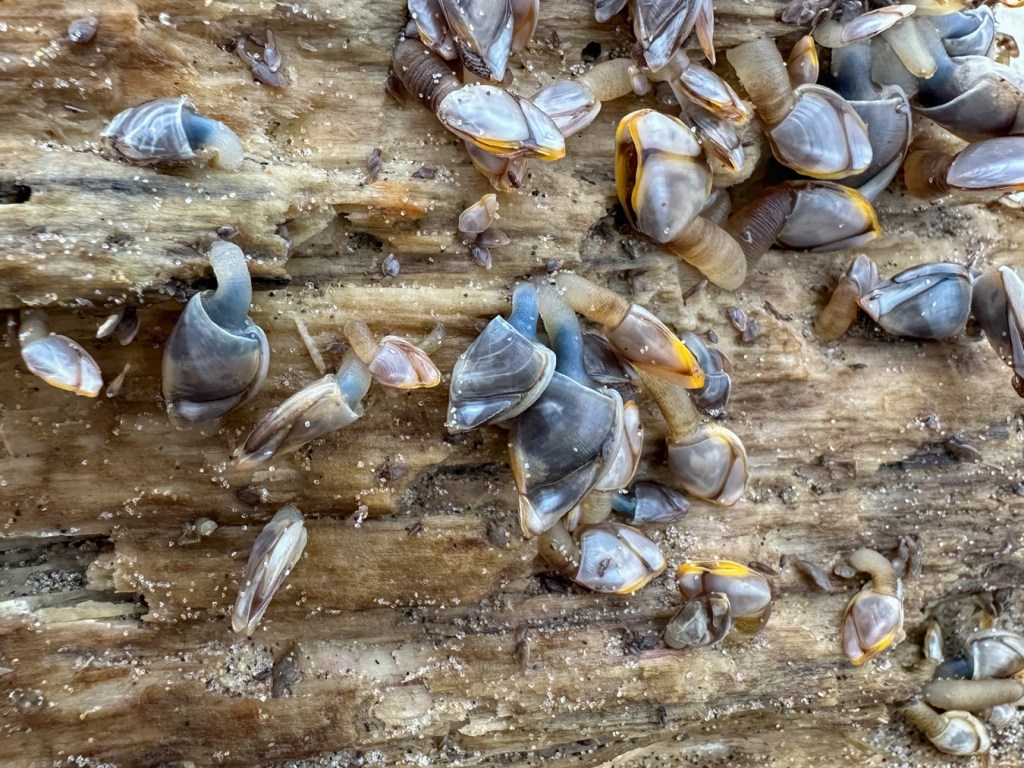
Lepas (Lepas) anatifera and its superficial look alike Lepas (Lepas) hillii are similar enough that I feel like identifications based solely on characters visible in photos like mine are undependable, at least in my hands. Thus, I don’t try to distinguish between them, and, assuming both species beach on Oregon shores, you may see a mix of L. anatifera and L. hillii in the examples I feature below.
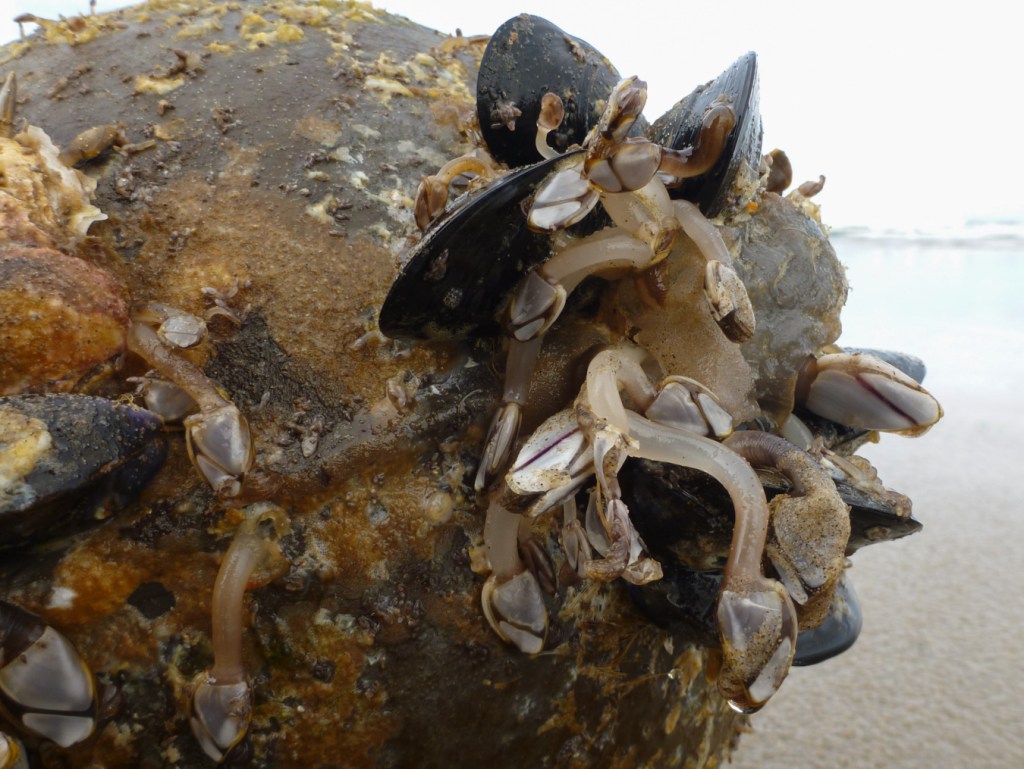
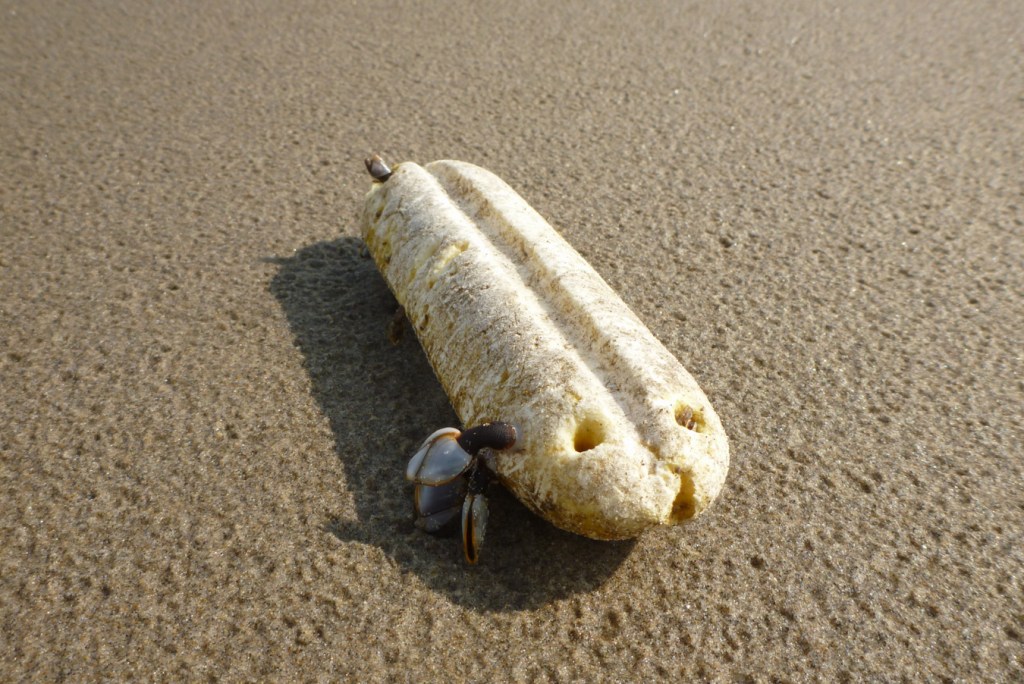
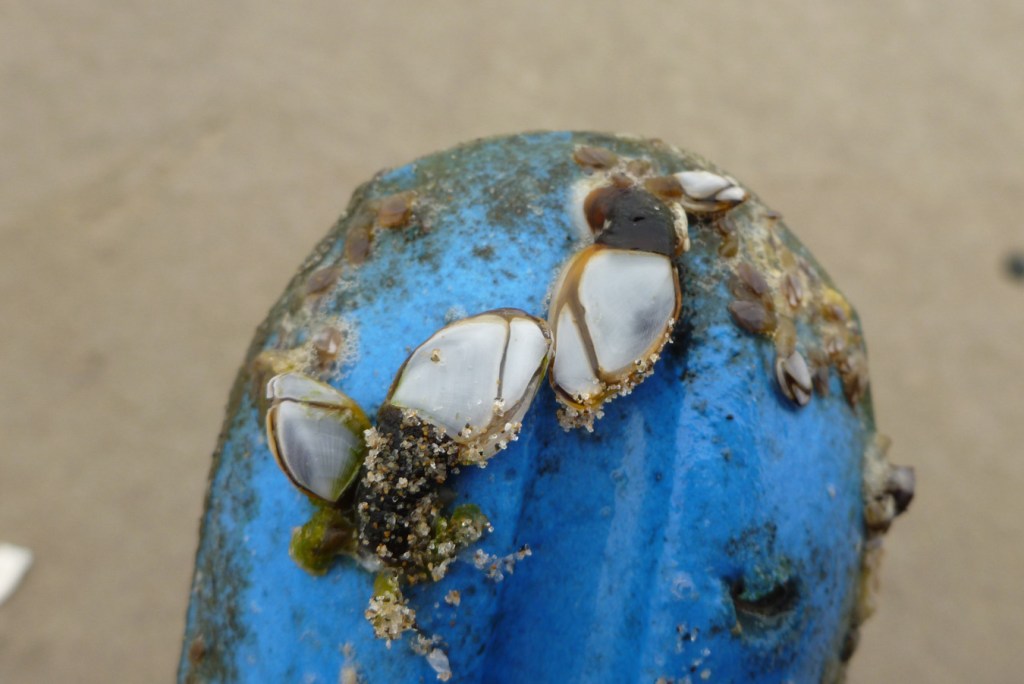
Beyond driftwood and bull kelp, highlighted above, these epipelagic rafters have a wide spectrum of floating human-made debris to choose from.
Floats

Fragments
Various Plastics
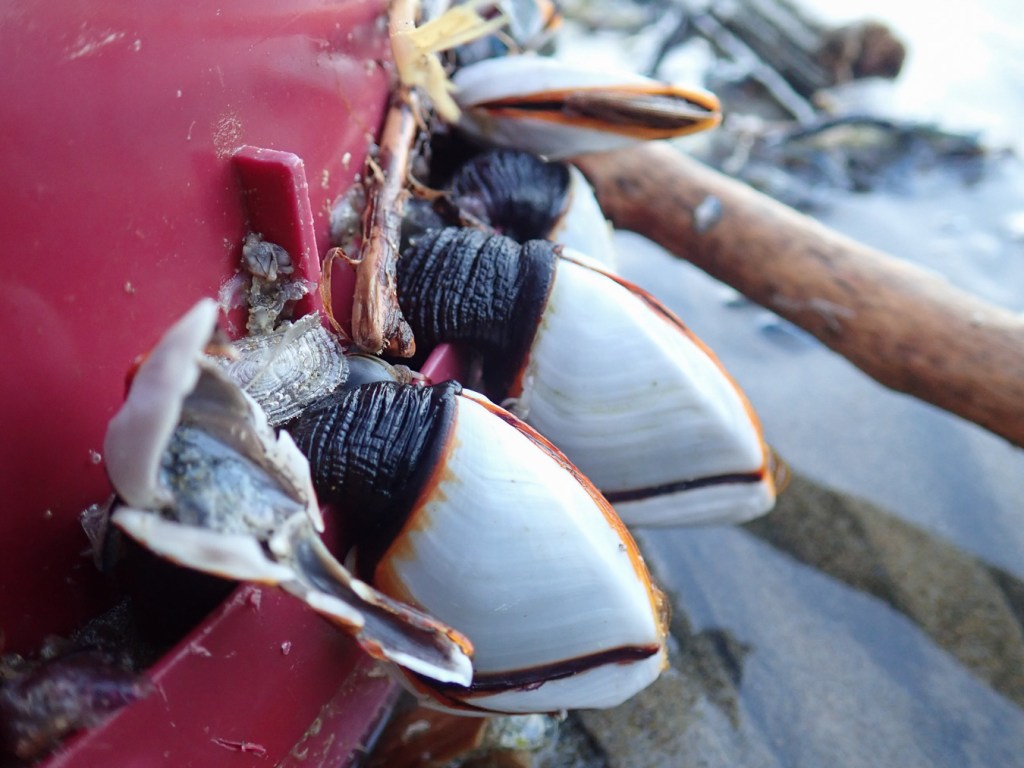
Check the Tires
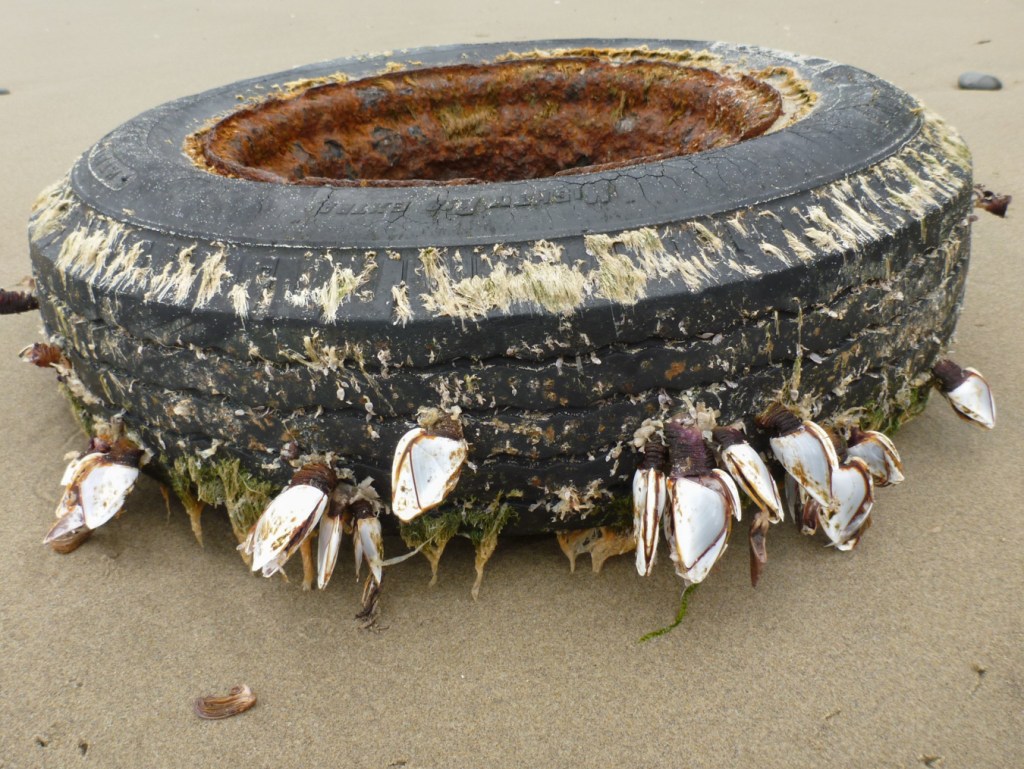
Pelagic Goosenecks Won’t Pass Up a Blue Boot and Neither Should You

Sets on Nets and Lost Lines

Circling Back to a Few More Examples From Driftwood


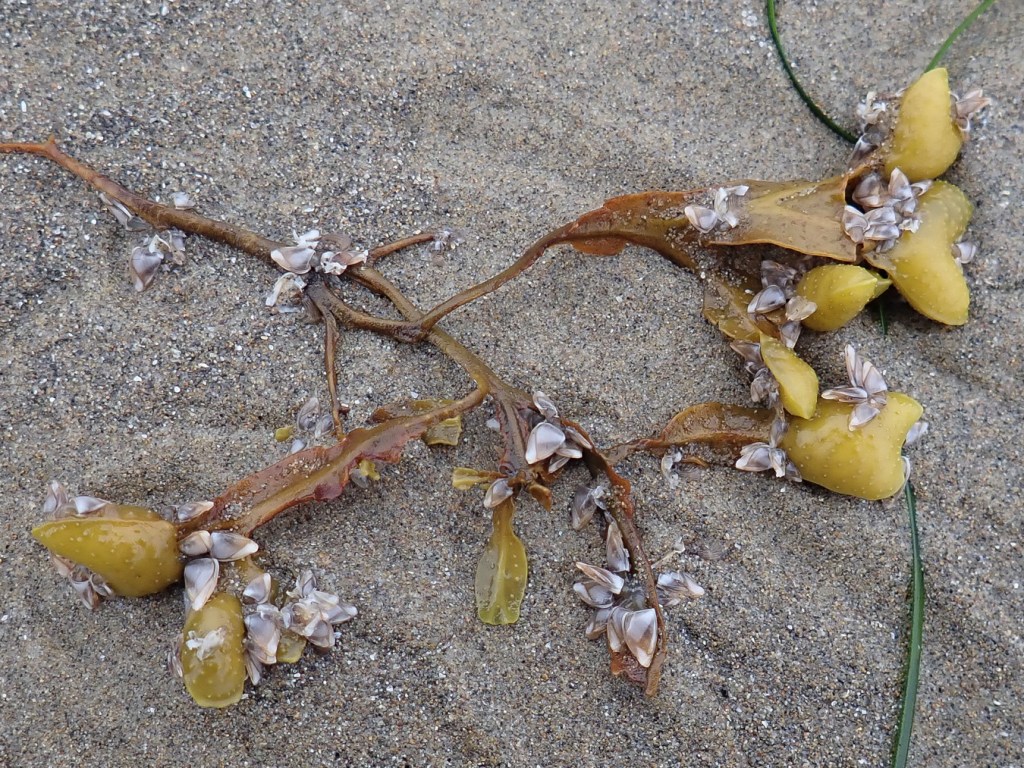
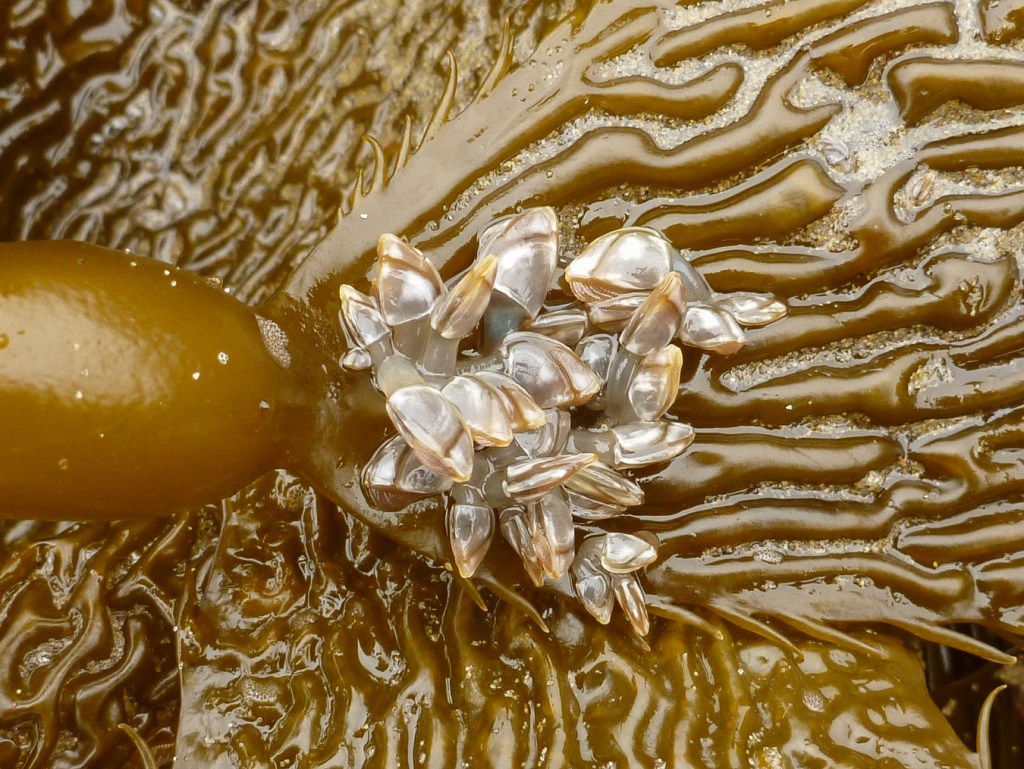
A smaller pelagic gooseneck, Lepas (Lepas) pacifica, is easy to overlook due to its small size. The comparatively small material it often rafts on is easy to overlook too. And, it would be easy to confuse them with smaller, younger versions of Lepas anatifera. Nevertheless, you should more or less expect to encounter them on any walk along the shore.

The majority of my Lepas pacifica photographs show them attached to beached brown seaweeds.
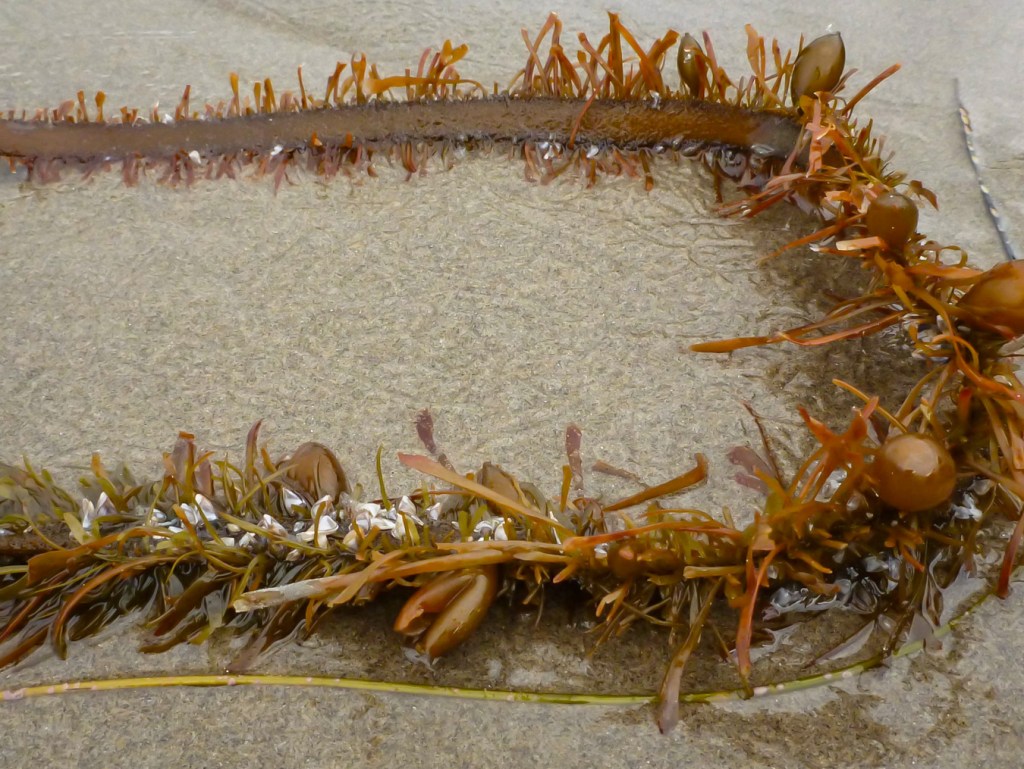
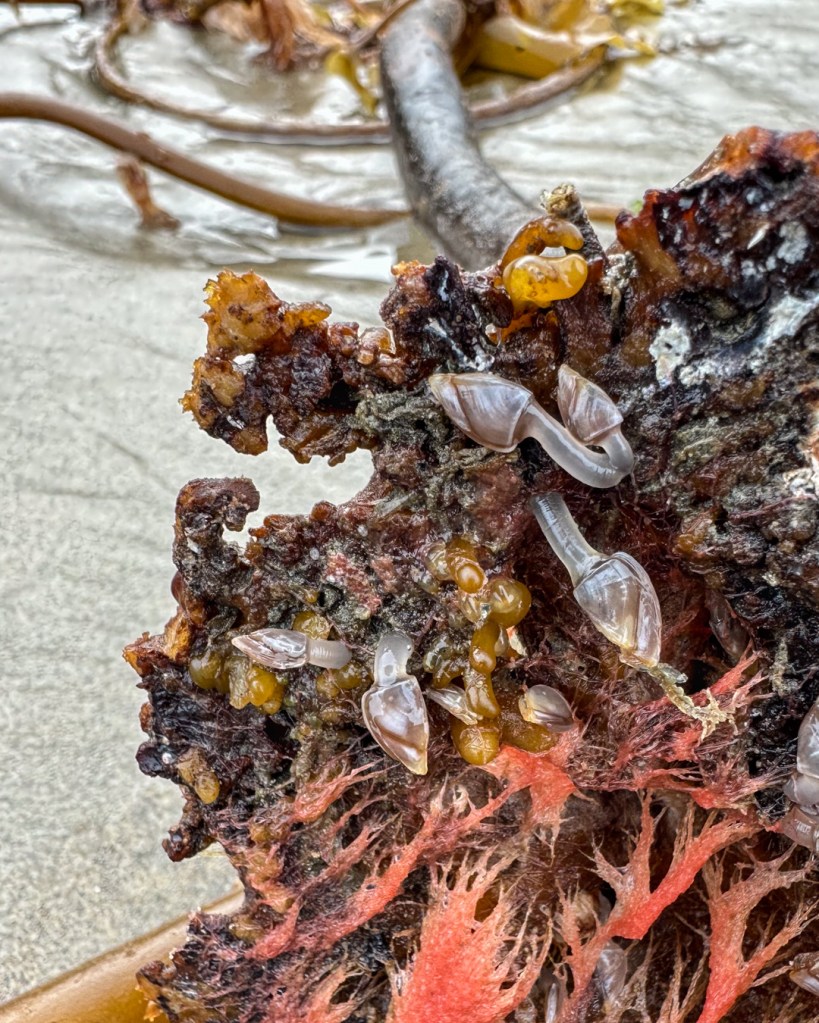

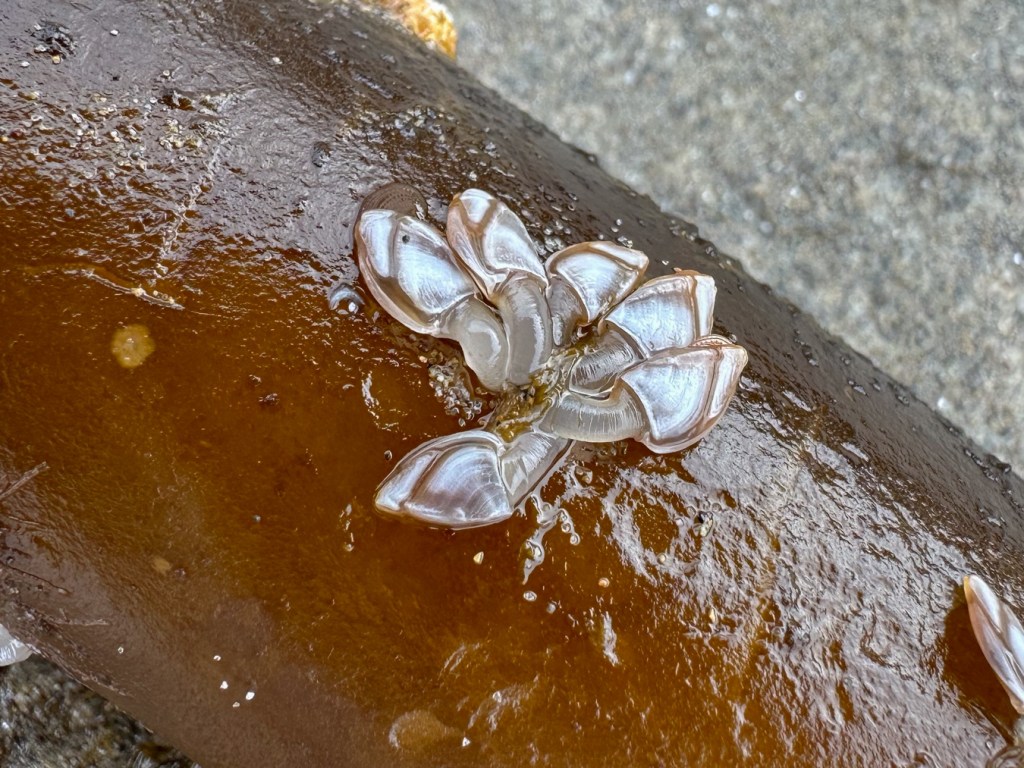
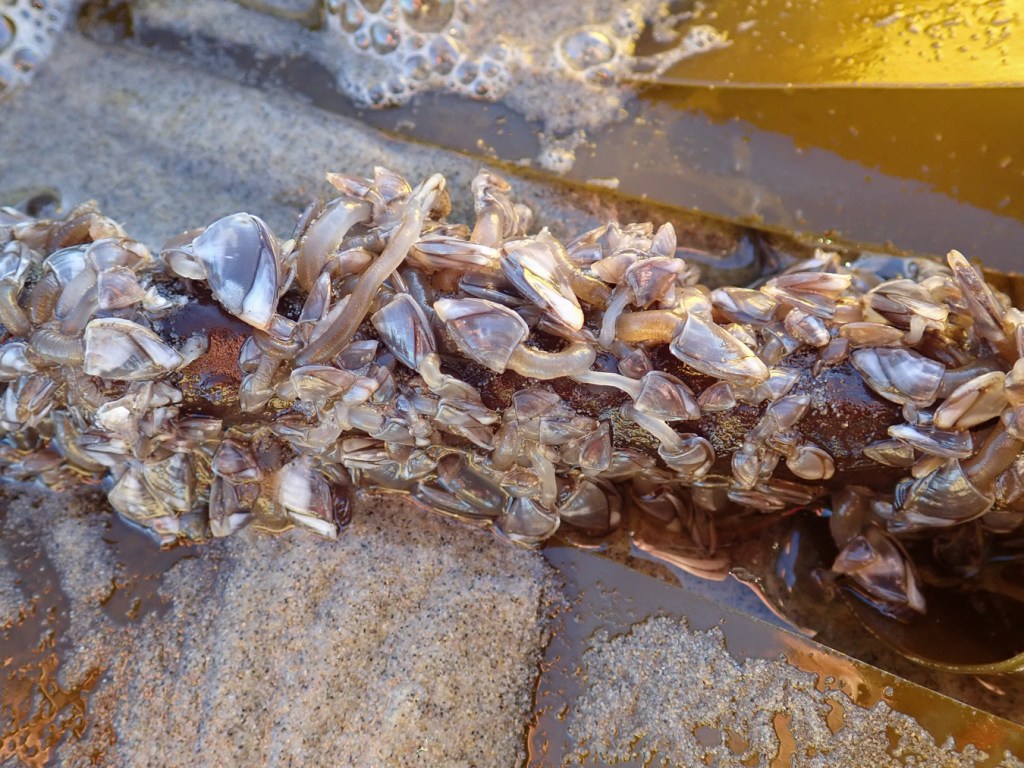
Drifting in on other rafts


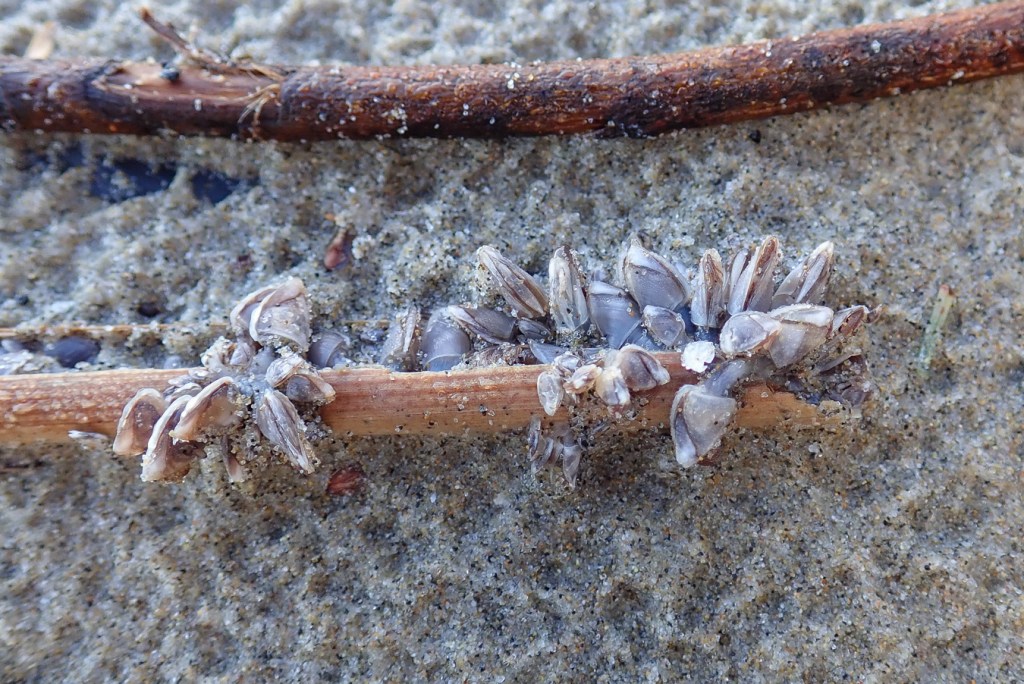

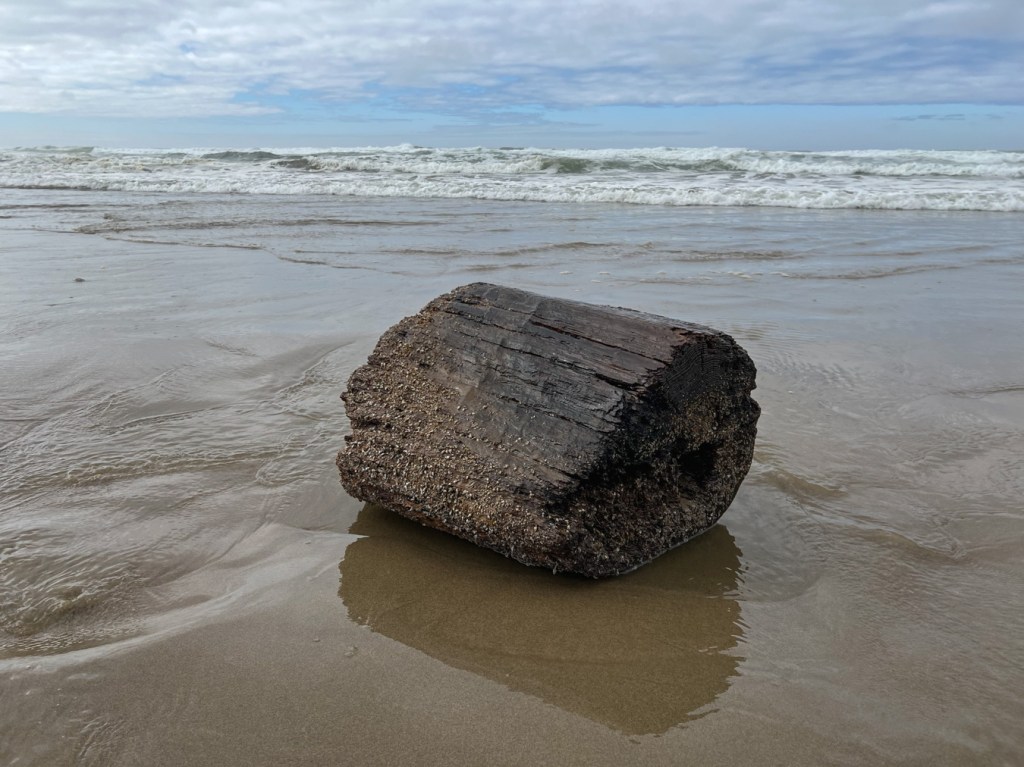

It’s not too unusual to find beached Lepas pacifica mixed in among other members of its subgenus. (Note: The first three images are all of the same piece of driftwood.)
Dosima fascicularis Blue buoy barnacle (also buoy barnacle)
Blue buoys are drifters attaching to human-made fragments or natural debris where they build their own foamy-looking floats. Strandings on Oregon beaches are occasional.


References
Gotshall, D. W. 2005. Guide to Marine Invertebrates, Alaska to Baja California 2nd Edition (Revised). Shoreline Press.
Harbo, R. M. 2011. Whelks to Whales: Coastal Marine Life of the Pacific Northwest. 2nd ed. Harbour Publishing Co.
Kozloff, E. N. 1993. Seashore Life of the Northern Pacific Coast. 3rd ed. University of Washington Press.
Lamb, A. and B. P. Hanby. 2005. Marine Life of the Pacific Northwest. Harbour Publishing.
Sept. J. D. 2019. The New Beachcomber’s Guide to the Pacific Northwest. Harbour Publishing.
Online Resources
Friends of Netarts Bay WEBS Crustaceans page. Accessed November 9, 2025.
Pacific Northwest Shell Club’s Crustacean page. Accessed November 9, 2025.
It’s worth scrolling down to barnacles in Common Sea Life of Southeastern Alaska: A field guide by Aaron Baldwin & Paul Norwood. Accessed November 9, 2025.
Species Accounts
Cowles, D. (2005). Balanus glandula Darwin, 1854. Invertebrates of the Salish Sea. Rosario Beach Marine Laboratory. Accessed August 3, 2025.
Cowles, D. (2005). Lepas anatifera Linnaeus, 1758. Invertebrates of the Salish Sea. Rosario Beach Marine Laboratory. Accessed November 19, 2025.
Cowles, D. (2006). Balanus crenatus Bruguiere, 1789. Invertebrates of the Salish Sea. Rosario Beach Marine Laboratory. Accessed August 3, 2024.
Cowles, D. (2006). Balanus nubilus Darwin, 1854. Invertebrates of the Salish Sea. Rosario Beach Marine Laboratory. Accessed August 3, 2025.
Cowles, D. (2006). Semibalanus cariosus (Pallas, 1788). Invertebrates of the Salish Sea. Rosario Beach Marine Laboratory. Accessed August 3, 2025.
Cowles, D. (2018). Chthamalus dalli Pilsbry, 1916. Invertebrates of the Salish Sea. Rosario Beach Marine Laboratory. Accessed August 3, 2025.
Hiebert, T.C. and M. Jarvis. 2015. Balanus glandula. In: Oregon Estuarine Invertebrates: Rudys’ Illustrated Guide to Common Species, 3rd ed. T.C. Hiebert, B.A. Butler and A.L. Shanks (eds.). University of Oregon Libraries and Oregon Institute of Marine Biology, Charleston, OR. Accessed August 3, 2025.
Hiebert, T.C. 2015. Balanus crenatus. In: Oregon Estuarine Invertebrates: Rudys’ Illustrated Guide to Common Species, 3rd ed. T.C. Hiebert, B.A. Butler and A.L. Shanks (eds.). University of Oregon Libraries and Oregon Institute of Marine Biology, Charleston, OR. Accessed August 3, 2025.
Hiebert, T.C. 2015. Semibalanus cariosus. In: Oregon Estuarine Invertebrates: Rudys’ Illustrated Guide to Common Species, 3rd ed. T.C. Hiebert, B.A. Butler and A.L. Shanks (eds.). University of Oregon Libraries and Oregon Institute of Marine Biology, Charleston, OR. Accessed August 3, 2025.
McFadden, M., Helmstetler, H., and D. Cowles (2007). Pollicipes polymerus (Sowerby, 1833). Balanus nubilus Darwin, 1854. Invertebrates of the Salish Sea. Rosario Beach Marine Laboratory. Accessed August 3, 2025.
I updated this page on August 3, 2025
 theoutershores